
A dental abscess isn't a routine toothache that'll settle on its own, it's an active bacterial pocket of pus that needs a dentist to remove the source of infection, not just antibiotics. Pain may ease if it drains, but that doesn't mean you're cured.
Maybe that's where you are tonight. You've rinsed, you've waited, you've hoped sleep would help, and instead the throbbing is louder when you lie down. Let's sort out what's happening, what can wait until morning, and what shouldn't, in plain language you can use right away.
Table of Contents
- When a Toothache Is Actually Something More Serious
- How an Abscess Forms Inside a Tooth
- Recognizing the Warning Signs Your Body Sends
- How a Dentist Confirms the Diagnosis
- Root Canal, Extraction, or Drainage, Which Fix Fits
- Where Antibiotics Fit and Where They Don't
- Managing Pain and Comfort Before Your Appointment
- Preventing the Next One and When to Call Our Office
When a Toothache Is Actually Something More Serious
It's a familiar story in Santa Ana households. A parent pushes through two or three days of tooth pain between work and school pickups, trying warm saltwater and hoping it'll pass. Then a cheek looks puffy in the bathroom mirror, or a fever shows up, and the worry changes.
That shift matters. A simple sensitivity or a small cavity can ache, but an abscess is different. In everyday terms, it's a pocket of pus your body has walled off while fighting bacteria. Clinically, a dental abscess is a localized collection of pus caused by bacterial infection, commonly involving the tooth root or the tissues around the tooth (periodontal tissues).

Why waiting rarely helps
Bacteria trapped inside a tooth or deep in the gum don't have a reliable way out. Pressure builds, pain comes and goes, and infection can move into surrounding bone or soft tissue. That's why dental abscess symptoms and treatment belong together. Naming the symptoms is only useful if it leads you to the right level of care, promptly.
Pain that suddenly stops isn't always a sign of healing. If the nerve inside the tooth dies or pus finds a small drainage path, pressure drops while bacteria remain.
At Bristol Dental & Orthodontics on South Bristol Street, Dr. Andrew Finley and our team start with triage. We'll ask what you're feeling, how fast it's changing, and whether swelling, fever, or trouble swallowing is part of the picture. From there, we can talk calmly through the next step, whether that's an urgent visit with us or emergency medical care first. You don't need to decide that alone at your kitchen table.
How an Abscess Forms Inside a Tooth
Think of a healthy tooth like a small, well sealed building. The hard outer layer (enamel) is the exterior wall. Inside runs a soft center with nerves and blood vessels (the pulp), a bit like wiring and plumbing through the middle. As long as the walls stay sealed, bacteria stay out.
How bacteria get inside
Problems start when there's an opening. Deep decay can eat through the wall. A crack from grinding, biting something hard, or a sports injury can do the same. An old filling that leaks at the edges can let bacteria slip underneath. Once inside, bacteria multiply in a space with no drainage, the pulp becomes inflamed, and it may eventually die (pulpal necrosis).
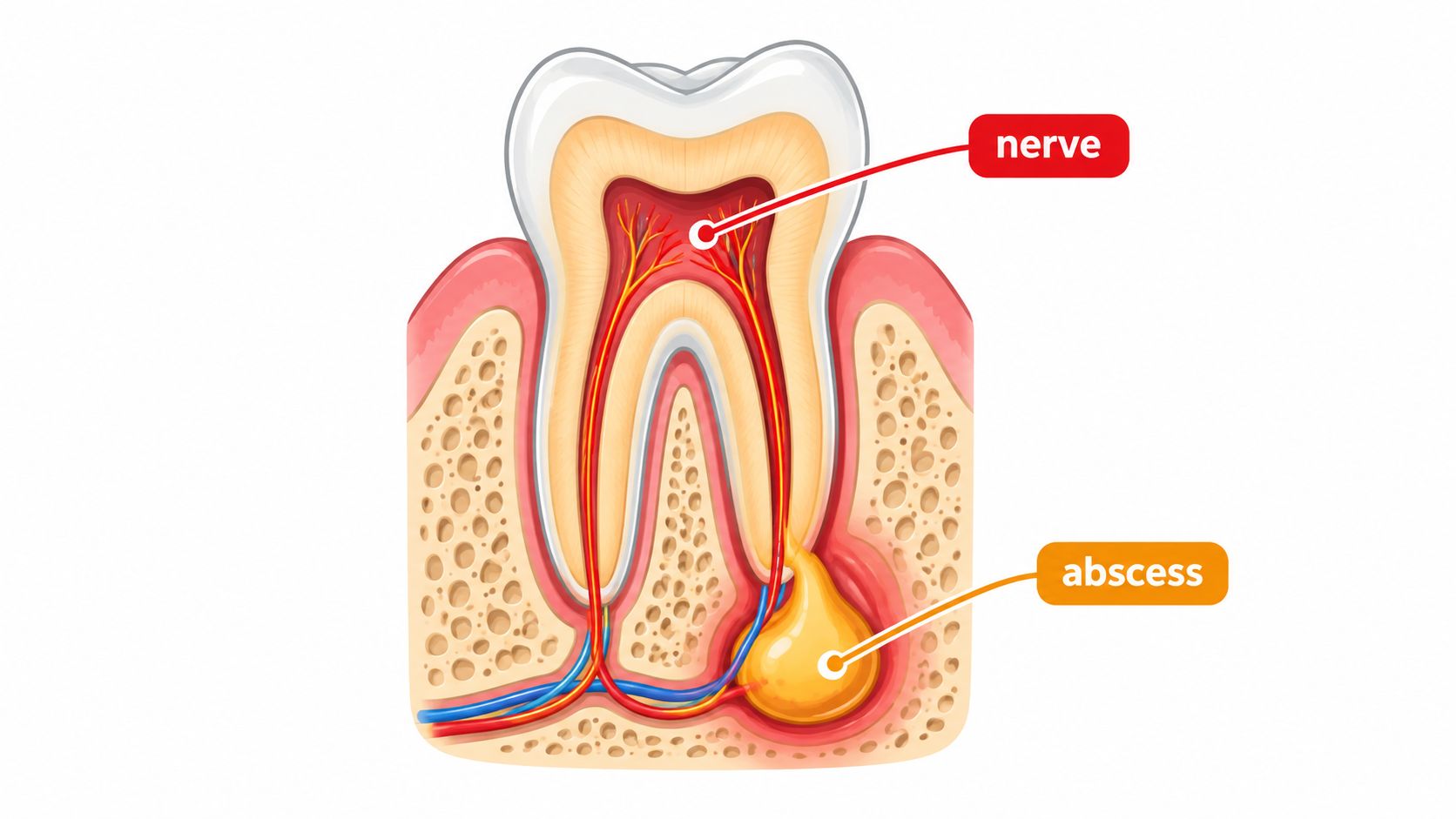
From there, infection can travel out through the tip of the root (the apex) into the bone. That description matches an abscess arising from pulpal necrosis and extending through the apical tissues, or from infection in a periodontal pocket. Pus collects, pressure rises, and you feel throbbing, especially when you bite or lie flat.
The two main starting points
- Inside the tooth (periapical abscess): This usually follows untreated decay, a crack, or an injury that damages the pulp. Infection gathers at the root tip.
- In the gum and supporting bone (periodontal abscess): Gum disease creates a deep pocket beside the tooth where bacteria collect. The tooth may feel loose or raised when you bite.
You don't need to memorize those terms. What helps is understanding the pattern. An abscess is usually the end of a longer story, not a sudden mystery. A cavity that was quiet for months, a tooth that chipped and seemed fine, cleanings that kept getting postponed. Routine checkups catch those early chapters, when treatment is simpler and more conservative.
Recognizing the Warning Signs Your Body Sends
Symptoms vary, and missing one sign doesn't rule out an abscess. You might notice severe, persistent throbbing pain that spreads to the jaw, neck, or ear, pain when chewing, sensitivity to hot or cold, a bad taste, swollen glands under the jaw (lymph nodes), or facial swelling. Mayo Clinic lists those features and advises emergency care when facial swelling comes with fever or difficulty breathing or swallowing.
The harder question families ask us is practical. Where should you go tonight, a dentist, urgent care, or the emergency department? Use this triage as a starting point, not a substitute for a clinician who knows your history.
Dental Abscess Symptom Triage
| Symptom | What it usually means | Where to seek care |
|---|---|---|
| Localized tooth pain, pain on biting, small gum swelling | Infection may still be contained near the tooth | Call Bristol Dental & Orthodontics promptly for urgent evaluation |
| Bad taste, a pimple like bump on the gum, pain easing after drainage | Pus may be draining, but the source tooth is still infected | Urgent dental visit, don't wait for pain to return |
| Fever, spreading cheek swelling, swollen glands | Your body is responding beyond the tooth | Contact us the same day and seek medical advice if worsening |
| Difficulty breathing, speaking, or swallowing, substantial mouth swelling, marked difficulty opening your mouth | Possible spread into deeper tissues or a threat to the airway | Emergency medical care immediately |
| Swelling or pain around the eye, sudden vision problems, confusion | Possible dangerous extension beyond the tooth | Emergency medical care immediately |
That emergency list reflects guidance to seek immediate care for difficulty breathing, speaking, or swallowing, substantial mouth swelling, marked difficulty opening the mouth, or eye swelling or pain.
When the usual rules change
Be more cautious with young children, older adults, pregnant patients, and anyone with a weakened immune system or uncontrolled diabetes. They may not mount a fever the way a healthy adult does, and swelling can progress faster. The absence of fever doesn't reliably mean things are safe.
A useful question to ask yourself: Is this staying in one tooth, or is it changing how I breathe, swallow, speak, open my mouth, or see? The second group needs an emergency department in Santa Ana or Orange County tonight, not a wait until morning approach.
If you're in Costa Mesa, Tustin, Irvine, or Garden Grove and symptoms stay localized, call us and describe what you see. If red flags are present, get emergency help first. Dental treatment can follow once you're medically stable.
How a Dentist Confirms the Diagnosis
Many patients feel calmer once they know what the appointment involves. There is no guessing from pain alone, because several problems can mimic an abscess and an abscess can hide behind mild symptoms. We combine what you tell us, what we can see and feel, and imaging.
What we check in the chair
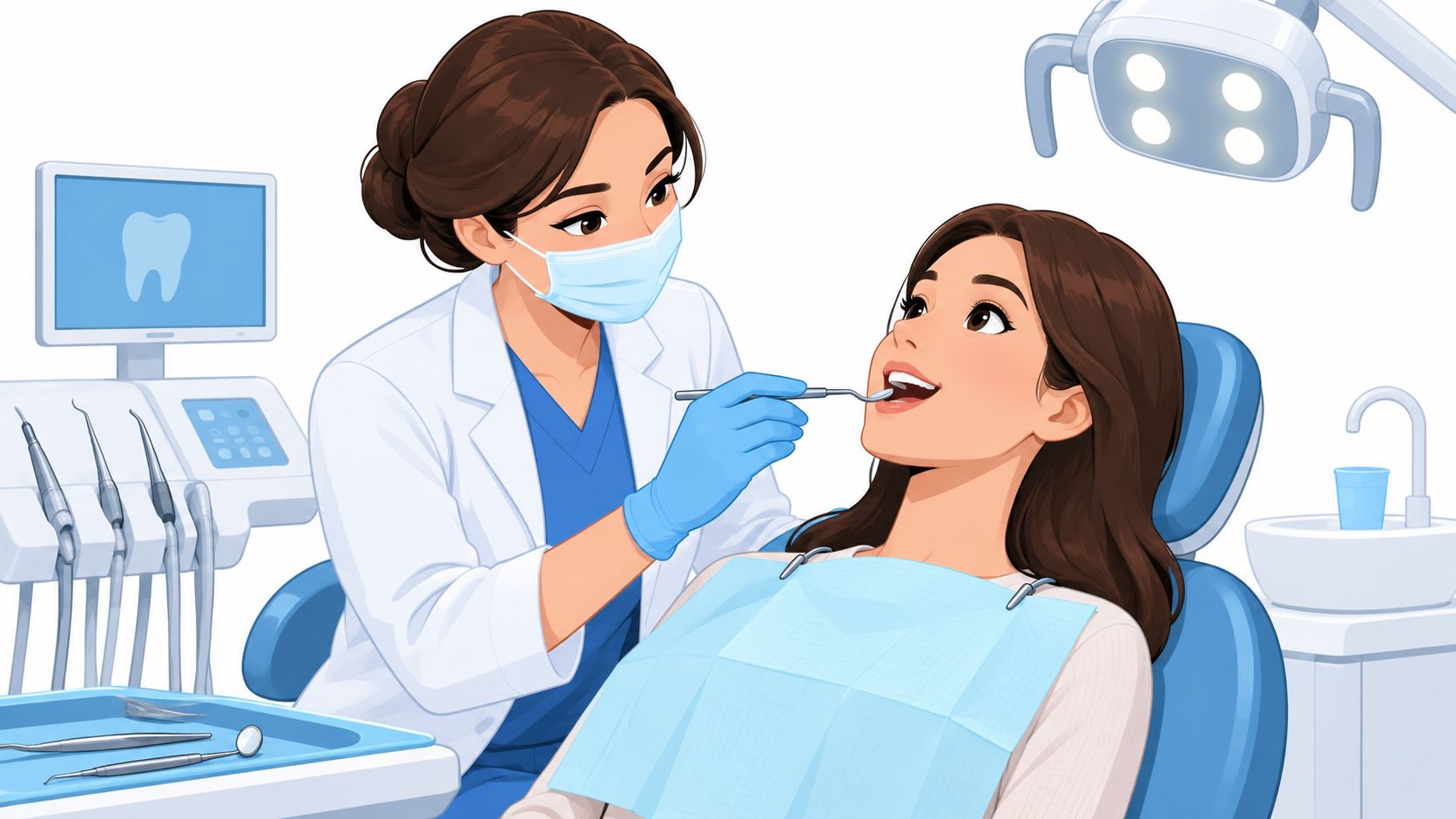
Dr. Finley will look for swelling, redness, or a draining spot on the gum. He may gently tap the tooth (percussion testing), because an inflamed root tip often hurts with tapping. He'll check how the tooth responds to temperature, feel the glands under your jaw and in your neck, and see how widely you can open. Each step answers a specific question about where infection is and whether it's spreading.
- Tapping and biting tests: These help locate which tooth is involved, since pain can feel like it's coming from a neighbor tooth or the ear.
- Gum and pocket checks: These show whether infection started in the gum rather than inside the tooth, which changes treatment.
- General signs: Fever, facial redness, and reduced eating or drinking help us judge urgency.
What imaging adds
A small x ray focused on the root tip (periapical x ray) can show changes in bone around the root. Bitewing x rays help check decay and bone levels between teeth. For complex anatomy or when we're planning a root canal or a future implant, a 3D scan (cone beam CT) may be useful. We're looking for three things, the source of infection, whether the tooth can be predictably saved, and whether infection has moved beyond the tooth.
That clarity is why home diagnosis is risky. Two people can describe the same ache and need very different care. An exam lets us recommend the most conservative option that removes the source.
Root Canal, Extraction, or Drainage, Which Fix Fits
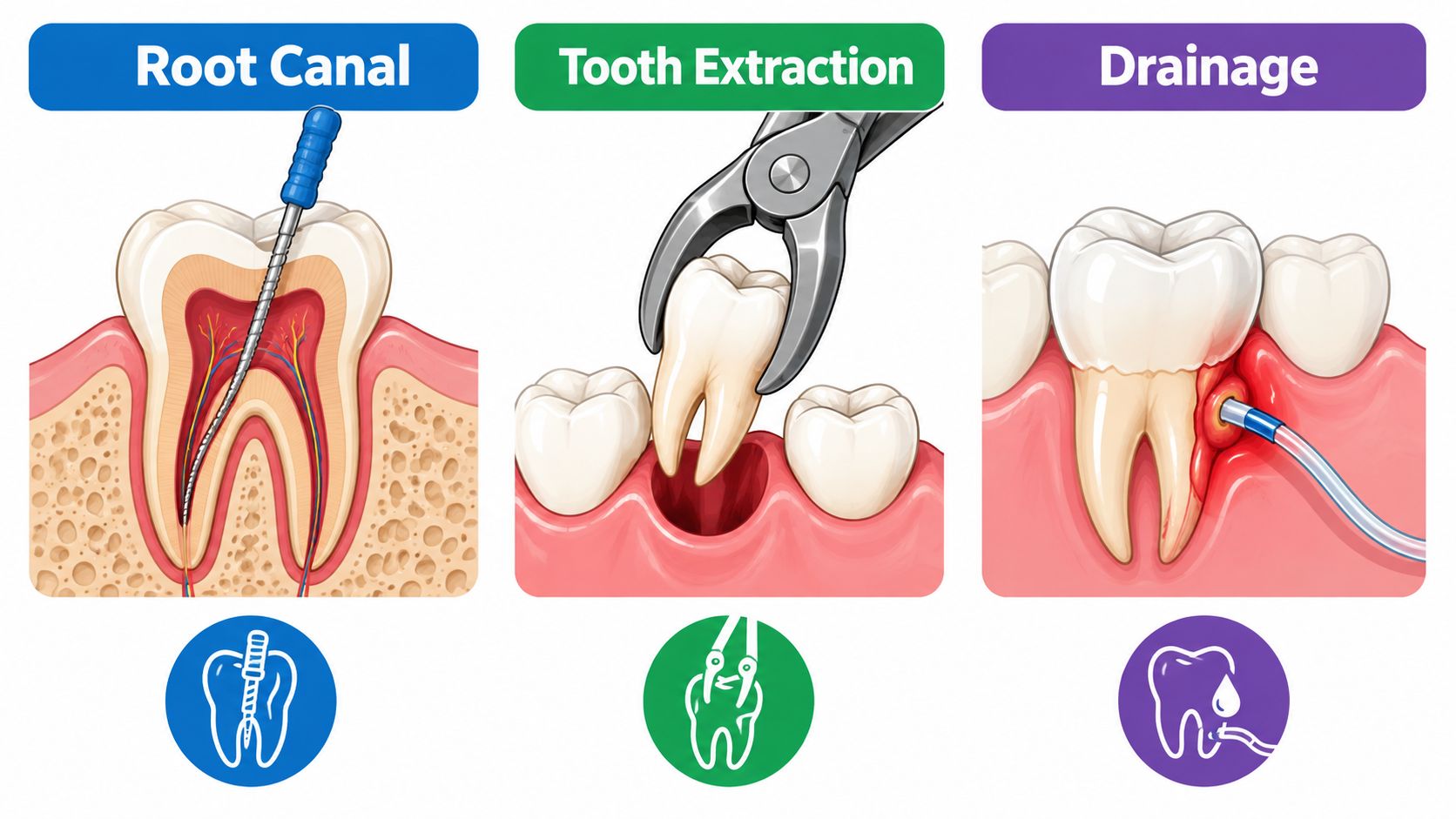
All effective treatment follows one principle, remove the source and let pus drain. Dentists call this source control. The principal interventions are incision and drainage, root canal treatment to remove infected pulp while preserving the tooth, or extraction when the tooth cannot be predictably restored.
Root canal treatment
If the tooth has enough healthy structure and good bone support, saving it is usually the goal. During root canal treatment, the infected pulp is removed, the inside of the tooth is cleaned and disinfected, and the space is sealed. A crown often follows to protect the tooth when you chew. Most patients are surprised that relief comes from removing the infected tissue itself, not from waiting for medicine to reach it.
Extraction
Sometimes a tooth is cracked below the gum, too decayed to rebuild, or has lost too much supporting bone. Removing it (extraction) eliminates the source when predictable repair isn't possible. After healing, we can discuss replacement options such as a dental implant, a bridge, or a partial denture, depending on the space, your bite, and your goals. We'll explain timing, because infected bone needs to heal before some restorative steps make sense.
Incision and drainage
When pus has collected in the gum or soft tissue, a small opening lets it drain and relieves pressure (incision and drainage). This is often paired with a root canal or extraction, not used as a stand alone cure. Draining pus without treating the tooth is like mopping a floor while the pipe still leaks.
How do we choose? We weigh remaining tooth structure, root shape, bone support, tooth position, your overall health, and whether infection is spreading. Dr. Finley will walk through those factors for your specific case, including what recovery typically feels like and what follow up looks like. No option should feel like guesswork, and we won't promise a specific outcome before we've examined you.
Where Antibiotics Fit and Where They Don't
This is the misconception we hear most. A patient understandably hopes a prescription will clear everything and help them avoid a procedure. Antibiotics can help in the right situation, but they can't clean out a dead pulp, seal a crack, or drain a closed pocket of pus. Blood flow to necrotic tissue inside a tooth is limited, so medicine circulating in your bloodstream has limited ability to reach the problem.
For healthy adults with a localized abscess and no signs of spread, definitive dental treatment comes first. ADA guidance recommends definitive conservative dental treatment without routine adjunctive antibiotics for immunocompetent adults with localized acute apical abscess and no systemic involvement, because benefit is limited and exposure can cause adverse effects and resistance.
When antibiotics become appropriate
Antibiotics enter the plan when infection is spreading or your whole body is involved, for example with fever, malaise, spreading facial redness (cellulitis), gland involvement, substantial swelling, or when immediate drainage can't be achieved. They're also considered more readily if your immune system is weakened. Choice and duration depend on your allergy history, medical status, severity, and local guidance, so that decision needs clinician review rather than a one size fits all rule.
Antibiotics are a side tool that supports treatment. Drainage, root canal therapy, or extraction is the main event.
Please don't self start leftover antibiotics from a prior illness, and don't automatically restart a course you missed or didn't finish. The right next step depends on why it was prescribed, how symptoms have changed, and whether the source was treated. Call us for individualized advice instead. Using antibiotics when they aren't needed also contributes to antimicrobial resistance, meaning the medicines work less well when you or your family need them later, and it can cause other adverse effects.
A practical rule helps. Localized pain and mild swelling mean call for an urgent appointment. Fever with spreading swelling, difficulty swallowing, or trouble breathing means emergency evaluation. Waiting at home for pills to work while the source remains can make the eventual dental procedure harder, not easier.
Managing Pain and Comfort Before Your Appointment
Comfort measures can make the hours before you're seen more bearable. They're a bridge, not a cure, and it's important to keep that distinction clear so temporary relief doesn't turn into delay. If pain is severe and persistent, or swelling is increasing, treat that as information and call sooner.
What you can reasonably do at home
- Over the counter pain relief as directed: Follow the label and any guidance from your medical clinician, especially if you take other medicines or have kidney, liver, stomach, or bleeding concerns. Ask us if you're unsure what's appropriate for you.
- Cold compress on the cheek: Apply it on the outside of your face for short intervals. It can ease soreness and help you rest while you wait.
- Warm saltwater rinses: Gentle rinsing helps keep the area clean, particularly if there's a bad taste or minor drainage. Spit, don't swallow, and don't rinse aggressively.
- Head raised and soft foods: Sleeping slightly propped up can reduce throbbing from pressure. Choose soft, cool foods and chew on the other side.
What to avoid
Don't place aspirin directly on the gum, it can burn the tissue. Don't apply heat to a swollen face, and don't press on, poke, or try to drain a swollen area yourself. Those steps can irritate tissue and make it harder for us to assess what's happening.
Stop relying on home measures if you develop fever, rapidly increasing facial or neck swelling, difficulty opening your mouth, or difficulty swallowing or breathing. At that point the situation has moved into emergency territory. Call Bristol Dental & Orthodontics for guidance, and seek emergency medical care if red flag symptoms are present or worsening.
Preventing the Next One and When to Call Our Office
After an abscess, most families ask the same sensible question. How do we keep this from happening again? Prevention isn't about perfection, it's about catching small problems while they're still small and keeping bacteria from finding an opening.
Habits that lower your risk
- Brush and clean between teeth daily: Plaque that sits along the gumline and between teeth feeds decay and gum disease, the two main doors for bacteria.
- Keep routine cleanings and exams: Regular visits let us spot early decay, leaking fillings, cracked teeth, and deepening gum pockets before they become emergencies.
- Fix cracks and old restorations promptly: A filling that has started to leak or a tooth that hurts on biting deserves a look, even if pain fades.
- Protect teeth from force: If Dr. Finley recommends a night guard for grinding, wearing it as directed helps prevent cracks. A custom mouthguard matters for local sports, for kids and adults alike.
- Don't ignore a bump on the gum: A small pimple like spot that comes and goes can signal a draining infection from a tooth that no longer hurts.
Families also ask how soon a child can return to school after treatment and what follow up is needed. Those answers depend on the procedure, whether swelling or fever was present, and your child's medical history, so we'll give you specific guidance at your visit rather than a generic timeline here. The same applies to returning to work, eating normally, and planning a crown or implant after healing.
Call our Santa Ana office promptly if you have tooth pain that persists, pain on biting, gum or facial swelling, a bad taste, sensitivity that lingers, or a tooth that feels loose or raised. Seek emergency medical care immediately for breathing, speaking, or swallowing difficulty, substantial swelling, or eye symptoms, as noted in the triage section above. For many Orange County families, Bristol Dental & Orthodontics serves as one dental home for general and family dentistry, emergency dentistry, Invisalign, dental implants, cosmetic dentistry, and sleep apnea oral appliance therapy. If what you've read sounds like what you're feeling, scheduling a consultation is a calm, concrete next step. We'll examine first, explain clearly, and recommend only what your specific case needs.
If you're dealing with tooth pain, swelling, or a suspected abscess, Bristol Dental & Orthodontics in Santa Ana offers prompt emergency evaluation, clear explanations from Dr. Andrew Finley, and treatment focused on removing the source of infection while preserving your tooth when that's predictable. Schedule a consultation today by visiting Bristol Dental and Orthodontics so we can examine you in person and recommend care suited to your specific case.