
You're looking at three different calendars at once. Your toddler needs a first checkup, your teenager keeps asking about straightening teeth, and your own cleaning is months overdue. If that sounds familiar, you're already asking the right question, even if you haven't said it out loud. What is family dentistry, and can one practice really handle all of that well?
Table of Contents
- What Family Dentistry Really Means
- The Dental Home Model Explained
- Services Across Every Age Group
- Why a Family Dental Home Benefits Everyone
- What to Expect at a Family Dentistry Visit
- Overcoming Barriers to Family Dental Care
- How to Choose the Right Family Dentist
- Building a Lifelong Dental Relationship
What Family Dentistry Really Means
A toddler's first tooth, a teenager's crowded bite, and a parent's sore molar don't arrive on a neat schedule. They show up in the same household, often in the same month. That's the everyday problem family dentistry is built to solve.
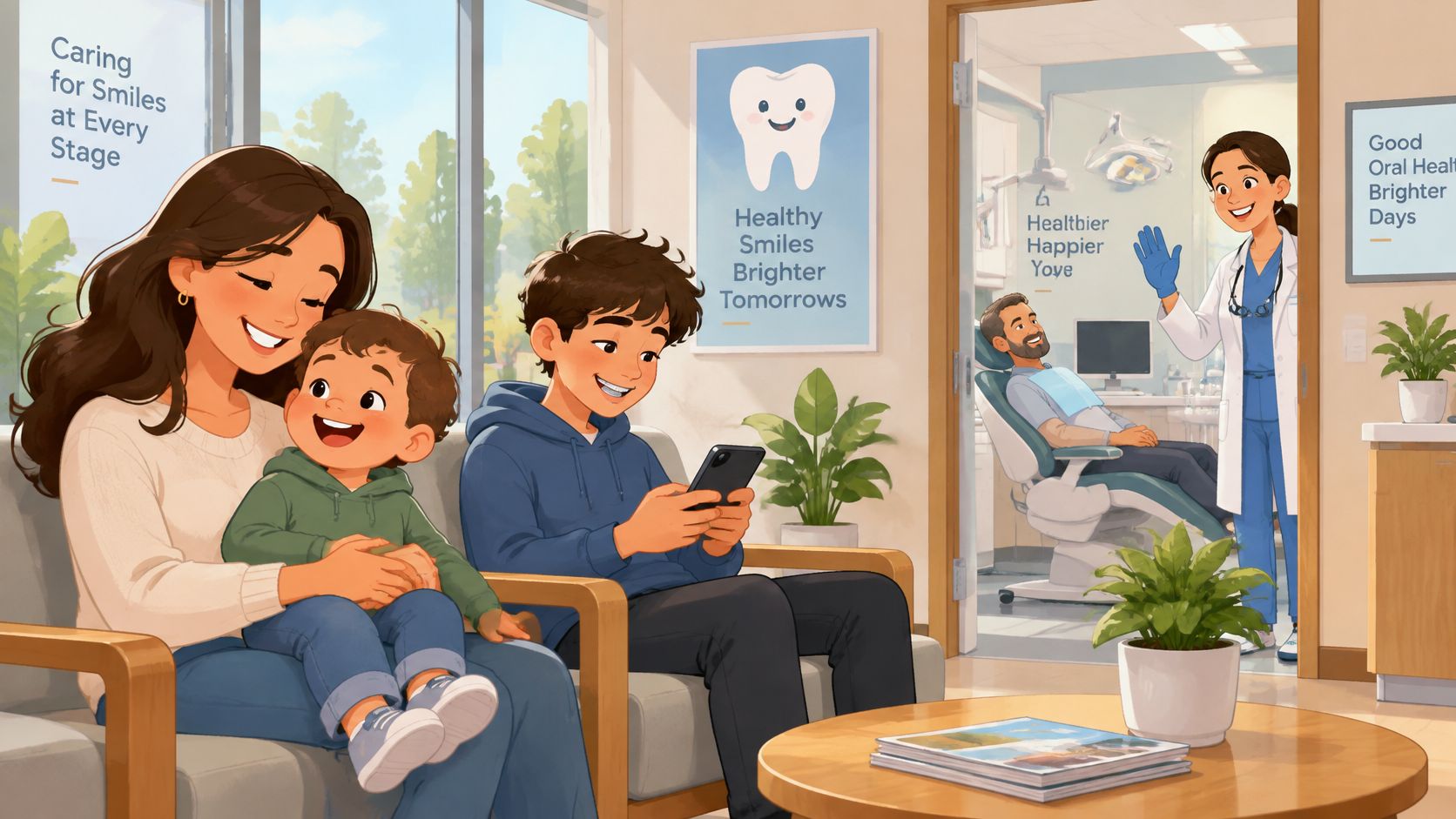
Family dentistry isn't a single procedure. It's continuous, age-spanning care for children, adults, and older relatives within one coordinated practice. The work includes preventive examinations, cleanings, cavity management, gum care, restorative treatment, and ongoing risk assessment, adjusted as each person grows and changes.
The attendance gap between generations shows why that breadth matters. According to the Centers for Disease Control and Prevention dental visit data, 86.9% of children ages 2 to 17 had visited a dentist within the previous year in 2019, compared with 65.5% of adults ages 18 to 64. Children are getting through the door more often than their parents are.
A Model Built on Continuity, Not Episodes
Family dentistry works like a family doctor for mouths. You are not just booking isolated fixes. You are building one record of habits, growth, past treatment, and risk that follows each person from childhood into adulthood.
That continuity changes decisions. A dentist who has watched a child's teeth erupt can spot crowding early. A dentist who knows a parent has gum inflammation can watch for similar patterns and give more targeted hygiene guidance at home.
Family dentistry works best when care is planned across life stages, not restarted from scratch at every visit.
It doesn't mean every family member gets identical care. A toddler needs gentle prevention and habit coaching. An adult may need a crown, gum monitoring, or a discussion about replacing a missing tooth. The shared part is coordination, not sameness.
The Dental Home Model Explained
A dental home is the organizing idea behind good family care. It's not just an address where cleanings happen. It's an ongoing relationship with a team that knows your family and plans ahead.
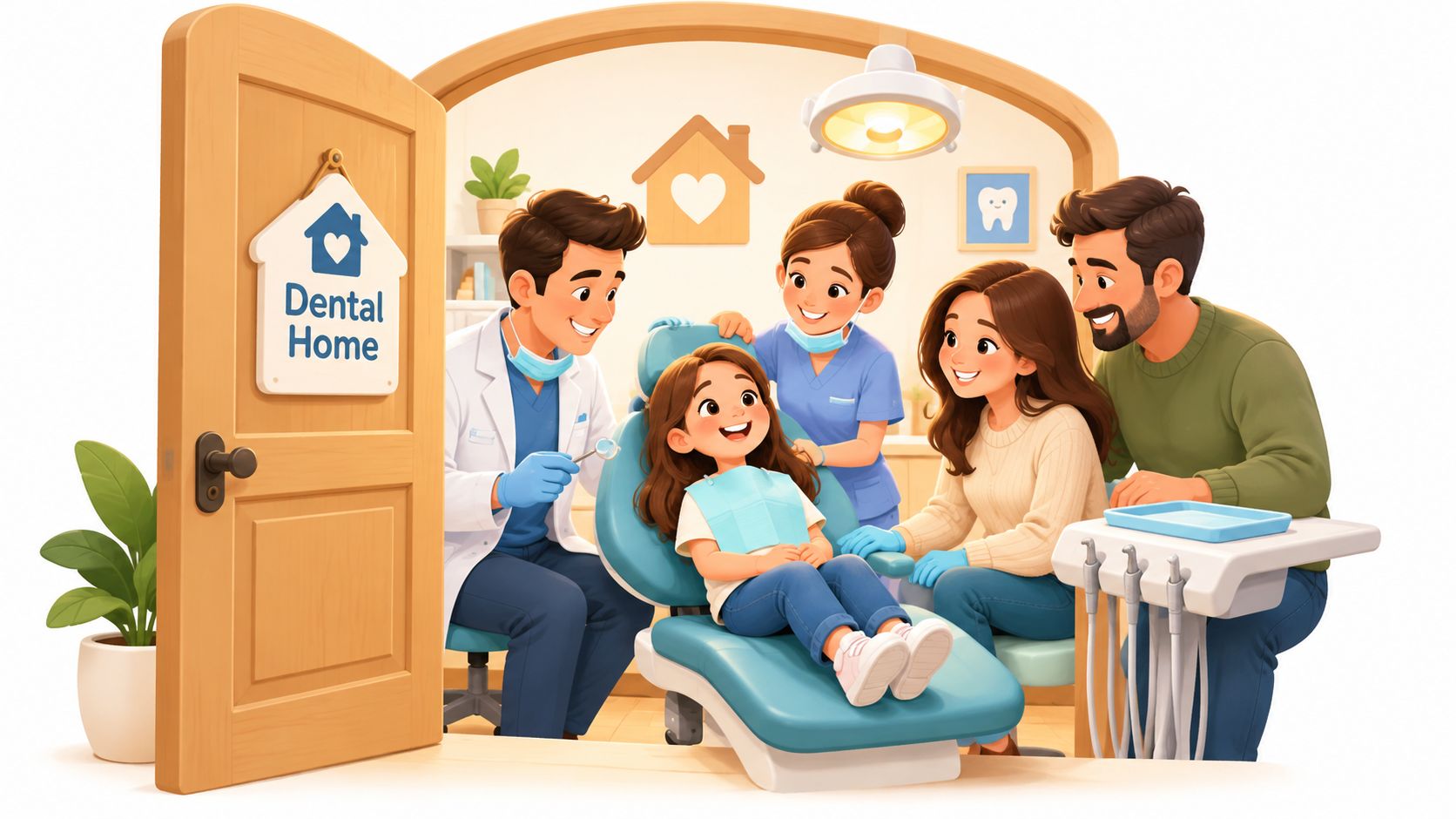
The American Academy of Pediatric Dentistry dental home definition describes it as accessible, continuous, coordinated, patient and family centered care. That includes disease assessment, acute treatment, prevention, and individualized caries and periodontal risk management. In plain language, the team treats problems, works to prevent new ones, and tailors the plan to each person.
When Care Should Start
The recommended starting point surprises many parents. A child's first examination should happen when the first tooth erupts and no later than 12 months of age. That early visit isn't about drilling or elaborate treatment. It's about checking development, spotting early risk, and helping parents with cleaning, feeding habits, and fluoride questions.
- First tooth erupting: Book that first exam rather than waiting for a full set of teeth.
- No later than age one: Use 12 months as the outer limit for getting started.
- After that: Let risk, not habit alone, guide how often you return.
Many families assume everyone must come every six months, no exceptions. Six months is a common interval, but it isn't a universal rule. Your dentist may recommend more frequent monitoring for a child with prior cavities, a high sugar diet, or tricky hygiene, and a less intensive schedule for a lower risk patient.
Why Risk Based Timing Matters
Practical rule: Ask what your personal risk factors are, then ask how they shaped your recall interval.
When risk is found early, the response can stay small. Fluoride guidance, sealant decisions, eruption monitoring, and minimally invasive care are easier before decay becomes extensive. That's the cause and effect at the heart of the dental home. Earlier information leads to simpler, more preventive choices later.
Services Across Every Age Group
Oral disease doesn't respect age boundaries, which is why family services have to stretch so wide. The World Health Organization global oral health report estimated that untreated decay in primary teeth affected approximately 514 million children worldwide in 2019, while untreated decay in permanent teeth affected more than 2 billion people. Baby teeth and adult teeth both need active care.
For young children, visits center on early examinations, fluoride and hygiene counseling, sealants where appropriate, and monitoring growth and eruption. The tone matters as much as the tools. Short, positive visits help children learn that the dental chair is a normal, safe place.
How Needs Shift Over Time
| Age Group | Preventive Care | Restorative Care | Specialty Coordination |
|---|---|---|---|
| Children | Exams, fluoride guidance, sealants, hygiene coaching | Small fillings and cavity management when needed | Pediatric or orthodontic referral when development requires it |
| Teenagers | Cleanings, gum checks, diet and hygiene review | Fillings, repair of chipped or damaged teeth | Orthodontics, including clear aligner assessment |
| Adults | Exams, periodontal assessment, oral cancer screening | Crowns, fillings, dental implants for missing teeth | Sleep apnea oral appliance coordination, cosmetic planning |
| Older adults | Gum health monitoring, review of existing restorations | Repair or replacement of worn dental work | Coordination with physicians and specialists as needs change |
Teenagers sit in a transition zone. Permanent teeth are in, habits are becoming independent, and orthodontic questions often surface. Your family dentist can monitor alignment, discuss options such as Invisalign where appropriate, and coordinate orthodontic care rather than leaving you to piece it together alone. No option suits every bite, so an individual assessment matters.
Adults bring a different mix. Restorative care, gum health, cosmetic concerns, and missing teeth become more common topics. Dental implants, crowns, and other restorative choices may enter the conversation, along with screening that looks beyond the teeth themselves.
Older adults often need careful monitoring of existing dental work and gums, plus coordination when medical conditions affect oral care. Sleep related concerns can also arise. For some adults, a custom oral appliance is part of sleep apnea care, coordinated with medical providers. Your family dentist's role is to connect these pieces, treat what's within scope, and refer thoughtfully when specialty care fits better.
Why a Family Dental Home Benefits Everyone
Separate providers for every family member can work. It just creates friction. Different records, different advice, different schedules, and no single team seeing the whole picture.
One coordinated practice simplifies the logistics you feel every week. Appointments can be grouped where it makes sense. Records live in one place. If something urgent comes up, you already know who to call, and that team already knows your history.
Shared Habits and Shared Risk
Families share more than an address. They share meals, routines, and often similar oral health tendencies. A dentist seeing both parent and child can give consistent guidance on brushing, fluoride, snacks, and drinks, instead of sending home conflicting instructions from different offices.
That shared view also supports earlier detection. When a team has tracked your family over time, small changes stand out sooner. A new area of gum inflammation, a shifting bite, or a pattern of decay gets context that a one off visit can't provide.
A team that knows your family's history doesn't have to guess at context. It can act on it.
The adult prevention gap is where a dental home can make a practical difference. The CDC Behavioral Risk Factor Surveillance System oral health indicator found that 64.8% of U.S. adults aged 18 or older had visited a dentist within the previous year in 2020, meaning more than one third of adults did not report a past year visit. Adults often prioritize their children's appointments and delay their own care.
A family practice can close that gap by normalizing care for everyone at once. When parents are already in the building for a child's visit, booking their own examination stops feeling like a separate project. Routine visits then become opportunities for education, preventive services, and early detection of decay, gum disease, and other oral concerns, before symptoms force urgent treatment.
What to Expect at a Family Dentistry Visit
Knowing the sequence of a visit removes much of the uncertainty, especially for children and anxious adults. Most appointments follow a predictable rhythm. You check in, update your health information, and settle in while the team reviews what's changed since last time.
That history review isn't paperwork for its own sake. Medications, medical conditions, new symptoms, and changes in habits all shape dental decisions. Telling your dentist about a dry mouth, jaw soreness, or a chipped tooth helps tailor the examination.
The Core Parts of the Visit
- Examination: Your dentist checks teeth, gums, bite, and soft tissues, and may use X rays when clinically indicated.
- Professional cleaning: Plaque and tartar are removed, and teeth are polished so home care starts from a cleaner baseline.
- Risk review: Diet, hygiene habits, medical history, and prior decay guide personalized recommendations.
- Discussion: You hear findings in plain language, with options and timing explained before any decisions.
For children, the pace and language adjust. The team explains tools in age appropriate terms, lets a child see or touch instruments where helpful, and keeps early visits short and positive. Parents get practical coaching they can use at the bathroom sink.
For anxious patients of any age, say so early. A good team will pace the visit, explain each step before it happens, and agree on signals if you need a break. You're not being difficult by asking. You're giving the team information that helps them care for you well.
Bring your questions, even the ones that feel basic. A family visit is built for education, not just cleaning.
You should leave knowing three things. What was found, what it means, and what happens next. If any of those feels unclear, ask before you go. Clear answers at checkout prevent confusion at home.
Overcoming Barriers to Family Dental Care
Families rarely postpone care because they don't care. They postpone it because something is in the way. Anxiety, cost concerns, transportation, childcare, and disability access all operate at household level, not just individual level.
The numbers reflect how common this is. A 2025 national oral health report found that 21% of adults had avoided dental care because of anxiety, while 14% of parents reported that anxiety prevented a child from receiving care. The same report found that 46% of people with chronic conditions experienced financial concern that prevented preventive dental visits.
When One Person's Barrier Affects Everyone
Consider a parent who's anxious about dentistry. That fear doesn't stay contained. It can delay the parent's own treatment and make booking a child's visit feel heavier too. Children read adult tension quickly, even when nobody says anything out loud.
Financial pressure works the same way. When a household budget tightens, preventive visits for several people get deferred together. That's why treating affordability as a private failing misses the point. It's a family access issue that deserves a direct conversation.
Convenience helps, but it doesn't solve everything. Booking siblings back to back won't fix a transportation problem, a language barrier, or genuine fear. Honest practices acknowledge that instead of pretending scheduling is the whole answer.
What Support Actually Looks Like
- Trauma informed communication: Staff explain steps, check consent, and let patients pause without judgment.
- Staged visits: Treatment can be sequenced so urgent needs come first and other work follows at a manageable pace.
- Transparent sequencing: You hear what matters now, what can wait, and why, before committing.
- Insurance and payment navigation: The team helps you understand your options rather than leaving you to decode paperwork alone.
- Emergency pathways: You know in advance who to contact after hours and what to do first.
If a practice can't explain how it handles anxious patients, accessibility needs, or urgent problems, that's useful information. Ask early. The answers tell you whether the practice is set up for real families, with real constraints.
How to Choose the Right Family Dentist
Start with a clarifying question. Can one family dentist appropriately manage infants, children, adults, older adults, and patients needing orthodontic or specialty care? For coordinated primary dental care, often yes, provided the practice has suitable training and clear referral pathways. But a family practice isn't automatically the same as a pediatric or specialty clinic, so verify rather than assume.
Location matters more than brochures admit. A practice that's easy to reach from Santa Ana, Costa Mesa, Tustin, Irvine, or Garden Grove makes routine care far more likely to happen. Long, difficult trips turn simple checkups into postponed ones.
A Practical Checklist to Work Through
- Experience with children: Ask how the team handles first visits, behavior guidance, and anxious young patients.
- Comfort with anxious adults: Ask about pacing, communication style, and options for managing dental anxiety.
- Accessibility: Confirm support for disability needs, language needs, and special health care requirements.
- Referral coordination: Ask how orthodontic, surgical, or other specialty referrals are handled and followed up.
- After hours arrangements: Find out exactly what happens if a toothache or injury occurs on a weekend.
- Emergency dentistry: Confirm how urgent problems are triaged for existing patients.
Pay attention to communication during your first contact. Does the team explain things in plain language? Do they welcome questions, or rush past them? A family dentist will be part of your household routine for years, so feeling heard isn't a luxury.
Also consider scope. If your teenager may need aligners, you may want implant advice someday, or a parent needs sleep apnea coordination, ask how the practice manages those conversations. You're looking for a team that treats what's appropriate in house and coordinates the rest without leaving you to manage hand offs alone.
The right family dentist explains limits as clearly as services. That honesty is a sign of good coordination, not weakness.
Trust your children's reactions too. A practice where kids feel calm and respected makes every future visit easier. That early comfort compounds over years of routine care.
Building a Lifelong Dental Relationship
Choosing a family dentist isn't a one time transaction. It's the start of a relationship that changes shape as your family does. The practice that counts a toddler's first teeth may later discuss aligners with that same child, then help them maintain their oral health as a young adult.
That long view is the answer to what is family dentistry. It's continuity plus coordination. One team tracking risk, habits, and history across generations, catching problems earlier, and adjusting care as needs shift from prevention to restoration to maintenance.
Think about what that means practically. Your records don't scatter across offices. Your children don't age out and start over with strangers. Advice stays consistent, and when specialty care is needed, there's a home base coordinating it.
For families in Santa Ana and across Orange County, Bristol Dental & Orthodontics provides that kind of comprehensive care for patients of all ages, including general and family dentistry, Invisalign, dental implants, cosmetic dentistry, sleep apnea treatment, and emergency dental care. Dr. Andrew Finley and the team can assess each family member individually and explain which options fit, without promising a particular outcome for any one case.
You don't need to have every question answered before you reach out. A consultation is a conversation, not a commitment to treatment. Bring your concerns about your child's first visit, your own overdue care, anxiety, or a specific tooth that's been bothering you, and work through them one at a time.
Healthy routines are easier to keep when one trusted team supports them. Starting that relationship now, wherever your family is starting from, is a reasonable and achievable next step.
If your family is looking for a coordinated dental home in Santa Ana, we'd be glad to meet you, answer your questions in plain language, and talk through care for every age, from first checkups to restorative and orthodontic needs. Schedule a consultation with Dr. Andrew Finley to discuss your family's specific situation by visiting Bristol Dental and Orthodontics.