
Cosmetic dental bonding is a conservative procedure in which a dentist shapes tooth-colored composite resin directly onto a tooth, often in a single visit, to address chips, small gaps, discoloration, or mild reshaping. It commonly lasts about 3–10 years, though the actual service life depends on the tooth, your bite, and how you care for it.
Maybe you've noticed a small chip when you smile in a photo, or a gap that catches your eye in the mirror. Bonding can be a straightforward way to make a targeted change, but it's best understood as dental work that may need polishing, repair, or replacement over time, not a one-time fix that lasts forever.
Table of Contents
- A Quick Look at the Bonding Appointment
- How the Bonding Material Sticks to a Tooth
- Who Is a Good Candidate for Bonding
- Bonding Compared to Veneers and Crowns
- How Long Bonding Usually Lasts and Why
- Daily Habits That Make Bonding Last Longer
- Deciding if Bonding Is the Right Move for You
A Quick Look at the Bonding Appointment
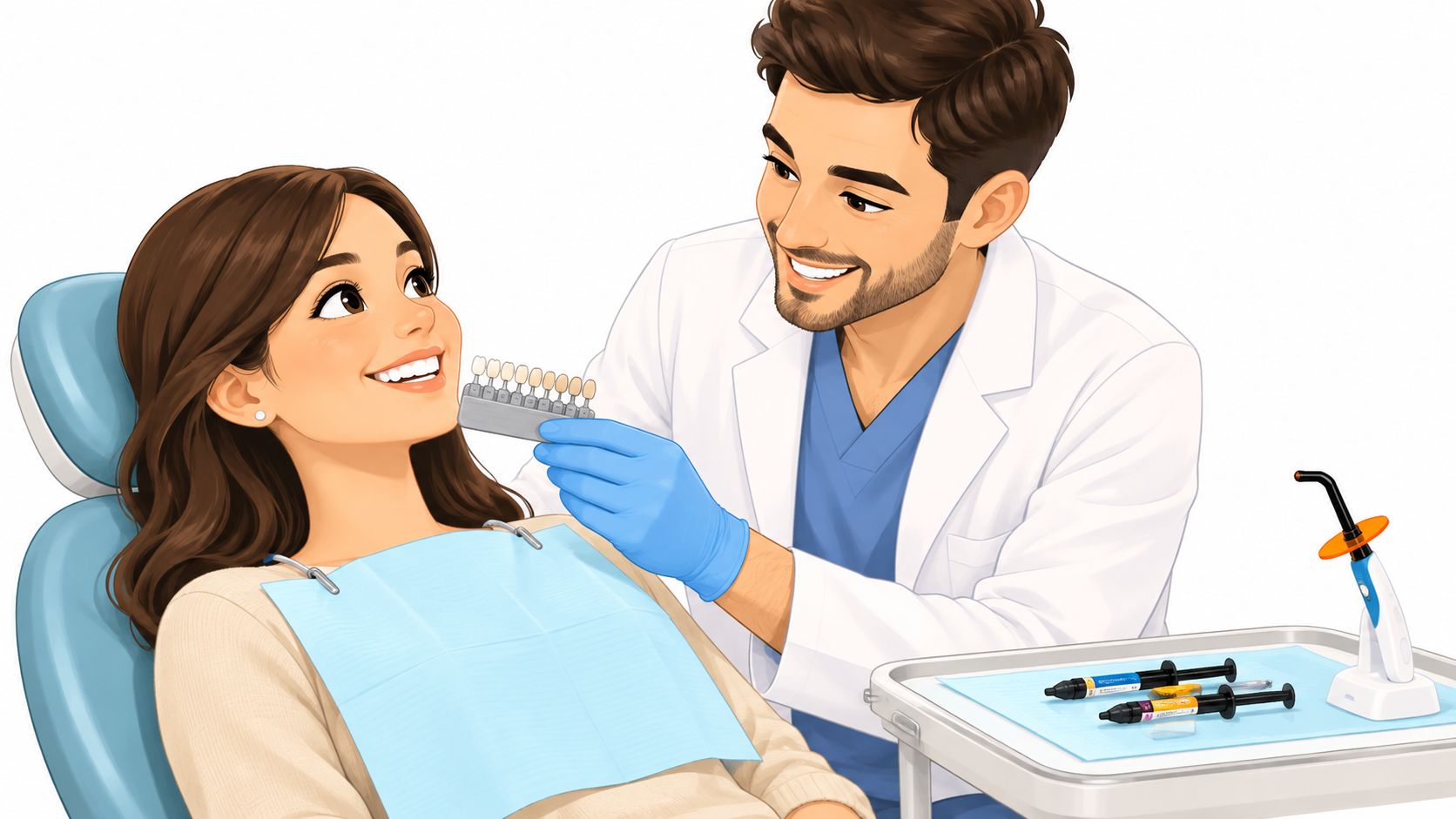
You sit down with your dentist and talk about what you'd like to change. If bonding seems suitable, you'll compare shades so the resin blends with your natural teeth. The dentist may also check how your teeth meet when you bite, because the bite affects where the new material can safely sit.
How the resin is placed
The tooth surface is prepared so the resin can attach. Your dentist applies the composite, shapes it to fill a small chip or adjust the tooth's outline, and hardens it with a curing light. The final step is smoothing and polishing the surface so it feels comfortable and looks at home beside nearby teeth.
Bonding uses a tooth-colored composite resin that attaches to the tooth through a prepared adhesive interface. Because it bonds to tooth structure, it can often be placed with less removal of healthy tissue than treatments that depend more on mechanical retention, as described in this patient guide to composite restorations.
Why this differs from a veneer or crown
Bonding is usually an additive procedure: the dentist adds and shapes material directly on the tooth rather than cementing a lab-made piece over it. That's one reason a small chip, short gap, mild discoloration, or uneven edge may be a reasonable bonding concern. The amount of preparation varies, and a tooth that has decay or weakened structure may need a different approach.
The appointment is often completed in one sitting, and numbing may not be needed, though the decision depends on the tooth and the work being done. The practical point is that a small cosmetic change can often be addressed without a more extensive restoration, but your dentist should first check that the tooth and bite can support it.
How the Bonding Material Sticks to a Tooth
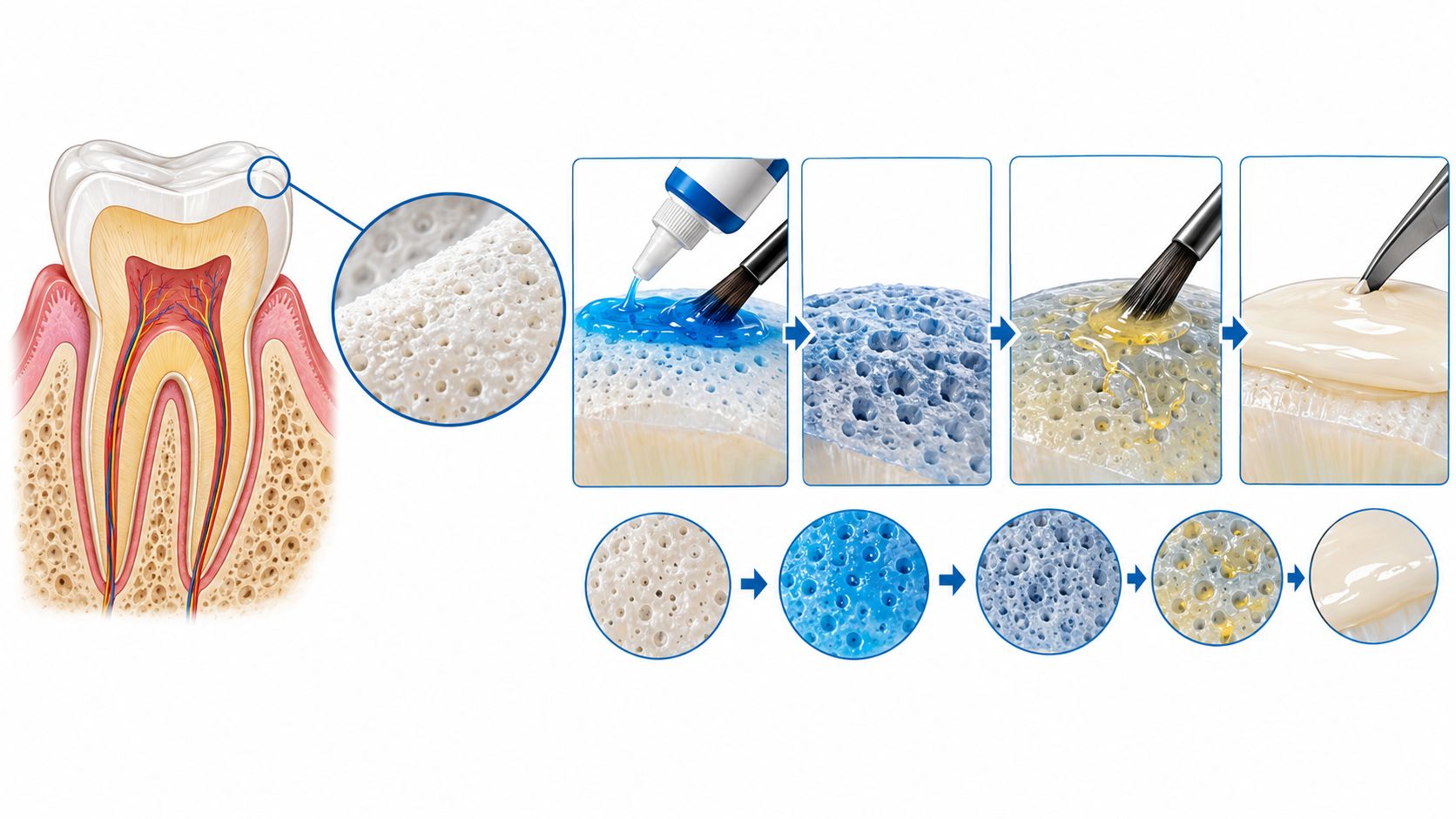
The word "bonding" can make the procedure sound like glue on a tooth. The attachment relies on something more precise: a carefully prepared surface and an adhesive layer that connects the tooth to the composite. A useful comparison is Velcro. One side needs the right texture for the other to grip, and conditioned enamel gives the resin thousands of microscopic holds to lock into.
The core idea dates to 1955, when American dentist Michael Buonocore published a study showing that treating enamel with 85% phosphoric acid for 30 seconds made it more receptive to acrylic resin. The acid created tiny irregularities in the enamel surface, and the resin flowed into them and hardened in place. That grip, called micromechanical retention, is still the foundation of adhesive dentistry. Historical reviews identify his publication as the starting point of modern adhesive restorative dentistry, and later Bis-GMA-based composites expanded what direct tooth-colored restorations could do. You can read more about the history in this review of adhesive restorative dentistry.
The interface matters
Modern adhesives build on the same principle, though the exact steps depend on the tooth surface and the adhesive system. Enamel and dentin, the layer beneath enamel, need different conditioning. Guidance commonly places etching times around 15–30 seconds, depending on the substrate and materials used.
Composite is a resin-based material that can include glass particles. The dentist applies it, shapes it, and hardens it with a curing light. As it cures, the material contracts slightly. If stress builds where the tooth meets the resin, the bond becomes more vulnerable to separation, edge leakage, sensitivity, or later decay.
This is why the quality of the interface counts more than picking a shade or brand. The working area has to stay dry, the adhesive has to cover the prepared surface fully, and the margins need a smooth finish rather than an edge that traps plaque.
A well-bonded restoration is also worth thinking of as the start of a pathway rather than a finished fix. Composite can be repaired or re-polished later, which makes bonding more maintainable than treatments that have to be replaced outright. Even the best adhesive work, though, has limits. Repeated heavy biting force can stress the interface over time, so the bond sets the starting point and daily habits shape how long it holds.
Who Is a Good Candidate for Bonding
Bonding tends to suit a small, specific change. It may be considered when a front tooth has a minor chip, when a short space between teeth is the main concern, or when a tooth's edge looks slightly uneven. It can also mask some localized discoloration, although the cause and depth of the color change matter.
A dentist evaluates enamel thickness, existing fillings, and bite contact before recommending bonding, because these factors determine whether composite will hold on your specific tooth. The process is similar to checking the wall before hanging a shelf. The shelf hardware matters less than what it anchors into. Thin or worn enamel gives the material less grip, and an older filling in the same spot changes how the new layer will sit.
When it may not be the right first step
Active decay should be treated before cosmetic work is planned. A tooth with substantial damage or weakened structure may need more support than a thin layer of composite can provide. Bonding also may not be the right solution if the goal is to move teeth, change several teeth extensively, or address a problem that involves the bite.
Habits and bite conditions deserve an honest conversation before treatment. Grinding or clenching, nail biting, chewing hard objects, and heavy contact on the tooth can increase the chance of chips or fractures. If you grind at night, ask how that affects the plan and whether a protective appliance is appropriate. The same is true if you have concerns about gum health or recurring decay. These factors do not always rule bonding out, but they shape whether it becomes a maintainable pathway or a repair that keeps failing.
Families and adults in Santa Ana and nearby Orange County communities, including Costa Mesa, Tustin, Irvine, and Garden Grove, may ask about bonding before an upcoming wedding, graduation, or job interview. A near-term event can shape your timing, but it shouldn't replace an exam. Bonding is most useful for a limited cosmetic adjustment; it doesn't take the place of orthodontic treatment or a restoration designed to cover and protect a more damaged tooth.
Bonding Compared to Veneers and Crowns
Bonding, veneers, and crowns can all change a tooth's appearance, but they don't do the same job. The right choice depends on what's healthy, what needs repair, and how much change you want.
| Option | How Invasive | Typical Lifespan Range | Stain Resistance | Repairability |
|---|---|---|---|---|
| Bonding | Usually the most additive, with little preparation in suitable cases | Commonly about 3–10 years, with individual results varying, as described in this overview of dental bonding | More likely to stain than porcelain | Often repairable or polishable |
| Porcelain veneer | A thin shell covers the front of the tooth; some enamel may need removal | Varies by case and care | Generally more stain-resistant than composite | Repairs and replacement depend on the damage and restoration |
| Dental crown | Covers the whole tooth and generally requires more preparation | Varies by case and care | Depends on the crown material and margins | May require more extensive treatment if damaged |
What each option preserves
Bonding adds composite to the tooth and can be a conservative choice for a small chip or a modest contour change. Its trade-off is that the material may stain, wear, or chip and may need maintenance.
Veneers are thin shells placed over the front surface of teeth. They may suit broader changes to color or shape, but placement typically involves removing some enamel. Because that preparation changes the tooth, choosing veneers calls for careful discussion of the goals and future maintenance.
Crowns cover the entire tooth rather than only its front surface. A dentist may consider a crown when a tooth is heavily damaged and needs more coverage and support than bonding or a veneer can provide. A crown isn't merely a more durable cosmetic upgrade; it is a different kind of restoration for a different condition.
Some people consider bonding as a conservative first step before deciding whether they want a larger change. It's important not to treat that as a trial with no consequences, since the dentist still needs to assess the tooth and the result may require upkeep. A good recommendation should reflect the condition of your tooth and bite, not assume porcelain is automatically preferable or that bonding fits every case.
How Long Bonding Usually Lasts and Why
There isn't one reliable lifespan that applies to every bonded tooth. A small restoration on a tooth with light bite contact faces different demands from a large restoration on a front tooth that takes force when you bite. In a systematic-review summary, reported survival for direct anterior composite restorations ranged from 28.6% to 100%, and annual failure rates ranged from 0% to 27.11% across studies. A separate review of composite laminate veneers reported pooled survival of 88%, with a 95% confidence interval of 81%–94%. These findings come from varied restorations and study conditions, so they aren't a personal forecast. The systematic-review summary on composite bonding gives that broader context.
How a bonded tooth can change over time
Consider a person who has a small chip repaired. The tooth may look and feel natural at first, then develop a tiny rough edge after repeated use. A dentist might be able to smooth and polish that spot, or recommend a repair if material is missing. Later, staining near the margin may prompt an assessment, but discoloration by itself doesn't confirm decay.
Fracture is a leading reason direct composite restorations fail. Other influences include the adhesive technique, the size and location of the restoration, the composite formulation, and whether the work is a replacement. Bruxism, high chewing stress, and habits such as biting nails can add force that makes the material more likely to chip.
Think maintenance, not a countdown. A bonded tooth may need a polish, a small repair, or eventually a replacement. A change doesn't automatically mean the original decision was a failure.
Composite can often be repaired rather than removed completely, which may preserve more of the tooth. The possibility of repair is one reason to plan bonding as ongoing care, and to contact your dentist if an edge changes or a margin becomes rough.
Daily Habits That Make Bonding Last Longer
Your daily habits can influence how bonding looks and how well it holds up. Composite can pick up stains over time, and its surface may not resist discoloration as well as porcelain. Coffee, tea, red wine, and tobacco are common sources of staining exposure, especially when they're frequent parts of your routine.
Biting habits can be just as important as food and drink. If you grind or clench, mention it at your appointment. Nail biting, chewing ice, or using your teeth to open packaging puts force on the bonded area that your dentist can't account for by selecting a shade or shaping the resin.
Clinical reviews report annual failure rates of approximately 1%–5% for anterior direct composite restorations. Some long-term data report roughly 90% survival at 10 years for Class IV anterior restorations and 95% for Class III restorations, though results vary with the case and follow-up. Those figures describe groups, not a prediction for any one person, as explained in this clinical review of anterior composite restorations.
A practical care routine
- Brush gently. Use a soft-bristled toothbrush and avoid aggressive scrubbing at the edges of the restoration.
- Ask about toothpaste. Your dentist can help you choose a non-abrasive option if you're concerned about surface wear or polish.
- Protect the bite. If you grind, ask whether a night guard makes sense for you. Don't assume that a guard is needed or suitable without an assessment.
- Keep routine appointments. Your dentist can check the margins, clean the teeth, and polish the composite when appropriate.
- Report changes early. A new chip, rough edge, or stained margin deserves a professional look. A stain isn't necessarily decay, but an exam can help distinguish the two.
Bonding's service life depends on both the dentist's technique and the forces and care the tooth faces afterward. A few manageable habits and timely follow-up may help you avoid leaving a small issue unexamined.
Deciding if Bonding Is the Right Move for You
Bonding isn't automatically temporary, and porcelain isn't automatically the better choice. The useful question is whether the material and treatment fit your tooth, bite, and expectations. If you assume bonding will never need attention, you may be disappointed; if you assume it can't be maintained, you may overlook a conservative option.
Ask yourself three questions
What change are you hoping to make? A small chip, short gap, or minor contour adjustment may be a bonding conversation. A larger change in shape or color may call for a discussion of veneers or another approach. If the concern is tooth position, orthodontic treatment may be more appropriate than adding material.
How much healthy tooth structure is available? The dentist needs to check for decay, cracks, and weakened areas. A tooth that needs more coverage may require a different restoration than a small cosmetic addition.
What demands will the tooth face? Grinding, clenching, nail biting, and strong bite contact can affect whether bonding is a sensible fit and what protective steps may help. Be candid about these habits, even if they seem unrelated to your smile goal.
If bonding chips, a repair may be possible without replacing the entire restoration. Research summarized in a systematic review found that combining mechanical surface treatment with chemical adhesive agents improves repair bond strength, and acceptable repairs can often be done with routine clinical equipment. That supports viewing bonding as a maintainable pathway, while recognizing that the repair options differ from those for ceramic restorations. Learn more in this review of composite repair techniques.
An in-person exam is the way to find out what suits your tooth and bite. Patients in Santa Ana and nearby Orange County communities can discuss their goals with Dr. Andrew Finley at Bristol Dental & Orthodontics, and ask for the available options without pressure.
Bristol Dental & Orthodontics offers cosmetic dentistry and can assess whether bonding is appropriate for a chipped, uneven, or discolored tooth. If you're in Santa Ana or the surrounding Orange County area, visit Bristol Dental and Orthodontics to schedule a consultation with Dr. Andrew Finley and discuss a plan designed for your tooth, bite, and goals.