
You're brushing your teeth, glance in the mirror, and notice one front tooth sits a little forward. Or maybe your child smiles and you see the adult teeth coming in at different angles. That moment often leads to the same question: what causes crooked teeth?
It's a fair question, and a reassuring one to answer. Crooked or crowded teeth usually don't happen because someone did something “wrong.” In many cases, they develop from a mix of inherited traits, childhood habits, growth patterns, and changes in oral health over time.
Table of Contents
- A Common Question for Santa Ana Families
- The Genetic Blueprint for Your Smile
- How Childhood Habits Shape a Smile
- Other Factors That Can Shift Your Teeth
- Modern Solutions for a Straighter Smile
- When to See Your Santa Ana Dentist
A Common Question for Santa Ana Families
If you're a parent watching new teeth come in, or an adult wondering why your smile looks more crowded than it used to, you're in very good company. This is one of the most common concerns families bring up in a dental chair.
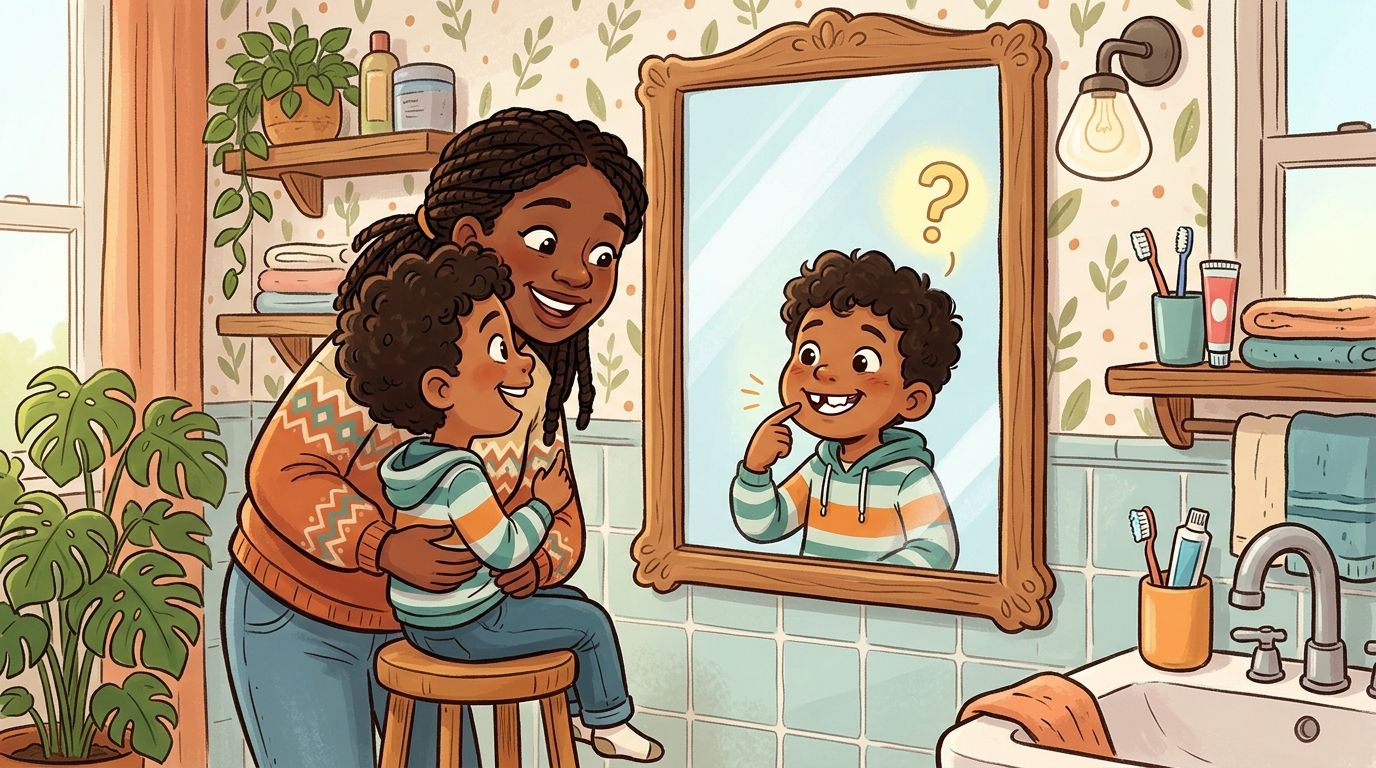
Crooked teeth are also much more common than many people realize. Research indicates that over half of children and adolescents are affected by some degree of malocclusion, and a 2020 evidence overview reported that more than 50% of children and teenagers in Germany alone present with misaligned teeth or jaws (InformedHealth evidence overview).
That matters because it helps remove the shame from the conversation. A crooked smile isn't unusual, and it isn't automatically a sign of poor brushing or poor parenting. It's often part of how the teeth, jaws, and muscles develop together.
What people usually mean by crooked teeth
Some people use “crooked teeth” to describe obvious crowding. Others mean gaps, a deep overbite, an underbite, or front teeth that twist as they come in.
In plain language, crooked teeth usually involve one or more of these patterns:
- Crowding means there isn't enough room for teeth to line up neatly.
- Spacing means there are noticeable gaps between teeth.
- Rotation means a tooth turns instead of facing forward.
- Bite misalignment means the upper and lower teeth don't fit together the way they should.
Crooked teeth are often a growth and alignment issue, not just a cosmetic issue.
Why the cause matters
Knowing what causes crooked teeth helps answer a second question that patients often ask right after it. Can anything be done about it, and when should treatment start?
The answer depends on the reason behind the misalignment. A child with a thumb-sucking habit may need a very different plan from an adult whose teeth shifted after gum disease or a missing tooth. That's why a good evaluation looks beyond the mirror and asks what is pushing, pulling, or crowding the teeth in the first place.
This article has been reviewed by Dr. Andrew Finley before publication so families can get a clear, patient-friendly explanation grounded in current dental understanding.
The Genetic Blueprint for Your Smile
For many people, the biggest part of the answer to what causes crooked teeth is genetics. You can think of heredity as the blueprint your body uses to build your smile.
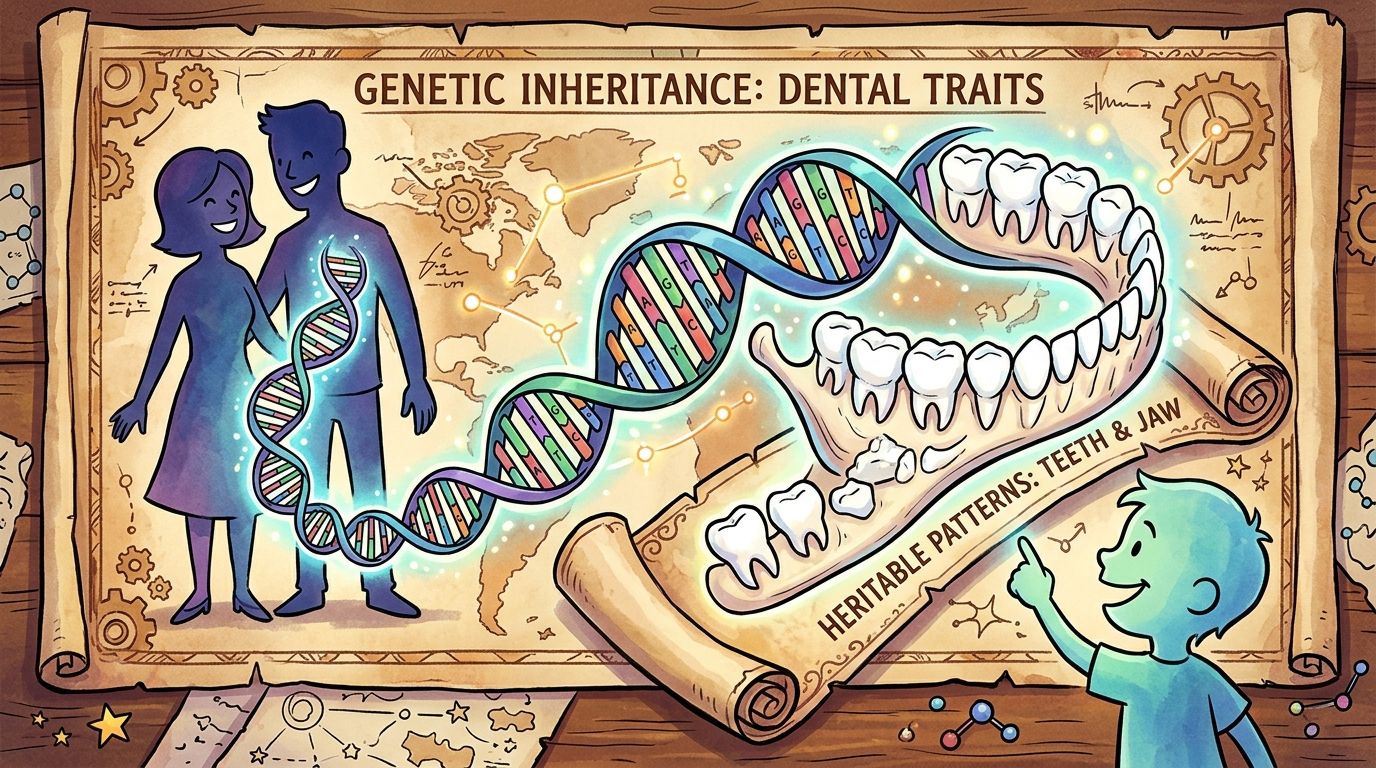
That blueprint can influence jaw size, jaw shape, tooth size, and the way the upper and lower arches meet. If those pieces fit together well, teeth often have an easier path into place. If they don't, crowding or bite problems become much more likely.
Why family history matters
Genetic factors play a central role, with many individuals inheriting traits such as smaller jaws or larger teeth from parents. Characteristics like overbites, underbites, and jaw size are often inherited, so a family history of crooked teeth increases the likelihood that a child will also develop misaligned teeth.
Here's the simplest way to picture it. If a child inherits a smaller jaw from one parent and larger teeth from the other, the result can be like trying to fit large books onto a short shelf. The books aren't the problem, and the shelf isn't the problem. The mismatch is the problem.
That mismatch can show up as:
- Front teeth overlapping because there isn't enough space
- Teeth erupting at angles because they have to find room wherever they can
- Overbites or underbites because the jaws relate to each other differently
- Uneven spacing if some teeth are smaller or the arch shape is different
Why modern jaws and teeth don't always match
There's also a broader biological story behind crowded smiles. Historical and biological research suggests that as human diets shifted toward softer, more processed foods, jaw size gradually reduced while tooth size stayed relatively constant. That mismatch helps explain why some degree of tooth misalignment is so common, and one summary notes that roughly 90% of people have some degree of tooth misalignment, while between 10% and 20% have severe malocclusion requiring orthodontic treatment (discussion of evolutionary and dietary influences).
You don't need to be an anthropologist to understand the takeaway. If the jaw develops a bit smaller but the teeth still come in at their usual size, something has to give. Teeth may rotate, overlap, or push outward.
Practical way to think about it: genetics loads the moving truck, and the jaw determines the size of the garage.
This is why even children with good home care can still develop crooked teeth. Brushing and flossing are essential for healthy teeth and gums, but they don't change inherited jaw shape or tooth size.
How Childhood Habits Shape a Smile
Genetics may set the stage, but daily habits can change the direction of development while a child is growing. Teeth don't just appear in place. They respond to pressure, posture, and the surrounding muscles over time.
A useful comparison is a young tree tied gently in one direction. One tug doesn't change much. A light force, repeated day after day, can gradually influence how it grows.
Small pressures add up over time
One of the clearest examples is non-nutritive sucking. Prolonged thumb sucking beyond age 3 years or pacifier use beyond 36 months has been associated with significantly higher rates of anterior open bite and Class II malocclusion, with odds ratios ranging from 2.2 to 3.5 in longitudinal pediatric studies (Bupa overview of crooked teeth causes).
That sounds technical, so let's make it plain. When a thumb or pacifier rests against the front teeth and roof of the mouth over long periods, it can encourage the upper front teeth to tip forward and the bite to open in front. The teeth are reacting to steady pressure.
Mouth posture matters too. Chronic mouth breathing can affect how the tongue rests and how the jaws develop. Parents who want a broader understanding of breathing patterns may find this resource helpful: Improve breathing for overall wellness.
Common habits and their dental impact
| Habit | Potential Impact on Teeth | Age of Concern |
|---|---|---|
| Thumb sucking | Can push front teeth forward and contribute to an open bite | More concerning when it continues beyond age 3 |
| Pacifier use | Can influence the bite and front tooth position over time | More concerning beyond 36 months |
| Tongue thrust | Can place repeated pressure on front teeth during swallowing | Important during active growth years |
| Chronic mouth breathing | Can affect tongue posture and facial development patterns | Important when it becomes a long-term pattern |
Children also swallow thousands of times over the course of daily life. If the tongue pushes forward against the front teeth again and again, that repeated pattern can gradually encourage teeth to move. Parents are often surprised by this because the force doesn't have to feel strong to matter.
A few signs are worth paying attention to at home:
- Front teeth starting to flare instead of growing straight
- A visible gap when back teeth touch and front teeth don't
- Open-mouth posture during rest or sleep
- Speech patterns that suggest tongue pressure against front teeth
Early habit changes are often simpler than later orthodontic correction.
If a child still sucks a thumb, uses a pacifier well past the toddler years, or seems to breathe through the mouth most of the time, it's smart to bring it up during a dental visit. In many cases, identifying the pattern early gives families more options and may reduce the need for more involved treatment later.
Other Factors That Can Shift Your Teeth
Not all crooked teeth begin in childhood. Teeth can also move later in life when the support around them changes or when outside forces disrupt a stable bite.
That surprises adults who say, “My teeth used to be straight enough. Why are they shifting now?” The short answer is that teeth sit in living bone and gum tissue, not concrete.
Changes that happen after childhood
Facial or jaw trauma, severe periodontal disease from poor dental hygiene, and long-term nutritional deficiencies can all push teeth out of their normal alignment. Periodontal disease weakens the supporting bone and gums around teeth, allowing them to shift or loosen.
Trauma is the most obvious example. A sports injury, fall, or impact to the face can change tooth position directly or alter the way the jaws meet.
Gum disease is quieter, but it can be just as important. If the bone and tissues supporting the teeth weaken, teeth may drift, spread, or feel less stable. Some people first notice this as a small new gap or a lower front tooth that suddenly looks crooked.
Why missing teeth and breathing issues matter
When a baby tooth is lost too early, or an adult tooth is removed and not replaced, nearby teeth may lean into the open space. That can change alignment gradually and affect the bite above or below it.
For readers who want a simple overview of the kinds of bite and alignment issues orthodontic care may address, what Impact Orthodontics treats in Calgary gives a useful visual summary.
Breathing concerns can also overlap with alignment questions. A narrow bite, long-term mouth breathing, and sleep quality sometimes show up in the same conversation. In some adults, signs like snoring, dry mouth on waking, or restless sleep raise a separate question about whether a sleep screening makes sense. In those situations, a dentist may also discuss oral appliance therapy for sleep apnea as part of a broader health conversation.
Modern Solutions for a Straighter Smile
Once you understand what causes crooked teeth, the next question is usually more practical. What can be done now?
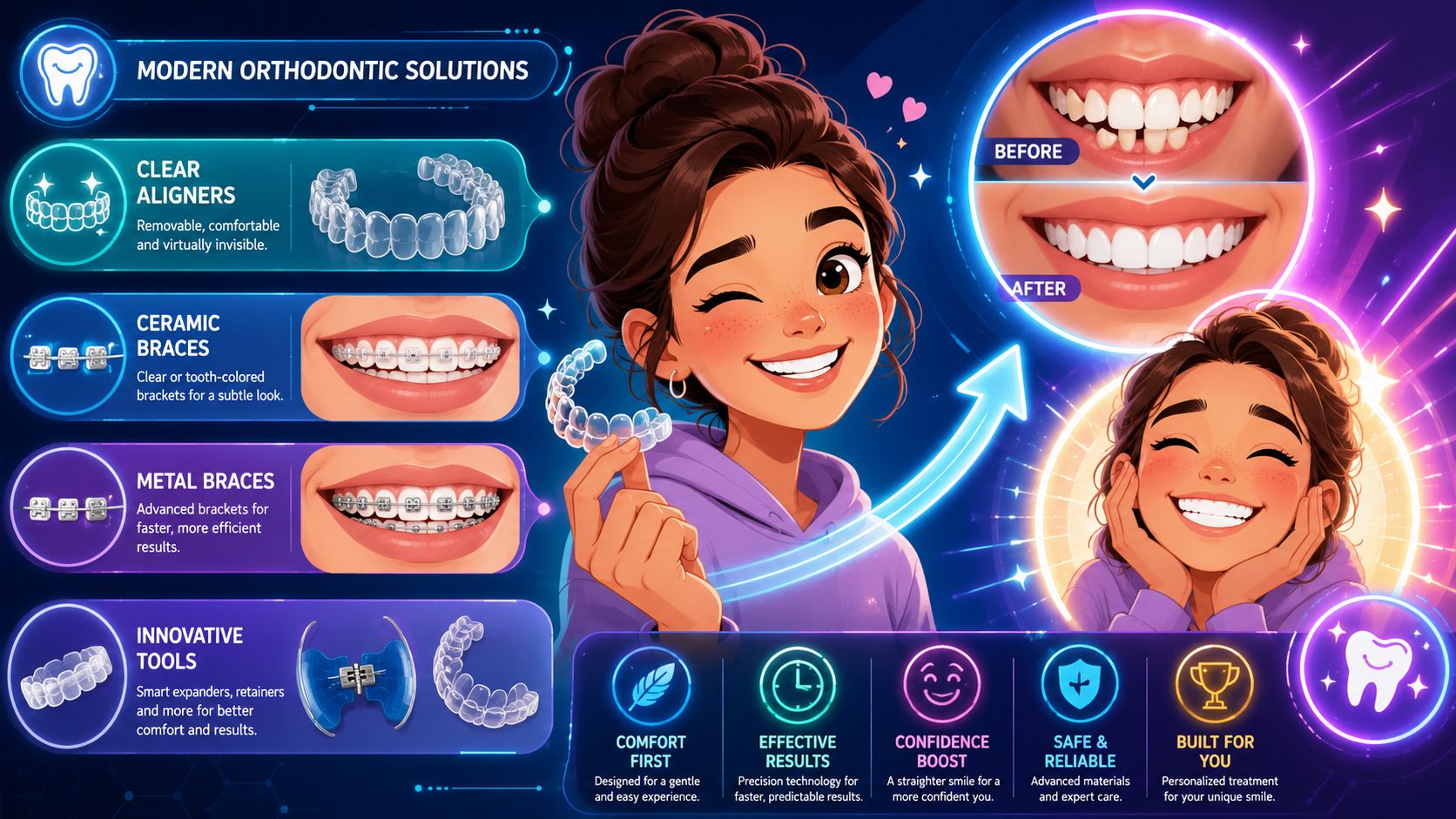
The good news is that modern orthodontic care is more personalized and more comfortable than many people expect. Treatment isn't one-size-fits-all. The right approach depends on whether the main issue is crowding, bite imbalance, relapse, missing teeth, or shifting related to oral health.
How Invisalign and braces move teeth
For many teens and adults, Invisalign treatment is an appealing option because the aligners are clear, removable, and built around gradual tooth movement. Instead of brackets and wires, patients wear a series of custom trays that apply gentle pressure in planned stages.
That makes Invisalign especially attractive for people who want a lower-profile option for work, school, or social settings in Santa Ana and nearby Orange County communities. It can also make brushing and flossing easier than fixed appliances for many patients, since the trays come out for meals and home care.
Traditional braces are still an excellent tool in the right case. Some bite problems, rotated teeth, or more complex movements may respond better to braces because they give the dentist or orthodontic team very direct control over how each tooth moves.
For a general patient-friendly overview of different straightening approaches, Dental Professionals of Fair Lawn's straightening options can help readers understand why one method may fit one smile better than another.
The best treatment is the one that matches the cause, the bite, and the patient's daily life.
When a full-mouth plan makes more sense
Sometimes straightening alone isn't the whole answer. If a tooth is missing, the surrounding teeth may have drifted into that space. In that situation, treatment may involve first creating room and then restoring the missing tooth with a stable replacement such as a dental implant.
In other cases, people seek treatment partly because crooked teeth affect how their smile looks in photos or at work. That's where cosmetic dentistry options may become part of the discussion, especially after alignment improves tooth position.
A few patients come in because a sudden shift follows an accident, a broken tooth, or pain. If alignment changes after trauma or severe discomfort, emergency dental care may be the first step before any orthodontic planning happens.
No treatment should be presented as a guarantee, because every smile responds differently. Still, today's options are flexible enough that many patients can address both function and appearance in a way that feels more manageable than they expected.
When to See Your Santa Ana Dentist
The right time to get crooked teeth evaluated is usually earlier than people think, but that doesn't mean treatment has to begin right away. Sometimes the smartest first step is checking growth, watching a habit, or documenting a shift before it becomes harder to correct.
For children, many orthodontic concerns are easiest to spot while the mouth is still developing. For adults, it's never “too late” to ask why teeth are moving or whether a straighter bite could improve comfort, cleaning, or confidence.
Signs it's worth getting checked
You don't need to wait for severe crowding to ask questions. A consultation is reasonable if you notice any of the following:
- Teeth overlapping or erupting out of position as adult teeth come in
- Difficulty chewing or biting comfortably
- Speech changes that seem related to tooth position
- New gaps or shifting that weren't there before
- Self-consciousness about your smile, especially in photos or at work
- Snoring, dry mouth, or mouth breathing that may belong in a wider conversation about bite and airway health
Children are often screened around age 7 so providers can spot developing issues while the jaws are still growing. That doesn't mean every 7-year-old needs treatment. It means some problems are easier to guide early than to fix later.
A calm next step for Orange County families
For families in Santa Ana, Costa Mesa, Tustin, Irvine, and Garden Grove, the most helpful visit is usually a straightforward one. The goal is to understand the cause, the timing, and the options.
If you're concerned, you don't need to decide on treatment before you have answers.
A good consultation should leave you knowing whether the concern is mainly genetic, habit-related, health-related, or part of a broader bite issue. From there, you can weigh whether monitoring, habit correction, Invisalign, braces, restorative treatment, or airway-focused care makes sense for your specific case.
Every smile is different, which is why individualized guidance matters. If you're wondering what's causing crowding, spacing, or bite changes for you or your child, a professional evaluation is the safest next step.
If you'd like a friendly, no-pressure evaluation, Bristol Dental and Orthodontics in Santa Ana welcomes patients from across Orange County. Dr. Andrew Finley and the team provide family dentistry, Invisalign, cosmetic dentistry, dental implants, sleep apnea oral appliance therapy, and emergency care with a patient-focused approach. Schedule a consultation to talk through your concerns, get clear answers, and learn what options may fit your smile.