
If you're reading this soon after hearing, “It's time to take out the wisdom teeth,” you're probably thinking about two things at once. First, the procedure itself. Second, what the first few days afterward are going to feel like.
That second part is where a lot of anxiety lives. Patients from Santa Ana, Costa Mesa, Tustin, Irvine, and Garden Grove often feel much better once they realize recovery usually goes more smoothly when they prepare before the appointment instead of scrambling afterward. A well-planned Wisdom Teeth Care Package isn't just a collection of soft foods and gauze. It gives you a clear plan for what to use, when to use it, and why it matters.
Table of Contents
- Why a Prepared Recovery Matters
- Your Pre-Surgery Preparation Checklist
- Assembling Your Essential Wisdom Teeth Care Package
- A Day-by-Day Guide to Healing
- Adapting the Kit for Kids Teens and Adults
- Your Long-Term Smile Health Journey
- Frequently Asked Recovery Questions
Why a Prepared Recovery Matters
A lot of people assume wisdom tooth recovery is chaotic. It doesn't have to be. Most patients do better when they know ahead of time where they'll rest, what they'll eat, how they'll manage swelling, and what items they'll need within arm's reach.
That preparation matters because wisdom tooth removal is extremely common. Approximately 10 million wisdom teeth are removed annually in the United States, affecting roughly 5 million Americans each year, and it's especially common in the late teens and early twenties, according to wisdom teeth removal statistics in the United States. In other words, if this is on your calendar, you're not dealing with something unusual.
What I've seen in practice is simple. The patient who plans ahead usually feels more settled than the patient who goes home with no ice packs ready, no soft food in the kitchen, and no idea when to start rinsing or brushing.
Practical rule: The best care package removes decisions when you're tired, sore, or still numb.
A prepared recovery also helps family members. Parents caring for a teen want a checklist. Adults managing their own recovery want to know what's worth buying and what usually sits unused. A thoughtful setup lowers stress for everyone in the house.
Here's the key trade-off. You can either spend a little time organizing before surgery, or you can try to solve small problems while you're swollen and uncomfortable. You would likely prefer the easy planning in advance.
Your Pre-Surgery Preparation Checklist
The week before surgery is the right time to make recovery easier. Don't wait until the night before.
Get the logistics settled
A smooth recovery starts with practical details.
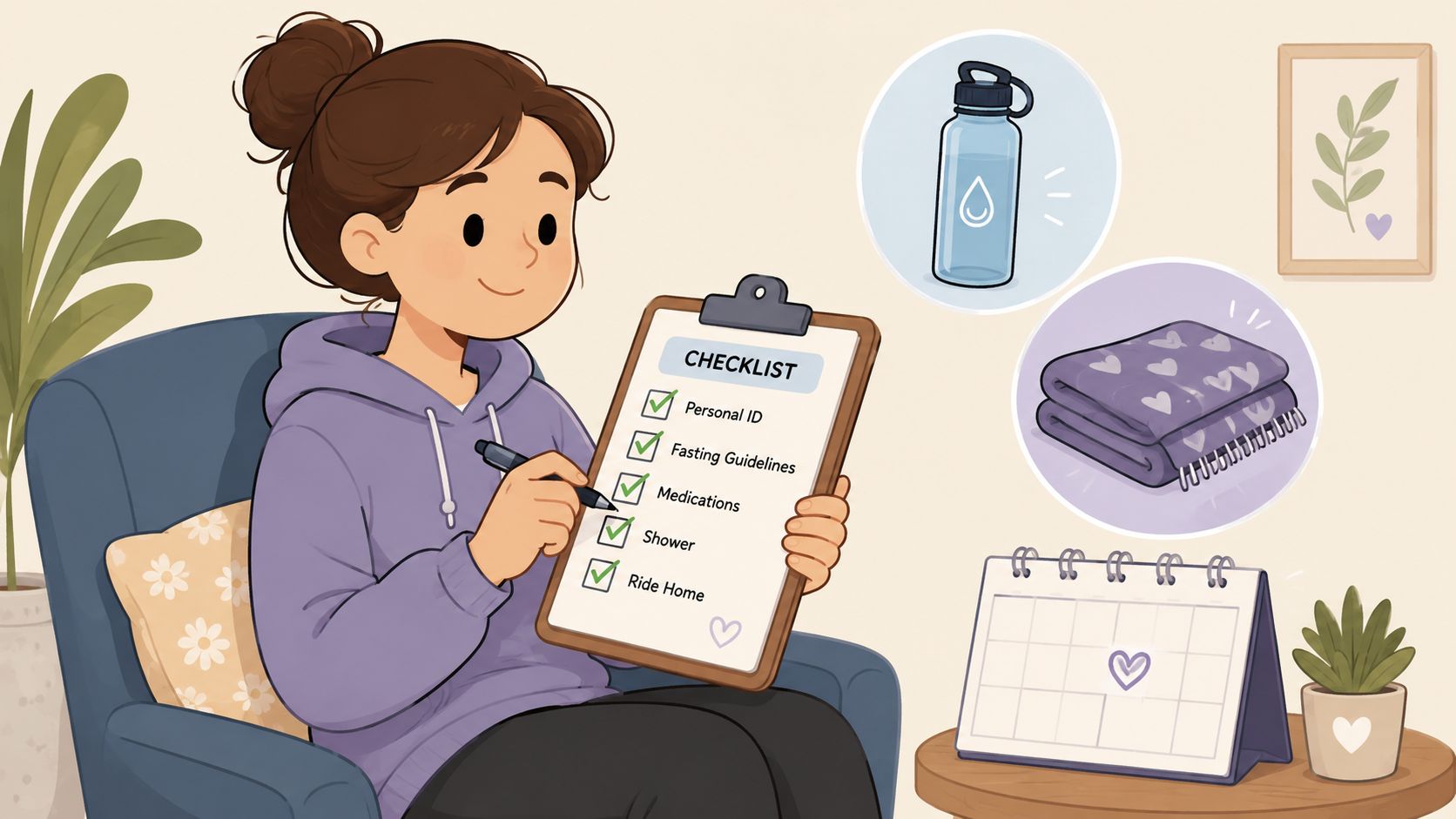
- Arrange a ride home: If you'll be sedated, have a responsible adult ready to drive you home and stay with you as instructed.
- Clear your schedule: Give yourself real rest time from work, school, sports, or errands so you're not tempted to push too soon.
- Pick up instructions and medications early: If Dr. Finley has prescribed anything or given specific directions, have those in hand before the appointment day.
- Set up your recovery spot: Put pillows, water, tissues, lip balm, chargers, medications, and entertainment in one place.
Shop before the procedure
The grocery run matters more than people expect. You'll be much more comfortable if your kitchen is already stocked with foods that are easy to eat without much chewing.
A good pre-op shopping list usually includes yogurt, applesauce, pudding, broth, eggs, mashed potato ingredients, oatmeal, smoothies that can be eaten with a spoon, and other soft options your body tolerates well. Keep meals simple. Recovery isn't the time to experiment with spicy, crunchy, or messy foods.
The best grocery list is the one you'll actually use when your mouth feels sore and opening wide is annoying.
Prepare your home for rest
Small adjustments make the first evening easier.
- Keep extra pillows ready: Sleeping with your head propped up can make the first few nights more manageable.
- Freeze ice packs in advance: Don't assume you'll remember later.
- Choose easy clothes: A loose top and comfortable layers help on procedure day.
- Tell school or work what you need: It's easier to request recovery time before the appointment than after symptoms start.
If you're unsure what your specific procedure will involve, it's worth asking for clarification during your consultation so you know how to plan realistically.
Assembling Your Essential Wisdom Teeth Care Package
You get home after surgery, your mouth is numb, and the last thing you want to do is search drawers for gauze or wonder what you can eat. A well-built Wisdom Teeth Care Package removes that friction. It puts the right item in reach on the day you need it, for the reason you need it.
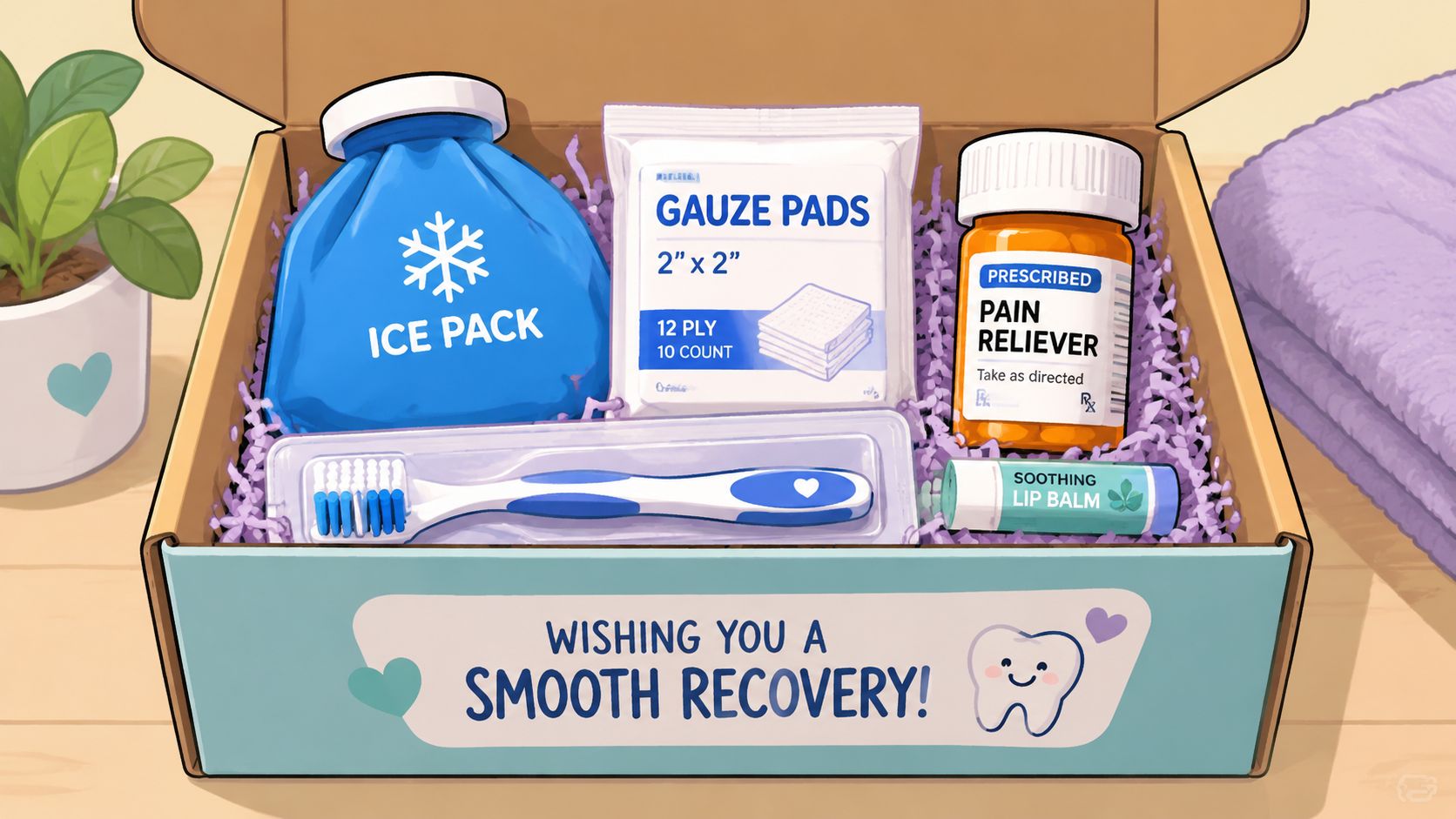
The goal is simple. Protect the blood clot early, limit swelling during the first couple of days, keep eating and drinking manageable, and make gentle hygiene easier once your surgeon says it is time. Patients do better when the kit matches the timeline, not just a generic shopping list.
Pack for the recovery timeline
I tell patients to build this kit in layers.
Day 0 to Day 1 items should be the easiest to grab because that is when bleeding control, cold therapy, and rest matter most.
Day 2 to Day 3 items should support hydration, low-effort meals, and careful cleaning as soreness and stiffness peak.
Day 4 and after items should help you transition toward more filling soft foods and a more normal routine without pushing too fast.
That structure lowers stress. It also cuts down on common mistakes, like trying to eat foods that require too much chewing or realizing too late that there is only one ice pack in the freezer.
For families mailing support from a distance, comfort extras can still make the package feel personal. A note, soft socks, or other thoughtful gifts with Canadian flair fit well alongside the practical recovery supplies.
What belongs in the kit and why
| Category | What to include | When you will use it | Why it helps |
|---|---|---|---|
| Bleeding control | Gauze pads | Day 0, sometimes into Day 1 | Gentle pressure helps manage oozing right after surgery |
| Swelling support | Two or more cold packs, cloth barrier | Day 0 to Day 2 | Cold helps limit early swelling and can reduce soreness |
| Mouth care | Salt, small cup, soft toothbrush | Usually after the first day, as directed | Supports gentle cleaning without disturbing tender areas |
| Food and hydration | Water bottle, broth, yogurt, applesauce, pudding, oatmeal, eggs, mashed potatoes | Day 0 through the first week | Soft textures let you eat and drink with less jaw effort |
| Comfort items | Lip balm, tissues, extra pillows, medications, entertainment | Day 0 onward | Small comforts make resting easier and help you stick to recovery instructions |
A few items deserve extra attention.
- Gauze: Keep more than you think you will need. The first evening is smoother when clean gauze is already set out and easy to change.
- Cold packs: Two or three are more practical than one. One can be in use while the others refreeze.
- Lip balm: Dry lips are common after surgery because the lips are stretched during treatment and many patients breathe through the mouth afterward.
- Soft toothbrush: You will not use it aggressively at first, but having one ready helps you restart oral hygiene gently when instructed.
- Pillows: Head elevation helps many patients rest more comfortably, especially the first night or two.
Build the food side strategically
Food should match how your mouth feels on that day. If chewing makes your jaw tired, your cheeks sore, or the extraction area throb, the texture is too advanced.
A smarter package includes a progression:
- First 24 hours: Broth, yogurt, pudding, applesauce
- Days 2 to 3: Oatmeal, mashed potatoes, scrambled eggs, smooth soups
- Days 4 to 7: Soft pasta, rice dishes, flaky fish, other foods that break apart easily
That progression matters because recovery is rarely limited by hunger. It is limited by mouth opening, tenderness, and how much chewing the area can tolerate without getting irritated.
One practical note. If you need guidance about whether your wisdom teeth should be monitored or removed, Bristol Dental & Orthodontics provides consultation and evaluation for wisdom teeth as part of broader family and cosmetic dental care.
A Day-by-Day Guide to Healing
Recovery feels less stressful when you know what each stage is for. The key is matching the right item to the right day instead of doing too much too soon.
Day 0 and Day 1
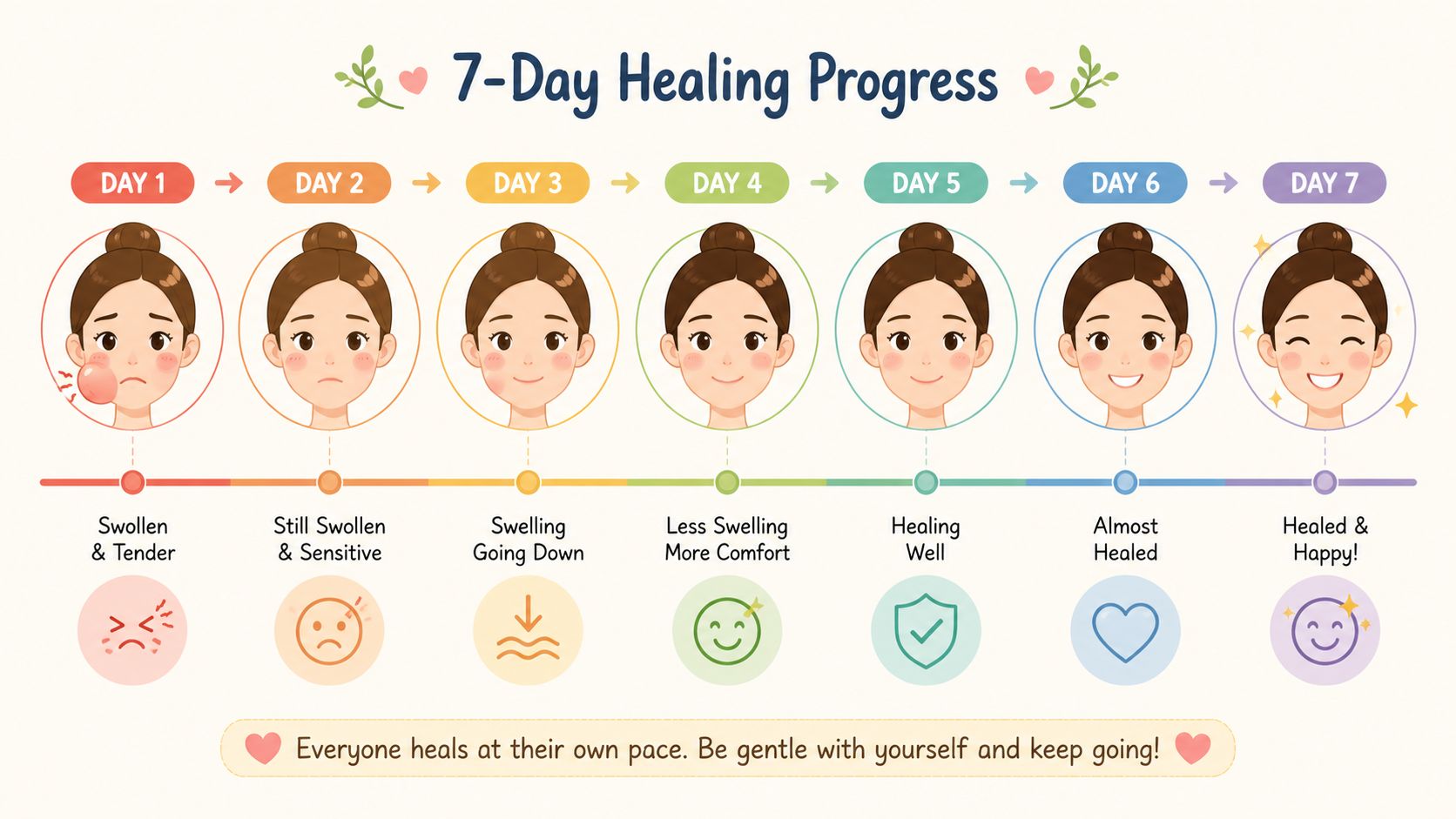
The first day is about protecting the blood clot and controlling swelling. Keep things quiet and simple. Rest, use gauze as instructed, stay hydrated, and stick with very soft or liquid foods that don't require much mouth movement.
Post-operative recovery typically takes about two weeks for most healing to occur, and patients are usually ready to resume nearly normal foods by the end of week 2, based on guidance for eating after wisdom tooth removal. That same guidance notes avoiding straws for at least one week, using ice packs in intervals during the first day, and avoiding brushing, rinsing, or spitting for the first 24 hours.
A useful day-one checklist looks like this:
- Use cold support: Apply ice on and off through the first day as instructed.
- Eat low-effort foods: Yogurt, applesauce, broth, pudding, or other spoon-friendly choices are usually easier than anything chewy.
- Keep your head raised: Resting flatter than necessary often feels worse.
- Skip the straw: Suction is one of the easiest ways to irritate the healing site.
Day 2 and Day 3
This is the stage when patients often get overconfident. They feel a little better, then try chips, toast, or a workout. That's usually a mistake.
Warm salt water rinses should start only after the first 24 hours, and for lower extraction sites, gentle irrigation with a syringe should begin on the third post-operative day to help clear debris and prevent infection-related problems that can account for 40 to 60% of post-extraction complications if debris is left unaddressed, according to this clinical wisdom teeth care protocol.
Don't treat day three like you're done healing. Treat it like you're entering the part of recovery where technique matters more than willpower.
At this point, your care package should shift:
- Salt and a cup become useful: Mix warm salt water only when your instructions say it's time.
- Your irrigation syringe matters more: If the lower sites were removed, this becomes part of keeping food out of the area.
- Warm compresses may become more helpful later: Early cold support and later warmth each have their place.
- Food texture can advance slowly: Move up only if chewing doesn't leave the jaw tired.
Day 4 through Day 7
Most patients start feeling more functional here, but the mouth still needs respect. Hygiene becomes more important, and food choices can widen if they're still soft and easy to manage.
This is a good phase for soft eggs, oatmeal, mashed potatoes, tender pasta, or similar meals that don't involve crunch or aggressive chewing. Keep cleaning gentle. Keep hydration steady. If an area catches food easily, don't poke at it with anything sharp or improvised.
By the end of the week, many people can do much more. That doesn't mean every mouth heals on the same schedule. Follow the instructions you were given, and if something feels off, ask.
Adapting the Kit for Kids Teens and Adults
Not every recovery setup should look the same. A teenager in Garden Grove heading back to school soon may need different support than an adult in Costa Mesa juggling work calls and child care.
What changes by age
For teens, the biggest issue is usually compliance. They may feel better before the mouth is ready for normal habits. Their care package should make the safe choice easier than the impulsive one. Stock foods they already like in soft form, keep the ice packs obvious, and make instructions visible.
Adults often need convenience more than reminders. They're more likely to push through discomfort, talk too much, return to errands too fast, or skip rest because life is busy. For them, the best kit is one that reduces friction. Prepared meals, extra pillows, medications organized in one place, and easy hydration matter more than novelty items.
Sedation discussions can also matter for different age groups. Some patients are mainly nervous about the procedure itself, while others are more concerned about recovery afterward. If anxiety is part of the picture, it's worth discussing comfort options during the consultation instead of waiting until the procedure day.
What stays the same for everyone
Some rules are universal. They're not optional, and they're not age-specific.
Using a straw or smoking within the first few days can increase the risk of dislodging the protective blood clot by 300%, significantly raising the incidence of painful complications like dry socket, based on Cleveland Clinic guidance on wisdom teeth removal and recovery.
That means every age group needs the same core precautions:
- No straws: Even when smoothies sound appealing.
- No smoking or vaping: Healing tissue doesn't benefit from irritation.
- No vigorous exercise too soon: A hard workout can be rough on a fresh surgical site.
- No “test foods” just because you're bored: Crunchy snacks are one of the most common bad decisions in recovery.
A teen's entertainment might be movies and game time. An adult's might be audiobooks and a quiet afternoon. The safety rules don't change.
Your Long-Term Smile Health Journey
Once recovery is underway, it helps to think beyond this one procedure. Wisdom teeth are just one chapter in long-term oral health.

Recovery is one part of the bigger picture
Research points toward a more selective approach to wisdom teeth management, with periodic exams every 6 to 12 months for asymptomatic teeth rather than routine removal in every case, according to this review of trends in third molar management. That matters because it reinforces the value of consistent dental follow-up, not one-time treatment decisions made in isolation.
After healing, many patients start thinking about the next thing they want to improve. Sometimes that's function. Sometimes it's appearance. Sometimes it's comfort during sleep or relief from a dental problem that's been put off.
When to think about next steps
For some Santa Ana patients, the next goal is straightening crowded teeth with Invisalign. Typical Invisalign treatment often falls in the 12 to 18 month range according to an overview of the Invisalign process, though the right timeline depends on the case. Both clear aligners and braces can address crowding, spacing, and several bite issues, as explained in this comparison of clear aligners and traditional braces.
Others may be focused on replacing missing teeth with dental implants, improving confidence with cosmetic dentistry, getting help for snoring or obstructive sleep apnea through oral appliance therapy, or knowing where to turn for emergency dentistry when something sudden happens.
If you're helping a younger patient recover, families sometimes also want medication guidance written in plain language. A practical outside resource is this guide to safe Advil for kids, which can help you ask better questions about age-appropriate pain relief. It doesn't replace your dentist's or physician's instructions, but it can support a more informed conversation.
Frequently Asked Recovery Questions
What does dry socket feel like
Dry socket is usually described as worsening pain after the first few days rather than a steady, gradual improvement. Patients may also notice a bad taste, a bad smell, or pain that seems to radiate. If pain seems to be getting sharper instead of settling down, contact your dental office for guidance specific to your recovery.
When can I go back to school work or exercise
Return timing depends on the procedure and how you're healing, but don't use “I'm bored” as your standard for readiness. Light daily activity is different from a workout, heavy lifting, or a packed school day with a lot of talking and moving around. Ease back in based on your instructions and how your body is responding.
Is bleeding or swelling on day three normal
Some swelling and soreness can still be part of a normal early recovery. Mild oozing can also happen. What matters is the trend. If symptoms are gradually improving, that's reassuring. If swelling, pain, or bleeding seem to be increasing instead of easing, it's time to check in.
Keep asking one question: “Am I improving overall?” Recovery doesn't have to be perfect every hour, but it should move in the right direction.
When should I call the office
Call if you have pain that feels out of proportion, bleeding that doesn't seem to settle, trouble swallowing, difficulty opening your mouth beyond what you were told to expect, or anything else that makes you uneasy. Clear follow-up questions are always better than guessing.
For patients who enjoy learning more about prevention and broader screening, this discussion of important oral health tests can give you useful context for future dental conversations. It isn't a substitute for an exam, but it can help you think more broadly about oral health beyond one recovery period.
Every article on this site is reviewed by Dr. Andrew Finley before publishing so patients receive careful, patient-focused information. If your wisdom teeth are bothering you, or you want to talk through recovery planning, schedule a consultation with Bristol Dental and Orthodontics.