
You're probably here because something small has started to bother you more often. Maybe it's your smile on a video call. Maybe it's a photo from a family event in Santa Ana or dinner in Irvine where your teeth looked more crowded than you remembered. Or maybe you had braces years ago, skipped the retainer, and now you're wondering if it's worth fixing as an adult.
It is a reasonable question. It's also one that many adults ask much later than they wish they had.
Choosing the best braces for adults isn't really about finding one “best” appliance for everyone. It's about matching the treatment to your teeth, your gum health, your workday, and your comfort level. If you commute through Orange County, meet with clients in Costa Mesa, teach, manage a team, travel for work, or just want to keep treatment low profile, those details matter just as much as the orthodontic mechanics.
At Bristol Dental & Orthodontics, adult patients often want two things at the same time. They want straighter teeth, and they want a treatment plan that fits normal life.
Table of Contents
- More Adults Are Straightening Their Smiles Than Ever
- Your Orthodontic Options A Detailed Look
- Comparing Adult Braces Side by Side
- Adult Specific Orthodontic Considerations
- Beyond Aesthetics Which Option Fits Your Lifestyle
- Your Orthodontic Journey What to Expect
- Begin Your Smile Transformation in Santa Ana
More Adults Are Straightening Their Smiles Than Ever

If you've ever thought, “I'm too old for braces,” you're not alone. Adults often put orthodontic treatment off because life is busy, dental care can feel easy to postpone, and many people still think braces are mainly for middle school and high school.
That picture has changed. According to 2024 statistics from the American Association of Orthodontists, approximately 25% to 30% of all orthodontic patients in the United States are adults over age 18, a sign that orthodontics is no longer limited to children and teenagers, as noted in this AAO adult orthodontic overview.
Why adults decide to start now
Some adults want to improve a smile they've never liked. Others notice shifting after years without a retainer. Some are preparing for a wedding, a new role at work, or a major life change. Others are less focused on appearance and more concerned about bite problems, crowding, or cleaning between overlapping teeth.
All of those reasons are valid.
Adults don't need a “good enough” solution. They need a plan that respects both oral health and daily life.
Why this matters in real life
Adult orthodontic treatment is different from teen treatment in one important way. Adults are making the decision themselves. That means they usually think beyond straight teeth. They're also thinking about presentations, dinners out, travel, dating, confidence, and whether treatment will feel manageable.
That's why the best braces for adults usually come down to a few practical questions:
- How visible is it: Will you feel comfortable wearing it at work or socially?
- How much upkeep does it need: Can you keep up with cleaning, check-ins, and wear time?
- How complex is your case: Are you dealing with mild crowding or a more involved bite problem?
- How does it fit your routine: Will your treatment work with meals, meetings, and family life?
For adults in Santa Ana, Tustin, Garden Grove, and nearby Orange County communities, the right choice is often less about trend and more about fit.
Your Orthodontic Options A Detailed Look
A lot of confusion starts with the names. Patients hear “braces,” “clear braces,” and “Invisalign” and assume they all work the same way. They don't. They all move teeth, but they do it with different materials and different day-to-day demands.
Traditional metal braces
Metal braces use small brackets attached to the front of the teeth and a wire that guides tooth movement over time. The system stays in place full time, so you don't have to remember to put it in or take it out.
This is often the most straightforward option mechanically. Because the appliance is fixed, it can be useful when a case needs close control and steady pressure over time.
Adults sometimes worry that metal braces will look bulky. Modern systems are smaller and more refined than many people expect, but they are still visible. For some patients, that's perfectly acceptable. For others, visibility is the main reason they look elsewhere.
Ceramic braces
Ceramic braces work much like metal braces, but the brackets are tooth colored or clear. That makes them less noticeable at conversational distance.
They appeal to adults who want the familiar structure of braces without the stronger contrast of metal on the front teeth. They still use brackets and wires, and they still stay in place continuously.
Ceramic braces can be a helpful middle-ground choice for patients who want a lower-profile look but still need a fixed appliance.
Practical rule: If you like the idea of braces because they're always working, but you'd rather soften the appearance, ceramic braces are often the option adults ask about first.
Clear aligners like Invisalign
Clear aligners move teeth with a series of custom trays that fit snugly over the teeth. Each tray is worn for a set period before moving to the next one, gradually guiding teeth into new positions.
A major difference is removability. Clear aligners like Invisalign are removable, allowing patients to eat, drink, and maintain oral hygiene without obstruction, and they're less noticeable than metal braces, which is one reason many adults prefer them for discreet treatment, according to the Cleveland Clinic explanation of braces and aligners.
That removability is what many adults love most. You can brush and floss normally, and you don't have brackets or wires around meals. But removability also creates responsibility. If you don't wear aligners consistently, treatment can slow down or become less predictable.
Why understanding the system matters
The “best braces for adults” question gets easier once you understand the basic tradeoff.
- Fixed appliances keep working whether you're busy, distracted, or traveling.
- Removable aligners offer flexibility and a discreet look, but they depend more on daily habits.
- Tooth-colored options can reduce visibility while keeping the structure of braces.
If you like reading broader patient-friendly explanations before your consultation, this overview of adult orthodontics in Vancouver gives another easy-to-follow example of how adult treatment choices are commonly framed.
Comparing Adult Braces Side by Side
Once you know what each option is, the next question is simpler. Which one fits you?
The answer usually depends on four things. Appearance, comfort, cleaning, and how much tooth movement your case requires. A patient in Costa Mesa who spends the day in meetings may weigh those factors differently than a parent in Garden Grove who wants the least day-to-day maintenance.
Here's a side-by-side snapshot.
| Feature | Traditional Metal Braces | Ceramic (Clear) Braces | Clear Aligners (Invisalign) |
|---|---|---|---|
| Visibility | Most visible | Less noticeable than metal | Least noticeable for many adults |
| How it works | Fixed brackets and wire | Fixed tooth-colored brackets and wire | Series of removable clear trays |
| Daily routine | Must clean around brackets and wires | Must clean around brackets and wires | Removed for meals and oral hygiene |
| Eating | Food restrictions are common | Food restrictions are common | Remove before eating |
| Comfort feel | Can feel more noticeable in the mouth | Similar brace feel with lower visual contrast | Often preferred by adults who want a smoother feel |
| Best fit for lifestyle | Good for patients who want a fixed system | Good for patients who want fixed treatment with a subtler look | Good for patients who want discretion and flexibility |
| Case complexity | Often used for simple to complex cases | Often chosen when aesthetics matter and treatment needs are suitable | Often preferred for mild to moderate cases, depending on clinical needs |
Comfort and patient experience
For many adults, comfort is a deciding factor. A comparative study found that Invisalign treatment for adults typically reduces the PAR index by 75% after 12 months, with patients reporting 85% high satisfaction versus 65% for braces, and significantly lower discomfort scores of 2.3 versus 5.6 on a 10-point scale, according to this comparative adult orthodontic study in PMC.
That doesn't mean braces are a poor choice. It means adults often experience aligners differently. With braces, you may notice bracket irritation, wire adjustments, and more awareness of the appliance. With aligners, adults often appreciate the smoother surfaces and lower profile.
Appearance and social comfort
Adult priorities become particularly personal. Some patients don't mind visible braces at all. Others know they'll think about them every time they speak in a meeting or smile in a photo.
Ceramic braces can reduce that concern without changing to a removable system. Clear aligners go further in the direction of discretion, which is why many working adults ask about them first.
If visibility is your main concern, clear aligners usually feel easiest to live with. If reliability without daily self-discipline matters more, fixed braces may feel simpler.
Cleaning and maintenance
Braces require more deliberate brushing and flossing because food can collect around brackets and wires. That doesn't make them a bad option. It just means hygiene takes more effort and consistency.
Aligners are usually easier to work into an established routine because you remove them before cleaning your teeth. The tradeoff is that you have to manage the trays carefully throughout the day.
Some adults prefer the structure of fixed braces because there's nothing to remember. Others prefer the freedom of taking aligners out for meals and oral care.
If you want another patient-oriented comparison that looks at the everyday tradeoffs adults consider, this guide to adult teeth straightening is a useful supplemental read.
Adult Specific Orthodontic Considerations
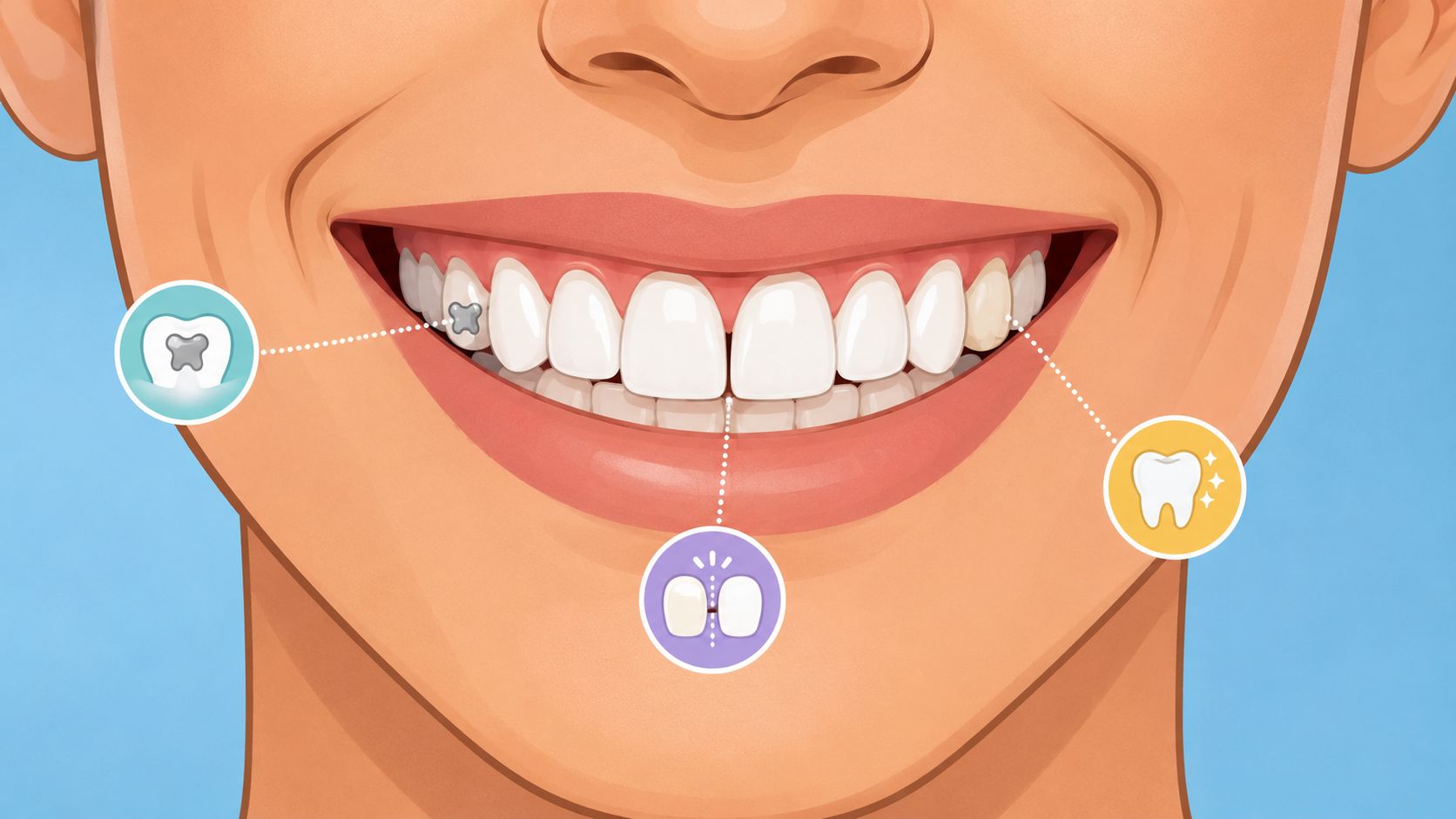
A 35-year-old patient may want the same straighter smile as a teenager, but the starting point is rarely the same. Adult teeth often come with a long history. Fillings, crowns, gum recession, missing teeth, clenching, and past dental work all affect how orthodontic treatment should be planned.
That does not make treatment harder for every adult. It makes the planning more personalized.
Gum health comes first
Teeth move through bone, and the gums help protect that support system. If the gums are inflamed or the bone around the teeth has already thinned, braces or aligners need to be planned with much more care.
A good comparison is renovating a house. You can update what people see, but the foundation has to be stable first. In orthodontics, the foundation is your gum tissue and bone support.
For a patient-friendly explanation of why that matters, this article on preventing bone loss with braces gives a useful overview.
Existing dental work changes what can move
Natural teeth can be guided into a new position. An implant cannot. Crowns, bridges, veneers, and large fillings can also affect how force is placed and which movements are safest.
This is one of the biggest differences between adult orthodontics and teen treatment. Sometimes teeth are straightened first so later restorative work fits better. In other cases, existing restorations need to be protected while the bite is being corrected. If a tooth is missing, the orthodontic plan may also need to leave the right amount of space for future replacement.
That kind of sequencing matters in real life. It can affect treatment length, the type of appliance that makes sense, and how many appointments need to be coordinated around work and family routines.
Adult orthodontic treatment works best when it respects the dental history you already have, not when it ignores it.
Adults often need a wider health review
Adult patients also bring habits and symptoms that change the conversation. Night grinding can place extra stress on teeth during treatment. Jaw soreness may point to bite imbalance. Worn enamel, old restorations, or untreated decay can all shift the order of care.
Some adults come in asking for straighter teeth and learn they also need help with bite function, airway concerns, or restorative planning. That is not a detour. It is part of making sure the final result looks good, feels comfortable, and fits daily life.
For adults in Santa Ana, lifestyle compatibility becomes especially important. A treatment choice has to work with your calendar, your eating habits, your professional responsibilities, and the dental conditions already present in your mouth. The best option is the one that improves alignment safely and fits the life you live.
Beyond Aesthetics Which Option Fits Your Lifestyle
A straight smile matters. But for most adults, the main question is this. How much will treatment interrupt my life?
That concern is common. A 2025 study by the American Academy of Orthodontics found that 42% of adult patients delay treatment because of “social embarrassment” or “inconvenience at work,” as reported in this adult braces lifestyle discussion.
If you spend your day talking to people
A teacher, manager, salesperson, attorney, or anyone who presents often may care most about visibility and speech confidence.
Clear aligners usually appeal to this group because they're subtle. Many adults feel more comfortable wearing them in professional settings than visible brackets. Ceramic braces can also work well if you want a fixed appliance with a softer appearance.
Metal braces may still be the right clinical option for some patients, but adults in public-facing roles often want to talk through the tradeoff between effectiveness and appearance very carefully before deciding.
If your schedule is unpredictable
Travel, long workdays, late dinners, and packed calendars change the equation. Fixed braces can be easier for adults who don't want one more thing to remember. Once they're on, they're on.
Aligners can fit a busy life beautifully if you're organized. But they do ask for routine. You need to remove them for meals, keep track of them, and put them back in consistently. For some adults, that flexibility feels freeing. For others, it feels like one more task in an already crowded day.
Some patients do best with the option that feels most invisible. Others do best with the option they can't forget to wear.
If meals and social events matter to you
Consider a few common situations:
- Business lunches: Aligners give you the ability to remove trays before eating, but you need to handle that discreetly and remember to place them back in afterward.
- Date nights or family dinners: Ceramic braces usually draw less attention than metal, but they still stay visible up close.
- Coffee meetings and long commutes: A fixed system avoids the in-and-out routine. A removable system gives you more control, but only if you stay consistent.
Many adults find their answer not by asking which option looks best in a brochure, but by asking which one fits Tuesday afternoon, airport travel, and dinner with friends in Tustin.
Your Orthodontic Journey What to Expect
Starting treatment feels easier when you know the general path ahead. Most adults don't need a dramatic change in routine overnight. They need a clear process and realistic expectations.
The first phase
Your visit usually begins with an exam, imaging, and a review of your goals. At this stage, your dentist or orthodontic provider looks at alignment, bite, gum health, existing dental work, and whether any treatment should happen before tooth movement starts.
That planning step matters more for adults because prior dental history often affects the timeline and the appliance choice.
The active treatment phase
Once treatment starts, progress happens gradually. For adult orthodontic patients, treatment with any type of brace typically lasts 6 to 12 months for mild cases, 12 to 24 months for moderate cases, and may take 24 to 36 months for severe cases, according to these adult braces treatment timelines.
Those ranges are useful, but they're not a promise for any one person. Tooth movement depends on case complexity, oral health, and how consistently the treatment is followed.
During this phase, adults usually need to adjust habits in small ways:
- Keep appointments consistently: Monitoring matters, even when everything seems to be going smoothly.
- Protect oral hygiene: Clean teeth and healthy gums support safer tooth movement.
- Follow appliance instructions: With aligners, wear time matters. With braces, food choices and care habits matter.
The retention phase
When active treatment ends, retention begins. This part gets less attention than it should, but it's how you protect the result.
Teeth can shift after orthodontic treatment. That's why retainers are part of the process, not an optional extra. Adults who had braces years ago and saw relapse usually understand this immediately. The straightening phase gets the visible credit. The retainer phase keeps the work from drifting backward.
The finish line isn't the day the braces come off. The finish line is keeping your teeth stable afterward.
Begin Your Smile Transformation in Santa Ana
You may be picturing a typical workday in Santa Ana. Morning coffee, meetings, lunch with coworkers, errands on the way home. Orthodontic treatment has to fit into that routine, not fight against it. The right choice is the one that supports your teeth, your gum health, and the way you live day to day.
For one adult, that may mean clear aligners that are easier to remove for meals or presentations. For another, fixed braces may be the better fit because they stay on and keep treatment working in the background, like a set schedule you do not have to remember. Ceramic braces can also make sense for adults who want a less noticeable fixed option.
Adults in Santa Ana and nearby communities such as Irvine, Costa Mesa, Tustin, and Garden Grove often need more than a quick answer. A good evaluation looks at gum health, existing crowns or fillings, bite issues, cosmetic goals, and the practical details of daily life. If you speak often for work, travel frequently, care for children, or already have other dental treatment planned, those factors can shape which option makes the most sense.
A consultation helps turn a broad question into a personal plan. You can ask how treatment may affect meals, speech, cleaning, checkup frequency, and future dental care. That kind of conversation matters because adult orthodontics is not only about getting straighter teeth. It is about choosing an approach you can realistically stick with.
If you're considering adult braces or clear aligners and want a plan that fits real life in Orange County, schedule a consultation with Bristol Dental and Orthodontics. You'll have a chance to discuss your goals, review your options clearly, and get guidance based on your smile, schedule, and dental history.