

You've opened your phone, typed “cosmetic dentistry near me,” and started comparing offices around Santa Ana. Perhaps one front tooth looks darker in photographs, your smile has shifted since orthodontic treatment, or you're curious whether whitening, bonding, Invisalign, or veneers would make a meaningful difference. The difficult part isn't finding names nearby. It's knowing which questions matter before anyone recommends treatment.
Cosmetic dentistry should be planned more like renovating a home than choosing a paint color. The visible result matters, but so do the foundation, how everything fits together, and what maintenance will be needed later. At Bristol Dental & Orthodontics, cosmetic care is considered alongside family dentistry, restorative treatment, orthodontics, and oral health. Dr. Andrew Finley can help you understand what may suit your teeth, bite, gums, schedule, and long-term goals.
This guide is designed as a decision aid, not a promise of a particular result. You'll learn what common procedures do, why a conservative plan may be preferable to extensive veneers, how digital planning can improve communication, and what to ask during a consultation. The same principles can help patients comparing offices in Santa Ana, Costa Mesa, Tustin, Irvine, and Garden Grove.
Table of Contents
- Introduction to Your Search for Cosmetic Dentistry Nearby
- Understanding What Cosmetic Dentistry Really Means
- Common Cosmetic Dentistry Procedures Explained in Plain Language
- Are You a Good Candidate and What to Ask Before Treatment
- Treatment Timelines Aftercare and Modern Digital Planning
- How to Choose a Cosmetic Dentist in Santa Ana and Orange County
- Taking the Next Step Toward Your Confident Smile
Introduction to Your Search for Cosmetic Dentistry Nearby
A Santa Ana patient may begin with a simple goal: “I want my smile to look better.” That goal can describe very different needs. One person may want to remove surface discoloration. Another may need a chipped tooth repaired, crowded teeth aligned, or a missing tooth replaced in a way that supports appearance and function.
The closest office isn't automatically the right fit. You're looking for a dental team that will first understand the condition of your teeth and gums, then explain whether the most conservative option could meet your goals. A consultation should leave you with choices, limitations, and a maintenance plan, not pressure to accept a large treatment package.
Start with the concern, not the procedure
Patients often search for “veneers near me” because they've seen a particular type of smile online. But the procedure you notice first may not be the procedure you need. Whitening, bonding, Invisalign, gum treatment, a crown, or an implant may address the underlying concern more appropriately, depending on what an examination shows.
Cosmetic dentistry has also become broader than isolated aesthetic work. The global cosmetic dentistry market was estimated at USD 33.6 billion in 2022 and is projected to reach USD 89.03 billion by 2030, with a projected compound annual growth rate of 13.5% from 2023 to 2030, according to Grand View Research's cosmetic dentistry market analysis. That growth reflects how modern practices combine aesthetics with restorative care and digital workflows, rather than treating appearance as a separate concern.
What this means for your consultation
Dr. Finley may discuss how your teeth meet, whether enamel can be preserved, the condition of your gums, and how you feel about future repairs. A natural-looking smile has to work when you speak, chew, relax your jaw, and care for your teeth at home.
You don't need to arrive knowing the answer. Bring photographs that show what bothers you, questions about reversibility and upkeep, and a clear description of your priorities. If you're ready to explore options, a personal consultation with Dr. Finley at Bristol Dental & Orthodontics can help turn a broad search into a practical plan.
Understanding What Cosmetic Dentistry Really Means
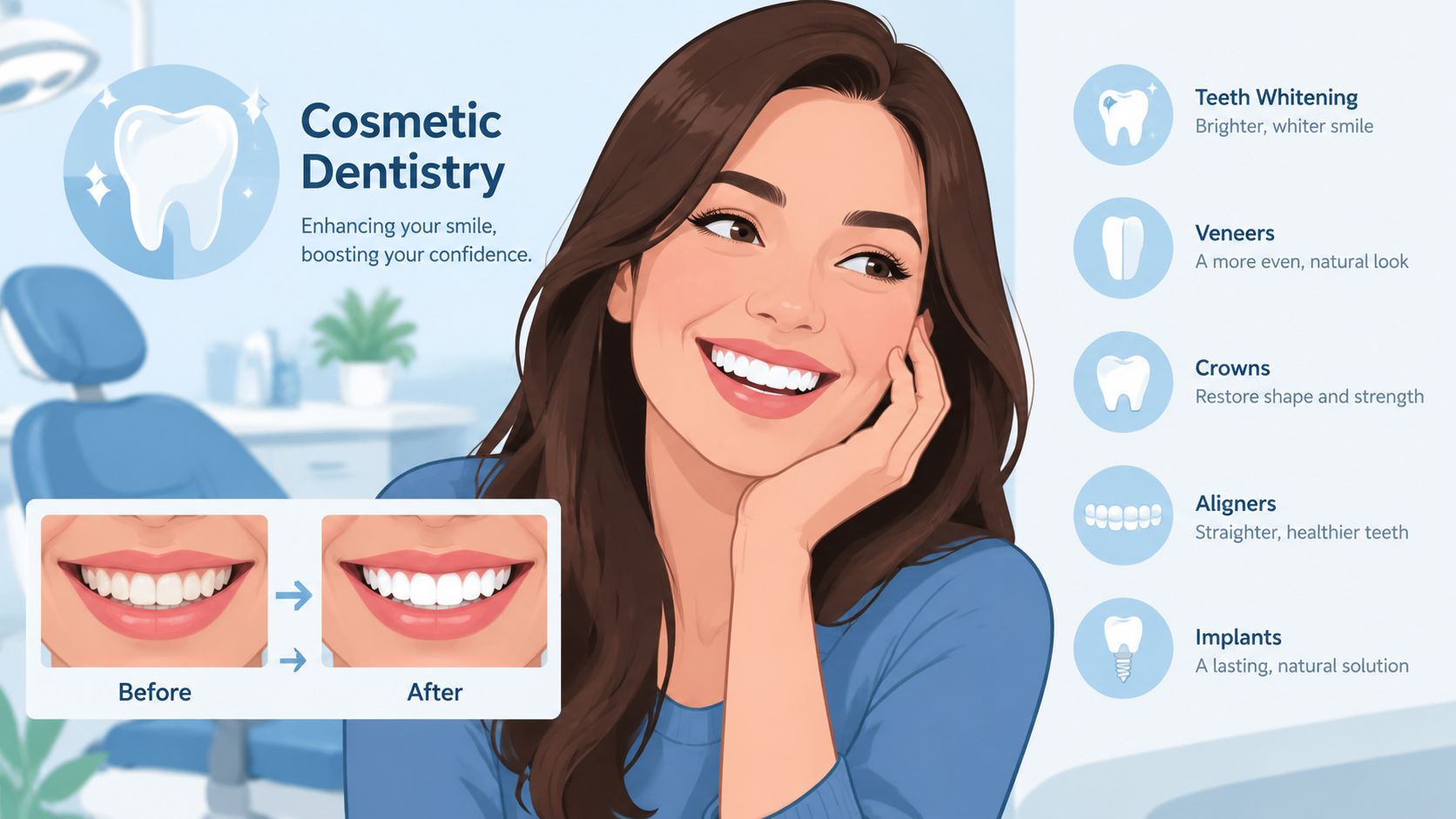
Cosmetic dentistry improves the appearance of teeth and smiles, but responsible planning doesn't stop at appearance. Think of your smile as a doorway. Color and shape are the visible parts, while the bite, enamel, gums, roots, and supporting bone provide the structure that allows the doorway to open and close properly.
A cosmetic change can be elective, such as brightening healthy teeth. It can also overlap with restorative care, such as replacing a missing tooth with an implant-supported restoration. The treatment category matters less than the planning question: what will improve the concern while protecting health and function?
Appearance and function work together
Straightness, tooth color, proportions, and symmetry affect how a smile looks. Bite relationships affect how teeth contact each other and how forces move through the mouth. Gum inflammation, decay, worn enamel, and clenching can also affect whether a cosmetic restoration is sensible.
That's why a quick makeover may not be the safest starting point for every patient. If alignment is contributing to the concern, aligner-first sequencing may reduce the need to reshape teeth. If a small chip or gap is the issue, bonding may offer a more conservative solution than covering several teeth with veneers.
Conservative planning preserves choices
Enamel is valuable because it provides a strong bonding surface for ceramic restorations. A 2025 systematic review of 621 laminate veneers found lower failure rates when veneers were bonded to enamel rather than to severely dentin-exposed teeth or existing composite restorations. A long-term retrospective study reported 98.4% observed survival for 672 ceramic veneers and 99.3% success when veneers were bonded exclusively to enamel, as reported in the PubMed review of laminate veneer outcomes.
Those findings don't predict what will happen in your mouth. They do support a useful planning principle: preserving healthy enamel can help protect future options. Dr. Finley can explain how much, if any, preparation a proposed restoration would require.
Digital tools improve the conversation
Digital smile design, CAD/CAM workflows, digital scans, simulations, and 3D printing can make planning easier to discuss. A preview may help you compare a subtle change with a more noticeable one, but a simulation is still a planning aid, not a guarantee of the final result.
The best consultation combines technology with clinical judgment. You should understand what can be changed, what shouldn't be changed, and how the proposed treatment may affect cleaning, bite comfort, repairs, and future dental visits.
Common Cosmetic Dentistry Procedures Explained in Plain Language
Patients in Santa Ana often use one phrase, “I want a better smile,” to describe different problems. The right option depends on whether the main issue is color, shape, alignment, tooth structure, or tooth loss.
Six options, six different purposes
Professional whitening targets discoloration in natural teeth. It may suit someone whose teeth are healthy but have darkened from normal aging, food, or drinks. Whitening doesn't reshape teeth, close gaps, or change the color of existing crowns, veneers, or fillings, so Dr. Finley may discuss how restorations fit into the overall plan.
Composite bonding uses tooth-colored material to repair small chips, adjust contours, or close limited spaces. It can be relatively conservative and may be easier to repair or revise than ceramic work. Bonding can still require maintenance, especially when placed where biting forces are strong.
Veneers cover the front surface of selected teeth to change color, shape, or proportion. They may help with certain discoloration, chips, or shape concerns, but preparation and bonding decisions matter. Veneers aren't a universal shortcut, and they require a discussion about enamel preservation, bite, repairs, and replacement planning.
Crowns cover more of a tooth than a veneer and are generally considered when a tooth needs greater structural protection. A crown may improve appearance, but it shouldn't be selected solely because it offers a visible change if a more conservative restoration could address the problem.
Invisalign treatment uses clear aligners to move teeth. Some aligner plans use bonded composite attachments. The FDA-cleared documentation explains that these attachments can help create forces that improve aligner retention or the force system used for tooth movement, as described in the FDA documentation for aligner attachment templates. Alignment may be considered before cosmetic reshaping when tooth position contributes to the concern.
Dental implants replace missing teeth with an implant-supported restoration. Modern osseointegrated implant dentistry traces a foundational milestone to Alvin Strock's invention of the modern osseointegrated dental implant in 1937, a development described in Fortune Business Insights' cosmetic dentistry market background. An implant plan must consider bone, gums, function, cleaning, and the timing of each phase.
Cosmetic Options at a Glance
| Procedure | Best For | Conservatism | Maintenance Note |
|---|---|---|---|
| Professional whitening | Natural teeth with discoloration | Usually limited to color change | Results can vary, and restorations don't whiten like natural enamel |
| Composite bonding | Small chips, gaps, or contour changes | Often conservative | May need polishing, repair, or replacement over time |
| Veneers | Selected shape, color, or surface concerns | Preparation may be irreversible | Requires careful hygiene, bite planning, and future repair planning |
| Crowns | Teeth needing broader structural coverage | More tooth coverage than a veneer | Regular examinations help monitor the tooth and restoration |
| Invisalign | Crowding, spacing, or alignment concerns | Moves teeth rather than covering them | Retention and ongoing follow-up are part of treatment planning |
| Dental implants | Replacement of missing teeth | Surgical tooth replacement | Cleaning and professional maintenance remain important |
No table can determine candidacy. Dr. Finley needs to examine your mouth and discuss your priorities before recommending a sequence. In some cases, bonding or aligner-first treatment may preserve more natural tooth structure than a veneer-heavy approach.
Are You a Good Candidate and What to Ask Before Treatment
A good cosmetic candidate isn't defined only by wanting a brighter or straighter smile. The more useful question is whether the proposed treatment matches your oral health, bite, available tooth structure, expectations, and willingness to maintain the result.
The examination comes before the design
Dr. Finley may evaluate enamel, existing fillings, cracks, decay, gum condition, tooth position, bite contacts, and signs of grinding or clenching. A tooth that looks uneven may need alignment, reshaping, bonding, or a restoration. A darker tooth may need a health assessment before whitening is considered.
You can help by describing what you want to change and what you want to avoid. For example, you might prefer a subtle improvement, want to preserve as much enamel as possible, or need treatment that fits around work and family responsibilities in Orange County.
Questions that reveal the quality of a plan
Use the consultation to understand the reasoning, not just the proposed procedure. Ask:
- What problem is this treatment solving? Is the concern mainly color, alignment, shape, wear, damage, or missing teeth?
- Can a more conservative option work? Ask whether whitening, bonding, enamel-preserving treatment, or aligner-first sequencing could meet your goals.
- How will this affect my bite? Find out whether tooth contacts, chewing, speech, or jaw comfort need special attention.
- What happens if something needs repair? Ask how repairs would be handled and whether the proposed material can be adjusted.
- What maintenance will I need? Discuss cleaning, examinations, retainers, nightguards, and habits that could affect restorations.
- What outcome is realistic for my teeth? A preview can guide a conversation, but no dentist can guarantee a specific cosmetic result.
Why enamel preservation matters
Material choice and preparation design can affect longevity. A 2024 review reported that dental veneers generally exceeded 90% survival beyond 10 years, with estimated survival of 94% for glass-ceramic veneers and 87% for feldspathic porcelain veneers, according to the review of long-term esthetic restoration outcomes.
Those figures describe groups studied under particular conditions, not an individual promise. The same review reported long-term differences among restoration types and emphasized how case selection and maintenance affect durability. For your appointment, the practical takeaway is simple: ask what material and preparation design fit your tooth, not which option sounds most dramatic.
Practical rule: If a plan changes healthy teeth permanently, you deserve a clear explanation of why that step is necessary and what alternatives were considered.
Treatment Timelines Aftercare and Modern Digital Planning
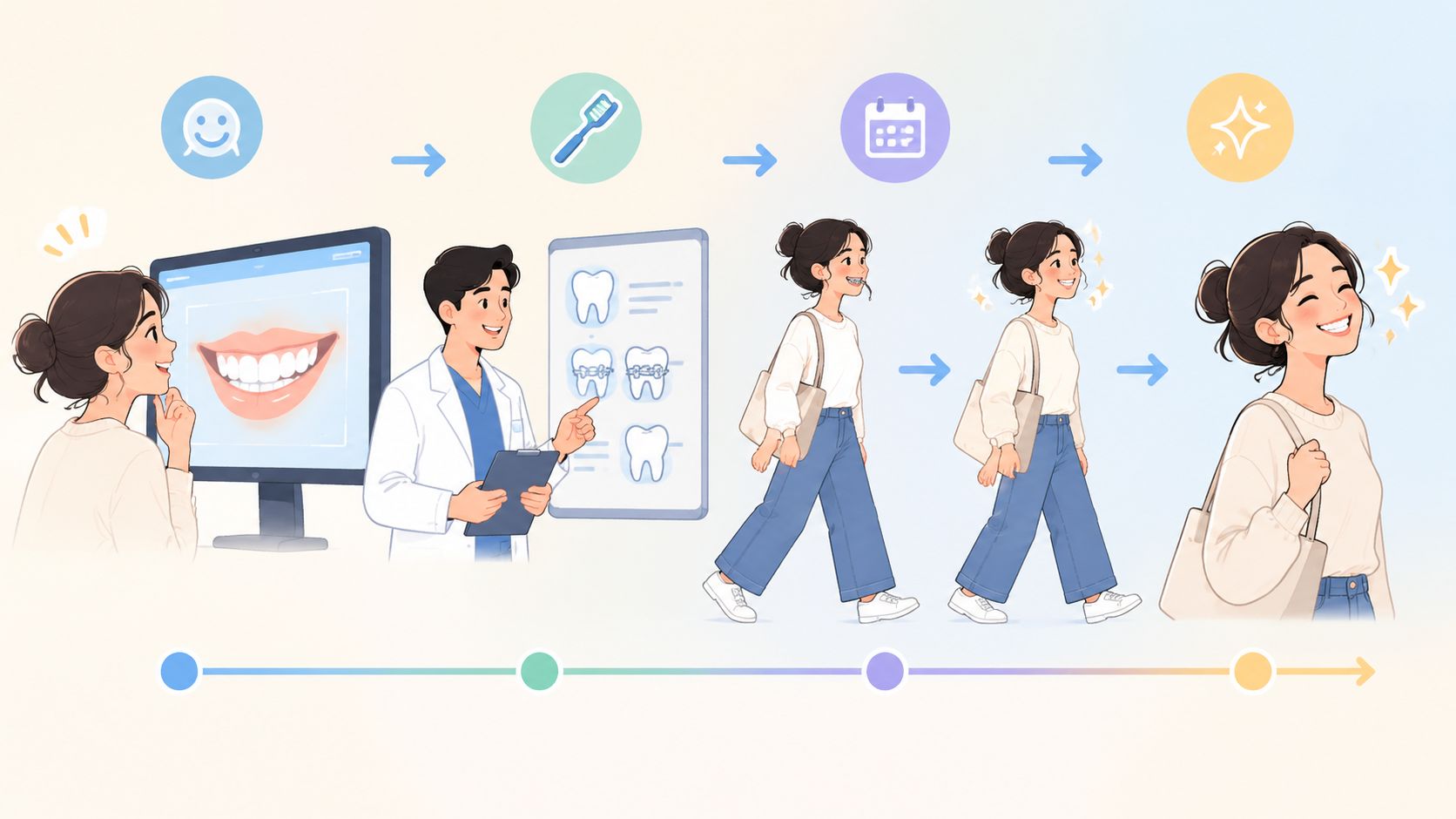
After you decide to proceed, treatment usually follows a sequence rather than one universal appointment. The sequence may include records, photographs, scans, health-focused treatment, a digital preview, the active procedure, and follow-up visits.
Planning first
Digital smile simulation can help you discuss tooth length, proportions, alignment, and the level of change you prefer. Current trend coverage describes AI-powered smile design, digital smile simulation, and 3D printing as increasingly common workflows, alongside interest in subtler, more natural aesthetics, as discussed in this overview of cosmetic dentistry trends.
A preview doesn't replace an examination. It gives you and Dr. Finley a shared visual reference so you can ask better questions before treatment begins. Depending on the procedure, digital information may also support laboratory communication or fabrication planning.

Different procedures follow different clocks
Whitening may involve a focused treatment and instructions for protecting the result. Bonding may be completed in a shorter sequence, while veneers or crowns require preparation, design approval, fabrication, placement, and review. Invisalign involves a planned series of aligners, monitoring, and retention after active movement.
Implant treatment has additional healing stages. Early placement after extraction may occur at 4 to 8 weeks or 12 to 16 weeks, while delayed placement means more than 4 months after extraction. A recent review reported survival rates of 95% to 100% for early placement and 92% to 100% for delayed placement, as summarized in this review of dental implant timing. Your bone, gums, infection history, restorative needs, and overall plan determine the appropriate timing.
Classic implant protocols commonly keep implants load-free for about 3 to 4 months in the mandible and 6 to 8 months in the maxilla to support osseointegration, according to this review of implant loading protocols. Dr. Finley can explain how that general framework applies, if at all, to your case.
Care after treatment
Follow the written instructions you receive, keep the area clean as directed, and report discomfort or changes rather than waiting for a routine visit. Maintenance may include professional examinations, hygiene care, aligner retention, a protective appliance, or adjustments to home habits.
Sleep concerns can also intersect with dental care. For adults with obstructive sleep apnea who can't tolerate CPAP or prefer an alternative, the AASM/AADSM guideline recommends oral appliance therapy and suggests a qualified dentist use a custom, titratable appliance rather than a non-custom device, as explained in the joint clinical practice guideline for oral appliance therapy. Cosmetic planning and sleep apnea treatment are different decisions, but both benefit from individualized evaluation.
How to Choose a Cosmetic Dentist in Santa Ana and Orange County
Choosing a cosmetic dentist nearby involves more than comparing map distances. Your goals may overlap with preventive care, orthodontics, restorative treatment, emergency dentistry, or sleep-related concerns. A convenient office can make follow-up, maintenance, and communication easier, but the treatment plan should still protect your oral health and function over time.
A practical local checklist
Look for a practice that explains options in plain language and treats cosmetic care as a planning decision, not a quick makeover. During your research, consider:
- Clinical breadth: Can the team address alignment, missing or damaged teeth, whitening, and general oral health when those needs connect?
- Planning methods: Does the office use suitable photographs, scans, radiographs, or digital previews to support the discussion?
- Conservative judgment: Will the dentist explain when bonding or orthodontic treatment may serve you better than irreversible preparation? An aligner-first plan can sometimes improve spacing or position before a small amount of bonding, rather than starting with veneers.
- Communication: Do you have time to ask about bite, longevity, repairs, and maintenance?
- Follow-up access: Is the office practical for visits from Santa Ana, Costa Mesa, Tustin, Irvine, or Garden Grove?
- Emergency support: Can the practice explain what to do if a tooth chips, a restoration feels loose, or pain develops?
A digital smile preview works like a shared sketch. It can help you discuss shape, proportion, and treatment boundaries before deciding, although a preview cannot replace an examination or guarantee the final result.
Reviews may show how patients describe communication and comfort, while before-and-after images can reveal a dentist's style. Neither source shows every patient's starting condition, bite, enamel, or maintenance routine. Use them to form questions, not to replace a consultation.
What local care can look like
Bristol Dental & Orthodontics is a family and cosmetic dental practice on South Bristol Street in Santa Ana, led by Dr. Andrew Finley. Services include Invisalign and orthodontics, dental implants, cosmetic dentistry, sleep apnea treatment, emergency dental care, and sedation dentistry.
When you contact an office, ask what the first visit includes and whether you will receive more than one treatment pathway. You can also review the practice's pages for cosmetic dentistry, Invisalign, implants, whitening, and related services before listing your priorities.
“I want to understand the least invasive option that could reasonably address my concern” is a useful way to begin the conversation.
Taking the Next Step Toward Your Confident Smile
A confident smile does not require the most extensive treatment. The better long-term choice balances natural appearance, healthy function, preserved tooth structure, and manageable maintenance. Bonding or aligner-first planning may suit some concerns better than moving straight to veneers.
If you feel uncertain about veneers, use that uncertainty to ask questions. A consultation with Dr. Finley can compare whitening, bonding, Invisalign, crowns, implants, or combined care after an examination. A digital smile preview can work like a shared sketch, helping you discuss shape and proportion before deciding. It cannot replace an examination or guarantee the final result.
Bring questions about bite, preparation, longevity, repairs, and aftercare. Bristol Dental & Orthodontics serves Santa Ana and nearby Orange County communities, including Costa Mesa, Tustin, Irvine, and Garden Grove. Personal treatment planning should be guided by an in-person evaluation.
Bristol Dental & Orthodontics offers cosmetic dentistry, whitening, bonding, Invisalign, implants, sleep apnea care, and emergency dental services. Contact the practice to learn more and schedule a consultation with Dr. Finley about a suitable next step.