
You've been meaning to call the dentist, but each time you think about the injection, the sound of the drill, or a long appointment, your stomach tightens. Maybe you're in Santa Ana, Costa Mesa, Tustin, Irvine, or Garden Grove, searching late at night for “sedation dentistry near me” and wondering whether sedation is suitable for someone with your concerns.
That hesitation is common. A 2026 clinical review summarizing a meta-analysis of 31 studies involving 72,577 adults reported a pooled prevalence of 15.3% for dental fear or anxiety, 12.4% for high dental fear or anxiety, and 3.3% for severe fear or phobia. Among children and adolescents, the pooled prevalence was 23.9%, with higher levels among preschoolers than schoolchildren and adolescents. You can read the review's discussion of dental anxiety and phobia for more context.
Sedation dentistry isn't a luxury reserved for unusual cases. It's a comfort option that may help some patients complete preventive care, restorative treatment, dental implants, cosmetic procedures, or emergency dentistry when fear, sensitivity, or the length of treatment would otherwise become a barrier. Bristol Dental & Orthodontics, a family and cosmetic dental practice in Santa Ana led by Dr. Andrew Finley, can discuss whether sedation fits your health history, anxiety level, and planned treatment.
Table of Contents
- Why So Many Patients Are Searching for Sedation Dentistry Near Me
- Understanding the Four Types of Dental Sedation
- What Modern Sedation Safety Standards Mean for You
- What to Expect Before, During, and After Your Sedation Appointment
- Who Is a Good Candidate for Sedation Dentistry
- Costs, Insurance, and How to Choose a Local Sedation Provider
- Your Next Step Toward Comfortable Dental Care in Santa Ana
Why So Many Patients Are Searching for Sedation Dentistry Near Me
A patient may search for sedation dentistry after postponing a filling until the tooth hurts, avoiding an examination because of a past experience, or learning that several appointments may be needed for restorative work. Another person may feel fine about routine cleanings but become overwhelmed by dental impressions, injections, gagging, or the idea of sitting still for a lengthy procedure.
The search often starts with a practical question, but the underlying concern is usually more personal: Can I get the care I need without feeling trapped or panicked? Sedation may help reduce awareness of the appointment and create a calmer experience, but it doesn't replace local anesthetic, clinical planning, or a conversation about your health.
Anxiety can affect the whole family
Parents sometimes search for sedation dentistry after a child has struggled to cooperate during treatment. Children and adolescents experience dental fear at meaningful levels, and the review linked above reported a pooled prevalence of 23.9% in that age group. The reported age gradient was 36.5% among preschoolers, 25.8% among schoolchildren, and 13.3% among adolescents, which helps explain why a child's age and ability to understand instructions matter during treatment planning.
Adults may face different obstacles. A strong gag reflex, difficulty becoming numb, fear of needles, or memories of painful treatment can make even a straightforward visit feel unmanageable. Sedation can be considered alongside communication techniques, topical numbing, local anesthetic, breaks, and a carefully paced appointment.
A useful starting point: You don't need to decide on a sedation method before speaking with a dentist. Your job is to describe what makes dental care difficult. The dental team can then assess possible options.
Sedation is also relevant to patients pursuing Invisalign, dental implants, cosmetic dentistry, sleep apnea care, or urgent treatment. Invisalign appointments may be comfortable without sedation, while implant surgery or extensive restorative care may raise different questions about appointment length and anxiety. Sleep apnea and respiratory concerns require especially careful screening because sedation can affect breathing.
The history of dental sedation shows why patients now have several options. Nitrous oxide was discovered in 1772, and inhaled gases began appearing in dental use in the late 1700s. Horace Wells used nitrous oxide as a dental anesthetic in the mid-1800s, while IV sedation began emerging in the 1960s. Later developments included IV diazepam in 1966, IV midazolam in 1983, IV flumazenil in 1988, and IV propofol in the 1990s, as described in this history of sedation dentistry.
Understanding the Four Types of Dental Sedation
Dental sedation describes a range of approaches, from mild relaxation to complete unconsciousness. The right choice depends on the intended depth, the procedure, the patient's cooperation, airway and medical risks, and the provider's training and monitoring capabilities.
“Sleep dentistry” is a common marketing phrase, but it can create confusion. Most dental sedation keeps a patient conscious enough to respond, even if they feel drowsy or remember little afterward. General anesthesia is different because it produces unconsciousness and requires a more advanced level of airway and anesthetic management.
Nitrous oxide
Nitrous oxide is inhaled through a small mask placed over the nose. Patients often describe a light, floating sensation, similar to relaxing in a warm bath. You remain awake, can communicate, and may feel less bothered by sounds, pressure, or the general environment.
It usually begins working quickly and wears off relatively quickly after the gas is stopped. That makes it a possible option for mild to moderate nervousness, shorter procedures, children who can comfortably use the nasal mask, or adults who want help relaxing without taking an oral medication.
Nitrous oxide doesn't remove the need for local anesthetic when a procedure could cause pain. It also may not be sufficient for severe dental phobia, a complex procedure, or someone who can't tolerate the mask.
Oral sedation
Oral sedation uses prescribed medication taken according to the dentist's instructions. Patients may feel sleepy, calm, and less aware of the appointment. A helpful comparison is taking a strong nap before a flight. You may still respond to directions, but the experience can feel distant, and memory may be limited.
The medication's effect isn't adjusted as precisely as medication delivered through an IV, and the response can vary between patients. A systematic review concluded that additional randomized controlled trials are still needed to confirm the effectiveness and safety of oral sedation in adult dental patients, as reported in this review of oral sedation evidence. The same evidence base identifies midazolam as the most commonly used medication for moderate dental sedation and describes it as very safe when properly titrated and monitored.
Oral sedation may be considered for patients with dental anxiety or a pronounced gag reflex, but it requires careful review of medications, health conditions, transportation, and recovery plans.
IV sedation
IV sedation delivers medication through a small IV line, allowing the dental team to adjust the level more directly during treatment. The onset is fast, and the experience may feel like pressing fast-forward through the appointment. Many patients remain responsive, but they can become deeply relaxed and may remember little afterward.
IV sedation can be considered for significant anxiety, longer procedures, sensitive gag reflexes, or treatment that would otherwise feel difficult to tolerate. It still isn't the same as general anesthesia, and it requires continuous monitoring of consciousness, breathing, oxygenation, and circulation.
After IV sedation, you'll need an adult companion to take you home. You shouldn't drive or perform work that requires sound judgment on the same day, consistent with published guidance for IV conscious sedation.
General anesthesia
General anesthesia produces unconsciousness rather than simple relaxation. It's a separate anesthetic approach, usually reserved for circumstances in which a patient can't tolerate treatment while conscious or the procedure requires a deeper level of anesthetic care.
Because deeper anesthesia carries greater risk and demands more intensive management, it isn't the routine choice for ordinary dental treatment. A published review of dental sedation techniques states that light sedation for low-risk patients classified as ASA I, and possibly ASA II, is considered the safest outpatient approach, while deep sedation isn't recommended for dental procedures because of higher morbidity and mortality risk. The review of dental sedation techniques explains this distinction.
Sedation types at a glance
| Sedation Type | How It Feels | Onset Time | Recovery | Best For |
|---|---|---|---|---|
| Nitrous oxide | Light, floating relaxation while awake | Usually quick | Often quick after the gas stops | Mild anxiety and shorter treatment |
| Oral sedation | Sleepy, calm, and possibly less aware | Depends on the prescribed medication and instructions | Requires planning for supervision and transportation | Moderate anxiety and selected procedures |
| IV sedation | Deep relaxation with possible limited memory | Fast | Requires an escort and a quiet recovery period | Significant anxiety or longer treatment |
| General anesthesia | Unconsciousness | Managed by an anesthesia team | Requires more extensive recovery planning | Selected complex or non-cooperative cases |
What Modern Sedation Safety Standards Mean for You
The American Dental Association released updated sedation and anesthesia guidelines in April 2026, its first major revision in nearly a decade. The updates tightened expectations around monitoring, documentation, BMI assessment, emergency protocols, and provider credentials, according to ADA News coverage of the updated guidelines.
For a patient, that should translate into a more complete process before, during, and after treatment. The dentist should review your medical history, medications, allergies, prior sedation experiences, and fasting status. BMI assessment may help the team identify factors that affect airway management and medication planning.

Monitoring should continue throughout treatment
The central safety principle is continuous in-operatory monitoring until discharge criteria are met. The team should continually assess your level of consciousness, track oxygenation with pulse oximetry, observe ventilation through respirations and chest movement, and check circulation through blood pressure and heart rate before, during, and after treatment. The ADA sedation use guidelines describe these monitoring expectations.
Respiratory depression and hypoxemia are important preventable risks during sedation. That's why a safe office doesn't rely on one set of vital signs taken before treatment. A trained individual should remain with you throughout active treatment, and the dental team should be prepared to recognize and respond to changes as they occur.
For moderate and deeper sedation, expert guidance supports adding capnography, which measures end-tidal carbon dioxide. It can identify ventilation problems earlier than pulse oximetry alone, especially when supplemental oxygen delays a drop in oxygen saturation.
Ask directly: “How will you monitor my breathing, oxygen level, blood pressure, and heart rate during treatment, and what happens if those measurements change?”
A practice should also explain discharge criteria rather than treating recovery as an afterthought. You should know who will escort you home, what activities to avoid, and which symptoms require a call to the dental office or urgent medical attention.
What to Expect Before, During, and After Your Sedation Appointment
Knowing the sequence can make an unfamiliar appointment feel more manageable. Your exact instructions will depend on the sedation method and your health history, so follow the directions provided by Dr. Finley or your dental team rather than general advice found online.
Before the appointment
The first stage is a consultation. The dentist reviews your medical history, current medications, supplements, allergies, previous reactions to anesthesia or sedation, and the treatment you're considering. The ADA guidance specifically references medical history, medication use, and NPO status, meaning whether you've followed the required instructions about eating and drinking before sedation.
Fasting instructions matter because sedation can affect protective reflexes and airway safety. Don't guess about whether you can eat, drink, or take a regular medication. Ask the office for clear written instructions before the appointment.
Arrange transportation in advance when your plan includes oral or IV sedation. An escort should understand that you may be drowsy after treatment and may need supervision while you recover.
During treatment
You'll be settled in the treatment chair, and the team will attach monitoring equipment appropriate to your sedation level. Pulse oximetry tracks oxygenation, while blood pressure and heart rate help the team assess circulation. For moderate or deeper sedation, ventilation monitoring may include capnography.
Sedation medication is administered through the planned route, whether inhaled, taken orally, or delivered through an IV. You may feel warm, heavy, calm, or sleepy. With conscious sedation, you can generally respond if the dentist asks you to open wider or adjust your position, although you may remember very little afterward.
A trained team member should remain with you during active treatment. The office should also have emergency equipment, documented protocols, and staff prepared to respond if your breathing, oxygenation, blood pressure, or level of consciousness changes.
After treatment
Recovery doesn't end when the dental work is finished. The team should assess whether you meet its discharge criteria before allowing you to leave. With oral or IV sedation, your companion drives you home, and you avoid driving, important decisions, and judgment-heavy work for the rest of the day.
Eat and drink only according to the instructions you receive, particularly if your mouth remains numb. Rest, follow medication directions, and call the office if something seems outside the recovery instructions you were given.
Who Is a Good Candidate for Sedation Dentistry
Sedation may be worth discussing if fear has caused you to delay examinations or treatment. It can also be considered when a strong gag reflex, difficulty becoming numb, sensitivity, or a long procedure makes ordinary care harder to tolerate.
The decision isn't based on anxiety alone. The dentist also considers the treatment, your ability to follow instructions, your airway, your medications, and your overall health.
Common reasons patients ask about sedation
- Dental anxiety or phobia: Sedation may help patients who feel overwhelmed by the dental environment or past experiences.
- A strong gag reflex: Some patients struggle with impressions, instruments, or prolonged treatment because of gag sensitivity.
- Longer or complex care: Dental implants, extensive restorative work, and some cosmetic procedures may involve appointments that feel easier with a planned comfort strategy.
- Difficulty cooperating: Some children, patients with special needs, or adults with movement-related challenges may need additional support to receive care safely.
- Urgent treatment: Emergency dental care can be stressful, especially when pain and fear occur together. The dentist must still evaluate the cause of the emergency and determine whether sedation is appropriate.
Health conditions need individual review
Patients with cardiovascular or respiratory disease may need additional screening, and expert guidance recommends considering ECG monitoring when those conditions are present. A higher BMI can also affect airway planning, which is one reason the updated ADA guidance includes BMI assessment.
Medication interactions matter too. Bring a complete list of prescriptions, over-the-counter medicines, and supplements. Don't stop or change any medication unless the prescribing clinician tells you to.
The ASA classification system groups patients according to their overall physical status. In general, light sedation for low-risk patients classified as ASA I, and possibly ASA II, is considered the safest outpatient approach. That doesn't mean a label alone decides your care. Dr. Finley must assess your individual circumstances before recommending a method.
Sedation can support many services, including Invisalign, dental implants, cosmetic dentistry, sleep apnea treatment, and emergency care. Sleep apnea deserves particular attention because airway and breathing concerns may change the sedation plan. Oral appliance therapy may be appropriate for some patients with sleep apnea, but sedation isn't a treatment for the condition itself.
Costs, Insurance, and How to Choose a Local Sedation Provider
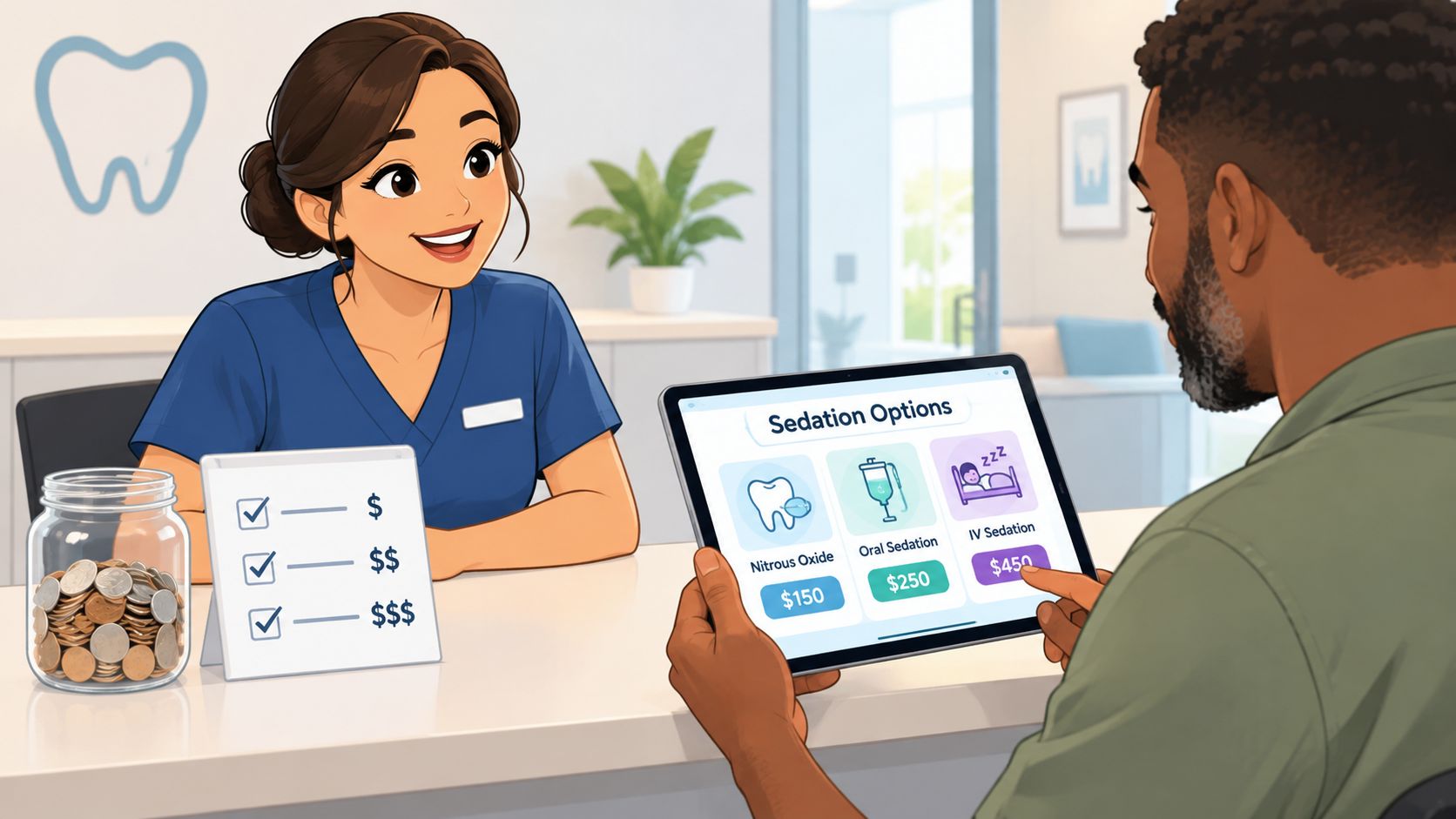
Sedation fees vary according to the sedation type, the length and complexity of treatment, and the training level required for the provider and team. The total treatment plan may also include the dental procedure itself, diagnostic work, local anesthetic, monitoring, and recovery support. A dental office should explain what each part covers before you schedule.
Insurance policies differ, and sedation coverage may depend on the procedure, medical necessity, age, health status, or policy exclusions. Ask your insurer whether the specific sedation method is covered, whether preauthorization is required, and what documentation the insurer expects. Then ask the dental office how it handles estimates, payment arrangements, and claims paperwork.
Use a safety checklist
When comparing local providers in Santa Ana and nearby Orange County communities, ask:
- Credentials and permits: What sedation training, credentials, and permits does the dentist hold for the proposed method?
- Monitoring equipment: Will the team continuously monitor consciousness, oxygenation, ventilation, blood pressure, and heart rate?
- Capnography: Is end-tidal CO2 monitoring available for moderate or deeper sedation?
- Emergency readiness: What emergency protocols, medications, equipment, and trained personnel are available?
- Updated standards: Does the practice follow the ADA's updated 2026 sedation and anesthesia guidance?
- Pre-sedation screening: Will the dentist review your health history, medications, BMI, allergies, and NPO status before treatment?
- Recovery planning: What discharge criteria must you meet, and who needs to take you home?
- Patient experience: Do reviews describe clear instructions, attentive monitoring, and respectful care during sedation appointments?
A local search result tells you where an office is located. It doesn't tell you how carefully the team screens patients or monitors them. A consultation gives you the chance to ask those questions before you commit to treatment.
Your Next Step Toward Comfortable Dental Care in Santa Ana
Sedation dentistry may give anxious patients a practical path back to care, but the safest option depends on the person, the procedure, and the team providing it. A consultation with Dr. Andrew Finley can help clarify whether nitrous oxide, oral sedation, IV sedation, or no sedation is appropriate for your situation.
Bristol Dental & Orthodontics is located on South Bristol Street and serves patients in Santa Ana and surrounding communities, including Costa Mesa, Tustin, Irvine, and Garden Grove. The practice offers care that includes Invisalign and orthodontics, dental implants, cosmetic dentistry, sleep apnea treatment, emergency dental care, and sedation dentistry.
You don't have to arrive with the perfect medical vocabulary or a final decision. Bring your concerns, explain what you've been avoiding, and ask how the team would plan for your comfort and safety. Scheduling a consultation is a conversation, not a commitment.
Bristol Dental and Orthodontics offers sedation dentistry alongside family care, Invisalign, dental implants, cosmetic dentistry, sleep apnea treatment, and emergency dental services. Visit Bristol Dental and Orthodontics to learn more or request a consultation with Dr. Andrew Finley about comfortable dental care in Santa Ana.