
You notice a space between your front teeth in a family photo, or food keeps catching between teeth that used to touch. Maybe the gap has always been part of your smile, or perhaps it's slowly becoming more noticeable. Either way, it's reasonable to ask whether you need treatment, what caused it, and which option makes sense for your mouth.
Teeth spacing treatment isn't one universal procedure. The right plan depends on whether teeth need to move, be reshaped, replaced, or supported by healthier gums. At Bristol Dental & Orthodontics in Santa Ana, Dr. Andrew Finley evaluates the cause first, then explains choices in clear, practical terms. The aim is a healthy, comfortable smile plan that fits your needs, whether you live in Santa Ana, Costa Mesa, Tustin, Irvine, or Garden Grove.
Table of Contents
- Why Do I Have Gaps in My Teeth
- Common Causes of Tooth Spacing
- Your Personalized Diagnosis and Treatment Plan
- Orthodontic Solutions Invisalign and Braces
- Cosmetic Dentistry for Closing Gaps
- When Implants or Surgery Are Needed
- Keeping Your Newly Aligned Smile Perfect
Why Do I Have Gaps in My Teeth
A visible space between two teeth is commonly called a diastema. The term describes the gap itself, not necessarily the reason it developed. Some gaps are a natural part of a person's smile and may not require treatment. Others affect how teeth meet, trap food, or change over time.
You might seek care because you don't like how the gap looks in photographs. That's a valid reason. You might also notice difficulty cleaning around the space, food collecting there, or a change in your bite. A gap that appears suddenly or continues widening deserves particular attention because it may relate to tooth movement, gum health, or a missing tooth.
A gap is a visible sign, not a diagnosis. The important question is what's holding the teeth apart or causing them to move.
Spacing is common across populations. A large systematic review reported spacing in a mean 18.7% of samples, with regional findings ranging from 1.2% to 59.5%. In the upper jaw, the mean reported prevalence was 23.4%, while the lower jaw mean was 12.8%, as reported in this systematic review of orthodontic spacing.
That frequency doesn't mean every gap needs correction. It does mean you're not unusual for asking about it. During a consultation, Dr. Finley looks at the position of each tooth, the way your upper and lower teeth fit together, the condition of your gums, and whether the space is stable or changing.
The most useful first step is to identify the cause. Once you know why the gap exists, treatment becomes easier to understand. Moving a healthy tooth into a better position is a different task from rebuilding a small tooth, replacing a missing tooth, or treating gum disease.
Common Causes of Tooth Spacing
Think of your teeth as books on a shelf. If the shelf is wider than the books, spaces appear between them. If one book is missing, the remaining books can shift. If the shelf itself becomes unstable, everything may move. Your teeth and jaws behave in a similar way.
Crowding and spacing rank among the most common orthodontic findings worldwide. The same systematic review linked above found spacing in a mean 18.7% of samples, with a mean prevalence of 23.4% in the upper jaw. The numbers vary widely by region, so they describe patterns across populations rather than predicting what will happen in your smile.
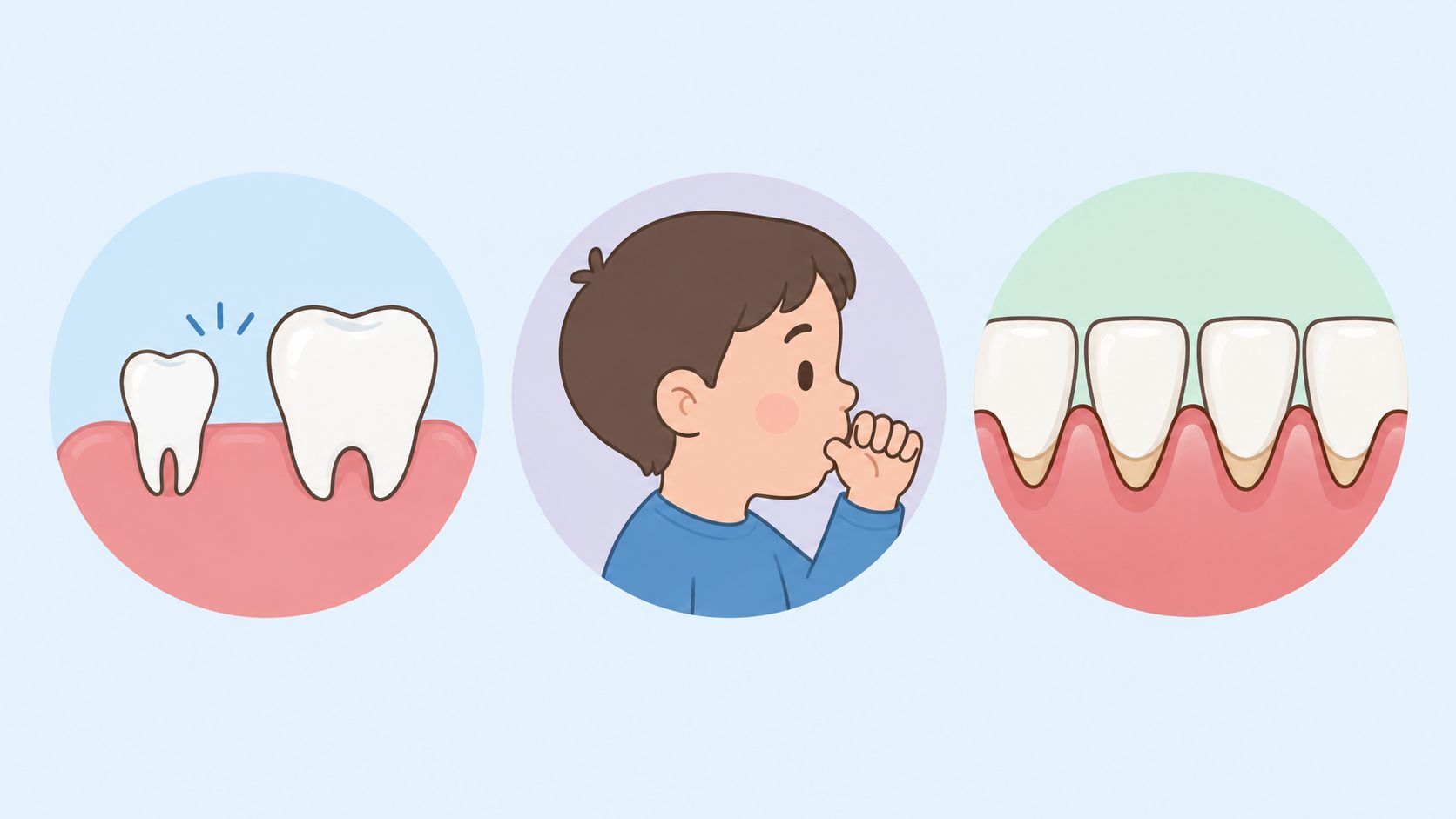
Tooth and jaw size
A broad jaw combined with relatively small teeth can leave extra room throughout the smile. This pattern often affects several teeth rather than creating one isolated gap. Orthodontics may redistribute the space, while bonding or veneers may adjust tooth shape when the teeth themselves look undersized.
Naturally small or unusually shaped teeth
Sometimes the jaw is proportionate, but one or more teeth are narrower than expected. A small lateral incisor, for example, can leave an uneven space beside a front tooth. In that situation, moving the teeth alone may create a better position but still leave a tooth-size imbalance. A combined plan could use alignment followed by cosmetic bonding or another restorative option.
Missing teeth
A missing tooth creates an open area that can invite nearby teeth to drift. The surrounding teeth may tilt or rotate, and the bite can become less balanced. Depending on the location and overall plan, treatment may involve orthodontic space management followed by tooth replacement, or orthodontic movement that closes the space.
Childhood habits and pressure
Thumb-sucking, prolonged pacifier use, or tongue pressure against the front teeth can influence alignment while the mouth is developing. The effect depends on the habit and the individual's growth pattern. An evaluation can determine whether the habit is still contributing to spacing and whether orthodontic guidance is appropriate.
The labial frenum
The labial frenum is the band of tissue connecting the inside of your upper lip to the gum above your front teeth. If its attachment or size contributes to a persistent midline gap, orthodontics alone may not address the underlying obstacle. A targeted frenectomy may be considered only after an examination confirms that the tissue is relevant.
Gum disease and tooth movement
New or widening spaces in an adult can signal reduced support around the teeth. Gum inflammation and bone loss can allow teeth to drift, so closing the gap before addressing gum health may treat the appearance without solving the cause.
The key distinction is simple: stable spacing and progressive spacing aren't the same problem. That's why a dental examination matters before choosing cosmetic or orthodontic treatment.
Your Personalized Diagnosis and Treatment Plan
Your first visit should feel like a conversation, not a sales presentation. You'll explain what bothers you, when you noticed the spacing, and what you'd like your smile to look and feel like. Dr. Finley then examines your teeth, bite, gums, and supporting structures to understand the problem from more than one angle.
Digital images and X-rays can help reveal information that isn't visible in a mirror. They may show root positions, missing teeth, bone support, or other factors that affect whether teeth can move safely. The team also considers practical details, such as how discreet you want treatment to be, how easily you can follow removable-appliance instructions, and whether you're seeking a cosmetic change or a broader bite correction.
What the consultation answers
A useful treatment discussion usually clarifies:
- What caused the gap: The plan changes if the issue comes from tooth size, missing teeth, gum support, a frenum, or tooth position.
- Whether the space is stable: A changing gap needs evaluation for active oral health or bite concerns.
- Which teeth should move: Closing a space without considering roots, bite contacts, and symmetry can produce an incomplete result.
- Whether treatment should be combined: Orthodontics, bonding, veneers, tooth replacement, or gum treatment may work together.
- What maintenance involves: Retainers and ongoing dental care are part of the plan, not an afterthought.
Independent clinical guidance emphasizes that treatment depends on the cause, size, location, and age of the patient. It may combine braces or aligners with bonding, veneers, tooth replacement, or gum-disease treatment rather than relying on one universal solution, as explained in this clinical overview of diastema causes and treatment.
Why combination treatment can make sense
Suppose the space between your front teeth is partly related to tooth position and partly related to narrow teeth. Aligners might bring the teeth into a healthier relationship, but bonding could be needed afterward to create balanced proportions. If a tooth is missing, orthodontics might prepare the space for replacement rather than resorting to pulling neighboring teeth together.
That approach may take more planning than covering a gap immediately, but it addresses the reason the smile looks uneven. Dr. Finley can explain what each step does, what it won't do, and which parts are optional versus necessary for oral health.
Orthodontic Solutions Invisalign and Braces
Orthodontics closes gaps by moving teeth, rather than disguising the space with added material. Braces and clear aligners can both guide teeth, but the patient experience differs.
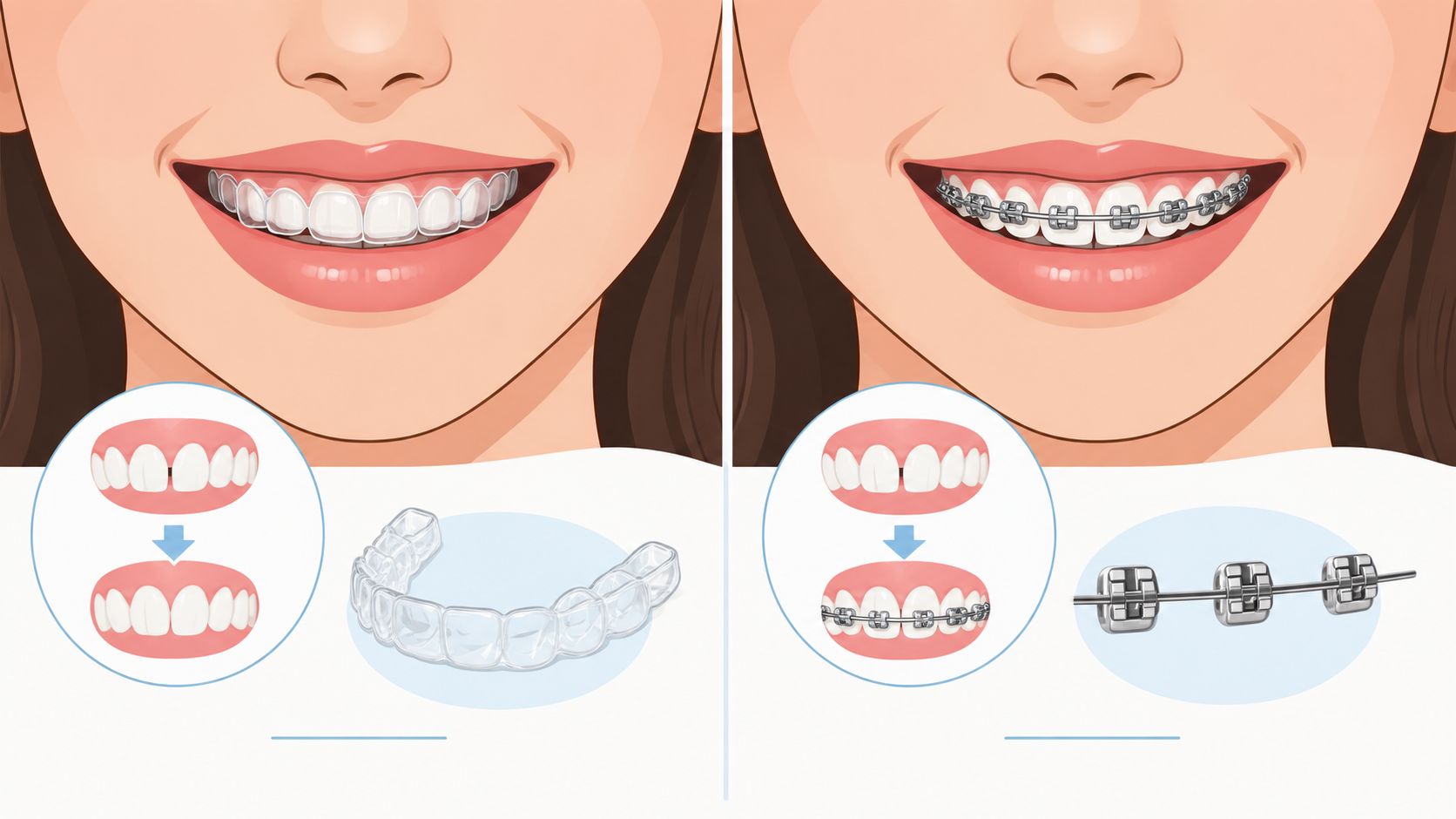
Traditional braces attach brackets to the teeth and connect them with wires. Adjustments change the force system gradually, helping guide teeth into planned positions. Braces can be useful when spacing appears alongside rotations, crowding, bite discrepancies, or more involved tooth movements. They stay in place, so you don't have to remember to put them back after meals.
Clear aligners use a sequence of custom trays. Each tray applies planned pressure to selected teeth, and you change sets according to your treatment instructions. Because you can remove aligners for eating and brushing, many patients appreciate the easier access for daily hygiene. The tradeoff is responsibility. You must wear them consistently and keep track of the trays.
The first full clear-aligner system emerged in 1997. By 2016, Invisalign products were used in about 8% of the 3 million new orthodontic patients in the U.S., reflecting the shift toward transparent, removable systems in that market, according to this published history of clear-aligner development.
Invisalign in daily life
Invisalign can be appealing if you want a less noticeable option for appropriate spacing patterns. You'll remove the trays for meals, brush before replacing them, and keep them clean. Some cases also use small tooth-colored attachments, which help the trays grip and guide particular movements.
Refinement aligners are a normal part of many plans, not necessarily a sign that treatment failed. They follow the same general wear schedule as regular sets, one to two weeks per set and about 20 to 22 hours each day, according to this patient guide to attachments and refinements. Your exact schedule comes from your treating dentist.
Braces and aligners compared
| Treatment | Best For | Typical Treatment Time | Key Consideration |
|---|---|---|---|
| Traditional braces | Spacing combined with complex alignment or bite concerns | Varies by diagnosis | Appliances remain in place and require careful cleaning |
| Clear aligners | Appropriate mild-to-moderate spacing and selected bite movements | Varies by diagnosis | Consistent wear and tray changes affect progress |
| Combined orthodontic and restorative care | Spacing with tooth-size differences, missing teeth, or damaged teeth | Varies by the combined plan | Moving teeth may be only one part of the final result |
There isn't a universally superior appliance. A Santa Ana patient who travels frequently may value removable trays, while another patient may prefer fixed treatment because it doesn't depend on remembering daily wear. The more important question is whether the appliance can perform the movements your diagnosis requires and whether it fits your routine.
Cosmetic Dentistry for Closing Gaps
Orthodontics changes tooth position. Cosmetic dentistry changes tooth shape, width, color, or visible surface. That distinction matters when the teeth are healthy and well positioned but appear too narrow for the surrounding space.
A practical way to compare these options is to start with the least involved treatment that can meet your goals. “Less involved” doesn't automatically mean better. The right choice depends on enamel, bite pressure, tooth condition, the size of the gap, and whether you want changes beyond spacing.
Dental bonding for small spaces
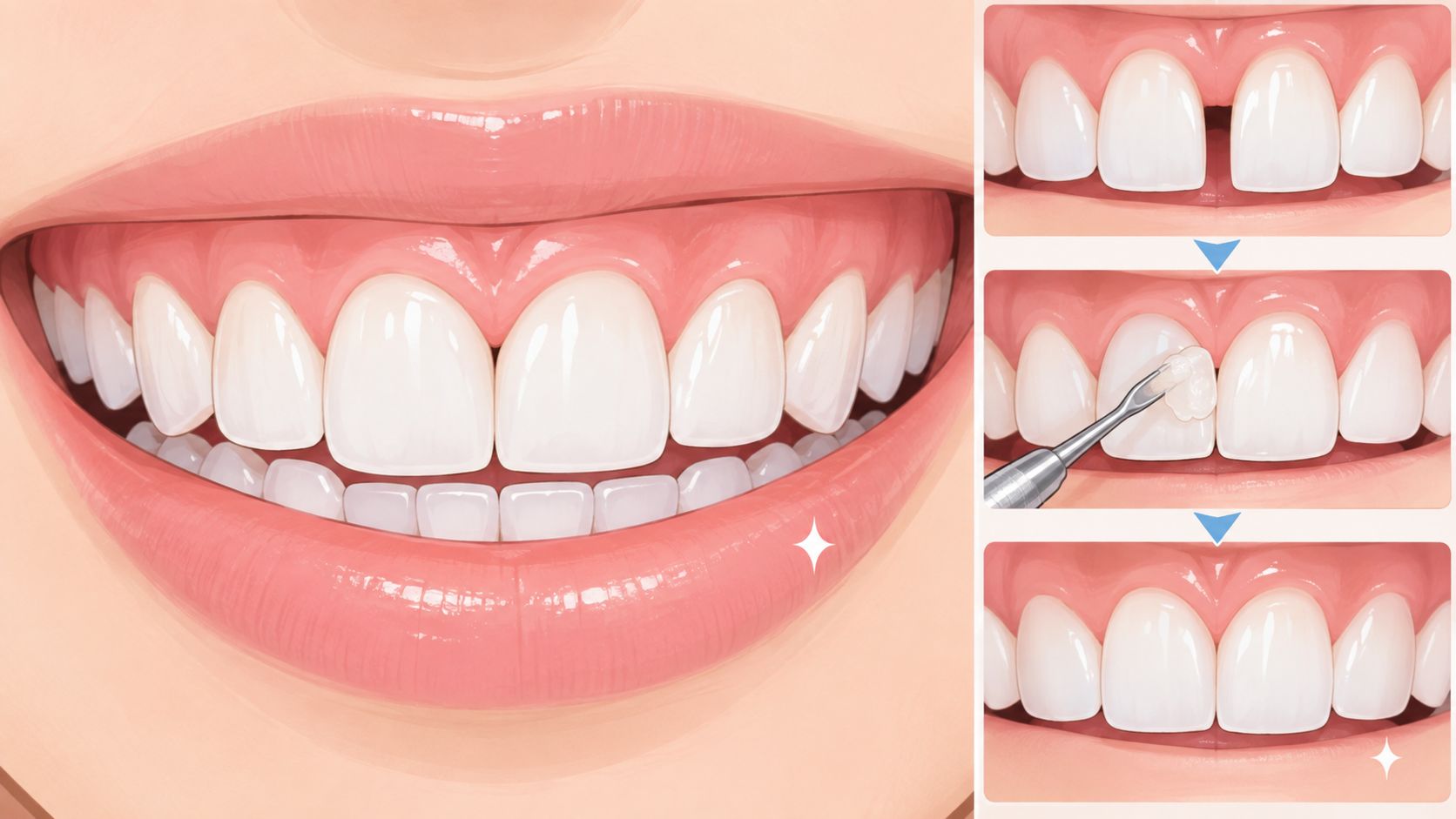
Bonding adds tooth-colored composite material to the sides of a tooth. Dr. Finley can shape the material to make a narrow tooth look more proportionate and reduce a small visible gap. The approach is conservative because it may require little or no alteration of healthy enamel.
Bonding can be a sensible choice when:
- The gap is small: Large spaces may create teeth that look too wide if filled only with composite.
- The teeth are healthy: Bonding doesn't replace treatment for decay, gum disease, or structural weakness.
- You want a modest change: The material can address shape and symmetry without moving the roots.
- You accept maintenance: Composite can chip, wear, or need repair, especially when bite forces or habits place stress on it.
Porcelain veneers for broader cosmetic changes
Veneers are thin, custom-made restorations bonded to the front surfaces of teeth. They can alter visible tooth shape and color while closing spaces. This may suit a patient who wants to address spacing along with uneven edges, discoloration, or differences in tooth proportions.
Veneers require careful planning because treatment may involve preparing enamel, and the result is intended as a long-term restoration rather than a temporary cover. Dr. Finley evaluates bite forces, gum health, enamel condition, and the amount of tooth structure available before recommending them.
Crowns when the tooth needs strength
A crown covers more of the tooth than a veneer. It may be considered when a tooth beside the gap is weakened by damage, decay, or a large existing restoration. In that situation, a crown can restore structure while contributing to the smile's proportions.
A crown shouldn't be selected solely because it can hide a space. It's a restorative option for a tooth that needs substantial coverage. Using a more involved restoration on a healthy tooth may remove more structure than necessary.
Cosmetic treatment can close what you see, but it may not correct what caused the teeth to move. If the gap is changing, the underlying issue comes first.
The most natural-looking result often comes from coordinating tooth movement with tooth reshaping. Aligners might position the teeth, then bonding might refine proportions. A missing tooth or gum problem may require restorative or periodontal care before cosmetic finishing. Bristol Dental & Orthodontics offers cosmetic and restorative evaluations in Santa Ana so Dr. Finley can help you compare those pathways without assuming one method fits every smile.
When Implants or Surgery Are Needed
Some gaps exist because a tooth is absent or because tissue is physically interfering with closure. In those cases, moving teeth or adding cosmetic material may leave the main problem unresolved.
Replacing a missing tooth
A dental implant replaces the function of a tooth root and supports a restoration above the gum. Implant planning requires enough room for the implant, the replacement tooth, and healthy surrounding structures. A commonly cited planning guideline calls for at least 1.5 mm between a single implant and an adjacent tooth, and at least 3 mm between two adjacent implants, according to this implant-planning guidance on spacing requirements.
That space may need to be created or refined with orthodontics before implant placement. The order matters because an implant is designed to remain stable rather than move like a natural tooth. Dr. Finley may coordinate restorative and orthodontic planning so the final tooth position, gum contours, and bite work together.

Addressing an oversized frenum
If the tissue above the front teeth contributes to a persistent midline gap, a frenectomy may be discussed. This procedure removes or releases the tissue that interferes with the planned tooth movement. It's not a routine answer for every diastema, and it shouldn't be performed based on appearance alone.
The timing depends on the diagnosis and orthodontic plan. In some cases, the teeth need to move before the tissue is addressed. In others, the dentist may recommend treating the frenum as part of a coordinated plan. A careful examination determines whether it is contributing to the spacing.
Treating gum-related movement first
When adult teeth begin separating, gum evaluation becomes essential. Orthodontic movement in the presence of untreated gum disease may not provide a stable foundation. The priority may be controlling inflammation and improving support before considering alignment or cosmetic closure.
Keeping Your Newly Aligned Smile Perfect
The appliance comes off, but the treatment isn't finished. Teeth can shift after orthodontic movement because the tissues around them need time and ongoing support to adapt. A retainer helps hold the positions your dentist planned.
Retainers may be removable, such as a clear tray worn according to instructions, or fixed, such as a thin wire attached behind selected teeth. Each has advantages and limitations. Removable retainers depend on consistent use, while fixed retainers require careful cleaning around the bonded wire and periodic checks.
Spacing deserves a thoughtful retention plan because different gaps behave differently. A 2025 report found statistically significant midline diastema relapse in 60% of samples, while lateral diastema closure was more stable, highlighting that spacing doesn't have one predictable prognosis, as reported in this study on relapse patterns after adult spacing treatment.
The retainer is what protects the alignment you worked to achieve. Wear it exactly as Dr. Finley recommends, and contact the practice if it becomes loose, damaged, or difficult to fit.
A 2024 systematic review found that the available evidence remains limited because well-designed comparative studies on relapse after aligners versus fixed appliances are lacking. The available studies suggested no major difference in relapse frequency between the two appliance types, so retention planning matters more than assuming one treatment is automatically unstable.
Whether your gap is between the upper front teeth, related to a missing tooth, or part of a broader bite concern, Bristol Dental & Orthodontics can assess the cause and discuss orthodontic, restorative, cosmetic, implant, gum-health, or oral-appliance considerations as appropriate. Schedule a consultation at Bristol Dental and Orthodontics to speak with Dr. Finley about a personalized teeth spacing treatment plan in Santa Ana, Costa Mesa, or Tustin.