

A Santa Ana parent can spend one morning coordinating a child's cleaning, a teenager's orthodontic visit, and care for a painful tooth, then repeat the same process in another office months later. That fragmented routine creates missed appointments, repeated paperwork, and treatment decisions that don't always account for the household as a whole.
A practical Santa Ana family dentist should do more than treat children. The right dental home should help toddlers, teens, parents, and grandparents maintain connected records and consistent preventive care, while also offering a clear path for orthodontics, restorative treatment, emergencies, sedation, and other concerns. Bristol Dental & Orthodontics is a family and cosmetic dental practice in Santa Ana, California, led by Dr. Andrew Finley, with care designed for patients at different stages of life.
Santa Ana's scale makes continuity especially useful. The city had 310,227 residents at the 2020 Census, and its estimated population was 316,184 in mid-2024, leaving a stable base of more than 310,000 potential patients. Its population is also notably diverse, with one census profile reporting 76.7% Hispanic or Latino residents, alongside Asian and White communities. (U.S. Census Bureau Santa Ana profile)
Table of Contents
- A Typical Morning in a Santa Ana Household
- What Your First Family Visit Looks Like
- Core Services for Every Age Group
- Comparing Invisalign, Implants, and Other Specialty Options
- When a Family Dentist Handles Sleep Apnea and Airway Concerns
- How to Choose the Right Santa Ana Family Dentist
- Insurance, Payment, and New Patient Logistics
- Trust Signals and Booking Your Next Step
A Typical Morning in a Santa Ana Household
A parent in Santa Ana pulls up the family calendar while waiting in the school-drop-off line. The kindergartner needs a cleaning, the teenager has an orthodontic adjustment, and the parent has been chewing carefully around a cracked molar. Each appointment matters, but arranging three offices across Santa Ana, Tustin, or Costa Mesa can turn ordinary dental care into a logistical project.
That's the problem family dentistry should solve. One office can keep the household's records together, coordinate appointments, and help the parent understand which needs are urgent and which can be planned. The child may need preventive guidance, the teen may need orthodontic monitoring, and the adult may need restorative treatment. Those are different clinical needs, but the family still needs one practical system for managing them.
Continuity matters more than a long service list
A family can benefit from seeing multiple relatives in one practice, especially when the front desk understands school schedules, work hours, transportation limits, and the need to group visits. A practice with pediatric, orthodontic, restorative, sedation, and emergency capabilities can reduce the number of separate referrals a household must coordinate.
Access isn't only about whether a dentist exists nearby. A recent study found that 51.3% of parents reported access to a dentist or oral health professional for their whole family, while 18.5% had access only for their children. (Family access study) Harvard's 2025 reporting also described uneven geographic access to dental clinics and the presence of “dental deserts,” reinforcing why proximity and continuity can matter to families.
Practical rule: Choose a dental office that can manage the family's next stage of care, not only today's cleaning.
For a household in Santa Ana, the useful question isn't whether an office treats kids. Ask whether it can care for the entire family consistently over time, including orthodontics, tooth replacement, cosmetic concerns, sleep-related questions, and urgent dental problems. The rest of the decision comes down to what the first visit feels like and whether the practice can support each age group under one coordinated plan.
What Your First Family Visit Looks Like
Your family arrives with different concerns. One child may be meeting a dentist for the first time, while a parent needs help with sensitivity and another relative wants to discuss a broken filling or sleep-related symptoms. A well-organized first visit gives each person time to be heard and leaves the household with a clear care plan.

At Bristol Dental & Orthodontics, the initial appointment should connect each patient's medical history, dental history, current concerns, and longer-term goals. That continuity helps the team coordinate routine care with orthodontics, implants, sleep apnea evaluation, or sedation when those services fit the patient's needs.
A calm sequence helps everyone know what to expect
Start with household details. Complete medical and dental history forms for every family member. List medications, allergies, earlier procedures, and the reason for the appointment.
Talk before the examination. Explain what brought you in, whether it is a child's first visit, tooth sensitivity, crowding, snoring, a broken filling, or a concern about smile appearance. Specific goals help the dentist focus the visit.
Complete the examination. The dentist checks the teeth, gums, bite, existing restorations, and overall oral condition. Depending on clinical needs, the appointment may include charting, digital x-rays, intraoral images, oral cancer screening, and periodontal assessment.
Review the findings together. Ask to see what the dentist sees and request plain-language explanations. An adult or orthodontic patient may also receive a bite analysis or orthodontic evaluation when it relates to the concern.
Children need a slower, more flexible pace. A young child's visit may be shorter and more playful, with attention to comfort, brushing habits, growth, and cooperation. The American Academy of Pediatric Dentistry recommends a first examination when the first tooth erupts and no later than 12 months of age. (AAPD periodicity guidance)
Bring the information that makes planning easier
Bring photo identification, an insurance card if applicable, a current medication list, and earlier dental records or x-rays when available. If several relatives are attending, confirm whether each person needs separate forms and whether the office can group appointments.
The visit length depends on how many people are being seen, the concerns involved, and whether diagnostic images are needed. Before treatment starts, the team should explain the findings, provide a written plan, review available options, and obtain consent.
The purpose of the first visit is understanding, not selling. Schedule appropriate follow-up appointments before the family leaves.
Core Services for Every Age Group
A family dental plan should follow the household over time. A child may start with prevention, receive orthodontic monitoring as the bite develops, and later need restorative care. Adults may combine gum maintenance with cosmetic treatment, while older relatives may need dentures, implants, or help caring for existing dental work. Keeping these needs connected reduces repeated explanations and makes follow-up easier.
Preventive and pediatric care
Routine exams, cleanings, fluoride, and sealants support healthy teeth at every age. Children's visits also give parents practical guidance on brushing, diet, thumb or pacifier habits, tooth eruption, and bite development. Children with higher cavity or gum-disease risk may need recall visits more often than the commonly used six-month pattern. The schedule should match the child's examination findings and risk level.
The American Academy of Pediatric Dentistry recommends an examination when the first tooth erupts and no later than 12 months of age. (AAPD periodicity guidance) Early care gives the dentist time to identify developing problems and helps a child become comfortable in the office.
Adults need regular prevention as well. The CDC reports that 21% of adults ages 20 to 64 have at least one untreated cavity, and ADA information indicates that roughly 42% of dentate adults age 30 and older have periodontitis. (CDC oral health surveillance report) These findings support routine screening, professional cleaning, and a recall plan based on personal risk rather than a fixed schedule for everyone.
Restorative, cosmetic, and urgent treatment
Fillings repair decay, while crowns protect teeth weakened by large fillings, cracks, or injury. Bridges, dentures, root canal treatment, and implants may be appropriate when a tooth is severely damaged or missing. Cosmetic options can include whitening, veneers, or tooth-colored restorations. The dentist should first confirm that the teeth and gums are healthy enough for elective treatment.
Call the office promptly for severe pain, a broken tooth, swelling, or concern about infection. Facial swelling that affects breathing or swallowing requires urgent medical attention. Do not wait for a routine cleaning when these symptoms appear.
Orthodontics and sedation
Traditional braces and clear aligners can address alignment and bite concerns for suitable patients. The choice depends on age, tooth development, treatment needs, appearance preferences, and the patient's ability to follow instructions. Sedation, including nitrous oxide or other in-office options when clinically appropriate, can help anxious patients, young children, or people facing longer procedures.
Bristol Dental & Orthodontics keeps orthodontics, implants, sleep apnea care, and sedation within one family practice. That in-house breadth supports continuity when more than one household member needs different types of care, while the dental team can coordinate referrals or treatment planning through the same office.
| Service Category | Who It Serves | Typical Reason Families Seek It |
|---|---|---|
| Preventive care | Children, adults, and older adults | Exams, cleanings, fluoride, sealants, and gum monitoring |
| Pediatric dentistry | Infants, children, and early teens | First visits, habit counseling, growth guidance, and comfort-focused care |
| Restorative dentistry | Patients with damaged, decayed, or missing teeth | Fillings, crowns, bridges, root canals, dentures, and implants |
| Orthodontics | Children, teens, and adults | Crowding, spacing, bite concerns, braces, or clear aligners |
| Cosmetic dentistry | Adults and appropriate older teens | Improving the appearance of healthy teeth |
| Sedation dentistry | Anxious patients and patients facing longer care | Improving comfort and cooperation during treatment |
| Emergency dentistry | Patients with sudden dental problems | Pain, broken teeth, swelling, or injury |
Comparing Invisalign, Implants, and Other Specialty Options
Specialty care becomes easier to evaluate when you compare daily life, not just the treatment name. Invisalign uses removable aligners that are commonly changed about every one to two weeks, and product guidance has described one-week wear for certain full, teen, and assist products.
Straightening teeth
Clear aligners are discreet and removable, which makes brushing and flossing simpler and avoids many food restrictions. They require personal discipline, though. A teen who frequently removes or misplaces trays may be a better candidate for fixed braces, particularly when a complex bite correction needs predictable appliance control.
Traditional braces remain a practical choice for many children and teens. They stay in place, but brushing takes more care and some foods can damage brackets or wires. The orthodontic evaluation should consider age, tooth development, bite complexity, appearance preferences, and the patient's ability to follow instructions.
Replacing a missing tooth
Implants, fixed bridges, and removable dentures solve different problems. An implant is supported in the jaw and may provide stable chewing function without preparing neighboring teeth, but it involves surgery, healing, and careful maintenance. Literature commonly describes functional osseointegration as a three-to-six-month process, with longer timelines possible in grafted or lower-density areas. (Dental implant osseointegration overview)
A bridge can replace a missing tooth without implant surgery, though it relies on neighboring teeth for support. A removable denture can replace several teeth and is easier to remove for cleaning, but it may feel less secure during chewing and requires consistent hygiene.
| Option | Best For | Daily Life Impact | Time to Complete | Maintenance |
|---|---|---|---|---|
| Invisalign | Disciplined teens and adults with suitable alignment concerns | Removable trays and fewer visible appliances | Planned in stages based on the case | Clean trays and maintain excellent wear habits |
| Traditional braces | Younger patients or complex bite corrections | Fixed appliance and more detailed brushing | Varies with the treatment plan | Brush around brackets and attend adjustments |
| Dental implants | Appropriate candidates replacing one or more missing teeth | Stable fixed replacement after healing | Surgical placement plus healing before final restoration | Brush, floss, and attend professional maintenance |
| Fixed bridges | Patients seeking a non-implant fixed replacement | Fixed tooth replacement supported by neighboring teeth | Often shorter than an implant pathway, depending on the case | Clean under the bridge and protect supporting teeth |
| Removable dentures | Patients replacing multiple teeth who prefer removable care | Removable appliance that may require adjustment | Depends on impressions, design, and healing needs | Remove, clean, and maintain the appliance as directed |
Bristol Dental & Orthodontics can evaluate orthodontic and tooth-replacement pathways in-house, allowing the family to discuss age, bone health, treatment commitment, and long-term priorities within one coordinated plan.
When a Family Dentist Handles Sleep Apnea and Airway Concerns
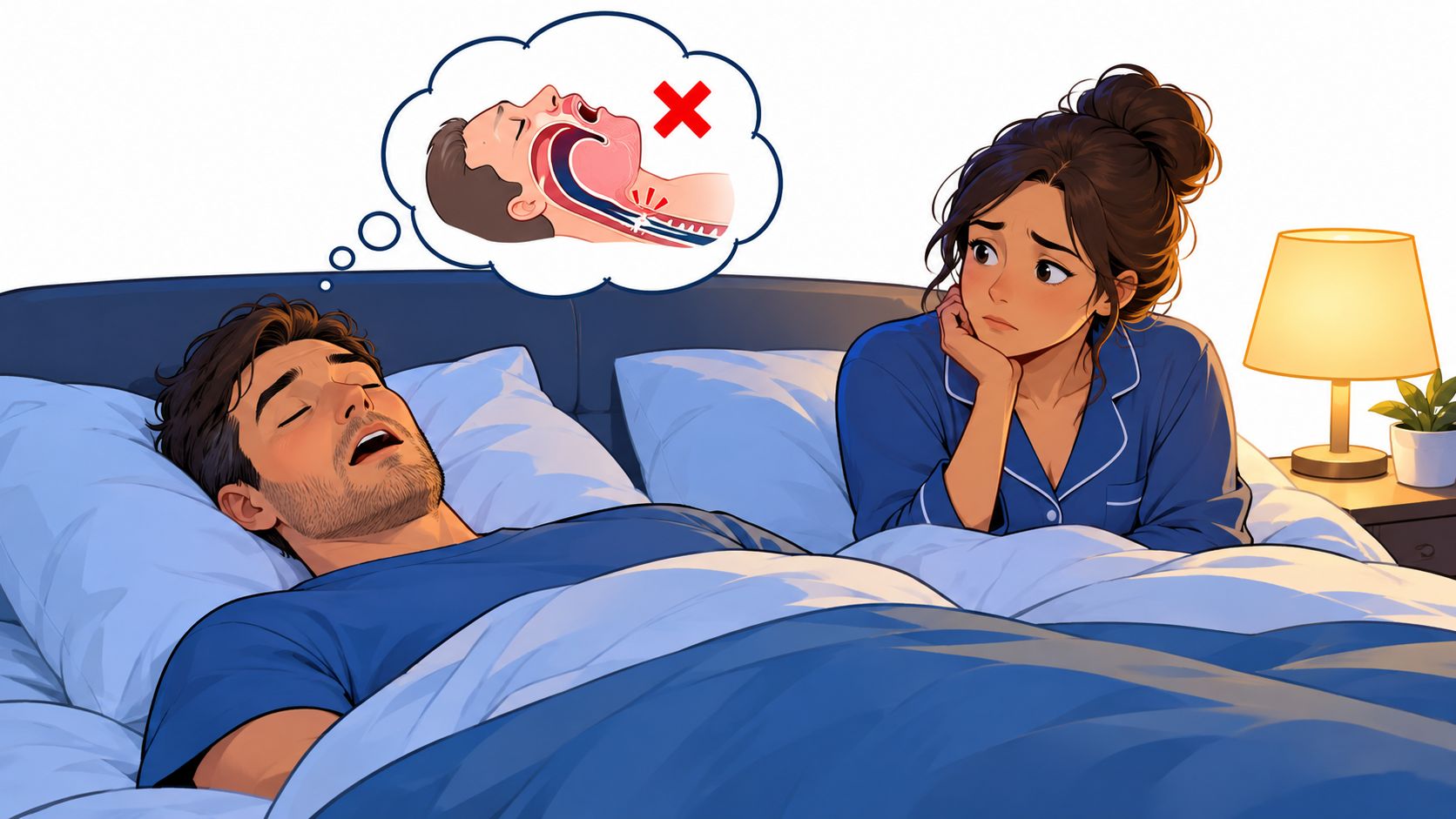
Snoring isn't always harmless. Repeated airway collapse during sleep can contribute to obstructive sleep apnea, and signs such as loud snoring, daytime fatigue, morning headaches, witnessed pauses in breathing, or restless sleep deserve attention.
A dentist is part of the care pathway, but diagnosis should come first. A physician-supervised sleep study determines whether sleep apnea is present and helps establish its severity. The dentist then reviews the diagnosis and considers whether a custom oral appliance is appropriate.
Where oral appliances fit
A custom, titratable oral appliance gently positions the lower jaw forward to help maintain airway space during sleep. The joint clinical guideline recommends oral appliance therapy for adults with obstructive sleep apnea who can't tolerate continuous positive airway pressure or prefer an alternative, and it recommends that a qualified dentist provide a custom device rather than a non-custom product. (Joint oral appliance guideline)
Treatment doesn't end when the appliance is delivered. Professional fitting, adjustment, follow-up, and testing after treatment begins help determine whether the therapy is working as intended. (AASM oral appliance guidance) The ADA has also highlighted emerging dental therapies for obstructive sleep apnea, which makes evidence-based evaluation more important than a broad promise that any appliance will suit every patient. (ADA News sleep apnea therapies)
Children need a separate assessment. Mouth breathing, crowded teeth, restless sleep, and habit concerns can justify an airway-focused conversation, but children with growth concerns, suspected significant apnea, or complex medical histories should be referred to the appropriate physician or pediatric specialist.
How to Choose the Right Santa Ana Family Dentist
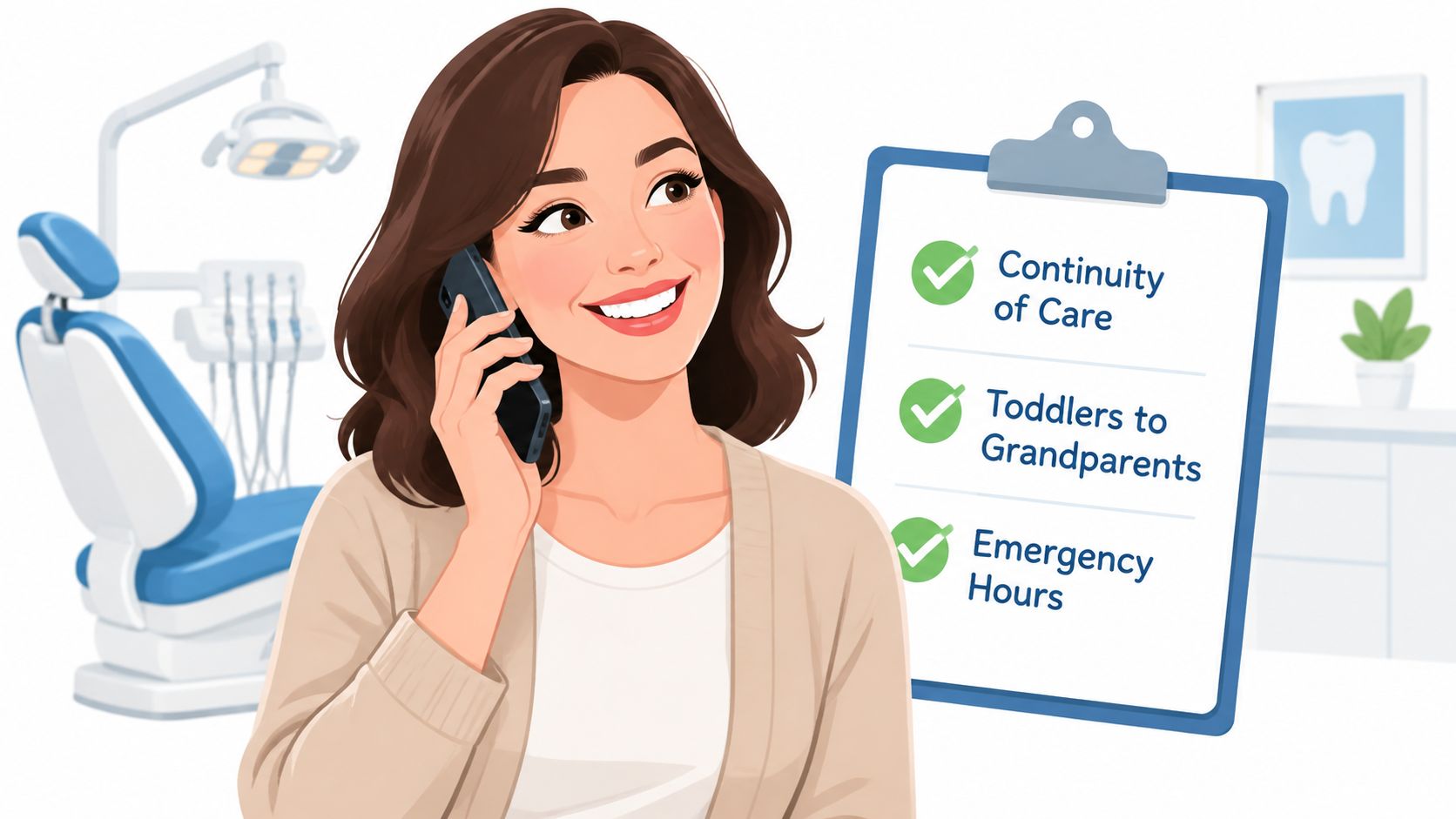
A family dental office should make care easier to coordinate, not create a new referral for every age or concern. During the first phone call, ask how the practice supports children, teens, adults, and older relatives over time.
Start with continuity
Confirm that the office welcomes young children early. The AAPD recommends an examination by the first tooth or first birthday, so ask whether the team is prepared to guide parents before school age. You should also know how the practice keeps medical histories, x-rays, orthodontic records, and treatment plans together. One coordinated chart helps the team recognize patterns, explain choices, and avoid asking your family to repeat the same history at every visit.
Ask practical questions before you commit
- Sedation availability: Ask whether the office offers nitrous oxide or other in-office options for anxiety, young children, or longer procedures.
- Emergency access: Find out what existing patients should do after a broken or knocked-out tooth, severe pain, or swelling. Ask about same-day visits and after-hours contact.
- Location and hours: Choose an office that fits your commute, school route, or home in Santa Ana. Regular preventive visits are easier to maintain when the trip also works for relatives in Irvine, Garden Grove, or Tustin.
- In-house breadth: Ask whether orthodontics, implants, sleep apnea evaluation, sedation, cosmetic care, and restorative treatment are available through one practice.
- Communication style: Expect plain explanations, written options, and time to ask questions before accepting treatment.
The office should also explain when outside medical or specialist care is appropriate.
Bristol Dental & Orthodontics is organized around connected care for Santa Ana families. Its in-house services include family dentistry, orthodontics, implants, sedation, sleep apnea treatment, cosmetic dentistry, and emergency dental care. That range can simplify decisions across the household while leaving room for outside referrals when a patient's medical needs require them.
Insurance, Payment, and New Patient Logistics
Financial planning should happen before treatment begins. Ask the front desk to verify available benefits, explain how the office handles in-network or out-of-network billing, and identify which parts of a proposed plan may have separate benefit rules.
Bring your photo ID, insurance card if applicable, prior records, and a current medication list. Pediatric visits, adult restorative care, and orthodontic treatment may be billed under different categories, so request a written explanation of each planned service. Bristol Dental & Orthodontics can help the family review coverage information before the appointment, but benefit verification isn't the same as a guarantee of payment.
Make the schedule work for the household
Tell the office how many family members need appointments and whether you prefer morning, after-school, or grouped visits. A well-planned block can reduce travel between Santa Ana and nearby Orange County communities such as Costa Mesa, Tustin, Irvine, and Garden Grove.
Ask how cancellations and rescheduling work. Clear notice policies help the office protect appointment time and help your family avoid losing momentum in preventive or orthodontic care. If a child is nervous or an adult needs sedation, mention that when booking so the team can plan appropriately.
For larger treatment plans, ask which payment methods are available, including major insurance plans, out-of-network billing, and third-party financing. The important point is clarity. You should understand what is recommended, what can wait, what alternatives exist, and what financial responsibility the office expects before work starts.
Call Bristol Dental & Orthodontics to confirm benefits, discuss the household's scheduling needs, and reserve a new-patient visit.
Trust Signals and Booking Your Next Step
A useful dental home should earn trust through consistent processes, not exaggerated promises. For Santa Ana households, that means a local office with care for children through grandparents, clear communication from Dr. Andrew Finley and the team, and a practical way to coordinate preventive, restorative, orthodontic, implant, sedation, cosmetic, emergency, and sleep apnea concerns.
Bristol Dental & Orthodontics is located on South Bristol Street and serves Santa Ana and surrounding Orange County communities. Families can also review established patient feedback on common review platforms, then use the first appointment to judge whether the team listens carefully, explains findings clearly, and respects the family's pace.
What ongoing care should feel like
Dr. Finley's review of patient education and treatment planning should focus on conservative recommendations, understandable choices, and consent before care. The front desk should help coordinate records, schedule multiple relatives, and return calls during the same business day when possible. Existing patients should also know how to contact the practice when an urgent dental issue arises.
The strongest signal is practical continuity. You shouldn't have to rebuild your dental history every time a child needs orthodontic guidance, a parent needs a crown, or a grandparent needs help with a missing tooth. Request a consultation online or call to schedule a new-patient appointment, and bring your family's records if you're transferring care.
Bristol Dental & Orthodontics provides family dentistry, Invisalign and orthodontics, implants, cosmetic care, sleep apnea treatment, emergency dentistry, and sedation for Santa Ana households. Visit Bristol Dental and Orthodontics to request a consultation and take the next step toward coordinated care for your family.