
Control any bleeding with clean gauze, protect the tooth by avoiding chewing and contact with sharp edges, and call a dental office the same day. If a permanent tooth has been knocked out completely, aim to reach a dentist within 1 hour where possible.
Maybe you felt a crunch during lunch, or your child took a fall and now there's a gap or a jagged edge. You don't need to diagnose the damage yourself. You need to decide whether it's safe to wait for a scheduled visit, whether you need urgent dental care, or whether a medical emergency comes first.
For families in Santa Ana and across Orange County, that decision starts with symptoms, not just how dramatic the tooth looks.
Table of Contents
- How Quickly a Broken Tooth Needs Dental Care
- Warning Signs That Need Emergency Medical Care
- First Steps and Pain Care at Home
- Handling a Knocked-Out Tooth Correctly
- Book a Visit to Confirm Your Repair Plan
How Quickly a Broken Tooth Needs Dental Care
A painless chip may wait for a routine appointment within about 7 days, but a knocked-out permanent tooth cannot wait.
| Situation | Immediate action | Target time to be seen |
|---|---|---|
| Chip or small crack, no pain | Save any fragment in milk or saliva; avoid chewing on that side | Routine visit, ideally within 7 days |
| Broken tooth with pain, sharp edge or exposed nerve | Rinse gently, keep the area clean, avoid chewing | Urgent visit, within 24 hours |
| Permanent tooth knocked out completely | Handle by the crown only; keep moist in milk or saliva; reinsert only if it slides in easily | Within 1 hour where possible |
| Baby tooth knocked out | Do not reinsert; keep the child calm and call the dentist | Same day |
| Head injury, heavy bleeding or breathing trouble | Call emergency services now | Immediately |
The timing framework comes from NHS emergency dental guidance, which recommends emergency care for a knocked-out adult tooth within 1 hour, or as soon as possible, and urgent treatment within 24 hours or 7 days, depending on symptoms. These are triage targets, not a guarantee of local appointment availability or permission to postpone calling.
A painless chip is different from a displaced tooth
A small missing corner without pain, looseness or a change in your bite usually belongs in the slower category. Call to describe it and let the dental team confirm that waiting is appropriate. No pain doesn't prove the injury is shallow.
A tooth that looks longer, sits at an angle or no longer meets its neighbor normally needs faster attention. It may have moved in its socket rather than chipped. Don't push it around to check.
Likewise, a sharp edge that repeatedly cuts your tongue deserves an urgent call even if the tooth itself doesn't ache. Tell the office whether you see a pink or red area inside the break, but don't poke it to investigate.
A general medical clinic can address urgent medical concerns, but it doesn't replace definitive dental repair. Depending on the injury, a dentist may need to perform bonding, place a crown, treat the root canal, stabilize the tooth or remove it.
Practical rule: If the tooth looks longer, the pain is sharp or your bite feels off, choose the faster category and call promptly.
Warning Signs That Need Emergency Medical Care
A child slips from playground equipment, hits the pavement, and stands up crying over a chipped front tooth. The chip is easy to see. Breathing, jaw alignment, and alertness are easier to miss, and they decide whether this is a medical emergency or a dental visit.
Uncontrolled bleeding, trouble with the airway, and a serious head or jaw injury come before the tooth. Sort the injury with this checklist. Waiting to see whether the tooth starts to hurt does not make a medical warning sign safer.
- Bleeding that will not slow under firm, steady pressure: Go to the nearest emergency department. Call 911 now if the bleeding stays heavy.
- A jaw that no longer lines up, or a face that looks clearly deformed after impact: Seek emergency medical assessment. A dental chair is the wrong first stop.
- Swelling or trauma that affects breathing, swallowing, or vision: Call 911 now. Do not drive, and do not hold out for a dental appointment.
- Blackout, vomiting, confusion, double vision, or unusual drowsiness after a blow to the head: Go to the emergency department, including when the person has already woken up. In a child, do not write drowsiness off as tiredness from crying.
I treat any struggle to breathe or swallow as the call that cannot wait.
When you arrive, mention a missing tooth or fragment and how the face was hit. Medical care can stabilize the person without repairing the tooth, so arrange a dental exam once they are cleared. Pain or a break alone, with none of the signs above, is a dental urgency. Any sign on this list means the emergency department first.
First Steps and Pain Care at Home
You are at the bathroom sink, looking at a sharp edge where the tooth used to be smooth. If no medical warning sign is present, protect the injury before you start inspecting it. Slow the bleeding, keep the piece, and get a visit booked. Home care will not finish the repair.
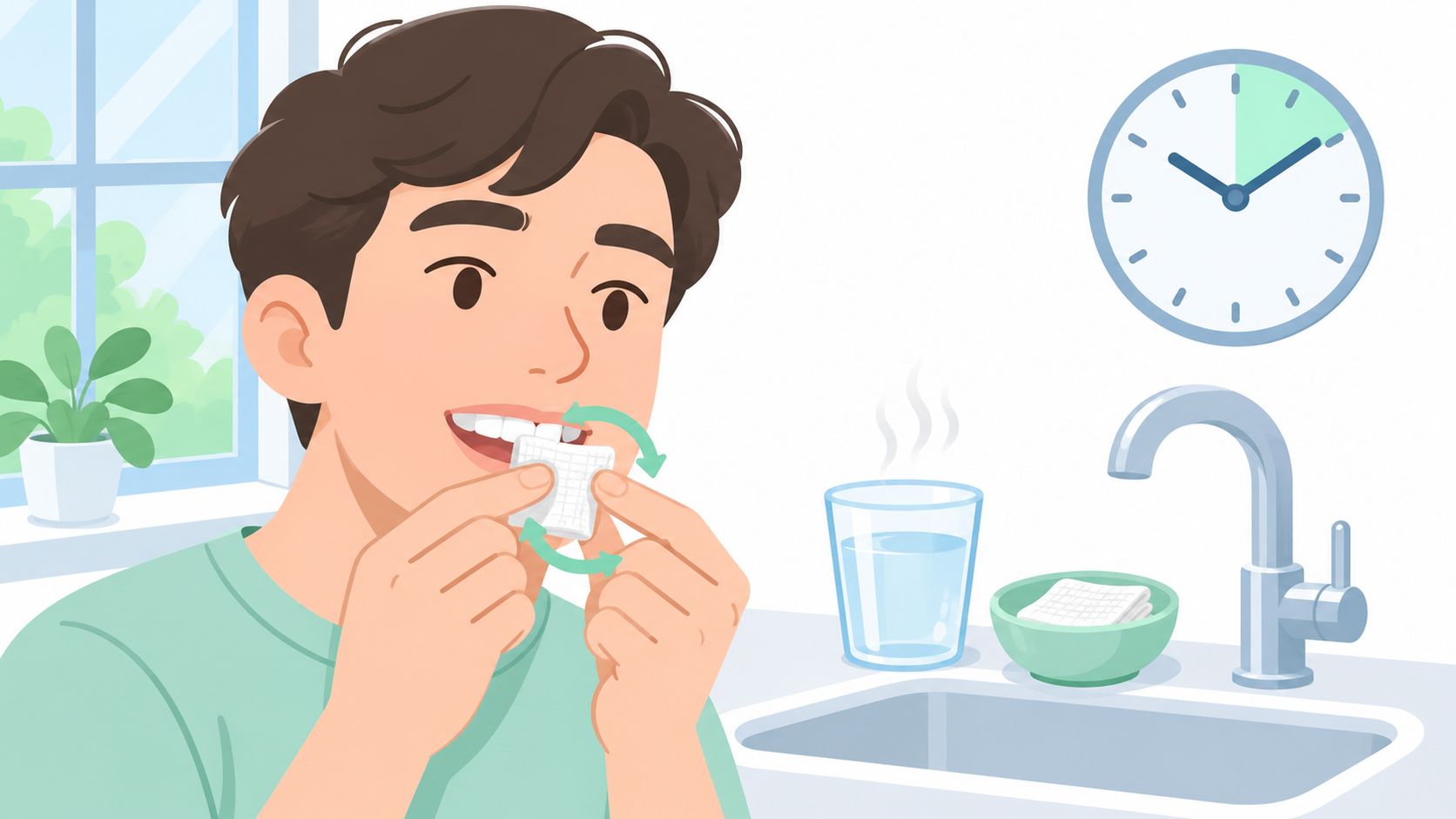
Protect the injury before trying to inspect it
Apply clean gauze. Hold it on the bleeding spot with gentle, steady pressure until the flow slows. Leave it there. Lifting it every few seconds restarts the clot. Bleeding that stays heavy needs medical care, not a longer wait at the sink.
Rinse gently with warm water. Let the water carry loose grit out of the mouth. Skip hard swishing and scrubbing. This rinse is for the mouth around a chipped or cracked tooth.
Save the broken piece. Blot it lightly with clean gauze, then tape it to a small card so the dentist can see the shape and size. A fragment that looks tiny can still be bonded back. Do not throw it away.
Leave the remaining tooth alone. Stop testing it with your tongue or fingers, and chew on the other side. Keep your tongue and cheek off a sharp edge. Do not file it smooth.
Call Bristol Dental & Orthodontics at 714-874-8579. Say what happened and ask for the earliest fitting visit. Mention pain, looseness, swelling, bleeding, and any change in how your teeth meet. If you already sorted the injury with the urgency guide above, tell the office which category you landed in.
Keep pain care simple
Hold a cold compress wrapped in a cloth against the outside of the cheek for short stretches. Ice straight on the skin, or a pack jammed against a sore jaw, makes the area harder to assess later.
Choose soft, cool foods that need little chewing. If cold sets the tooth off, switch to room-temperature food. Stop testing the break with cold drinks. Hard crusts, nuts, and sticky foods can catch a loose piece.
Rest with your head raised. Use an over-the-counter pain reliever only as the label directs. If you are unsure which medicines are safe together, ask the office or a pharmacist before you combine them. For a child, use an age-appropriate product and follow its dose. Do not split an adult tablet by guesswork.
Keep the appointment even if the ache settles.
Avoid repairs that make treatment harder
- Don't place aspirin on the gum. Direct contact can burn the tissue. A tablet meant to be swallowed is not a gum treatment.
- Don't chew on or probe the broken edge. Pressure can shift a loose fragment and irritate the tissues inside and around the tooth.
- Don't use household super glue or improvised adhesives. They irritate tissue, trap debris, and get in the way of a proper repair. A piece that seems to fit still needs a dentist to check the tooth underneath.
Before you settle in to wait: Bleeding controlled, fragment taped to a card, call made, pain managed.
If pain worsens, call the office the same day. New swelling, a bite that feels different, or a tooth that grows looser means the waiting plan has changed. Call again rather than sitting it out.
Handling a Knocked-Out Tooth Correctly
A completely knocked-out permanent tooth is different from a broken fragment. The tissues on its root need protection, and the chance of preserving the tooth is linked to rapid management. Aim to reach a dentist within 1 hour where possible, without delaying transport to attempt a perfect home solution.
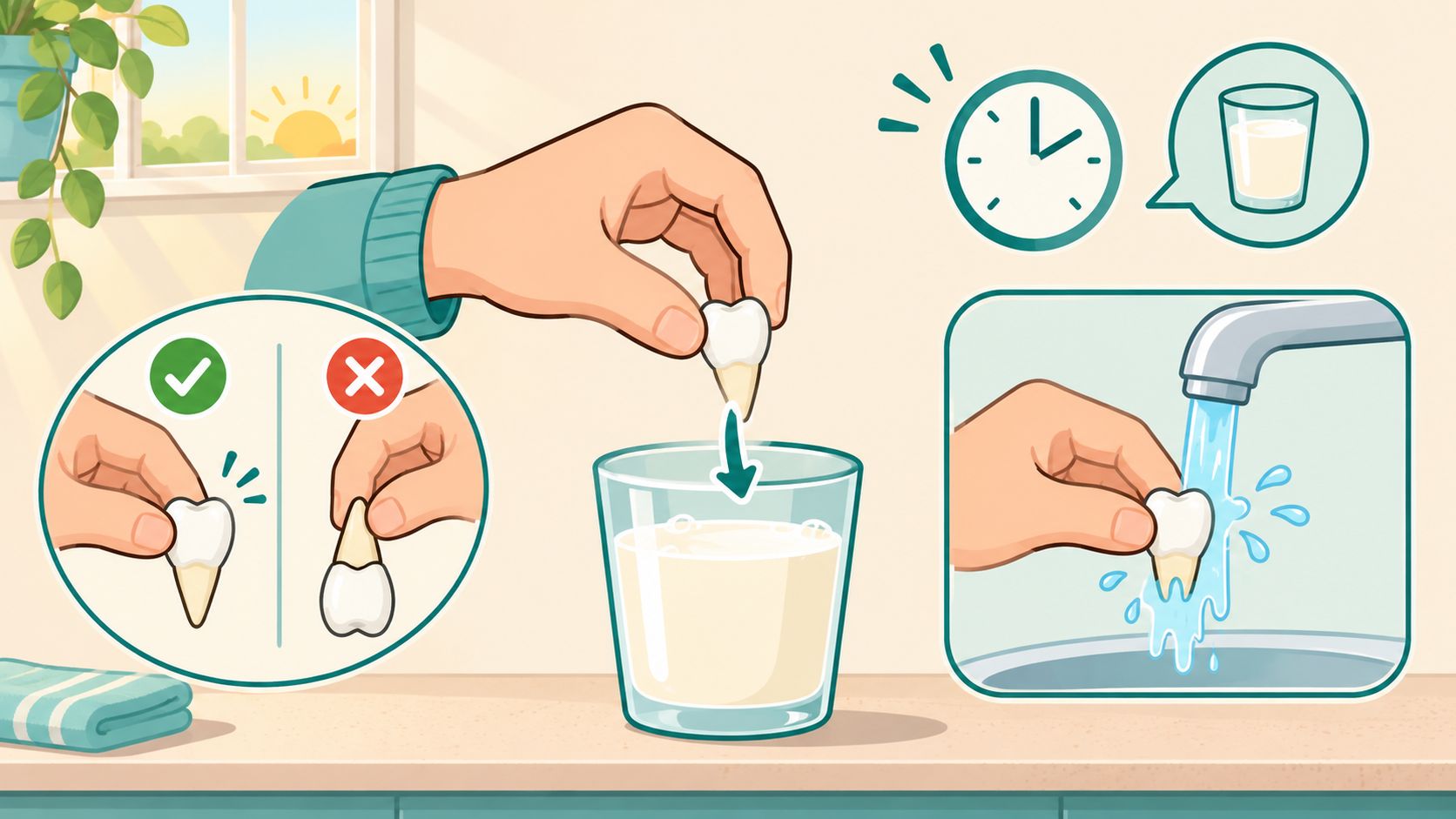
Handle the crown, protect the root
Pick it up by the crown. That's the visible chewing portion. Don't touch the root, because the cells on its surface help the tooth reattach.
Clean only if it's visibly dirty. If needed, rinse briefly and gently with milk or sterile saline, without rubbing or scrubbing. Don't rinse it under tap water or wrap it in tissue or cloth.
Try gentle reinsertion only when appropriate. For a permanent tooth, you may slide it back into its socket if it goes in easily and the person can safely hold it in place. Never force it or attempt this with someone who is confused, drowsy or unable to cooperate.
Otherwise, put it in milk immediately. Use a clean container with cow's milk, or the person's own saliva if milk isn't available. Don't leave the tooth dry while searching for a preferred container.
Leave for dental care. Don't wait for pain to ease or assume successful reinsertion means the injury is resolved. The tooth still needs assessment and may need stabilization.
Never reinsert a baby tooth. Doing so can damage the permanent tooth developing underneath. If you're unsure which type it is, keep it moist and contact a dentist immediately.
Mayo Clinic's tooth-loss first-aid guidance specifically recommends milk or the person's saliva for storage and warns against rubbing, wrapping or tap-water rinsing that may damage root-surface cells.
Keep the tooth moist and keep moving toward care. Don't spend valuable time repeatedly examining it.
Bring the tooth in its storage container and note when the injury happened. Tell the dental team if it spent time dry or was placed back into the socket.
A head impact accompanied by vomiting, confusion, loss of consciousness or other warning signs changes the priority. Seek emergency medical care first and tell that team about the missing tooth.
Book a Visit to Confirm Your Repair Plan
You bit down, heard a crack, and the piece in your hand looks small. That fragment still does not show whether the break stops in enamel or reaches the nerve. A dentist checks the enamel, the hard outer layer; dentin, the layer underneath; pulp, the tissue containing nerves and blood vessels; and the root and surrounding support. How soon you need that visit depends on pain, looseness, and whether the tooth still holds together.
The NHS guidance on chipped, broken or cracked teeth advises contacting a dentist and bringing any detached fragment in milk or saliva, because reattachment may sometimes be possible. An examination, with imaging when appropriate, helps determine whether the tooth needs a straightforward repair or treatment deeper inside.
Match the repair to the damage
Bonding uses tooth-colored resin that is shaped and polished to blend with natural teeth. It can repair chips, cracks and minor gaps. It is a poor match when a large share of the tooth is gone and the remaining walls cannot hold the resin.
A crown may be appropriate for a larger break when the remaining tooth needs more coverage. If the injury involves the pulp, root canal therapy may be considered before rebuilding the tooth. A displaced tooth may need stabilization. A tooth that cannot be predictably repaired may require extraction.
If replacement is necessary, a single tooth implant may be an option. It uses a small titanium post placed in the jawbone as a replacement root, with a custom-made crown attached after the implant bonds to the bone. Suitability requires an individual examination rather than a decision based only on how the break looks.
Cosmetic results and long-term strength both matter, and Dr. Finley will weigh them against the remaining tooth structure. He looks at how much sound tooth remains, whether the root and supporting tissues are affected, and what treatment can reasonably protect function. I recommend booking the same day if the tooth is loose, the bite feels wrong, or pain spikes with temperature. A small chip with no pain can often wait for the next available visit, but it still needs a plan before the edge wears further.
Make the call useful
Bristol Dental & Orthodontics is a family and cosmetic dental practice in Santa Ana, CA, serving Santa Ana and the surrounding Orange County communities. Emergency dentistry covers broken teeth, toothaches and other urgent problems.
When you call 714-874-8579, have these details ready:
- What happened: a fall, sports impact, or a break while eating.
- What you feel: pain, temperature sensitivity, looseness, or a changed bite.
- What you saved: a fragment or whole tooth, and how it is stored.
Bring any fragment in milk and ask for the earliest appointment that matches the urgency. Consult Dr. Finley about your specific injury and follow his instructions after treatment, including any recommended reassessment.
Visit Bristol Dental and Orthodontics or call 714-874-8579 to schedule a consultation with Dr. Andrew Finley. Describe the injury so the team can help you determine how promptly you should be seen.