

A cleaning appointment is booked, but the office is full, the benefit is unclear, or you do not have a regular dentist. Those practical barriers can leave a pregnancy cleaning on hold even when the visit can be scheduled during any trimester.
Tell the dental team you are pregnant and how far along you are before the visit. Articles on this topic often stop at a yes or no, leaving out what may affect the appointment and how to work through scheduling or coverage questions.
Dental cleanings during pregnancy are part of routine prenatal health care. The trimester affects visit logistics, while access may depend on benefit details, appointment availability, anxiety, or finding a dental office. Families in Santa Ana, Costa Mesa, Tustin, Irvine, and Garden Grove can use the guidance ahead to plan a visit and know when to call.
Table of Contents
- Is a Cleaning Safe at Each Stage of Pregnancy
- Pregnancy Gum Changes and When to Book or Call
- What Happens at a Pregnancy Cleaning Appointment
- Anesthesia, X-Rays and Medications Explained
- Coverage and Scheduling Barriers and How to Work Through Them
- Book Your Cleaning and Coordinate With Your Care Team
Is a Cleaning Safe at Each Stage of Pregnancy
HRSA and the ADA both list routine preventive dental care as appropriate throughout pregnancy. The U.S. Health Resources and Services Administration includes teeth cleanings among procedures considered safe during pregnancy, alongside dental exams, necessary X-rays, local numbing medicine, fillings, crowns, and root canals. The ADA also states that oral health care, including preventive treatment, can be provided at any point during pregnancy.
A cleaning can also help identify gum inflammation or a cavity while it is simpler to manage. Tell the dental office how far along you are and whether your obstetric clinician has given you any care instructions. If your pregnancy is high-risk, you take several medications, or you have an urgent infection, share those details with both offices so they can coordinate your care.
How each trimester changes the visit
The trimester can affect comfort and scheduling. The cleaning remains an option at every stage.
| Pregnancy stage | Routine cleaning | Planning notes |
|---|---|---|
| First trimester (weeks 1 to 13) | Can be scheduled | A shorter visit may help if you have morning sickness; share your gestational week at check-in |
| Second trimester (weeks 14 to 27) | Can be scheduled | Many patients find this a comfortable window for longer visits and needed care |
| Third trimester (weeks 28 to 40) | Can be scheduled | Ask about a shorter appointment and position changes; a slight leftward tilt can ease dizziness from lying flat |
| Any stage with urgent pain, swelling, or infection | Needed care should not be automatically delayed | Coordinate with the obstetric clinician if the pregnancy is high-risk or medication is needed |
In the first trimester, book the cleaning and ask for a shorter visit if morning nausea is a concern. Sharing your gestational week at check-in helps the team pace the appointment.
In the second trimester, a longer visit may feel more manageable. If a filling or deeper cleaning is also planned, choose a time of day when your energy is steadier.
In the third trimester, ask whether the appointment can be shortened or include position changes. The dental team can adjust the chair to help you stay comfortable.
Practical rule: At check-in, share your gestational week, current medications, and any pregnancy complications.
Bristol Dental & Orthodontics can coordinate with your medical team when a pregnancy is high-risk or a dental problem needs timely care. Dr. Andrew Finley can review your circumstances before treatment. This is general education, not a personal treatment plan.
Pregnancy Gum Changes and When to Book or Call
Hormones increase gum tissue's response to the same plaque, much as skin can become more sensitive in warm weather. The CDC's guidance on oral health during pregnancy estimates that approximately 60–75% of pregnant women develop gingivitis. Look for red, swollen, or bleeding gums.
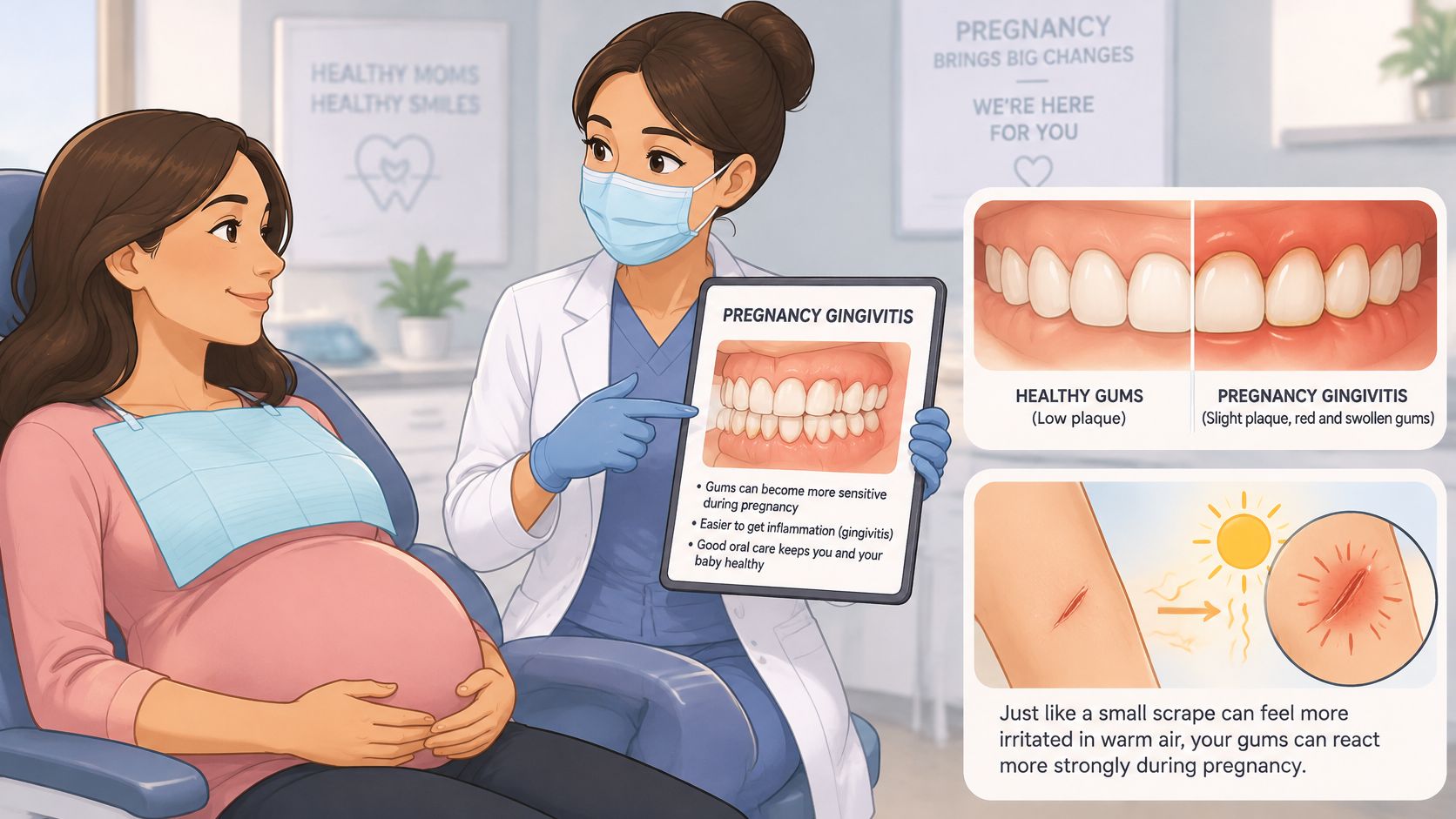
Brushing and flossing remove much of the soft plaque, but they cannot reliably remove hardened tartar, especially below the gumline. A professional cleaning clears plaque and calculus that have built up and reduces bacteria around the gums. If gingivitis persists, it can progress to periodontitis, which may require more extensive periodontal treatment.
Light bleeding versus bleeding that needs an exam
A little bleeding during brushing can accompany pregnancy-related gum sensitivity. If it continues or increases, or comes with swelling, pus, fever, spreading pain, or a loose tooth, contact a dental office for an assessment. These symptoms need attention before delivery.
Substantial bleeding, gum pain that starts on its own, loose teeth, or a history of periodontal disease may call for periodontal charting and a maintenance interval adjusted to your needs. At the visit, share your gestational week, pregnancy complications, medications, and obstetric provider's details if relevant.
| Symptom | What to do | Timing |
|---|---|---|
| Light bleeding when brushing or flossing | Arrange a cleaning and exam, and keep up with home care | Next available visit |
| Bleeding that persists or increases | Request an assessment for gum disease | Prompt appointment |
| Swelling, pus, fever, or spreading pain | Seek urgent dental evaluation | Same day or as soon as possible |
| Loose teeth | Request a prompt dental assessment | Prompt appointment |
| Swelling affecting the eye or throat, or trouble swallowing or breathing | Call 911 or go to the nearest emergency department | Immediately |
| Severe morning sickness or vomiting that limits visits | Tell the office and ask about shorter, more comfortable visits | Schedule when symptoms ease |
Bleeding gums warrant an exam, so book one this week.
Home care and when to call someone else
Between visits, brush twice daily with fluoride toothpaste and clean between your teeth every day. If vomiting is frequent, rinse with plain water and wait a bit before brushing. This helps avoid scrubbing stomach acid across your enamel. Tell the dental office if nausea or a strong gag reflex makes appointments difficult, and ask about a shorter visit.
Swelling that reaches the eye or throat, or difficulty swallowing or breathing, calls for emergency medical care. Call 911 or go to the nearest emergency department immediately. Report vaginal bleeding, cramping, or sudden swelling of the face or hands to your obstetric provider right away. A dental visit does not replace that call.
What Happens at a Pregnancy Cleaning Appointment
Check-in takes the first few minutes and helps the team set the pace. They confirm your pregnancy, how far along you are, current medications, and any guidance from your prenatal clinician. Mention nausea, a strong gag reflex, or hip discomfort so the team can adjust the visit.
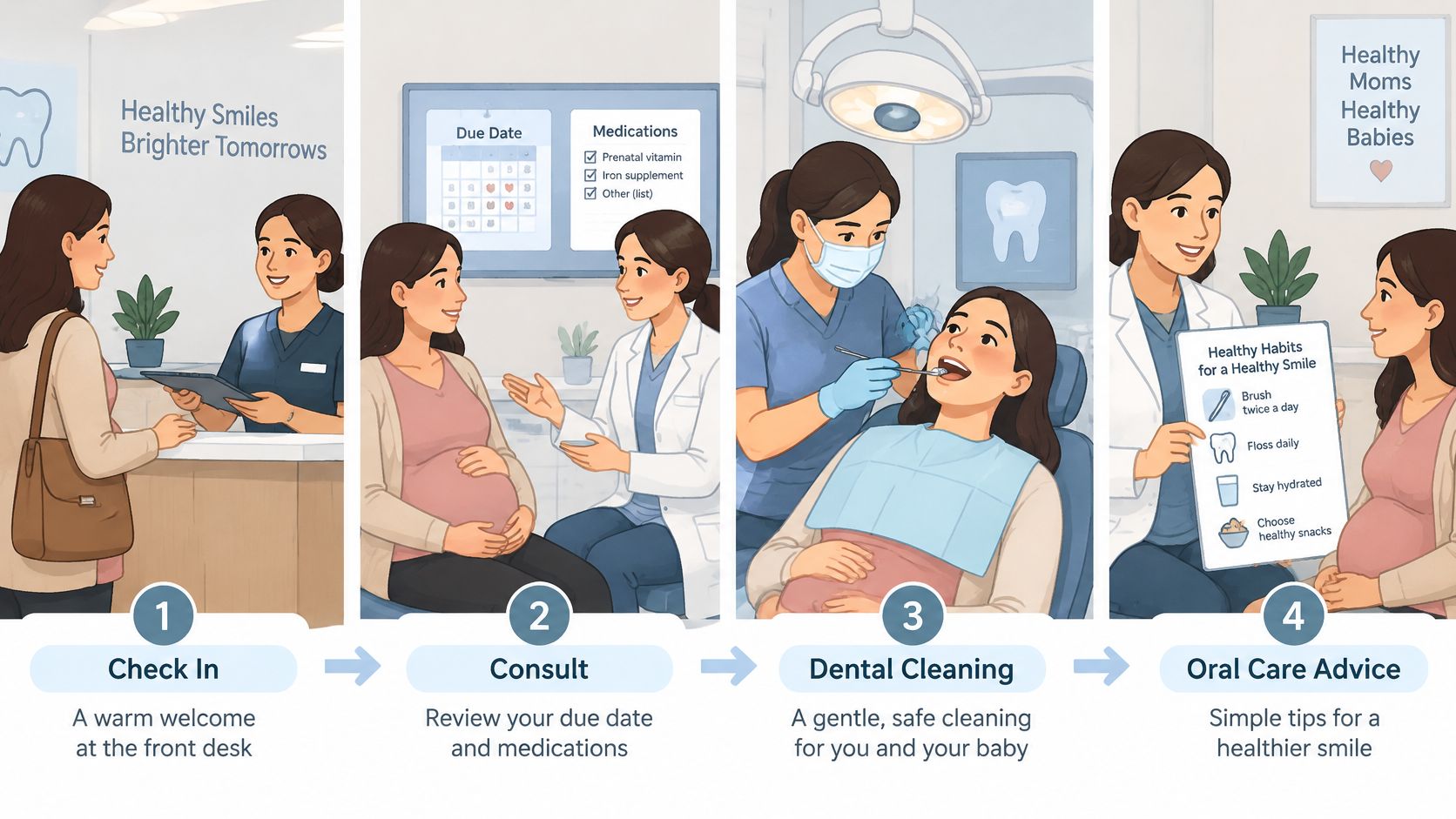
The team positions you for comfort. The chair may start partly reclined. If you feel dizzy or nauseated, ask to change position; a pillow under one hip is also a reasonable request. You can ask for a pause or a shorter appointment, especially if sitting still is uncomfortable.
The dentist or hygienist checks your gums as well as your teeth. They may measure the spaces between your teeth and gums and record bleeding or pocket depth when follow-up is needed. These measurements help show whether irritation is near the gum surface or needs closer attention.
The cleaning removes plaque and tartar. Hand instruments or an ultrasonic scaler clear deposits above the gumline and, when needed, below it. Polishing smooths the tooth surface. Routine cleaning usually does not require numbing, though deeper cleaning under the gum sometimes does.
The team considers imaging or numbing only if needed. They should explain how an X-ray or anesthetic would affect a dental decision. Ask what question an image is meant to answer; if it is not needed for care that day, it may not be taken.
You leave with a follow-up plan. Mild gum tenderness may occur for a short time. The team can review home care and set a return interval based on what the exam found, including an earlier visit if your gums need closer follow-up.
What a calmer checkup looks like later
At a follow-up, the gum measurements give the team a way to compare changes. If your home-care routine is helping, bleeding on probing should decrease, and pocket depths may improve when they were deeper. Your teeth may also feel smoother after deposits are removed. If tenderness worsens or pain, swelling, or a bad taste develops, call the dental office rather than waiting for the next scheduled visit.
Anesthesia, X-Rays and Medications Explained
A routine cleaning usually needs no medicine. If decay, infection, or gum disease calls for treatment, the dentist can consider the procedure, any needed anesthetic or X-ray, and your pregnancy history together.
| Procedure | Status in pregnancy | Precaution |
|---|---|---|
| Routine cleaning (scaling and polishing) | Can be performed in any trimester | Share gestational week and medication list |
| Scaling and root planing | Can be performed when indicated | Local anesthetic when needed; coordinate if high-risk |
| Dental exam and necessary X-rays | Can be performed when clinically indicated | Digital low-dose imaging; only images that answer a diagnostic question |
| Local anesthetic (lidocaine, with or without epinephrine) | Recognized as usable when needed | Use the lowest effective dose |
| Fillings and crowns | Can be placed when needed | Timing discussed with the dentist and obstetric clinician |
| Root canal | Can be performed when needed | Urgent treatment should not be automatically postponed |
| Elective medications | Avoid unless necessary | Review any prescription with the obstetric clinician |
What is usable, and what needs a second clinician
The American Dental Association pregnancy guidance says needed oral care, including dental X-rays and local anesthesia, can be provided during pregnancy. Delaying treatment may allow a dental problem to become more complex.
Local anesthetic such as lidocaine, with or without epinephrine, can be used when a deeper cleaning or urgent care requires it. The dentist uses the lowest effective dose. Numbing for a needed procedure differs from taking an optional drug without a clear reason.
X-rays answer a diagnostic question; they are not a routine add-on. Digital techniques use low-dose beams aimed at the mouth. If an image would not change the decision that day, it can wait.
Medication may call for input from your obstetric clinician. If an antibiotic or pain medicine is needed, the dental and obstetric clinicians can agree on the drug and dose, particularly in a high-risk pregnancy. Elective prescriptions can usually wait.
Scaling and root planing treats periodontitis and goes deeper than a routine polish. A review of 823 pregnant women treated between 13 and 21 weeks' gestation found that the treatment, with local anesthetic when needed, did not increase adverse fetal outcomes. The study also reported lower preterm-birth rates among treated women. These results apply to the 13 to 21 week window studied and should be checked against your own history.
The table is a starting point, not an individual treatment plan. Tell the dental team how far along you are, what medications you take, and whether your pregnancy is considered high-risk. The dentist can review your history and coordinate with your obstetric clinician when needed.
Coverage and Scheduling Barriers and How to Work Through Them
Cost, scheduling, and uncertainty about coverage are common reasons pregnant patients miss dental care. A 2025 survey of pregnant and postpartum patients found that 43% reported dental problems, while 41% had not received prenatal dental care. Respondents also cited fear or anxiety, time limitations, and not having a regular dentist. Patients who knew their insurance covered dental visits were significantly more likely to have attended one.
A separate finding shows why feeling well is not a substitute for an exam: 31.6% of pregnant respondents insured through Medicaid reported receiving a teeth cleaning during pregnancy, according to a study in PubMed Central. Knowing a benefit exists and knowing how to use it are separate steps.
A checklist you can finish this week
- Confirm the dental benefit: Call your plan and ask whether dental visits are covered during pregnancy and what the visit includes.
- Ask about Medi-Cal: If you have Medi-Cal, ask whether dental coverage applies to you now and which offices can see you.
- Take the next opening: If one practice is booked, ask for its next available cleaning rather than waiting for an ideal time.
- Put it in the prenatal plan: Ask your prenatal clinic to note dental care in your record, so both offices have the same information about your pregnancy week, medications, and risk level.
- Name the worry: If fear or a gag reflex could make the appointment difficult, mention it when booking. The team can discuss shortening the visit.
A benefit can be hard to use if the plan, appointment, and prenatal schedule do not line up. Ask about coverage and the next available appointment in the same call, and keep the answers together. Bristol Dental & Orthodontics serves families in Santa Ana and across Orange County, including Costa Mesa, Tustin, Irvine, and Garden Grove.
Book Your Cleaning and Coordinate With Your Care Team
Before the appointment, write down three details: your pregnancy week, current medications, and any health concerns your care teams should know. Share them with both offices so they can coordinate relevant information.
Ask the dental team to note your pregnancy week and arrange a shorter visit if nausea or chair positioning is a concern. If possible, choose a time of day when you feel more comfortable. Contact the dental office promptly about pain, swelling, or possible infection, and keep brushing twice daily with fluoride toothpaste and cleaning between your teeth each day.
If bleeding or cramping occurs, contact your obstetric clinician. For a cleaning or gum evaluation, bring your three check-in details to a consultation so the team can plan the visit around your circumstances.
Bristol Dental & Orthodontics serves families in Santa Ana and nearby Orange County communities. Visit Bristol Dental and Orthodontics to schedule a consultation and discuss a cleaning or evaluation.