

You may be putting off a filling, implant consultation, or cleaning because the thought of being in the dental chair makes your heart race. It's understandable to want one clear answer about what will help, but sedation isn't a one-size-fits-all choice, and deeper doesn't automatically mean better.
The best sedation dentistry matches your anxiety, procedure, health history, and the team's ability to monitor and respond to changes. A good plan can also include non-drug support, so medication isn't the only way to make care feel manageable.
Table of Contents
- Which Type of Sedation Fits Which Visit
- How Sedation Depth Works Like a Dimmer Switch
- Who Needs Sedation and What Else Can Help
- What Safe Monitoring Looks Like During Treatment
- Questions to Ask and How to Judge the Answers
- Preparing for and Recovering From Your Visit
- Schedule Your Sedation Consultation in Santa Ana
Which Type of Sedation Fits Which Visit
The best sedation dentistry is the level that fits your anxiety, the procedure, your health history, and what the office can monitor and manage, not the deepest option available. Sedation levels have different effects on awareness and different monitoring needs, so choosing one starts with a conversation about you, not a ranking of drugs.
| Sedation type | How it's given | Typical depth | Common uses | Recovery pattern |
|---|---|---|---|---|
| Nitrous oxide-oxygen | Inhaled through a small nasal hood | Minimal; relaxed and awake | Routine cleanings, fillings, and mild anxiety | Usually wears off within minutes after stopping |
| Oral sedation | Pill taken before the visit | Minimal to moderate | Longer visits and moderate anxiety | Often needs an adult escort; drowsiness can last hours |
| IV sedation | Medication given through a vein | Moderate; dose adjusted during treatment | Longer or more involved procedures and deeper anxiety | Usually needs an adult escort and monitored discharge |
| General anesthesia | Given by an anesthesia provider | Unconscious | Extensive surgery and some special-needs patients | Longer recovery; planned in a setting built for it |
With nitrous oxide-oxygen, you breathe the mixture through a small nasal hood. You stay awake and can respond, while feeling more relaxed; once the gas is stopped, its effects usually wear off within minutes. The American Dental Association's sedation guidelines describe safety responsibilities that change with sedation depth, including preparation, monitoring, emergency readiness, and provider training. The practical point is that the method matters less than whether it suits the patient and the visit.
Oral sedation involves taking a prescribed pill before the appointment. It may make you drowsy, so arrange for an adult to accompany you and follow the practice's instructions about transportation and recovery. The timing and effect can vary by medication and person, so ask Dr. Andrew Finley what to expect for your proposed plan.
IV sedation delivers medication through a vein, allowing the clinician to adjust the dose during treatment. General anesthesia is different: the patient is unconscious, and care requires an anesthesia plan and a setting equipped for it.
A nervous adult coming in for a routine cleaning and someone having multi-implant surgery may need very different support. Dr. Finley determines suitability case by case at Bristol Dental & Orthodontics, based on the planned care, health history, and available monitoring.
How Sedation Depth Works Like a Dimmer Switch
Think of sedation as a dimmer switch, not an on-off button. As the level deepens, awareness and responsiveness change, and the team's monitoring and rescue responsibilities change with them.
With minimal sedation, you're relaxed but still respond normally to spoken directions. You might feel a little slower in your thinking or coordination, while breathing and circulation are expected to remain unaffected. A common misunderstanding is that “sedated” means asleep. At this level, you're awake and able to communicate.
With moderate sedation, the dimmer is lower. You should still respond purposefully to a spoken request or light touch, breathe adequately on your own, and not need someone to intervene to keep your airway open. You may remember less of the appointment, but reduced memory isn't the same as being unconscious. The ADA's sedation teaching guidelines explain these levels through responsiveness and breathing.
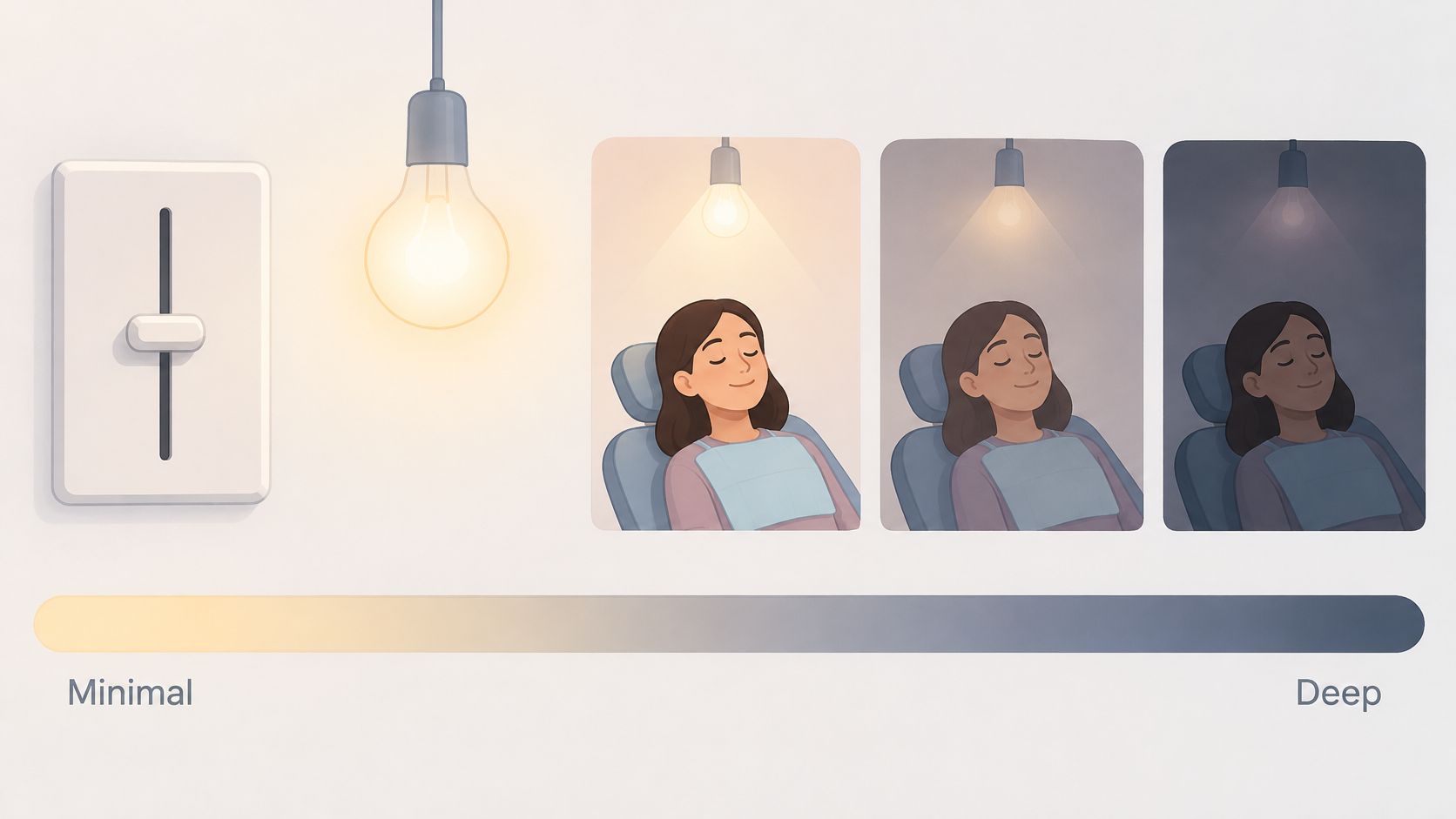
Deep sedation and general anesthesia reduce responsiveness further. Because a patient may be difficult to wake or may need help maintaining breathing, these levels call for appropriate staffing, equipment, and a plan for responding if the patient becomes more heavily sedated than intended.
A dose doesn't affect everyone in the same way. Age, weight, body composition, other medications, alcohol, sleep apnea, and other health conditions can change the response; combining sedating agents can deepen effects unpredictably. For example, someone expecting a light, talkative visit might become drowsier than expected and need gentle prompting from the team.
Practical rule: Ask what level the team is aiming for and what they'll do if your response becomes deeper than planned.
A target level is a clinical aim, not a promise of exactly how you'll feel. If you're considering sedation for emergency care, implants, cosmetic treatment, or orthodontics, ask what awareness and communication to expect and how the team will respond if that changes.
Who Needs Sedation and What Else Can Help
Consider two illustrative composites, not real patients. An adult in Costa Mesa has postponed a crown for years because a racing heart in the chair makes treatment feel impossible. A Tustin parent brings a child with sensory sensitivities for several preparation visits before treatment begins. Both may benefit from a plan built around their specific needs, but the plan doesn't have to start or end with medication.
Sedation may be considered for adults with significant dental fear or past difficult experiences, people with a strong gag reflex, patients facing long or multi-visit procedures, or anyone who finds it very hard to stay still. But a short visit, such as a routine cleaning or an Invisalign check, may not need sedation at all.
The 2025 peer-reviewed perspective on odontophobia discusses the limitations of relying on medication alone and describes options such as gradual desensitization, sensory-adaptive environments, cognitive-behavioral strategies, and clear communication. In practice, that might mean a preparation visit, a tell-show-do explanation, a stop signal you control, lower lighting, headphones, or caregiver involvement. Psychological support may also be worth discussing when anxiety runs deep.
Before considering sedation, tell your dental team about:
- Sleep apnea: Screening matters because breathing and airway risks affect planning. Some people with sleep apnea may be candidates for a custom oral appliance rather than sedation; ask Dr. Finley whether an evaluation is appropriate.
- Obesity or older age: These can be relevant to the team's assessment of sedation and monitoring needs.
- Heart or lung disease: Share diagnoses and current care, even if you think they're unrelated to dentistry.
- Pregnancy: Tell the practice so the care team can consider your circumstances before recommending a plan.
- Medications and supplements: Bring an up-to-date list, including non-prescription products.
- Recent alcohol or cannabis use: Be candid, since these may affect the sedation plan.
Acute dental pain follows its own timeline, so call the practice rather than delaying urgent care while trying to decide on sedation yourself. For dental implant surgery, sedation planning is separate from the discussion of the procedure's risks, alternatives, and informed consent. Medication may help with anxiety, but it doesn't replace either conversation.
What Safe Monitoring Looks Like During Treatment
A calm appearance does not show the whole picture during sedation. The team needs to follow breathing and responsiveness throughout treatment, because changes can happen before a patient looks distressed.
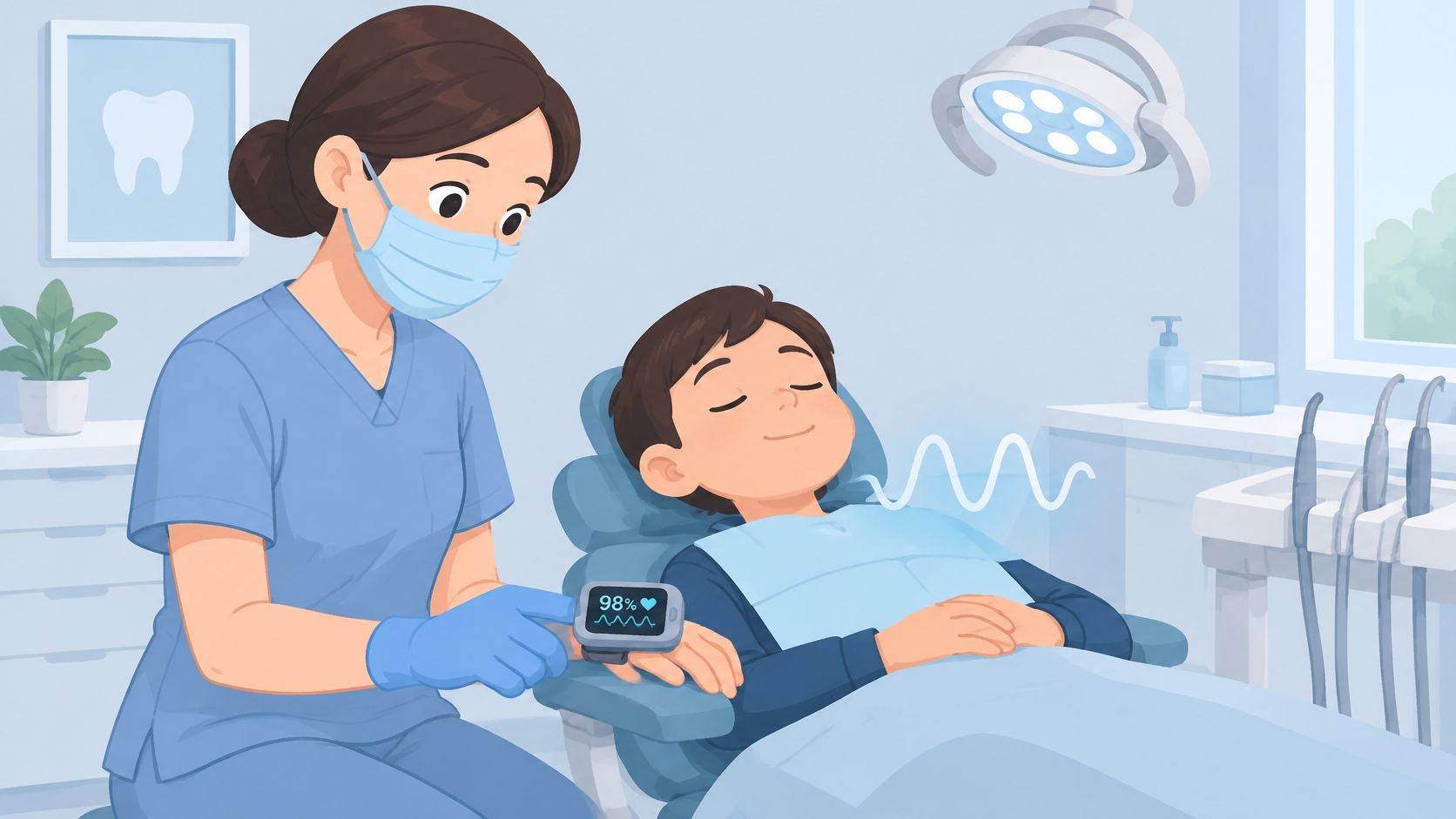
Pulse oximetry uses a sensor to track oxygen saturation. It helps show how much oxygen is in the blood, while ventilation monitoring checks how well air is moving in and out. For deeper sedation or general anesthesia, the ADA guidelines for sedation and anesthesia call for ventilation monitoring with end-tidal carbon dioxide unless the procedure or equipment makes that measure invalid. This can alert the team to reduced ventilation before oxygen saturation falls.
A trained team member should observe responsiveness and respiratory status during active treatment, watching and listening for changes in breathing. A monitor supplements direct observation; it does not replace it. Before sedation begins, the practice should document relevant medical history, medications, airway concerns, fasting instructions when applicable, and baseline vital signs.
For children and higher-risk patients, a time-stamped record helps track changes during treatment. The American Academy of Pediatric Dentistry's monitoring guidance recommends recording heart rate, respiratory rate, blood pressure, oxygen saturation, and expired carbon dioxide at least every 10 minutes in a time-based record. The team should also document weight, body mass index, and any weight-based dosing before sedation.
Emergency readiness matters too. The practice should have appropriate oxygen, suction, emergency and reversal medications, a rescue plan, and staff training that includes drills. If breathing slows, a prepared team can recognize the change, pause treatment, support breathing, and record its response.
Monitoring continues after treatment until consciousness returns to an expected level and vital signs are stable. If impairment may remain, a responsible adult should supervise the patient and follow written discharge instructions. The consultation checklist in the next section can help you assess who monitors you, what is recorded, and how the team responds to a change.
Questions to Ask and How to Judge the Answers
Two sedation plans can sound similar while assigning different roles, setting different goals, and offering different ways to begin. Use this checklist to compare the written details with what matters to you.
| Question to ask | A clear answer includes | Warning sign |
|---|---|---|
| Who gives and monitors my sedation? | A named, trained person responsible for the sedation plan | Unclear roles or no clear assignment of responsibility |
| Which vital signs are recorded, and how often? | Oxygen saturation, heart rate, blood pressure, and breathing recorded at set intervals with times | Only a general statement that you'll be watched |
| What's your plan if my breathing or consciousness changes? | A response plan that describes how the team will act | Reassurance without a described plan |
| What training and permits apply to the sedation level you're recommending? | Training and permits matched to the planned level, verifiable through the Dental Board of California | Hesitation or no clear answer about credentials |
| Who stays with me during recovery, and who drives me home? | Written discharge criteria and a required responsible adult | Being expected to leave alone or without written instructions |
| Can I start with a preparation visit or non-drug support? | Options such as preparation visits, tell-show-do, and stop signals | Sedation presented as the only route |
A dentist's license can be checked through the Dental Board of California. Use the checklist to understand who is responsible for each part of the plan, and ask for answers in writing when they are not already provided.
Then compare two written plans side by side. Look at the intended sedation level, what you are likely to feel, who is responsible for your care, and what non-drug support is available. A plan that uses a lighter level may be a better fit when it can meet your needs and the office can monitor and respond at that level. More sedation is not automatically a better match.
Words such as “painless” or “sleep dentistry” are marketing language; they don't help you compare plans. Ask what each plan is intended to do and what options you have if you feel anxious or need a pause. No plan can guarantee a particular experience, so take time to discuss any unclear answer before scheduling.
Preparing for and Recovering From Your Visit
Good preparation starts before appointment day. Follow the written instructions from your dental team rather than general advice, because requirements can differ by sedation method and by your health needs.
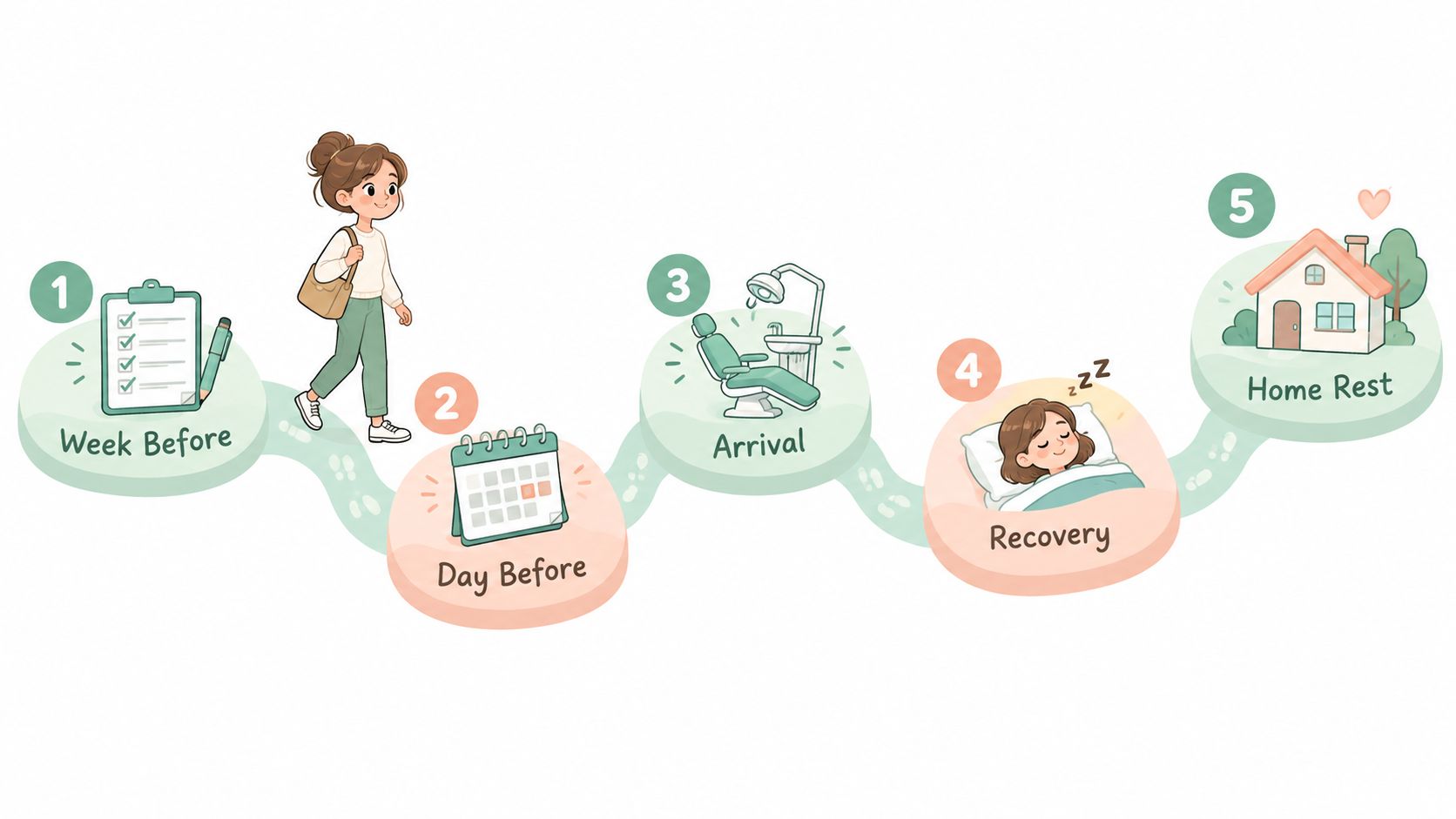
Before the visit: Give the practice a complete list of medications and supplements, any previous reaction to anesthesia, sleep apnea diagnosis, and pregnancy status. These details help the team assess which options are appropriate.
The night before: Follow fasting instructions exactly and arrange an adult escort if required. Food and clear-liquid instructions differ by sedation plan, so don't guess or use someone else's instructions.
The morning of treatment: Take only the medications your dentist has approved, with a small sip of water if instructed. Wear loose clothing and leave jewelry and contact lenses at home if the practice asks you to.
During treatment: Tell the team if you feel uncomfortable or need a pause. Monitoring should continue during active treatment, not just at the beginning.
The first hours after: Rest with your escort and follow the discharge instructions. Avoid driving, alcohol, and important decisions until the effects have clearly worn off; never combine medication with alcohol or improvise a sedative dose at home.
The next day: Follow the practice's written guidance, and call if confusion or severe pain continues. For trouble breathing, chest pain, or someone who can't be woken, call emergency services.
Nitrous oxide usually requires less preparation than deeper sedation, while IV sedation and general anesthesia may involve fasting instructions. Your care team should explain exactly what applies to your appointment. Don't give a child medication before the visit unless the dental team has specifically directed you to do so, and clarify supervision and transportation before administering anything.
Schedule Your Sedation Consultation in Santa Ana
If you feel tense about an upcoming appointment, a consultation can help clarify what support may fit your needs. At Bristol Dental & Orthodontics in Santa Ana, Dr. Andrew Finley can discuss comfort options with patients from the surrounding Orange County communities.
The conversation can cover your health history, medications, sleep or airway concerns, planned procedure, anxiety, and non-drug support. Together, these details help determine whether sedation may be appropriate and which level could suit the visit. No option guarantees that you will feel no anxiety, so it is reasonable to ask how the team will support you if your comfort needs change.
Sedation may be discussed alongside care such as Invisalign and orthodontics, dental implants, cosmetic dentistry, sleep apnea treatment, or emergency dental care. The consultation is a chance to connect the proposed approach with both your concerns and the procedure.
Bring a current medication list and details of any past sedation or anesthesia. These give the team useful context before discussing your appointment. You can also explain what tends to make dental care difficult for you, so non-drug support can be considered from the start.
If you are nervous, you do not need to settle on a method before asking for help. Schedule a consultation with Bristol Dental and Orthodontics to discuss your concerns and explore an option suited to your visit.