
You're often told there's an age when dental implants stop being sensible. That's the most common advice about dental implants for seniors, and it's misleading. A birthday alone doesn't tell Dr. Finley whether bone can heal, gums are healthy, or an implant can be cleaned every morning and night. Those practical questions decide far more than whether you're 68, 78, or 88.
Table of Contents
- Why Age Alone Rarely Decides Implant Candidacy
- The Health and Daily-Care Screen Behind Candidacy
- Medications and Conditions to Review Before Surgery
- How Bone Health and Grafting Shape Implant Planning
- Implant Treatment Timeline and Healing
- Keeping Implants Healthy as Bone and Gums Change
- Choosing Implants, Dentures or Bridges for a Senior
Why Age Alone Rarely Decides Implant Candidacy
For many adults 65 and older, age by itself isn't the reason implants are ruled out. Candidacy turns on bone and gum health, medical history, medications, daily hygiene, smoking, and whether you can keep up with follow-up care. Two people the same age can look very different on those points, so a single age cutoff doesn't help either of them.
What the Survival Numbers Actually Mean
A 2017 systematic review and meta-analysis of adults aged 65 and older screened 2,221 publications and included 11 studies in its statistical analysis. Its pooled implant survival at 1 year was 97.7%, and longer follow-up estimates were 96.3% in six studies and 96.2% in another reported estimate.
| Follow-up point | Pooled implant survival |
|---|---|
| 1 year, 11 studies | 97.7% |
| Longer follow-up, six studies | 96.3% |
| Another longer-term estimate | 96.2% |
A survival rate is the share of implants still in place at a checkpoint. It describes a group average, not a promise for one mouth. A high average tells you treatment can be predictable for older adults as a group, but it doesn't erase individual risk from gum disease, poor cleaning, thin bone, or a health condition that isn't well managed.
Averages open the conversation. Your exam, imaging, and medical review answer it for you.
For many Santa Ana and Orange County seniors, the better first question is straightforward. How are you cleaning your teeth now, and how is your overall health being managed. If those answers are solid, age alone usually won't close the door. If they're not, the exam can show what needs attention first, and whether another tooth replacement fits your situation better.
The Health and Daily-Care Screen Behind Candidacy
Can the implant be kept clean every day. That question sits at the center of Dr. Finley's screen, because bacteria collect around implants much as they do around natural teeth. Plaque left at the gumline can inflame the tissue, and that inflammation can progress to peri-implantitis, a condition where bone support around the implant is lost.
The Screen in Order
Hand and eye function comes first, because you'll need to brush, floss, and clean between teeth daily. Caregiver support comes next, since someone reliable may need to help if you can't manage alone. Then Dr. Finley reviews gum history, including past periodontitis and current bleeding, followed by smoking and diabetes control, which affect healing and infection risk.
The screen continues with frailty and cognition, bone and nutrition, and expected follow-up. Each factor asks whether care can continue for years, not just whether surgery is possible for one day.
| Factor | What the exam checks | Why it matters |
|---|---|---|
| Hand and eye function | Can the patient brush, floss and clean between teeth daily | Plaque around implants drives gum inflammation |
| Caregiver support | Is someone able to help with daily hygiene if needed | Daily cleaning depends on who does it |
| Gum health history | Past periodontitis and current bleeding or inflamed gums | Gum disease can spread around implants |
| Smoking | Current and recent tobacco use | Smoking is linked with poorer healing and more complications |
| Diabetes control | Blood sugar management, reviewed with the physician | Affects healing and infection risk |
| Frailty and cognition | Ability to follow care instructions and attend visits | Missed follow-up raises the risk of unnoticed problems |
| Bone and nutrition | Jawbone height and width on imaging, eating habits and weight stability | Bone volume decides whether grafting is needed; nutrition supports healing |
| Expected follow-up | Realistic ability to attend recall visits for years | Maintenance continues for the life of the implant |
Say two patients are both 78. One lives alone, has arthritis in both hands, and skips recall visits. The other brushes twice daily, uses tools that fit stiff fingers, and has an adult child checking in each week. They don't present the same picture, even though their birth certificates match.
A 2025 systematic review indexed on PubMed found five-year implant survival of 96.8% in patients older than 75, compared with 92.1% among patients aged 65 to 75, with no significant difference in success rates between the groups. That result doesn't mean older is automatically better. It means age alone didn't separate outcomes, which is why independence and upkeep deserve close attention.
Before a visit, try three quick self-checks. Can you brush and clean between teeth without help, is there a caregiver who can step in if you can't, and have your gums stayed stable over the past year without regular bleeding. Your answers are a starting point for an exam with Dr. Finley, not a verdict on your own.
Medications and Conditions to Review Before Surgery
Prescriptions alone usually don't rule out implants, and you shouldn't stop a medication on your own to make a procedure possible. That's the most important safety point in this part of planning. The right question isn't whether you take a drug, it's what you take, why, at what dose, for how long, and what surgery is planned.
Relative Risk Is Not the Same as Exclusion
Osteoporosis itself has not been conclusively shown to impair osseointegration, the process by which bone connects with the implant. Low-dose osteoporosis treatment isn't viewed the same way as high-dose antiresorptive therapy or prior radiotherapy, which deserve closer review. Blood thinners raise a bleeding and timing question to plan with the prescribing physician, not an automatic no.
A 2025 clinical guideline on implant treatment for older patients reported that cerebrovascular and kidney disease were associated with greater implant-removal risk, whereas osteoporosis and antiresorptive-agent use were not associated with increased risk in its analysis. That distinction matters, because a flat warning list can make very different situations sound equally risky.
| Medication or condition | What the care team reviews | Key point |
|---|---|---|
| Osteoporosis drugs, bisphosphonates and denosumab | Exact drug, route, dose and duration | Osteoporosis alone not conclusively shown to impair healing; high-dose therapy needs closer review |
| Blood thinners, anticoagulants | Reason prescribed, bleeding risk and timing of surgery | A risk-management question, not an automatic exclusion |
| Kidney disease | Kidney function and medication dosing | Associated with greater implant-removal risk in a 2025 study |
| Cerebrovascular disease | Stroke history and current medications | Associated with greater implant-removal risk in a 2025 study |
| Prior head and neck radiotherapy | Radiation dose and the jaw area treated | Reviewed case by case with imaging and the treating team |
| Diabetes | Blood sugar control, reviewed with the diagnosis | Control is assessed alongside the diagnosis |
Blanket drug holidays aren't a universal instruction. Stopping a bisphosphonate, denosumab, or an anticoagulant without medical direction can destabilize treatment for another serious condition. Dr. Finley and your prescribing physician need to weigh the surgical plan against that risk together.
Bring a complete medication list to your appointment. It should make coordination easier and faster.
- Exact drug name and dose: Include prescriptions, injections, and infusions, not just daily pills.
- Route and duration: Note whether you take it by mouth or injection, and how long you've taken it.
- Reason prescribed: Write down the condition each medication treats.
- Recent kidney results: Bring recent lab information if you have it.
- Bleeding history: Note unusual bruising, past surgical bleeding, or related concerns.
How Bone Health and Grafting Shape Implant Planning
A patient may have enough jawbone for an implant in one area and too little in another. Imaging helps show the bone's height and width, which determine whether the implant can be placed safely as planned or whether the site needs rebuilding first. Bone may shrink after a tooth is lost, especially if the gap has been empty for years.
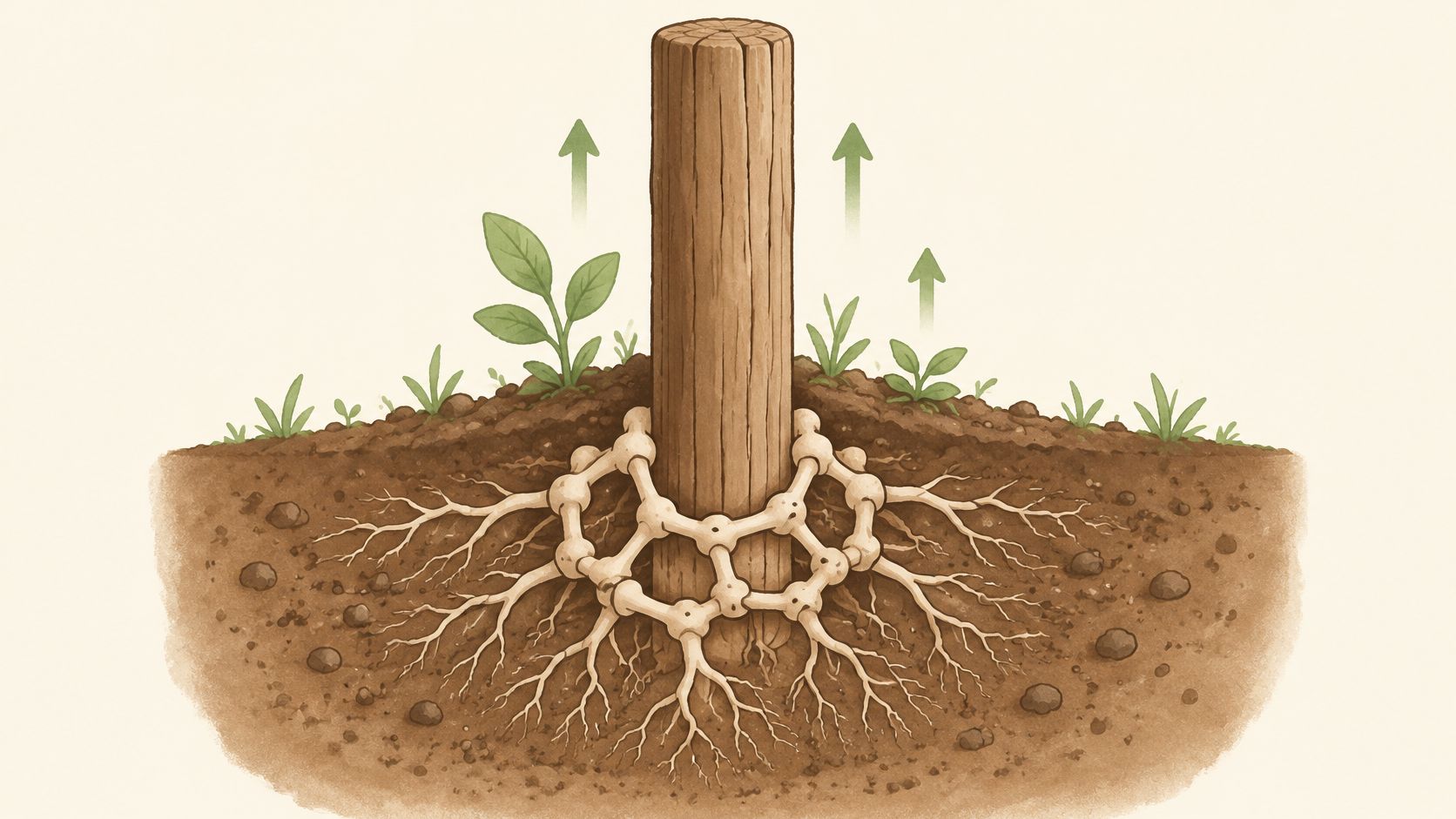
Once placed, the implant needs bone to grow into contact with its surface. This connection is called osseointegration. It is a separate healing step from attaching the visible tooth on top.
Three Grafting Situations in Plain Terms
Socket preservation is done after a tooth is removed. Graft material fills the empty socket to help maintain its shape as it heals. Ridge augmentation rebuilds width when the jaw ridge has narrowed, giving the implant more surrounding bone rather than leaving it against a thin wall.
A sinus lift may be considered for the upper back jaw, where the sinus cavity can sit close to the intended site of an upper molar implant. Adding bone there creates more room for placement, but grafting can extend the time before the implant is placed. The exam and imaging help determine whether any of these procedures fit your needs.
Planning point: Grafting can create the bone support needed for a stable, well-positioned implant. It also adds a procedure and may add healing time, so ask how it affects your treatment plan.
Before deciding, discuss possible complications in plain language. The Mayo Clinic overview of dental implant surgery describes the procedure and its risks. The FDA's overview of dental implants lists possible problems, including implant looseness or loss, damage to nearby teeth or tissues, and sinus perforation. Other listed complications include jawbone fracture, bite problems, abutment-screw loosening, and difficulty cleaning around the gums.
Plan for these complications, which are possible rather than expected outcomes. Imaging, careful positioning, a review of your medical history, and follow-up can help reduce avoidable problems and identify others early. Dr. Finley can explain which risks relate to your anatomy and what alternatives may be considered if bone support is limited.
Implant Treatment Timeline and Healing
Implant treatment is staged, because healing bone can't be rushed to fit a calendar. You'll move through planning, possible site preparation, placement, healing, and then the final tooth. Some cases allow a temporary tooth sooner, but that's decided case by case after Dr. Finley sees bone quality and implant stability.
| Stage | Typical timing | What happens |
|---|---|---|
| Consultation and 3D imaging | One or two visits over a few weeks | Exam, imaging and medical-history and medication review |
| Extraction and grafting, if needed | Healing commonly 3 to 6 months before placement | Socket preserved or bone rebuilt |
| Implant placement | Single surgical visit | Post placed in the jawbone, with local anesthesia and optional sedation |
| Osseointegration healing | Commonly several months, often about 3 to 6 months | Bone grows into contact with the implant surface |
| Abutment and crown or bridge | Typically a few weeks after healing | Connector and visible tooth attached |
| Recall and maintenance | Often every 3 to 6 months at first, then based on risk | Cleaning, gum check and periodic X-rays |
The consultation usually brings together an oral exam, 3D imaging, and a review of your medications and health history. If a failing tooth must be removed or bone must be rebuilt, that site heals first. At placement, the implant post is set in the jaw during a single surgical visit, usually with local anesthesia and optional sedation.
Why the Wait Matters
During osseointegration healing, you're waiting for bone to connect with the implant surface. Chewing hard on the site too early can work against that process, so you'll receive specific instructions about diet and care. Once healing is complete, the abutment connects the implant to a crown or bridge, and recall visits begin.
Timing shifts with bone quality, grafting, overall health, and the type of restoration chosen. Ask Dr. Finley to walk through your own likely sequence during a consultation, including what could shorten or extend it. A realistic calendar helps families plan transport, caregiver help, and follow-up from the start.
Keeping Implants Healthy as Bone and Gums Change
An implant doesn't get a cavity, but the gum and bone around it can still become inflamed. That's why maintenance isn't an optional extra. Like a car's routine service, small checks let your dental team catch changes while they're still manageable.
The ITI consensus statement on advanced age and systemic conditions reports peri-implant marginal bone loss in geriatric patients of approximately 0.1 to 0.2 mm annually after the initial remodeling period, while the first year after loading may show about 0.51 mm of loss. It also reports that marginal bone loss in older patients is generally low and comparable with other age groups during 1 to 5 years of follow-up.
Those small numbers explain why an early baseline matters. A standardized X-ray taken when the implant is restored gives Dr. Finley a reference point. Later images can then help separate normal early remodeling from inflammatory bone loss that needs treatment.
From Plaque to a Problem Worth Catching Early
The sequence is plain. Plaque builds around the implant, gums become red and bleed, and persistent inflammation can move from mucositis to peri-implantitis. At that later stage, supporting bone is lost, and continued loss can threaten the bone connection itself.
Cleaning can become harder with reduced dexterity, impaired vision, dry mouth, cognitive limits, or a history of gum disease. The solution is to match tools to your hands and eyes, not to expect one standard routine to fit everyone.
- Soft brush: Use gentle strokes at the gumline, with an enlarged or long-handled grip if your hands tire easily.
- Interdental brushes: Choose sizes that fit the gaps without forcing, and replace bent brushes.
- Floss threaders or water flosser: Use these where a bridge or tight contact makes regular floss difficult.
- Caregiver backup: Agree in advance who will inspect and help if independence declines.
Professional care includes cleanings, probing and soft-tissue checks at intervals based on risk, plus periodic standardized radiographs. If a parent moves into assisted living, bring the maintenance plan into that transition rather than assuming staff will know the routine. A workable daily plan, reviewed as ability changes, protects the investment in care and comfort.
Choosing Implants, Dentures or Bridges for a Senior
The right option depends on how many teeth are missing, the condition of bone and gums, and whether daily cleaning can be managed reliably. There's no single answer for every senior, and a choice that suits a neighbor in Irvine or Tustin may not suit you. Start with the situation, then compare how each option attaches and how you'll clean it.
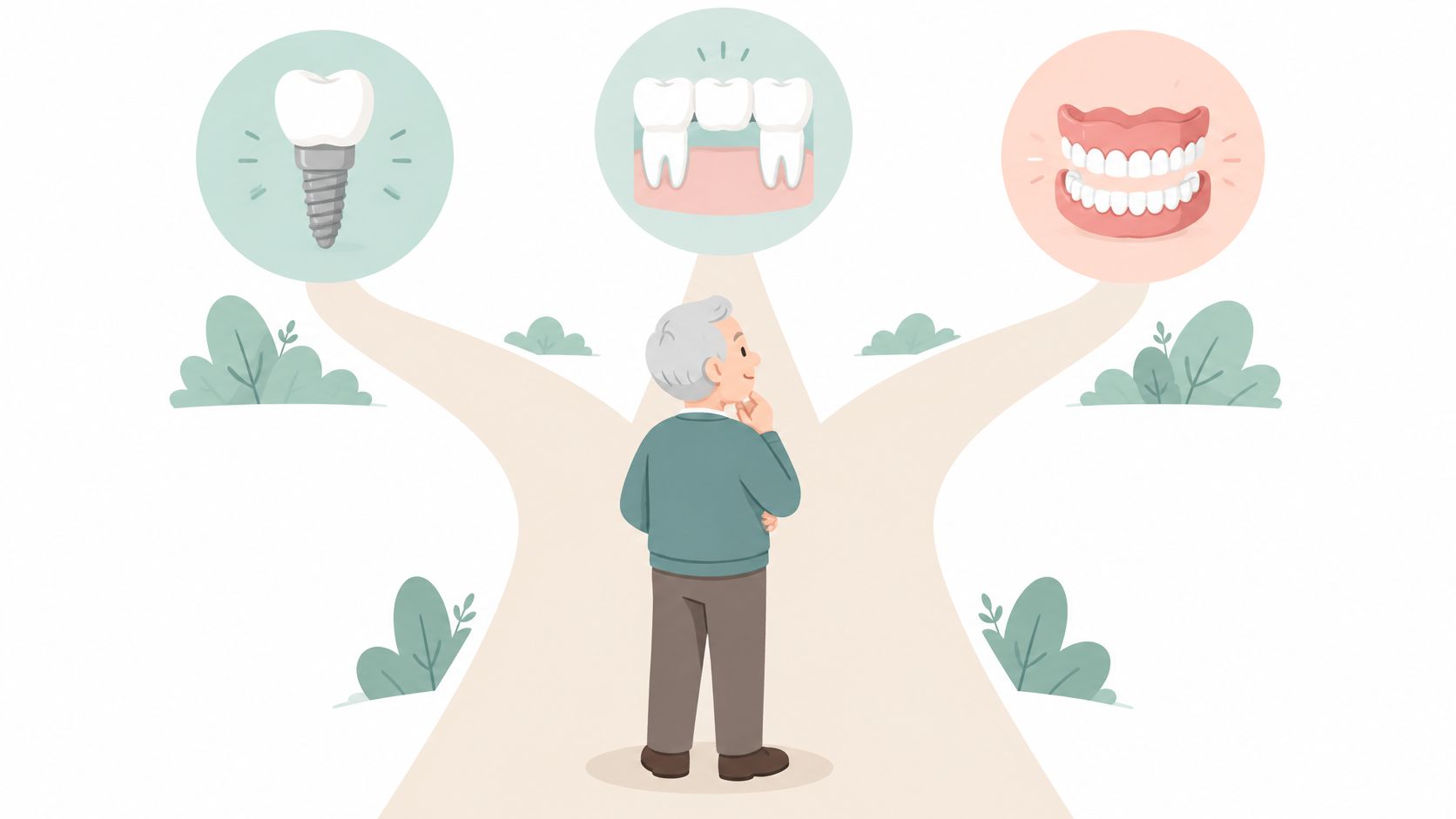
| Option | How it attaches | Effect on jawbone | Daily cleaning | Best fit |
|---|---|---|---|---|
| Single dental implant with crown | Anchored in the jawbone | Supports bone where the implant sits | Brush and floss around the crown and gumline | One missing tooth, healthy gums |
| Implant-supported bridge | Two or more implants support several teeth | Supports bone at implant sites | Floss under the bridge with a threader | Several missing teeth, sound bone |
| Traditional bridge | Crowns on neighboring natural teeth | No direct bone support | Clean under the pontic daily | Gaps flanked by sturdy, crownable teeth |
| Removable partial or full denture | Clasps or suction, resting on gums | Bone under the denture may shrink over time | Remove and clean daily | Many missing teeth, lowest upfront complexity |
| Implant-retained denture | Denture snaps onto implants | Implants help stabilize the denture | Remove, clean denture and implant attachments | Full-arch loss, want more stability |
A Practical Verdict by Situation
- One missing tooth: With healthy gums and a reliable cleaning routine, a single implant is often the clearest option to discuss.
- Several missing teeth: With sound bone and good cleaning ability, an implant-supported bridge may replace multiple teeth without using neighboring teeth for support.
- Many missing teeth: With limited bone or dexterity, an implant-retained denture or a removable denture may be more realistic to clean and maintain.
- Weak neighboring tooth: A traditional bridge may be a poor fit if the teeth beside the gap can't carry extra load well.
Implants support bone where they sit, while removable dentures are often the lowest-complexity option up front. Traditional bridges avoid implant surgery, but they depend on neighboring natural teeth. None of those trade-offs can be judged from a photo or a quick estimate, which is why gum condition, bite, imaging, and cleaning ability belong in the same conversation.
Cost is shaped by the number of implants, grafting or a sinus lift, 3D imaging, lab work, your sedation choice, and lifetime maintenance visits. Compare complete written treatment plans rather than a single first estimate, because a lower starting figure may not include every stage. Check with your own dental plan or insurer about how each option is treated, since plans differ and the office can't answer coverage questions for a policy it hasn't reviewed.
If you're weighing dental implants for seniors for yourself or a parent, schedule a consultation with Dr. Andrew Finley at Bristol Dental & Orthodontics in Santa Ana, serving Costa Mesa, Tustin, Irvine, and Garden Grove. Bring your medication list, and bring a caregiver if that helps you ask questions and remember the plan. You'll leave with a clearer view of candidacy, alternatives, timing, and upkeep, without being asked to decide from age alone.
If missing teeth are making meals, speech, or denture wear harder than they should be, Bristol Dental & Orthodontics in Santa Ana can review your bone, gums, medications, and daily cleaning routine and explain whether implants, a bridge, or a denture fits best. Schedule a consultation with Dr. Andrew Finley through Bristol Dental and Orthodontics, and bring your medication list plus a family member or caregiver if that support would help.