
You're at the sink in Santa Ana, halfway through a morning brush, when the foam turns pink. You rinse, look at the bristles, and the same question lands that brings so many patients in: why do gums bleed when brushing teeth? The tempting move is to park the toothbrush until things settle.
Resist that move. Pink on the brush usually means the gum edge is already irritated by plaque sitting along it, and a few days off lets that layer thicken while the bleeding drags on. Gentle cleaning, done daily, is what calms the tissue down. If the blood showed up when you started flossing, give it about a week of light, consistent passes before judging the result.
The sight is common. A 2024 peer-reviewed study of university students found that 40.5% had experienced bleeding gums while brushing, and many felt otherwise fine. Where the blood appears, how long it lasts, and what else is changing in your mouth decide whether careful home care is enough or an exam should come first.
Table of Contents
- Match the Blood on Your Toothbrush
- How Plaque Makes Gums Bleed
- Keep Cleaning While Gums Are Tender
- When Brushing Force or Health Is Involved
- Gingivitis or a Deeper Gum Problem
- Daily Habits That Keep Gums Quiet
- Book a Gum Check Before It Worsens
Match the Blood on Your Toothbrush
A Costa Mesa parent stops mid-brush because the foam is pink and assumes the bristles did the damage. Light bleeding usually means the gum edge is inflamed, most often by plaque, and the brush is only disturbing fragile tissue.
Use the table as a first sort, then read the row that matches what you see. This is general education, not a diagnosis of your mouth.
| Cause | Typical signs | How urgent | First step |
|---|---|---|---|
| Plaque gingivitis | Red or puffy gumline that bleeds with gentle brushing | Often mild if it improves | Soft brush twice daily and daily cleaning between teeth |
| Tartar at the gumline | Bleeding that returns in the same spots | Needs a professional cleaning | Book a cleaning; a toothbrush cannot scrape tartar off |
| New or infrequent flossing | Brief blood between teeth after starting floss | Often settles in about a week | Keep flossing gently every day |
| Aggressive brushing | Sore gums, frayed bristles, or worn gum edges | Fix technique and rule out disease | Switch to a soft or extra-soft brush and light pressure |
| Periodontitis | Ongoing bleeding plus bad breath, recession, loose teeth, pus, or bite changes | Serious | Arrange a periodontal evaluation |
| Blood thinners or similar medicines | Gums bleed more easily, sometimes with bruising elsewhere | Do not stop the medicine on your own | Tell the dentist and the prescribing clinician |
| Pregnancy, diabetes, smoking, or illness | Bleeding alongside a known risk factor | Exam if bleeding persists or other warning signs appear | Seek dental and medical review if it persists |
How to read your row
Plaque gingivitis shows a red, puffy margin that bleeds with gentle contact. Careful cleaning for 1 to 2 weeks is a fair test when teeth feel firm and breath is ordinary.
Tartar keeps the same spots bleeding because a toothbrush cannot lift hardened buildup. Home care will not finish that job. Book a cleaning rather than scrubbing harder.
New or long-skipped flossing can cause brief blood between teeth. If you stay gentle, that often settles in about a week. Keep the daily habit. Do not quit on day two.
Hard scrubbing injures tissue that is already tender. Frayed bristles and worn outer gum edges are clues. Change the brush and the pressure, and still get disease ruled out if bleeding stays.
Periodontitis adds persistent bleeding to bad breath, recession, loose teeth, pus, or a bite that feels different. Do not run a home trial. That pattern needs a periodontal evaluation.
Blood thinners and similar medicines can make gums bleed more easily. Never stop a prescribed drug because of pink foam. Tell both the dentist and the clinician who prescribed it.
Smoking, diabetes, pregnancy, older age, and some illnesses raise risk. A short careful-cleaning trial is reasonable only when bleeding is light and already easing. If it persists, dental and medical review should not wait.
Practical rule: One to two weeks of gentle cleaning is a fair test only for light bleeding that is already improving, with no loose teeth, pus, or foul taste.
Dr. Andrew Finley at Bristol Dental & Orthodontics can sort which row fits the pattern in that mouth. Follow the matching row, then look at why inflamed tissue bleeds in the first place.
How Plaque Makes Gums Bleed
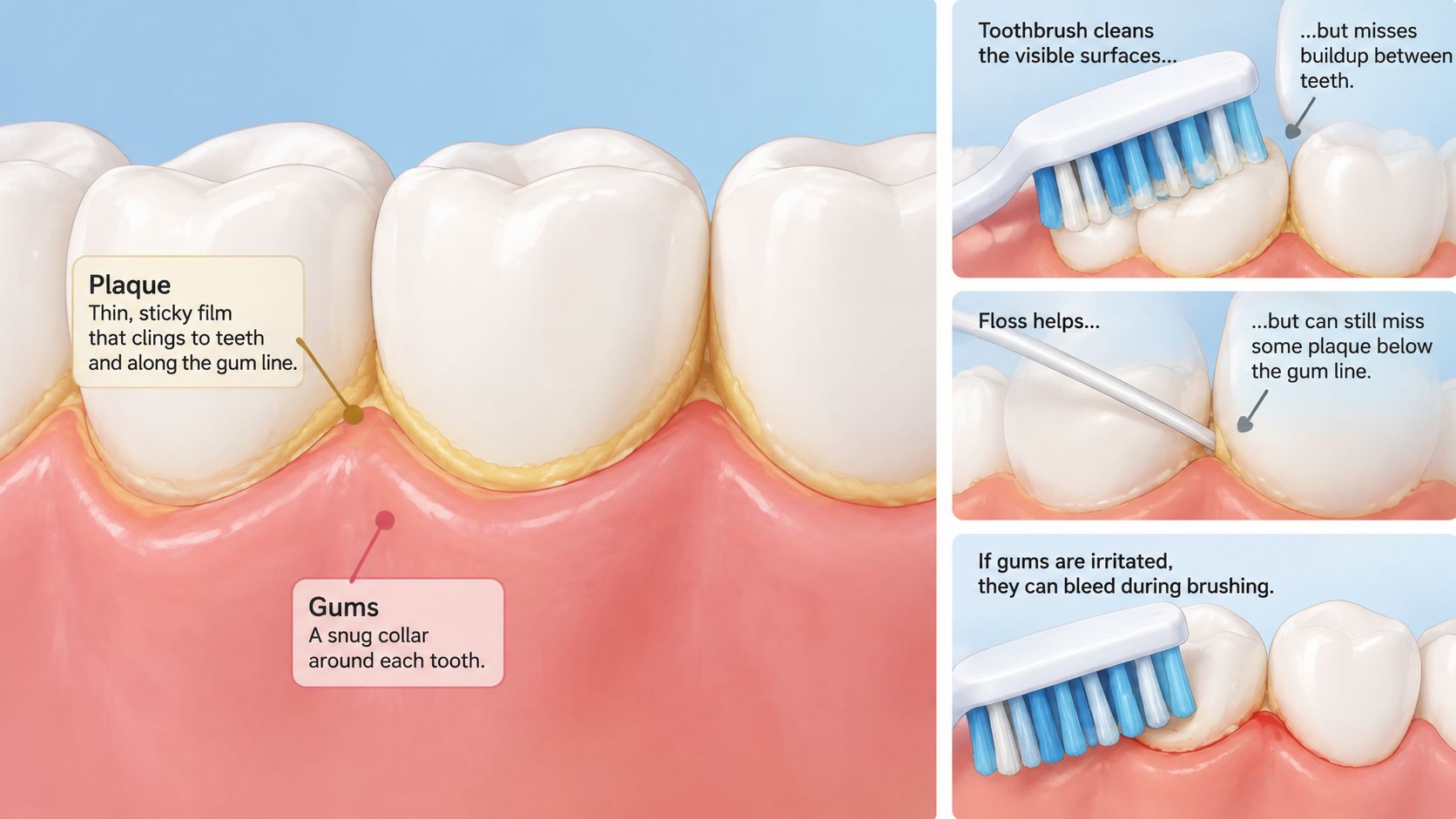
Picture a back molar the way a Tustin teen might after skipping floss for a month. The gum sits like a snug collar around the tooth. Plaque is a sticky bacterial film along that collar. When brushing and flossing miss it, bacteria and their by-products set off an immune response.
Blood vessels in the gums widen and become leakier. The margin swells and turns tender. Even a soft brush can disturb those fragile vessels. It is like a sunburned lip that splits at a light touch. The touch reveals the injury. It does not start it.
From soft film to hard tartar
If plaque stays, it hardens into tartar. A toothbrush cannot remove tartar well, and the rough edge keeps irritating the tissue. The National Institute of Dental and Craniofacial Research identifies plaque and tartar as central causes of gum disease. It also notes that smoking, diabetes, older age, genetics, hormonal changes, and some illnesses or medications can increase risk.
Bleeding during brushing most commonly reflects gingivitis, inflammation limited to the gum tissue. At this stage the problem has not yet taken the ligament and bone that hold the tooth. Daily disruption of plaque, plus professional cleaning when tartar is present, is what lets this early stage settle. That is a general pattern, not a promise for every mouth.
Why pink foam is common
Nearly 42% of U.S. adults aged 30 and older have periodontitis, according to the Centers for Disease Control and Prevention. Bleeding gums are common rather than rare, because so many adults already have gum inflammation that has moved past a mild stage. Blood on the brush is a visible sign that inflamed tissue is being disturbed.
Persistent bleeding, or bleeding that starts on its own without brushing, deserves a professional look. Untreated inflammation can move beyond the gums into the support around the teeth. That deeper problem is a different condition from this gum-limited stage, and home brushing does not measure it.
Keep Cleaning While Gums Are Tender
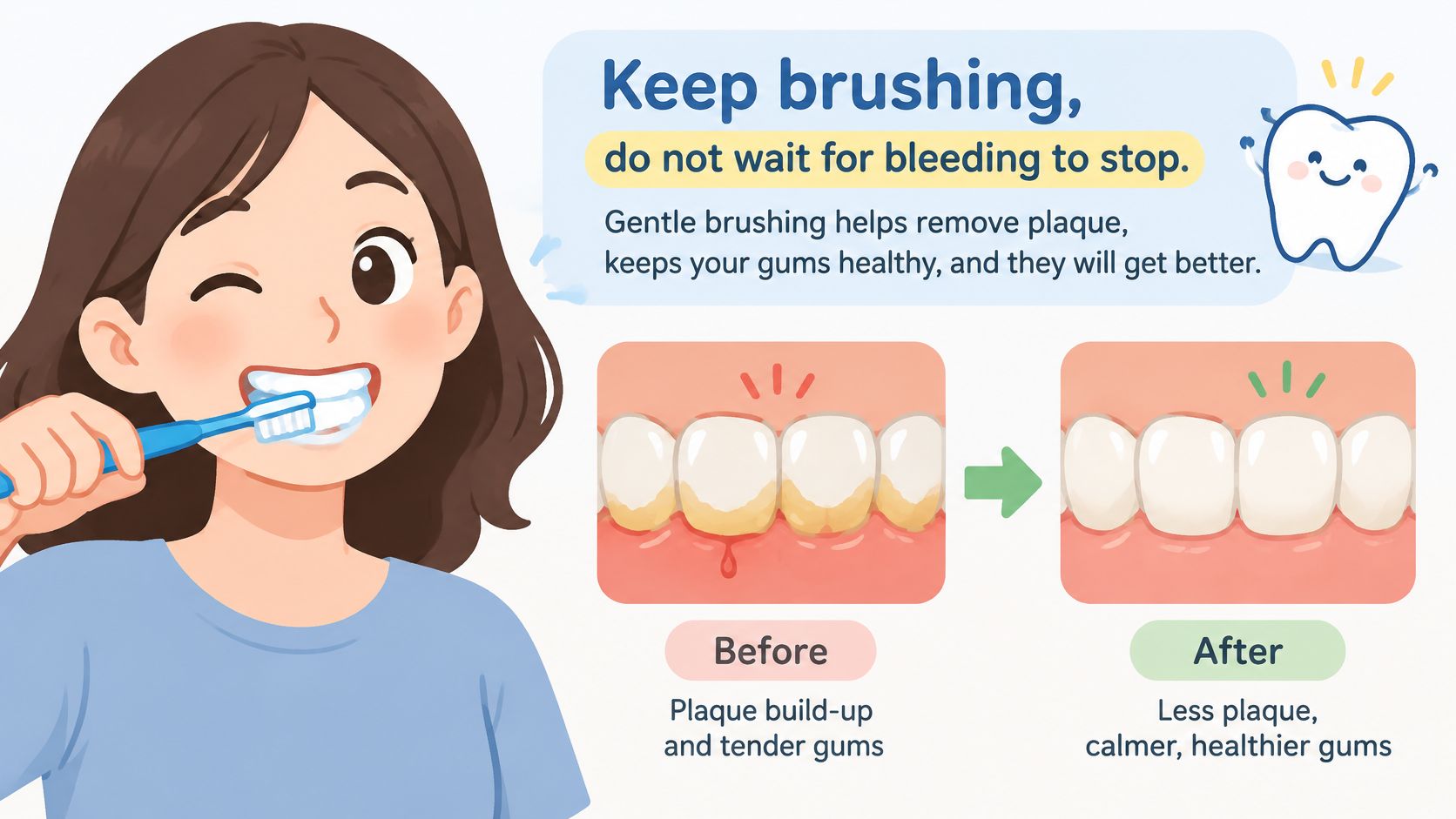
Keep brushing. Do not wait for bleeding to stop before you clean. Stopping lets more plaque collect and usually prolongs the inflammation. The question people skip is whether to clean through the tenderness. The answer is yes, gently.
Bleeding that eases with gentle, regular hygiene is a different story from bleeding that stays. Gingivitis is generally preventable and reversible with consistent brushing, interdental cleaning, and professional treatment, as described in CDC facts on gum disease. Aggressive scrubbing can injure inflamed tissue instead of helping it.
A gentle routine you can start tonight
- Use a soft or extra-soft brush and a pea-sized amount of fluoride toothpaste.
- Angle the bristles about 45 degrees toward the gumline so the tips reach the collar, not just the chewing surface.
- Use short, light strokes or small circles. Pressure should be no harder than holding the brush in a loose fist. If the bristles splay, the force is too high.
- Brush twice a day for about two minutes, including the tongue side of every tooth.
- Clean between teeth once a day with floss or another interdental cleaner. Slide under the gum edge. Do not snap the floss down onto the papilla.
- If flossing is new, expect some blood and keep going gently. The ADA notes this often settles in about a week.
- Spit, and do not rinse away all the fluoride. Note whether the same sites still bleed after 7 to 14 days.
If the same spots are calmer after about a week of gentle flossing, stay with that routine. If they are not, more force is the wrong next move.
Scrubbing harder to “make it stop” can cut tissue that is already swollen. A powered brush with a pressure sensor can help people who habitually press too hard, because the handle warns them before the bristles splay. Hardened tartar still needs a professional cleaning. No brush lifts it.
Continue gentle cleaning. Book an exam if bleeding, swelling, bad breath, recession, looseness, or pain at one tooth remains after that careful trial.
When Brushing Force or Health Is Involved
How hard you brush, which medicines you take, and what your body is doing to your circulation and hormones can each make gums bleed for their own reason. Sorting the three matters, because each calls for a different fix, and none of them is a reason to quit gentle plaque removal.
Hard brushing
A medium or hard brush, a sawing motion, and worn outer gum edges are clues that force is cutting tissue that is already sensitive. The American Dental Association's consumer guidance recommends an extra-soft or soft-bristled toothbrush when aggressive brushing may be contributing, and it advises talking with a dentist about gums that keep bleeding.
A new electric brush is not automatically gentler. If you still press, the motor just scrubs the injury faster. Let the bristles rest on the gumline and move the handle slowly.
Dropping the force does not mean dropping the cleaning. The tender collar still needs light daily plaque removal while it heals; pressure is what comes off, not the routine.
Medicines
Blood thinners are one recognized reason gums bleed more easily, and some other drugs dry the mouth, so plaque sticks longer and cleaning feels harder. Either way, the decision sits with two clinicians. Report the bleeding to the dentist and to the prescriber, and let them weigh the dose, the timing, or the dental plan.
Keep taking the medicine as prescribed and raise the bleeding in both offices. A shared conversation is the safe way to decide whether anything about the drug should change.
Health conditions
A systemic factor changes the question from "am I brushing wrong" to "what is my body doing to this tissue." Slower healing, hormone shifts, and reduced circulation can each make a small amount of plaque provoke more bleeding, and low blood flow can even mask redness while damage continues underneath. The useful evidence is your own response over a careful gentle trial, since no population statistic can predict whether your gums will bleed.
Two patterns settle when to escalate. Sudden heavy mouth bleeding, unexplained bruises, or bleeding from several sites in the body calls for prompt medical care. Bleeding with swelling, soreness, lasting bad breath, or changes around the teeth that survives a careful gentle routine needs a dental exam rather than a firmer hand, and mixed medical cases belong in a dental and medical conversation together.
Gingivitis or a Deeper Gum Problem
Both diagnoses can begin with the same pink foam in the sink. The difference sits below the gumline: gingivitis is inflammation in the soft collar of gum tissue, while periodontitis means the structures anchoring the tooth are breaking down. The collar works like a rubber gasket around a pipe joint. A swollen gasket can still seal, but once the joint underneath loosens, no amount of polishing the outside will hold it.
A Garden Grove parent who skipped flossing for months, sees pink foam, and still has firm teeth and ordinary breath fits the gingivitis pattern: inflamed gums with no loss of the attachment or bone that holds each tooth. That version improves when plaque comes off every day and tartar is removed professionally.
Once a tooth starts to feel loose, the same plaque process described earlier has moved below the gumline. Bacterial toxins keep the body in a chronic fight there. Ligament and bone break down, pockets deepen, and bleeding becomes easier to provoke. Home care cannot rebuild lost support on its own.
Bleeding confined to one tooth, or to a single spot under an aligner edge, is its own pattern. Food and plaque packed at one contact can inflame a single collar while the rest of the mouth stays calm, and scrubbing the whole mouth harder misses the actual site.
The clinical split
The American Academy of Periodontology's patient information draws the line this way. Gingivitis is inflamed, easily bleeding gums and does not itself involve attachment or bone loss. Periodontitis is a destructive disease and needs a periodontal evaluation and treatment. Home care alone is not the plan once support is breaking down.
| Feature | Gingivitis | Periodontitis |
|---|---|---|
| Gum tissue | Inflamed and bleeds easily | Inflamed, with deeper pockets below the gumline |
| Tooth support | No loss of attachment or bone | Ligament and bone breakdown |
| Common signs | Pink foam and puffy gum edges | Ongoing bleeding with bad breath, recession, looseness, pus, or bite changes |
| Reversibility | Generally reversible with consistent plaque control | Needs professional periodontal evaluation and treatment |
| Next step | Gentle home care and a professional cleaning | Periodontal evaluation |
Read the table from the bottom row upward, because the last two rows decide what happens next. A mouth that stays in the gingivitis column usually responds to steady, gentle cleaning, and tender gums deserve about a week of consistent flossing before the result is judged. Bleeding that stays frequent or spontaneous, or that is not clearly better after about 1 to 2 weeks of careful plaque control, belongs in a periodontal exam before anyone reaches for a firmer brush.
The split matters because the right response differs. Gingivitis rewards patience: keep the soft brush and the between-teeth cleaning going while the tissue calms down. Periodontitis rewards speed: the sooner support loss is measured and treated, the more of it can be kept.
Daily Habits That Keep Gums Quiet
Once this week's bleeding is understood, the goal is a routine a household can keep without turning every night into a project.
Twice-daily fluoride brushing with a soft brush, once-daily cleaning between teeth, and regular professional cleanings form the base. Tartar returns even when home care is good, because minerals in saliva harden leftover film. Replace a brush about every three months, or sooner if the bristles fray. A frayed brush does not reach the collar, and it often means you are pressing too hard.
Aligners, implants, and appliances
For teens and adults in Invisalign or other aligners around Santa Ana, bleeding often tracks plaque trapped under trays.
- Remove aligners to brush and floss, then rinse the trays before they go back in.
- Avoid all-day snacking under them, because food stays against the gumline until the next full cleaning.
- Check one tooth that bleeds every time the tray comes out, since a rough edge or a tight contact can pack food there.
For dental implant crowns and cosmetic restorations, the gum collar still needs the same 45-degree angle and the same between-teeth cleaning. A smooth ceramic surface does not clean itself. Plaque still forms where the crown meets the gum.
An oral appliance for sleep apnea can trap plaque the way a retainer does. Clean it daily, and have the gums checked if bleeding starts after delivery. People who smoke, or who live with diabetes, support their gums most by managing those conditions with their physicians while keeping a regular cleaning schedule.
Mouthwash can supplement brushing. It does not replace the brush or the floss. A two-week self-check is simple. The same sites should show less blood and less puffiness. If that check does not improve, the next step is an exam, not a new gadget.
Book a Gum Check Before It Worsens
Decide first whether you are watching, booking, or seeking emergency care. The NHS guidance on gum disease advises arranging a dental evaluation when gums bleed during brushing, flossing, or eating hard foods, even when the bleeding seems minor.
| What you notice | Timing | Next step |
|---|---|---|
| Light bleeding already easing with gentler daily cleaning | Recheck in about 1 to 2 weeks | Continue soft brushing and daily between-teeth cleaning |
| Bleeding while brushing, flossing, or eating hard food | Arrange a dental visit | Examination, scheduled soon |
| Very sore or swollen gums, loose tooth, ulcer, red or white patch, or a mouth or lip lump | Prompt assessment | Call for a sooner visit |
| Frequent, spontaneous, or one-tooth bleeding that persists after careful cleaning | Do not extend the home trial | Periodontal evaluation |
| Heavy bleeding that will not stop | Emergency | Urgent dental or medical care the same day |
The deciding question is direction. Light bleeding that fades over the watch window points to plaque irritation that gentle cleaning is already reversing, so easing off would only hand the advantage back to the film. Bleeding that holds steady, starts on its own, or keeps returning to one tooth, aligner, crown, or implant points to a local cause that brushing cannot reach. Soreness, swelling, a loose tooth, an ulcer, a patch, or a lump raises the stakes further. Each of those signs shortens the wait.
Bleeding that soaks through pressure is different. Press firmly with clean gauze and seek urgent dental or medical care right away.
Santa Ana patients can schedule a consultation for an exam based on their history and symptoms, and the same applies to patients coming in from Costa Mesa, Tustin, Irvine, and Garden Grove. An exam gives a clear picture of what is causing the bleeding. Findings can be folded into family care, Invisalign, dental implants, cosmetic dentistry, oral appliance therapy for sleep apnea, or same-day emergency dentistry when those needs arise.
This guide is general information reviewed by Dr. Andrew Finley before publication and is not personal medical advice. Jot down how long the bleeding has lasted and whether it is easing before your visit.
Bristol Dental and Orthodontics offers family and specialty visits in Santa Ana for bleeding gums, including checks around aligners, implants, cosmetic restorations, and oral appliances for sleep apnea. If pink foam is lingering, or you are unsure whether to keep watching, an exam can sort the cause without a promise that home care alone will fix it. Schedule a consultation at Bristol Dental and Orthodontics and bring the brush you use every day.