
You're at the kitchen table on a Saturday night, pressing a clean towel to your child's mouth after a pickup basketball collision. A permanent tooth is missing, the bleeding is frightening, and every search for “emergency dentist Anaheim” seems to give you a different answer. The right next step depends less on the amount of pain than on breathing, swallowing, bleeding, swelling, trauma, and whether a permanent tooth may be saved.
Dental emergencies are common and persistent, not unusual edge cases. A federal analysis recorded 936,482 emergency department visits with dental conditions as the first-listed diagnosis in 2009, compared with 874,000 in 2006, and reported about 2,566 dental-related visits every day that year. More recent CDC data found roughly 1.94 million emergency department visits per year for tooth disorders during 2020–2022, representing 59.4 visits per 10,000 people and about 1.4% of all emergency department visits (federal HCUP analysis, CDC dental emergency data).
If you're in Santa Ana, Anaheim, Costa Mesa, Tustin, Irvine, or Garden Grove, use a simple decision process. Go to the ER when your airway, major bleeding, facial swelling, or jaw may be involved. Call an emergency dentist when the problem is urgent but contained in the teeth, gums, or mouth. Wait for a regular appointment only when symptoms are mild, stable, and manageable.
Table of Contents
- What Counts as a Dental Emergency
- First-Aid Steps You Can Take Right Now
- Emergency Dentist or ER, How to Decide
- What to Expect at an Emergency Dental Visit
- Payment, Insurance, and Sedation Options
- How Bristol Dental & Orthodontics Handles Emergencies
- Aftercare and Preventing the Next Emergency
What Counts as a Dental Emergency
A knocked-out adult tooth deserves immediate attention even if the pain seems modest. Hold the tooth by the crown, never the root, and seek urgent care because the chance of successful management is greatest when treatment begins within the first hour (knocked-out tooth guidance). A child's baby tooth is handled differently, so tell the dental team the patient's age and whether the missing tooth was permanent.
Other true emergencies include bleeding that won't stop with firm pressure, facial swelling that affects swallowing or breathing, a suspected jaw fracture, or a severe dental infection accompanied by fever. Swelling that restricts swallowing or extends toward the eye is a high-acuity warning sign and should be escalated promptly (dental emergency triage guidance).
Urgent problems that still need a dentist
Some problems are urgent but usually don't require an emergency room. These include sudden severe tooth pain, a broken tooth with bleeding, a lost crown that exposes sensitive tooth structure, a localized abscess without airway symptoms, or a soft-tissue injury that may need dental repair. Contact an emergency dentist and describe the symptoms rather than waiting for the office to guess how serious the problem is.
A lost filling, small chip without pain, broken retainer, mild toothache that responds to over-the-counter relief, or minor sensitivity can often wait for a regular dental appointment. Don't ignore these problems indefinitely, though. A small defect can become more difficult to restore if you continue chewing on it or delay assessment.
Quick test: If breathing, swallowing, bleeding, spreading swelling, major trauma, or a permanent tooth is involved, treat the situation as an emergency. If none of those apply and symptoms are stable, call a dentist for guidance rather than going straight to the ER.
First-Aid Steps You Can Take Right Now
The first few minutes matter, but rushed home treatment can also create avoidable damage. Keep the injured person seated, wash your hands, and call a dental office while you begin basic first aid.
Use one main action for each problem
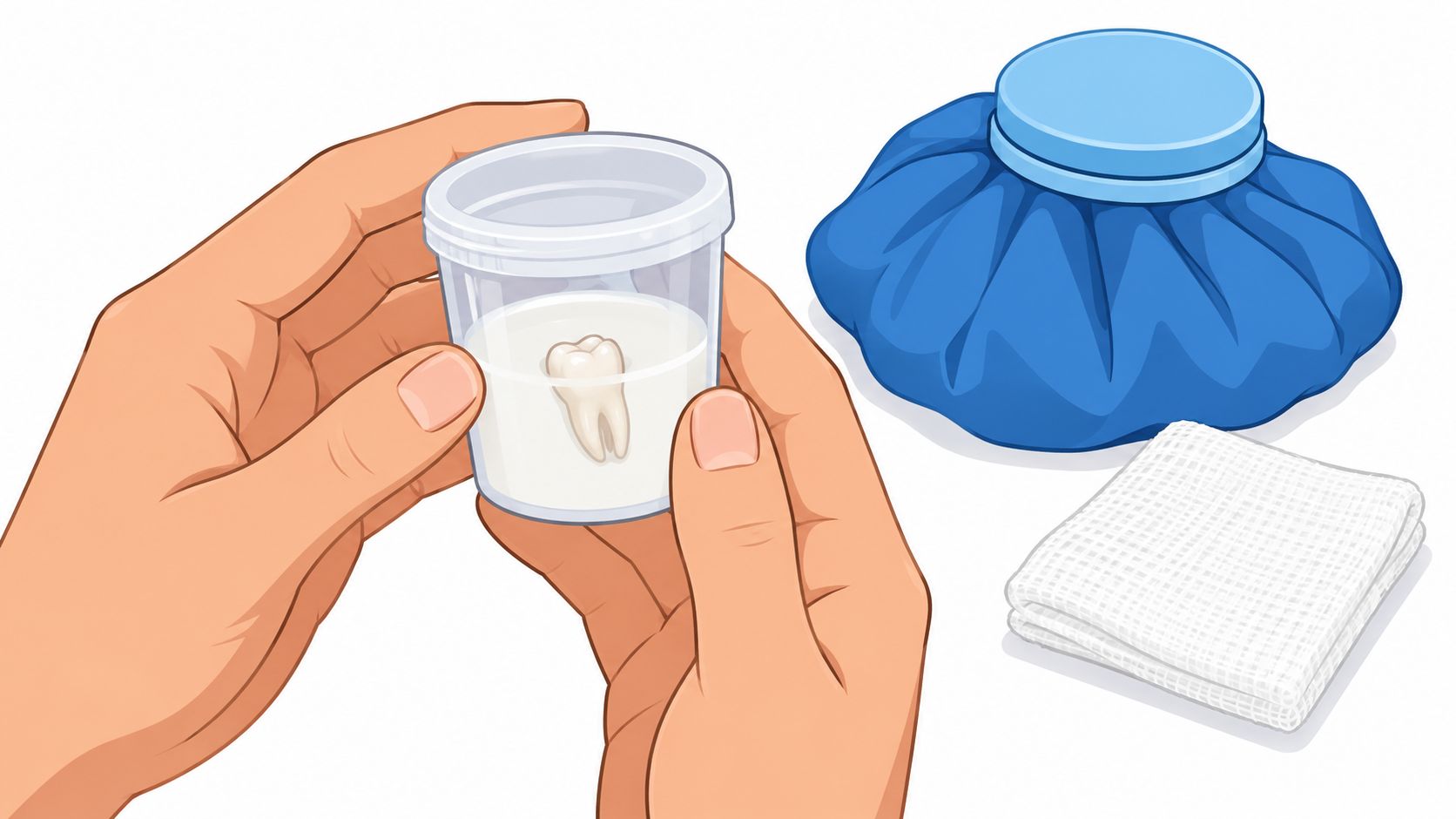
Knocked-out adult tooth: Pick it up by the crown. If it's visibly clean and the person can cooperate, gently place it back in the socket without forcing it. If that isn't possible, keep it moist in milk or saline and call immediately. Don't scrub the root, wrap the tooth in tissue, or let it dry (knocked-out tooth first aid).
Cracked or broken tooth: Rinse gently with water, save any fragments, and place a cold compress on the outside of the cheek. Don't chew on that side, glue the fragment back, or apply heat to facial swelling.
Toothache with swelling: Rinse with warm salt water and use a cold compress externally. Don't place aspirin directly on the gum, because it can irritate or burn the tissue. A localized abscess needs dental evaluation, since antibiotics alone don't remove the source of infection. Definitive care generally involves drainage or tooth removal when appropriate (dental abscess treatment guidance).
Bitten lip or tongue: Rinse away visible debris, apply gentle pressure with clean gauze, and use a cold compress. If bleeding remains uncontrolled, swelling affects breathing or swallowing, or the wound appears deep, use the ER decision described below.
Object stuck between teeth: Try gentle dental floss, moving it carefully rather than snapping it into the gums. Never use a knife, pin, tweezers, or another sharp object.
Write down when the injury or pain started, what changed, and any medication already taken. Bring that information to the visit, especially if a child is involved or symptoms have progressed quickly.
Emergency Dentist or ER, How to Decide
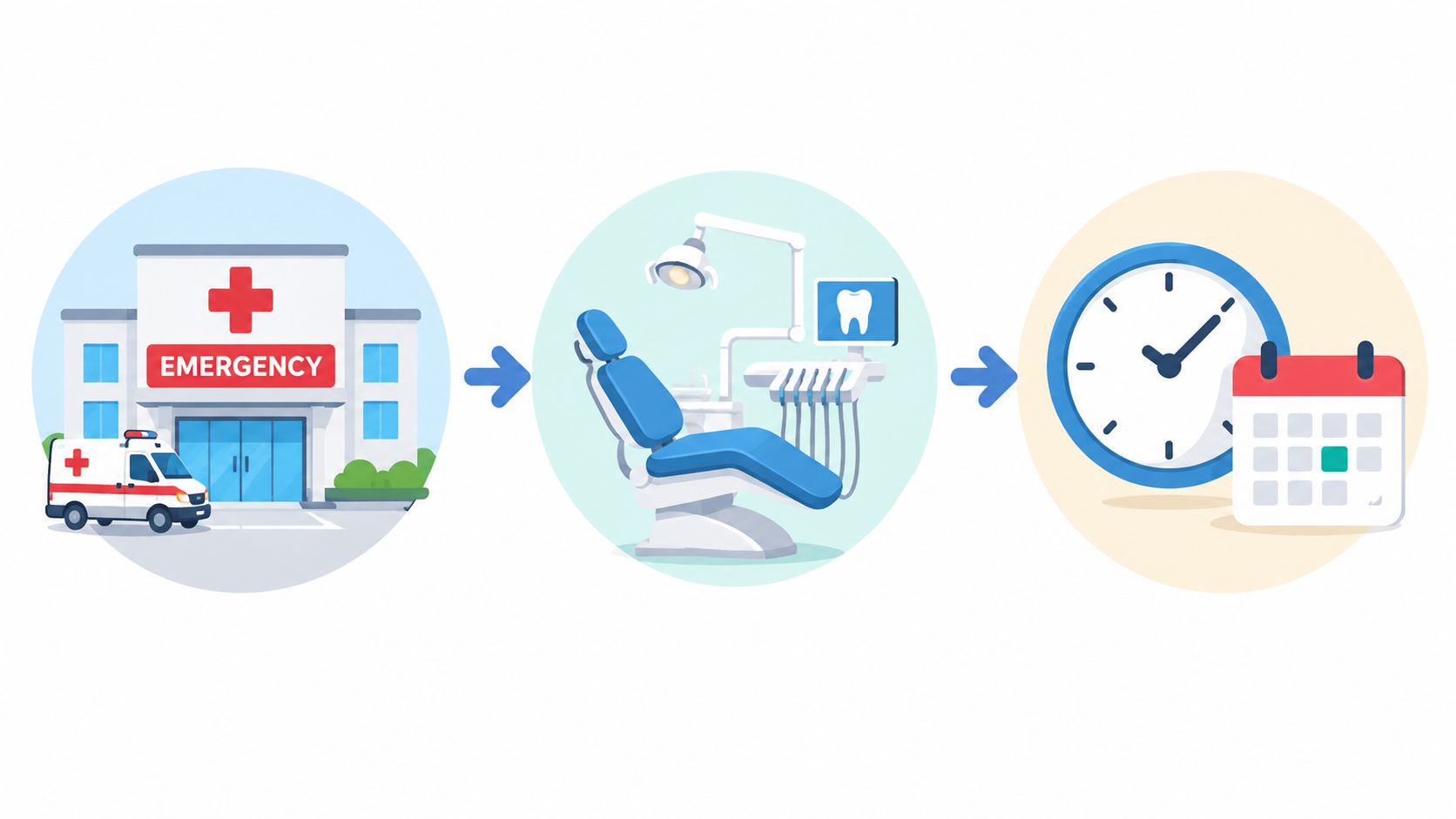
The emergency room and an emergency dentist solve different parts of the problem. The ER is equipped to manage airway concerns, uncontrolled bleeding, serious facial trauma, and injuries that may involve bones or broader medical complications. A dentist is trained to examine teeth and supporting tissues, control dental infection at its source, stabilize damaged teeth, and plan definitive dental treatment.
Choose the ER first
Go to the ER for:
- Difficulty breathing or swallowing, including swelling that feels close to the airway.
- Facial swelling spreading toward the eye or neck.
- Oral bleeding that won't stop with sustained gentle pressure.
- A suspected jaw fracture or major facial impact.
- High fever with a dental infection, particularly when swelling or weakness is worsening.
Swelling that restricts swallowing or extends to the eye is a recognized high-acuity referral trigger (clinical triage guidance). Call emergency services if the person is struggling to breathe, becoming confused, losing consciousness, or showing signs of a life-threatening condition. After the immediate medical danger is controlled, arrange dental follow-up for the tooth or infection.
Call an emergency dentist
Choose an emergency dentist for sudden severe tooth pain, a knocked-out permanent tooth, a broken tooth with bleeding, a lost crown with an exposed root, a localized abscess without airway compromise, or a mouth injury that may need dental sutures. These problems need prompt assessment, but they're often within outpatient dental scope when the infection is contained and the patient can breathe and swallow normally.
Wait for a routine visit
A mild sensitivity flare, tiny chip without pain, lost filling without discomfort, or dull ache that responds to over-the-counter medication can usually wait for a regular appointment. Avoid chewing on the affected area and call if symptoms change.
The rule I give panicked callers is simple: if breathing, swallowing, or bleeding is compromised, go to the ER first. If the tooth or gum is the main problem and those functions are normal, call an emergency dentist.
What to Expect at an Emergency Dental Visit
Start with the phone call. Tell the front-office team whether the patient is an adult or child, what happened, when it happened, where the pain or swelling is located, and whether there's bleeding, fever, facial swelling, or trouble breathing or swallowing. Say clearly if a permanent tooth was knocked out, because timing affects the response.
Bring identification, your insurance card if applicable, and a current medication list. If the injury involved a tooth fragment, crown, retainer, or dental appliance, bring that too. Don't drive yourself if pain, medication, or facial injury makes driving unsafe.
The visit usually follows a focused sequence
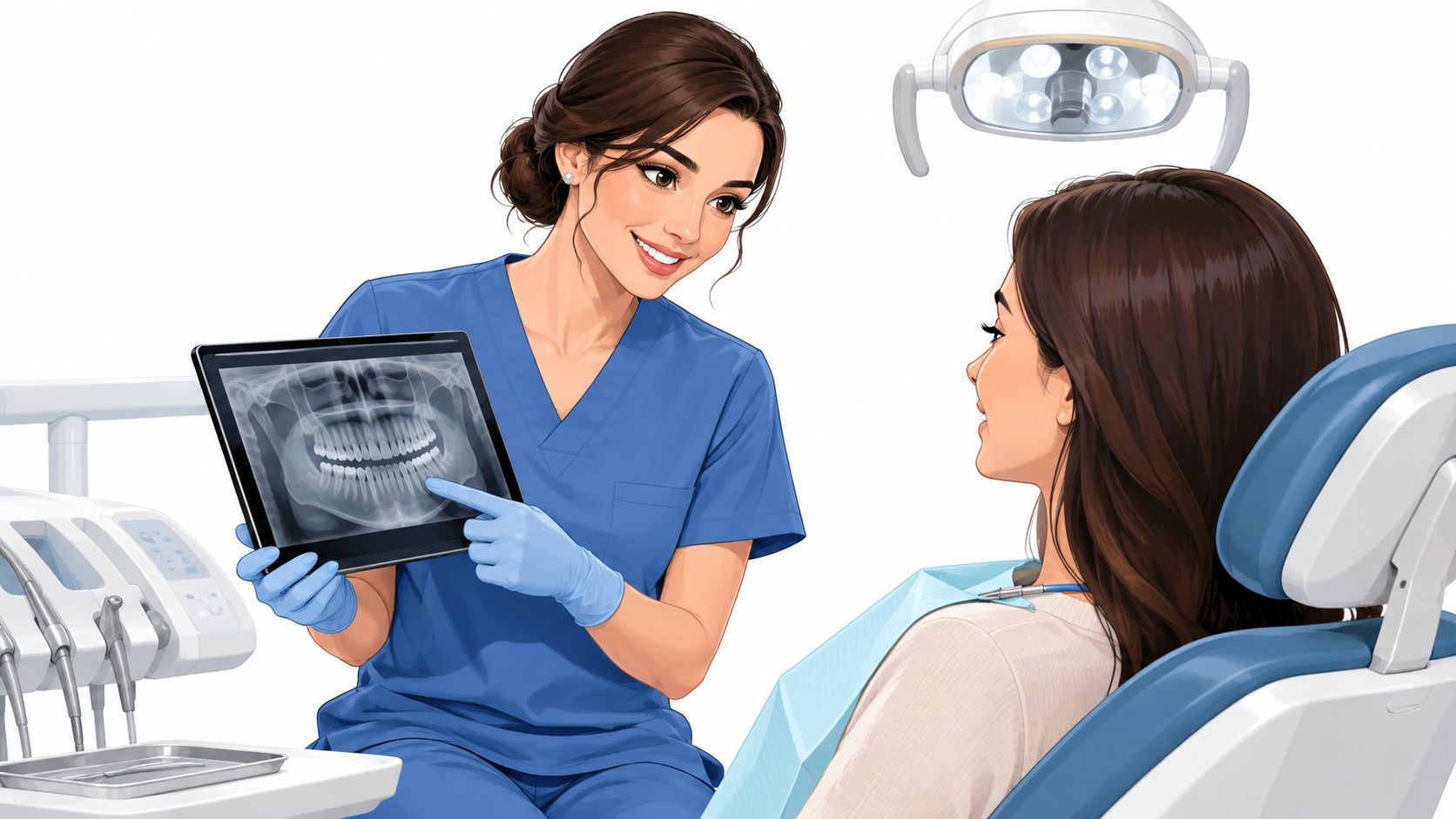
The team will first assess urgency and complete intake. The dentist then performs a focused examination and may take X-rays to determine whether the tooth has a fracture, infection, damaged nerve, loosened supporting tissue, or deeper injury. The goal isn't to perform every elective evaluation during a crisis. It's to identify the immediate problem and protect your health and the tooth when possible.
The dentist should explain what the findings mean in plain language and present realistic options. Depending on the situation, same-day stabilization may involve a temporary filling, the start of pulpal therapy, splinting a loose tooth, drainage, an extraction, or sutures. A temporary measure may relieve pain and protect the area while a root canal, crown, implant, orthodontic repair, or other definitive treatment is scheduled.
Pain relief is the first priority, but relief doesn't always mean the underlying problem is finished. Dental abscess care is driven by source control. Incision and drainage or tooth removal may be required, and severe infections can need inpatient referral when IV antibiotics are necessary or infection spreads into neck soft tissues (abscess management reference).
Ask what you should eat, which symptoms should prompt a callback, and when follow-up must occur. Before leaving, repeat the instructions back to the team so there's no confusion once you're home.
Payment, Insurance, and Sedation Options
Ask about the financial process during the first call, not after treatment begins. Emergency dental care may involve diagnostic imaging, restorative treatment, endodontic care, oral surgery, or an extraction, and insurance plans often classify those services differently. Your coverage depends on your plan, so the office can explain what it can verify and what remains your responsibility.
PPO plans commonly offer more flexibility for urgent provider selection, while DHMO plans may use assigned offices and referral rules. That distinction can affect how quickly you can arrange care. If you're uninsured, ask whether the practice offers an in-house membership plan, third-party financing such as CareCredit, or a phased plan that separates urgent stabilization from elective completion.
Don't postpone a dangerous problem solely because you haven't worked out the full treatment plan. Ask for the immediate clinical recommendation first, then discuss the next phase and payment arrangements.
Sedation also needs a practical conversation. Local anesthetic is routinely used to numb the treatment area and may be available during a same-day visit. Nitrous oxide can help some patients relax, but availability and safety screening vary. Oral conscious sedation and IV sedation generally require more preparation, transportation arrangements, medical review, and in some cases an appointment planned in advance.
| Sedation Type | Onset | Best For |
|---|---|---|
| Local anesthetic | During the appointment | Numbing a specific tooth or treatment area |
| Nitrous oxide | Usually during the appointment | Patients who need help relaxing while remaining responsive |
| Oral conscious sedation | Requires advance planning in many cases | Patients with significant dental anxiety who can follow instructions |
| IV sedation | Requires advance arrangements | Selected patients needing a deeper level of monitored sedation |
Tell the office about medical conditions, pregnancy, allergies, current medications, and previous reactions to sedation. Sedation decisions must be made for the individual patient by the dental team.
How Bristol Dental & Orthodontics Handles Emergencies
When you call Bristol Dental & Orthodontics, lead with the symptom that determines triage. Say, “I have facial swelling and trouble swallowing,” or “My child knocked out a permanent tooth during a game.” That gives the team clinically useful information faster than saying only, “I need an emergency appointment.”
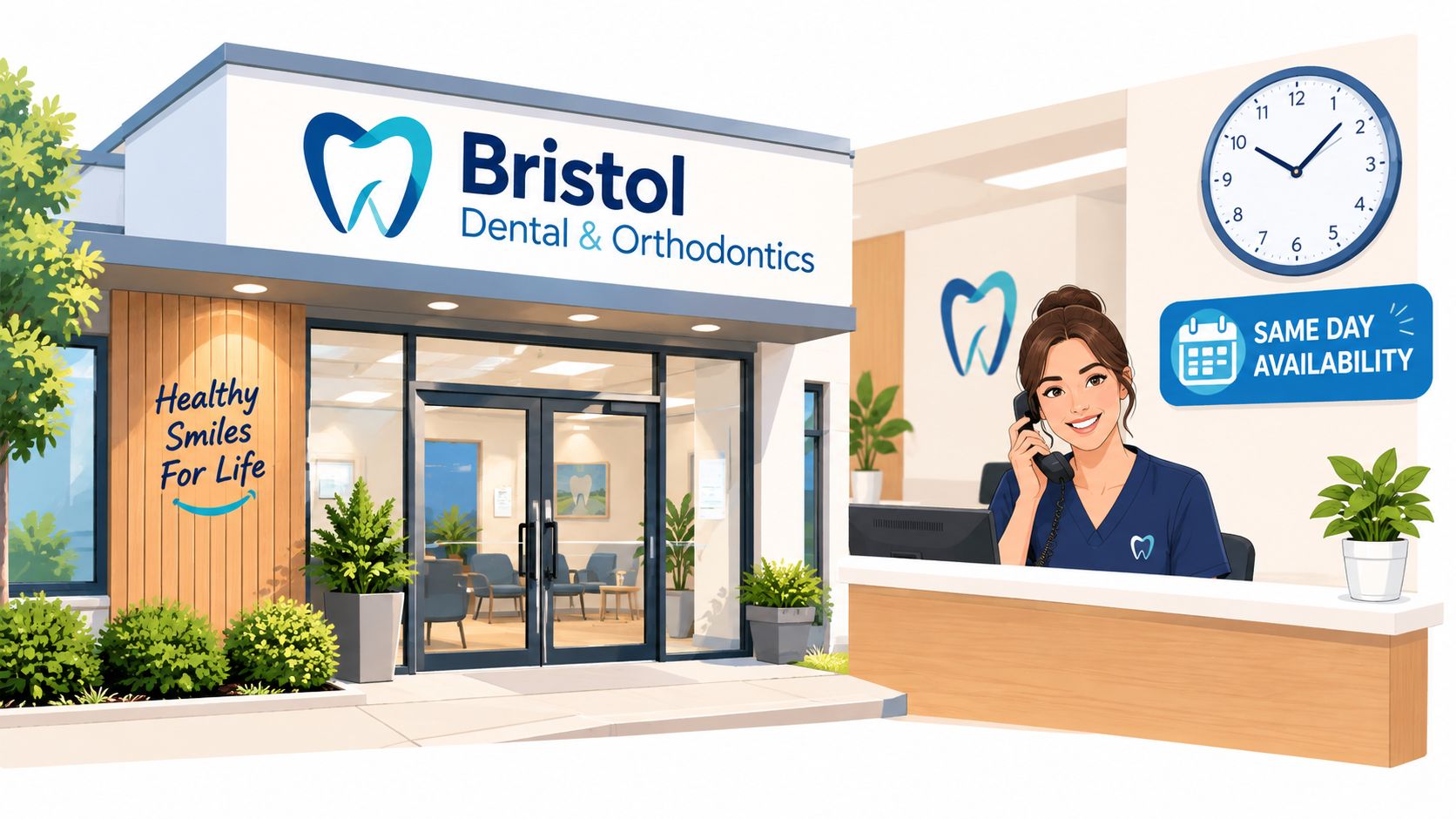
The practice provides a dedicated emergency phone line and an after-hours answering service, so callers can explain the problem outside the usual office flow. Same-day appointments are available for urgent cases, but the team still needs to determine whether the situation belongs in the dental office or the ER. A true emergency should be communicated directly and clearly rather than left as a general scheduling request.
Make the call easier for the front office
Have these details ready:
- The timing: State when the pain, injury, swelling, or bleeding began.
- The trigger: Explain whether the issue followed a fall, sports injury, bite, lost restoration, or gradual infection.
- The location: Identify the upper or lower jaw and the right or left side if you can.
- The warning signs: Mention fever, swelling, bleeding, difficulty swallowing, breathing changes, or a knocked-out tooth.
- The current care: List medication taken and first-aid steps already attempted.
Bristol Dental & Orthodontics is on South Bristol Street in Santa Ana, serving patients from Anaheim and nearby Orange County communities. Patients may reach the office from I-5 or the 91, and the location is also practical for families in Garden Grove, Stanton, Buena Park, Fullerton, and Orange. People traveling from Costa Mesa, Tustin, or Irvine should tell the team where they're coming from so scheduling and arrival instructions are clear.
One office can coordinate the next decision
A dental emergency may not end with a temporary repair. A damaged tooth could later need endodontic care, oral surgery, orthodontic evaluation, a crown, or replacement with a dental implant. Bristol Dental & Orthodontics provides general and family dentistry, emergency dental care, oral surgery, endodontics, orthodontia, implants, Invisalign, cosmetic dentistry, sleep apnea treatment, and sedation dentistry.
That broader scope can make the follow-up conversation more organized. Dr. Andrew Finley and the team can discuss the immediate stabilization along with the longer-term plan, whether that involves preserving a natural tooth, correcting alignment, replacing a missing tooth, or restoring appearance after the emergency has settled.
Aftercare and Preventing the Next Emergency
After emergency treatment, follow the written instructions even if you feel better quickly. A temporary filling, root canal start, extraction, or temporary crown protects the area for a reason, and chewing too soon on the treated side can disrupt that protection.
Protect the treated area
For a same-day filling or temporary crown, choose softer foods until the dental team says normal chewing is appropriate. Avoid extreme temperatures if the tooth feels sensitive, and don't pull at the temporary material with your tongue or fingers. After a root canal start, tenderness with biting can occur, but increasing pain, swelling, or fever warrants a call back.
After an extraction, keep the area undisturbed and follow instructions about gauze, rinsing, eating, and activity. Severe or worsening pain after initial improvement, especially with an unpleasant taste or odor, can signal a healing complication such as dry socket. Contact the office rather than trying to diagnose it at home.
Use only pain medication that your dentist or medical clinician considers appropriate for you. Tell the office if swelling increases, fever develops, bleeding persists, or symptoms interfere with swallowing or breathing. Antibiotics, when prescribed, don't replace drainage, tooth removal, or other source control when those treatments are needed (abscess treatment guidance).
Match prevention to the emergency
- Sports injuries: A properly fitted custom mouthguard can reduce the chance of dental trauma during contact or collision sports.
- Nighttime grinding: A custom nightguard may help protect teeth that are repeatedly cracked or worn from grinding.
- Tooth decay: Fluoride toothpaste and a fluoride rinse routine can support daily cavity prevention, alongside professional examinations and cleanings.
- Restoration failures: Regular checkups can identify leaking fillings, weakened crowns, cracks, or gum problems before they become urgent.
- Broken teeth from misuse: Don't use teeth to open packages, cut objects, or hold items. Teeth are not tools.
Sleep-related concerns also deserve a separate decision. For adults with obstructive sleep apnea, the joint guideline from the American Academy of Sleep Medicine and the American Academy of Dental Sleep Medicine recommends oral appliance therapy when a patient can't tolerate CPAP or prefers an alternate therapy, and it specifies a custom, titratable appliance made by a qualified dentist (AASM and AADSM oral appliance guideline). That's a planned consultation, not an emergency substitute.
Dental emergencies often follow a recognizable pattern: untreated decay, an aging restoration, repeated grinding, sports impact, or delayed care. Schedule routine examinations and cleanings, address small changes early, and ask about a mouthguard or restorative plan when your history points to a predictable risk.
Bristol Dental & Orthodontics provides emergency dental care, family dentistry, implants, Invisalign, cosmetic dentistry, sleep apnea treatment, and sedation dentistry for patients in Santa Ana and surrounding Orange County communities. If you're unsure whether your symptoms belong in the ER or with an emergency dentist, call the team for triage and visit Bristol Dental and Orthodontics to schedule a consultation with Dr. Andrew Finley.