
A Santa Ana family may be thinking about orthodontics at three different moments. A child's parent might wonder whether an early evaluation is necessary. A teenager may be concerned about crowded teeth before school photos or sports season. One parent may be considering treatment after years of postponing it, perhaps alongside cosmetic dentistry or planning for a dental implant. Those are different situations, but they belong to the same larger picture.
Orthodontics for all ages means treatment isn't limited to adolescence. Children, teens, adults, and older adults can all have meaningful reasons to discuss tooth alignment, bite function, appearance, and long-term oral health. The right timing depends on growth, the condition of the teeth and gums, the supporting bone, the type of bite concern, and the person's goals.
At Bristol Dental & Orthodontics, a family and cosmetic dental practice in Santa Ana led by Dr. Andrew Finley, families can approach orthodontic decisions as part of ongoing dental care rather than as a rushed milestone. A child may need observation rather than an appliance. A teen may benefit from treatment while growth and daily routines are being monitored. An adult may need careful periodontal planning before choosing braces or clear aligners.
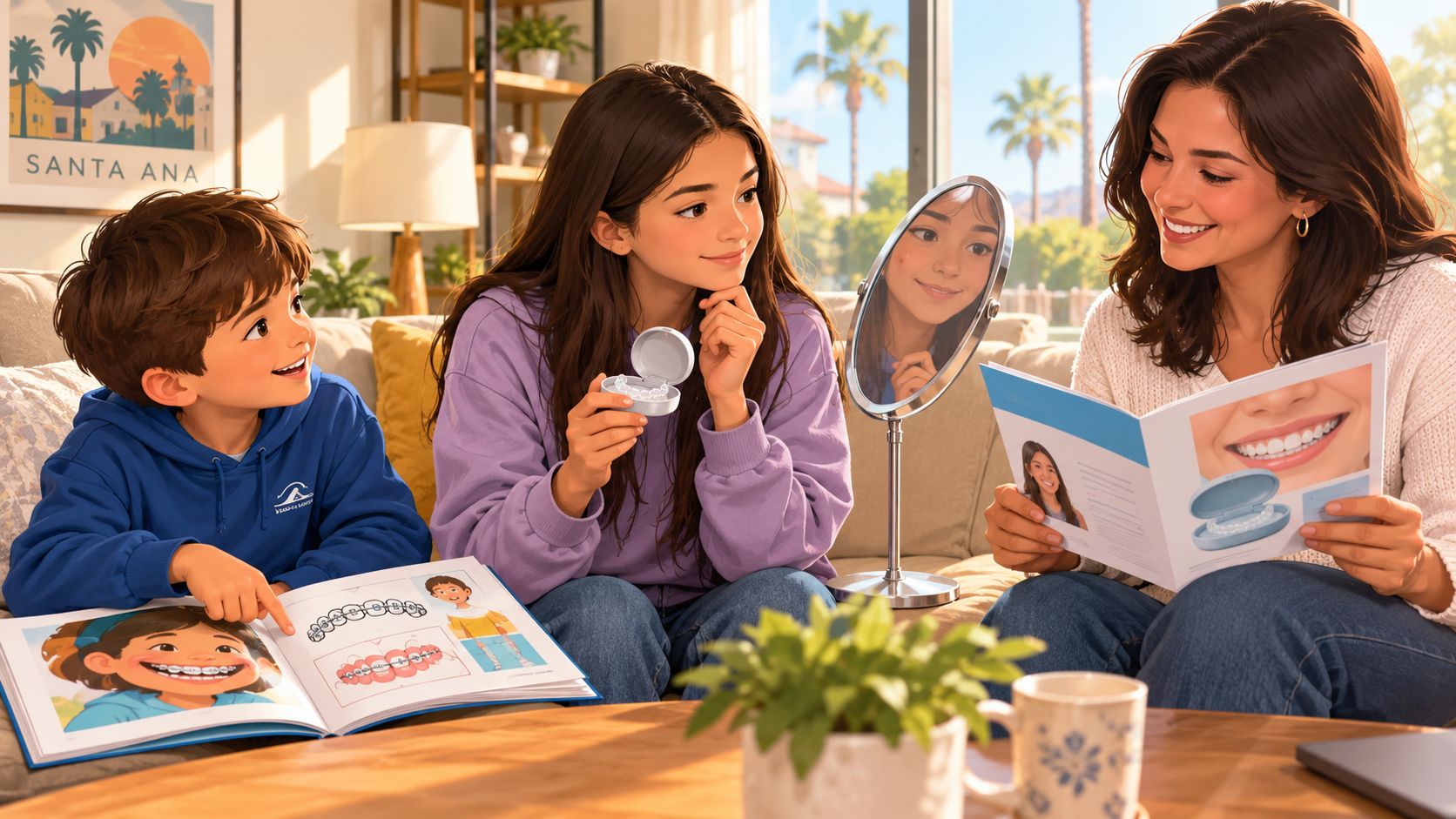
A helpful starting point: An evaluation doesn't automatically mean treatment should begin. It means your family can understand what's happening, what can wait, and what needs attention.
Orthodontic care may also connect with other needs, including Invisalign, dental implants, cosmetic dentistry, sleep apnea treatment, or emergency dental care. Families in Santa Ana and nearby Orange County communities such as Costa Mesa, Tustin, Irvine, and Garden Grove can schedule a consultation with Dr. Finley to discuss age-appropriate options and realistic expectations.
Table of Contents
- Introduction to Orthodontics for All Ages
- What Orthodontic Care Looks Like by Age Group
- Comparing Treatment Options and Suitability
- Timelines Benefits Risks and Life After Braces
- Costs Insurance and Choosing Your Santa Ana Provider
- Taking the Next Step With Bristol Dental and Orthodontics
Introduction to Orthodontics for All Ages
A child's tooth may need room to erupt, while an adult may be considering alignment around existing dental work. Both situations involve the same biological task: guiding teeth through supporting bone in a controlled, gradual way. Orthodontics therefore fits into a lifelong continuum, with different decision points as the mouth develops, changes, and ages.
The basic process
Each tooth rests in a socket, held by a ligament and surrounded by supporting bone. When an appliance applies a carefully planned force, the body remodels the bone around that tooth. Some areas change to allow movement, while others continue to provide support. The process is more like a path being adjusted around a moving object than furniture being pushed across a room.
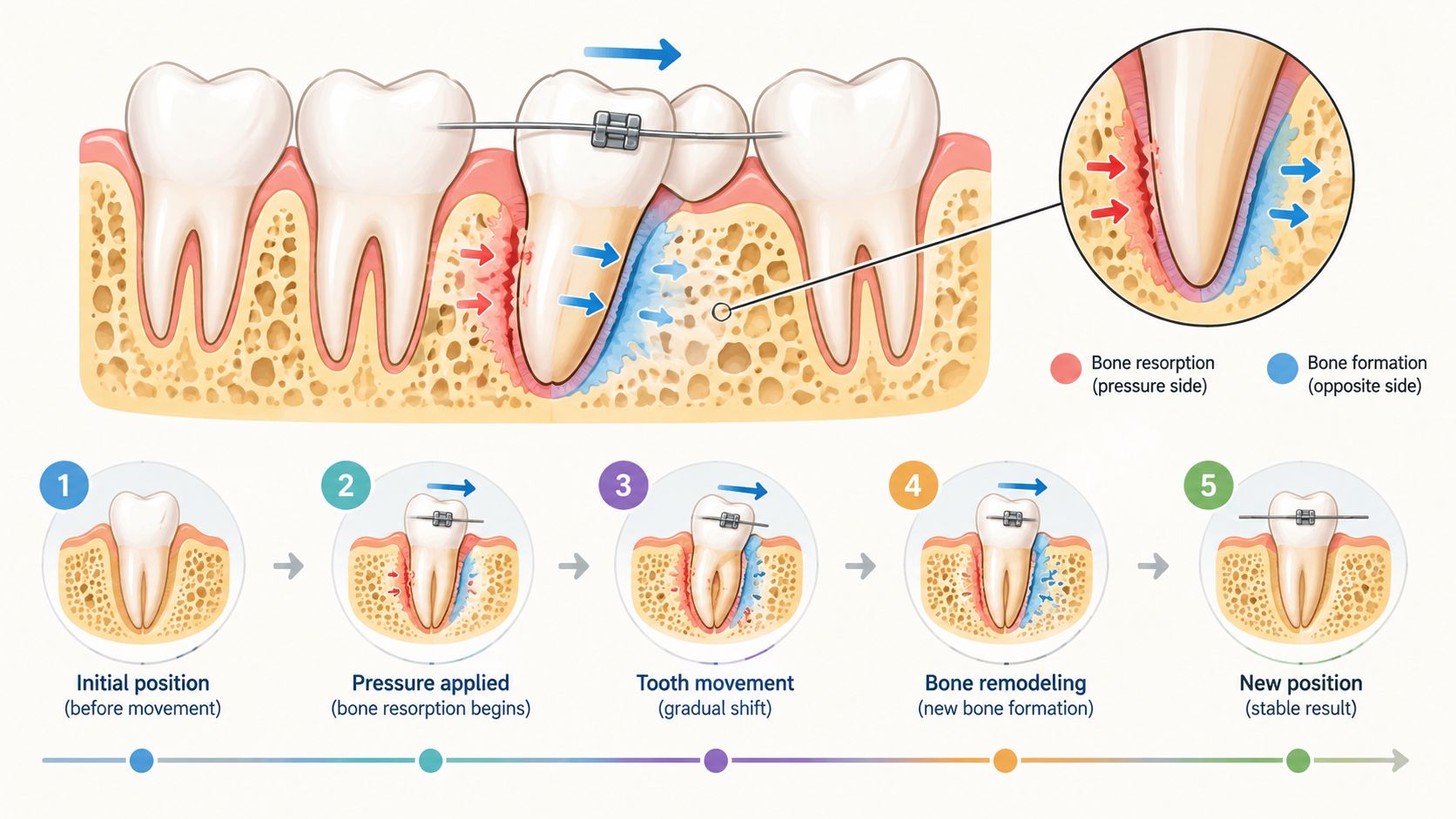
That gradual response explains why appointments, adjustments, and monitoring are part of safe treatment. A bracket, wire, or clear aligner supplies direction, but the surrounding tissues determine how the tooth responds.
The biology is shared across ages, yet the clinical questions change. For a growing child, the team may assess jaw development, tooth eruption, or an oral habit. For a teen, the plan may coordinate permanent teeth and the bite while growth and daily appliance care are considered. For an adult, existing restorations, gum health, bone support, and force levels require careful review.
Why age changes the plan
Age is not a simple cutoff for orthodontic care. It changes what the clinician must examine and which goals are realistic.
For younger patients, Dr. Finley may consider whether growth could help address a particular concern. Adults may need controlled movement with close protection of the gums and supporting bone. Older adults can also be considered when their teeth and supporting tissues are healthy, sometimes alongside restorative planning.
A 2024 review described adult and aged alveolar bone as having higher density, slower osteoclast activation, reduced osteoblast differentiation, and slower bone turnover under orthodontic forces in its discussion of adult orthodontic biology. In practical terms, adult teeth can still respond, but treatment may call for more deliberate force management and closer periodontal attention.
Orthodontic treatment is less about moving teeth quickly and more about moving them in a controlled way that respects the person's biology.
Two people with similar-looking crowding may therefore receive different recommendations. Alignment is only one part of the diagnosis. The bite, roots, gums, bone, habits, restorations, and ability to follow daily instructions all shape the plan. This age-aware approach lets Santa Ana families view growth guidance, adult treatment, and long-term retention as connected parts of dental care.
What Orthodontic Care Looks Like by Age Group
A child, teenager, adult, or senior may sit in the same consultation chair, but the evaluation won't be identical. Orthodontics for all ages works best when the clinician matches the timing and method to the patient's development, health, and priorities.
| Age Group | Common Concerns | Typical Focus |
|---|---|---|
| Children | Crossbite, harmful oral habits, severe overjet, eruption concerns, jaw development | Screening, observation, and selective early intervention |
| Teens | Crowding, bite imbalance, permanent tooth alignment, appearance, appliance care | Comprehensive alignment and bite correction with growth and cooperation considered |
| Adults | Aesthetic concerns, relapse, gum health, restorations, missing teeth, bite function | Controlled movement, periodontal monitoring, and coordination with restorative care |
| Older adults | Tooth position, function, periodontal support, wear, missing teeth, rehabilitation planning | Individualized treatment only when teeth, gums, and bone can support it |
Children and the value of a timely evaluation
An age-7 screening is a useful benchmark for identifying orthodontic risks, but it isn't a command to begin appliances. A systematic review and meta-analysis found no evidence that treatment started before age 11 provides additional benefit over treatment begun later for many situations, and an evidence review concluded that early intervention is generally no more effective and less efficient than one later phase for many common malocclusions the review summarized in PubMed.
Early treatment can still be appropriate when a child has a localized skeletal or functional concern. Examples include a crossbite, a harmful oral habit, or severe overjet where growth guidance or risk reduction may be relevant. The decision should consider the child's growth status, the risk of trauma or impaction, and whether early treatment can change the problem rather than just start alignment sooner.
Teens, adults, and older patients
Teen treatment often combines alignment, bite correction, and attention to daily cooperation. Appliance care, brushing, food choices, rubber bands when prescribed, and keeping appointments all affect how smoothly care proceeds.
Adults commonly seek orthodontics for appearance, function, relapse after earlier treatment, or preparation for restorative work. A U.S. study found that about 1.0% of adults had at least one orthodontic visit over a five-year period, representing roughly 2.05 million adults, with the highest prevalence, 1.7%, among ages 19 to 30 adult orthodontic visit data. Older adults may also be candidates, but healthy gums and supporting bone are more important limitations than age alone.
Comparing Treatment Options and Suitability
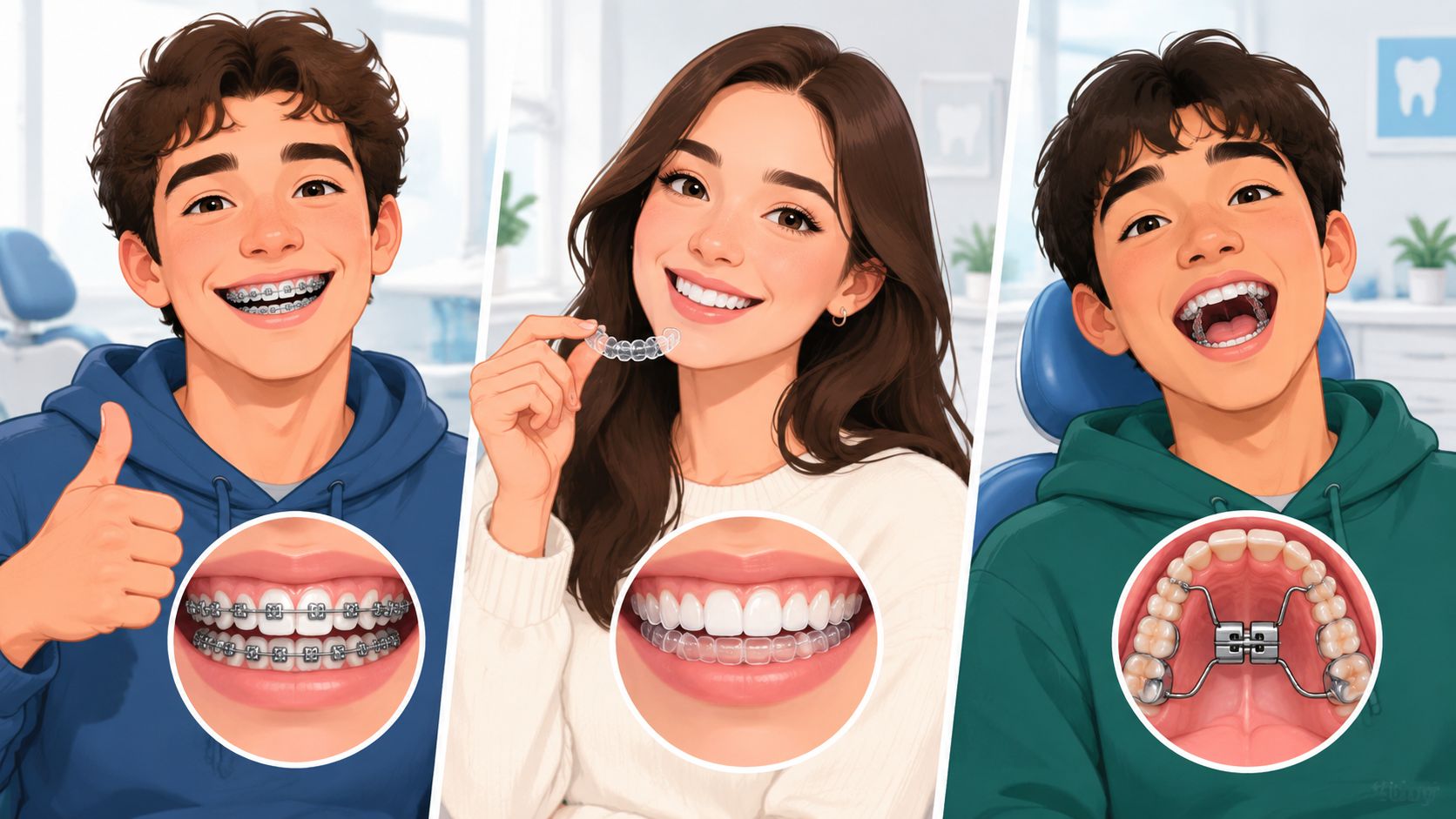
The best orthodontic appliance depends on the problem being treated and the patient's daily life. Traditional braces use brackets and wires attached to the teeth. Clear aligners use a series of removable trays. Supportive appliances, including expanders in selected children, may address a particular jaw or eruption concern rather than general tooth alignment.
Traditional braces
Braces can provide detailed control over tooth position and bite relationships. They may be suitable for children, teens, and adults, including patients whose treatment needs make removable trays less practical. Because the appliance remains attached, it doesn't depend on remembering to put it in after meals, but it does require careful cleaning and attention to foods that may damage components.
Braces can also be used when orthodontic care is part of a larger restorative plan. For example, moving teeth may help create a more favorable arrangement before cosmetic dentistry or a dental implant is considered. The order of care must be determined through an examination, because moving teeth around a missing space or existing restoration requires individualized planning.
Clear aligners
Clear aligners may appeal to patients who want a more discreet option and can follow a removable-appliance routine. They're typically taken out for eating and oral hygiene, then worn according to the prescribing clinician's instructions. That flexibility can work well for some adults and teens, but it also creates responsibility. An aligner that stays in its case won't apply the planned force.
The FDA classifies the Invisalign System as an orthodontic device indicated for treating malocclusion, as documented in the FDA device record for the Invisalign System. That classification provides a regulated basis for discussing it as an orthodontic treatment device, but it doesn't mean every patient is automatically a candidate.
Choosing based on the person, not the trend
A consultation should examine:
- The bite and tooth positions: Some movements need more detailed control than others.
- Daily habits: Removable treatment requires reliable wear and safe storage.
- Gum and bone health: Periodontal concerns may need attention before or during movement.
- Existing dental work: Crowns, bridges, missing teeth, and implant planning can affect sequencing.
- Personal priorities: Appearance, speech, comfort, sports, work, and convenience all matter.
Bristol Dental & Orthodontics offers family and cosmetic dental care, including Invisalign and orthodontics, dental implants, cosmetic dentistry, sleep apnea treatment, emergency dental care, and sedation dentistry. The appropriate combination depends on an in-person evaluation rather than on the appliance's popularity.
Timelines Benefits Risks and Life After Braces
Orthodontic care follows a continuum rather than a single treatment event. Diagnosis and planning come first. During active treatment, the clinician applies controlled forces and checks how the teeth, bite, gums, and supporting tissues respond. Once movement ends, retention helps hold the result. For Santa Ana families, that may mean different decision points over time: guiding growth in childhood, managing adult tooth movement, and maintaining alignment long after braces or aligners are removed.
How long treatment may take
Treatment length depends on the bite's complexity, the amount of movement required, growth, appliance choice, oral health, missed appointments, and following home instructions. Adults do not automatically need much longer treatment than teenagers. A recent meta-analysis summarized in an orthodontic review found no statistically significant difference in total fixed-appliance treatment duration between adolescents and adults the review's summary of treatment duration evidence.
That finding describes groups, not an individual forecast. A teenager with a complex bite may need more care than an adult with limited alignment needs. An adult with gum concerns or planned restorative work may need a more cautious sequence, even when the tooth movements themselves appear limited.
Benefits and possible risks
Orthodontics may improve tooth alignment, bite relationships, cleaning access, and how the teeth work together. Many patients also value a change in smile appearance. These possible benefits must be weighed against plaque buildup, enamel decalcification, gum irritation, root changes, discomfort, relapse, and complications linked to existing dental or periodontal disease.
Practical rule: Healthy gums and supporting bone come before a decision to move teeth, at any age.
Adult and older bone may remodel more slowly. Clinicians may therefore choose gentler forces, allow more time between adjustments, and monitor periodontal tissues carefully. There is no upper age limit in principle. Candidacy depends on the condition of the teeth, gums, and supporting bone, not age alone.
Retention is ongoing care
Teeth can shift after braces or aligners because surrounding tissues and the bite continue to adapt, while everyday forces remain present. Retainers help maintain the new positions, but the type and wearing schedule should fit the patient's situation. Ask what to do if a retainer is lost, damaged, or stops fitting. Waiting until teeth have visibly moved can make correction more difficult.
Regular dental cleanings and examinations still matter after orthodontic treatment. Retention works like maintenance for a repaired structure. It protects the position achieved during active treatment and keeps care connected across the family's changing dental needs.
Costs Insurance and Choosing Your Santa Ana Provider
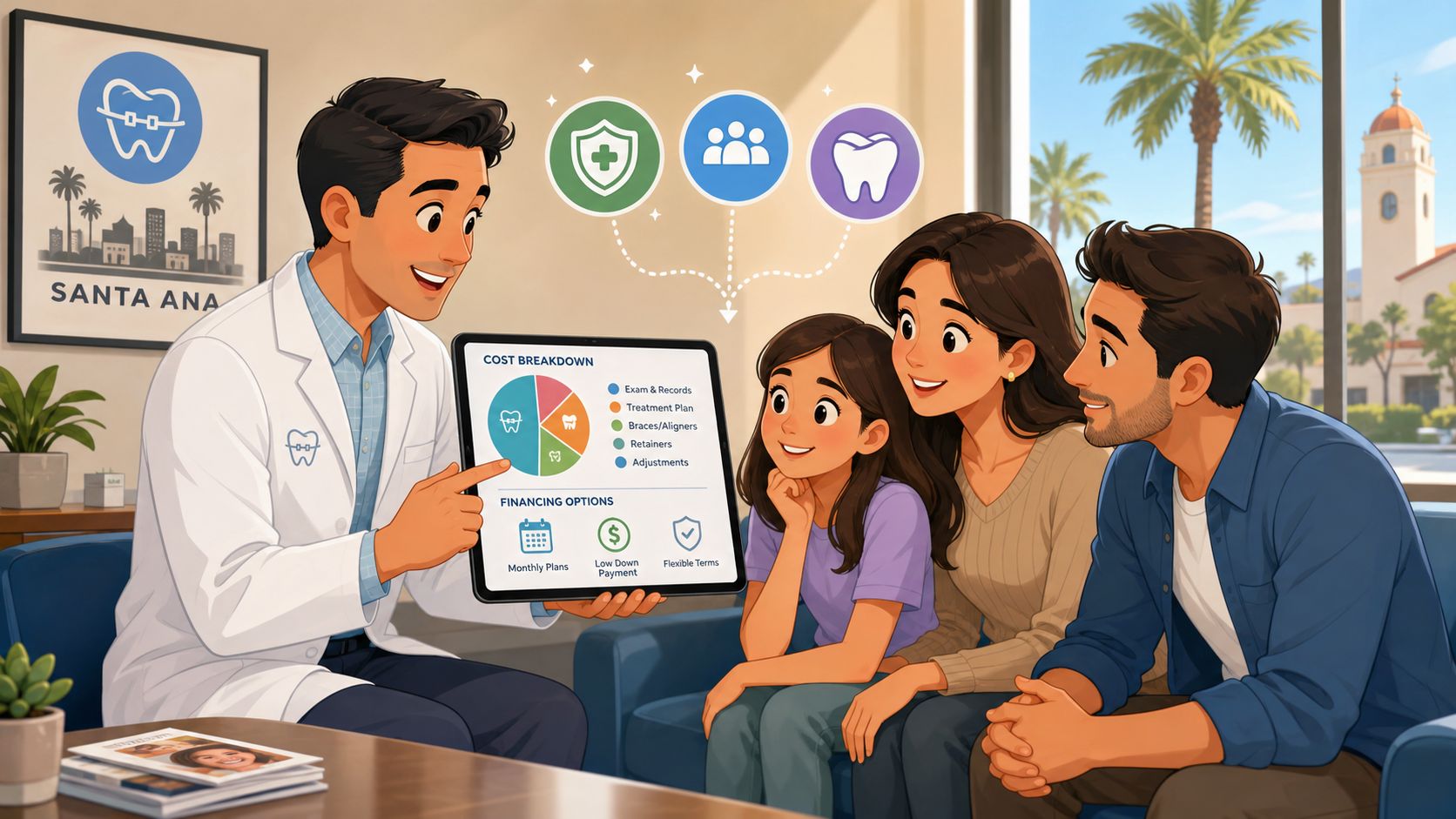
Orthodontic costs depend on the diagnosis, appliance, treatment complexity, expected monitoring, retention, and whether other dental services must be coordinated. A clear financial discussion should explain what the proposed fee includes, which services may be separate, how replacement retainers are handled, and what happens if the plan changes after treatment begins.
Questions to bring to a consultation
Ask the office to explain:
- The clinical plan: What problem is being addressed, and what alternatives are reasonable?
- The treatment sequence: Does orthodontics need to come before cosmetic dentistry, restorative work, or a dental implant?
- The financial estimate: Which appointments, appliances, retainers, and follow-up services are included?
- Insurance questions: What orthodontic benefits might apply, what documentation is needed, and what limits or exclusions should the family check directly with the plan?
- Payment arrangements: Are financing or staged payment options available, and what are their terms?
- Continuity of care: Who will monitor progress, manage an urgent appliance issue, and answer questions between visits?
A consultation is also a chance to evaluate communication. Families should leave understanding the diagnosis, the reasons for the recommended timing, the responsibilities at home, and the situations that would lead the clinician to modify the plan.
Why local continuity can help
For families in Santa Ana, keeping care nearby may make appointments easier to manage. Patients from Costa Mesa, Tustin, Irvine, and Garden Grove may also value a practice that can discuss orthodontics alongside general dentistry and related needs.
If a patient experiences a dental emergency during orthodontic treatment, the response may involve both the appliance and the tooth itself. If sleep-related breathing concerns arise, orthodontic planning should remain separate from oral appliance therapy unless a qualified clinician evaluates the indication. The FDA's guidance says candidates for oral appliances for snoring or obstructive sleep apnea shouldn't have central sleep apnea, severe respiratory disorders, loose teeth, or advanced periodontal disease, and these devices aren't for patients under 18 FDA guidance on intraoral sleep devices.
Bristol Dental & Orthodontics is located on South Bristol Street and provides a wide range of dental services for families and cosmetic patients. Bring prior dental records, a list of medications, questions about timing, and any concerns about gums, jaw discomfort, missing teeth, or sleep.
Taking the Next Step With Bristol Dental and Orthodontics
Orthodontics for all ages is best understood as a continuum. A child may need an evaluation and observation, not immediate treatment. A teen may receive full care during an important developmental stage. An adult may choose discreet alignment or need orthodontics coordinated with restorative treatment. An older patient may pursue improved function when the gums and supporting bone are healthy enough to support movement.
The decision should always be individualized. A photograph or online quiz can't assess periodontal support, roots, jaw relationships, restorations, eruption patterns, or the interaction between orthodontics and other dental needs. Dr. Andrew Finley can examine the patient, discuss priorities, explain suitable options, and identify whether the timing is right.
Orthodontic care may be part of a broader plan that includes clear aligners, traditional braces, cosmetic dentistry, dental implants, emergency dental care, or sleep apnea treatment. Oral appliance therapy for adults with obstructive sleep apnea also requires qualified dental oversight, because follow-up helps monitor dental side effects and occlusal changes. The American Academy of Dental Sleep Medicine and the American Academy of Sleep Medicine recommend dentist oversight and suggest follow-up every 6 months during the first year and at least annually afterward their clinical practice recommendations.
A thoughtful consultation doesn't pressure you to start. It gives you a safer basis for deciding what comes next.
This article is educational and should not replace an examination or personal medical advice. Every article from the practice must be reviewed by Dr. Finley before publishing, and readers should discuss their own dental history and goals directly with a qualified clinician.
Bristol Dental and Orthodontics offers age-appropriate orthodontic evaluations, Invisalign and traditional braces, and coordinated family and cosmetic dental care for Santa Ana patients. Visit Bristol Dental and Orthodontics to learn more and schedule a consultation with Dr. Finley for your child, teen, or adult smile.