
You may be searching for a cosmetic dentist in Orange County because you've started hiding a chipped tooth in photos, noticing stains after years of coffee, or wondering whether a smile makeover would look natural on you. In Santa Ana, the right decision isn't just choosing the most dramatic before-and-after image. It's finding a dentist who can assess your bite, gums, existing dental work, schedule, sensitivity, and willingness to preserve natural tooth structure.
Bristol Dental & Orthodontics is a family and cosmetic dental practice in Santa Ana, CA, led by Dr. Andrew Finley. Cosmetic care here belongs in a broader dental plan, alongside preventive care, Invisalign, implants, sleep apnea treatment, and emergency dentistry. That matters because a smile can look better temporarily while an untreated bite, gum problem, or damaged tooth continues underneath.
Table of Contents
- What a Cosmetic Dentist in Orange County Can Do for You
- The Most Common Cosmetic Procedures Explained
- Matching Your Goals to the Right Treatment Path
- What to Expect at Your First Consultation
- Why a Comprehensive Santa Ana Practice Matters
- Questions to Ask Before You Choose a Provider
- Planning Your Next Step With Confidence
What a Cosmetic Dentist in Orange County Can Do for You
A professional in a Santa Ana conference room tilts their head during a client call, keeping a chipped front tooth out of view. They've learned how to smile without showing too much. That's a common reason people begin researching cosmetic dentistry, but the work involves more than covering a flaw.
Cosmetic dentistry evaluates color, shape, alignment, proportion, and how your smile appears at conversational distance. Whitening can address certain types of discoloration. Bonding can reshape a small chip. Contouring can refine uneven edges. Invisalign can improve the position of teeth, while veneers or crowns may address changes that whitening alone can't resolve. Dental implants can replace missing teeth while restoring the visible part of the smile and the chewing function behind it.
The global cosmetic dentistry market was estimated at USD 33.6 billion in 2022 and is projected to reach USD 89.03 billion by 2030, with a projected compound annual growth rate of 13.5% from 2023 to 2030, according to Grand View Research's cosmetic dentistry market analysis. That growth places aesthetic dental care within a large, expanding health segment rather than a narrow niche.
Local habits affect planning
An Orange County patient may be managing coffee, tea, boba, sun exposure, a demanding work schedule, or frequent travel between Santa Ana, Costa Mesa, Tustin, Irvine, and Garden Grove. Those details affect shade discussions, appointment pacing, and maintenance planning.
A dentist also needs to know whether you're preparing for a single event or looking for a durable change that fits your everyday life. A fast whitening appointment may suit one patient. Another may benefit from orthodontics first, followed by whitening or bonding. Someone with worn or missing teeth may need restorative planning before cosmetic refinements.
Practical rule: The best cosmetic plan is the smallest plan that addresses the actual problem safely and realistically.
The next decisions are practical. You'll see how common procedures differ, how to match treatment intensity to your goals, what happens during a first consultation, and which questions help you compare providers without feeling pressured.
The Most Common Cosmetic Procedures Explained
A teacher in Irvine chips a front tooth while biting a hard piece of a coffee cup. The tooth isn't painful, but the edge catches her attention every time she speaks. Composite bonding may be appropriate for a small cosmetic defect because the dentist can add tooth-colored material and shape it to blend with the neighboring teeth, sometimes within one visit. The consultation still needs to address bite pressure, habits, and whether the remaining tooth is strong enough for that approach.
Patients usually ask, “Will it look obvious?” and “How long will it last?” The honest answer depends on the tooth, the bite, the material, and daily habits. Bonding generally involves little or no downtime, although the tooth may feel different until the patient gets used to its new contour.
A Laguna Beach bride wants a brighter smile before her wedding. Professional whitening can produce significant shade improvement through either in-office or supervised at-home bleaching, as described in an evidence review of bleaching approaches. At-home trays using carbamide peroxide had lower recurrence than in-office bleaching in comparative studies, so the delivery method and maintenance plan deserve as much attention as the initial appointment.
Sensitivity is the concern I hear most often. Temporary sensitivity after peroxide-based whitening occurs in 43% to 80% of patients, according to a review summary on whitening sensitivity. Your dentist may adjust the schedule, concentration, or maintenance approach, but no whitening method should be presented as universally comfortable.
When whitening isn't enough
A Mission Viejo professional has long-standing tetracycline staining that doesn't respond adequately to bleaching. Porcelain veneers may be considered when the goal involves color, shape, and proportion, but veneers require careful planning and may involve altering natural tooth structure.
Ceramic veneers have pooled survival rates around 96.05% at 10.4 years, with short-term survival around 97.76% and five-year survival around 97.12%, based on systematic review data summarized in this clinical review. The same review emphasizes enamel preservation. One retrospective study found 99.3% success when veneers were bonded exclusively to enamel, while failure risk increased when dentin exposure exceeded 30%.
A Santa Ana college student has tooth movement after childhood braces. Invisalign treatment for adults averages 12 to 18 months, and aligners generally need to be worn 22 hours per day to work as intended, according to American Dental Association patient guidance. The key questions are whether the patient can follow the wear schedule and whether the treatment addresses appearance alone or also bite function.
A Huntington Beach retiree is missing a molar and wants to chew more comfortably. A dental implant with a restoration may provide a fixed replacement, but the dentist must evaluate bone, gums, bite, medical history, and the condition of neighboring teeth. An ADA/JADA summary reported an overall implant survival rate of 98.1%, with survival of 97.6% in the maxilla and 98.9% in the mandible, as described in this osseointegration summary. Those figures describe study results, not a guarantee for an individual patient.
Matching Your Goals to the Right Treatment Path
The right treatment isn't automatically the most extensive one. Start by deciding how much you want to change, how quickly you need it, and how much natural tooth structure you're willing to alter.
The conservative path
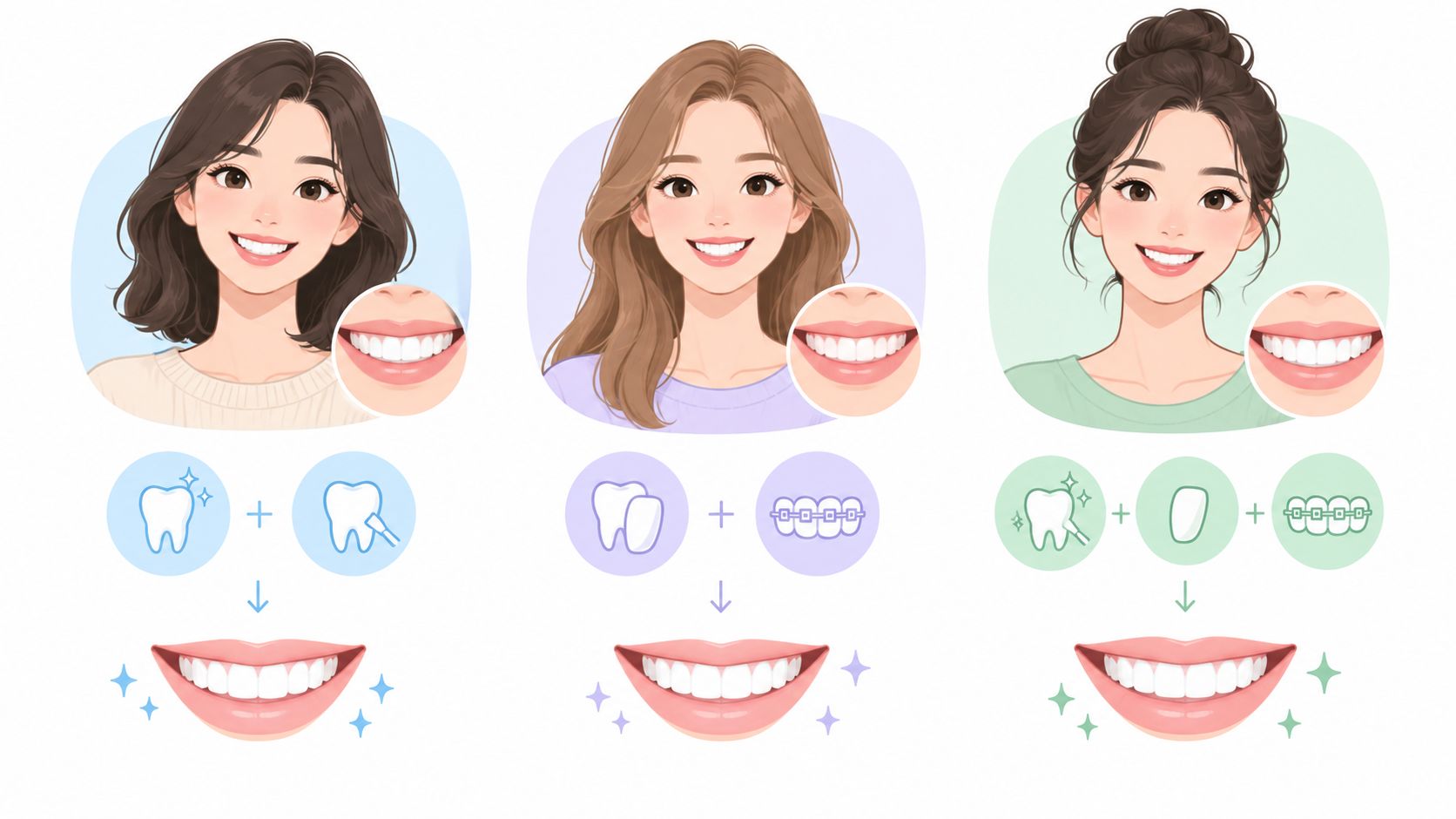
Whitening, bonding, and minor contouring suit patients whose teeth are generally healthy but look dull, uneven, or slightly irregular in photos. This path usually preserves more natural structure and may involve fewer appointments. Sensitivity is most relevant with whitening, while bonding and contouring typically don't create the same bleaching-related response.
The trade-off is scope. Conservative treatment can improve a focused concern, but it won't correct extensive wear, multiple missing teeth, or significant alignment problems.
The moderate path
A working professional may choose Invisalign followed by whitening, or a small number of veneers on the most visible teeth. This path can create a meaningful change without committing to treatment across the entire arch.
Expect planning visits, active treatment, and refinement rather than a single quick appointment. Invisalign requires consistent daily wear, while veneers involve more permanent planning and may cause temporary sensitivity depending on preparation and the individual tooth. The central question is whether the patient wants improved positioning first or a direct change in shape and color.
The comprehensive path
Patients with worn, missing, heavily restored, or structurally compromised teeth may need a broader plan combining orthodontics, implants, crowns, veneers, or other restorative work. This takes longer and requires more coordination because the dentist must establish a stable bite and healthy supporting tissues before final cosmetic work.
Preservation matters: A larger smile change usually carries a larger commitment. Ask exactly what will be altered, what can remain untouched, and what maintenance the final result will require.
A plan may involve multiple visits over an extended period. That isn't a drawback if the patient needs it, but it should never be recommended because a larger makeover is more visually dramatic. Dr. Finley can evaluate which path fits your teeth, gums, bite, timeline, and comfort needs.
What to Expect at Your First Consultation
A good first visit shouldn't begin with someone telling you what to fix. At a Santa Ana cosmetic dental office, I'd start by asking what bothers you about your smile, what you'd like to change, and what you don't want to change. Some patients want a brighter shade. Others want a front tooth repaired without making the rest of the smile look artificial.
The records appointment gives the dentist a complete picture. That may include:
- Digital photographs: Images from several angles show tooth proportions, gum display, midline, and how your smile moves when you talk.
- Three-dimensional records: A low-radiation 3D scan or standard impressions can help evaluate teeth, bite, and available space.
- Bite analysis: The way your teeth meet affects bonding, veneers, orthodontics, and restorations.
- Health screening: The dentist checks for cavities, gum problems, cracks, worn surfaces, and existing restorations that could affect the cosmetic plan.
The plan should be understandable
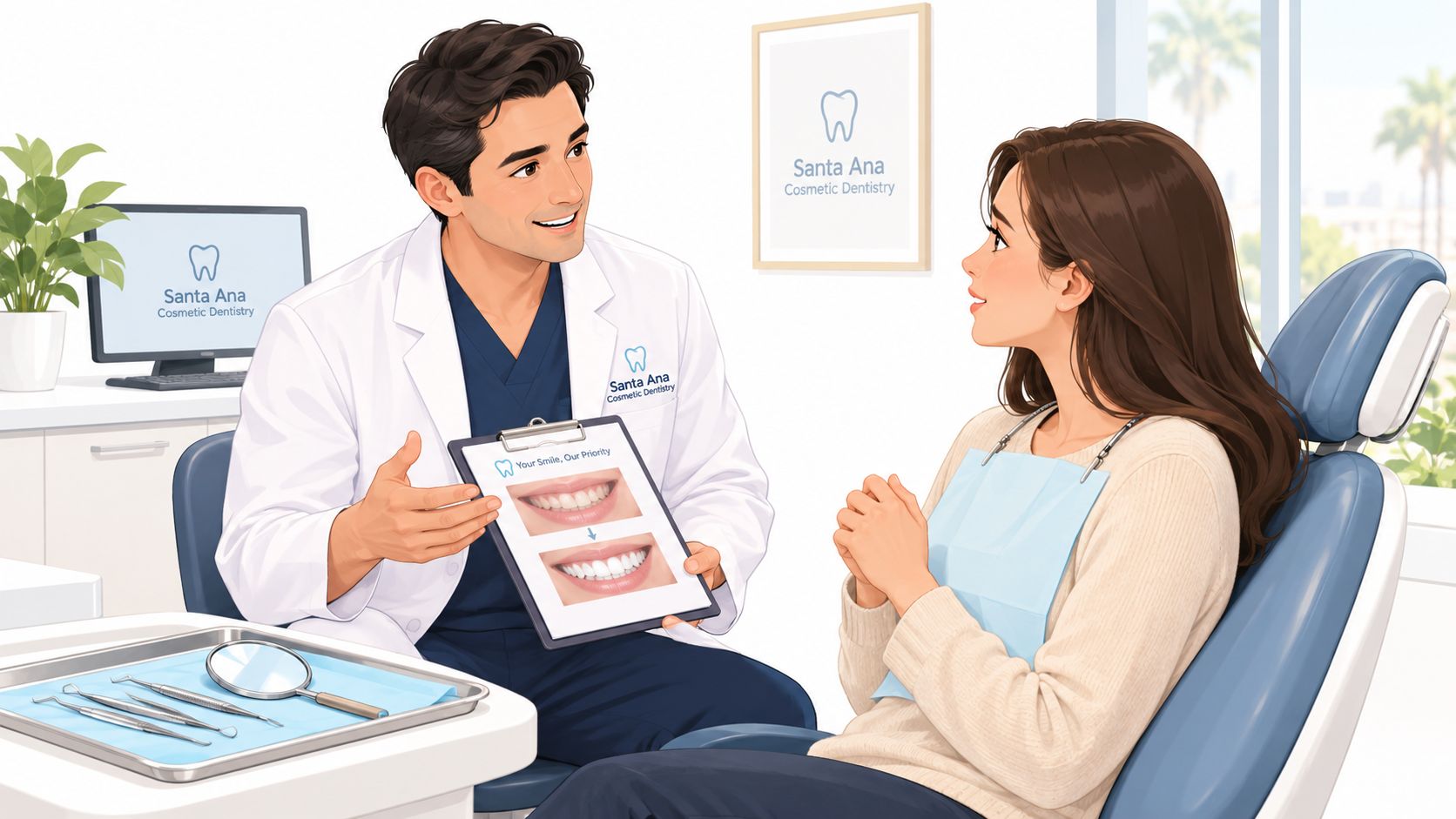
After gathering records, the dentist should review the findings with you on a screen or in another visual format. You should understand which concerns are cosmetic, which are restorative, and which need attention before elective treatment begins.
Ask to see conservative and more involved options. A useful consultation explains the trade-offs between whitening, bonding, veneers, orthodontics, implants, or no treatment at all. It also covers the expected timeline, appointment sequence, preparation, maintenance, possible sensitivity, and total investment.
You should receive a written plan rather than relying on memory. The plan may change after additional records or a second opinion, but it should give you a clear basis for deciding.
The second visit often focuses on refining the plan or starting treatment. You should leave the first appointment with clarity, not pressure. If you're pushed to commit before you understand what will happen to your teeth, pause and seek another opinion.
Why a Comprehensive Santa Ana Practice Matters
A cosmetic case doesn't exist separately from the rest of your mouth. The dentist planning veneers should also understand your gum health, fillings, bite, cleanings, orthodontic history, and any recurring emergency problems. That's the practical reason to consider a family and cosmetic practice such as Bristol Dental & Orthodontics.
A single-service boutique may provide focused cosmetic care, but you may need another office for cleanings, gum treatment, bite evaluation, orthodontics, or urgent repairs. That can create separate records, repeated explanations, and gaps between the dentist designing the smile and the clinician maintaining it.
A Santa Ana office can coordinate general dentistry, family care, Invisalign and orthodontics, dental implants, cosmetic dentistry, sleep apnea treatment, emergency dental care, and sedation dentistry. For an Orange County patient balancing work, school, parenting, and commuting, having connected care in one location can make follow-up easier.
The difference in day-to-day care
| Factor | Comprehensive Santa Ana Practice | Single-Service Boutique |
|---|---|---|
| Scope | Can coordinate preventive, restorative, orthodontic, cosmetic, implant, sleep, and emergency needs | Focuses on a narrower service category |
| Records | Dental history and treatment records can remain within one practice | Patients may need to transfer records between offices |
| Follow-up | Adjustments and related dental concerns can be addressed through the same care relationship | Other concerns may require separate referrals |
| Convenience | One Santa Ana location may simplify visits near home or work | Patients may travel to multiple offices |
| Long-term planning | Cosmetic decisions can account for gums, bite, restorations, and maintenance | Cosmetic planning may occur separately from routine care |
Continuity doesn't guarantee a particular result, but it gives the dentist more context when making decisions. That matters for anyone hoping their smile will remain healthy and natural-looking years from now, not just on the day treatment is completed.
For example, a patient who wants veneers may first need gum care or bite correction. Someone asking about an implant may need an evaluation of surrounding teeth and chewing forces. Someone seeking a brighter smile may need a plan that accounts for sensitivity and future maintenance. A family practice can keep those pieces connected.
Questions to Ask Before You Choose a Provider
Treat the consultation like an interview. You're not being difficult by asking how a dentist plans cases, handles complications, or protects natural tooth structure. You're making sure the provider's approach matches your expectations.
Credentials and experience
Ask:
- Relevant training: What training does the dentist have in veneers, bonding, orthodontics, implants, or full-mouth restorative planning?
- Comparable cases: Can you see before-and-after examples involving teeth like yours, rather than only highly dramatic makeovers?
- Personal involvement: Who examines you, designs the plan, prepares the teeth, and manages follow-up?
- Complexity: Does the dentist handle cases involving worn teeth, missing teeth, bite concerns, gum problems, or sensitivity?
A provider should explain what falls within the practice's scope and when another clinician's input would be appropriate. Confidence is useful. Overconfidence is a warning sign.
Planning and technology
Ask whether the practice uses digital photographs, scans, bite records, mockups, or wax-ups when appropriate. Technology should help you understand the proposal, not distract from the clinical reasoning.
You should also ask:
- Smile preview: Can I see a proposed shape or mockup before treatment?
- Trade-offs: What are the advantages and limitations of each option?
- Tooth preservation: How much natural structure would each approach require?
- Sequence: Should alignment, gum care, fillings, or whitening happen first?
A clear plan should explain not only what the dentist recommends, but why the alternatives were rejected or reserved.
Materials and comfort
For veneers, ask which ceramic is being considered, which laboratory will fabricate the restorations, and how the dentist approaches conservative preparation. The material choice matters, but so does the amount of enamel retained and the way the restoration meets your bite.
For whitening, ask how the practice manages sensitivity and whether supervised home maintenance could be appropriate. For implants, ask how the dentist evaluates bone, gums, restoration design, and long-term cleaning. For anxious patients, ask what comfort and sedation options are available.
Logistics and future repairs
Request a written breakdown of the treatment stages and fees. Ask about payment arrangements, how insurance is handled, what follow-up visits include, and what happens if a restoration chips or needs repair years later.
Bring this list to two or three consultations in Santa Ana or elsewhere in Orange County. Rushed answers, vague cost explanations, pressure to commit the same day, and reluctance to discuss conservative alternatives should make you slow down. The right provider listens, shows relevant cases, explains limitations, and gives you time to decide.
Planning Your Next Step With Confidence
You don't need to decide on a full smile makeover before you speak with a dentist. You need to identify the problem clearly and understand the least invasive path that could address it.
A conservative plan may suit a patient with healthy teeth who wants whitening, bonding, or minor contouring. This is often the sensible starting point for someone whose smile looks dull or uneven but doesn't have major structural concerns. The main questions involve shade goals, sensitivity, maintenance, and whether a small repair will hold up under the bite.
A moderate plan may fit a working professional who wants more visible improvement without treating every tooth. Invisalign can address alignment, followed by whitening, or a limited number of veneers may address the teeth that show most when the patient smiles. The plan requires more coordination, and patients need to understand the wear schedule, preparation, sensitivity, and maintenance before agreeing.
A treatment plan is reserved for a broader dental situation, such as long-standing wear, missing teeth, extensive restorations, or an unstable bite. It may combine implants, orthodontics, crowns, veneers, and other restorative procedures. That approach can be appropriate when the problem is bigger than color or shape, but it also involves more visits, more planning, and a greater commitment to ongoing care.
Your consultation should answer practical questions
Bring reference photos if they help you describe the smile you want, but keep the conversation grounded in your own anatomy. A photo can show a preferred level of brightness or tooth shape. It can't show whether your gums, bite, enamel, roots, or existing restorations can support the same design.
At Bristol Dental & Orthodontics in Santa Ana, Dr. Andrew Finley can evaluate your specific situation, including gum health, bite, existing dental work, missing teeth, and sensitivity. No online guide can determine whether whitening, bonding, veneers, Invisalign, implants, or a combined plan is suitable for you.
Ask for clear answers about:
- Timeline: How many stages are involved, and what needs to happen first?
- Preservation: What natural tooth structure can remain untouched?
- Comfort: What sensitivity, soreness, or adjustment period is realistic?
- Maintenance: How will you protect the result with daily care and follow-up?
- Investment: What are the full treatment costs, and what could require additional care?
A cosmetic dentist in Orange County should help you make an informed decision, not sell you a standard makeover. The strongest plan is the one that respects your health, schedule, appearance goals, and comfort level at the same time.
Bristol Dental & Orthodontics offers cosmetic dentistry, Invisalign, dental implants, sleep apnea care, emergency dentistry, and family dental services in Santa Ana. To discuss a natural-looking smile improvement with Dr. Andrew Finley, visit Bristol Dental and Orthodontics and schedule a consultation.