

A full dental exam is a thorough evaluation of your teeth, gums, bite, soft tissues, and supporting bone that establishes a baseline for prevention and early detection. In the United States, 66.7% of adults age 18 and older had a dental exam or cleaning in the past year, compared with 86.9% of children ages 2 to 17 in 2019.CDC dental visit data
Maybe you've recently moved to Santa Ana, your child has started complaining about sensitivity, or you've realized it has been years since anyone checked your teeth. You may be wondering whether you need a simple cleaning or a more detailed appointment.
A full exam looks beyond the tooth that hurts. It gives the dental team a clearer picture of your teeth, gums, bite, jaw, soft tissues, and supporting structures, so you can understand what appears healthy, what needs attention, and which options may be appropriate for your situation.
Table of Contents
- What a Complete Dental Exam Includes
- Step by Step Through Your Exam Visit
- Why Imaging and Gum Charting Matter
- What the Findings Can Lead To
- How Often You Need One and How to Prepare
- Common Misconceptions and Access Realities
- Your Next Step Toward a Healthier Mouth
What a Complete Dental Exam Includes
You arrive in Santa Ana with one question: is this visit only for a cavity, or will the dentist check the rest of your mouth too? A complete dental exam answers the broader question. It may include a cleaning, images, or treatment for a specific symptom, but its purpose is to understand your overall oral health.
A full dental exam creates a useful starting point. The dentist reviews your medical and dental history, examines your teeth and restorations, assesses your gums, checks how your upper and lower teeth meet, inspects the soft tissues of your mouth, and studies supporting bone when imaging is indicated. These findings help identify current concerns and create a record for comparing future changes.
Practical rule: A problem-focused visit investigates one concern. A complete exam reviews the whole mouth.
An aching tooth may require prompt attention. In that situation, the dentist may focus on the painful tooth, nearby gum, and likely cause. That approach can address the immediate problem, while a broader review may also identify decay between teeth, early gum changes, bite wear, or an unusual area on the cheek or tongue.
What the dentist evaluates
The examination commonly includes:
- Medical and dental history: Medications, health changes, previous treatment, symptoms, and habits provide context for interpreting findings.
- Extraoral and intraoral screening: The dentist examines the face, jaw area, cheeks, tongue, palate, gums, and other soft tissues.
- Tooth-by-tooth review: Each tooth is checked for decay, cracks, worn areas, defective restorations, and changes that may need monitoring.
- Periodontal assessment: The team evaluates the gums and supporting tissues, including measurements that can identify inflammation or attachment loss.
- Bite and jaw assessment: Tooth contact, jaw movement, and joint comfort can help explain wear, tension, or difficulty chewing.
- Radiographic review: X-rays may show structures that a visual examination cannot reveal.
The results do not automatically mean you need treatment. They help the dentist explain what can be monitored, what may need care, and whether a concern points toward specialty planning, such as Invisalign for tooth alignment, implants for tooth replacement, or sleep apnea treatment when oral and jaw findings support further evaluation.
The ADA's 2026 living guideline reaffirmed that clinicians should perform a complete extraoral and intraoral clinical exam on all adults and update medical, social, and dental histories. The guidance applies to new-patient, recall, and emergency visits, including visits for people without obvious risk factors.ADA oral cancer examination guidance

For families and adults in Santa Ana, Costa Mesa, Tustin, Irvine, and Garden Grove, this whole-mouth review can make care easier to organize. If time, anxiety, transportation, or other access needs affect your visit, mention them when scheduling. The dental team can explain the appointment, allow questions, and help set practical next steps.
Step by Step Through Your Exam Visit
A complete dental appointment typically starts before you sit in the chair. The team will ask about your general health, current medications, allergies, previous dental experiences, and the reason for your visit. Tell them about sensitivity, bleeding, jaw discomfort, grinding, snoring, a missing tooth, or any spot that has changed.
That information gives the dentist context. For example, dry mouth, a new medication, or a health diagnosis may change how the team thinks about decay risk, gum health, or treatment planning.
The clinical checks
A hygienist may begin by reviewing your chart, examining your gums, and completing a cleaning when that service is appropriate. Cleaning removes plaque and tartar that can interfere with seeing the tooth and gum surfaces. The hygienist may also record observations that the dentist will review with the rest of your examination findings.
Gum charting uses a small, ruler-like instrument. The hygienist or dentist gently measures the space between the gum and tooth at several locations, records bleeding or recession, and looks for areas that need closer attention. You may feel pressure, but you can ask for a pause whenever you need one.
The dentist then examines each tooth and restoration. They may use a mirror, light, and dental instruments to look for decay, cracks, worn surfaces, loose restorations, or areas that need imaging. The bite check is practical rather than mysterious. You may be asked to close, move your jaw, or tap your teeth together while the dentist observes how the upper and lower teeth contact each other.
The soft-tissue screening includes the cheeks, lips, tongue, floor of the mouth, gums, and palate. The dentist may also gently feel areas around the jaw and check how the jaw joints move. These checks help identify changes that a cavity-focused visit could overlook.
Reviewing the information together
Radiographs are taken or reviewed when they can add useful information. The dentist combines those images with the examination, gum measurements, history, and symptoms rather than relying on one finding alone.
At Bristol Dental & Orthodontics, new-patient appointments can be structured so patients know what to expect as the team gathers this information and discusses the results. A full exam should end with a conversation, not just a list of procedures. The team can explain what they found, what needs attention first, what can be monitored, and what questions remain.
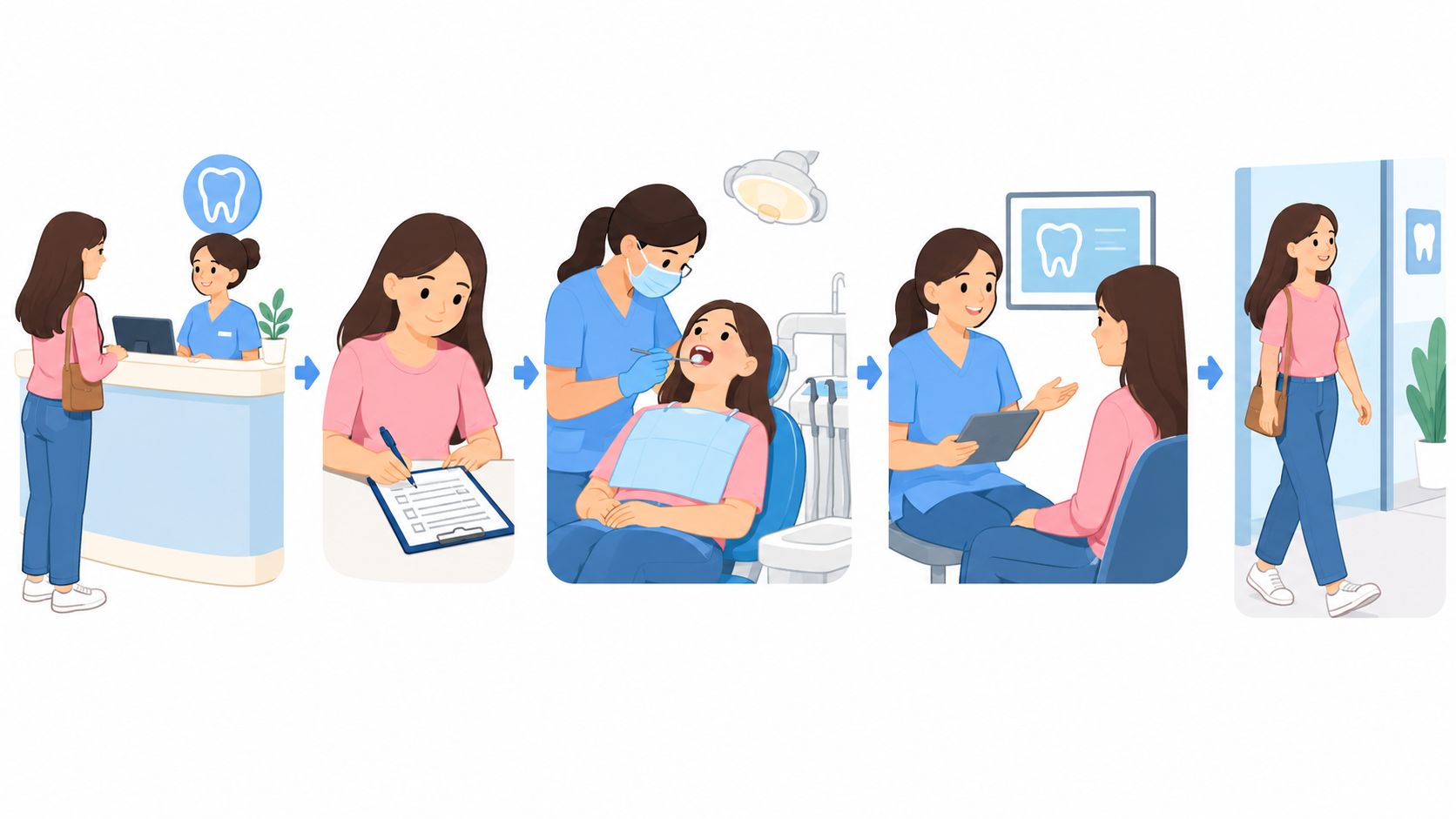
A standard exam isn't intended to force a treatment decision. If you feel nervous, let the team know when you arrive. Asking for an explanation before an instrument is used, requesting a pause, or bringing a written list of concerns can make the visit feel more manageable.
Why Imaging and Gum Charting Matter
A mirror shows the visible part of your mouth. Imaging and gum charting show what lies around and beneath it, including tooth roots, supporting bone, and areas that are difficult to inspect directly. Together, they give the dentist a fuller map of your mouth instead of relying on surface appearance alone.
The FDA advises examining dental radiographs for decay, periodontal bone loss, developmental anomalies, and hidden disease. Images can also show the supporting alveolar bone, the bony crest between teeth, root shape, furcations, and calculus deposits.FDA dental radiography guidance
Each image answers a different question
The dentist chooses images according to your history, examination, age, symptoms, and clinical needs. They are not interchangeable:
| Image type | What it focuses on |
|---|---|
| Bitewing images | The spaces between teeth and the supporting bone level in areas that are hard to inspect directly. |
| Periapical images | One tooth from crown to root, including the surrounding bone and possible root-related concerns. |
| Panoramic imaging | A broad view of the teeth and jaws, useful for seeing larger patterns, developmental concerns, or treatment-planning needs. |
A tooth may look normal above the gum while its supporting bone shows a different condition. An image can also help the dentist decide whether a tooth may be restored or whether another order of care should be considered.
Why six-point charting creates a clearer record
Baseline periodontal charting is completed at six sites per tooth. The record may include probing depth, recession, bleeding on probing, furcation status, and tooth mobility. These measurements create a detailed map of inflammation or attachment loss, then provide a point of comparison at later visits.Baseline periodontal charting guidance
The measurements can affect treatment planning when probing depths reach 4 mm or more, especially when bleeding or furcation involvement is also present. As noted in the guidance above, the meaning depends on the complete pattern, not one measurement in isolation.
For someone visiting a dentist in Santa Ana or elsewhere in Orange County, it is reasonable to ask which images and measurements are recommended and what each one is intended to show. If cost, transportation, language, anxiety, or accessibility affects your visit, tell the dental team early so they can explain available options and plan the appointment clearly.
These findings can support periodontal care or monitoring, and they may also guide referrals for orthodontic treatment such as Invisalign, dental implant evaluation, or assessment of sleep-related breathing concerns. The purpose is to connect each recommendation to evidence from your own mouth.
What the Findings Can Lead To
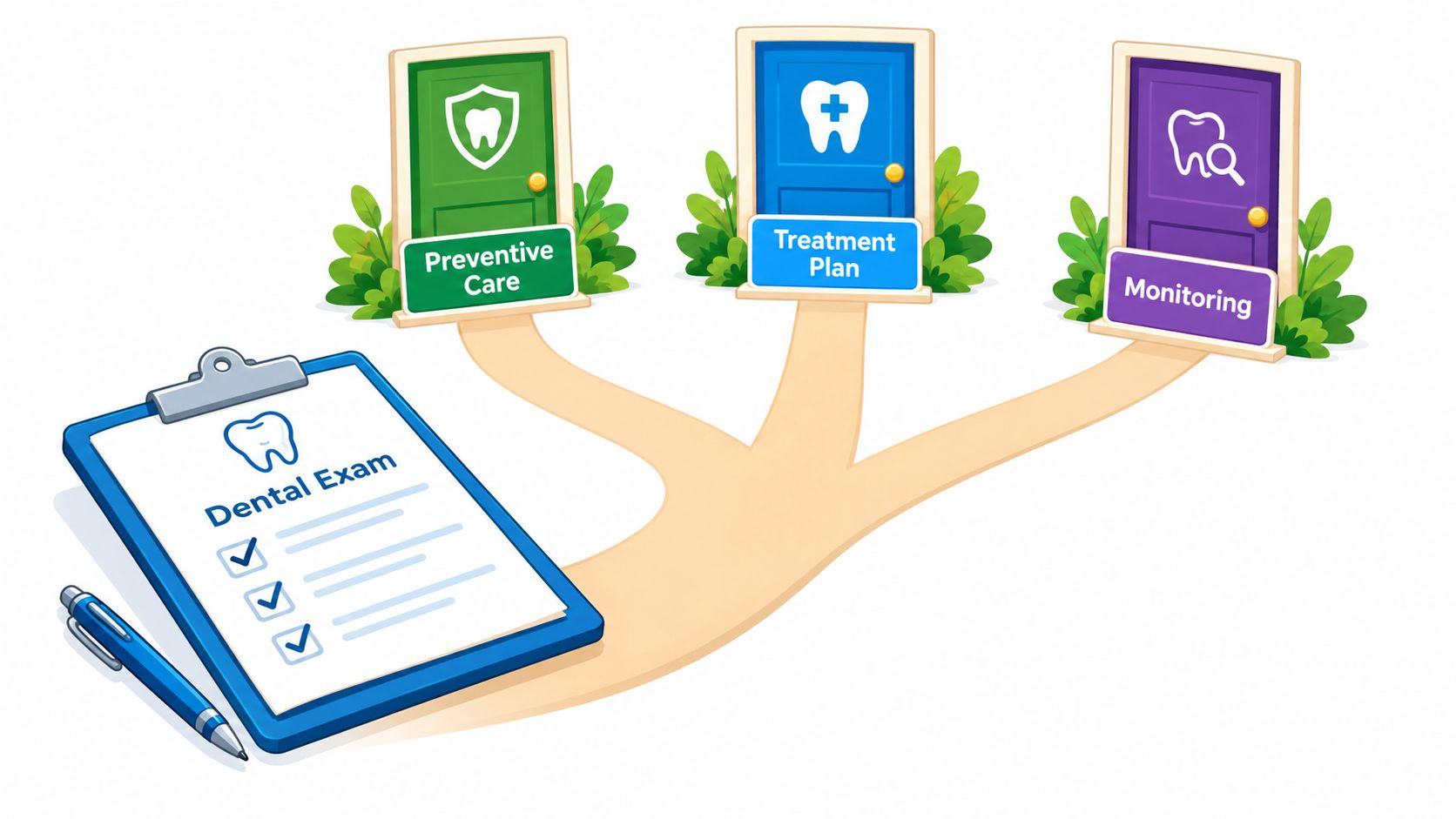
A complete exam doesn't automatically lead to a filling, crown, extraction, or another procedure. It creates a clinical roadmap. The next step depends on the findings, your symptoms, your priorities, and the consequences of treating or monitoring a particular concern.
Several care paths may follow
Healthy findings may support a preventive plan that includes routine cleanings, oral-hygiene guidance, fluoride, or sealants when appropriate. If the dentist finds decay or a cracked tooth, the discussion may include a filling, crown, or root canal evaluation, depending on the tooth and how much structure remains.
Gum findings can lead to more detailed periodontal care. That may include professional cleaning, scaling and root planing, or a maintenance schedule designed around the condition of the gums. The exam helps distinguish a temporary irritation from a pattern that needs continued attention.
Bite and alignment findings may support an orthodontic consultation. Invisalign attachments are small bonded composite shapes or bulges that give clear aligners a better grip on the teeth, helping direct movements such as rotation, extrusion, and controlled tipping.Invisalign attachment research Whether aligner treatment is appropriate depends on the individual examination and treatment goals.
Missing teeth identified during the examination or on imaging may lead to a dental implant consultation. Implant treatment commonly takes many months from start to finish because the implant post needs time for osseointegration, the process in which jawbone forms a connection with the implant.Dental implant treatment overview
Connecting oral findings with daily concerns
Jaw tension, worn teeth, or a history of snoring may prompt a conversation about sleep-disordered breathing and oral appliance therapy. An oral appliance isn't suitable for everyone, and it shouldn't replace an appropriate medical evaluation, but a dental exam can identify concerns worth discussing.
Bristol Dental & Orthodontics offers general and family dentistry alongside Invisalign, dental implants, cosmetic dentistry, sleep apnea treatment, and emergency dental care in Santa Ana. Having several services available in one practice may make it easier to discuss how one concern, such as missing teeth or bite wear, relates to another.
The important point is choice. You can ask which problem needs attention first, what can safely be monitored, what each option involves, and what may happen if treatment is delayed. The exam informs the conversation, but it doesn't commit you to scheduling a procedure.
How Often You Need One and How to Prepare
There isn't one interval that fits every patient. Your dentist may recommend routine, complete reviews based on your oral health, age, medical history, previous treatment, gum condition, dry mouth, decay pattern, orthodontic care, and symptoms. Patients with active concerns may need closer follow-up than patients whose findings remain stable.
New patients and adults returning after several years generally benefit from a complete baseline examination, even if they've had a recent problem-focused visit elsewhere. A recent visit may have addressed one tooth without creating a full record of the gums, bite, soft tissues, and supporting bone.
Bring useful information
A little preparation can make the appointment more productive:
- Medication details: Bring a current list of prescriptions, over-the-counter medicines, and supplements.
- Health updates: Mention recent diagnoses, procedures, pregnancy, allergies, or changes in daily health.
- Previous records: Bring prior dental records or X-rays if they're available. The dentist can decide whether they remain useful.
- Symptoms: Write down sensitivity, bleeding, grinding, jaw pain, loose teeth, snoring, or a spot that hasn't healed.
- Questions: Ask what needs treatment now, what can be monitored, and how recommendations fit your priorities.
You don't need a special preparation routine. Brushing and flossing before the appointment is helpful if convenient, but the dental team can still examine and clean your mouth when you arrive.
Plan enough time to complete the history, examination, charting, imaging when indicated, and discussion. If you need treatment, ask for a separate review of the findings before booking anything. You should understand the diagnosis, available options, expected sequence, and consequences of not treating before deciding with Dr. Finley or another qualified dentist.
Common Misconceptions and Access Realities
Pain isn't a reliable appointment calendar. Early decay, gum disease, and concerning soft-tissue changes may not cause noticeable symptoms, which is why waiting for an ache can leave fewer simple options available. The CDC describes routine dental visits as an opportunity for oral-health education, preventive services, and early detection and treatment of oral diseases.CDC preventive dental care definitions
Older adults shouldn't assume examinations are no longer necessary. Root decay, dry mouth, worn restorations, medication effects, and soft-tissue concerns can all make continued dental evaluation relevant. The need for care may change with age, but it doesn't disappear.
Access affects whether prevention works
A full exam has clinical value, but patients also need a realistic way to complete follow-up care. Time away from work, transportation, language preferences, dental anxiety, and uncertainty about coverage can all affect whether someone gets evaluated or returns for treatment.
Access gaps are especially visible among adults with public insurance. One analysis cited by the ADA reported that 24% of Medicaid-enrolled adults received dental care compared with 53% of privately insured adults.ADA oral-health coverage and access data The same policy resource describes lower dental use among Black and Hispanic groups and greater cost barriers affecting those populations.
For families in Santa Ana and nearby Orange County communities, practical questions matter. Ask whether the practice can coordinate family appointments, what appointment times are available, which payment arrangements exist, and whether language support is available. If anxiety is a concern, mention it before the visit so the team can discuss comfort measures and pacing.
Prevention still needs a plan
An examination doesn't eliminate the need for treatment, and it can't guarantee that an emergency won't occur. It can, however, give you a clearer baseline and help you address concerns before they become urgent. The dentist should explain priorities plainly, including what can be monitored and what deserves earlier attention.
Your Next Step Toward a Healthier Mouth
If you've delayed care, moved to Santa Ana, or noticed a change in your mouth, start by scheduling a full evaluation rather than trying to guess which single service you need. The appointment can review your teeth, gums, bite, soft tissues, and supporting bone, then connect the findings to preventive care, restorative treatment, Invisalign, implant planning, cosmetic goals, sleep apnea concerns, or emergency dentistry when appropriate.
Bring your medication list and questions with you. Tell the team about jaw pain, nighttime grinding, snoring, sensitivity, missing teeth, loose restorations, or any area that concerns you. Clear information helps Dr. Finley and the dental team understand what matters to you and explain the available next steps without rushing you into a decision.
Families and individuals in Santa Ana, Costa Mesa, Tustin, Irvine, and Garden Grove can ask about appointment scheduling, family coordination, evening or Saturday availability, and insurance or payment options directly with the practice. If you're nervous, say so when you book. A calm conversation before the exam can make it easier to attend and to understand what happens afterward.
A full exam is a starting point, not a judgment about how long you've been away. Whether your next step is routine monitoring or a more detailed consultation, the goal is to replace uncertainty with a clear, personal plan.
Bristol Dental and Orthodontics provides thorough examinations and coordinated care for families and adults, including preventive, restorative, orthodontic, implant, cosmetic, sleep apnea, and emergency dental services. Visit Bristol Dental and Orthodontics to request a consultation in Santa Ana and discuss your oral-health concerns with the team.