
If you're comparing cosmetic dentists around Santa Ana, you're probably not looking for a glamorous sales pitch. You're trying to figure out what will help, what can wait, how much daily life will change, and whether you're about to start something bigger than you wanted.
That's the right way to think about it. Those who ask about cosmetic dentistry in Orange County aren't chasing perfection. They're bothered by one or two things that have built up over time. A front tooth chip. Old bonding that doesn't match anymore. Staining that whitening strips never touched. Teeth that shifted and now show up in every photo and video call.
You also might be weighing cosmetic goals against real-life priorities like work, school schedules, a missing tooth, snoring at home, or a cracked tooth that suddenly moved to the top of the list. Good treatment planning should make that easier, not more confusing.
Table of Contents
- What Cosmetic Dentistry Really Means for Orange County Patients
- The Most Common Cosmetic Procedures Explained
- Porcelain vs Composite Veneers and How to Choose
- Are You a Good Candidate and What the First Visit Looks Like
- Planning the Investment Without the Surprise
- How to Choose the Right Cosmetic Dentist in Orange County
- Where Cosmetic Goals Meet Restorative and Family Care
- Your Next Step and Questions Worth Asking
What Cosmetic Dentistry Really Means for Orange County Patients
In plain English, cosmetic dentistry means treatment chosen mainly to improve how your smile looks. That can include whitening, bonding, veneers, clear aligners, and tooth-colored crowns. It's elective in many cases, but it often overlaps with restorative care when a tooth also needs strength, shape, or replacement.
That overlap matters. A patient may come in asking for a whiter smile and leave realizing an old crown or worn edge is the reason the smile looks uneven. Another patient may think they need veneers when careful whitening and bonding would do the job with less tooth change.
Wanting a better smile isn't vanity
People in Santa Ana, Costa Mesa, Tustin, Irvine, and Garden Grove see polished smiles everywhere. That doesn't mean your concern is superficial. If you cover your mouth when you laugh, avoid photos, or notice one front tooth every time you look in the mirror, that affects confidence in a very real way.
Orange County is also a crowded dental market. One local planning report cited 1 dentist for every 856 residents in Orange County, compared with 1 for every 1,312 residents statewide in California, which helps explain why patients here see so many options and so much marketing (Orange County dentist-to-population data).
Practical rule: Cosmetic treatment should solve a problem you notice in daily life, not create a bigger one through rushed decisions.
Why this conversation is bigger now
Cosmetic dentistry isn't a fringe service anymore. The global market was estimated at USD 33.6 billion in 2022 and is projected to reach USD 89.03 billion by 2030, with a projected 13.5% CAGR from 2023 to 2030 (cosmetic dentistry market projection). That kind of growth tells you patients are seeking these treatments routinely, and practices are investing heavily in them.
For you, the useful takeaway is simple:
- More availability: You have more cosmetic options than patients had years ago.
- More pressure: You'll also see more glossy promises than you need.
- More reason to slow down: The right plan is usually phased, specific, and built around your goals.
The smartest place to start is not with “What's the fastest makeover?” It's with “What bothers me most, what matters functionally, and what's the most conservative fix that still looks good?”
The Most Common Cosmetic Procedures Explained
Most cosmetic consultations in Orange County circle around the same group of treatments. They do very different jobs, and patients get frustrated when every option is pitched like it solves everything.
Whitening, bonding, and veneers
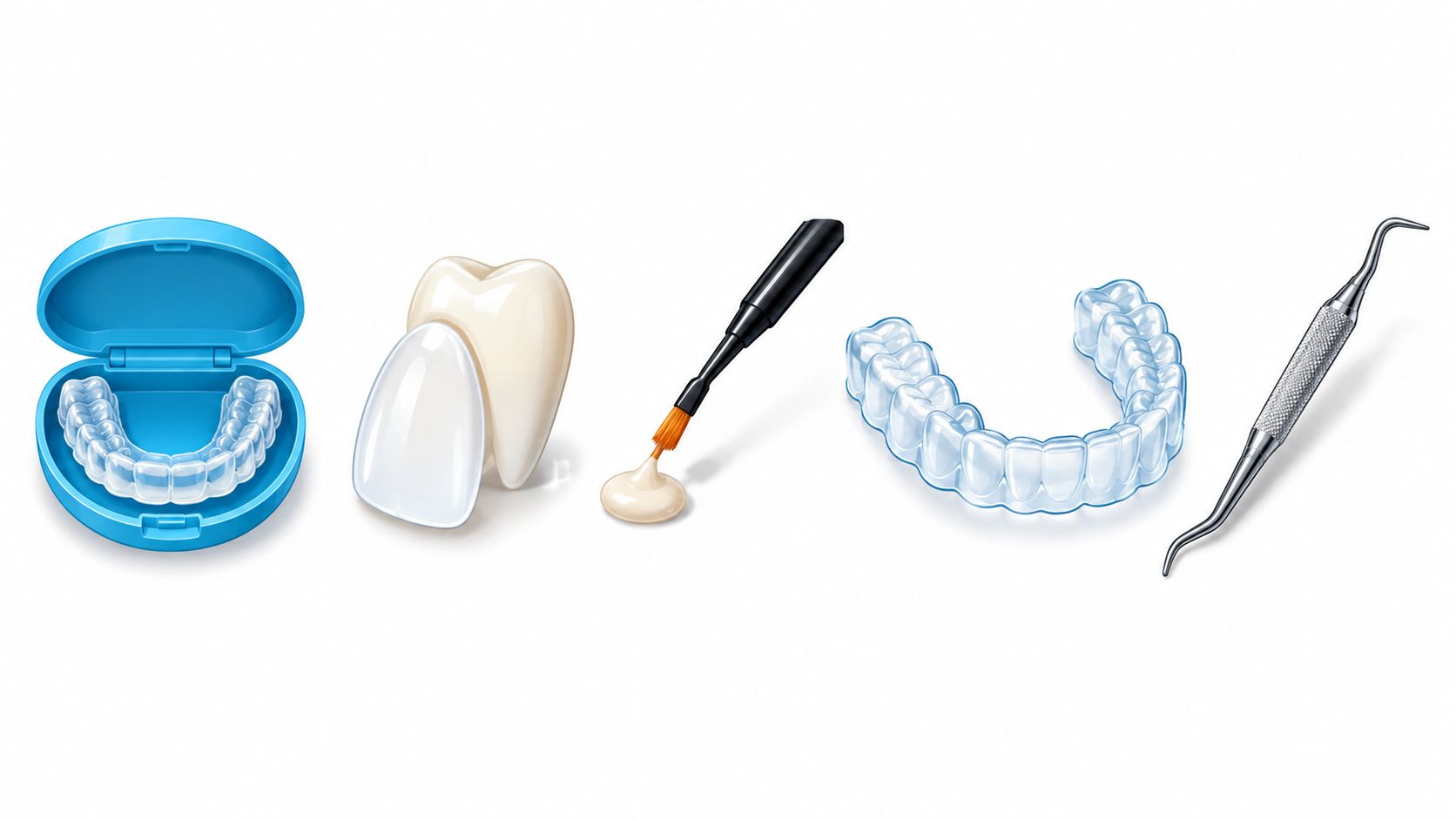
Professional whitening is the simplest place to begin if your main issue is color. Think of it as a deep refresh for enamel. It helps with common surface and age-related discoloration, and it's usually handled either in-office or with custom take-home trays. Whitening is often one of the shortest cosmetic treatments, though some stains respond better than others.
Composite bonding works well for small chips, uneven edges, tiny gaps, and shape corrections. The material is sculpted directly onto the tooth and polished in the chair. It's conservative and useful when you want a targeted change without committing to a full veneer plan.
Porcelain veneers are thin custom shells bonded to the front of teeth, usually in the visible smile zone. They're often used for shape, color, spacing, and symmetry concerns that whitening alone won't fix. Veneers usually take more planning than bonding because the result depends on shade, proportion, bite, and how the smile fits your face.
Invisalign, crowns, and implants
Invisalign is a series of clear aligners that gradually move teeth. Most patients switch aligners every 1 to 2 weeks, wear them 20 to 22 hours per day, and may need attachments, which are small tooth-colored bumps that help the aligners grip teeth for tougher movements like rotations and extrusions (how Invisalign aligners and attachments work). If your teeth are crowded or uneven, straightening first can reduce how much reshaping you need later.
All-ceramic crowns are usually the right answer when a tooth needs full coverage because it's heavily restored, cracked, or structurally weak. They can be cosmetic, but they're not just a beauty treatment. A crown changes the whole outer surface of the tooth, so it should be placed for a clear reason.
Dental implants are the cosmetic and functional answer for a missing tooth, especially in the front of the smile. The visible crown comes later. The bone healing process called osseointegration typically takes about 3 to 6 months, while the soft tissue often heals in about 1 to 2 weeks (implant healing timeline and osseointegration overview).
A smile can look more “natural” after orthodontic movement and small bonding than after aggressive cosmetic work. Don't skip that comparison.
Match the procedure to the problem
Here's the practical way to approach it.
- Color problem: Start with whitening.
- Small chip or minor shape issue: Bonding may be enough.
- Multiple front teeth with color and shape concerns: Veneers may make sense.
- Crowding or bite-related aesthetics: Invisalign often belongs early in the plan.
- Missing tooth: Think implant, not a cosmetic cover-up.
- Weak or broken tooth: A crown may be the responsible choice.
The right procedure is the one that solves your actual problem with the least unnecessary dentistry.
Porcelain vs Composite Veneers and How to Choose
Patients usually ask this as a material question. I think it's better asked as a planning question. What are you trying to fix, how fast do you want to fix it, and how much maintenance are you comfortable with?
Aesthetic improvement alone doesn't settle the debate. A study in the British Dental Journal found no statistical difference in patient-perceived cosmetic improvement between porcelain and composite maxillary anterior veneers, and both groups showed highly significant aesthetic gains after treatment (veneer patient-perception study). In other words, both can look very good when the case is chosen well and the work is done carefully.
Porcelain vs Composite Veneers at a Glance
| Factor | Porcelain Veneers | Composite Veneers |
|---|---|---|
| Appearance | Strong option for lifelike translucency and color stability | Can look very good, especially for smaller corrections |
| Visits | Usually planned over more than one visit | Often completed in one visit |
| Repairs | Usually less simple to patch chairside | Easier to repair directly |
| Stain resistance | Generally stronger over time | More likely to pick up stain and polish wear |
| Best fit | Multi-tooth smile zone cases and longer-term polish | Single-tooth fixes, conservative changes, phased plans |
What durability means in real life
Composite veneers can absolutely work. They just ask more of the material and often more of the patient. A systematic review reported direct composite veneer survival at 89% at 5 years in one cohort, 80% at 5 years in another, and 87% at just over 3 years in a randomized trial (systematic review on composite veneer survival).
That doesn't mean composite is a poor choice. It means it's usually a better fit when you value conservatism, repairability, or speed more than long-term polish and stain resistance.
My blunt recommendation
If you're fixing one tooth or making a modest change, composite deserves a serious look. If you're planning a broader smile makeover across several visible front teeth, porcelain is often the steadier long-term path.
The material matters less than the diagnosis. A poorly planned porcelain case is worse than a well-planned composite case.
Choose based on your priorities:
- Longevity and color stability: Lean porcelain.
- Lower commitment and easier repair: Lean composite.
- Fast, conservative correction: Composite often wins.
- High-visibility smile design: Porcelain often earns its place.
Are You a Good Candidate and What the First Visit Looks Like
Not everyone who wants cosmetic work should start it right away. That's not a bad thing. It's how responsible dentistry works.
Healthy gums, controlled decay, and a stable bite matter more than the shade of your teeth. If you're dealing with active gum inflammation, untreated cavities, clenching wear, or a cracked back tooth, those need attention first. Cosmetic dentistry sits on top of biology. If the foundation is off, the pretty part doesn't last.
Signs you may be a good candidate
A productive cosmetic consult usually starts with a few green lights:
- Healthy gum support: Your gums don't have to be perfect, but active disease should be addressed first.
- Clear goals: “I hate this chip” is more useful than “I want a celebrity smile.”
- Reasonable expectations: Natural-looking improvement is a better target than absolute uniformity.
- Willingness to maintain the work: Nightguards, hygiene, and follow-up matter.
Some patients are surprised when the honest recommendation is less treatment, not more. That's often a good sign.
What should happen at the first visit
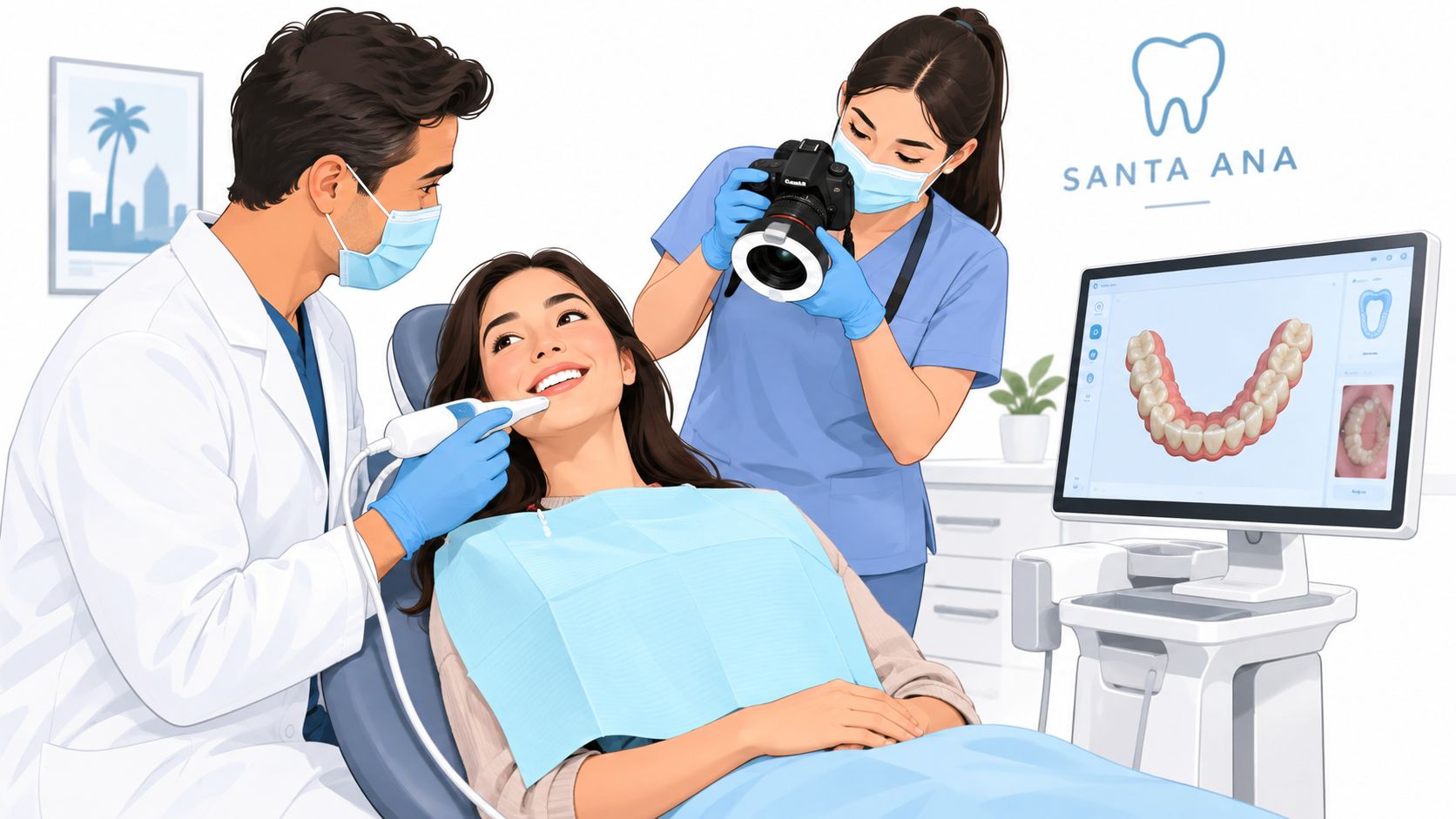
A real cosmetic consultation should feel like an evaluation, not a closing pitch. That usually includes photos, digital scans, a bite review, and a discussion about what bothers you most when you smile, talk, or chew. It should also include what you don't want, such as bulky veneers, over-whitened teeth, or a plan that takes over your calendar.
Questions about function belong in that room too. Patient education materials increasingly stress that consultations should address whether treatment may change tooth contacts, chewing, speech, jaw comfort, repair needs, maintenance, and whether a more conservative option could work (patient consultation questions for cosmetic treatment). Those aren't side issues. They're central.
Bring photos of smiles you like, but also bring a short list of what you dislike about your own smile. That's usually more helpful.
If you're exploring care in Santa Ana, one option is Bristol Dental & Orthodontics, where Dr. Andrew Finley and the team can evaluate cosmetic concerns alongside general, restorative, and orthodontic needs in one office. The most useful outcome of a first visit is a written plan that shows what should happen now, what can wait, and what may not need treatment at all.
Planning the Investment Without the Surprise
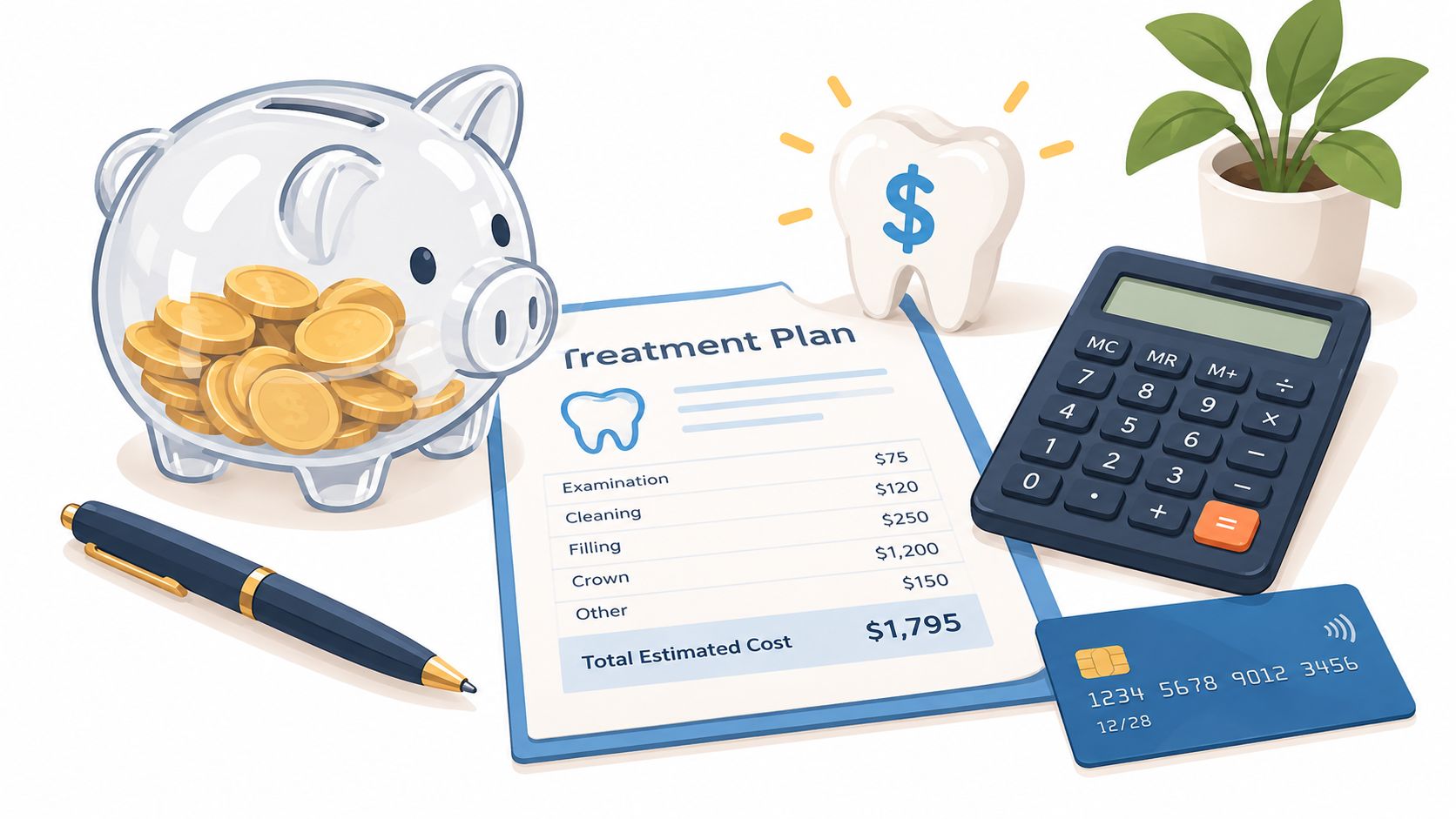
This is the part patients often hesitate to ask about, and it's the part that should be discussed plainly. Cosmetic treatment is often out of pocket, especially when the goal is appearance rather than repair of disease or damage. That doesn't mean it's irresponsible. It means you need a plan that fits real life.
Why patients feel blindsided
Many practices spend more time showing before-and-after photos than explaining how treatment is paid for, what's elective, and what can be staged. That leaves patients guessing. Independent consumer data found that 58% of consumers say dental care is not affordable, 46% are not prepared for their largest out-of-pocket dental expense, and 50% of insured respondents do not know their annual maximum (patient affordability and dental benefit awareness).
Those numbers fit what I hear in the consult chair. Many people aren't saying no to treatment. They're saying no to uncertainty.
A smart way to phase cosmetic care
You don't have to do everything at once. In fact, you shouldn't.
- Start with the biggest concern: Fix the issue you notice first, whether that's one front tooth, crowding, or discoloration.
- Separate foundation from finish: Handle decay, gum issues, cracks, or bite instability before elective smile changes.
- Ask for staged options: A good treatment plan should show what can be done now and what can be revisited later.
- Use pre-tax benefits if eligible: Some parts of treatment may fit within health savings or flexible spending rules, depending on your plan.
- Discuss financing early: If the office offers outside financing arrangements, ask how the process works before saying yes to care.
What to ask before you agree
Don't leave with a verbal summary and a vague total. Ask for a written plan with phases. Ask which parts are cosmetic, which parts are restorative, and which steps are optional.
Worth asking: “If I only do the first phase now, will that still leave me in a healthy, stable place?”
Also ask whether your ideal result depends on sequencing. For example, whitening before bonding can affect shade matching. Straightening before veneers can reduce how much tooth reduction is needed. A responsible office will walk you through those trade-offs without pushing same-day decisions.
How to Choose the Right Cosmetic Dentist in Orange County
Orange County gives patients plenty of choice. That's good for access, but it also means you have to filter through polished marketing, generic smile galleries, and a lot of treatment plans that look bigger on paper than they need to be.
A good cosmetic dentist doesn't just show attractive photos. They explain why a treatment fits your mouth, your bite, your habits, and your priorities.
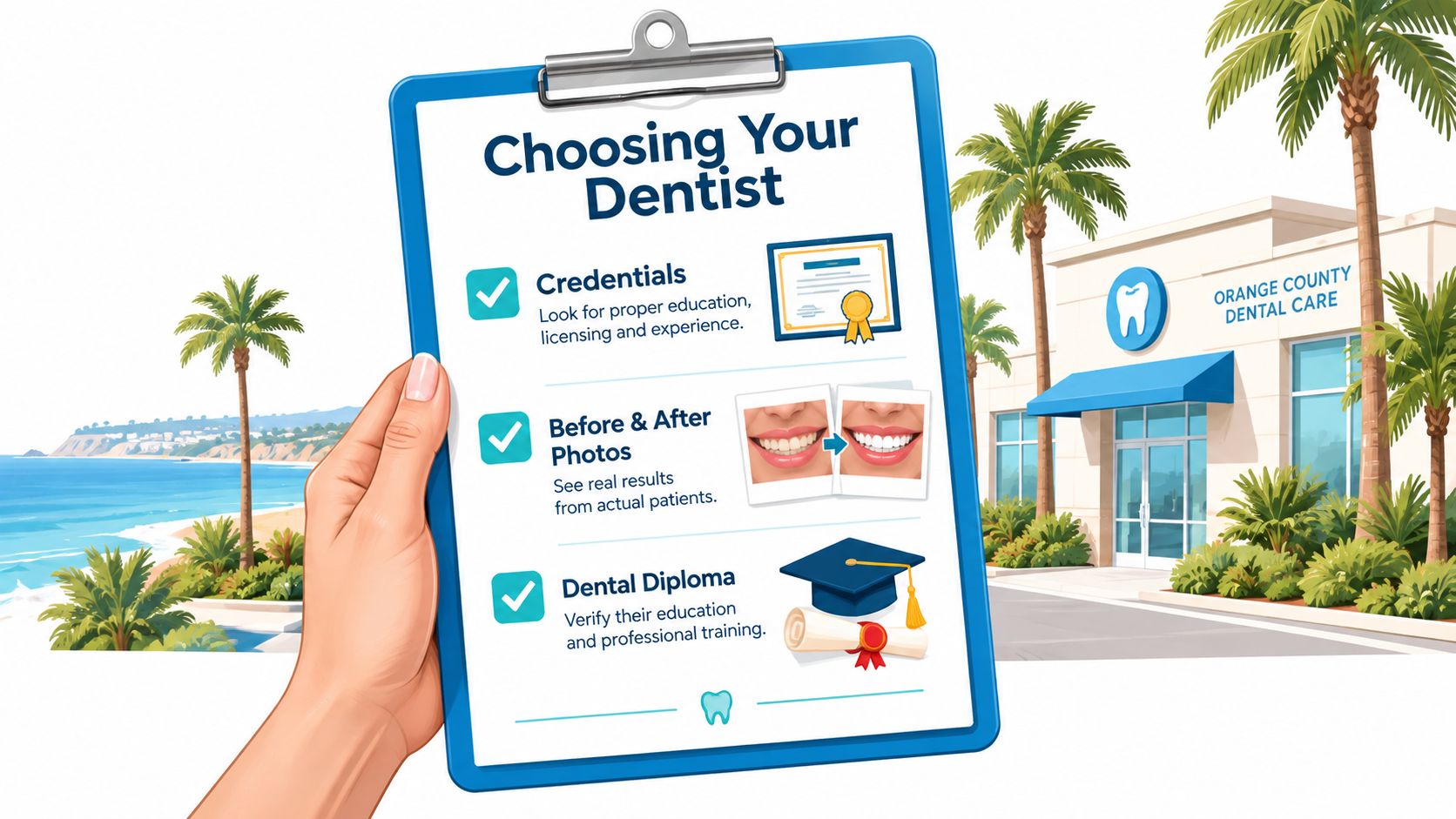
What to look for first
Use a simple checklist when comparing offices for cosmetic dentistry in Orange County:
- Relevant training: Ask about continuing education in cosmetic, restorative, and occlusion-focused care.
- Real case examples: Look for before-and-after cases that resemble your problem, not just dramatic full smile makeovers.
- Planning process: Ask whether the dentist uses photos, scans, mock-ups, and bite analysis.
- Material discussion: You should hear a clear explanation of why one material fits better than another.
- Maintenance honesty: Good offices talk about repairs, wear, stain risk, and future replacement. They don't act like cosmetic work is permanent and worry-free.
Questions that reveal a lot
You can learn more in five minutes of direct questions than in an hour of online browsing.
Ask things like:
- What would you do if this were your own tooth?
- What is the most conservative option that still looks good?
- What problems could show up later, and how are they usually handled?
- Will this change how my teeth meet or how I speak?
- Who plans the case and who does each step?
Those questions cut through sales language fast.
Red flags worth taking seriously
Be cautious if an office pushes veneers before discussing orthodontics, gum health, grinding, or the condition of old restorations. Be cautious if every solution sounds the same. And be cautious if you feel rushed to commit before you understand the long-term maintenance.
If a consult feels like a presentation instead of a conversation, keep looking.
Second opinions are reasonable. In a crowded market like Santa Ana, Costa Mesa, Tustin, and Irvine, the right fit is usually the office that educates clearly, answers hard questions directly, and is willing to recommend less treatment when less treatment makes more sense.
Where Cosmetic Goals Meet Restorative and Family Care
Cosmetic work rarely exists in isolation. The front teeth get the attention, but the back teeth, gums, bite, airway, and daily habits often determine whether the cosmetic result holds up.
That's why sequencing matters. Straightening first can create space and symmetry before bonding or veneers. Replacing a missing tooth can restore balance to the smile instead of forcing neighboring teeth to compensate. Treating a cracked molar or gumline decay first can prevent a cosmetic plan from being built on unstable teeth.
Common combinations that make sense
A few pairings come up often for Santa Ana families:
- Invisalign before veneers: If teeth are crowded or flared, aligners can improve position before any cosmetic finishing. That often preserves more natural tooth structure.
- Whitening with bonding updates: Whitening can freshen the overall smile, then small bonding adjustments can refine shape or repair older visible dental work.
- Implant replacement in the smile zone: When a front tooth is missing or failing, the cosmetic result depends on tissue healing, timing, and the final crown design, not just the implant itself.
- Crown and veneer coordination: If you have one old front crown and natural neighboring teeth, the cosmetic challenge may be shade harmony, not “making everything whiter.”
Function first still applies
Patients also ask whether cosmetic treatment can affect comfort. It can, which is why the consult should cover bite and jaw issues. That's especially important if you clench, wake with sore jaw muscles, or already notice wear.
For snoring and adult obstructive sleep apnea, oral appliance therapy belongs in a different category, but it matters to many families comparing dental services. The American Academy of Sleep Medicine and the American Academy of Dental Sleep Medicine state that oral appliance therapy for adults should be delivered by a qualified dentist using a custom, titratable device, not a non-custom device, and that oral appliances are an option for patients who cannot tolerate CPAP or prefer an alternative (guideline on oral appliance therapy for adult obstructive sleep apnea). A related guideline explains that titratable means the device allows adjustable mandibular protrusion, so the lower jaw can be advanced in steps during treatment (description of titratable oral appliances).
That may sound separate from cosmetic care, but it often isn't separate from your life. The same patient who wants a cleaner smile may also want help with snoring, family dental visits, emergency care, or anxiety about treatment. A well-run practice can coordinate those needs instead of sending you in circles between offices.
Your Next Step and Questions Worth Asking
If you're serious about changing your smile, book a consultation before you keep comparing photos online. Bring recent dental records if you have them, a medication list, and a few photos of smiles you like. Bring a short list of your own concerns in priority order.
The first visit should feel straightforward. Expect a conversation, an exam, photos, and a written plan with phased options where appropriate. Since this is health content, every cosmetic case still needs an individual evaluation, and Dr. Andrew Finley should review this content before publication and review your specific case in person before treatment decisions are made.
Questions patients often remember later
How long do porcelain veneers last?
They can last a long time when they're planned well and maintained properly, but they're not a lifetime guarantee. Longevity depends on bite forces, habits like clenching, oral hygiene, and whether the underlying teeth and gums stay healthy.
Does whitening damage enamel?
Professional whitening is generally conservative when it's used appropriately, but not every stain responds the same way and some patients notice temporary sensitivity. Whitening also doesn't change the color of crowns, veneers, or existing bonding.
Can Invisalign help crowded lower front teeth?
Often, yes. Lower front crowding is a common reason adults ask about aligners, but the right plan depends on space, bite, and how much movement is needed.
What happens if a veneer chips?
That depends on the material and the location of the damage. Some problems are repairable, while others may require replacement, which is one reason bite evaluation matters before treatment starts.
How long does the implant process take?
It varies by whether the tooth is already missing, whether grafting is needed, and how healing progresses. The implant itself usually needs time to integrate with bone before it supports the final crown.
Will cosmetic dentistry affect my speech?
It can temporarily, especially when front tooth length or contour changes. Well-planned treatment should account for speech, but it's smart to ask about that upfront if you speak for work or are especially sensitive to small changes.
Bristol Dental & Orthodontics is located on South Bristol Street in Santa Ana and serves patients from nearby Costa Mesa, Tustin, Irvine, and Garden Grove. If you're comparing options, call during office hours or request an appointment online so you can get a real exam and a plan that fits your goals instead of another generic cosmetic pitch.
If you're considering smile improvements, Bristol Dental and Orthodontics offers cosmetic dentistry, Invisalign, dental implants, sleep apnea oral appliance therapy, emergency care, and family dentistry in Santa Ana. Dr. Andrew Finley and the team can help you sort out what's cosmetic, what's restorative, and how to phase treatment responsibly. Schedule a consultation if you want clear answers without pressure.