
If you're searching for a cosmetic dentist in Orange County, there's a good chance this didn't start as a big makeover plan. It usually starts smaller. You notice yourself smiling with your lips closed in work photos, or you catch an old chip on a front tooth in the bathroom mirror before heading out in Santa Ana traffic. Maybe your whitening trays stopped getting you where you want to go. Maybe you lost a tooth years ago and you're finally ready to replace it.
That's the right way to think about cosmetic dentistry. Not as one procedure, and not as an impulse decision. A good smile plan is staged, practical, and built around your real life in Orange County.
Table of Contents
- Why Orange County Patients Look for a Cosmetic Dentist
- What Cosmetic Dentistry Actually Covers
- Common Cosmetic Procedures Explained
- Your Cosmetic Dentistry Journey Step by Step
- Costs, Staging, and Smart Planning
- How to Choose the Right Cosmetic Dentist in Orange County
- Questions Patients Ask Most Often and Next Steps
Why Orange County Patients Look for a Cosmetic Dentist
You see it on a Tuesday, right before work. A front tooth looks darker in the bathroom mirror, an old chip catches the light, or a photo from dinner in Costa Mesa makes your smile look more uneven than you realized. That is usually what gets Orange County patients to finally book a cosmetic consult.

In Orange County, appearance matters, but convenience matters too. Patients in Santa Ana are often trying to fit dental visits between work, school pickups, traffic, and everything else that fills a normal week. They want their smile to look better. They also want a plan that makes sense on the calendar and in the budget.
The usual reasons people finally book
Patients usually come in for one visible problem first, then learn whether it should be handled alone or as part of a larger plan.
- Stained teeth: Coffee, tea, wine, aging, and older dental work can leave the smile looking dull or uneven.
- Chips and worn edges: Small flaws on front teeth can make a healthy smile look older or rougher.
- Gaps or mild crowding: Some patients want straighter teeth and a cleaner look without committing to traditional braces.
- Old bonding or mismatched dental work: Repairs that blended in years ago can start to stand out.
- Missing teeth: A missing tooth changes the look of the smile and can also affect chewing and bite balance.
Cosmetic dentistry is common because these problems are common. The important question is not whether treatment exists. The important question is what to do first, what can wait, and whether the office is building a real plan or just selling a procedure.
A good cosmetic plan matches real life
One Santa Ana patient may need quick whitening before family photos. Another may need bonding on a chipped front tooth. Another may be looking at Invisalign, veneers, or an implant in stages over several months.
That staging matters.
If gums are inflamed, a bite is unstable, or old dental work is failing, those issues need to be addressed before the cosmetic part is finalized. That is how you avoid paying twice for the same tooth.
Practical rule: If a practice jumps straight to treatment without a full exam, photos, and a clear discussion of timing, keep looking.
A good cosmetic dentist in Orange County should help you sort the problem into steps, explain the trade-offs, and tell you what is worth doing now versus later. For Santa Ana patients especially, that is the difference between a rushed fix and a smile plan that holds up.
What Cosmetic Dentistry Actually Covers
Cosmetic dentistry is not one procedure. It is the part of dentistry focused on how your smile looks in real life. Color matters. Shape matters. Spacing, symmetry, gumline, and how your teeth show when you talk and smile all matter too.
In Orange County, that usually means one of two things. A patient wants a small fix that shows right away, or they need a staged plan because the cosmetic issue is tied to wear, old dental work, crowding, or a missing tooth.
Cosmetic, general, and restorative care often overlap
These categories are useful, but they are not separate boxes.
General dentistry covers exams, cleanings, fillings, gum care, and the routine work that keeps teeth healthy. Restorative dentistry repairs damage and replaces lost structure, such as crowns, bridges, fillings, and implants. Cosmetic dentistry focuses on the visible result and whether the final smile looks balanced, natural, and consistent.
A front tooth often needs all three. If it is cracked, the tooth may need restorative treatment. If the gums around it are inflamed, general care comes first. Then the cosmetic decisions start. Shade. Shape. Edge position. Surface texture. How it matches the tooth beside it.
That is why a good cosmetic dentist does not talk about veneers or whitening first. They figure out what is healthy, what is worn, what is failing, and what should be changed in what order.
What can be part of a cosmetic plan
A cosmetic plan may include one treatment or several, depending on the goal:
- Professional whitening to improve overall tooth color
- Composite bonding to repair small chips, soften uneven edges, or close minor spaces
- Porcelain veneers to change color, shape, width, length, or visible balance
- Clear aligner treatment to improve spacing, crowding, and tooth position
- Implants to replace a missing tooth when appearance and bite are both affected
- Gum reshaping to even out a gummy or uneven smile
- Smile makeovers that combine treatments in a staged sequence
Healthy gums, stable teeth, and a bite that works come before the final polish.
That matters more than patients expect. Someone in Santa Ana may come in asking for straighter, whiter front teeth, but the issue may be grinding, recession, or an old crown that no longer matches. If you skip those details, the cosmetic result looks good for a short time and ages badly.
The right way to define cosmetic dentistry is simple. It is dental treatment planned around appearance, but built on health and function first. That is the standard to expect from any Orange County practice you are considering.
Common Cosmetic Procedures Explained
A lot of Orange County patients come in asking for one procedure when they need a sequence. A whitening case may turn into whitening first, then bonding on one chipped edge. A “I want veneers” case may start with straightening because the teeth are crowded and the prep would be heavier than it needs to be.
That is the right way to look at cosmetic treatment in Santa Ana. Start with the smallest change that solves the problem.
Common Cosmetic Procedures at a Glance
| Procedure | Best For | Typical Timeline |
|---|---|---|
| Whitening | Surface stains, age-related darkening | One to two visits |
| Composite bonding | Small chips, minor gaps, shape tweaks | Single visit |
| Porcelain veneers | Color, shape, worn edges, visible asymmetry | Two to three appointments over a few weeks |
| Clear aligners | Mild to moderate crowding, spacing, some bite issues | Often several months to more than a year, depending on complexity |
| Dental implants | One or more missing teeth | Multi-step process that may take several months |
| Gum contouring | Uneven or gummy smile | Often one visit, with healing time afterward |
What each option really does
Whitening works best for natural teeth that are stained or darkened with age. It does not change the color of crowns, veneers, or tooth-colored fillings, so uneven dental work can stand out more after whitening. If you have older work on the front teeth, ask the dentist to show you how the shade match will look before you start.
Bonding is a smart choice for small fixes. Chips, narrow gaps, worn corners, and minor edge irregularities are usually good bonding cases. It is conservative, fast, and cost-friendly, but it does not wear like porcelain. If you clench or grind, ask how likely it is to chip and what maintenance looks like.
Veneers are for bigger visible changes. They can correct color, shape, length, proportions, and symmetry in a way bonding often cannot. They also require careful planning. If a Santa Ana practice talks about veneers before discussing bite, enamel, and how much tooth structure will be changed, slow down and get clearer answers.
Two procedures that change the whole plan
Clear aligners fix position. That matters because many cosmetic complaints are really alignment problems in disguise. If one front tooth is rotated, pushed back, or overlapping, whitening will not fix it and bonding may only camouflage it. Aligners only work if you wear them as directed, so be honest with yourself before you commit.
Dental implants replace missing teeth, but in the smile zone they are also cosmetic treatment. The final look depends on implant position, gum shape, spacing, and the crown that sits on top. This is one area where staging matters a lot. A rushed implant plan can leave you with a tooth that functions but does not blend.
Gum contouring is more useful than many patients expect. If the teeth look short or the gumline is uneven, changing the gum shape can improve the smile more than changing the teeth themselves. In the right case, it is the difference between a result that looks obvious and one that looks natural.
Match the procedure to the problem. Color problems call for whitening. Position problems call for tooth movement. Shape problems may call for bonding or veneers.
If you are comparing cosmetic dentists in Orange County, pay attention to how they explain these trade-offs. A good Santa Ana consultation should tell you what each procedure fixes, what it cannot fix, and what should happen first. That is how you avoid paying for cosmetic work twice.
Your Cosmetic Dentistry Journey Step by Step
A lot of Orange County patients come in asking for veneers when what they really need is a plan. The best smile results in Santa Ana usually happen in stages, with each step solving the problem in the right order.
Step one through step three
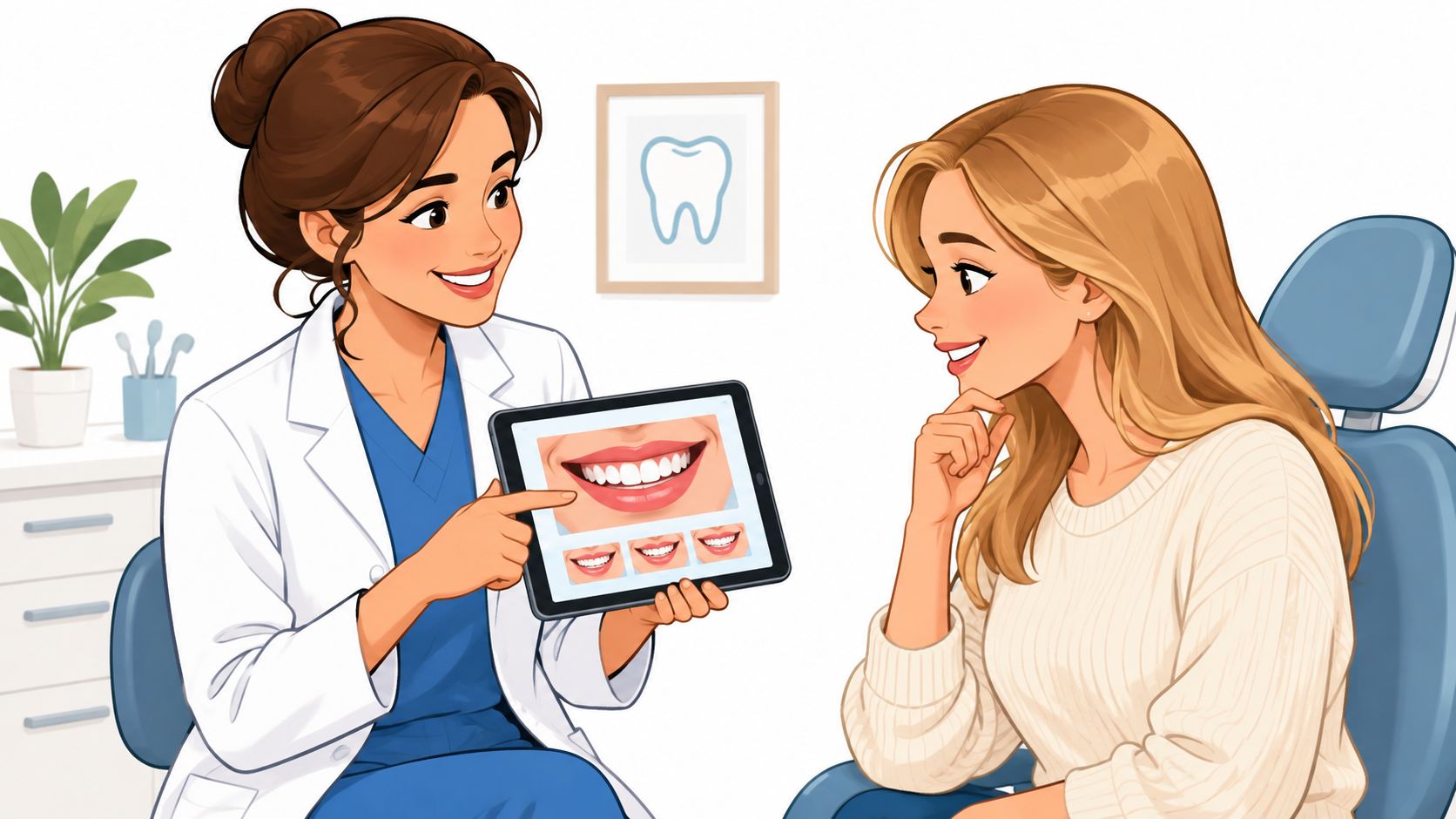
Consultation and goal setting
Start by naming what bothers you most. Too dark. Too short. Too crowded. Old bonding that no longer matches. A useful consultation gets specific fast and turns vague goals like “I want a better smile” into a clear treatment target.Exam and diagnostics
Your dentist needs to check more than the front teeth. Gum health, bite, enamel thickness, wear, old fillings, and crown edges all affect the cosmetic plan. Photos help. Scans can help. In the smile zone, small details matter.Pre-treatment cleanup
Cosmetic work lasts longer when the mouth is stable first. That may mean a cleaning, treating gum inflammation, replacing a leaking filling, or addressing a cracked tooth before any whitening, bonding, or veneers begin.
Planning before treatment
This part decides whether the final result looks natural or done. It also tells you a lot about the practice you are sitting in.
A good Santa Ana cosmetic dentist should show you the sequence, not just the finish line. You may review shade choices, tooth proportions, mock-ups, or digital previews. If veneers are on the table, ask how much enamel would be changed, what the temporary phase looks like, and whether a more conservative option could get you there.
If clear aligners are part of the plan, small enamel reshaping between teeth sometimes comes up to create space and improve fit. Done carefully, it can be a conservative way to refine alignment and avoid bulkier cosmetic work later.
Treatment and maintenance
Some treatment is quick. Some takes patience.
Bonding may be done in one visit. Whitening often comes early so the rest of the work can match the lighter shade. Veneers take planning, temporaries, and precise lab communication. Implants need healing time, and rushing that stage usually shows in the final smile.
Once treatment is complete, protection becomes part of the job:
- Nightguards: Important if you grind or clench
- Hygiene visits: Cosmetic work still needs routine care
- Touch-ups: Whitening and bonding may need maintenance over time
- Check-ins: Bite changes and wear should be monitored
A good cosmetic result is not one big appointment. It is a staged plan, followed carefully, then maintained.
Costs, Staging, and Smart Planning
A lot of Orange County patients sit down for a cosmetic consult expecting one price. Then they find out the plan has phases.
Patients in Santa Ana, Tustin, Irvine, and the rest of Orange County should ask about cost early, but they should ask about sequence at the same time. Cosmetic dentistry is rarely one line item. The total depends on how many teeth are involved, what has to be corrected first, and how long you want the result to hold up.

Why one smile plan can cost more than another
Two patients can both ask for veneers and need completely different treatment.
One may need a small cosmetic change on a couple front teeth. Another may need old fillings replaced, gum levels refined, bite issues addressed, and whitening before any veneer work should start. Those are not the same case, and they should not carry the same fee.
Price shopping without looking at the plan is a mistake. A lower quote can mean fewer records, less detail in the design phase, weaker lab communication, or no clear follow-up plan. If a dentist cannot explain what is being done first, what can wait, and what protects the final result, the number on the estimate does not tell you much.
Smarter ways to stage treatment
The best cosmetic plans are usually phased. That gives you more control over budget, timing, and how conservative the treatment stays.
- Start with changes that preserve tooth structure: Whitening, minor bonding, or enamel reshaping may improve the smile enough that you need less dentistry overall.
- Handle functional problems first: If a tooth is broken, missing, or worn down from grinding, fix that before spending money on surface-level cosmetics.
- Build in phases when needed: Many Orange County patients split treatment across seasons, insurance cycles, or work schedules instead of forcing everything into one stretch.
- Budget for protection and upkeep: Nightguards, maintenance visits, and future touch-ups are part of the cost, especially for patients who clench or grind.
Here is the standard I would use. Ask the Santa Ana office to separate the plan into "must do now," "can do next," and "optional if you want the extra polish." That makes the decision clearer. It also shows whether the dentist is planning around your teeth and bite, or just trying to sell the biggest case.
A smart cosmetic plan should feel organized, not rushed. You should know what you are paying for, why it comes in that order, and what can be postponed without hurting the final result.
How to Choose the Right Cosmetic Dentist in Orange County
You sit down for a cosmetic consult in Santa Ana. You ask about fixing worn edges, uneven color, and one older crown that never matched well. Within five minutes, the conversation jumps straight to veneers on every front tooth.
That is a warning sign.
If you live in Orange County, you need a dentist who plans in steps and explains why each step comes first. Cosmetic dentistry is rarely one decision. It is a sequence. The right office will help you sort out what improves the smile, what protects your teeth, and what can wait until later.
What to look for in a consultation
A good consultation should feel specific to your mouth, not built around a menu of procedures. The dentist should study your enamel, bite, gum line, existing fillings or crowns, and the way you use your teeth. If all you hear is a pitch for one treatment, keep looking.
Here is what I would look for in a Santa Ana cosmetic office:
- A diagnosis before a proposal: They explain what is causing the problem, not just how they can cover it.
- Clear sequencing: They tell you whether whitening, orthodontics, gum treatment, replacing old dental work, or bite protection should happen before cosmetic changes.
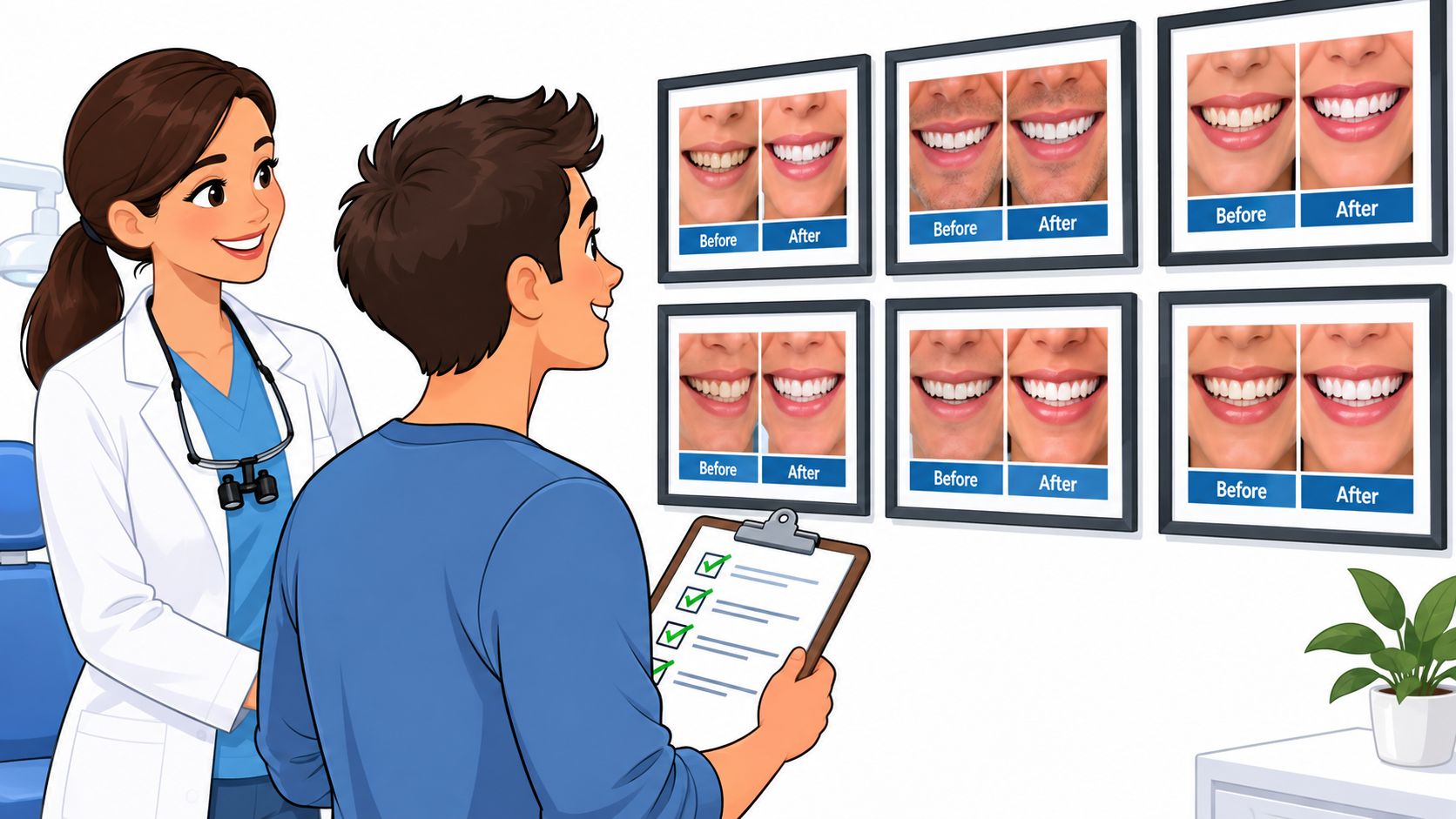
- Real examples of similar cases: Not generic smile photos. Cases that resemble your spacing, wear, discoloration, or uneven edges.
- Planning tools you can review: Photos, scans, wax-ups, or mock-ups that show what is changing and what is staying the same.
- Plain talk about maintenance: They tell you how often bonding may need touch-ups, how veneers hold up under grinding, and when a nightguard matters.
A strong cosmetic dentist should also be comfortable saying no. If your request would remove healthy tooth structure when a more conservative option could work, that should be stated clearly.
Local fit matters in Orange County
Orange County patients are often balancing work schedules, traffic, insurance timing, and family logistics. That makes follow-through matter. If your plan involves aligners before veneers, or an implant before reshaping neighboring teeth, coordination matters just as much as the cosmetic result.
That is why some patients look at Bristol Dental & Orthodontics in Santa Ana. The practice offers family dentistry, cosmetic dentistry, Invisalign, dental implants, emergency care, and sleep apnea treatment in one office. For a staged cosmetic plan, that can make scheduling and communication easier.
Convenience alone is not enough, though. The office still needs to show good judgment.
Questions worth asking before you commit
Ask direct questions and listen for direct answers.
- Can you show me cases similar to mine?
- What needs to be healthy or stable before cosmetic treatment starts?
- What is the most conservative way to improve this smile first?
- If I clench or grind, what changes about the plan?
- What will need maintenance, replacement, or touch-ups later?
- What result are you trying to protect by doing the treatment in this order?
You are not just choosing someone to make teeth look better. You are choosing someone to make careful decisions with your enamel, bite, and long-term maintenance in mind.
That is the standard.
Questions Patients Ask Most Often and Next Steps
You finally decide to fix your smile, then the questions start. Should you whiten first? Will veneers ruin healthy teeth? Can you do this before a wedding in Newport Beach or a work event in Irvine without rushing into the wrong treatment?
Here are the answers I give Orange County patients every day.
The short answers
How long do results last?
That depends on what you choose, how you bite, how well you clean your teeth, and whether you grind at night. Whitening fades. Bonding can chip or stain. Veneers and crowns usually hold up well, but they still need maintenance and may need replacement later.
Does cosmetic dentistry damage natural teeth?
Good cosmetic dentistry protects tooth structure whenever possible. Start with the most conservative option that can solve the problem. If whitening, bonding, or aligners can get you where you want to go, that is usually the smarter first move than cutting healthy enamel for a bigger case.
Should I whiten first or get veneers first?
If color is the main complaint, whitening often comes first. If the problem is shape, spacing, uneven edges, old fillings, or teeth that do not match, whitening will not fix the bigger issue. A good plan decides the order before anything starts.
Timing and special situations
What if I grind my teeth?
Say it at the first visit. Grinding changes everything. It affects material choice, bite design, whether aligners make sense first, and whether you need a nightguard to protect the work.
How far ahead of a wedding or big event should I start?
Start earlier than feels necessary. Small changes like whitening or minor bonding may move quickly. A staged plan with aligners, implants, gum work, or multiple restorations takes time. If the date matters, bring it up at the start so the plan fits the calendar.
Can cosmetic treatment overlap with other dental needs?
Yes, and in many cases it should. Missing teeth, worn teeth, bite problems, old crowns, clenching, or airway concerns can all affect the cosmetic plan. In a Santa Ana office, that matters because your smile plan should work with your health needs, not compete with them.
What to do next
Do not shop for one procedure. Choose a dentist in Orange County who can map the case in stages and explain why the order matters. First get the teeth and gums stable. Then handle alignment, replacement of missing teeth, or bite issues if needed. Finish with the cosmetic details.
That approach saves teeth, avoids redoing work, and usually leads to a better result.
If you are comparing options in Santa Ana, ask for a consultation with Dr. Andrew Finley and review three things in plain language. What needs to happen first, what can wait, and what is optional. Bristol Dental and Orthodontics treats cosmetic cases with that staged planning mindset, which is exactly what you want before committing to any smile change.