
Living with a missing tooth can wear on you in small ways before it becomes a big decision. Maybe you avoid chewing on one side. Maybe a denture shifts when you talk. Maybe you've been thinking about implants for months, but you're still unsure what the first appointment will be like.
That uncertainty is normal. Patients often don't walk into a dental implant consultation feeling fully informed. They walk in hoping for a clear answer, and sometimes worrying they'll be judged, rushed, or told they need more treatment than expected.
Dr. Andrew Finley takes a calmer approach. At Bristol Dental & Orthodontics in Santa Ana, the consultation is meant to give you clarity, not pressure. It's the appointment where your concerns, health history, imaging, and goals all come together so you can understand whether an implant makes sense, and what the path looks like if it does.
For some patients, the answer is straightforward. For others, the answer is “not yet,” which is very different from “never.” That distinction matters. If you live in Santa Ana or nearby Orange County communities like Costa Mesa, Tustin, Irvine, or Garden Grove, it helps to know that a good consultation doesn't just focus on the ideal case. It also explains the next steps when your situation is more complex.
Table of Contents
- The Purpose of a Dental Implant Consultation
- A Step-by-Step Look at Your Consultation Visit
- From Examination to a Personalized Treatment Plan
- Navigating Practical Questions Timeline Cost and Comfort
- Common Questions About Dental Implant Consultations
- Conclusion Take the Next Step with Bristol Dental & Orthodontics
The Purpose of a Dental Implant Consultation
A dental implant consultation isn't a sales visit. It's a planning appointment with three jobs: find out whether an implant is appropriate, gather the information needed to plan safely, and give you space to ask questions before any treatment decisions are made.
For patients, that often comes as a relief. You're not expected to show up already knowing the right treatment. The consultation is where the dentist learns what you're missing, what's bothering you, what your health background looks like, and what kind of result you want.
Implants are also far more common than many people realize. In a nationally representative study of U.S. adults with missing teeth, implant use increased from 0.7% in 1999 to 2000 to 5.7% in 2015 to 2016, and the study projected that by 2026 prevalence could range from 5.7% to 23% depending on future growth patterns, according to the NHANES implant prevalence study. That shift helps explain why modern consultations are detailed. This is no longer viewed as an unusual or niche option.
What the appointment is really trying to answer
A useful consultation usually centers on questions like these:
- Is an implant appropriate here: One missing tooth, several missing teeth, or a loose denture can each lead to a different recommendation.
- Is the area ready now: The condition of the gum tissue, neighboring teeth, and jawbone affects timing.
- Are there health factors to account for: Your medications, healing history, and medical conditions may influence planning.
- What does the full process look like: Some patients can move directly to placement planning. Others may need a staged approach first.
Practical rule: A good dental implant consultation should leave you with a clearer decision, not just more terminology.
Why this first visit matters so much
Implants depend on planning. The implant itself may be small, but the decision involves bone, bite, gum health, function, appearance, and long-term maintenance. If any of those pieces are ignored early, the treatment plan can become harder to understand and harder to compare.
That's why the consultation is often the most important appointment in the process. It turns a general hope, “I want my tooth back,” into a specific roadmap based on your mouth, not someone else's.
A Step-by-Step Look at Your Consultation Visit
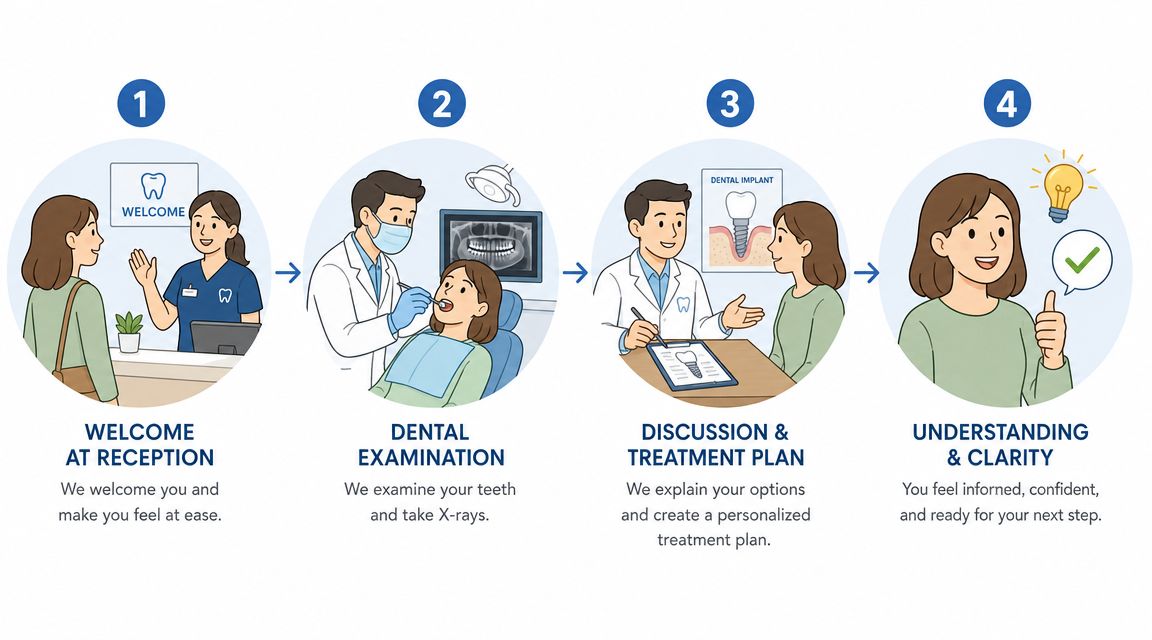
Most implant consultations feel more like an organized evaluation than a procedure. Nothing is being rushed. The goal is to gather the right information in the right order.
You might start by talking about what brought you in. Some patients are missing a tooth that was removed years ago. Others are tired of a partial denture, or they have a tooth that may not be restorable. That conversation matters because your goals shape the plan. Replacing one back tooth and rebuilding a visible front tooth don't involve the same considerations.
First comes the conversation
Early in the visit, expect questions about:
- Your medical history: Conditions, medications, and anything that could affect healing or infection risk.
- Your dental history: Prior extractions, gum problems, past restorations, and what has or hasn't worked for you.
- Your goals: Better chewing, better appearance, improved stability, or a replacement that feels less removable.
This part can seem simple, but it's one of the most important steps. A treatment plan makes more sense when it solves the problem that troubles you.
Then comes the exam and imaging
A detailed implant consultation goes beyond looking at the space in the mirror. The Mayo Clinic notes that preoperative preparation may include a full dental exam, dental X-rays, 3D images, and a customized treatment plan based on the condition of the jawbone and remaining teeth, as described in Mayo Clinic's overview of dental implant surgery preparation.
In plain language, that means the dentist needs to see what's happening under the gums, not just above them.
A 3D CBCT scan is especially helpful because it can show:
| What the scan helps assess | Why it matters |
|---|---|
| Bone volume | The implant needs enough support in the jaw |
| Nerve pathways | Important for safe planning in lower jaw sites |
| Sinus location | Important for upper back tooth areas |
| Site shape and angulation | Helps determine implant position and restoration design |
The consultation is usually non-invasive. You're answering questions, having an exam, and getting imaging so the dentist can plan with precision.
What patients often find reassuring
Many people expect the consultation to end with a same-day yes or no. More often, it ends with a thoughtful explanation. If the site looks ideal, that's helpful. If the bone or gum conditions suggest more preparation is needed, that's also helpful because now you know before surgery is scheduled.
At Bristol Dental & Orthodontics, this kind of visit is where Dr. Finley gathers the information needed to decide whether an implant is the right option and what sequence of care makes sense for your case.
From Examination to a Personalized Treatment Plan
Once the exam and imaging are complete, the question changes from “Can I get an implant?” to “What is the smartest way to get there?” That's where many patients need the most reassurance.

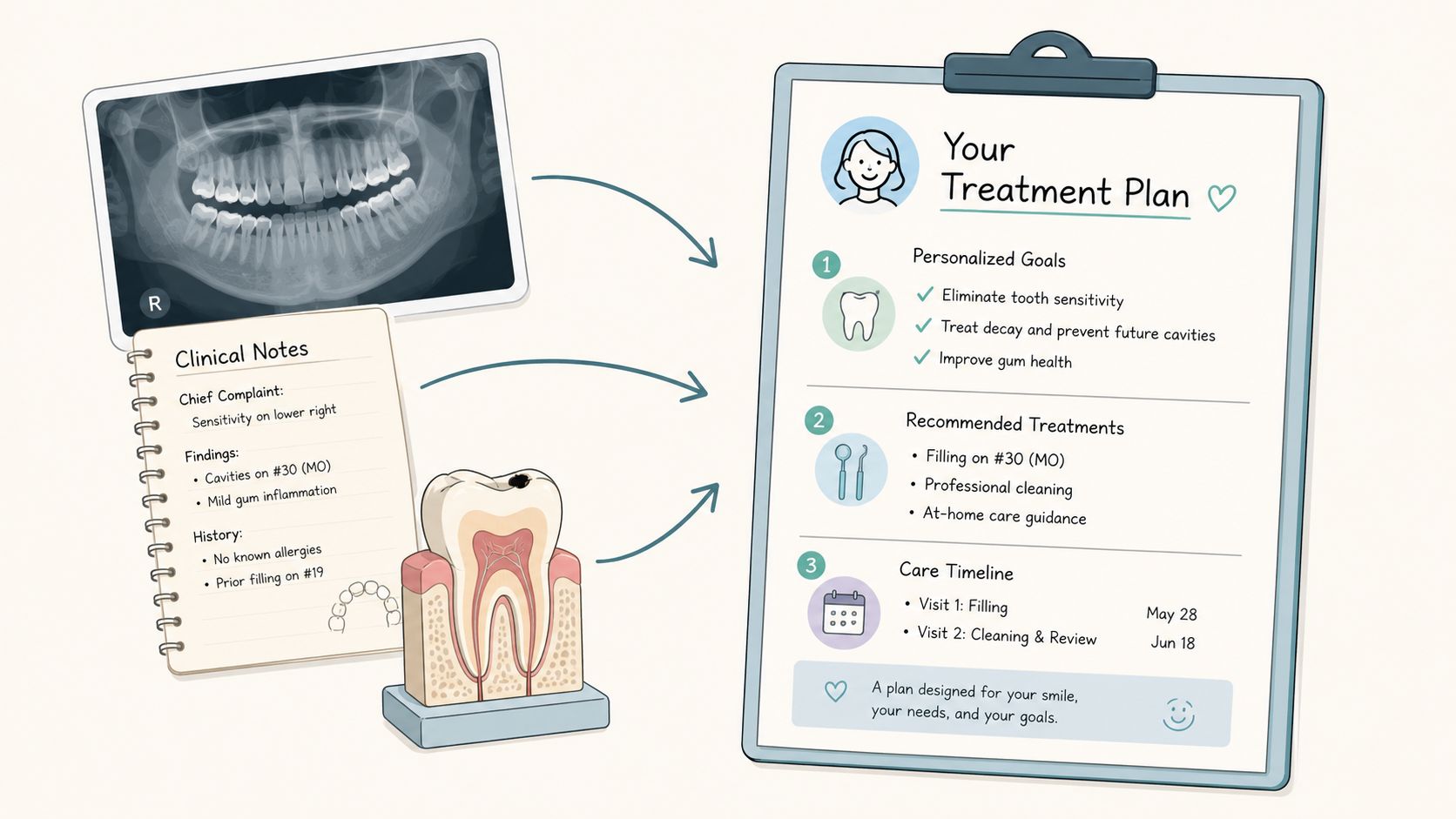
A personalized plan should translate clinical findings into plain language. It should tell you what's recommended, why it's recommended, what the stages are, and what could change the timeline. That matters even more when you're not an immediate implant candidate.
What a treatment plan usually includes
A clear plan often covers the following:
- The recommended approach: One implant, more than one implant, or a different restoration if an implant isn't the best fit.
- The sequence of care: Whether treatment starts with removing a tooth, healing, grafting, or direct implant planning.
- The restoration goal: What the final tooth replacement is intended to do functionally and cosmetically.
- The checkpoints: When healing, follow-up imaging, or specialist coordination may be needed.
Patients often get stuck on the word “candidate,” because it sounds final. In reality, many consultations lead to a staged answer.
When the answer is not yet
Some mouths need preparation before implant placement. Academic patient guidance notes that a quality consultation should explain the full decision tree, including whether procedures such as bone grafting may be needed to prepare the site and how that can affect the timeline, as outlined in UIC's patient guide to deciding if dental implants are right for you.
That can include situations like these:
- Bone loss after an old extraction: The space has healed, but the ridge may no longer have the shape needed for ideal placement.
- A tooth that needs to come out first: The area may need time to heal before the next step is chosen.
- Anatomy in the upper back jaw: The location of the sinus can affect how the site is prepared.
- Health or hygiene concerns: The foundation may need to improve before implant surgery is considered.
“Not yet” is often good news. It means the dentist sees a path forward and wants to prepare the site properly rather than force a shortcut.
What transparency looks like
A trustworthy consultation doesn't only describe the easiest version of treatment. It also explains what changes if your case is more complex. For example, needing a graft doesn't mean the implant idea has failed. It means the plan has more than one phase.
That kind of honesty helps patients make better decisions. You can compare options, ask better questions, and understand why one timeline is shorter while another is more staged. Most of all, you leave knowing where you stand.
Navigating Practical Questions Timeline Cost and Comfort
Once you understand the clinical plan, most of the remaining questions are practical. How long will this take? What affects the overall cost? What if you're nervous about treatment?

The timeline is rarely one appointment from start to finish. Healing matters because the implant needs time to integrate with the surrounding bone before the final restoration is placed. That's why implant planning tends to be staged and why the consultation should map out those stages clearly.
Timeline matters because healing matters
For some patients, the timeline is straightforward. For others, it includes preparatory treatment first. If a graft or extraction is needed, that can add steps before the implant is placed. If the site is already healthy and well-shaped, the path may be simpler.
The important point is that the treatment plan should explain the order of events in plain English. You should know what happens first, what happens after healing, and when the final restoration is expected to be discussed.
What affects cost
A consultation shouldn't reduce cost to one single number without context. The overall investment usually depends on factors such as:
- How many teeth are being replaced
- Whether grafting or other preparation is needed
- The complexity of the site
- The type of final restoration planned
- Whether care is completed in one stage or several
That's one reason comparison shopping can feel difficult. Two plans may sound similar at first, but one may include important preparatory steps that the other has not addressed clearly.
What about comfort and anxiety
Many patients are more worried about the unknown than about the actual treatment. The consultation is a good time to discuss numbness, surgical planning, and whether sedation options might help you feel more comfortable. If you already know you're anxious in the dental chair, say so early. That helps the team plan around your needs.
Dental implants are widely regarded as a durable treatment option. One evidence summary reports 95% to 98% success within the first five years, which is part of why careful planning matters so much, as noted in this summary of dental implant success rates. High documented success doesn't eliminate the need for individualized planning. It reinforces it.
Common Questions About Dental Implant Consultations
How should I prepare for the appointment
Bring the basics that help the dentist understand the full picture. That usually means a list of medications, a summary of major health conditions, and any recent dental records or images you already have if the office requests them.
It also helps to write down your own questions ahead of time. A few examples:
- Function questions: Can I chew normally again?
- Timing questions: Will this likely be one stage or more than one?
- Planning questions: If I'm not ready now, what would need to happen first?
- Personal concerns: Will I have a temporary option during treatment?
A short list makes the visit more productive. It also helps you leave with answers you can remember.
Does the consultation hurt
In most cases, no. The consultation itself is generally an exam, a discussion, and imaging. You may have areas that are already tender because of a damaged or missing tooth, but the appointment is typically focused on evaluation, not surgery.
If anything in your mouth is already uncomfortable, mention it at the start. That helps the dentist examine the area gently and explain what may be causing the soreness.
What if the plan feels too big or confusing
That's exactly when you should slow down and ask for clarification. If a proposed treatment plan feels overwhelming or unclear, it's reasonable to seek another opinion. Guidance on second opinions notes that a trustworthy consultation should offer a rationale you can understand and compare, as explained in this discussion of when to seek a second dental opinion.
A clear plan should answer three things: what is being recommended, why it's being recommended, and what happens if you wait or choose another option.
If you do get a second opinion, try to compare the plans line by line. Are they solving the same problem? Do they include the same preparatory steps? Are they based on similar imaging and findings? Those questions are often more useful than comparing the plans by price alone.
What if an implant is not the right treatment for me
That can happen, and it doesn't mean the consultation was a dead end. Sometimes a bridge, partial denture, full denture, or another restorative approach may be more appropriate based on your anatomy, health history, or treatment priorities.
A good consultation helps you understand the tradeoffs. An implant may offer one set of advantages, while another treatment may fit your timeline, comfort level, or maintenance preferences better. The goal isn't to force every patient into the same path. The goal is to find the right solution for your mouth and your circumstances.
Conclusion Take the Next Step with Bristol Dental & Orthodontics
A dental implant consultation should give you clarity, not pressure. You should leave knowing whether an implant looks possible, whether the site needs preparation first, and what the full path may involve if you're not an immediate candidate. That kind of transparency makes the process easier to understand and easier to trust.
If you're in Santa Ana, Costa Mesa, Tustin, Irvine, or Garden Grove, schedule a consultation with Dr. Andrew Finley to talk through your options in person. Every case is different, and your next step should be based on your health, your goals, and a plan that makes sense to you.
If you're ready to talk through missing teeth, bone grafting questions, or whether implants are the right fit, contact Bristol Dental and Orthodontics to schedule a consultation with Dr. Finley. Every article is reviewed by Dr. Finley before publishing, and your visit can help turn uncertainty into a clear, personalized plan.