

You might be here because your child's dentist mentioned crowding at a checkup. Or maybe you've caught your own smile in a photo and thought, “I've been meaning to fix that.” For many families in Santa Ana, that moment comes with equal parts hope and uncertainty. You want clear answers, a plan that makes sense, and a team that doesn't make the process feel intimidating.
That's where a local orthodontist in Santa Ana can make a real difference. The right office doesn't just place braces or hand you aligners. They help you understand why treatment is recommended, what your options are, how long the process may take, and how orthodontic care can connect with bigger goals like replacing missing teeth, improving sleep, handling a dental emergency, or planning cosmetic work later.
Dr. Andrew Finley leads a family-focused approach that helps patients move through treatment one step at a time, with guidance that's easy to follow and suited to daily life in Santa Ana and nearby Orange County communities.
Table of Contents
- Your Guide to Orthodontic Care in Santa Ana
- Orthodontic Care for Every Age in Orange County
- Invisalign, Braces, and Aligners Explained
- What to Expect from Your First Consultation to Your New Smile
- Choosing Your Orthodontist in the Santa Ana Area
- Understanding Your Payment and Financing Options
- Take the First Step and Frequently Asked Questions
Your Guide to Orthodontic Care in Santa Ana
A parent in Santa Ana notices a new adult tooth coming in behind a baby tooth. At the same time, an older sibling keeps postponing treatment because school, work, and family schedules already feel full. Both concerns are common. Both usually start the same way. With a careful exam, a clear plan, and a team that explains what matters now, what can wait, and why.

Orthodontic care affects more than the look of a smile. It can shape how teeth meet, how easily they can be cleaned, and how other dental treatment is planned later. A crowded arch works a bit like books packed too tightly on a shelf. It is harder to keep everything clean, and each tooth has less room to sit where it should. In a local practice, that bigger picture matters because patients rarely walk in with only one concern.
Some families come in asking about spacing or crooked teeth and learn that treatment may also support future implant planning, cosmetic work, or long term bite stability. Others start with a broken tooth, gum concerns, or delayed eruption and need those issues organized in the right order before tooth movement begins. Good orthodontic care is not just about picking braces or aligners. It is about building the right sequence, so each step supports the next one.
That is why the first conversation matters so much.
Dr. Finley and his team help patients understand the full journey, from the first consultation to the day retainers take over. A strong visit should answer the questions people have. What is the problem. Does treatment need to start now. What will daily life look like. How often are visits. What happens if something changes along the way. When those answers are clear, patients can make decisions with confidence instead of guessing.
Patients across Santa Ana and nearby communities often want the same kind of experience. They want honest guidance, a plan that fits family life, and a team that does not leave them translating clinical terms on their own. Orthodontics works best when it feels organized and understandable. You should leave the office knowing not only what treatment is recommended, but also why it fits your goals, your timing, and your life.
Orthodontic Care for Every Age in Orange County
Orthodontic treatment doesn't belong to one age group. Children, teens, and adults each have different goals, and the reason for treatment often changes with age. Some patients need growth guidance. Others want bite correction, easier cleaning, or a more balanced smile before cosmetic work.
Children benefit from timing, not just treatment
For children, timing matters as much as the appliance itself. According to the American Association of Orthodontists, the first clinical benchmark for pediatric orthodontics is an evaluation by age seven. That early visit helps identify developing bite problems before all permanent teeth erupt and can reduce the force needed for later tooth movement.
That doesn't mean every seven-year-old needs braces. Often, the most valuable part of that visit is knowing whether to act now or watch growth carefully. If a child has a crossbite, severe crowding, or a jaw relationship that's heading in the wrong direction, earlier guidance may make later treatment more manageable.
A parent often gets confused here because “early evaluation” sounds like “early treatment.” They're not the same thing.
- Evaluation means checking growth, spacing, and bite development.
- Monitoring means following changes over time.
- Intervention means treatment starts because there's a reason to act now.
Teens need options that fit real life
Teen years are still a common window for orthodontic treatment because many permanent teeth are in place and growth may still help in some cases. This is also the age when appearance and routine start to matter more. School photos, sports, instruments, and social confidence all come into the conversation.
Some teens do well with braces because fixed appliances don't depend on remembering to wear them. Others are strong candidates for clear aligners if they're responsible and motivated. The right answer depends on the bite, the treatment goals, and the teen's habits.
A treatment plan should fit the patient's maturity level, not just the X-rays.
Adults often want function and appearance together
Adults in Santa Ana and across Orange County often come in with a different starting point. They may have had braces years ago and relapsed. They may be planning veneers, replacing a missing tooth with an implant, or trying to improve cleaning around crowded areas. Many also prefer a less noticeable option.
That's why modern orthodontics often overlaps with broader dental planning. A small tooth movement might create better spacing before implant placement. Bite correction may support long-term wear patterns. Clear aligners can appeal to adults who want a more discreet path while continuing work and family routines.
Adults also tend to ask more “why” questions, and that's a good thing. You should understand not only how treatment works, but why it's being recommended for your specific goals.
Invisalign, Braces, and Aligners Explained
A patient may walk into a Santa Ana orthodontic office certain they want the least noticeable option, then learn that the better question is how each system fits their bite, habits, and daily routine. Straightening teeth is a little like guiding a row of books back into place on a shelf. The goal is orderly movement, but the tool you use changes how steady that process feels.
Orthodontic literature consistently confirms that both clear aligner systems and traditional braces can achieve excellent alignment and bite correction for common concerns such as crowding, spacing, overbite, underbite, crossbite, and open bite when diagnosis and planning are done carefully. That shifts the conversation in a helpful way. The key decision is not which option sounds nicer. It is which one gives your orthodontist the control your case needs, and which one you are most likely to use correctly from start to finish.
How traditional braces work
Traditional braces stay on the teeth and apply gentle force all day. Because they are fixed in place, they keep working during school, work, sleep, and busy days when life gets distracting. That reliability is often helpful for patients who need more detailed bite correction or who would rather not keep track of a removable appliance.
Braces can also reduce one common problem. They take memory out of the equation. If a younger patient tends to misplace things, or an adult has a packed schedule, fixed braces can make treatment more predictable.
That does not mean braces are the right fit for everyone.
They do require some adjustment. Brushing takes more care, flossing takes a little practice, and certain sticky or hard foods are better avoided so brackets and wires stay intact. A supportive orthodontic team helps with those details, showing patients how to clean properly and what to expect at adjustment visits so the process feels manageable.
How clear aligners fit into daily life
Clear aligners appeal to many teens and adults because they are less noticeable and can be removed for meals and brushing. For the right patient, that flexibility feels easier and more natural. You can eat normally, clean your teeth the usual way, and keep treatment less visible in photos, meetings, or social settings.
The tradeoff is consistency. Aligners only work when they are worn as directed, and patients usually move through a planned series of trays to guide each stage of tooth movement. If trays spend too much time in a case, on a napkin at lunch, or forgotten on a bathroom counter, treatment can slow down.
This is one reason your orthodontist looks at more than crooked teeth. Dr. Finley and his team consider the full picture, including your schedule, your routines, and how likely you are to follow the plan comfortably. A treatment option should work in real life, not only on a digital scan.
If you want flexibility and know you are disciplined about wearing trays, aligners may fit well. If you want treatment working all the time without relying on memory, braces may be the simpler choice.
Comparing Your Orthodontic Options
| Feature | Traditional Braces | Clear Aligners |
|---|---|---|
| Appearance | More visible | Less noticeable |
| Wear style | Fixed on the teeth | Removable |
| Daily discipline | Lower, since they stay on | Higher, since they must be worn consistently |
| Eating | Some food restrictions | Removed for meals |
| Cleaning | Requires brushing around brackets and wires | Teeth are brushed normally, and trays also need cleaning |
| Best fit for lifestyle | Helpful for patients who want treatment always working | Helpful for patients who want flexibility and can follow instructions closely |
A good consultation connects the tool to the person. One patient may do well with braces because they want fewer decisions during the day. Another may prefer aligners because they value appearance and know they can stick to the schedule. The best Santa Ana orthodontic experience is not about being handed a menu of options. It is about having a team explain the reason behind the recommendation, answer your questions clearly, and guide you toward a plan you can finish with confidence.
What to Expect from Your First Consultation to Your New Smile
A first orthodontic visit often starts with a simple concern. A parent notices teeth coming in crooked. An adult sees old crowding returning. Someone else wants to prepare for future dental work and wants to know what should happen first.
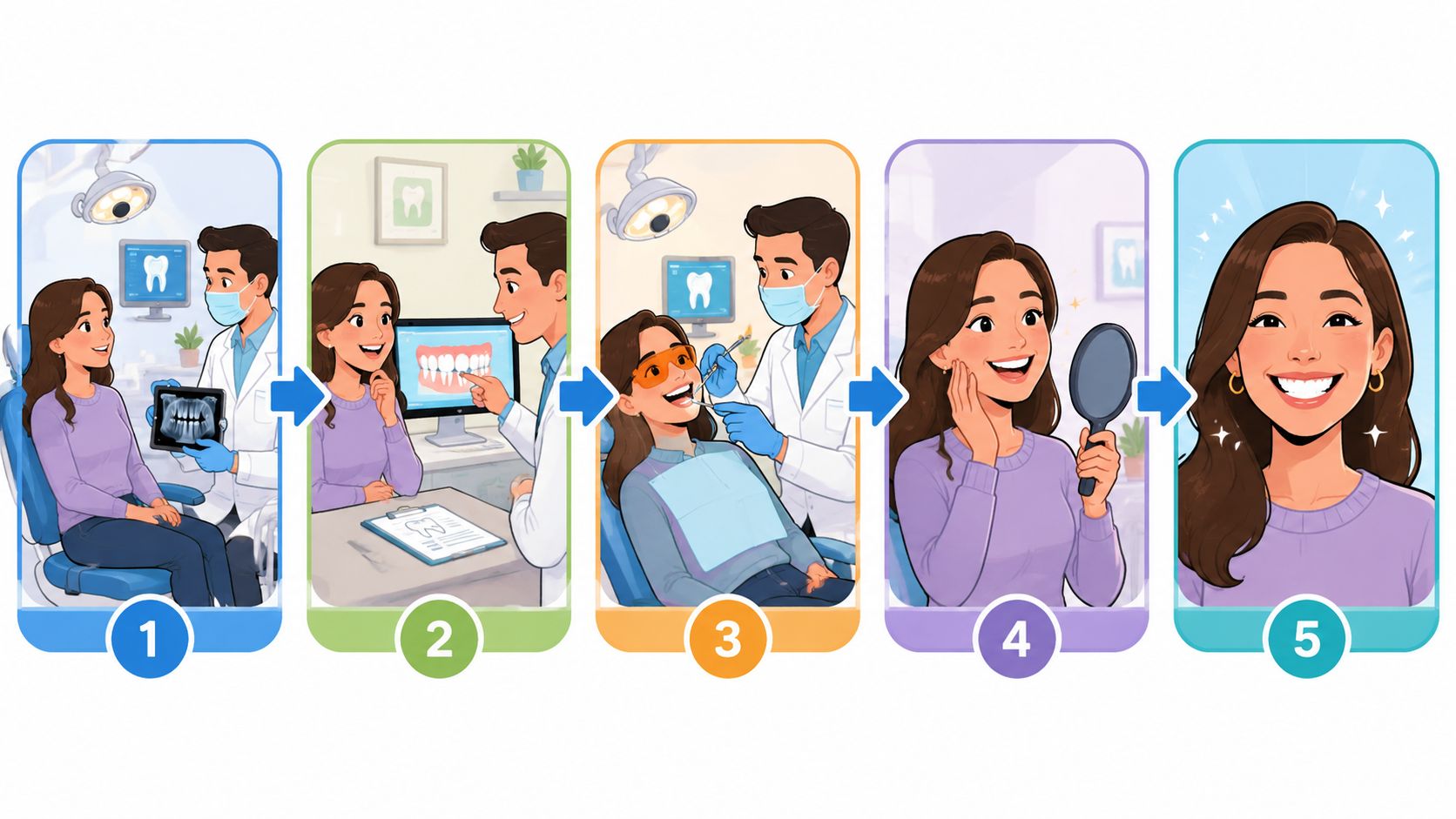
A good Santa Ana orthodontic experience turns that concern into a clear plan. Dr. Finley and his team guide patients step by step so each stage makes sense before the next one begins. That matters because orthodontic treatment works best when you understand not only what is happening, but why it is being recommended.
The first visit and your records
Your consultation usually begins with a conversation. What has been bothering you? What are you hoping to change? Are there timing concerns, past orthodontic treatment, missing teeth, jaw discomfort, or other dental goals that could affect the plan?
After that, the office gathers records such as photos, digital scans, and imaging. These records work like a map. Straightening the front teeth is only one part of the job. Your orthodontist also needs to study how the upper and lower teeth fit together, how the roots are positioned, how the jaws relate, and what kind of result is likely to stay stable over time.
Patients are often relieved at this stage. Instead of guessing, they can finally see the full picture.
In some cases, the consultation also helps connect orthodontics with other needs. If a tooth is missing, treatment may need to line up with future implant planning. If there is heavy wear from grinding or signs that the bite is under strain, the orthodontist may want to coordinate with your general dental care before or during treatment.
Building your treatment plan
Once the records are reviewed, Dr. Finley explains the diagnosis in plain language and outlines the path ahead. This part should feel less like a sales pitch and more like a guided explanation. What problem is being corrected? Why is one approach a better fit than another? What will your daily routine look like?
That discussion helps patients set realistic expectations. Tooth movement is controlled and gradual. It works more like careful remodeling than a quick fix. The plan may look straightforward on paper, but your body still needs time to respond safely.
Treatment length depends on how much movement is needed, how the bite fits together, and how consistently the plan is followed. As noted earlier, adult treatment often falls within a broad range. Smaller corrections may finish sooner, while more involved bite changes can take longer. A timeline at the beginning is a well-informed estimate, not a guarantee.
Your active treatment phase
Active treatment is the part patients usually picture first, but it becomes much less intimidating once the routine is explained clearly.
With braces, the first major visit includes placing brackets and wires, then reviewing hygiene, food choices, and what soreness to expect early on. With aligners, the team checks the fit of the first trays and teaches you how to wear them correctly, remove them, clean them, and keep the process on track.
Then comes the steady middle of treatment. In this phase, support matters. Follow-up visits are not just quick check-ins. They allow the orthodontist to monitor how teeth are responding, make adjustments, answer new questions, and catch small issues before they become larger delays.
A typical treatment journey often feels like this:
- Getting started: You learn the routine, adjust to new habits, and understand how to care for your teeth and appliances.
- Building progress: Teeth begin shifting in a controlled way, and regular visits help keep movement aligned with the plan.
- Refining the result: Final adjustments focus on bite fit, comfort, and the details that make the smile look and function better.
For many patients, this stage feels more manageable than they expected. The big change comes from many small, guided steps.
Retention keeps your smile in place
Finishing active treatment is exciting, but your teeth are not ready to hold their new positions on their own right away. The surrounding bone and tissues need time to adapt. Retainers give that support.
Retainers work like the last step of setting concrete. The shape is there, but it still needs protection while it stabilizes. Without retention, teeth can drift back toward their old positions, sometimes slowly enough that patients do not notice until the change is obvious.
That is why the final appointment is not really the end of the process. It is the beginning of protecting the result you worked for. A supportive orthodontic office does more than remove braces or hand over the last aligner. It gives you a retention plan, explains how to use it, and helps you keep your new smile stable for the long term.
Choosing Your Orthodontist in the Santa Ana Area
Santa Ana patients have choices, and that can be both helpful and overwhelming. Healthgrades lists 220 orthodontists within a 10 mile radius of Santa Ana, which shows how many providers serve the broader Orange County area. With that many options, convenience alone usually isn't enough to make the decision.
Start with fit, not just proximity
A nearby office is valuable, especially for families balancing school, work, and traffic between Santa Ana, Costa Mesa, Tustin, Irvine, and Garden Grove. But location shouldn't be the only filter. You're choosing someone who may guide your care for months, sometimes longer, and possibly coordinate with other parts of your dental treatment.
Pay attention to how the office explains things. Do they slow down and answer questions in plain language? Do they help you understand the reason behind the recommendation? That matters more than a polished sales pitch.
A strong orthodontic relationship usually includes these elements:
- Clear diagnosis: You understand what problem is being treated.
- Thoughtful planning: The recommendation fits your bite, age, and goals.
- Comfort with coordination: The office can account for restorative, cosmetic, or airway-related concerns when they affect treatment.
- Respectful communication: You don't feel rushed or talked over.
Questions worth asking before you commit
You don't need technical language to ask smart questions. In fact, simple questions are often the most useful.
- What are you trying to correct? Ask for the problem in everyday terms.
- Why is this option a better fit for me than another one? This reveals whether the recommendation is personalized.
- What will I need to do at home? Success often depends on daily habits.
- How will this affect future dental work? This is especially important if you're considering implants, cosmetic dentistry, or treatment for nighttime breathing concerns.
The right office should welcome those questions. Good care feels collaborative. You should leave with more clarity, not more pressure.
Understanding Your Payment and Financing Options
For many families, the financial side of orthodontic care feels harder to ask about than the clinical side. That hesitation is common, and it's one reason treatment gets delayed. A 2025 study reported that 68% of patients postpone orthodontic treatment because pricing is unclear or installment options aren't obvious, while only 12% of local Santa Ana orthodontic websites provide detailed cost breakdowns or financing calculators.

What shapes the overall cost of treatment
Orthodontic costs usually depend on the complexity of the case, the type of appliance used, and how much treatment coordination is involved. A shorter, simpler movement is different from extensive bite correction. A case tied to implants or cosmetic planning may also require more sequencing and communication.
That's why a real estimate typically comes after records and diagnosis, not before. If a website gives broad generalities, that's normal. The useful conversation happens when your clinical needs are understood.
A helpful financial discussion should cover:
- What the treatment includes: Appointments, appliances, and retention details.
- What may vary: Adjustments if the case changes during treatment.
- How benefits apply: Whether any dental coverage may contribute.
- What payment paths exist: Monthly arrangements or third-party financing, when available.
How families usually plan for care
Families often feel more comfortable once the office breaks the process into manageable steps. The goal isn't to rush a decision. It's to make the numbers understandable enough that you can plan realistically.
Insurance paperwork can also create confusion. Some patients hear terms like authorization, benefit review, or documentation and aren't sure what they mean. If you want a plain-English overview of one part of that process, this guide to prior authorization in healthcare can help explain why approvals sometimes take time.
What matters most is transparency. You should know who to ask, what your options are, and what the next step looks like before treatment begins. Financial planning is part of patient care, not a separate conversation.
Take the First Step and Frequently Asked Questions
A healthier, more confident smile usually starts with a simple conversation. Not a commitment. Not pressure. Just an evaluation that helps you understand what's happening, what can wait, and what may be worth addressing now. That's true whether you're looking into Invisalign, planning around implants, exploring cosmetic dentistry, managing sleep-related concerns, or coming in after an emergency dental issue that changed your bite or tooth position.
Every smile has its own story. Some patients need early guidance for a child. Others want adult treatment that fits work and family life. The most useful next step is to sit down with Dr. Finley, review your records, and talk through your case in plain language. Every article on this topic should be reviewed by Dr. Finley before publishing, and your in-person consultation is where general education becomes personal guidance.
Common questions patients ask
Orthodontic treatment should feel understandable. If something sounds confusing, ask until it makes sense.
Does orthodontic treatment hurt?
Most patients describe pressure or soreness at certain points, especially after starting treatment or changing aligners. That feeling is usually temporary, and your team can explain ways to stay more comfortable.
How do I clean my teeth with braces?
You'll brush more carefully around brackets and wires and may use small cleaning aids to reach tighter spaces. The key is consistency. Your dental team should show you the technique, not just tell you to “brush better.”
Can adults still straighten their teeth if they've had dental work before?
Often, yes. Adults with crowns, missing teeth, or past dental treatment may still be candidates, but planning matters. That's why an exam is important before assuming which option fits.
If you're ready to talk through your concerns and see what treatment may make sense for you or your child, schedule a consultation with Bristol Dental and Orthodontics.