
If you're waking up tired, hearing from your partner that you snore, or finding it harder to focus during the day, you're not alone. Many people in Santa Ana and nearby communities like Costa Mesa, Tustin, Irvine, and Garden Grove assume this is just part of getting older or living a busy life. Sometimes it is. Sometimes it isn't.
A common pattern goes like this: you get what should be a full night's sleep, but you still wake up foggy, dry-mouthed, or headachy. You push through work, need more caffeine than you'd like, and by afternoon you feel drained again. If that sounds familiar, a sleep-related breathing problem may be part of the picture.
As a dentist, I find that many patients are surprised to learn that the mouth, jaw, and airway are closely connected. That's where Dental Sleep Medicine comes in. It helps identify when the way you breathe during sleep may be affecting how rested you feel, and it offers a non-surgical treatment option for many people through a custom oral appliance.
Table of Contents
- Tired of Being Tired An Introduction for Santa Ana Patients
- What Is Dental Sleep Medicine
- Signs You Might Benefit from a Sleep Consultation
- Your Diagnostic Journey From Screening to Sleep Study
- Comparing Your Treatment Options OAT vs CPAP vs Surgery
- The Bristol Dental & Orthodontics Experience
- Frequently Asked Questions and Your Next Steps
Tired of Being Tired An Introduction for Santa Ana Patients
One patient described it this way. She'd fall asleep without much trouble, but every morning felt like she hadn't slept at all. Her spouse complained about loud snoring. At work, she noticed she was more irritable, less patient, and reaching for coffee just to feel normal.
That story is common across Santa Ana and Orange County. People often dismiss these symptoms because they don't seem dramatic. Snoring sounds harmless. Daytime fatigue feels ordinary. A dry mouth in the morning seems like a small inconvenience.
When tired isn't just tired
Sleep is when your body is supposed to reset. If breathing becomes restricted over and over during the night, your sleep can become fragmented even if you don't fully remember waking up. You may spend enough hours in bed but still miss the kind of deep, restorative rest that helps you feel clear and steady the next day.
Some patients first look for ways to feel more productive and alert. Practical resources on improving energy for professionals can be helpful for daytime habits, but if your exhaustion keeps returning despite good routines, it's worth asking whether poor sleep quality is the underlying issue.
Poor sleep doesn't always announce itself with a dramatic symptom. Sometimes it shows up as low energy, morning headaches, brain fog, or a partner nudging you because you're snoring again.
A gentle first step
This doesn't mean every tired person has sleep apnea. It does mean those symptoms deserve attention, especially when they've become part of your normal. Many people feel relieved once they understand there's a name for what they're experiencing and that treatment doesn't always mean a large machine or surgery.
Dental sleep medicine can be a practical entry point for patients who want answers in plain language. Should your snoring or fatigue point to more than stress, a conversation with Dr. Andrew Finley can help you understand your options without pressure.
What Is Dental Sleep Medicine
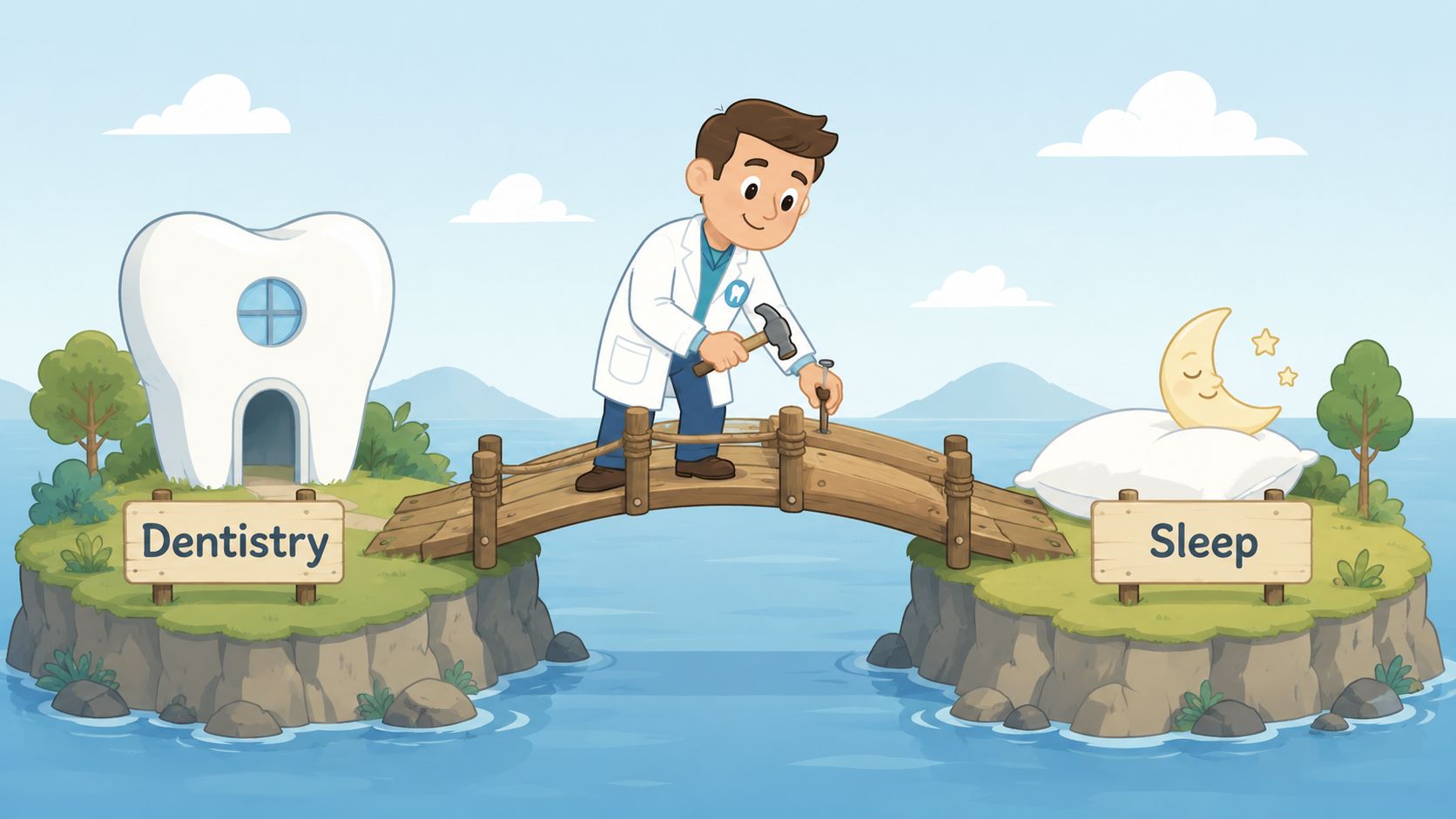
Dental sleep medicine is the part of dentistry that focuses on helping people breathe better during sleep with a custom oral appliance. If your airway narrows at night, airflow can slow down or stop for short periods. An oral appliance is designed to support the jaw and surrounding tissues so the airway stays more open.
A defined part of healthcare
The field became more clearly established when the American Academy of Dental Sleep Medicine formally defined the discipline in 2008 as "an area of dental practice that focuses on the use of oral appliance therapy to treat sleep-disordered breathing, including snoring and obstructive sleep apnea (OSA)."
That definition helps patients understand the goal of treatment. This is not routine dental care, and it is not just about making a mouthguard. The focus is your airway, your breathing pattern during sleep, and whether the position of your jaw and oral tissues may be contributing to the problem.
For some patients, body weight is also part of the picture. A good conversation may include an evidence-based approach to sleep apnea and weight, because sleep breathing problems often improve best when we look at the whole person, not just the appliance.
What a dentist actually does
A dentist trained in dental sleep medicine does not diagnose sleep apnea alone. That diagnosis comes from a physician and sleep testing. The dentist's job is to examine your teeth, gums, jaw joints, bite, and oral anatomy to see whether an oral appliance is a safe and appropriate option for you, then provide a device that is made for your mouth.
According to the AADSM special article on oral appliance therapy, a proper exam considers factors such as craniofacial structure, tooth quality, periodontal health, restorative needs, dental sensitivities, manual dexterity, range of motion, and nasal patency. In plain language, the appliance should fit your mouth the way a prescription pair of glasses fits your eyes. It needs to match your anatomy, not just your symptoms.
The part many patients are never told
Getting the appliance is only the starting point.
A sleep appliance usually needs follow-up adjustments over time so it can balance two goals at once. It needs to be comfortable enough that you will wear it, and effective enough to keep your airway open while you sleep. If either piece is missing, treatment can fall short.
This long-term monitoring is one of the most overlooked parts of dental sleep medicine. Your bite can shift, your symptoms can change, and an appliance that felt fine at delivery may need small changes later. Careful check-ins help confirm that the treatment is still working, not just that you still have the device.
The best dental sleep medicine care works as a team effort between the sleep physician and the dentist, with ongoing review rather than a one-time fitting. That steady adjustment process is how oral appliance therapy becomes a treatment plan, not just a product.
Signs You Might Benefit from a Sleep Consultation
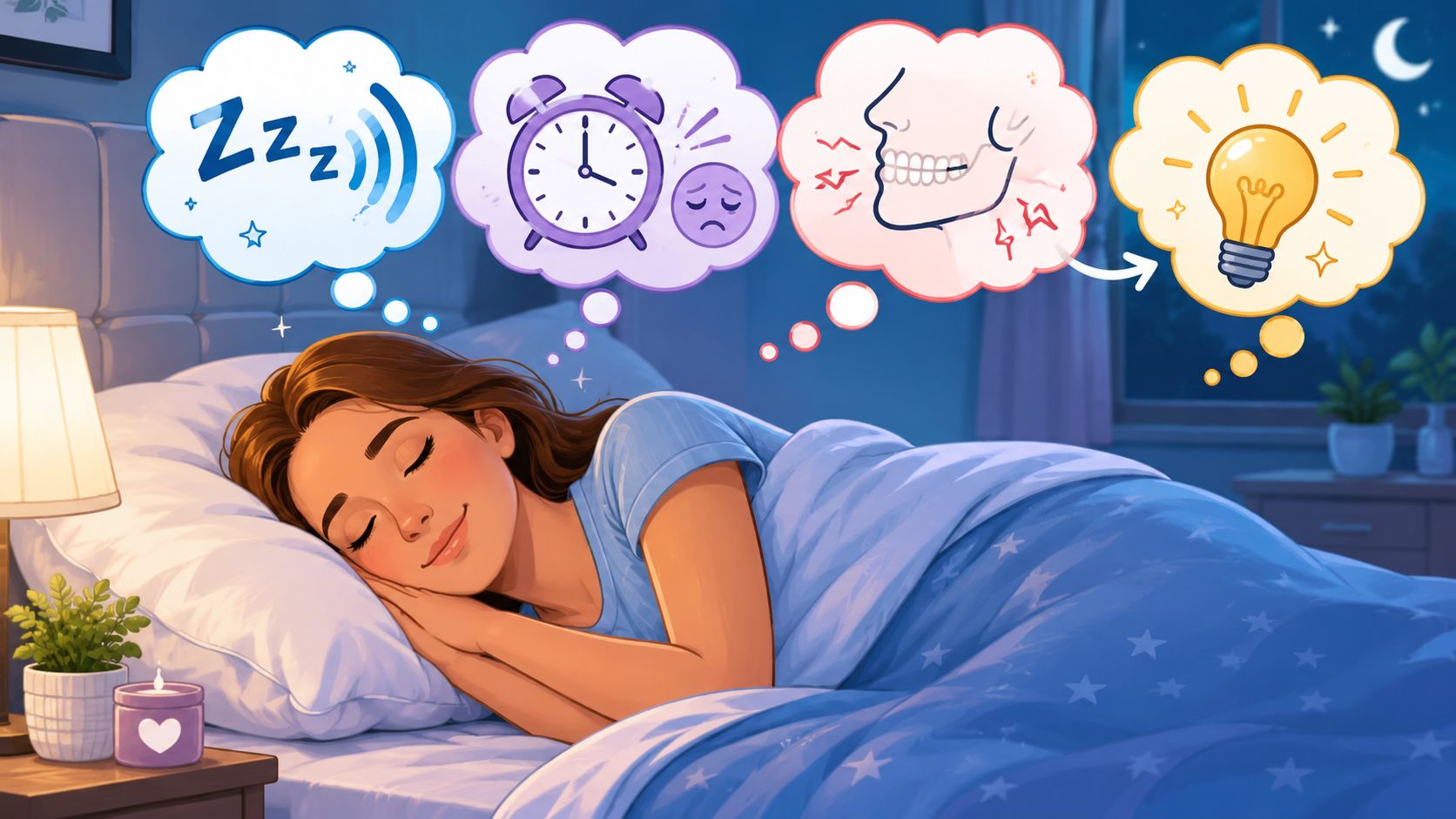
Some signs are obvious. Others are easy to miss because they show up during the day, not the night. If you've been wondering whether your sleep deserves a closer look, this checklist can help you organize what you're noticing.
Common patterns patients notice
Sleep problems affect approximately 70 million adults in the U.S. The same source reports that 17.2% of individuals under 60 experience sleep disorders, while 82.8% of those age 60 and older do, which is one reason screening becomes more important with age.
You don't need every sign on this list to justify a consultation.
- Loud, ongoing snoring: Snoring can happen when tissues in the airway vibrate as air tries to move through a narrowed space.
- Pauses in breathing noticed by someone else: A bed partner may see or hear brief breathing interruptions before you ever realize anything is wrong.
- Waking up tired: This is one of the most common complaints. You may sleep for many hours and still feel unrefreshed.
- Morning headaches or dry mouth: These can be clues that your breathing and sleep quality aren't ideal overnight.
- Daytime sleepiness: If you feel drowsy while reading, watching TV, or sitting still, your body may be trying to catch up.
- Trouble concentrating: Poor sleep often shows up as forgetfulness, brain fog, or slower thinking.
- Mood changes: Irritability and low patience can be tied to repeated sleep disruption.
- A history of CPAP struggles: If you've already been diagnosed and found CPAP hard to tolerate, that's worth discussing.
Questions to ask yourself
Not every patient connects sleep and weight, but the two can influence each other. If you'd like a broader overview, this evidence-based approach to sleep apnea and weight explains the relationship in patient-friendly terms.
Consider these quick questions:
- Has someone complained about your snoring more than once?
- Do you feel worse in the morning than you expected to feel?
- Are you relying on caffeine just to feel functional?
- Have your focus or mood changed without a clear reason?
If your symptoms are affecting your energy, relationships, or daily routine, they're worth bringing up. A consultation isn't a commitment to treatment. It's just a way to get clarity.
Your Diagnostic Journey From Screening to Sleep Study
For many people, the hardest part is not treatment. It's uncertainty. They aren't sure what the process involves, who does what, or whether they'll be pushed into something uncomfortable.
The usual path is more straightforward than people expect. It starts with a conversation, not a machine.
The first visit
At an initial dental screening, the discussion often includes your symptoms, medical history, and sleep concerns. The dentist also examines your mouth, jaw, teeth, and airway-related anatomy to look for features that may affect whether an oral appliance is appropriate.
This visit helps answer practical questions such as:
- Do your symptoms suggest a sleep-related breathing issue worth evaluating further?
- Would your oral health support a custom appliance if one is recommended later?
- Are there factors such as gum health, restorations, or jaw movement that need attention first?
Why a sleep study matters
A dentist can screen for concerns, but a formal diagnosis of obstructive sleep apnea comes from a physician. That's why patients are typically referred to a sleep physician for testing before treatment is finalized.
There are two common ways this may happen:
- In-lab sleep study: This is a more thorough overnight evaluation performed in a clinical setting.
- At-home sleep test: This is often more convenient and may be appropriate for some patients, depending on the physician's judgment.
Each option has tradeoffs. An in-lab study can offer a deeper look at sleep patterns. A home test can feel easier and less intimidating for some people.
The important part isn't whether the test happens at home or in a lab. It's getting an accurate diagnosis before choosing treatment.
What happens after diagnosis
Once the sleep physician confirms the diagnosis and makes a treatment recommendation, the dental side becomes more specific. If an oral appliance is appropriate, the dentist takes records, discusses the design, and plans the fitting process.
That teamwork protects patients from guesswork. You aren't being handed a generic device and told to hope for the best. The goal is to match the treatment to the diagnosis, your anatomy, and your comfort.
Comparing Your Treatment Options OAT vs CPAP vs Surgery
Most patients don't want a sales pitch. They want an honest comparison. That's the right instinct, because sleep apnea treatment isn't one-size-fits-all.
Clinical guidelines from the AASM and AADSM recommend oral appliances for patients with mild-to-moderate obstructive sleep apnea and for those with severe OSA who are intolerant of CPAP therapy or prefer an alternative. That makes oral appliance therapy a legitimate treatment path, not a backup idea.
How each option works
Oral Appliance Therapy, often called OAT, uses a custom device worn during sleep. Many appliances work by moving the lower jaw forward to help keep the airway more open. The Cleveland Clinic overview of oral appliance therapy describes two main appliance types: mandibular advancement devices and tongue-stabilizing devices.
CPAP uses pressurized air delivered through a mask to keep the airway from collapsing during sleep. It can be highly effective when patients use it consistently, but some people struggle with the mask, pressure, dryness, or the overall experience of sleeping with equipment.
Surgery aims to change airway structures. Depending on the person, that may be considered when other treatments aren't appropriate or haven't worked well enough. Surgery can be helpful in selected cases, but it's more invasive and requires a more detailed medical decision process.
Sleep Apnea Treatment Comparison
| Feature | Oral Appliance Therapy (OAT) | CPAP Machine | Surgical Options |
|---|---|---|---|
| How it works | Repositions oral structures to help keep the airway open | Uses pressurized air through a mask | Alters airway-related anatomy |
| Best fit for | Mild to moderate OSA, or severe OSA when CPAP isn't tolerated or another option is preferred | Many patients with OSA, especially when they can tolerate nightly use | Selected patients based on anatomy and medical evaluation |
| Comfort | Often feels more compact and travel-friendly | Some patients adjust well, others find the mask difficult | Involves recovery and more invasive care |
| Portability | Easy to carry | Less convenient for travel | Not a device-based treatment |
| Maintenance | Requires cleaning, fit checks, and follow-up adjustments | Requires equipment care and regular use | Requires surgical follow-up |
| Key limitation | Needs proper candidacy and ongoing adjustment | Tolerance can be a major barrier | Not every patient is a good candidate |
Choosing based on real life
The right option depends on more than the diagnosis alone. It also depends on how you sleep, what you can tolerate, what your anatomy allows, and whether you'll consistently use the treatment night after night.
Some patients also look at bedroom setup to support better sleep overall. For example, if you're exploring positioning changes, this guide can help you find the right adjustable bed as one part of a broader comfort strategy.
The best treatment is the one that is both appropriate for your condition and realistic for your daily life.
The Bristol Dental & Orthodontics Experience
Patients often assume getting an oral appliance means taking impressions once, receiving a device, and being sent on their way. That approach can leave people frustrated. A better experience is more personal and more deliberate.
A care path built around fit and follow-up
At Bristol Dental & Orthodontics in Santa Ana, Dr. Andrew Finley starts by looking at the whole picture. That includes your diagnosis from the sleep physician, your symptoms, your teeth and gums, jaw function, and whether your mouth can comfortably support a custom appliance.
If you move forward, the next step is precision. Records are taken so the appliance is made for your mouth, not for an average mouth. That matters because a device that technically fits but doesn't feel stable or wearable may end up in a nightstand instead of helping you sleep.
The process usually includes:
- A candidacy review: Your oral health, jaw movement, restorations, and comfort are evaluated before a device is ordered.
- Custom records: Digital or traditional impressions and a bite record help shape the appliance accurately.
- Delivery and fitting: The appliance is placed, checked, and adjusted so it feels secure and workable.
- Guided titration: Small changes are made over time to balance comfort with effectiveness.
Why monitoring matters so much
One of the biggest gaps in sleep apnea care is what happens after the appliance is delivered. Recent studies show that 30–40% of patients discontinue oral appliance therapy within one year due to unmonitored side effects or lack of effectiveness. That's a strong reminder that long-term success depends on more than a good first fit.
The same source highlights the need for a more data-driven approach to monitoring compliance and efficacy in real-world care. In practical terms, that means follow-up shouldn't be treated like an afterthought. If a patient develops jaw soreness, bite changes, or persistent symptoms, the appliance may need adjustment rather than abandonment.
A sleep appliance isn't a set-it-and-forget-it treatment. It works best when the dentist keeps checking comfort, fit, and whether symptoms are actually improving.
What patients around Orange County can expect
For patients coming from Santa Ana, Tustin, Irvine, Costa Mesa, or Garden Grove, the experience should feel clear and supportive. Questions are encouraged. Adjustments are normal. Reassessment is part of responsible care, not a sign that something has gone wrong.
Every article on this topic should also be reviewed by Dr. Finley before publishing, because sleep-related care deserves careful oversight and plain, accurate communication.
Frequently Asked Questions and Your Next Steps
A common moment in treatment goes like this. A patient starts sleeping better, then a few months later wonders, "Do I still need check-ins if the appliance seems fine?" That question makes sense. Oral appliance therapy works best when we keep confirming two things over time: you are comfortable, and your sleep is improving.
Common questions
How long does an oral appliance last?
It depends on the material, your bite, and how consistently you wear it, but these appliances do not last forever. Follow-up guidance explains that replacement is often needed after a few years, and regular visits help us catch wear, fit changes, or bite changes before they become bigger problems. You can review that guidance in this oral appliance follow-up protocol summary.
Does medical billing apply to this treatment?
Sometimes, yes. Coverage often depends on your diagnosis, a physician's prescription, and documentation showing why the appliance is being recommended. Billing rules can be confusing, so it helps to ask the office what records may be needed before treatment starts. This overview of oral appliance billing requirements explains the general process.
Are there side effects?
Some patients notice jaw soreness, tooth tenderness, saliva changes, or small bite shifts, especially early on.
Those changes do not automatically mean the treatment is failing. They are signals that the appliance may need an adjustment, the same way a new pair of shoes may need a break-in period or a different fit. This is one reason long-term success depends on more than getting the appliance made. It depends on monitoring, fine-tuning, and checking whether your symptoms and sleep quality are improving over time.
What if I already have other dental goals?
That is very common. You may also be planning orthodontic care, cosmetic treatment, or work to restore damaged teeth. Sleep treatment should fit into your overall dental plan so one step does not create problems for another.
Your next step is simple. If snoring, daytime fatigue, or interrupted sleep has become part of daily life, schedule a consultation and talk it through. A good visit should leave you with a clear plan, whether that means a sleep evaluation, oral appliance therapy, or another path that fits your needs.
If you're ready to talk through snoring, sleep apnea, or whether a custom oral appliance could be appropriate for you, schedule a consultation with Bristol Dental and Orthodontics. Dr. Andrew Finley and the team serve Santa Ana and nearby Orange County communities with patient-focused care, and they can help you understand your options in a clear, low-pressure way.