
You're probably doing what many do when they start thinking seriously about their smile. You're opening tabs, looking at websites, comparing photos, and trying to figure out who performs great cosmetic work and who just markets themselves well.
That's a smart instinct. Cosmetic dentistry is personal. Whether you're thinking about veneers, Invisalign, implants, whitening, or rebuilding a worn smile, the dentist you choose matters more than the treatment name on the website.
If a family member asked me how do you find a good cosmetic dentist, I'd keep the answer simple. Don't start with ads. Don't start with promises. Start with proof.
Table of Contents
- Start with Credentials and Specialized Training
- How to Judge a Dentist's Before-and-After Gallery
- Your Consultation Checklist What to Ask and Observe
- Exploring Your Cosmetic and Restorative Options
- A Patient-Focused Approach in the Heart of Orange County
Start with Credentials and Specialized Training
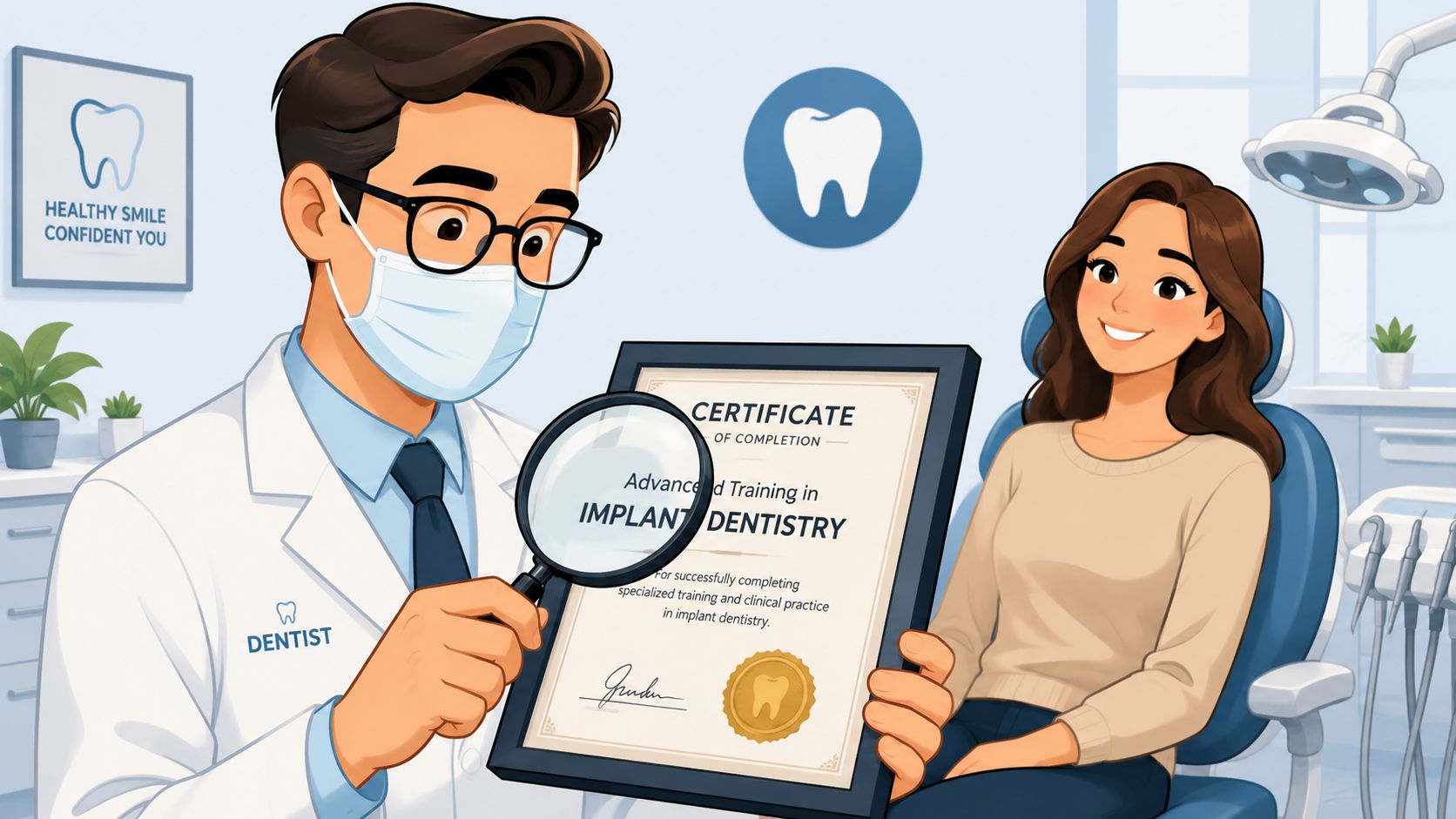
When someone wants a smile change, the first mistake is assuming a dental degree alone tells you enough. It doesn't. A DDS or DMD means a dentist completed dental school. That's important, but cosmetic dentistry often depends on advanced training taken after graduation.
If you want veneers, complex bonding, smile design, implant restoration, or a full cosmetic plan, I'd look for clear evidence of specialized education. Not vague language. Not “we value continuing education.” Real names, real affiliations, and a visible commitment to this type of work.
Look past the initials after the name
A critical milestone in identifying a qualified cosmetic dentist is verifying their affiliation with the AACD and understanding the difference between general membership and Accredited Fellow status. The AACD states that Accredited Fellow status represents the highest level of global recognition in the field, and candidates must pass rigorous written and oral examinations demonstrating expertise in complex cosmetic procedures through the AACD accreditation and profile standards.
That distinction matters. A website may show an AACD logo, but a logo alone doesn't mean the dentist completed the academy's most demanding path. Membership shows interest. Accredited Fellow shows a much deeper level of evaluation.
Practical rule: If a dentist says they have advanced cosmetic training, you should be able to find the exact program names on their website or hear them clearly in the consultation.
What I'd want to see on a real cosmetic dentist's site
I'd look for specific postgraduate training in programs such as Hornbrook, Spear, Kois, or AACD-affiliated education. Those names carry more weight than generic claims because they tell you the dentist has invested time in focused cosmetic study rather than basic weekend lectures.
Here's my simple filter:
- Named training: The dentist lists actual postgraduate programs, not broad claims about education.
- Current commitment: They continue taking advanced courses regularly, especially in materials, aesthetics, bite design, and restorative planning.
- Clear scope: They explain what kinds of cosmetic and restorative cases they handle most often.
- Professional humility: They don't rely on buzzwords. They show their work and explain their process.
If you want a helpful outside example of how patient-facing cosmetic education can be presented clearly, Testimonial.to's Aesthetic Mastery is worth reviewing. Not because you should choose a dentist based on testimonials alone, but because it shows how detailed patient stories and treatment communication can look when they're done well.
A good cosmetic dentist should also be able to explain how training affects actual treatment decisions. That includes when to choose conservative bonding instead of veneers, when Invisalign should come before cosmetic work, or when implant planning needs to happen before final smile design.
In Santa Ana and throughout Orange County, that matters even more because patients often want a natural result, not a generic “done” look. You want a dentist who understands facial balance, bite function, material choices, and long-term maintenance. Credentials don't guarantee your result, but they're the first reliable filter. Use them.
How to Judge a Dentist's Before-and-After Gallery
You find a dentist online, the smile photos look beautiful, and you feel ready to book. Stop there for a minute. The key concern is not whether the gallery looks good. The key concern is whether those cases are the dentist's work.
That point gets missed all the time, and it matters more than patients realize. A polished gallery can sell confidence without proving skill.
What a trustworthy gallery should prove
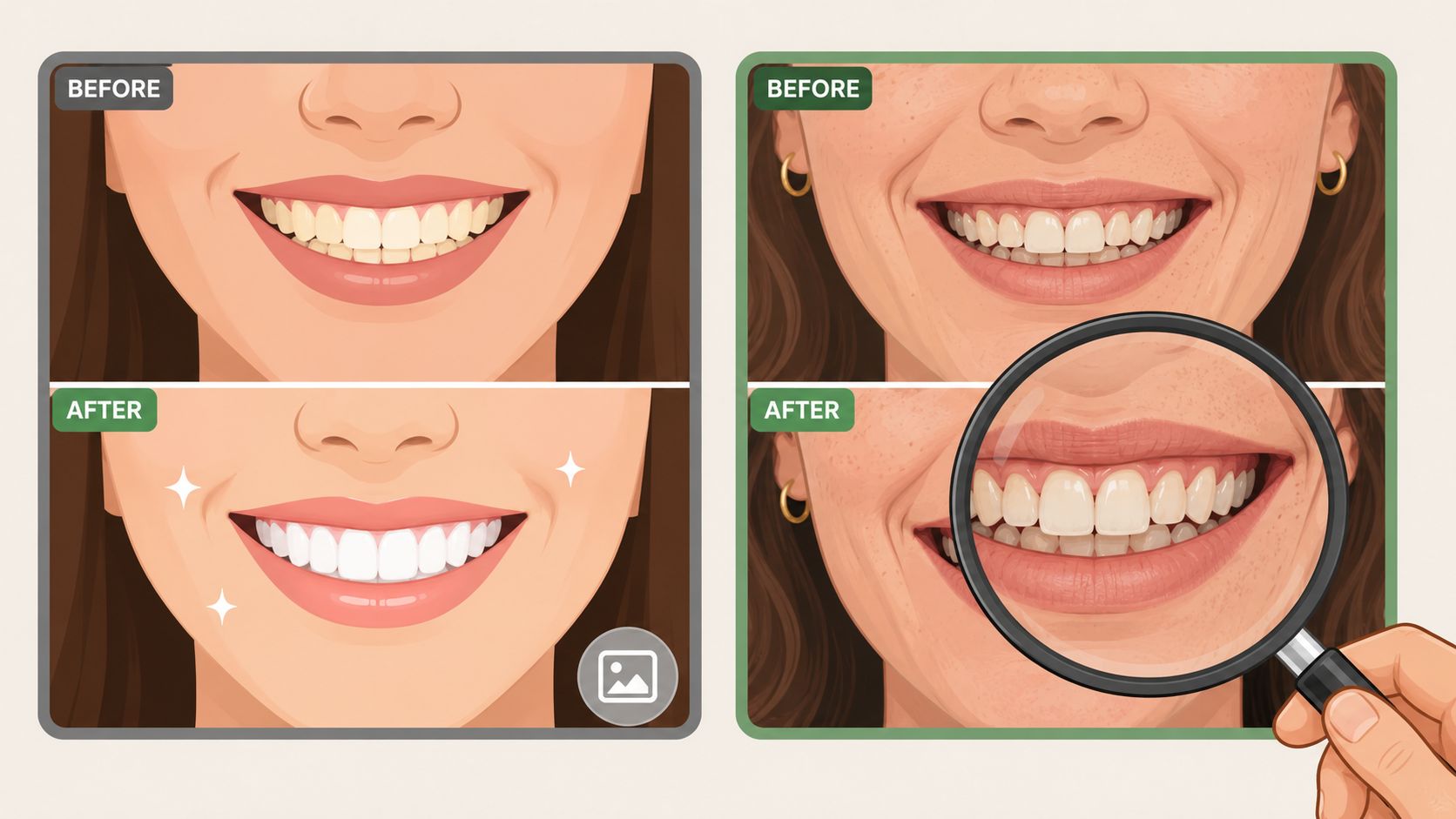
Before-and-after photos should answer one question clearly: did this office plan and complete this treatment?
Do not settle for a pretty slideshow. Ask directly, "Are these your own patients?" Then ask, "What was done in this case, and why?"
A dentist who treated the patient should be able to explain the starting problem, the treatment choices, the limits they had to work around, and why the final result fits that person. If the answer is vague, overly rehearsed, or focused only on how white the teeth look, keep your guard up.
This matters for another reason. Good cosmetic dentistry is not only about the final photo. It is also about diagnosis, restraint, and communication. If you want a useful outside perspective on that part of the process, read what to look for in dental communication.
How to spot real patient work
Authentic galleries usually have patterns that are hard to fake:
- Consistent photography: Similar backgrounds, lighting, and angles across many cases often mean the office documents its own work.
- More than one view: Close-ups, full-smile photos, and side angles suggest clinical records, not just marketing images.
- Case descriptions: A short explanation of the problem and treatment shows the office understands the work well enough to explain it.
- Range: Real practices show different kinds of patients, tooth shapes, ages, and concerns.
- Natural variation: Not every result should look identical. Good cosmetic dentists tailor treatment to the face, bite, and goals of the patient.
Stock or borrowed images often feel too perfect, too generic, or too disconnected from the actual office. Everyone looks like a catalog model. Every smile has the same shape and the same blinding shade of white. There is no explanation of what treatment was done. That is a warning sign.
Red flags I would take seriously
If I were helping a family member choose a cosmetic dentist, I would slow down when I saw any of these:
The gallery has no context.
You see photos, but no explanation of whether the case involved bonding, veneers, crowns, implants, or whitening.The office cannot discuss specific cases.
If the team gets slippery when you ask about a case, assume the photos are not doing the job you need them to do.Every result looks copied and uniform.
Good cosmetic work is consistent in quality, not identical in style.The photos look more like advertising than records.
Headshots alone are less useful than clear intraoral and smile photos.
Use the gallery to judge honesty and judgment, not just taste. A real before-and-after portfolio should show you how the dentist thinks, how they solve problems, and whether their results look believable on real people. Admire the smile if you want. Verify the case first.
Your Consultation Checklist What to Ask and Observe
Online research narrows the list. The consultation is where you determine if the dentist suits you.
This visit shouldn't feel rushed or scripted. It should feel like a thoughtful conversation about your goals, your concerns, your timeline, and what's realistic for your teeth and bite.
Questions that reveal how a dentist thinks
A trustworthy cosmetic dentist should be able to walk you through real patient cases, especially ones that look like your situation. When evaluating a portfolio, look for “actual patient” photos with case histories rather than generic images. Reputable practices often label photos clearly, explain what was done, and can discuss the story behind the result, as described in this guidance on choosing a cosmetic dentist and reviewing authentic case examples.
That same source also points to a few questions I strongly agree with:
- Ask to see cases similar to yours, such as front teeth veneers, a single implant in the smile zone, or a full smile makeover.
- Ask whether the dentist would connect you with a past patient who has lived with their veneers for years.
- Ask how they handled a dissatisfied patient and what they learned from it.
- Ask who the ceramist is for veneers or cosmetic crowns, and whether that ceramist is also AACD-accredited.
Those questions matter because they reveal honesty. A careful dentist manages expectations. A careless one sells a fantasy.
Essential Consultation Questions
| Topic | Question to Ask |
|---|---|
| Training | What advanced cosmetic training have you completed after dental school? |
| Case experience | Can you show me cases similar to mine? |
| Planning | What are my treatment options, and which one is the most conservative? |
| Materials | What material would you use for my case, and why? |
| Lab partnership | Who makes the veneers or crowns, and how do you work with the ceramist? |
| Longevity | What kind of maintenance should I expect over time? |
| Expectations | What result do you think is realistic for my smile? |
| Problem solving | Can you tell me about a case that didn't go as planned and how you handled it? |
| Comfort | How do you help anxious patients during longer visits? |
| Coordination | If I need implants, Invisalign, or bite treatment first, how would you sequence that? |
What to notice besides the answers
Pay attention to how the team communicates. That often tells you as much as the treatment plan. If you want a useful framework for evaluating this side of the experience, this article on what to look for in dental communication highlights the kinds of communication habits that help patients feel informed and respected.
You should notice whether the dentist listens before recommending. You should also notice whether the team explains things in plain English. Good cosmetic care isn't just technical. It's collaborative.
If you leave a consultation more confused than when you arrived, keep looking.
In my opinion, the right consultation leaves you feeling calmer, not pressured. You should understand your options, the likely sequence of treatment, the tradeoffs, and the next step. That's the standard.
Exploring Your Cosmetic and Restorative Options
A good cosmetic plan starts with the smallest treatment that can realistically get you where you want to go.
Patients often come in asking for veneers when what they really need is tooth movement first. Others ask for whitening when the bigger problem is an old filling, a chipped edge, or one tooth that sits out of line. The right dentist sorts out the underlying problem before talking about the final polish.
Start with the goal, then match the treatment to it.
If your teeth are healthy but crowded, spaced, or slightly turned, clear aligners are often the best first step. If the main concern is surface stain, professional whitening may be enough. If you have small chips or minor shape issues, bonding can make a noticeable difference without removing much tooth structure. If the teeth are heavily worn, severely discolored, or mismatched in shape, veneers or crowns may make more sense. If a tooth is missing, dental implants can restore both appearance and chewing function.
Here is the sequence I usually recommend patients think through:
- Whitening: Best for healthy teeth with external staining.
- Bonding: Good for small chips, short edges, and minor shape corrections.
- Veneers: Better for larger visible changes in color, shape, and front-tooth symmetry.
- Crowns: Usually reserved for teeth that also need more structural support.
- Dental implants: Used to replace missing teeth.
- Clear aligners: Often the smartest first move before cosmetic finishing.
Sequence matters. If teeth need to be moved, do that before placing veneers. If the gums are inflamed, treat that first. If you grind or clench, address the bite before committing to cosmetic work on the front teeth. That is how good results last.
I also recommend choosing a dentist who can look beyond the smile photo. Cosmetic treatment sits on top of function. A person who wants straighter front teeth may also have worn enamel, unstable bite contacts, missing back teeth, or nighttime clenching. If those problems are ignored, even beautiful work can chip, loosen, or feel wrong.
That is why I prefer an office that can coordinate cosmetic care with restorative treatment, bite management, implant planning, and urgent dental needs. You do not need a sales pitch. You need a clear plan, in the right order, with a reason for every step.
If a dentist cannot explain why you should wait on cosmetic treatment, keep looking. Sometimes the best cosmetic decision is to fix the foundation first.
A Patient-Focused Approach in the Heart of Orange County
You live in Orange County, you want to improve your smile, and three offices all look polished online. The right choice usually comes down to one thing. Which dentist gives you a clear, honest plan after looking at the whole picture, not just the front teeth in a photo?
For patients in Santa Ana, Costa Mesa, Tustin, Irvine, and Garden Grove, that standard matters. Cosmetic treatment depends on bite stability, gum health, missing teeth, wear, airway issues, and whether anything painful or urgent needs attention first.
What local patients should expect
A good local practice should be able to connect smile goals with everyday dental health. That means cosmetic dentistry, dental implants, clear aligners, family care, emergency visits, and oral appliance treatment for sleep-related breathing problems should all make sense together, in the right order.
Just as important, the office should be willing to show real work and explain it plainly. Before-and-after photos matter, but only if they are genuine. Ask whether the gallery shows actual patients from that office, whether the cases were completed there, and whether the dentist can explain what was done in each example. If the photos look overly polished, inconsistent, or too generic, keep asking questions.
You should also know exactly who is examining you, what records are being taken, and what needs to happen first. A trustworthy dentist will tell you if alignment should come before cosmetic finishing, if worn teeth need protection, or if gum treatment has to happen before any smile makeover begins.
Why this matters in Santa Ana
Santa Ana patients do not need another polished sales pitch. They need a dentist who can say, "Here is the problem, here is the order I would treat it, and here is what I would leave alone."
That is the standard I would want for my own family.
Look for calm communication, documented results, and treatment recommendations that make sense without pressure. If an office rushes past your questions, avoids discussing limits, or cannot confirm that its smile gallery reflects real in-house cases, keep looking.
If you are comparing practices in Orange County, keep the checklist simple. Verify training. Verify that the photos are authentic. Ask direct questions during the consultation. Choose the office that treats you like a person and gives you a reason for every step.