
Your child comes off the field at a Saturday game in Santa Ana holding a tooth. Or you wake in the middle of the night with a throbbing ache and wonder whether you need a dentist or the emergency room. When someone you love is hurting, the hardest part is often deciding what to do first.
Start with safety, then get the right kind of help. Emergency dental care isn't the same as emergency medical care, and knowing the difference can help you act without panic.
Table of Contents
- A Calm Guide for Santa Ana Families in a Dental Emergency
- What Counts as a Dental Emergency
- ER, Dentist, or Wait How to Triage
- First Aid Steps You Can Take Right Now
- What Happens at the Emergency Dental Visit
- Why Early Dental Care Usually Beats the ER
- Cost, Access, and Honest Options for Santa Ana Families
- Your Santa Ana Emergency Dental Care Checklist
A Calm Guide for Santa Ana Families in a Dental Emergency
You don't need to diagnose the problem before calling for help. You need to describe what's happening, recognize serious warning signs, and protect an injured tooth while arranging care.
A cracked crown during a holiday meal and a swollen jaw may both feel urgent, but they don't necessarily need the same response. The safest decision depends on more than pain alone. Breathing, swallowing, bleeding, swelling, and the circumstances of an injury all matter.
Start with the person, not the tooth
Look at how the person is doing overall. Can they breathe and swallow normally? Is bleeding controlled? Was there a hard impact to the face, or does the person seem generally ill?
Practical rule: Don't wait for a dental-office callback when someone has trouble breathing or swallowing, uncontrolled bleeding, or major facial trauma. Seek emergency medical help.
Once immediate medical danger is ruled out, contact a dental office for guidance. Bristol Dental & Orthodontics, a family and cosmetic dental practice in Santa Ana led by Dr. Andrew Finley, encourages patients to call promptly about urgent symptoms. Describe the problem before assuming that you can safely wait.
Make the call easier
Stress can make it difficult to remember details. Write down the essentials or ask another adult to help:
- What happened: Explain whether the problem followed an injury, a meal, recent dental treatment, or no obvious event.
- What you're noticing: Describe pain, swelling, bleeding, a missing tooth, or a loose restoration.
- What has changed: Say whether symptoms are worsening or affecting eating, sleep, or opening the mouth.
- Who needs care: Give the patient's age and mention relevant medical conditions or medications.
For a child, tell the office whether you know if the injured tooth is a baby tooth or a permanent tooth. If you're unsure, say so rather than guessing.
This guidance is informational, not a diagnosis or an individualized treatment plan. Dr. Finley or another qualified clinician needs to assess your specific situation. The immediate goal is straightforward: choose the right destination, take sensible first-aid steps, and avoid postponing needed care.
What Counts as a Dental Emergency
A dental emergency is a problem that needs prompt professional assessment because of pain, infection, injury, bleeding, or damage to a tooth. Not every emergency looks dramatic. A tooth can hurt intensely without looking broken, while a visible chip may cause little discomfort.
Don't use appearance alone to decide whether something matters. Tell the dental team what you feel and what you can see, then let them determine the urgency.
Problems that deserve a prompt dental call
- Severe toothache: Pain that interferes with sleep, eating, or normal activities deserves assessment. Describe whether it comes and goes or stays constant.
- A knocked-out tooth: A permanent tooth knocked out by an injury needs immediate dental attention. Tell the office when the injury happened and how the tooth has been stored.
- A broken or cracked tooth: Report pain, the size of the missing piece, and whether the injury followed a blow to the face.
- A lost filling or crown: Call for advice even if it doesn't hurt. The urgency depends on the condition of the remaining tooth and your symptoms.
- Possible infection: Tooth or gum pain accompanied by swelling needs prompt evaluation rather than an assumption that it will settle.
- Bleeding or trouble after treatment: Explain what procedure you had, when symptoms began, and whether they're improving or worsening.
Untreated decay is a common underlying problem, not a personal failing. More than 2 billion people worldwide had untreated decay in permanent teeth in 2019, and WHO identifies it as the most common health condition in the Global Burden of Disease 2021, according to its Global Oral Health Status Report.
Urgent doesn't always mean the hospital
A small chip without pain or a lost filling without swelling may be less urgent than severe pain or a knocked-out permanent tooth. Still, don't assign yourself a waiting period based on a general description online. Call and ask whether your symptoms require care today or can wait for a scheduled appointment.
A quiet-looking tooth problem can still need treatment. A frightening-looking problem doesn't automatically belong in the ER.
Useful descriptions are simple: “The crown came off, but I have no pain,” or “My jaw is swelling and I can't eat comfortably.” You don't need clinical vocabulary. Bristol Dental & Orthodontics can use those details to guide the next step, while Dr. Finley determines the diagnosis through an examination.
ER, Dentist, or Wait How to Triage
Choose the ER for medical danger and a dental office for urgent tooth treatment when medical warning signs aren't present. Waiting is an option only after the problem has been assessed as suitable for a later appointment.
For Santa Ana and Orange County families, the nearest appropriate hospital may be safer than driving farther to a familiar dentist when serious symptoms develop. Don't let familiarity with an office override an urgent medical need.
Triage at a Glance Where to Call First
| Situation | First Call | Why |
|---|---|---|
| Trouble breathing or swallowing, or swelling affecting these functions | Emergency services | Medical assessment takes priority over dental treatment |
| Uncontrolled bleeding, major facial trauma, or a suspected jaw fracture | Emergency services or a hospital emergency department | The injury may involve more than a tooth |
| Eye swelling, vision changes, or spreading swelling with fever and illness | Emergency medical care | These symptoms need urgent evaluation |
| A knocked-out permanent tooth without medical warning signs | An emergency dental provider immediately | Tooth preservation requires prompt dental treatment |
| Severe localized tooth pain, a broken tooth, or a localized gum swelling | A dental office promptly | A dentist can assess and treat the underlying dental problem |
| A lost crown or filling, or a small painless chip | A dental office for timing guidance | The office can determine whether a scheduled visit is appropriate |
The scale of hospital use is substantial. Tooth disorders generated an annual average of 1,944,000 U.S. emergency-department visits during 2020–2022, equal to 59.4 visits per 10,000 people and about 1.4% of all ED visits; adults aged 25–34 accounted for 29.2%, the largest share, according to the CDC's analysis of emergency visits for tooth disorders.
Those figures aren't a reason to avoid the hospital when you need it. They're a reason to distinguish a medical emergency from a dental problem that requires hands-on dental treatment.
When you can't reach your usual dentist
Call Bristol Dental & Orthodontics and explain that you're seeking urgent assessment. Ask about the earliest appropriate appointment rather than assuming availability. If the office isn't reachable, seek another qualified emergency dental provider.
Without an established dentist, start with the same symptom description and ask whether the provider can evaluate your problem promptly. For children, make their age and the nature of the injury clear at the beginning of the call.
Don't keep leaving messages while symptoms become more serious. If breathing, swallowing, bleeding, or overall illness changes, reassess the destination. First aid can protect the tooth or improve comfort while help is being arranged, but it shouldn't delay departure.
First Aid Steps You Can Take Right Now
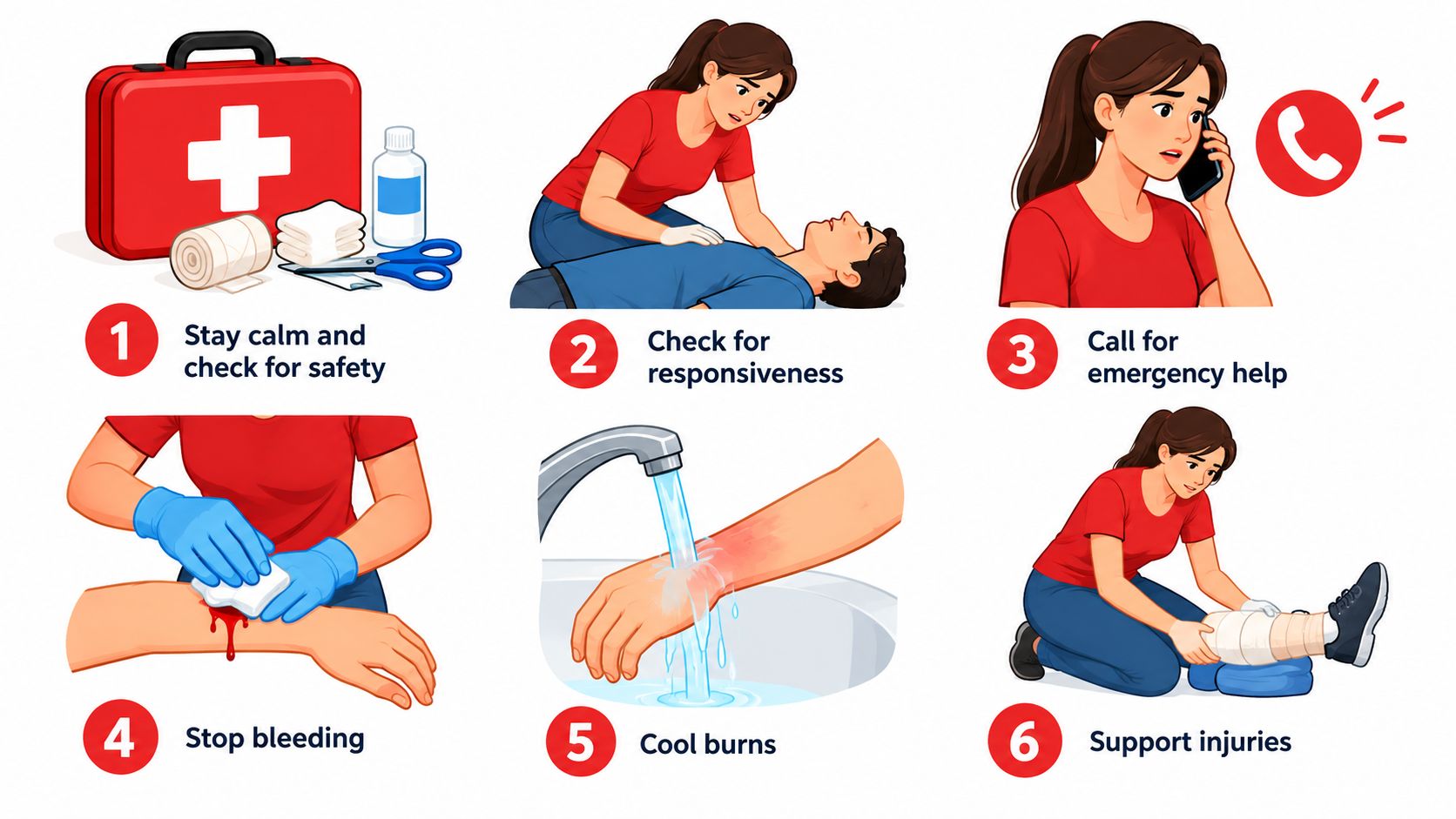
First aid buys time. It doesn't replace treatment. Arrange professional care while taking these steps, and ask Dr. Finley or the treating clinician for guidance specific to the patient.
Protect a knocked-out permanent tooth
Pick up the tooth by the crown, the part normally visible above the gum. Don't touch or scrub the root. If it can't be replanted promptly, place it immediately in cold milk, physiologic saline, or the patient's saliva and seek emergency dental care.
Milk is generally preferred among practical transport options. Water is less suitable, but it's better than letting the tooth dry. Keep the tooth in its transport liquid and bring it with the patient.
After approximately 60 minutes of dry storage, the cells of the periodontal ligament are considered nonviable, substantially worsening the healing prognosis, according to the guideline for treating avulsed permanent teeth. That isn't a safe waiting window. The objective is to minimize dry time from the moment the tooth is knocked out.
This protocol applies to permanent teeth. If a child's tooth comes out and you're unsure which kind it is, ask a dental professional immediately rather than attempting replantation yourself. Even when considerable time has passed, bring the tooth and seek assessment instead of deciding that treatment is pointless.
Manage other injuries while arranging care
- Cracked or broken tooth: Gently rinse the mouth, save any fragments, and use a cold compress against the outside of the cheek for comfort. Avoid chewing on the damaged tooth.
- Lost crown or filling: Keep any recovered piece and bring it to the appointment. Avoid chewing on that side, and don't use household glue to attach a restoration.
- Soft-tissue bleeding: Apply steady pressure with clean gauze for 10–15 minutes. Don't repeatedly lift it to inspect the wound; uncontrolled bleeding requires emergency medical care.
- Swelling: A cold compress outside the cheek may help with comfort while you contact a dental provider. It doesn't treat the source of an infection.
For pain, use over-the-counter medication only when it's medically appropriate for you and according to its label. Ask a clinician or pharmacist if you're uncertain about interactions, medical conditions, or suitability for a child.
Keep treatment moving while you provide first aid. Don't postpone an urgent visit to see whether a compress or pain medicine will solve the problem.
Bring the tooth, fragments, or restoration even if you're unsure whether they can be used. The clinician can make that decision after examining the injury.
What Happens at the Emergency Dental Visit
An emergency appointment starts with understanding the problem, not committing you to a treatment you haven't discussed. At Bristol Dental & Orthodontics, tell the team what happened, what hurts, and what you're most worried about.
Be direct about anxiety, a difficult previous dental experience, or concerns about cost. Those details belong in the conversation from the beginning, not after a treatment plan has been proposed.
Assessment comes before a decision
The clinician will take a history and examine the affected area. Depending on the problem, dental X-rays may be needed to assess the tooth and surrounding structures. Bring your medication list, allergies, relevant medical history, and any recent treatment information.
A dental abscess requires urgent dental treatment. Symptoms can include intense tooth or gum pain, facial or jaw swelling, fever, a bad taste, difficulty chewing or opening the mouth, and swollen neck glands; breathing, speaking, or swallowing difficulty, substantial mouth swelling, eye symptoms, or severe difficulty opening the mouth require emergency medical attention, according to the NHS guidance on dental abscesses.
The purpose of the assessment is to identify what needs attention now and what can be planned later. Your symptoms alone won't determine whether a tooth needs a restoration, root-canal treatment, extraction, or another intervention.
Comfort and treatment planning
Ask how the team will manage discomfort before treatment begins. Local anesthesia may be appropriate, and Bristol Dental & Orthodontics also provides sedation dentistry. Whether sedation is suitable depends on the procedure, your medical history, and the clinician's assessment.
Treatment may involve temporary stabilization or definitive care. For an injured permanent tooth, assessment can include replantation when appropriate, stabilization, a tetanus review, and follow-up planning. For other problems, the discussion may include a restoration, root-canal treatment, drainage, or extraction.
Before consenting, ask:
- What did you find? Request a plain-language explanation of the examination and imaging.
- What needs attention now? Separate immediate care from later treatment.
- What are my options? Discuss alternatives, limitations, and the consequences of delaying.
- What happens afterward? Ask about instructions, warning signs, and follow-up.
You shouldn't leave guessing whether the problem is fully treated or only stabilized. Ask the team to clarify that distinction and provide the next steps in writing. Dr. Finley can tailor recommendations to your situation rather than treating the emergency appointment as a commitment to unrelated future care.
Why Early Dental Care Usually Beats the ER
For a dental problem without medical warning signs, early dental assessment is usually the more direct route to treatment. That recommendation doesn't diminish the hospital's role. It recognizes that relieving symptoms and fixing a tooth are different jobs.
In a national analysis of dental-condition emergency visits in 2018, 94.5% ended in treatment and discharge, while 5.5% resulted in hospital admission, according to the Agency for Healthcare Research and Quality's dental emergency-department report. Emergency departments frequently manage pain or infection symptoms rather than provide definitive restorative dental care.
Treat the cause, not just the discomfort
A prescription isn't necessarily the treatment that resolves the tooth problem. ADA-supported guidance prioritizes definitive dental treatment for localized infections, including procedures to treat the pulp, root-canal treatment, extraction, or drainage when indicated; antibiotics offer limited benefit when the infection is localized and source control is available, according to its antibiotic stewardship guidance.
The same guidance identifies systemic involvement or dangerous spread as reasons for urgent escalation. It also supports appropriately dosed ibuprofen and/or acetaminophen for pain when medically suitable. Your clinician should determine medication choice and suitability; antibiotics shouldn't substitute for needed dental treatment.
Ask before leaving: “Has the cause been treated, or do I still need a dental procedure?”
Build a plan beyond the emergency
If pain improves after medication or temporary care, keep the recommended dental follow-up. Improvement in comfort doesn't tell you whether the underlying problem has been resolved.
A regular dental home gives you somewhere to bring questions before they become urgent. It also gives your dentist a chance to assess untreated decay, review existing restorations, and discuss preventive care based on your needs.
At Bristol Dental & Orthodontics, an emergency consultation can be the beginning of that relationship, not an obligation to accept a broad treatment plan. Once the immediate issue is addressed, ask Dr. Finley what deserves priority and what can reasonably be scheduled later. A clear plan is more useful than either ignoring the problem or trying to address everything at once.
Cost, Access, and Honest Options for Santa Ana Families
A dental emergency doesn't arrive with extra room in the family budget. Work shifts, childcare, transportation, language needs, and uncertainty about coverage can make arranging care difficult. Tell the office about those barriers early.
A 2025 review reported that approximately 63% of surveyed individuals couldn't afford dental services and 25% avoided visits because suitable facilities weren't available in their neighborhood, illustrating the access challenges described in the review of barriers to dental care. The CDC analysis discussed earlier also identified Medicaid as the expected payer for a substantial share of tooth-disorder emergency visits. These aren't problems of planning ahead.
Ask for a clinically safe sequence
Delaying needed treatment can mean facing a more involved problem later. But that doesn't mean every patient can complete all recommended care immediately. Ask whether triage-first assessment, temporary stabilization, and staged definitive treatment are appropriate for your condition.
Not every problem can safely be staged. The dentist should explain where flexibility exists and where postponement introduces unacceptable risk.
- Written estimates: Request a clear breakdown before consenting to treatment.
- Benefit verification: Ask what needs to be confirmed with your plan, without assuming coverage.
- Payment sequencing: Discuss which treatment is urgent and which can be scheduled later.
- Practical support: Mention transportation, language, or scheduling needs when booking.
- Other care settings: Ask about public or community-clinic referrals if the proposed arrangements aren't workable.
Make the next step explicit
Families in Santa Ana, Costa Mesa, Tustin, Irvine, and Garden Grove deserve clear choices, not pressure or blame. Bristol Dental & Orthodontics can discuss your concerns alongside the clinical findings.
If you've already received temporary hospital care, bring the discharge instructions and medication information to your dental consultation. Ask what remains untreated and how to arrange that care within the limits you're facing.
Your Santa Ana Emergency Dental Care Checklist
Save a short plan on your phone before you need it. Medical danger comes first; urgent tooth problems need prompt dental guidance.
- Choose the destination: Use the triage warning signs above rather than pain intensity alone.
- Save the office number: Copy the current Bristol Dental & Orthodontics phone number from the practice website into your contacts. Confirm how to seek help when the office is closed.
- Prepare what to bring: Gather identification, medication and allergy lists, relevant coverage information, recent treatment records, and any tooth, fragment, or restoration.
- Protect an injured tooth: Follow the permanent-tooth handling and transport steps above.
- Track changes: Note when symptoms began and whether swelling, bleeding, or general illness is worsening.
- Confirm follow-up: Know whether the emergency visit completed treatment or whether another appointment is needed.
Bristol Dental & Orthodontics is located on South Bristol Street and serves Santa Ana and surrounding Orange County families, including Costa Mesa, Tustin, Irvine, and Garden Grove. Beyond emergency dentistry, patients can discuss preventive care, cosmetic dentistry, Invisalign, dental implants, and sleep apnea or oral-appliance care with Dr. Finley, based on their individual needs.
Bristol Dental & Orthodontics offers emergency assessment and ongoing family dental care to help you address today's problem and plan what comes next. Visit Bristol Dental and Orthodontics to schedule a consultation with Dr. Andrew Finley, or contact the office promptly if you're dealing with an urgent dental concern.