
You might be reading this with a mix of excitement and nerves. Maybe your child has been counting down to the day the braces come off. Maybe you've had braces yourself for what feels like a very long stretch, and now you're wondering what the appointment will feel like, whether it will hurt, and what happens once you walk out with a new smile.
Those questions are normal. For many patients, getting braces off feels like a finish line. In reality, it's both a celebration and a transition. The braces removal visit is usually much shorter than the full course of treatment, but the habits you build right after that visit matter a great deal, especially during the first month.
At Bristol Dental & Orthodontics in Santa Ana, Dr. Andrew Finley and our team spend a lot of time helping patients feel prepared, not surprised. Families from Santa Ana, Costa Mesa, Tustin, Irvine, and Garden Grove often tell us they feel better once they know what the day looks like and what comes next. This guide walks through the full braces-off journey in plain language so you can feel calm, informed, and ready.
Table of Contents
- The Final Countdown to Your New Smile
- Your Braces Removal Appointment Explained
- What to Feel and See Right After Removal
- The Retainer Phase Protecting Your Investment
- Caring for Your New Smile Long Term
- Your Next Steps and Common Questions
The Final Countdown to Your New Smile
You are on the ride home after a regular checkup, and someone in the car asks, “So, is the next visit the one?” That question tends to make the finish line feel real. After months of careful brushing, food rules, and steady changes that happened a little at a time, the idea of seeing your teeth without brackets can suddenly feel very close.
By this point, families have usually put a lot into treatment. Time, appointments, home care, patience, and trust all add up. That is why getting braces off feels bigger than a routine visit. It marks the end of active tooth movement and the beginning of protecting the result you worked hard to get.
That second part matters more than many patients expect.
The braces coming off is the moment everyone pictures first, but the first month afterward often has the biggest effect on how well your smile holds its new shape. Teeth do not instantly “lock in” the day the brackets are removed. They need guidance while the bone and surrounding tissues adjust. A retainer does that job. It works like the support stakes around a newly planted tree, keeping things steady while everything settles.
Families sometimes worry that removal day will be uncomfortable or intense. In most cases, it is a calm, orderly appointment focused on removing the hardware, cleaning away adhesive, and checking that your teeth and gums look healthy. The emotional part is often larger than the physical part. You are seeing the payoff.
It also helps to frame this milestone the right way. Braces off does not mean your orthodontic care is over. It means your care is changing. Active treatment is ending, and protection starts right away. Patients who understand that shift from day one are usually the ones who do best in the weeks that follow.
Your Braces Removal Appointment Explained
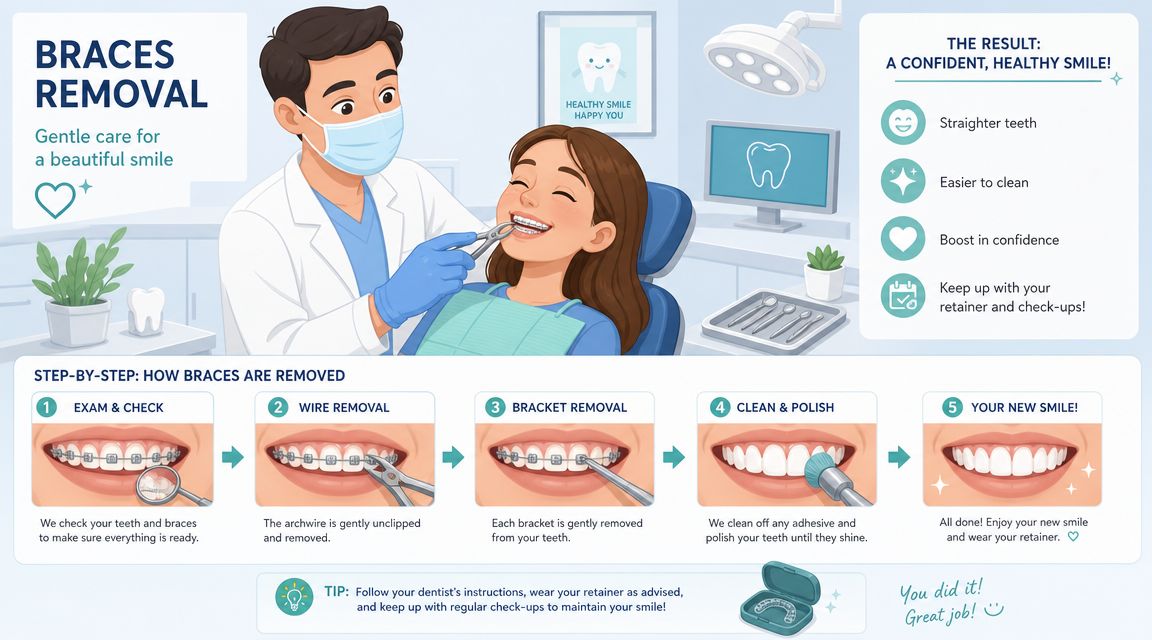
The appointment itself is usually more straightforward than people expect. Braces removal is generally a mechanical de-bonding procedure, not a tooth-moving procedure. One patient guide explains that the orthodontist removes the archwire and elastics first, then uses orthodontic pliers to detach each bracket, and then polishes away leftover adhesive so the enamel feels smooth again. In routine cases, the appointment is commonly about 30 to 60 minutes, as described in this step-by-step overview of braces removal.
What the team does first
The first part is simple. The wire comes out, along with any elastics or small attachments that need to be removed first. Patients often notice this right away because the mouth feels less “tight” as soon as those parts are gone.
Then the focus shifts to the brackets. These are detached one by one with instruments designed for that purpose. You may hear small clicks or feel pressure, but the process is controlled and methodical.
A simple way to picture it is this:
- Wire and elastics come off so the braces are no longer actively connected.
- Each bracket is detached from the tooth surface.
- Remaining adhesive is polished away so the teeth feel smooth again.
- The bite and tooth surfaces are checked before you move on to the retainer phase.
How the brackets come off
Many patients feel the most anxious before this visit, mostly because they can't visualize it. The key point is that the braces aren't “ripped off.” The orthodontic team uses a deliberate technique to release each bracket from the tooth.
The teeth can feel a little tender during this stage. Some people describe the sensation as pressure or a quick pinch of awareness rather than pain. The most noticeable part for many patients is the polishing afterward, because it creates vibration and leaves the mouth feeling very different once the adhesive is gone.
Practical rule: If you know to expect pressure, sound, and vibration, the appointment usually feels much less mysterious.
What happens before you leave
The end of the visit matters just as much as the beginning. Once the brackets and adhesive are gone, your teeth are checked, and you're prepared for retention. Depending on your treatment plan, that may mean a retainer is fitted right away or impressions are taken so your retainer can be made.
Families are sometimes surprised that the braces-off appointment isn't really complete until the retainer plan is in place. That's because removal day isn't only about revealing straight teeth. It's about helping keep them that way.
What to Feel and See Right After Removal

The first hour after getting braces off can feel surprisingly emotional. Some patients grin right away. Others keep running their tongue over their teeth because the smooth surfaces feel so unfamiliar. Both reactions are common.
Patient guidance sources consistently describe the procedure as typically painless and often completed in a single visit. One source says it usually takes about an hour, while another notes that most patients don't experience pain and may only feel temporary pressure or sensitivity as brackets are detached and adhesive is cleaned away, according to this patient-friendly explanation of what braces removal feels like.
What most patients notice first
The most common first impression isn't pain. It's texture.
Your teeth no longer have brackets, hooks, and wire edges on them, so they can feel oddly large, slick, or extra smooth. Your lips and cheeks may also feel different against the teeth because there's less hardware in the way.
You might notice:
- A smooth enamel feel when you run your tongue across your teeth
- Mild sensitivity to air, temperature, or pressure
- A different bite sensation because your mouth is adjusting to life without brackets
- An urge to keep checking your smile in every reflective surface nearby
When something feels strange but still normal
One detail that can worry patients is the feeling that the teeth are a little “loose” or tender afterward. That sensation can happen after the orthodontic force is removed. It doesn't automatically mean the teeth are unstable. The feeling can come from the tissues around the teeth adjusting.
A few appearance changes can also catch people off guard. Some teeth may look slightly different in color where brackets used to sit. Gums can look a little puffy in spots if they've been irritated during treatment. These aren't reasons to panic, but they are good things to ask about during your visit if you're concerned.
Most patients do better when they expect an adjustment period instead of expecting everything to feel instantly ordinary.
Soft foods may feel more comfortable on day one if your teeth are a little sensitive. Hydration, gentle brushing, and a calm first evening usually help. If you notice something that feels sharp, unusual, or worrying, contact your dental team for guidance specific to your case.
The Retainer Phase Protecting Your Investment
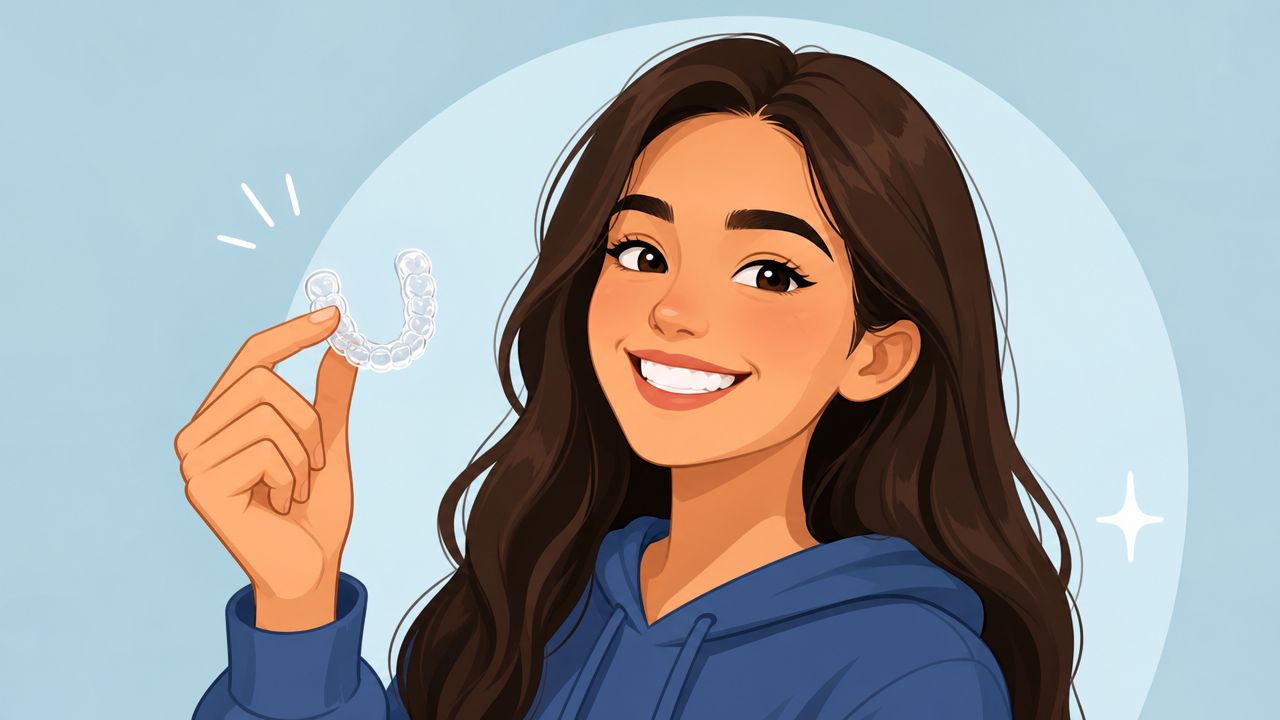
This is the part families often underestimate. Getting braces off is memorable, but the months after removal do more to protect your result than that single appointment ever could.
One patient resource makes this point clearly. Success after braces removal depends on retainer wear and follow-up, and the first 30 days after debonding deserve special attention because that's when compliance and small shifts matter most, as discussed in this overview of braces removal and the early retainer phase.
Why the first month matters so much
Teeth don't become permanently fixed in place the moment the brackets come off. They've been guided into new positions over time, and your mouth needs time to adapt to that new arrangement. That's why retainers aren't a bonus item or an optional extra. They're part of treatment.
A useful way to explain it to kids and teens is “tooth memory.” Teeth can drift if nothing holds them steady after braces are removed. Adults understand this too, even if they use different words. The point is the same. Without a retainer plan, your result is more vulnerable.
During the first month, small choices matter:
- Wearing the retainer exactly as directed helps keep teeth from shifting during the adjustment period.
- Putting the retainer back in the same place every time reduces the chance of loss or damage.
- Cleaning it consistently makes it easier to keep using comfortably.
- Reporting fit issues quickly gives your dental team a chance to respond before a small problem becomes a bigger one.
A retainer protects the work you already did. It doesn't replace braces, but it can help preserve the result braces created.
What retainer success looks like at home
Families often ask what “good retainer habits” look like in daily life. In practical terms, it means making the retainer part of the routine, not an afterthought. Patients who do well usually connect it to fixed moments in the day, such as after brushing or before bed.
Different patients may receive different retainer designs. Some are clear and removable. Some include a wire component. Some treatment plans may involve bonded retention in certain areas. Your exact recommendation depends on your orthodontic history, bite, age, and risk of movement.
A simple home checklist can help:
| Situation | Helpful response |
|---|---|
| You take the retainer out to eat | Put it straight into its case |
| It feels tight after being left out | Contact your dental team rather than forcing it |
| It starts to smell or look cloudy | Clean it as instructed and keep up the habit daily |
| A child says they “forgot” again | Tie wear to an existing routine, not memory alone |
For patients considering future orthodontic care or alternatives for family members, Invisalign treatment at Bristol Dental & Orthodontics is one option that can be discussed during a consultation, depending on the case.
Caring for Your New Smile Long Term
A few weeks after braces come off, many patients settle into an easy thought: treatment is over. In reality, this first stretch after removal often shapes how well your result holds up over the years. Teeth have memory. They can drift if daily care and retainer habits slip, especially early on.
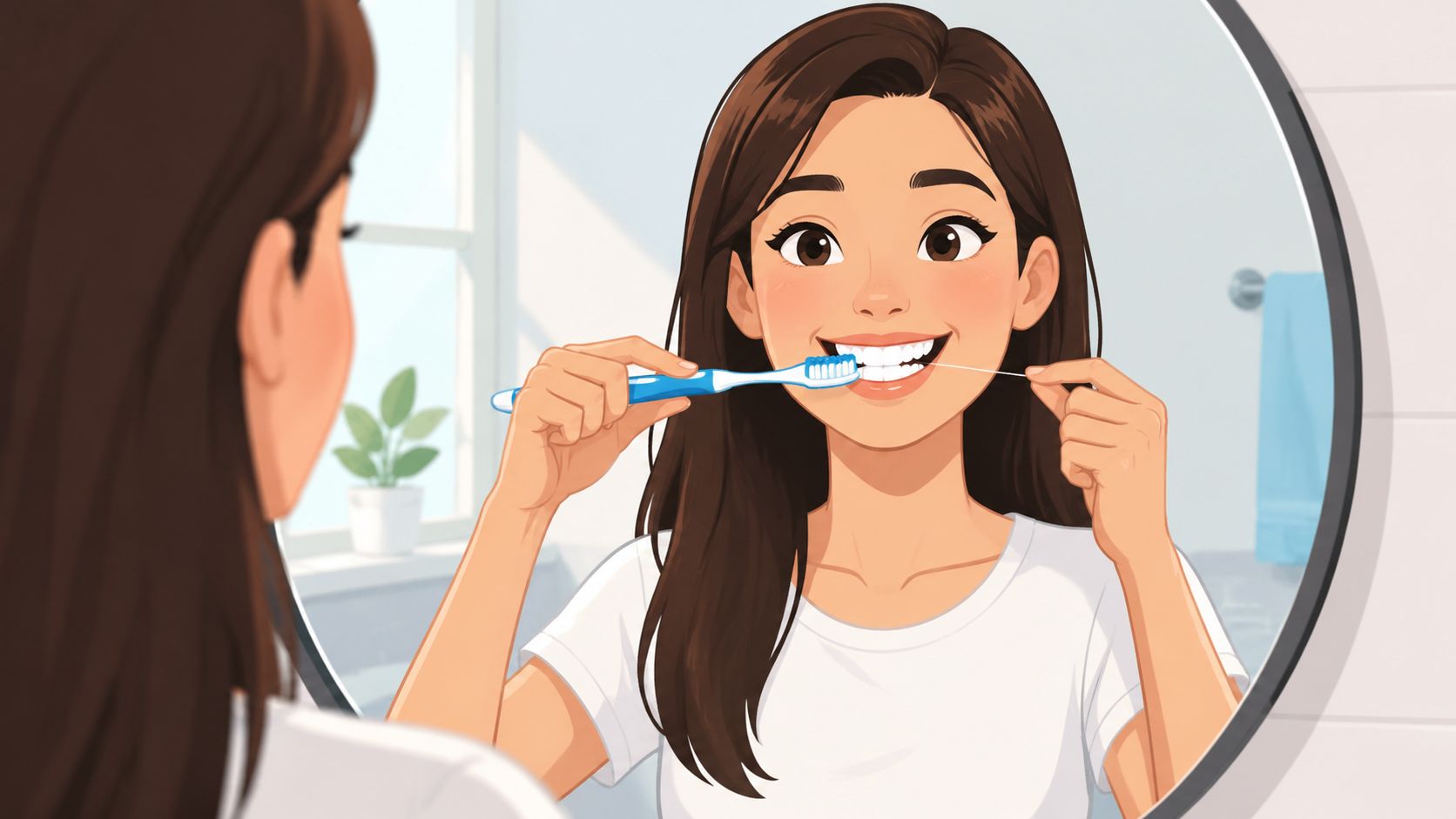
The good news is that home care usually gets simpler. You can brush every surface more directly, floss without working around wires, and notice changes faster. That makes this phase less about doing complicated things and more about staying steady with a few simple ones.
Daily care protects the result you earned
Your teeth may look straight now, but they still need healthy gums and clean enamel to stay that way. A good comparison is a freshly painted wall. The paint may look finished, but it still needs proper care while it settles. Your smile works much the same way after orthodontic treatment.
A strong long-term routine usually includes:
- Brushing carefully along the gumline to remove plaque from areas that were harder to reach during treatment
- Flossing every day to keep the spaces between teeth healthy
- Cleaning and checking your retainer daily so buildup, odor, cracks, or warping do not go unnoticed
- Keeping regular dental visits so your dentist or orthodontic team can monitor enamel, gums, bite, and retainer fit
For children and teens, parents often help most by making these habits automatic. A routine tied to brushing at night works better than reminders that depend on memory alone.
Long-term success usually looks quiet
Many families expect problems to be obvious. Often, they are not. A retainer that is left out too often, brushing that gets rushed, or a missed cleaning appointment may not cause immediate pain. The first sign can be subtle tooth movement, gum irritation, or a retainer that suddenly feels tighter than it should.
That is why the first month after braces matters so much. It sets the pattern. Patients who wear their retainer as directed and keep up with cleaning early tend to protect their result more predictably over time.
Questions about appearance are common
Once brackets are gone, small details become easier to see. Some patients notice uneven color, rough spots where adhesive used to be, or tiny shape differences they never paid attention to before. That can feel surprising, even when the teeth are beautifully aligned.
If those details bother you, it is reasonable to ask about next-step options such as cosmetic dentistry at Bristol Dental & Orthodontics. The right plan depends on what you are seeing and whether the concern is cosmetic, functional, or part of your teeth adjusting after treatment.
Worth remembering: A lasting orthodontic result depends on three steady habits. Wearing the retainer as instructed, keeping teeth and gums clean, and showing up for routine dental care.
Adults sometimes use this stage as a checkpoint for broader oral health goals too. After alignment is finished, it can be easier to discuss bite comfort, tooth wear, missing teeth, or other concerns that affect how the smile looks and functions over time.
Your Next Steps and Common Questions
By the time the braces come off, most patients don't just want reassurance. They want simple answers they can use the same day. These are some of the most common practical questions families ask after the appointment.
Quick answers families often ask
What can I eat on the first day?
Start with foods that feel comfortable if your teeth are sensitive. Many patients do fine with softer choices at first, then return to a normal routine as their mouth settles.
Is mild soreness normal afterward?
It can be. Some tenderness, pressure awareness, or sensitivity can happen after removal. If discomfort feels strong, lasts longer than expected, or seems unusual, call your dental office.
What if my teeth feel strange without braces?
That's common. Smooth enamel, a slightly different bite, and general unfamiliarity are all things patients often notice right away.
What if I lose my retainer?
Don't wait and hope for the best. Contact your dental team as soon as possible so they can advise you on the next step. Delay gives teeth more time to shift.
When to reach out for help
Call your dental office if your retainer doesn't fit, cracks, feels suddenly much tighter than expected, or if you're unsure whether a sensation is normal. It's much easier to address a new concern early than after movement has already happened.
Parents should also keep an eye on routine. Kids and teens rarely lose a retainer because they're careless on purpose. Most often, it gets wrapped in a napkin at lunch, left on a bathroom counter, or forgotten after sports or sleepovers. A simple system at home helps.
If you're in Santa Ana or nearby Orange County communities such as Irvine, Costa Mesa, Tustin, or Garden Grove, a personal visit is still the best way to answer case-specific questions. Every smile finishes treatment on its own timeline, and every retention plan should match the patient wearing it.
If you have questions about getting braces off, retainers, Invisalign, cosmetic dentistry, dental implants, sleep apnea treatment with oral appliance therapy, or urgent dental concerns, Bristol Dental and Orthodontics welcomes patients from Santa Ana and surrounding Orange County communities to schedule a consultation with Dr. Andrew Finley. Every article should be reviewed by Dr. Finley before publishing, and your own care decisions should always be based on a direct exam and personalized guidance.