

If you're reading this, there's a good chance you've had a moment like this recently. You smiled in a photo, looked at it, and your eyes went straight to the one thing that bothers you. Maybe it's staining, a chipped edge, crowding, a gap, or a tooth that just doesn't seem to fit the rest of your smile anymore.
That feeling is common, and it doesn't mean you're being vain. Your smile is part of how you introduce yourself before you say a word. At the same time, many people in Santa Ana and across Orange County don't know what a smile makeover involves, or whether it's cosmetic, restorative, or both. It can be all of those things, depending on your needs.
I'm Dr. Finley, and when patients ask about a smile makeover, I like to slow the process down and make it understandable. Good dentistry shouldn't feel mysterious. It should feel organized, realistic, and centered on your health and comfort.
Table of Contents
- Feeling Confident in Your Smile
- What Is a Smile Makeover Really
- Common Procedures in a Smile Makeover
- Your Smile Makeover Journey Step by Step
- Health First The Foundation of a Lasting Smile
- Choosing Your Smile Makeover Dentist in Santa Ana
- Frequently Asked Questions About Smile Makeovers
Feeling Confident in Your Smile
A patient might tell me, "I cover my mouth when I laugh," or "I avoid being in pictures with my kids." Those comments usually aren't about one tooth. They're about confidence. People often feel that their smile affects how open, polished, or approachable they seem.
That concern isn't unusual. Survey findings discussed in cosmetic dentistry reporting on smile makeovers show that 99.7% of Americans believe a smile is an important social asset, and 74% think an unattractive smile can hurt career success. Numbers like that help explain why so many people start looking into treatment once they realize they're tired of hiding their smile.
Why patients often wait
Patients don't delay because they don't care. They delay because they feel unsure.
They wonder things like:
- Will I need veneers right away
- Can whitening help enough on its own
- What if I have crooked teeth and old dental work
- Will the process be uncomfortable or complicated
Sometimes the first issue someone notices is discoloration. If that's your starting point, a useful outside resource is DentalHealth.com's guide for discolored teeth, which walks through common causes in plain language. That kind of information can help you arrive at a consultation with better questions.
A smile makeover isn't about chasing a perfect smile. It's about helping your smile look healthy, natural, and more like the version of yourself you want to show people.
In my experience, a turning point comes when a patient realizes this doesn't have to be a rushed cosmetic fix. It can be a thoughtful plan. For some people, the goal is brighter teeth. For others, it's replacing missing teeth, straightening a bite, or repairing wear from grinding. The destination may be confidence, but the route should fit your mouth, your priorities, and your long-term health.
What Is a Smile Makeover Really
A smile makeover is not one treatment. It's a customized plan that combines the right procedures in the right order.
The easiest analogy is a home renovation. If you want a better kitchen, you don't start by hanging decorative lights before checking the wiring, walls, and layout. Dental treatment works the same way. We look at the foundation first, then design the visible changes around it.
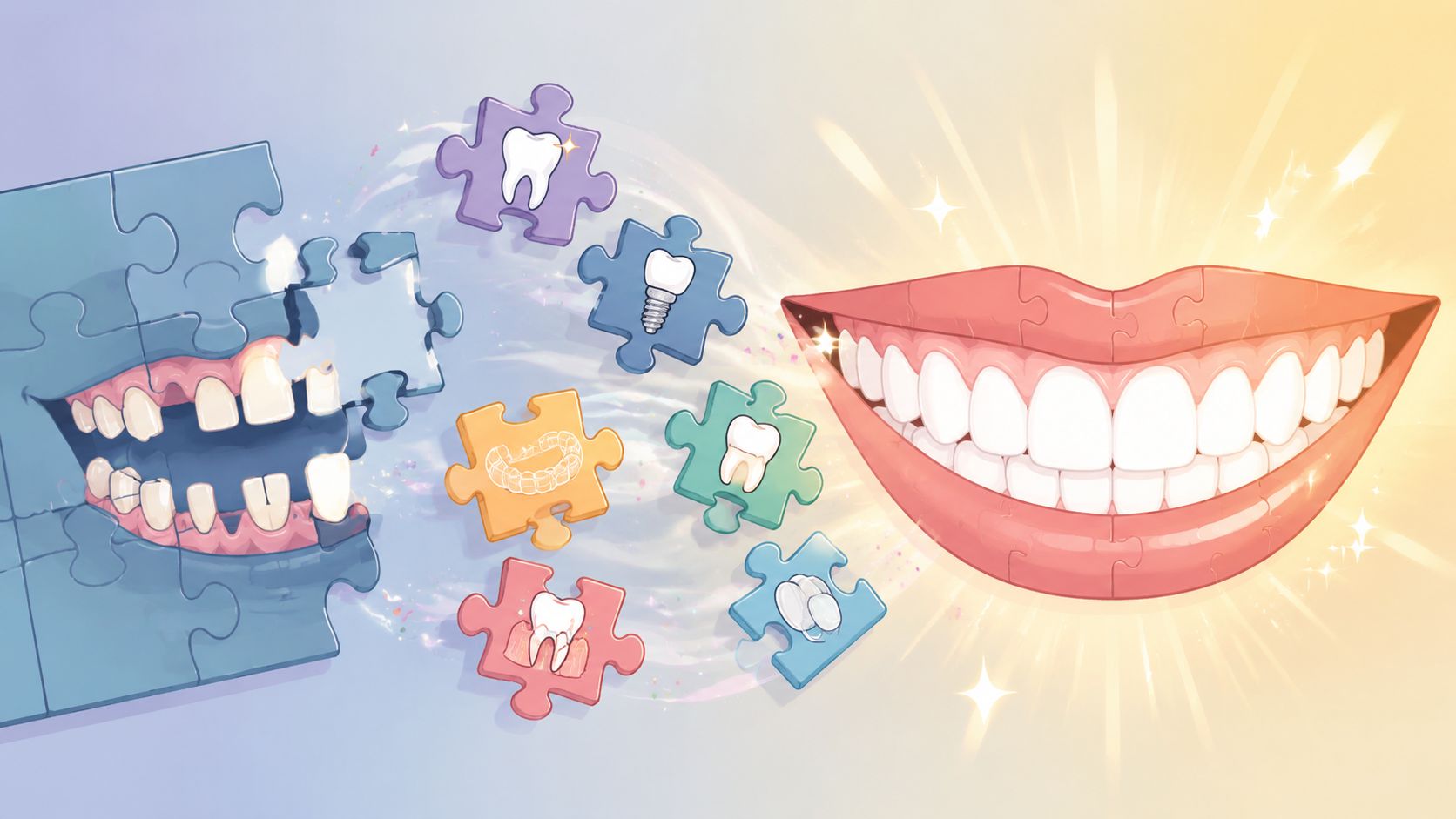
A smile makeover is described as a multi-procedure cosmetic dentistry approach that can include clear aligners, bonding, crowns, implants, gum lifts, porcelain veneers, contouring, and whitening in this overview of smile makeover components. That flexibility is why it isn't sold as a one-size-fits-all product. Two patients can both ask for a better smile and need completely different care.
What gets personalized
Your plan is built around several moving parts, not a single cosmetic wish.
| Area | What we look at |
|---|---|
| Color | Staining, old restorations, and whether whitening makes sense first |
| Shape | Chips, uneven edges, worn teeth, and proportions |
| Alignment | Crowding, spacing, rotations, and bite position |
| Gums | Gum levels, symmetry, and how much tooth shows when you smile |
| Function | Chewing comfort, grinding, missing teeth, and existing dental work |
A patient with healthy teeth but mild crowding may do well with Invisalign and whitening. Another patient may want veneers, but need bite correction and replacement of older failing restorations first. Someone else may come in asking for cosmetic changes and find out that missing teeth are the main reason the smile doesn't feel balanced.
What a consultation should feel like
A proper smile makeover conversation shouldn't feel like shopping from a menu. It should feel like planning.
That means we talk about:
- What bothers you most. Not what bothers the dentist most.
- What you're hoping to improve. Photos, social confidence, chewing comfort, or all three.
- What your mouth can support safely. Cosmetic treatment has to match oral health.
- What level of change feels natural to you. Some patients want subtle improvement. Others want a bigger transformation.
Practical rule: The best smile makeover plan solves the reason you're unhappy with your smile without ignoring the reason your teeth got there in the first place.
That difference matters. A beautiful result isn't just about what looks good on day one. It's about whether the plan makes sense for your bite, gums, enamel, and long-term maintenance.
Common Procedures in a Smile Makeover
When people hear the term smile makeover, they often think only of veneers. In reality, there are several tools we may use, and each one solves a different kind of problem.
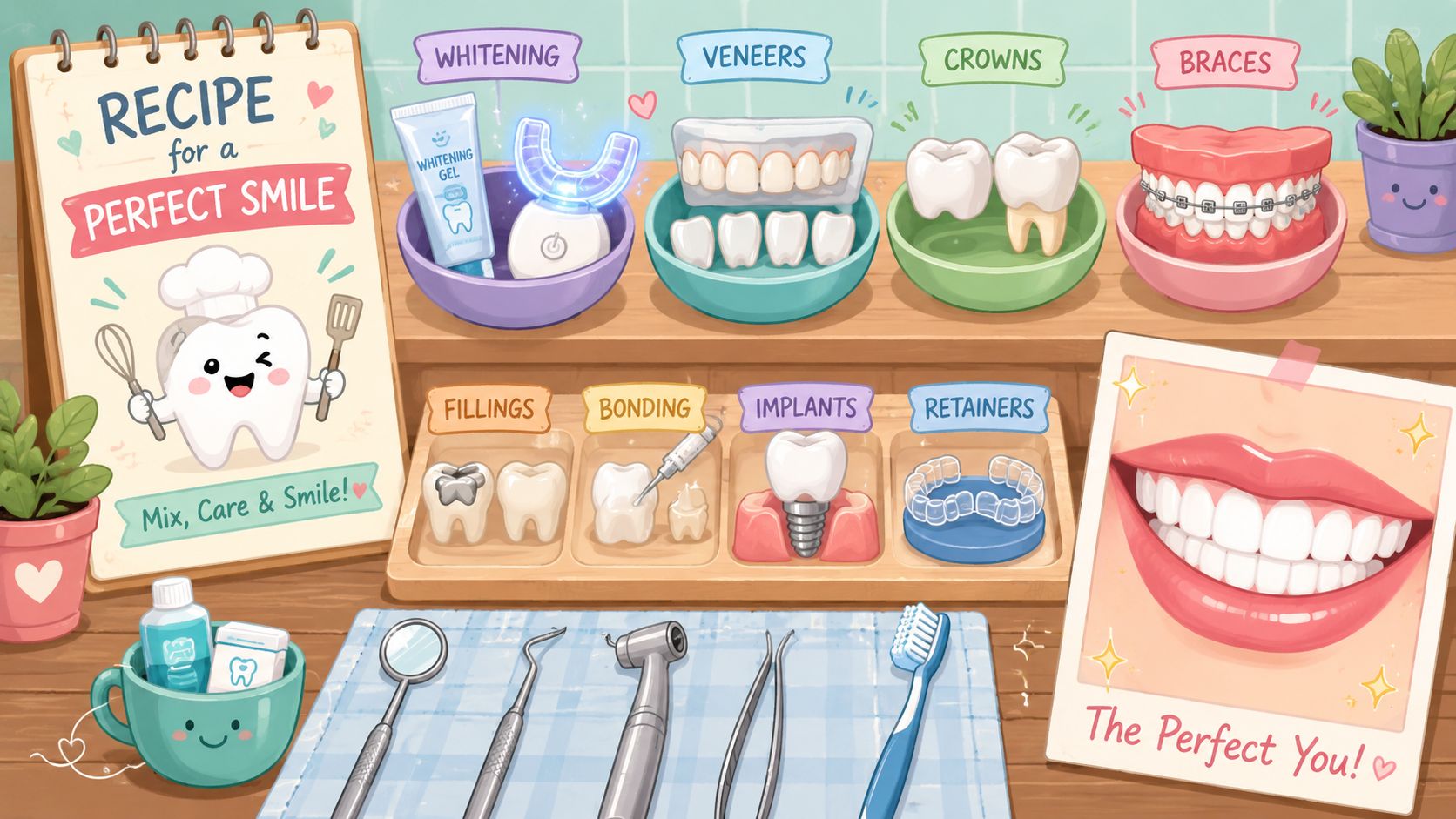
Treatments that change color and surface details
Some procedures are mainly about refining what you already have.
- Teeth whitening helps lift stains and brighten natural teeth. It can be a good option when the main concern is discoloration rather than shape or alignment. If you're comparing at-home and professional approaches, this guide on choosing a pro whitening gel gives a helpful overview of what to think about.
- Dental bonding uses tooth-colored material to repair small chips, soften uneven edges, or close minor gaps.
- Teeth contouring reshapes tiny areas of enamel to improve symmetry.
- Gum lifts adjust uneven gumlines when teeth appear too short or unbalanced.
These are often the least dramatic in terms of structure, but they can make a visible difference when the issues are small and well defined.
Treatments that change shape and coverage
Other procedures do more of the heavy lifting.
- Porcelain veneers cover the front of selected teeth to improve color, shape, and overall uniformity.
- Crowns cover the whole visible tooth and may be used when a tooth needs both cosmetic improvement and stronger structural support.
Veneers and crowns can look similar in photos, but they aren't interchangeable. The right choice depends on how much natural tooth remains, whether the tooth has large old fillings, and how forces hit that tooth when you bite.
A cosmetic plan should match the condition of the tooth. The prettiest option isn't always the healthiest option.
Treatments that move or replace teeth
Sometimes the smile problem isn't on the surface at all.
- Clear aligners such as Invisalign move teeth into a better position. This can improve spacing, crowding, and certain bite issues without covering healthy enamel just to disguise misalignment.
- Dental implants replace missing teeth with a fixed solution that supports appearance and chewing.
- Combined restorative care may include implants, crowns, and cosmetic finishing when teeth are missing, worn down, or heavily restored.
Many patients find themselves surprised. They come in expecting a purely cosmetic conversation and learn that the most important improvement may be replacing a missing tooth, rebuilding worn teeth, or correcting alignment before any cosmetic finishing happens.
Why the menu isn't the treatment plan
The same ingredient can be useful in one case and unnecessary in another. A smile makeover is called a multi-procedure approach because it may include several options, not because it should include all of them.
At Bristol Dental & Orthodontics, that distinction matters. The goal is to choose only the procedures that serve your smile, your function, and your comfort. Nothing more.
Your Smile Makeover Journey Step by Step
The process usually feels much less intimidating once you can see the sequence. Most patients do better when they understand what happens first, what waits until later, and why.
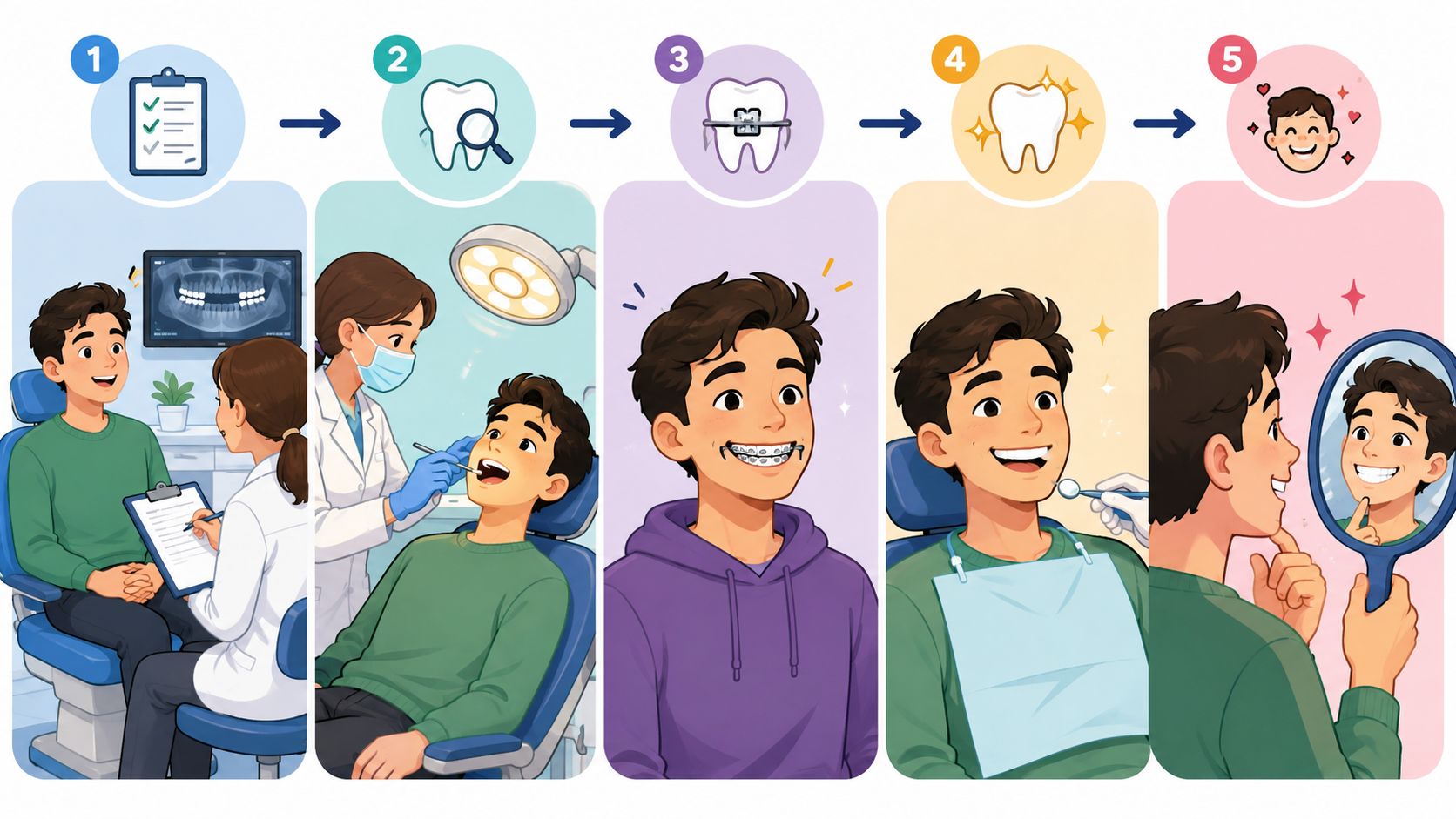
A smile makeover is typically planned as a sequenced system, not a single event. Guidance on the smile makeover process and timeline notes that digital smile design can use photographs and specialized software to preview the result, and that treatment often starts with whitening because restorations placed later can't be whitened afterward. That same source notes that timelines can range from about 2 weeks for simple cases to several months when orthodontics or implants are involved.
Step 1 The first visit
This appointment is part conversation, part diagnosis.
We talk about what you notice when you smile, what you want to change, and what kind of result feels right to you. Some patients bring photos of their younger smile. Some point to one chipped tooth. Others say, "I don't know exactly what's off. I just know I don't like how it looks."
At the same time, I need to evaluate the health side. That can include existing dental work, gum condition, bite position, areas of wear, and whether there are hidden problems that need attention before cosmetic treatment.
Step 2 Planning and previewing
Once we know your goals and your oral condition, we build the roadmap.
Digital planning helps us study:
- Tooth position in relation to your lips and face
- Shade choices before final restorations are made
- Tooth proportions so the smile doesn't look too flat, bulky, or artificial
- Sequencing so one procedure doesn't interfere with another later
Many patients feel relief. Instead of hearing a list of possible treatments, they finally see how the pieces fit together.
If a treatment plan sounds rushed or unclear, ask what happens first and why. A good plan should have a clear order.
Step 3 Foundational treatment
This phase depends on what your smile needs.
It may include cleaning up decay, treating gum problems, replacing failing restorations, or starting orthodontic movement. If whitening is part of the plan, this is often when we do it so the final shade is established before veneers, bonding, or crowns are completed.
For a simple cosmetic case, this phase may move quickly. For a more involved case with implants or Invisalign, patience matters. The cosmetic finish only looks right when the groundwork is right.
Step 4 Preparing the final work
Once the mouth is ready, we move into the visible transformation phase. That may involve preparing teeth for veneers or crowns, taking records, placing temporary restorations when needed, and coordinating the final shape and fit.
This stage is often more comfortable for patients than they expected because the process is broken into planned steps rather than rushed all at once.
Step 5 Final placement and follow-up
The last step is placing the final restorations or completing the last cosmetic refinements. Then we review how to care for your new smile, how to protect it if you grind your teeth, and what maintenance matters most.
A smile makeover doesn't end when the work is done. It lasts better when you keep up with hygiene visits, wear any recommended appliance, and return if something feels off.
Health First The Foundation of a Lasting Smile
This is the part patients don't always hear enough about. A smile makeover should start with health, not with the most visible procedure.
Many people ask whether they can go straight to veneers. Sometimes they can. Often, they shouldn't. Evidence-based aesthetic planning emphasizes that disease, bite issues, and gum levels need to be addressed first because cosmetic results can fail when the foundation isn't stable, as discussed in this educational review of treatment sequencing in smile design.
Why rushing creates problems
Think about putting fresh paint over damaged drywall. It may look better for a while, but the underlying problem is still there.
Teeth work the same way. If you place cosmetic dentistry on top of active gum disease, untreated decay, unstable bite forces, or major crowding, several things can happen:
- The result may not last well because the support system was weak from the start.
- The teeth may look better but feel worse if bite problems weren't corrected.
- You may need rework later that could have been avoided with proper sequencing.
This is one reason I take a conservative view of smile makeovers. Fast isn't always kind to teeth.
What sequencing can look like in real life
The right order varies from person to person, but the logic is consistent. A patient may need periodontal treatment first because inflamed gums change the frame around the teeth. Another may need orthodontic alignment before cosmetic work so we don't cover healthy teeth just to hide a position problem.
In some cases, restorative treatment comes before final esthetic work because worn or broken teeth need support first. Only after those issues are stable does it make sense to refine color, shape, and detail.
Healthy gums, a stable bite, and sound teeth aren't separate from cosmetic dentistry. They are what makes cosmetic dentistry dependable.
Questions worth asking before you start
If you're exploring a smile makeover in Santa Ana, Costa Mesa, Tustin, Irvine, or Garden Grove, these are smart questions to ask any dentist:
- What has to be treated before the cosmetic work begins
- Are my gums and bite stable enough for veneers or bonding
- Would orthodontics preserve more natural tooth structure
- If I grind my teeth, how will that affect the plan
- What kind of maintenance will the final result need
Those questions don't slow the process down in a bad way. They protect you from getting an answer that's too simple for a complex mouth. That health-first approach is often what separates a short-term cosmetic change from a smile that still makes sense years later.
Choosing Your Smile Makeover Dentist in Santa Ana
You sit down for a cosmetic consultation expecting to talk about whiter, straighter, more even teeth. Instead, the right dentist also checks your gums, bite, worn areas, old dental work, and jaw habits. That extra step can save you from getting pretty dentistry placed on an unstable foundation.
A smile makeover asks one dentist, or one coordinated team, to do several jobs at once. They need an eye for shape and balance, but they also need to understand function, comfort, and long-term tooth health. If your plan may involve aligners, implants, crowns, or repair of worn teeth, those pieces need to fit together in the right order, much like building a house. You choose the site and pour the foundation before you paint the walls.
Digital tools can help with planning and fit. As noted in this discussion of current smile makeover technology, dentists may use CAD/CAM, digital imaging, and 3D printing to plan veneers and crowns with more precision. Those tools are helpful, but the judgment behind the plan matters just as much. A scanner cannot decide whether inflamed gums, bite pressure, or tooth wear should be handled first.
What to look for in a consultation
A good consultation should feel like a careful exam, not a sales pitch.
Look for a dentist who can explain:
- Why a treatment is recommended
- What should happen first, second, and later
- Whether a more conservative option could protect more natural tooth structure
- How temporary restorations, healing time, or orthodontics may affect the timeline
- How comfort is managed if dental visits make you nervous
That sequencing piece matters more than many patients realize. For example, if teeth are crowded, moving them first may reduce how much enamel has to be reshaped later. If gums are unhealthy, treating them first changes the frame around the teeth and gives cosmetic work a better chance to last. A rushed plan can make the final result look good for a short time but fail the stress test of daily chewing, grinding, and aging.
Why local care can make the process easier
Smile makeovers rarely happen in one visit. There are check-ins, try-ins, adjustments, healing periods, and maintenance visits. If you live in Santa Ana or nearby areas such as Tustin, Irvine, Costa Mesa, or Garden Grove, having your dental team close by makes those steps easier to manage.
Bristol Dental & Orthodontics provides family, cosmetic, orthodontic, implant, emergency, and sleep-related dental care in Santa Ana. That matters when a smile plan overlaps with bigger issues such as missing teeth, bite changes, clenching, or nighttime airway concerns. In real life, mouths do not divide themselves into neat categories. The more your dentist can see the full picture, the more clearly your treatment can be planned.
Choose a dentist who explains the order of care clearly, respects your comfort, and protects your oral health before the cosmetic details begin.
Frequently Asked Questions About Smile Makeovers
People usually have a few practical questions once they understand that a smile makeover is a customized plan rather than one procedure. These are some of the most common.
Am I a good candidate for a smile makeover
You may be, but the answer depends on both your goals and your oral health.
Some patients are mainly bothered by staining or minor chips. Others have missing teeth, worn enamel, uneven gums, old crowns, or a bite that no longer feels comfortable. The best candidates are people who want improvement and are willing to start with a full evaluation instead of assuming the treatment in advance.
If active dental disease or gum problems are present, those usually need to be treated first. That's not a setback. It's part of making the cosmetic result more reliable.
Can a smile makeover help if I have missing teeth or more complex problems
Yes, in many cases, but the treatment plan may be more restorative than people expect.
A common question in smile makeover planning is how to choose between veneers, crowns, implants, and aligners when budget, longevity, and chewing function matter as much as appearance, especially in more complex cases, as noted in this discussion of options for patients with missing teeth or rehabilitation needs. For some patients, replacing a missing tooth or rebuilding worn teeth is the step that makes the rest of the smile possible.
Sometimes the most important cosmetic improvement is restoring function first.
How long do results last
That depends on the procedures used, your bite, home care, and whether you grind or clench. A bonded edge and an implant don't have the same maintenance pattern, and neither behaves exactly like a veneer or crown.
What helps most is regular hygiene care, good home habits, and wearing any recommended nightguard or protective appliance. A smile makeover isn't a one-time beauty purchase. It's dental work that needs thoughtful upkeep.
Do I have to do everything at once
No. Many patients don't.
Some people phase treatment for comfort, scheduling, or financial reasons. A plan might begin with health stabilization, then alignment, then final cosmetic work. Others start with one visible concern and build from there. What's important is that the phases still follow a sound sequence.
If you're curious about what's possible for your smile, the next step is a consultation with Dr. Finley. Every mouth is different, and your plan should be based on your health, your goals, and a realistic look at what will serve you best.
If you're considering a smile makeover in Santa Ana or nearby Orange County communities, a personalized consultation is the best place to start. Dr. Finley reviews every case carefully, and every article on this topic is reviewed by Dr. Finley before publishing. To learn more or schedule a visit, contact Bristol Dental and Orthodontics.