
Cosmetic dentistry is generally considered elective dental care focused on improving the appearance of teeth, gums, and the overall smile, and the U.S. cosmetic dentists industry is projected at $7.1 billion in 2026 across 7,025 businesses. In simple terms, it includes treatments like whitening, bonding, veneers, and other smile-focused services that are usually chosen for appearance rather than disease treatment alone.
If you're reading this, there's a good chance you're wondering whether the treatment you're considering is really "cosmetic," or whether it's also about protecting your oral health. That's a smart question. Patients often come in feeling unsure about where the line is, especially with treatments like crowns, clear aligners, or implants that can improve both how a smile looks and how it works.
Cosmetic dentistry is any dental work focused on improving the appearance of a person's smile, teeth, and gums, and it's often elective. The confusing part is that many dental procedures don't fit into one neat box. Some are mainly for looks. Some are mainly for function. Some do both at the same time.
As Dr. Finley would tell a new patient, the goal isn't to memorize dental terms. It's to understand your options well enough to ask the right questions and feel comfortable with your decision.
Table of Contents
- Your Guide to a More Confident Smile
- Defining Cosmetic Dentistry Beyond a Perfect Smile
- Common Procedures to Enhance Your Smile
- Cosmetic vs Restorative Dentistry Where Treatments Overlap
- Considering a Smile Makeover Your Next Steps
- Finding Your Cosmetic Dentist in Santa Ana
Your Guide to a More Confident Smile
A lot of people don't start by asking for "cosmetic dentistry." They say something more personal. They cover their mouth when they laugh. They avoid photos. They notice one chipped tooth, stains that won't lift, or spacing that's bothered them for years.

That feeling is common, and it's one reason cosmetic dentistry has become a major part of modern dental care. According to IBISWorld's U.S. cosmetic dentists industry overview, the field is projected at $7.1 billion in 2026 across 7,025 businesses, and it includes services such as veneers, direct bonding, whitening, and cosmetic crown-and-bridge work. The same industry overview notes that these services are not generally covered by insurance, which helps explain why patients often want clarity before they move forward.
What cosmetic dentistry usually means to a patient
Most patients don't need a technical definition. They need a practical one.
Cosmetic dentistry usually means treatment chosen to improve how your smile looks. That might mean making teeth whiter, straighter, more even, less worn, or more balanced with your gums and facial features.
It can be very simple, like whitening before a wedding or family photos. It can also be more involved, such as combining alignment and tooth reshaping to improve symmetry.
Practical rule: If the main reason for treatment is how your smile looks, it's usually considered cosmetic.
Why this question matters
The phrase what is considered cosmetic dentistry matters because it affects more than labels. It shapes expectations about planning, timing, and whether a treatment is being recommended for appearance, protection, or both.
For patients in Santa Ana and nearby Orange County communities, that distinction can make consultations much easier. When you understand the "why" behind a recommendation, you're in a better position to decide what feels right for your smile and your goals.
Defining Cosmetic Dentistry Beyond a Perfect Smile
The easiest way to understand cosmetic dentistry is to think of it as a treatment focus, not a separate branch of dentistry that stands completely on its own.
Clinically, a procedure is considered cosmetic when the treatment plan is driven by visual goals such as color, position, shape, size, alignment, and overall smile symmetry, according to this overview of cosmetic dentistry. That same source notes that the American Dental Association does not recognize cosmetic dentistry as a formal specialty, and that this work is mainly concentrated within general dentistry, prosthodontics, and orthodontics.
It's about the primary goal
People often get tripped up here.
A procedure doesn't become cosmetic just because it looks nice at the end. Dentists try to make many treatments look natural. The key question is: what is the main purpose of the treatment plan?
If the main purpose is to improve appearance, it's cosmetic. If the main purpose is to treat decay, repair damage, replace missing structure, or restore chewing function, it's restorative. Sometimes the answer is both.
Here's a simple way to understand it:
- Cosmetic first: Whitening, enamel reshaping for minor appearance issues, bonding to close a small gap, or veneers placed mainly to improve the look of front teeth.
- Restorative first: Fillings for cavities, treatment for gum disease, or a crown needed because a tooth is cracked or weakened.
- Mixed purpose: Clear aligners that improve bite and appearance, a front-tooth crown after trauma, or gum reshaping that changes both health access and smile balance.
Your regular dentist may also provide cosmetic care
Because cosmetic dentistry isn't a separate ADA-recognized specialty, many patients receive cosmetic treatment from a general dentist, often with support from orthodontic or prosthodontic planning when needed.
A cosmetic consultation shouldn't feel like a sales conversation. It should feel like a careful discussion of goals, limits, tradeoffs, and what matters most to you.
That matters because good cosmetic care isn't only about making teeth whiter or straighter. It's about choosing changes that fit your face, your bite, your oral health, and your long-term maintenance.
For many patients, the best cosmetic result is the one that still looks like them. Just more balanced, refreshed, and comfortable to show.
Common Procedures to Enhance Your Smile
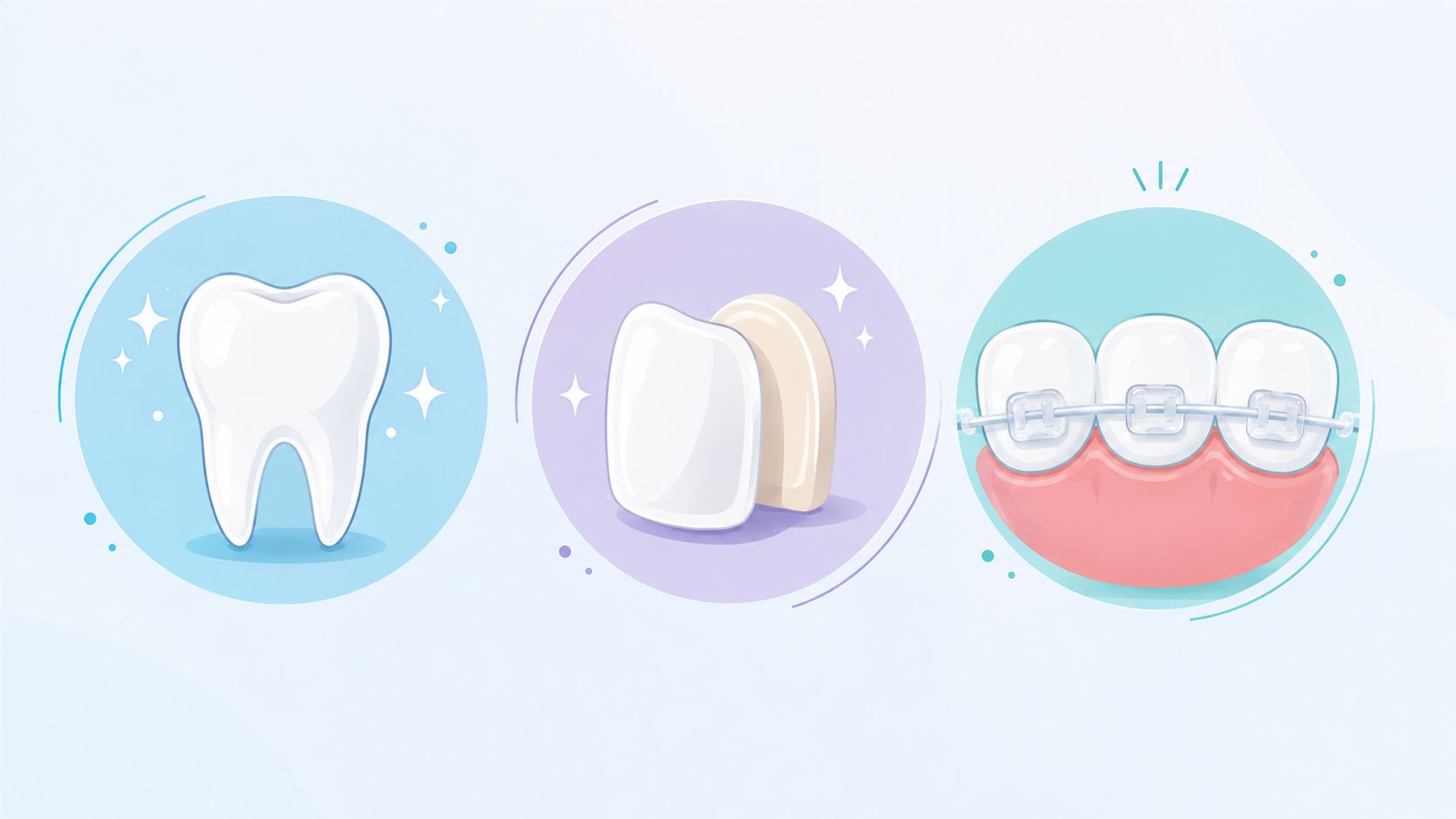
Some cosmetic treatments are quick and conservative. Others involve more planning and a bigger change in shape, color, or alignment. From a technical standpoint, Cleveland Clinic's cosmetic dentistry overview explains that these procedures are often judged by the materials used and by how much tooth structure is altered. For example, bonding adds material to reshape a tooth, while porcelain veneers are thin ceramic shells bonded to the front. In plain language, that means the right option depends on how much change you want and how conservative you want to be.
Whitening for a brighter smile
Whitening is one of the most familiar cosmetic treatments because the goal is straightforward. Lift surface and deeper discoloration to create a brighter smile.
This can be a good fit when teeth are healthy but look dull, yellowed, or stained. It doesn't change the shape of teeth or move them into better positions. It changes color.
Patients sometimes think whitening will fix every cosmetic concern. It won't. If the issue is uneven edges, crowding, spacing, or worn enamel, whitening alone may make those things more noticeable.
Bonding for small shape changes
Bonding uses tooth-colored material to make targeted improvements. It can help if one tooth looks slightly short, chipped, narrow, uneven, or separated by a small gap.
One reason patients like bonding is that it can be a more conservative way to improve shape. The downside is that it may not be the best match for every situation, especially if you want a broader smile redesign or if the tooth needs more strength than bonding can provide.
A good consultation usually focuses on what specifically bothers you. One corner chipped? One front tooth looks smaller than the other? Bonding is often part of that conversation.
Veneers for bigger visual changes
Veneers are often considered when several appearance concerns are happening at once. A patient may want to improve color, shape, spacing, and overall uniformity in the front teeth.
They can create a more coordinated result than small touch-ups alone because they're designed as part of a larger visual plan. That doesn't mean they're right for everyone. A dentist still has to consider bite forces, enamel condition, and whether a more conservative option could get you close to the same goal.
Invisalign for discreet alignment
Clear aligners fit many patients' idea of cosmetic dentistry because they improve the position and appearance of teeth without the look of traditional braces. They can be a strong option for adults and teens who want a more discreet approach to straightening.
For some people, the biggest benefit is the smile change. For others, alignment also supports cleaning, comfort, or bite improvement. That's why Invisalign often sits right at the intersection of cosmetic and functional care.
If spacing, crowding, or a tilted front tooth is what bothers you most, aligners may be part of the answer before whitening or reshaping.
Cosmetic vs Restorative Dentistry Where Treatments Overlap
This is the part that confuses patients most. A treatment can improve appearance and still not be "purely cosmetic." In fact, some of the most common dental procedures sit directly in the overlap between looks and function.
A practical discussion of the boundary between cosmetic and restorative care points out that patients often need clarity on whether treatments like crowns, implants, or orthodontics are elective or medically indicated, because that affects both decision-making and insurance expectations. That's exactly the right question to ask in a consultation: Is this for looks, for health, or both?
Cosmetic vs restorative dentistry at a glance
| Aspect | Cosmetic Dentistry | Restorative Dentistry |
|---|---|---|
| Primary goal | Improve appearance | Repair health, structure, or function |
| Main focus | Color, shape, symmetry, spacing, alignment | Damage, decay, missing teeth, chewing ability |
| Typical reason a patient asks for it | "I don't like how this looks." | "This hurts, broke, or isn't working well." |
| Common examples | Whitening, bonding, veneers, smile reshaping | Fillings, crowns for damaged teeth, tooth replacement |
| How treatment is judged | Visual improvement and smile harmony | Stability, protection, function, comfort |
| Insurance expectations | Often elective | More likely to involve medical or restorative need |
Where crowns, implants, and orthodontics fit
Crowns are a perfect example of overlap. If a tooth is cracked, heavily filled, or weakened after treatment, a crown may be needed to protect it. That's restorative. If that crown is on a front tooth, shade, contour, and symmetry also matter a great deal. The same treatment has a cosmetic side.
Implants work the same way. Replacing a missing tooth helps restore the bite and keeps the smile more complete. If the missing tooth is in a visible area, the cosmetic planning becomes just as important as the structural planning. The implant itself may be restorative in purpose, but the final result clearly affects appearance.
Orthodontics can fall into either category depending on the reason for treatment. Some patients want straighter front teeth because they don't like crowding or spacing. Others need alignment changes because tooth position affects comfort, bite forces, or wear. Many cases involve both.
Ask your dentist, "If I leave the appearance issue alone, does the tooth or bite still need treatment?" The answer often reveals whether the recommendation is cosmetic, restorative, or mixed.
This distinction doesn't reduce treatment to one label. It helps you understand the purpose behind it. That's especially useful when you're weighing timing, budgeting, and whether to treat only the urgent issue or include smile improvements at the same time.
Considering a Smile Makeover Your Next Steps
A smile makeover starts long before anyone talks about shade tabs or tooth shapes. The first question is whether your mouth is ready for cosmetic treatment.
Healthy gums, stable teeth, and control of decay usually come first. If someone has active dental disease, cosmetic work may need to wait until those issues are treated. That's not a setback. It's part of building a result that has a better chance of lasting.
Start with a healthy foundation
To determine if you are a candidate, these are good questions to bring to a consultation:
- Is my mouth healthy enough first? Ask whether gum health, cavities, grinding, or bite issues need attention before cosmetic treatment.
- What exactly is bothering me? A good plan starts with your concern, not a generic smile template.
- What are the conservative options? Sometimes a small change can make a big visual difference.
- What does maintenance look like? Different materials and procedures come with different upkeep.
Some patients are surprised to learn that the "best" cosmetic choice isn't always the most dramatic one. A modest change in alignment, edge contour, or color can sometimes deliver the natural result they're after.
Think in terms of maintenance and value
The cost-and-value side of cosmetic dentistry deserves honest discussion. According to CareCredit's overview of cosmetic dentistry considerations, some cosmetic results are temporary, while others are long-lasting, depending on the procedure, materials, technology, and home care. The same source notes that cheaper options aren't always better in the long term.
That doesn't mean one treatment is universally better than another. It means value depends on the whole picture:
- How long the result may hold up
- How much maintenance it needs
- Whether it preserves tooth structure
- Whether it solves one concern or several at once
The right question isn't only "How much does this cost?" It's also "What will I be maintaining, replacing, or touching up over time?"
Most cosmetic procedures are elective, so patients should expect a thoughtful conversation about priorities. You may decide to phase treatment. You may choose a conservative first step. You may also decide that improving function now and aesthetics later makes the most sense.
That's normal. Cosmetic planning should fit your life, not pressure you into a fixed timeline.
Finding Your Cosmetic Dentist in Santa Ana
You book a consultation because you want a nicer smile. Then a good dentist asks a broader question. Is the change you want mainly about appearance, mainly about protecting the teeth, or a mix of both?
That distinction matters. A dentist who can sort those goals clearly will help you choose treatment with fewer surprises, especially for procedures like crowns, bonding, implants, or aligners that can improve both looks and function.

What to look for in a consultation
A useful consultation should leave you feeling informed, not rushed. You want a dentist who explains the "why" behind each option in plain language.
Here are a few signs you are in the right place:
- Clear categories: You should understand whether a recommendation is cosmetic, restorative, or both.
- Reasoning you can follow: If a dentist suggests veneers, whitening, bonding, or a crown, you should hear what problem that treatment solves and what tradeoffs come with it.
- A plan built around you: Smile design is not a paint color sample. Your bite, tooth shape, facial features, habits, and budget all affect what makes sense.
- Photos or mockups: Visual examples can help you say, "Yes, that looks natural to me," or, "That looks too bright or too square."
- Space for questions: You should feel comfortable asking what happens if you do nothing, whether a more conservative option exists, and how long results may last.
One simple test helps. If you ask, "Is this for looks, for health, or both?" you should get a straight answer.
That answer is especially helpful if your concerns overlap. A missing tooth may affect your smile and your bite. A worn front tooth may need strengthening and reshaping. Slight crowding may bother you cosmetically, but it can also make cleaning harder. The right dentist will sort those pieces out instead of treating every concern as purely cosmetic.
Many patients around Santa Ana want one office that can handle routine care, cosmetic goals, and treatment planning when the line between appearance and function gets blurry. That can make decisions easier because the full picture stays in view.
Every smile starts in a different place. One person may need whitening and edge smoothing. Another may need a step-by-step plan that starts with oral health, then improves appearance once the foundation is stable.
The goal is not to hear a sales pitch. The goal is to leave your visit knowing what your options are, what each one is meant to do, and which questions to ask before you decide.