
When you need an emergency dentist near me, there's a good chance you're dealing with pain, swelling, bleeding, or a tooth that just broke at the worst possible time. That kind of problem can make everything feel urgent and confusing fast.
Take a breath. Start with one question: Do you need a dentist, or do you need the ER? That decision matters more than anything else in the first few minutes.
This guide is written for people in Santa Ana and nearby Orange County communities like Costa Mesa, Tustin, Irvine, and Garden Grove who need clear next steps right now. It gives you a calm, practical plan for triage, first aid, and what to expect once you get professional care. Every article from this practice should be reviewed by Dr. Finley before publishing.
Table of Contents
- Responding to a Dental Emergency in Santa Ana
- ER or Dentist Deciding Where to Go for Help
- Immediate First-Aid for Common Dental Emergencies
- How to Contact an Emergency Dentist in Santa Ana
- What to Expect at Your Emergency Dental Visit
- From Emergency Care to Long-Term Health
Responding to a Dental Emergency in Santa Ana
It is 9:30 at night. Your child walks in holding a tooth. Or you bite down at dinner and feel a sharp crack, then heat, pressure, and pain. In that moment, you do not need guesswork. You need to know two things fast. Is this a medical emergency, and who should treat it?
Start by getting control of the scene. Sit down. Rinse your mouth gently if there is blood or debris. Use clean gauze or a clean cloth to apply pressure if something is bleeding. Put a cold compress on the outside of the cheek if swelling has started.
Then do a quick triage check.
Can you breathe normally? Can you swallow normally? Is bleeding stopping with firm pressure? Is swelling getting worse or spreading into the face or jaw? Those answers matter more than the pain level, because they tell you whether you need a hospital or a dental office.
That is the key decision in any dental emergency in Santa Ana. Some problems are urgent but dental. Others are medical and need the ER first.
If the situation is painful but stable, act quickly and contact an emergency dentist. If breathing, swallowing, bleeding, or major swelling is involved, stop trying to make it fit into a dental appointment and get emergency medical help right away.
Time still matters, even when the problem seems manageable. A cracked tooth can become an exposed nerve. A lost filling can turn into severe pain by morning. A knocked-out tooth has a much better chance when treatment happens fast. Do the basic first aid, stay calm, and get the right kind of care without delay.
ER or Dentist Deciding Where to Go for Help
A lot of people make the same mistake in a dental emergency. They focus on the tooth and miss the bigger medical risk.
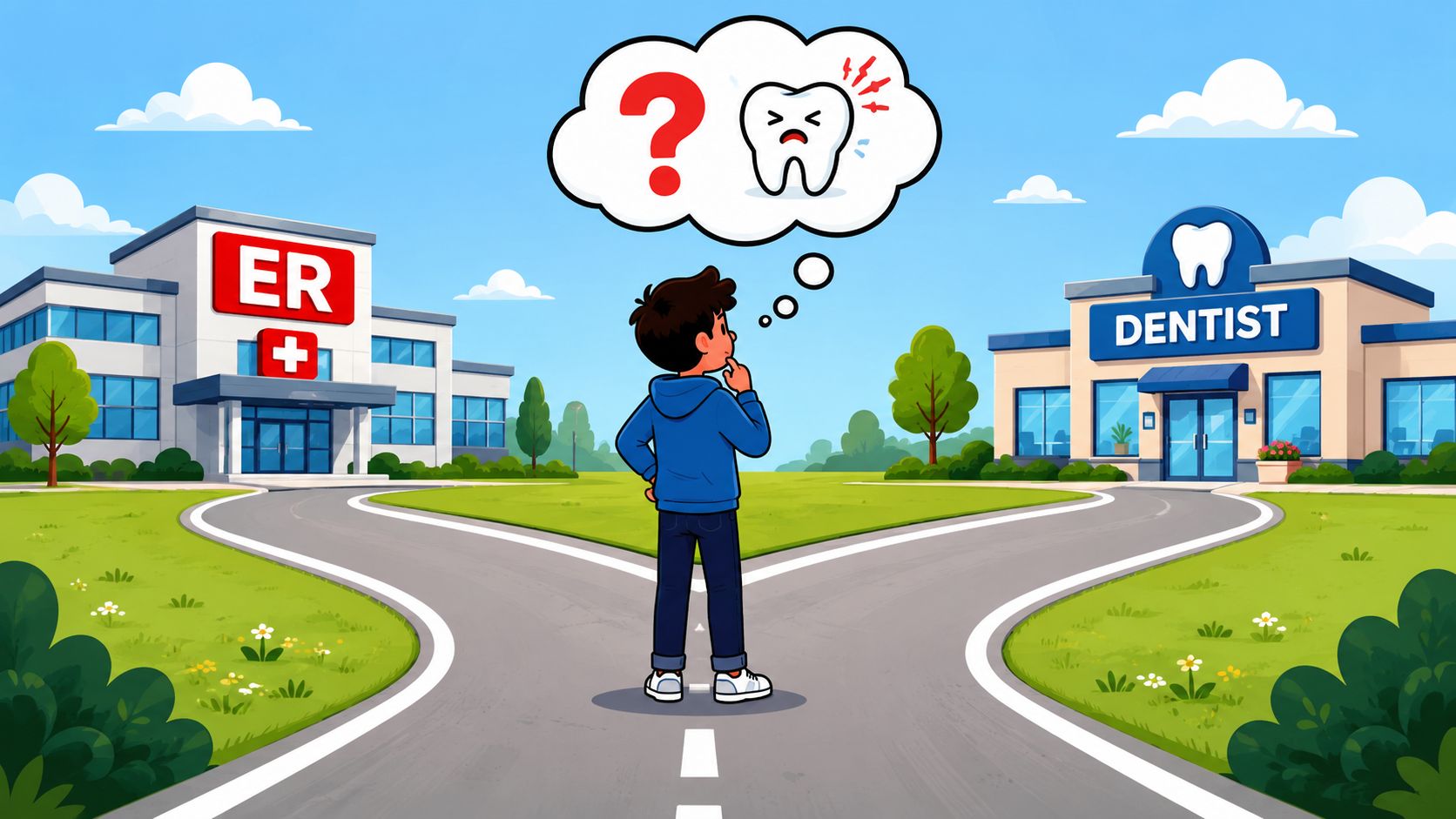
The first decision is simple. Protect your airway first. Protect the tooth second.
Go to the ER now
Choose the ER or call 911 if the problem has become a medical emergency, including:
- Trouble breathing: Any sense that your airway is tightening, your throat feels blocked, or breathing is getting harder.
- Trouble swallowing: You cannot swallow normally, saliva is pooling, or swallowing feels obstructed.
- Severe or spreading swelling: Swelling in the gums, jaw, face, or neck that is getting bigger or moving outward.
- Bleeding that does not stop: Firm pressure is not controlling it.
- Possible jaw fracture or dislocation: Your jaw looks out of place, will not open or close normally, or your bite changed sharply after an injury.
- Signs of a serious infection: Fever, facial swelling, foul drainage, or pain with swelling that is escalating fast.
Do not wait this out at home. Do not keep calling dental offices if you cannot breathe, cannot swallow, or the swelling is climbing into the face or neck. That is hospital territory.
If airway, major swelling, or uncontrolled bleeding is involved, go to the ER first.
Call an emergency dentist
A dental office is the right place for urgent problems that are painful or time-sensitive but medically stable. That includes:
- Severe tooth pain
- A knocked-out tooth
- A chipped, cracked, or broken tooth
- A lost crown or filling
- A painful dental injury without heavy bleeding or breathing problems
- A broken denture, orthodontic issue, or restoration causing sharp pain or soft-tissue injury
Here is the practical rule. If you are breathing normally, swallowing normally, and the bleeding is controlled, call an emergency dentist right away. Dental teams are set up to treat the cause, relieve pain, and protect the tooth or surrounding tissue.
Some cases can shift from dental to medical quickly. Swelling that starts in the gum can spread. A painful cracked tooth can turn into an infection. Bleeding after an extraction or injury can stop being manageable. If the situation is getting worse while you wait, change course and go to the ER.
Use this decision test
Ask these three questions:
- Can I breathe normally?
- Can I swallow normally?
- Is bleeding controlled with firm pressure?
If the answer to any one is no, treat it as a medical emergency.
If all three answers are yes, call an emergency dentist. Then follow the office instructions and get seen as soon as possible.
Immediate First-Aid for Common Dental Emergencies
Good first aid won't replace treatment, but it can reduce damage and help you get through the trip to the office with less risk and less panic.
Knocked-out tooth
A knocked-out tooth is one of the few dental emergencies where minutes matter.
Handle the tooth by the top part, not the root. If it's dirty, rinse it gently. Don't scrub it. Don't scrape it. If you can place it back into the socket gently, do that. If you can't, keep it moist and get help fast.
What to do right away:
- Pick it up carefully: Touch the crown, not the root.
- Rinse gently if needed: Use water briefly. Don't scrub.
- Try to reposition it: Only if it slides in easily and you're able to keep it there safely.
- Keep it moist if it won't go back in: Milk is commonly used for transport. If that's not available, ask the dental office what they want you to do next.
- Call immediately: Don't wait to see if the pain settles down.
Severe toothache
A severe toothache often means something is inflamed, infected, cracked, or irritated enough that it needs evaluation soon. What you should not do is keep testing the tooth over and over.
Start simple. Rinse gently with warm water. Remove any trapped food if you can do so carefully. Apply a cold compress on the outside of the face if swelling is present. Keep your head raised.
Use these steps:
- Rinse gently: Warm water is enough.
- Keep the area clean: If food is stuck, remove it carefully without digging into the gum.
- Use cold on the outside: This may help if the face feels tender or puffy.
- Avoid extremes: Very hot, very cold, and very sweet foods often make things worse.
- Don't place aspirin on the gum: It can irritate soft tissue.
A toothache that is escalating, waking you up, or coming with swelling needs prompt professional attention.
Chipped or broken tooth
Not every broken tooth is the same. A small chip can wait a bit longer than a fractured tooth with pain, sharp edges, or visible internal damage.
Rinse your mouth gently with warm water. Save any pieces you find. If the edge is sharp, cover it with something temporary only if your dentist advises it or if you need to protect your lip or tongue until you're seen. Use a cold compress on the face if there's swelling.
Focus on these actions:
- Clean the area gently
- Save any fragments
- Avoid chewing on that side
- Protect your tongue and cheek from sharp edges
- Call for an urgent exam if pain is significant or the break is large
Lost crown or filling
This is common, and people often make it worse by chewing on the area or delaying care because it doesn't seem dramatic enough.
If a crown comes off, keep it. If a filling falls out, the tooth may become very sensitive. Avoid sticky foods, hard foods, and chewing on that side. Keep the area clean and call for guidance.
Do this next:
- Save the crown if you have it
- Keep the tooth clean
- Avoid pressure on that tooth
- Expect sensitivity
- Arrange care before the area gets more irritated
Dental emergency first-aid cheat sheet
| Emergency | Immediate Action |
|---|---|
| Knocked-out tooth | Pick it up by the crown, rinse gently if dirty, try to place it back if possible, or keep it moist and call immediately |
| Severe toothache | Rinse with warm water, keep the area clean, use a cold compress outside the face if swollen, avoid triggers |
| Chipped or broken tooth | Rinse gently, save pieces, avoid chewing there, protect soft tissue from sharp edges |
| Lost crown or filling | Save the crown, keep the area clean, avoid chewing on that side, contact the office promptly |
How to Contact an Emergency Dentist in Santa Ana
It is 7:30 p.m. Your face is swelling, your tooth is throbbing, and you are trying to decide whether to keep calling dental offices or head straight to the hospital.
Use this rule first. If you have trouble breathing, trouble swallowing, uncontrolled bleeding, major facial trauma, or swelling that is spreading fast, go to the ER now. If the problem is severe dental pain, a broken tooth, a lost restoration, or a knocked-out tooth without those red-flag symptoms, call an emergency dentist immediately.
Once you know you need a dentist, stop bouncing between tabs and call a nearby office directly. That gets you screened faster and gives the team a chance to tell you whether to come in now, send photos, or go to the ER instead. If you are in Santa Ana, Costa Mesa, Tustin, Irvine, or Garden Grove, choose the closest office that offers urgent care and ask for the first available emergency appointment.
What to have ready when you call
You do not need a polished explanation. You need the facts that help the front desk or clinical team triage you correctly.
Have these ready:
- What happened: toothache, swelling, broken tooth, lost crown, injury, bleeding
- When it started: today, last night, after eating, after a fall
- What you feel now: pain, pressure, swelling, bleeding, sensitivity, trouble biting
- Whether there was trauma: sports injury, fall, hit to the face, biting something hard
- What you already did: rinsed, used a cold compress, held pressure, saved the tooth or crown
What to say first
Start with the problem that changes urgency.
Use plain language like this:
- "I have swelling and significant pain."
- "My tooth was knocked out."
- "I broke a tooth and it has a sharp edge."
- "I am still bleeding after holding pressure."
That gives the office what it needs to decide how fast you should be seen.
If you're trying to find the right office in an emergency, use the practice's contact page for Bristol Dental & Orthodontics to call and request urgent guidance. Keep your phone close after you call. If the office asks for photos, send clear pictures in good light. If they tell you not to eat, to keep a tooth moist, or to come in right away, follow those instructions exactly.
Keep the call short. Clear symptoms, clear timing, clear next steps. That is how you get help fast.
What to Expect at Your Emergency Dental Visit
You should expect a visit that answers three questions fast. Is this dangerous, what can be treated today, and what needs to happen next?
That approach protects you. A good emergency dental visit is built around triage first, then pain control, then a clear treatment plan.
The first few minutes
The team will get you checked in and focus on the problem right away. They will ask what happened, when it started, how the pain or swelling changed, and whether there was an injury to the face, jaw, or mouth. If your symptoms suggest something more serious, they will tell you plainly if you need hospital-level care instead of routine dental treatment.
Then comes the exam. Expect the dentist to look at the painful tooth, the gums, your bite, and the nearby teeth and soft tissue. X-rays are common because they help show cracks, infection, root problems, and damage that you cannot see from the outside.
If you came in after a fall, sports hit, or other accident, the dentist may check areas that do not hurt yet. That is the right call. Trauma can affect more than one tooth.
The goal of the visit
The first goal is to get the situation under control. That usually means reducing pain, protecting the tooth or tissue, stopping active bleeding, lowering pressure from swelling, or stabilizing damage so it does not get worse before the permanent repair.
Sometimes the full treatment can be done the same day. Often it cannot, and that is still good emergency care. A temporary filling, smoothing a sharp broken edge, re-cementing a crown, draining a localized problem, adjusting the bite, or starting treatment for an infection may be the right first step.
Expect some combination of:
- A focused exam and X-rays: To find the actual source of the problem
- Immediate pain relief: Such as numbing, protective covering, or treatment to calm the area
- Short-term stabilization: To protect the tooth, restoration, or surrounding tissue
- Specific home instructions: What to eat, what to avoid, how to clean the area, and when to call back
- A firm follow-up plan: So the temporary fix turns into a lasting one
One warning matters here. If you walk out feeling better but do not understand the next step, the visit was incomplete.
Before you leave
Do not leave with vague instructions. Ask direct questions.
You need to know:
- What the dentist found
- What was done today
- Whether the problem is fully treated or temporarily stabilized
- What symptoms mean you should call back right away
- When the next visit should happen
If swelling increases, fever starts, bleeding returns, or pain suddenly spikes after you get home, call the office immediately. If you develop trouble swallowing, trouble breathing, or rapidly spreading swelling, go to the ER. That ER-versus-dentist decision still matters even after the appointment.
The best emergency visits are not the ones that do everything in one sitting. They are the ones that make you safer, calmer, and clear on exactly what happens next.
From Emergency Care to Long-Term Health
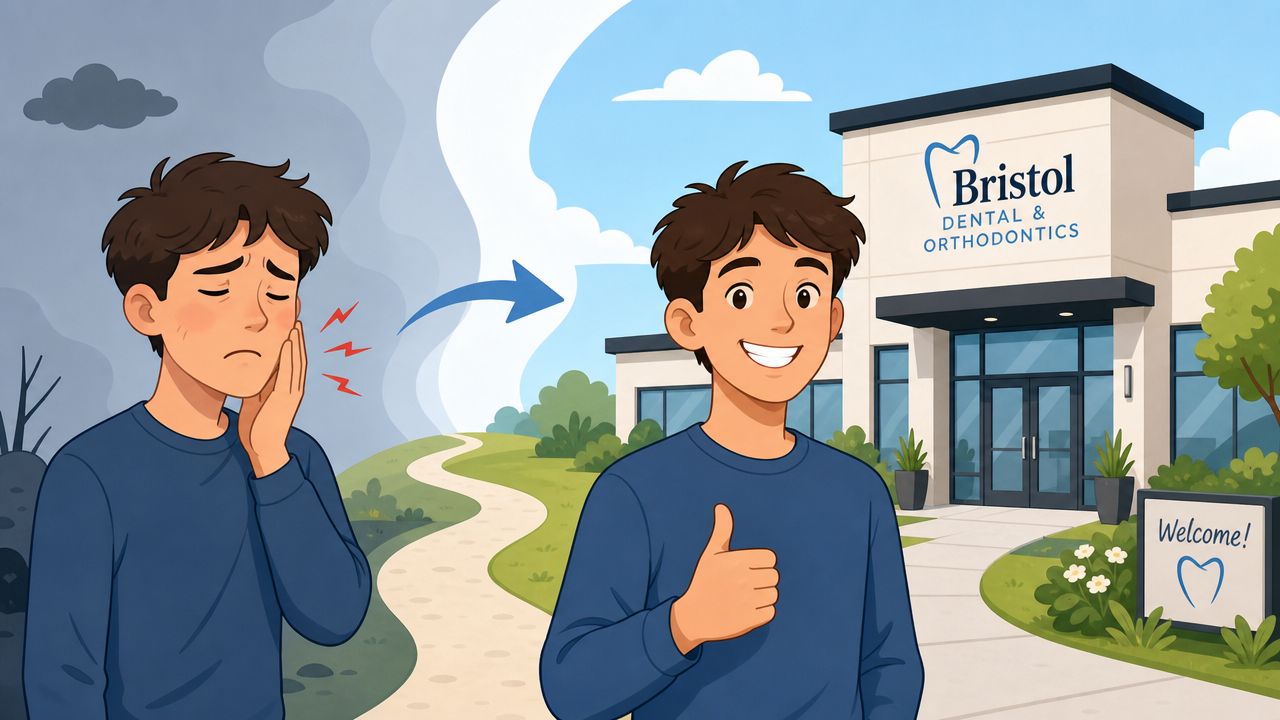
The pain may be under control. The problem still needs a finish line.
Why follow-up matters
Emergency dental care is triage first. It gets you stable, lowers risk, and buys time to fix the underlying issue before it turns into another urgent call.
That next step matters more than many patients realize. A cracked tooth can worsen. A temporary repair can fail. An infection can calm down, then return if the source is still there. Relief today is good. Definitive treatment is what keeps you out of the ER, out of repeated pain, and out of a cycle of short-term fixes.
If your visit addressed swelling, trauma, a broken restoration, or sudden tooth pain, ask one direct question after the crisis passes. "What still needs to be completed?"
The bigger picture after the crisis
Long-term care depends on what caused the emergency. You may need a crown to protect a damaged tooth, root canal treatment to remove infected tissue, replacement of a lost filling or crown, repair of a chipped front tooth, or removal of a tooth that cannot be saved. Some patients also use the emergency as a turning point and finally deal with older problems they have been putting off, such as worn teeth, missing teeth, bite problems, or sleep-related oral appliance needs.
That is the right move.
The goal is not just to stop one bad day. The goal is to lower the odds of the next one.
If you live in Santa Ana or nearby Orange County communities, establish a dental home after the emergency visit and complete the recommended follow-up. You need a place that already knows your history, your X-rays, and what was stabilized during the urgent visit. That makes future decisions faster and safer, especially when the first question is whether you need a dentist or the ER.
If you need prompt guidance or want to establish ongoing care after a dental emergency, Bristol Dental and Orthodontics serves Santa Ana and nearby Orange County communities with family, cosmetic, restorative, orthodontic, and emergency dental care. Once the immediate crisis is handled, schedule a consultation with Dr. Andrew Finley to discuss the right next step for your specific situation.