

You finally make the call. Maybe it's about a dental implant you've been putting off, Invisalign you've wanted for years, or a cosmetic fix before an important event. But as soon as you think about sitting in the chair, your stomach tightens and you tell yourself you'll deal with it later.
That reaction is more common than many people realize. A lot of people in Santa Ana and nearby communities like Costa Mesa, Tustin, Irvine, and Garden Grove aren't avoiding dental care because they don't care about their health. They're avoiding it because they feel nervous, overwhelmed, or scared of what the visit might feel like.
Sedation dentistry exists for exactly that reason. It's not about pushing people into heavy medication. It's about helping patients feel calmer, more comfortable, and more able to get the care they need safely.
Table of Contents
- Feeling Anxious About the Dentist You Are Not Alone
- Understanding the Spectrum of Dental Sedation
- A Closer Look at Your Sedation Options
- Comparing Your Sedation Choices at a Glance
- Is Sedation Dentistry the Right Choice for You
- How Sedation Supports Your Dental Goals in Santa Ana
- Frequently Asked Questions About Sedation Dentistry
Feeling Anxious About the Dentist You Are Not Alone
A patient might know they need treatment, yet still cancel twice before finally coming in. Maybe they chipped a tooth and need cosmetic work. Maybe they've been told an implant would help. Maybe even a routine cleaning feels stressful because they've had a hard dental experience before.
That kind of delay usually doesn't come from laziness. It comes from fear, embarrassment, or the feeling of losing control.
For many people, the turning point is learning that dental visits don't have to feel like something to endure. Sedation can help turn a tense appointment into one that feels manageable. Some patients want just enough help to take the edge off. Others need a deeper level of relaxation for longer treatment.
Dental anxiety can make small problems turn into bigger ones simply because it becomes hard to book the visit.
The reassuring part is that comfort options are now a routine part of modern dentistry, not a last resort. Sedation is one more way to help patients receive care in a calmer setting.
If you've been postponing treatment in Orange County because you're worried about pain, sounds, gagging, or feeling trapped in the chair, it doesn't mean something is wrong with you. It means your concerns should be taken seriously.
Understanding the Spectrum of Dental Sedation
Sedation isn't one single thing. It's better to think of it as a spectrum of relaxation, ranging from light calming support to much deeper levels used for more involved situations.
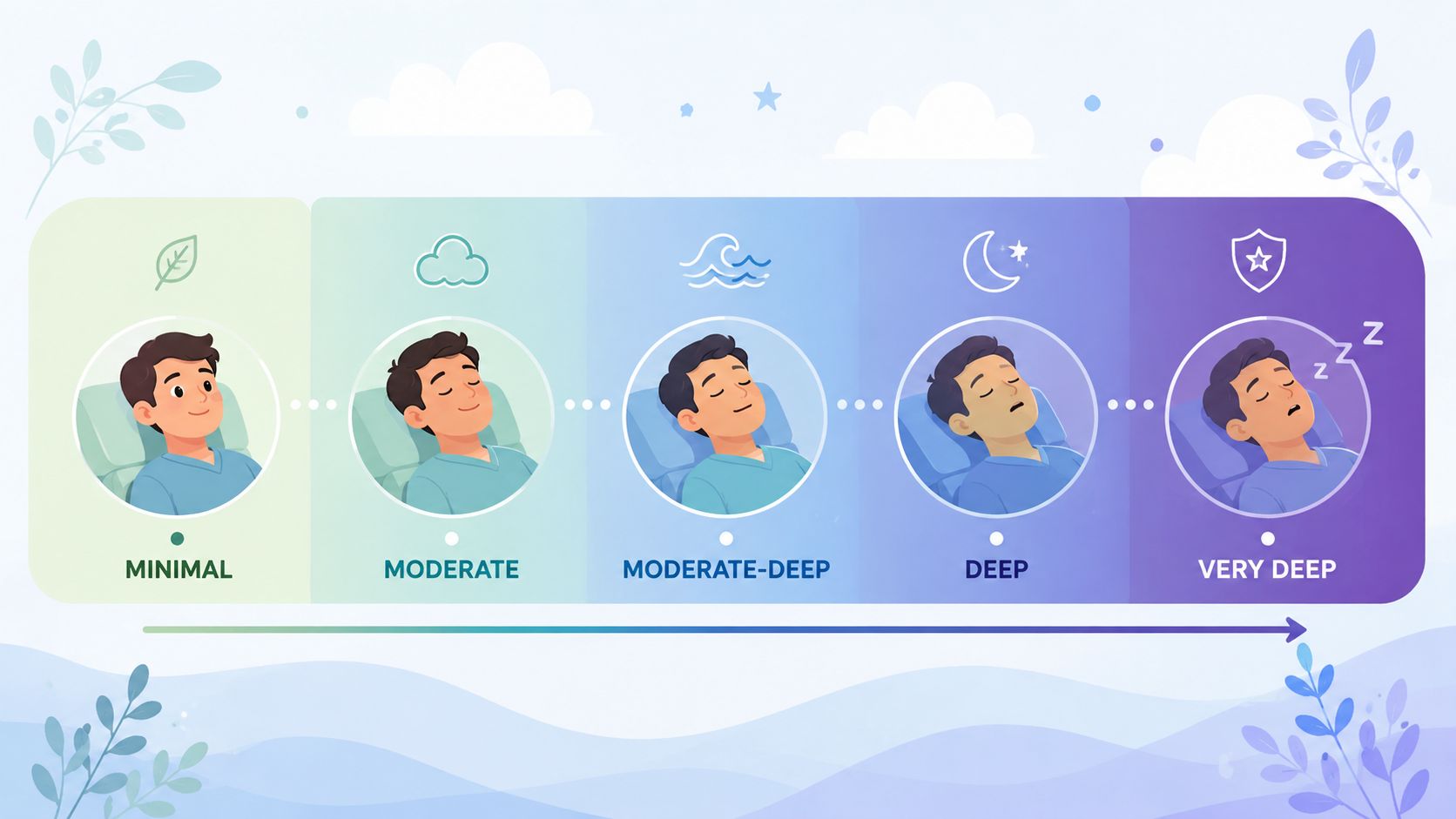
Most patient confusion starts here. People often ask, “Will I be asleep?” In many cases, the answer is no. With several common sedation options, you're still awake enough to respond, but you feel far more relaxed and less focused on the procedure.
The Basic Levels Patients Usually Hear About
A simple way to understand the spectrum is this:
- Minimal sedation helps you relax while staying awake and aware.
- Moderate sedation creates a deeper sense of calm and may make the appointment feel easier to get through.
- Deep sedation or general anesthesia goes further and is usually reserved for specific needs, longer procedures, or more medically appropriate settings.
Sedation dentistry is generally discussed in four main types: nitrous oxide, oral conscious sedation, IV sedation, and general anesthesia, as outlined in this overview of common dental sedation types. That same overview notes that nitrous oxide usually takes effect in 3 to 5 minutes, oral conscious sedation is commonly taken about 1 hour before the appointment, and recovery from nitrous oxide is often 15 to 30 minutes, while oral and IV sedation may require about 24 hours before normal driving is advised.
Why Dentists Don't Use a One Size Fits All Approach
The goal usually isn't to choose the strongest option. It's to choose the lightest level that still helps you feel comfortable.
A short visit for a nervous patient may call for something very different than a long implant procedure. The right choice can also depend on your medical history, how easily you get numb, whether you have a strong gag reflex, and how anxious you feel before the appointment even starts.
Practical rule: The best sedation plan matches both the procedure and the person, not just the treatment name.
That's why the different types of sedation dentistry matter. They aren't competing options. They're different tools for different situations.
A Closer Look at Your Sedation Options
Knowing the names of the options is helpful. Knowing what they feel like is what usually makes the topic less intimidating.
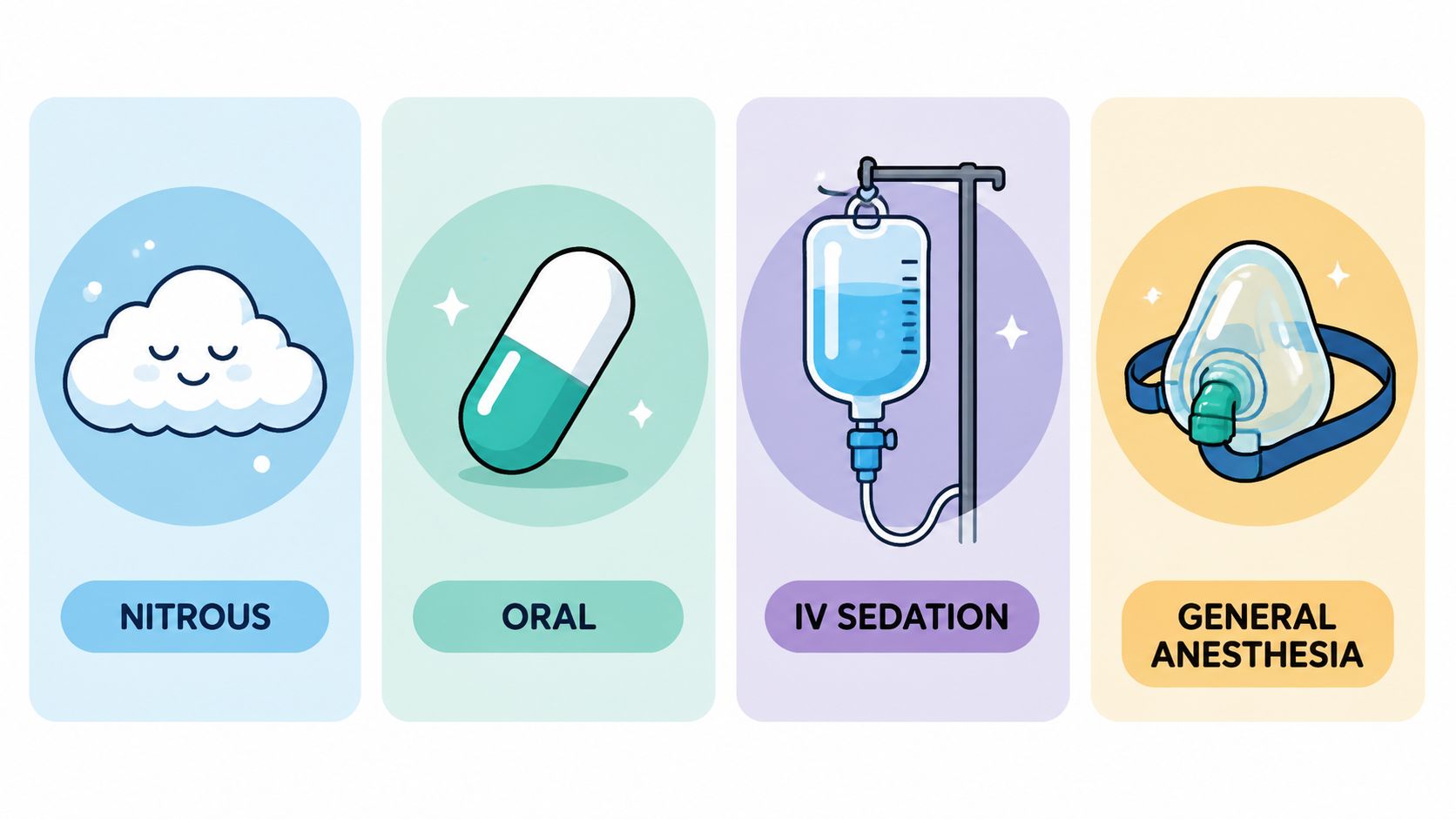
Nitrous Oxide for Light, Flexible Relaxation
Nitrous oxide is often called laughing gas, though many patients don't laugh. What they usually notice is a lighter, calmer feeling. Some describe it as feeling floaty or pleasantly detached from the usual stress of a dental appointment.
It's breathed in through a small mask, and one of its biggest advantages is flexibility. According to this clinical review of nitrous oxide sedation, nitrous oxide is titratable in real time, meaning the level can be adjusted during treatment. The same review notes that it's typically started with 100% oxygen for 2 to 5 minutes, then increased gradually, with a common operational concentration of 30% to 40% and a maximum delivery limit of 70% on many machines. After treatment, 100% oxygen for 5 minutes is recommended.
That real-time adjustment is a big reason many patients like it. If your anxiety rises and falls during a visit, nitrous oxide can be matched to that moment more easily than a pill can.
Nitrous oxide is often a good fit for:
- Mild to moderate anxiety during cleanings, fillings, or shorter visits
- Patients who want quick recovery and less downtime afterward
- People who want to stay awake and able to respond normally during care
Oral Conscious Sedation for Deeper Calm
Oral conscious sedation is usually taken as a pill before the appointment. Many patients prefer it because it doesn't involve a mask for the whole visit and doesn't require an IV to get started.
This option often creates a stronger sense of relaxation than nitrous oxide alone. You're typically still conscious, but you may feel drowsy, less alert to time, and less bothered by what's happening around you. Some people remember the appointment clearly. Others remember only parts of it.
Oral conscious sedation can be a good choice for people who:
- Feel significant nervousness before arriving and want help getting calm before treatment begins
- Need a longer appointment but don't necessarily need the tighter control of IV sedation
- Prefer a simple start without inhaled gas or an IV line
The tradeoff is predictability. A pill has to be absorbed through your body, so its timing and depth can vary more from person to person than IV medication. Recovery is also slower, so patients generally need someone else to drive them home and should plan for a restful day afterward.
Some patients choose oral sedation because they want the appointment to feel less vivid from the start, not just once treatment begins.
IV Sedation for More Complex Treatment
IV sedation is often selected when a patient needs a deeper level of calm or when the dental work itself is longer and more involved. Medication is given through a small IV, which allows the sedation level to be adjusted promptly during the procedure.
That control is the main difference patients should understand. IV sedation generally gives the dental team more precise control over onset and depth than oral medication does. It's commonly considered especially useful for complex treatment, severe anxiety, or visits where comfort needs may change over time.
Patients often ask what IV sedation feels like. Many say they feel very relaxed and much less aware of the details of the appointment. They're not necessarily fully asleep, but the experience often feels shorter and easier to tolerate.
IV sedation may be considered for:
- Long restorative visits
- Dental implant treatment
- Strong dental fear
- Patients who struggle with staying comfortable in the chair for extended care
Because recovery takes longer, you'll need a ride home and should avoid driving until it's appropriate to resume normal activity based on your instructions.
What About General Anesthesia
General anesthesia is different from the options above because it makes the patient fully unconscious. It's generally reserved for specific cases, such as especially complex or lengthy procedures, or situations where that level of care is the most appropriate choice.
Most patients exploring everyday comfort options for dental visits are really deciding among nitrous oxide, oral conscious sedation, and IV sedation. General anesthesia sits in a separate category because it involves a deeper state and different planning.
For some people, knowing that not every sedation choice means being “put under” can be a major relief.
Comparing Your Sedation Choices at a Glance
If the details start to blur together, a side by side view can help. This kind of comparison makes it easier to see how the types of sedation dentistry differ in everyday terms.
Sedation Dentistry Options Compared
| Feature | Nitrous Oxide ('Laughing Gas') | Oral Conscious Sedation | IV Sedation |
|---|---|---|---|
| Level of sedation | Lighter relaxation | Deeper calming effect | More controlled, deeper conscious sedation |
| How it works | Inhaled through a mask | Taken by mouth before the visit | Given through an IV |
| Best for | Shorter visits, mild anxiety, patients who want quick recovery | Moderate anxiety, patients who want to relax before arriving, longer visits | Complex procedures, severe anxiety, longer treatment where adjustment may be needed |
| During treatment | Usually easy to adjust while you remain awake and responsive | Less flexible once taken | Can be adjusted promptly during the procedure |
| Recovery | Usually faster recovery | Slower recovery, ride home needed | Slower recovery, ride home needed |
| Driving afterward | Often more convenient after recovery is complete | Don't plan to drive yourself home | Don't plan to drive yourself home |
This table is a starting point, not a diagnosis. Two people having the same treatment may still need very different comfort plans based on their health history, anxiety level, and how they respond in the dental chair.
Is Sedation Dentistry the Right Choice for You
You may be sitting in the parking lot before a dental visit, fully aware that the procedure is manageable, but your shoulders are tight and your heart is racing anyway. That is often the key question behind sedation. It is not whether a treatment sounds serious on paper. It is whether your comfort level, health history, and the kind of visit you are having make extra help a good fit.
Sedation can make sense for many adults, not only for people with severe fear. A shorter cosmetic appointment, a longer implant visit, or even a series of Invisalign check-ins can feel very different from patient to patient. Two people may need the same dental work and still need different comfort plans.
A helpful way to look at it is to match the sedation level to both the procedure and your reaction to dental care. Lighter relaxation may be enough if you mainly feel nervous during cleanings or simple visits. A stronger calming option may be more appropriate if you tend to avoid treatment, become tense in the chair, or expect a longer appointment that asks more of you physically and emotionally.
Signs Sedation May Be Worth Discussing
Sedation may be a good topic to bring up if any of these sound familiar:
- You put off treatment because anxiety starts days before the appointment
- You feel overwhelmed by longer procedures such as implant placement or multi-step restorative work
- You have a strong gag reflex that makes it hard to stay comfortable
- You had a difficult past experience and want a calmer restart
- You get very tense during routine care even when the procedure itself is straightforward
- You want help staying relaxed through cosmetic or orthodontic visits that feel simple to others but stressful to you
How Safety Decisions Are Made
The safest sedation choice starts before any treatment begins. It starts with questions.
A dentist should review your medical history, current medications, past experiences with sedation, and the details of the procedure being planned. That matters because the right choice is not always the deepest option. It is the option that fits you safely and supports the work being done, whether that is a brief cosmetic visit or a more involved implant appointment.
At Bristol Dental & Orthodontics, patients can talk through sedation in the context of their actual treatment plan, including family care, cosmetic dentistry, orthodontics, or restorative work. The goal is to choose a level of support that helps you stay calm, comfortable, and medically appropriate for the visit.
The right sedation plan should feel tailored, not automatic. Comfort matters, and safety comes first.
How Sedation Supports Your Dental Goals in Santa Ana
You may already know what you want from your dental care. Straighter teeth, a repaired smile, or a way to get through an urgent visit without feeling overwhelmed. The missing piece is often comfort.
Sedation can support those goals by matching the level of relaxation to the kind of appointment you are having. A shorter visit may call for light support. A longer or more involved procedure may call for a stronger option. The goal is not to give every patient the same experience. It is to make the visit feel manageable and safe for the person in the chair.
For Invisalign and Orthodontic Visits
A Santa Ana patient may feel excited about improving their smile with Invisalign, while still feeling tense about scans, attachments, or a series of follow-up visits. In that situation, lighter sedation can work like turning down background noise. You are still present and aware, but less focused on the parts of the visit that make you uneasy.
That can matter even during appointments that appear straightforward on paper. If anxiety builds before each visit, having a comfort plan may make it easier to stay on track with treatment.
For Dental Implants and Restorative Care
Implants are a good example of why the right level matters. A patient may feel calm during a consultation, then feel much more nervous once the appointment involves surgery, numbness, and more time in the chair. Oral sedation or IV sedation may be discussed for those longer visits because they can help the body relax for a sustained period.
The same idea applies to restorative care. If several treatments are being completed in one appointment, deeper relaxation can make the experience feel more like settling in for one extended visit than bracing for every minute of it.
For Cosmetic and Emergency Dentistry
Cosmetic treatment often sits in an interesting middle ground. Patients seeking veneers, bonding, or other smile improvements are usually looking forward to the result, but they may still dislike the sounds, the sensations, or the feeling of being watched closely. In those cases, mild to moderate sedation may help without adding more than the visit requires.
Emergency care is different. There is often pain, stress, and very little time to prepare mentally. If a patient from Santa Ana arrives with a broken tooth, swelling, or sudden discomfort, the right comfort approach can help lower panic and make it easier to receive care.
Sedation options continue to expand as dental teams refine how they support different kinds of patients and procedures. What matters most for you is the practical question. What are you having done, and what level of help will let you get through it comfortably and safely?
Frequently Asked Questions About Sedation Dentistry
Will I be completely asleep
Usually, no. Many common forms of sedation dentistry are designed to help you stay relaxed while still remaining responsive. General anesthesia is the option associated with being fully unconscious, and that's usually reserved for specific situations.
Is sedation dentistry safe
It can be a safe option when it's chosen carefully, with proper screening and monitoring. The key is a thorough review of your health history, medications, and treatment needs before anything is recommended.
Will I remember the procedure
It depends on the type of sedation and how your body responds. Some patients remember most of the visit. Others remember only parts of it. That's one reason a consultation matters so much. Your comfort goals should be part of the decision.
Can I drive myself home afterward
That depends on the sedation used. Nitrous oxide often involves a quicker recovery, while oral and IV sedation generally mean you should arrange a ride and plan for the rest of the day accordingly.
How do I choose the right option for me
Focus on the underlying issue, not the sedation name. Are you worried about anxiety before you arrive, a long procedure, gagging, past trauma, or wanting to complete more work in fewer visits? Once those concerns are clear, the right option becomes easier to identify with your dentist.
If you're unsure which type sounds right, that's normal. Most patients don't need to decide on their own. They need a clear conversation with a dentist who understands both the procedure and the person.
If dental anxiety has been getting in the way of treatment, a consultation can help you understand your options without pressure. Bristol Dental and Orthodontics serves Santa Ana and nearby Orange County communities with patient-focused care, including support for implants, Invisalign, cosmetic dentistry, emergency visits, and sedation options. Schedule a visit to talk with Dr. Finley about what level of comfort may be appropriate for your needs.