

You may be reading this because something has changed in a very personal way. Maybe you've lost several teeth over time. Maybe you're tired of hiding your smile in family photos. Maybe eating has become more work than it should be. Those concerns are real, and they affect a lot more than appearance.
If you searched for Dentures San Jose CA, you're probably trying to sort through a lot of options quickly. This guide is written from the chairside perspective I use with patients every day. I want things to feel understandable, not overwhelming. Although Bristol Dental & Orthodontics serves Santa Ana and nearby Orange County communities like Costa Mesa, Tustin, Irvine, and Garden Grove, the questions people ask about dentures are surprisingly similar across California.
You're also far from alone. Over 100 million Americans are missing at least one tooth, and about 90% of people with complete tooth loss use some form of dentures, according to this denture statistics overview. That matters because it reminds people that dentures aren't a strange or outdated last resort. They're still a common, practical way to restore chewing, speech, and facial support.
Table of Contents
- Considering Your Next Steps After Tooth Loss
- Understanding Your Foundational Denture Options
- A Closer Look at Implant Supported Dentures
- Your Treatment Journey From Consultation to Final Fit
- Dentures Compared to Other Tooth Replacement Options
- Understanding the Investment in Your New Smile
- Daily Care and Long-Term Maintenance for Your Dentures
Considering Your Next Steps After Tooth Loss
You finish dinner with family and catch yourself chewing on one side, covering your mouth when you laugh, or choosing softer foods without even thinking about it. For many people, tooth loss starts affecting daily life before they have words for it. Then the bigger questions show up. Will I look like myself? Will dentures feel obvious? How much will this change my routine?
Those concerns are normal. They are also a good place to begin.
In the consultation chair, I usually tell patients they do not need to arrive with the answer. You only need a starting point. We can sort through the rest together. Some people want the simplest removable option. Others care most about a secure fit when they talk and eat. Some need to replace every tooth in one arch. Others are trying to restore a few missing areas and keep the teeth that are still healthy.
Missing teeth affect more than your smile. They can change the way food breaks down when you chew, how certain words sound, and how well your lips and cheeks are supported.
Dentures have been used for a very long time, and that history is a reminder that they are not a strange or outdated last resort. The materials, fit, and appearance have improved over time, but the goal is still very human. Help you eat more comfortably, speak with confidence, and feel more like yourself again.
What patients often worry about first
The first questions are usually practical and personal at the same time:
- Natural appearance: Will the teeth suit my face, or will they look too bright, bulky, or artificial?
- Comfort: Will the denture rub sore spots or move when I am eating and talking?
- Lifestyle: Will I need adhesive, frequent adjustments, or changes to the foods I enjoy?
- Confidence: Will I feel relaxed in conversations, at work, and around family?
Those questions help us choose wisely. They tell us what success looks like in your day-to-day life, not just on a model of your mouth.
A denture plan works a lot like choosing a pair of shoes for a long trip. Looks matter, but fit matters more. The right option has to match how much support your mouth can provide, how stable you want the teeth to feel, and how you want this solution to fit into your routine in San Jose.
A helpful way to think about your next step
A better question than "Do I need dentures?" is "What kind of tooth replacement fits my mouth, my health, and my life right now?" That small change makes the decision feel less overwhelming. Instead of treating dentures as one single choice, you begin to see a set of options with different strengths.
If you want to talk through those choices, Bristol Dental & Orthodontics can be part of that conversation. The goal of the first visit is not to pressure you into a decision. It is to understand what is bothering you, what you want to get back, and which option gives you the best chance of feeling comfortable and confident again.
Understanding Your Foundational Denture Options
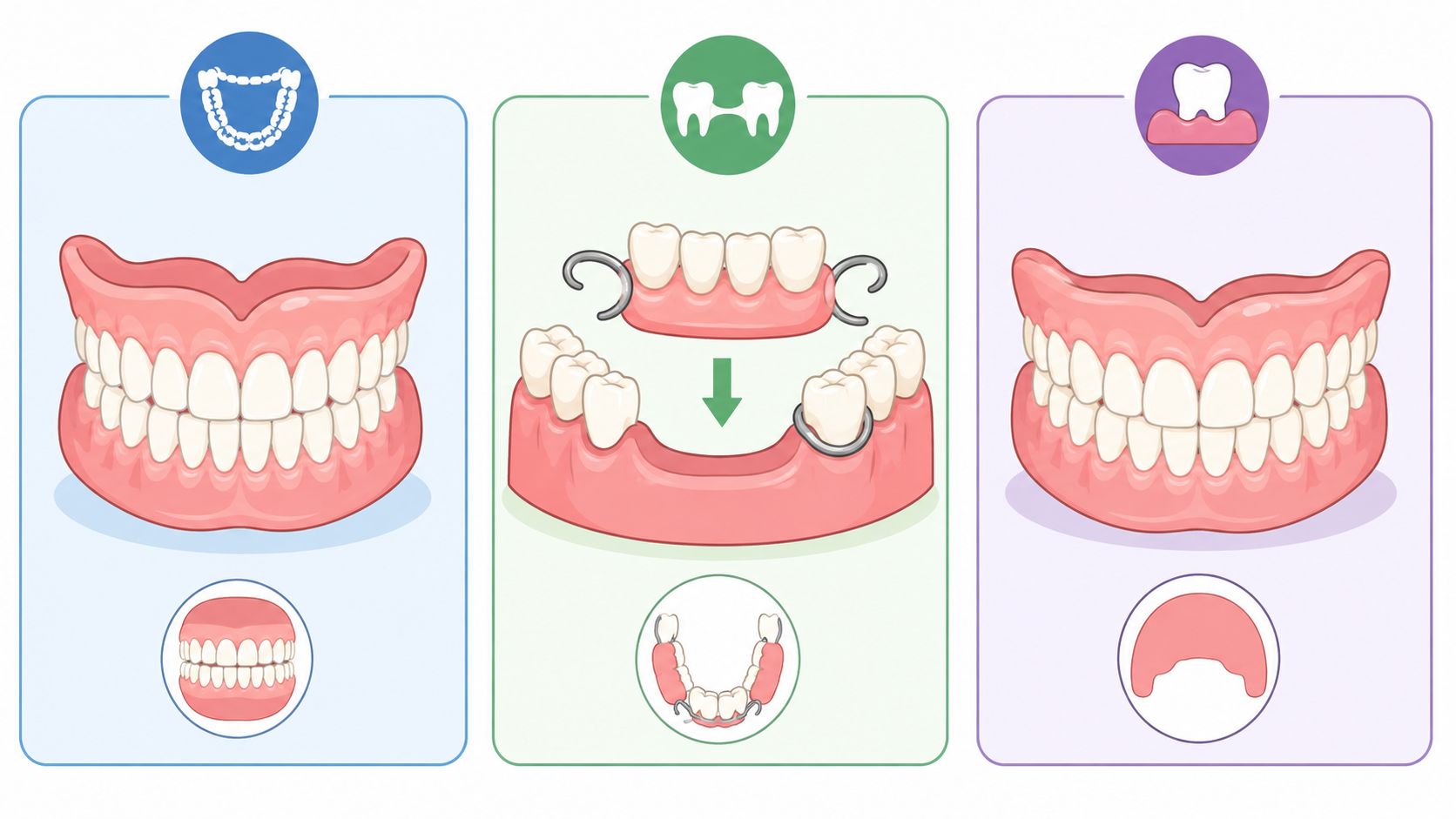
Most denture choices make more sense when you stop thinking of them as one product. They're really a category of tooth replacement solutions. A better comparison is replacing windows in a house. If one window is damaged, you don't rebuild the whole wall. If every front window is gone, you need a more complete replacement plan.
Why dentures are still a standard treatment
Dentures remain relevant because they solve a common problem in a direct way. They replace missing teeth and help restore bite function, speech support, and facial structure without requiring every patient to pursue surgery.
That doesn't mean every denture is the same. The best choice depends on how many teeth are missing, where they're missing, and how much support is available from the gums, jaw, and any remaining teeth.
Practical rule: The fewer assumptions you make from online photos, the better. Two people can both say “I need dentures” and need very different treatment plans.
The three basic categories most patients hear about
Complete dentures replace all teeth in the upper arch, lower arch, or both. Patients usually choose this option when no natural teeth remain in that arch, or when the remaining teeth can't be predictably saved. You can think of a full denture as a complete rebuild.
Partial dentures replace several missing teeth while working around teeth that still remain. This is the puzzle-piece version. It fills in spaces rather than replacing everything. A partial can help restore chewing on one side, improve appearance in the smile zone, or keep nearby teeth from drifting into empty spaces.
Conventional dentures usually refers to the traditional removable style made after the mouth is ready for the final prosthesis. Many are fabricated from heat-cured acrylic resin. They rest on the gums and underlying tissue and are shaped to fit the individual mouth as closely as possible.
A few simple examples make this clearer:
- One arch fully missing: A complete denture may be the most straightforward removable option.
- Several teeth missing with healthy teeth left: A partial denture may make more sense.
- Need for a removable prosthesis without implant surgery: A conventional denture is often the starting point.
Patients also ask whether dentures can look natural. In many cases, yes, when tooth size, arrangement, gum contour, and lip support are planned carefully. The “natural” result usually comes from many small design decisions, not one dramatic feature.
A Closer Look at Implant Supported Dentures
A common moment in the consultation room goes like this. A patient says, “My upper denture is manageable, but the lower one never feels fully secure.” If that sounds familiar, you are not imagining it. Lower dentures often have a harder job.
Why lower dentures often feel harder to manage
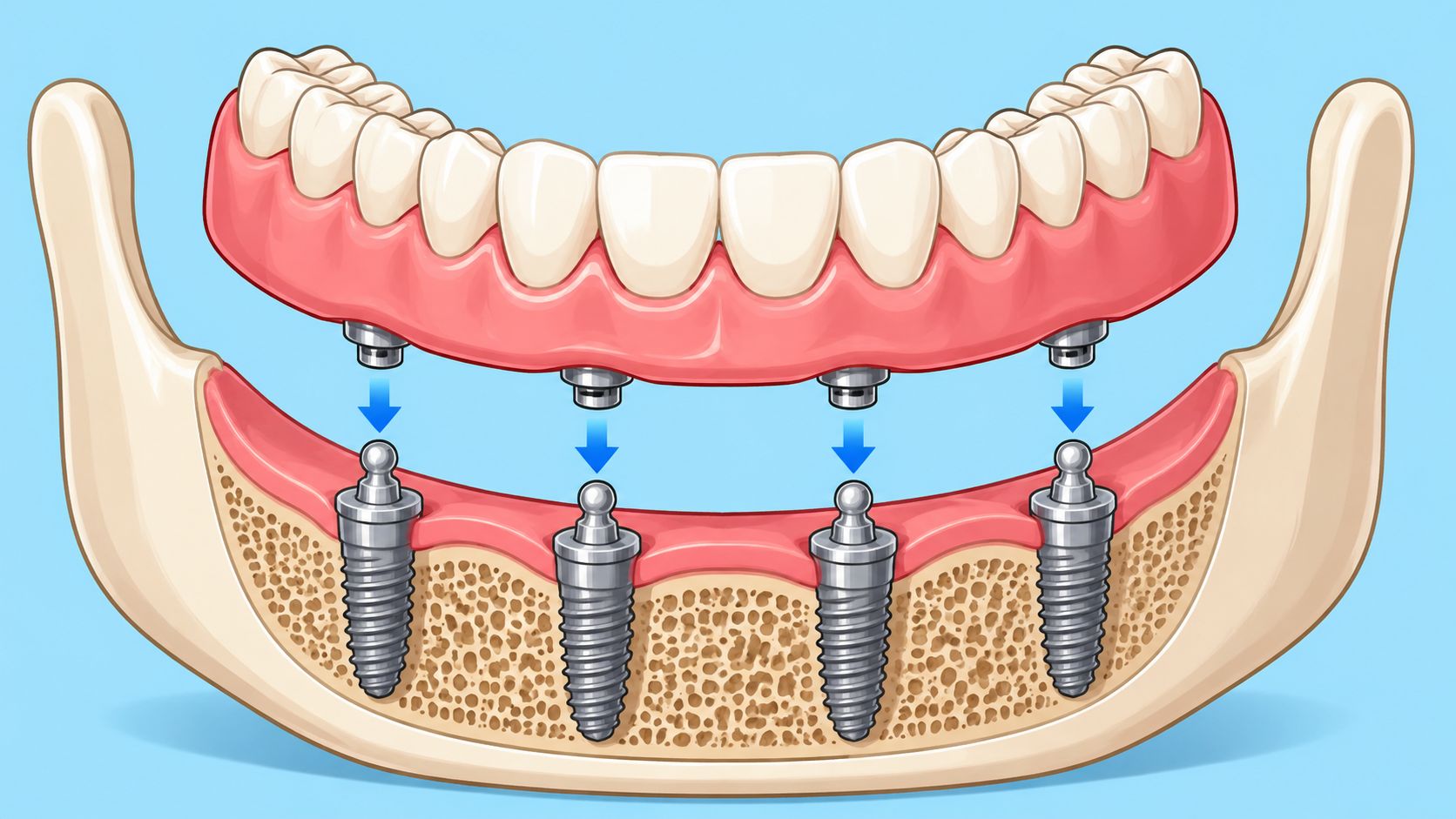
An upper denture usually gets some natural help from the shape of the roof of the mouth. A lower denture has much less surface area to rest on, and it has to share space with the tongue, cheeks, and constant movement during speech and eating.
Over time, the jawbone in the lower arch can shrink, which gives the denture less to hold onto. A regular lower denture rests mainly on gum tissue, and gum tissue compresses and shifts. Implants act like new roots anchored in the bone, creating a steadier base that does not depend only on the gums.
That difference shows up in real life, not just in diagrams.
What implant support can change day to day
From the outside, a traditional denture and an implant-supported denture may look very similar. The difference is in how they feel during normal moments, like ordering lunch with friends, reading out loud, or biting into something that used to make you nervous.
Patients often ask me less about the mechanics and more about daily life. Will I still need adhesive? Will it click when I talk? Will I feel more relaxed eating in public? Those are the right questions, because comfort and confidence are usually what people are really trying to get back.
Implant-supported dentures may help with:
- A steadier fit while eating: Food can feel easier to manage when the denture is less likely to slide.
- More confidence during conversation: Many patients feel less preoccupied with whether the denture is shifting.
- Less dependence on soft tissue alone: Support comes from implants as well as the denture base, which can improve day-to-day stability.
For some patients, the biggest benefit is emotional. They stop planning every meal around what feels “safe.” They stop wondering whether other people can tell they are wearing dentures. That sense of relief matters.
Is this the right option for everyone?
Not always. Implant support solves a specific type of problem, usually movement and lack of security, especially on the lower arch. If your main concern is cost, healing time, or avoiding surgery, another option may fit your life better.
The decision depends on your mouth, your health history, and your goals. Some patients want a removable denture that snaps into place for added stability. Others may be better candidates for a different type of tooth replacement.
A helpful question is, “What problem am I trying to solve?” If the answer is, “I want my denture to feel more secure so I can eat and speak with less worry,” implant support is often worth a serious discussion.
Patients also ask about getting teeth the same day as extractions. In some cases, that is possible as part of a transition plan. The important point is that same-day teeth are usually an early step, not the final version. Healing and fine-tuning still matter.
If slipping, sore spots, or lack of confidence are wearing on you, let's talk through whether implant-supported dentures make sense for your life, not just your X-rays. Dr. Finley can help you compare the tradeoffs in a personalized consultation.
Your Treatment Journey From Consultation to Final Fit
Clarity about the sequence often brings comfort. Denture treatment isn't one mystery appointment. It's a series of smaller decisions and fittings.
The first conversation
A consultation usually starts with your goals, not with a sales pitch. You might say you want to chew better, replace failing teeth, or stop feeling self-conscious when you smile. Your dentist examines your mouth, reviews what teeth remain, looks at the condition of the gums, and talks through whether a removable or implant-based approach makes more sense.
If extractions or other preparatory care are needed, that gets discussed early. This is also where appearance comes into the conversation. Some patients want a very subtle look that resembles the smile they've had for years. Others want a fresher, fuller look.
The fitting process in plain language
After the planning stage, the next steps usually include records and measurements. That may involve impressions or digital records of the mouth, bite relationship, and the amount of lip and cheek support needed.
Then comes a phase many patients appreciate because it makes things feel real:
- A preview stage: A wax or trial setup can help evaluate tooth position, smile line, and bite before the final denture is completed.
- Adjustments before final delivery: Small changes at this point can improve comfort and appearance.
- Final fit appointment: The finished denture is inserted, and pressure points, bite balance, and speech issues are checked.
No denture should be treated like a “set it and forget it” appliance. Even a well-made denture often needs follow-up adjustments as your mouth adapts. That's normal, not a sign that something has gone wrong.
Sore spots, small speech changes, and a learning curve with eating are common early on. What matters is having them evaluated and adjusted instead of trying to push through discomfort at home.
Patients are sometimes embarrassed to mention that a denture feels bulky or unfamiliar at first. Please don't be. That feedback helps your dentist refine the fit. The process works best when it's collaborative.
Dentures Compared to Other Tooth Replacement Options
Dentures are one path, not the only path. If you still have some healthy teeth, or if you're considering a fixed replacement, it helps to compare your options side by side.
Comparing Tooth Replacement Options
| Feature | Partial Dentures | Dental Bridge | Dental Implants |
|---|---|---|---|
| Best suited for | Several missing teeth with natural teeth remaining | One or more missing teeth in a span with supporting teeth nearby | Replacing one or more teeth, or supporting larger restorations |
| How it stays in place | Removable appliance that uses the existing mouth anatomy and may engage remaining teeth | Fixed restoration attached to neighboring teeth | Anchored in the jawbone |
| Removal | Removed for cleaning | Not removed by the patient | Depends on design, many are not removed by the patient |
| Effect on nearby teeth | Uses remaining teeth for support in some designs | Usually involves reshaping neighboring teeth | Typically does not require preparing adjacent teeth in the same way |
| Maintenance | Daily removal and cleaning | Cleaned in the mouth with special attention under the bridge area | Regular home care and professional monitoring |
| Feel during chewing | Can work well, though movement may occur in some cases | Often feels more fixed than a removable option | Often provides the most tooth-like stability when appropriate |
| Treatment complexity | Often less invasive | Moderate, depending on the case | Surgical component and more planning involved |
How patients usually decide
The right option often comes down to what tradeoff feels acceptable to you.
A partial denture may appeal to someone who wants a removable solution and has remaining teeth that can help support it. A bridge may fit a patient who wants something fixed and has healthy neighboring teeth suitable for that role. Implants may be attractive to people who want a replacement that feels more anchored and are comfortable with the treatment process involved.
The most important thing is not to choose based only on what sounds “advanced.” A simpler option can be the right one when it matches your oral condition and goals. A more involved option can be worth it when stability is the main issue.
A consultation helps sort out questions like these:
- Do you want removable or fixed?
- Are nearby teeth healthy enough to be part of the plan?
- Is your main concern appearance, chewing strength, or long-term stability?
- Would surgery feel reasonable to you, or would you prefer a non-surgical path?
There isn't one universal winner. There's the option that fits your mouth and your life best.
Understanding the Investment in Your New Smile
A denture conversation often becomes a money conversation within the first few minutes. That makes sense. If you are already adjusting to tooth loss, you also want to know what this choice will mean for your budget, your schedule, and your daily life.
In a high cost-of-living area like San Jose, denture costs can vary a lot. A basic removable denture usually falls into a very different range than a full implant-supported plan. The reason is simple. You are not paying for one single item on a shelf. You are paying for a sequence of decisions, appointments, materials, and adjustments built around your mouth.
A helpful way to look at it is this: the denture itself is only one part of the investment. The full cost may also reflect the exam, imaging, impressions, any needed tooth removal, healing time, fitting appointments, and follow-up refinements. Two patients can both ask for "dentures" and need very different levels of care.
What usually changes the total cost
Several parts of the plan can affect the final number:
- The type of denture: A partial, a full removable denture, and an implant-supported denture involve different materials and different levels of treatment.
- Work needed before the denture is made: Some patients need extractions or time for the gums and bone to heal before moving to the next step.
- How the denture is designed: The teeth, base materials, and attachment method can all influence comfort, appearance, and price.
- How much fine-tuning is expected: Some cases need more adjustment visits to improve fit, speech, and bite.
Here is where many people feel unsure. They see a broad online estimate and wonder whether it applies to them. Often, it does not. Someone replacing several teeth with a partial denture is facing a different investment than someone rebuilding a full lower arch and wants more stability with implants.
Why a written treatment plan helps
A written treatment plan works like a roadmap. It shows where you are starting, which steps come first, and which choices may change the total cost. That matters because cost anxiety often comes from uncertainty, not just from the number itself.
I encourage patients to ask direct questions such as:
- What is included in this fee?
- Are extractions, temporary dentures, or relines separate costs?
- What might change after the exam or healing period?
- How many adjustment visits are usually part of the process?
- Are there different ways to reach my goal at different price points?
Those questions are practical, but they are also personal. Many patients are really asking, "Can I make this work in real life?" That includes time off work, comfort during the transition, and whether the result will feel worth the investment.
A good consultation should leave you with more clarity, not more confusion. If you want, we can talk through your options together and build a plan that fits your mouth, your priorities, and your budget.
Daily Care and Long-Term Maintenance for Your Dentures
The first week with dentures often teaches people something no brochure explains well. A denture can look good at delivery and still feel very different at breakfast, during a conversation, or at the end of a long day. That does not always mean something is wrong. It often means your mouth and your routine are still adjusting.
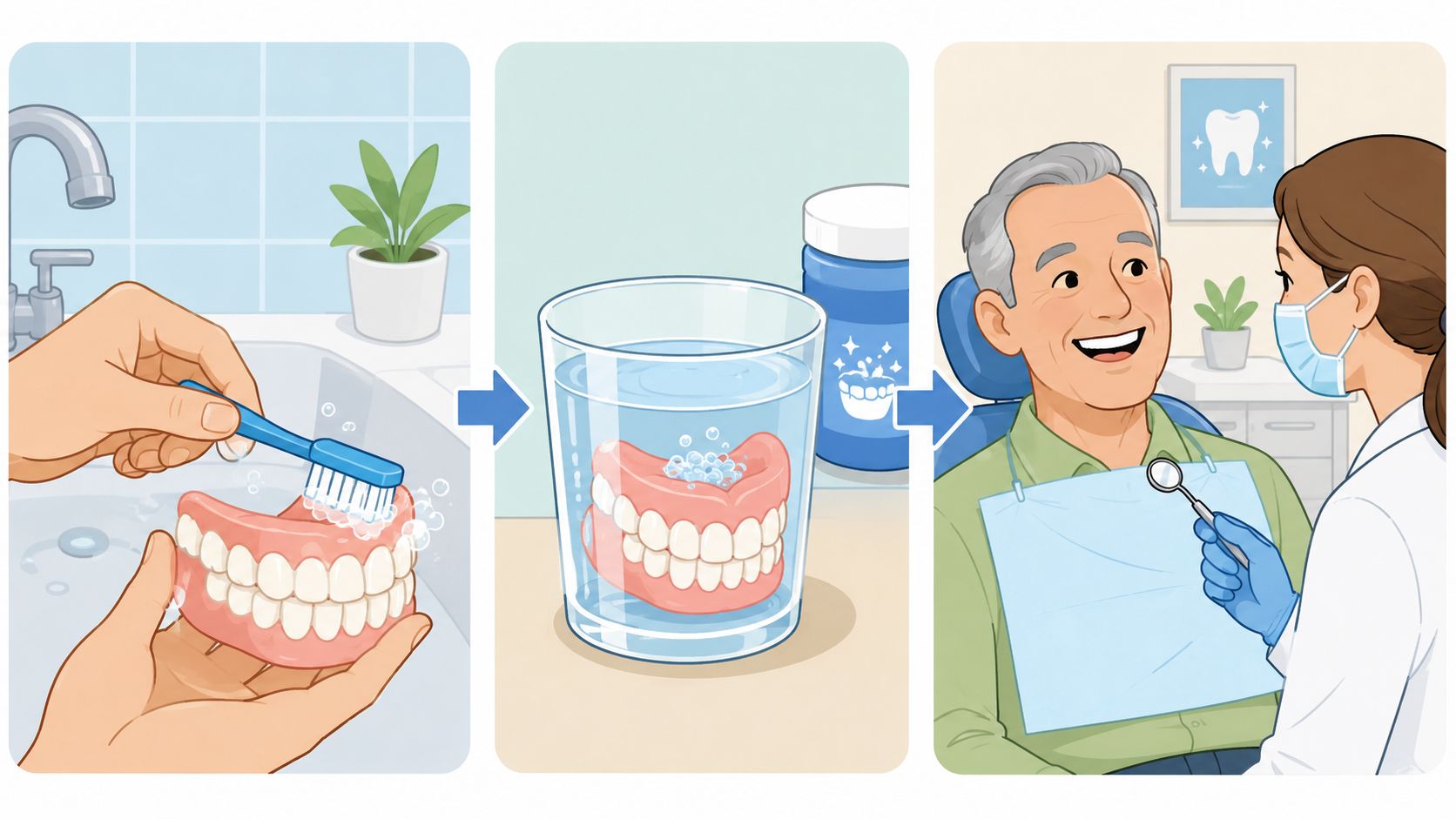
Daily care helps protect both the denture and the tissues underneath it. I tell patients to treat dentures the way they would treat a good pair of glasses. Clean them gently, handle them carefully, and do not expose them to heat that can change their shape. Even a small change in shape can create sore spots, looseness, or a bite that suddenly feels off.
The home care habits that matter most
A good routine is simple:
- Brush gently every day: Use a soft brush and a cleanser made for dentures or the cleaning method your dentist recommends. Regular toothpaste can be too abrasive for some denture materials.
- Use cool or lukewarm water: Hot water can warp the acrylic and affect the fit.
- Soak as directed: Some dentures should stay moist when they are out of the mouth. Follow the instructions given for your specific appliance.
- Clean your mouth too: Gums, tongue, palate, and any remaining natural teeth need daily care.
- Handle dentures over a folded towel or sink of water: If they slip, there is less chance of cracking them.
Small habits prevent bigger problems.
Patients are sometimes surprised that a “clean” denture can still be causing irritation. The reason is simple. Cleanliness and fit are related, but they are not the same. A denture may be spotless and still rub if the shape of your gums has changed over time.
When a denture needs professional attention
Your mouth is not static. Bone and gum tissue can gradually change after tooth loss, and dentures may need adjustments to keep up. That is why follow-up care matters long after the first fitting.
Please call if you notice:
- Sore spots that keep returning
- Clicking or movement while eating or speaking
- Speech changes that were not there before
- Cracks, chips, or worn chewing surfaces
- A denture that feels looser than it used to
Trying to “tough it out” usually makes daily life harder. A small pressure point can turn into an ulcer. A minor crack can become a full break. A loose fit can make eating in public feel stressful, which is often the part patients remember most.
Long-term maintenance is part of denture success
Over time, some dentures need relines, repairs, or replacement. That is normal wear, not a personal failure. Dentures sit on living tissue, and living tissue changes. If you have implant-supported dentures, the denture and the implants both need regular monitoring so we can check attachment parts, tissue health, and how the bite is wearing.
The goal is not just to keep the denture usable. The goal is to keep it comfortable, stable, and natural-looking in daily life, whether you are sharing a meal in Orange County, speaking at work, or laughing without thinking about your teeth.
If your dentures have started to feel different, or if you want a clearer plan for caring for a new set, Dr. Finley would be glad to talk it through with you in a personalized visit.