
Individuals commonly have four wisdom teeth, and they usually show up between ages 17 and 25. But it's also common to have fewer, none, or even extra wisdom teeth, and the only reliable way to know your actual count is with a dental X-ray.
If you're a parent in Santa Ana scheduling a teen's checkup, or you're a college student home from Irvine or Tustin wondering why the back of your mouth feels different, this question comes up all the time. Families often expect a simple answer. Then they find out wisdom teeth don't always follow the “everyone gets four” rule.
That's why this topic matters. The number itself is only part of the story. What really affects long-term oral health is where those teeth are, whether they have room to come in, and whether they're likely to stay quiet or cause trouble later.
Table of Contents
- The Classic Answer and Its Common Exceptions
- Why the Number of Wisdom Teeth Varies
- How Dr. Finley Confirms Your Wisdom Tooth Count
- Potential Problems Wisdom Teeth Can Cause
- Deciding Between Removal and Monitoring
- Frequently Asked Questions About Wisdom Teeth
- Can you tell how many wisdom teeth you have without an X-ray
- Is it normal to have no wisdom teeth at all
- Do wisdom teeth always hurt when they come in
- Can wisdom teeth affect orthodontic planning
- What if I have jaw pain and I'm not sure it's my wisdom teeth
- What is recovery from wisdom tooth removal like
- When should a family schedule an evaluation
The Classic Answer and Its Common Exceptions
For most adults, the classic answer to “How many wisdom teeth do you have?” is four. These are your third molars, one in each back corner of the mouth. They're also the last set of adult teeth to erupt, so they often become a milestone in the late teen and young adult years.
According to Cleveland Clinic's overview of wisdom teeth, most adults have four wisdom teeth, about 8 out of 10 people have at least one that erupts, and these teeth typically appear between 17 and 25. That timing helps explain why families are often first told about wisdom teeth during high school or early college checkups.
Why people get confused
A lot of patients assume that if they can't see wisdom teeth, they don't have them. That isn't always true. Some wisdom teeth stay under the gums, some come in only partway, and some never form at all.
Think of wisdom teeth like the last cars expected to pull into a full parking lot. In some mouths, there are four cars and four spaces. In others, a few cars never arrive, or they arrive when the lot is already crowded.
Simple takeaway: Four is common, but it isn't a rule.
What counts as normal
Several real-life situations are still normal:
- Four wisdom teeth: This is the pattern many people expect.
- Fewer than four: Missing one or more can be completely normal.
- No wisdom teeth: Some people are born without any third molars.
- More than four: A smaller number of people develop extra wisdom teeth.
That variety is why a simple headcount based on what you can see in the mirror doesn't tell the whole story. For some patients in Orange County, the practical question isn't just how many wisdom teeth they have. It's whether those teeth are likely to fit comfortably and stay healthy.
Why the Number of Wisdom Teeth Varies
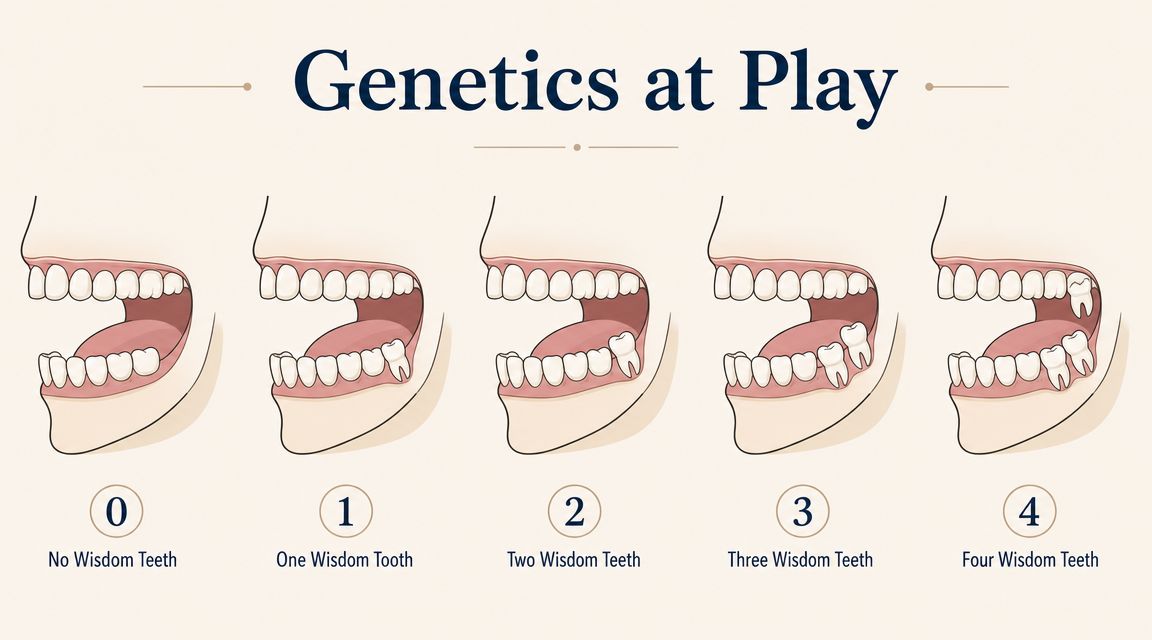
The number of wisdom teeth you have is largely shaped by genetics. In other words, your body follows a dental blueprint, much like it does for hair texture, height, or eye color. Some people are born with fewer third molars, while a smaller number develop extra ones.
A dental review summarized by Oralux Dental on wisdom tooth variation reports that about 20% to 25% of people have fewer than four wisdom teeth, while a smaller number have extra supernumerary teeth. That's a helpful reminder that “normal” has a wider range than many families think.
What congenitally missing means
You might hear a dentist say a wisdom tooth is congenitally absent. That sounds technical, but it means the tooth never developed in the first place. It didn't get lost. It didn't hide. It just wasn't part of your original pattern.
This can reassure patients who worry something is wrong if they only have two or three wisdom teeth. In many cases, that's just how their mouth developed.
Why evolution also plays a role
Human jaws have changed over time. Our ancestors likely relied more on those back molars for chewing coarser foods, but modern jaws are often smaller. That helps explain why the old idea of “everyone gets four and they all fit” doesn't match what dentists see in real life.
Here's a useful way to look at it:
| Wisdom tooth pattern | What it usually means |
|---|---|
| Four present | Common, but space and position still matter |
| One or more missing | Often a normal inherited variation |
| None present | Also within the normal range for some people |
| Extra wisdom teeth | Less common, but possible |
Families often feel relieved when they learn that having fewer wisdom teeth isn't unusual. It's just one version of a normal dental pattern.
For patients in Santa Ana, Costa Mesa, and nearby communities, the important point is this: the “right” number is the number your mouth developed. From there, your dentist looks at function, space, and health rather than treating every patient as if they should match a textbook diagram.
How Dr. Finley Confirms Your Wisdom Tooth Count
A lot of families come in with the same question: “My teen only sees one wisdom tooth. Does that mean there's only one?” The honest answer is that the mirror gives only part of the story. Some wisdom teeth come in normally, some stay under the gums, and some never formed at all.
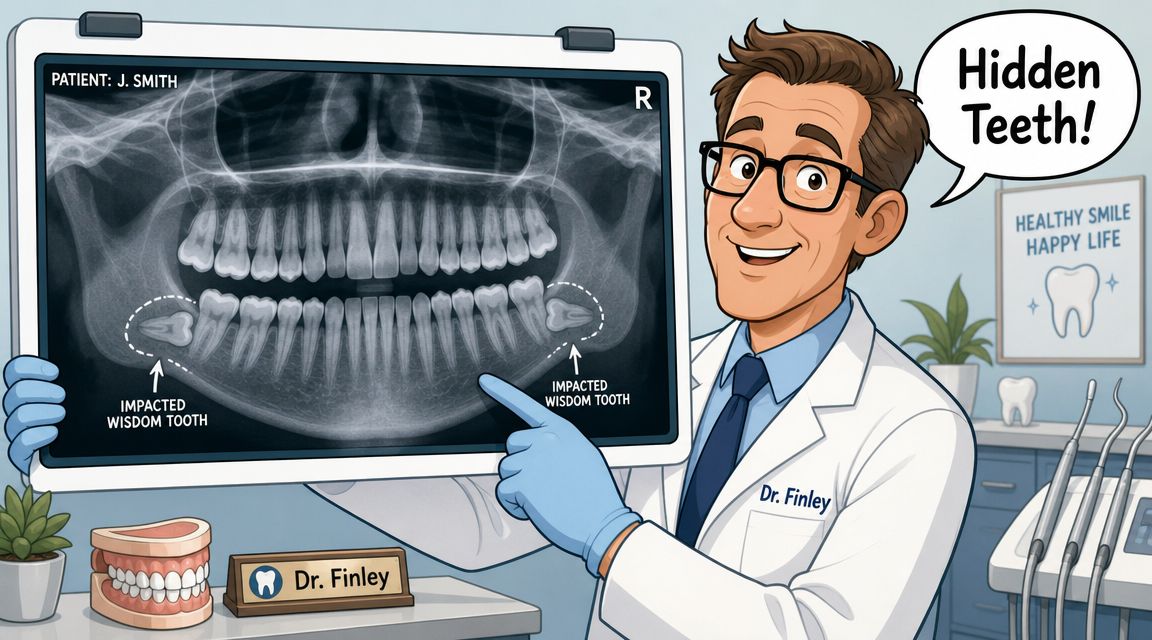
Dr. Finley confirms the count by combining what he sees during the exam with what appears on a panoramic X-ray. That wide-view image shows the full upper and lower jaws at once, which helps him check whether a third molar is present, missing from development, or sitting below the surface where you cannot see it yet.
What the visit usually involves
The appointment is usually simple and calm. Dr. Finley is not just counting teeth. He is also checking what that count could mean for long-term oral health.
A clinical exam
He looks at the back of the mouth, checks the gum tissue, and asks about pressure, soreness, swelling, or trouble keeping the area clean.A panoramic X-ray
This image works like a map of the jaws. It can show wisdom teeth that have not erupted, teeth growing at an angle, or spaces where a wisdom tooth never developed.A practical review of what the findings mean
A patient with four wisdom teeth may only need periodic monitoring. A patient with two may still need follow-up if one is pressing toward a nearby molar. A patient with none may avoid future wisdom tooth concerns, but that still gives useful information for orthodontic and preventive planning.
Why imaging changes the answer
Two patients can both assume they have two wisdom teeth and still have very different situations. One may have two. Another may have four, with two still hidden in the jawbone.
That is why Dr. Finley does not rely on guesswork. He uses imaging to answer two separate questions clearly: how many wisdom teeth are there, and what are they likely to do over time?
That second question matters. A tooth count can affect how we plan preventive care, whether orthodontic treatment needs closer follow-up, and how quickly we should respond if back-of-mouth pain shows up later. At Bristol Dental & Orthodontics in Santa Ana, the goal is to give families a clear picture early, so they can make calm, informed decisions instead of waiting for a surprise.
Potential Problems Wisdom Teeth Can Cause
The biggest issue with wisdom teeth usually isn't the number. It's space. These molars tend to arrive after the jaws have largely finished growing, so they often try to enter a crowded area.
The Columbia Dental page on wisdom teeth and impaction notes that about 90% of people have at least one impacted wisdom tooth. That same source explains that lack of space can lead to pain, infection, and damage to neighboring teeth.
What impaction actually means
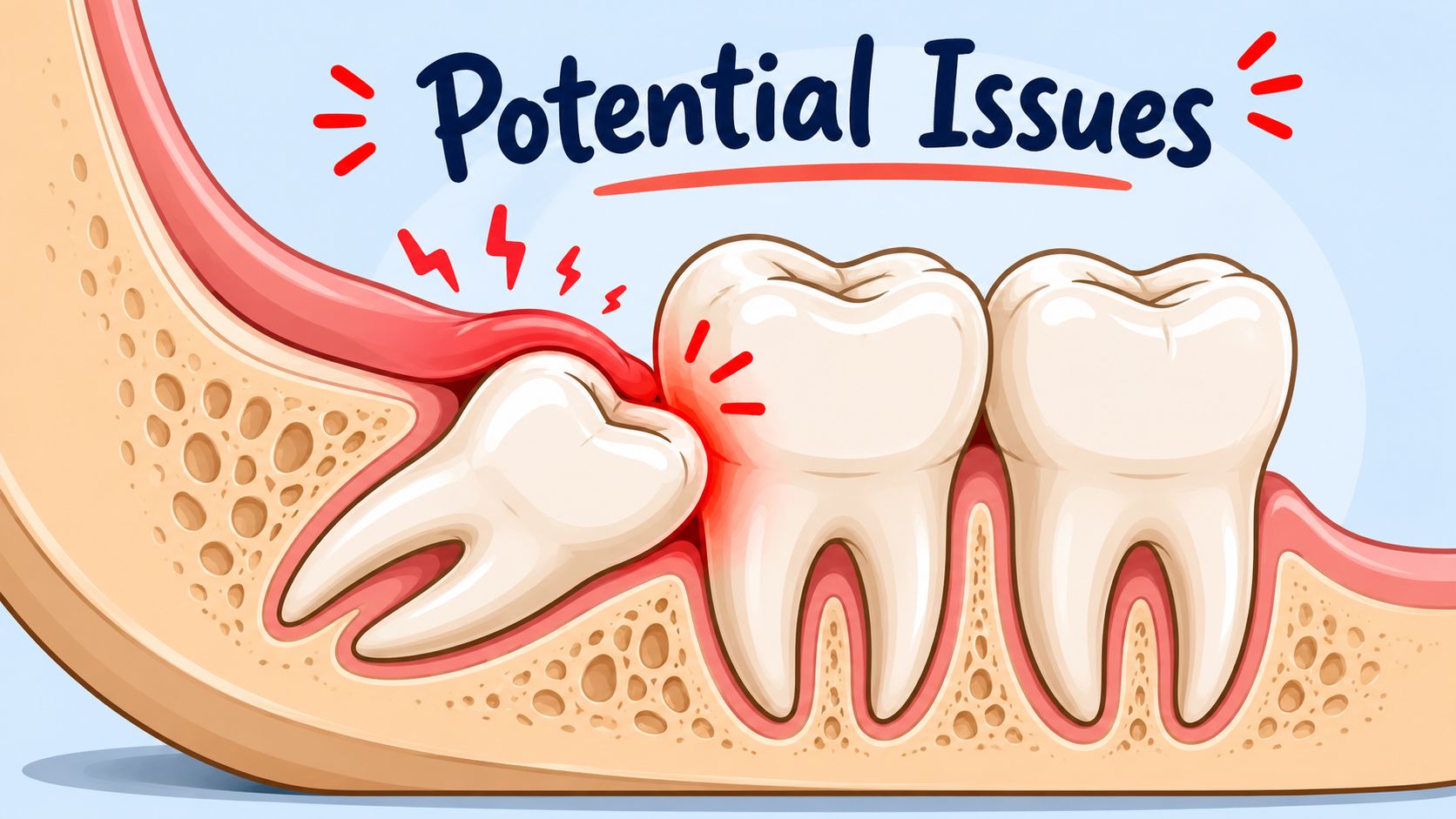
An impacted wisdom tooth is one that can't erupt into a normal position. It may stay trapped under the gums, partly break through, or angle into the tooth in front of it.
A helpful analogy is a door that can't open because furniture blocks the swing path. The door exists. It just doesn't have room to move the way it should.
Common problems dentists watch for
When wisdom teeth don't have enough room, several things can happen:
Pain in the back of the mouth
Pressure, soreness, or tenderness may come and go, especially as a tooth tries to erupt.Gum irritation or infection
Partially erupted wisdom teeth can create a hard-to-clean flap of gum tissue where food and bacteria collect.Damage to the tooth next door
A tilted wisdom tooth may push against the second molar, making that area harder to keep clean and healthy.Crowding concerns
Patients who've had braces or Invisalign treatment often worry about movement in the back of the mouth. If alignment changes are already present, a dentist may also discuss whether future orthodontic correction could help.
When symptoms need prompt attention
Not every wisdom tooth problem starts dramatically. Some begin with mild pressure, a sore jaw, or a bad taste near the back molars. Others flare up quickly with swelling or more intense discomfort.
If you develop pain, swelling, or signs of infection, it's smart to seek timely care through an emergency dentist in Santa Ana. Quick evaluation can help determine whether the issue is a wisdom tooth, a gum infection, or another dental problem that happens to feel similar.
Pain near the back teeth doesn't automatically mean you need removal. It does mean the area deserves a professional look.
Why this matters for long-term planning
Wisdom teeth can affect more than one chapter of your dental care. They may influence hygiene, comfort, orthodontic stability, and treatment timing. That's why dentists often monitor them before they become a full-blown emergency.
For families in Garden Grove, Tustin, and Santa Ana, early awareness usually makes decisions easier. You don't have to wait until a problem becomes urgent to learn what those teeth are doing.
Deciding Between Removal and Monitoring
One of the most common questions I hear is, “If I have wisdom teeth, do they automatically need to come out?” The answer is no. Some wisdom teeth stay healthy, functional, and easy to monitor. Others create enough risk that removal becomes the more sensible choice.
The decision usually comes down to what those teeth are doing in your mouth right now, and what they're likely to do next. A calm, evidence-based plan is better than assuming every wisdom tooth should be removed or, on the other hand, ignoring a problem because it isn't severe yet.
Situations that may support removal
Dentists often lean toward extraction when a wisdom tooth is associated with clear trouble, such as:
- Ongoing pain or repeated flare-ups that keep returning
- Infection around the gum tissue near a partially erupted tooth
- Damage to a neighboring tooth or an unhealthy contact point
- Problematic positioning that makes proper eruption unlikely
- Orthodontic concerns when space and alignment are already under strain
For some patients, comfort options may also be part of the discussion, especially if anxiety has made dental treatment hard in the past. The right recommendation depends on the full picture, not just the fact that a wisdom tooth exists.
When monitoring makes sense
Monitoring can be a reasonable choice when wisdom teeth appear stable and aren't causing active problems. In those cases, regular exams and imaging help your dentist watch for changes over time.
A watch-and-wait approach may fit if the tooth is:
| Situation | Why monitoring may be reasonable |
|---|---|
| Fully erupted and cleanable | It may function like a regular molar |
| Symptom-free | No current sign of pain or infection |
| Well positioned | Less concern about pressure on nearby teeth |
| Easy to evaluate | Changes can be tracked during routine visits |
Removal isn't a rule. Monitoring isn't neglect. The right plan depends on symptoms, position, hygiene, and risk.
Patients sometimes expect a one-size-fits-all answer, but wisdom tooth care rarely works that way. A teenager with crowded, angled third molars has a different situation than an adult whose wisdom teeth erupted normally years ago.
If you're unsure where your situation falls, a consultation can help you understand the options without rushing the decision. For some patients, that conversation leads to monitoring. For others, it leads to planned extraction before discomfort interrupts school, work, travel, or orthodontic care.
Frequently Asked Questions About Wisdom Teeth
Can you tell how many wisdom teeth you have without an X-ray
Usually, no. A wisdom tooth can be partly visible, fully erupted, trapped under the gums, or still sitting in the jawbone, so counting by sight is a little like counting parked cars when some are still inside the garage. An X-ray gives Dr. Finley the full picture, which matters because the number alone is only part of the story. Position, angle, and available space help shape whether a wisdom tooth is likely to stay quiet, affect orthodontic plans, or create an urgent problem later.
Is it normal to have no wisdom teeth at all
Yes. Some people never develop any wisdom teeth, while others develop one, two, three, or four. Genetics plays a big role in that difference.
For families, this is often reassuring news. No wisdom teeth does not mean anything is wrong. It means your mouth followed a different blueprint.
Do wisdom teeth always hurt when they come in
No. Some come in and behave like regular molars. Others press against the gum, trap food, or inflame the tissue around them.
Pain is a useful signal, but it is not the only one. A wisdom tooth can be developing a problem before it becomes painful, which is one reason checkups during the teen and young adult years can help prevent surprise infections or scheduling a procedure at the worst possible time.
Can wisdom teeth affect orthodontic planning
Yes, they can be part of the bigger plan. If the back of the jaw is crowded, Dr. Finley may want to keep a close eye on wisdom teeth during braces or retainer care, especially if future eruption could make cleaning harder or complicate long-term stability.
This does not mean wisdom teeth automatically ruin orthodontic results. It means they are one more moving part to account for, like making sure there is enough room in a parking space before another car pulls in.
What if I have jaw pain and I'm not sure it's my wisdom teeth
Jaw pain can come from several places, including the jaw joint, clenching, sinus pressure, gum infection, or a wisdom tooth. The location and timing of the pain offer clues, but they do not confirm the cause on their own.
That is why an exam matters. In our Santa Ana practice, the goal is to sort out whether this is something that needs urgent treatment, planned follow-up, or a completely different kind of dental care.
What is recovery from wisdom tooth removal like
Recovery depends on how the tooth is positioned and how involved the procedure is. A fully erupted tooth is often simpler to recover from than one that is buried in bone or angled sideways.
Families usually want to know what daily life will look like. In many cases, that means a short period of rest, softer foods, gentle cleaning, and watching for signs that the area is healing as expected. You will get specific instructions so you know what is normal, what to avoid, and when to call.
When should a family schedule an evaluation
A good time is when wisdom teeth first show up on a teen's routine X-rays, before college, before orthodontic retention becomes a concern, or as soon as symptoms begin. Early evaluation gives you time to make a calm decision instead of reacting in the middle of pain, swelling, or a busy school or work week.
If you'd like a clear answer about how many wisdom teeth you have and what that means for your long-term oral health, schedule a consultation with Bristol Dental and Orthodontics. We welcome patients from Santa Ana, Costa Mesa, Tustin, Irvine, and Garden Grove, and all clinical content should be reviewed by Dr. Finley before publishing.
Written with the Outrank app