
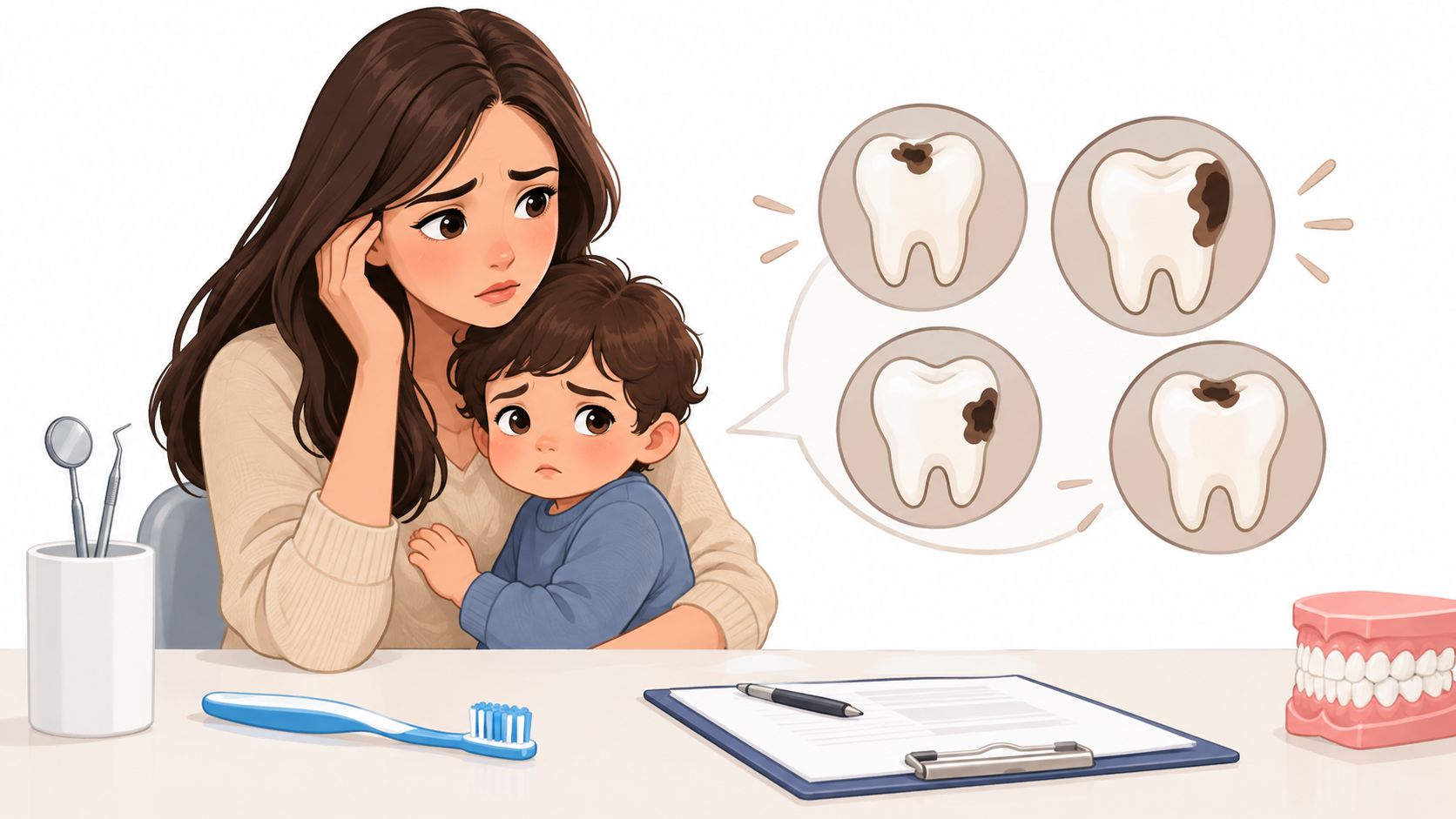
A parent sits in my chair feeling defeated. They brush their child's teeth twice a day, keep soda out of the house, and still hear that new cavities have appeared. An adult may feel the same way after developing decay despite a careful routine. The explanation is often not a lack of effort. Cavity risk depends on several moving parts, including saliva, meal timing, fluoride exposure, previous decay, medications, orthodontic appliances, and the shape of the teeth.
At Bristol Dental & Orthodontics, led by Dr. Andrew Finley, prevention starts with identifying which of those factors matter most for you. The most useful answer to “how to prevent cavities” isn't a longer shopping list. It's a layered plan that combines daily plaque removal, appropriate fluoride, professional treatments, and adjustments for your age and health.
Table of Contents
- Why Cavity Prevention Deserves a Plan, Not a Tip
- Building a Daily Routine That Actually Protects Teeth
- Fluoride, Mouthwash, and What the Evidence Really Supports
- Sealants and Professional Treatments Worth Asking About
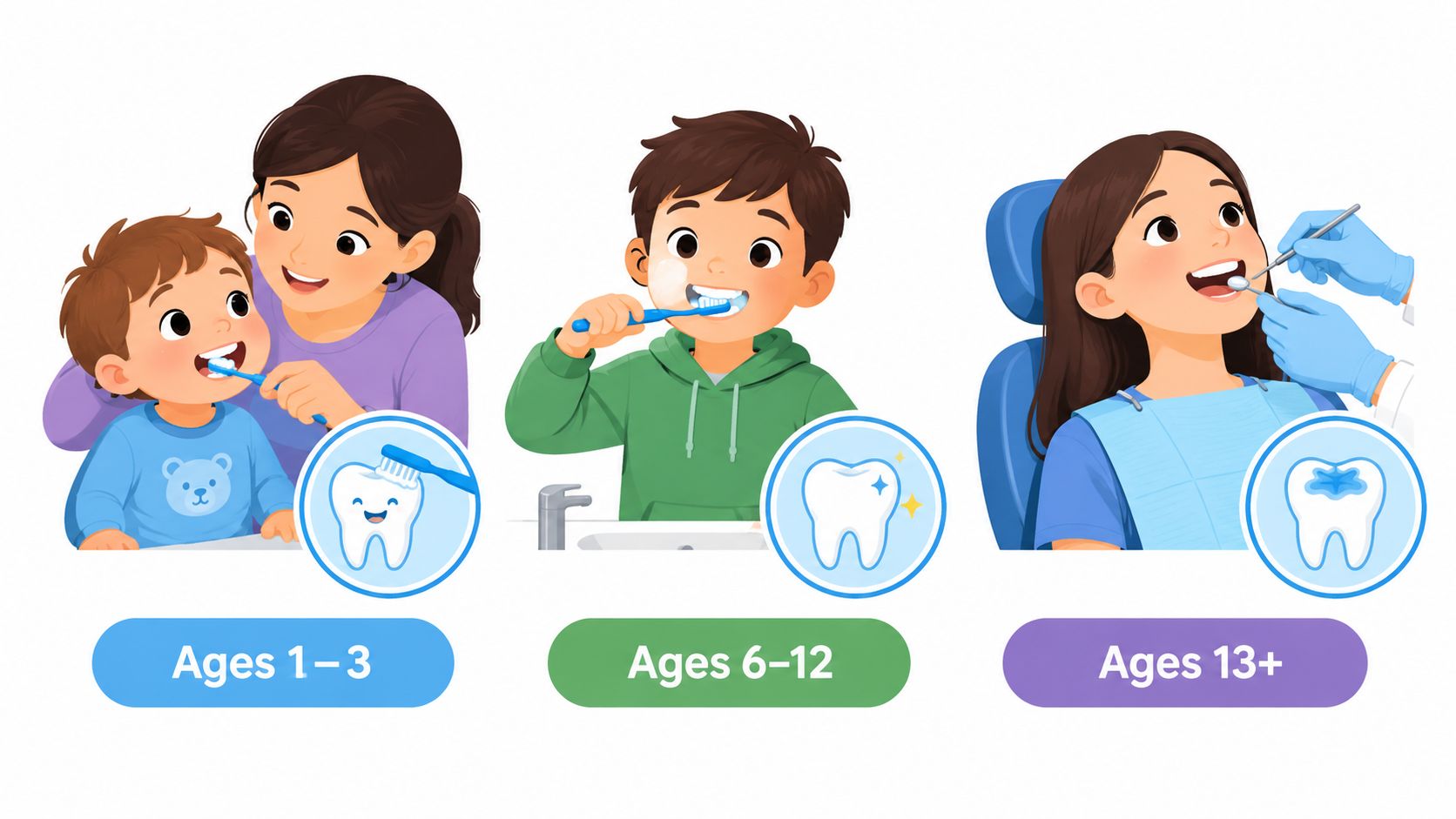
- Adjusting the Plan by Age and Life Stage
- Special Situations That Change the Risk Equation
- Your Sample Prevention Plan and When to See a Dentist
Why Cavity Prevention Deserves a Plan, Not a Tip
Your routine is only one part of the equation
Brushing removes plaque, but it doesn't change every condition that makes a tooth vulnerable. Someone with frequent snacking, reduced saliva, deep molar grooves, or a history of repeated fillings may need more support than someone whose enamel has stayed stable for years.
Saliva normally helps wash away food and buffer acids. Medications, mouth breathing, cancer treatment, and some medical conditions can reduce that protection. The timing of food matters, too. A sweet drink consumed slowly across the morning exposes teeth differently from a small dessert eaten with a meal.
Fluoride exposure also varies. Community water fluoridation is a major population-level prevention measure. The U.S. Centers for Disease Control and Prevention's fluoridation guidance states that fluoridated water reduces cavities by about 25% in children and adults, and recommends an optimal level of 0.7 mg/L in drinking water. The same guidance reports that schoolchildren in fluoridated communities have, on average, 2.25 fewer decayed teeth than similar children in non-fluoridated communities.
Build prevention in layers
A flat checklist treats every patient as though they have the same mouth. A risk-based plan asks what your teeth need now.
- Low risk: Consistent fluoride toothpaste, daily cleaning between teeth, sensible eating patterns, and routine examinations may be enough.
- Moderate risk: You may benefit from a fluoride rinse, sealants on susceptible chewing surfaces, or more focused coaching around diet and technique.
- Higher risk: Dry mouth, orthodontic brackets, frequent recent cavities, exposed roots, or radiation treatment may call for professional varnish, prescription-strength fluoride, or shorter recall intervals.
The same routine can under-protect a teenager with braces while providing more treatment than necessary for an adult with stable enamel. Prevention should tighten when risk rises and relax when the mouth remains healthy over time.
Use the rest of this guide as a decision aid. Start with the daily foundation, then look for the factors that describe your situation. Bring those observations to a dental visit so Dr. Finley can help determine which additions are appropriate for your specific case.
Building a Daily Routine That Actually Protects Teeth
Good prevention is less about brushing harder and more about cleaning the places that routinely get missed.
Make brushing thorough and gentle
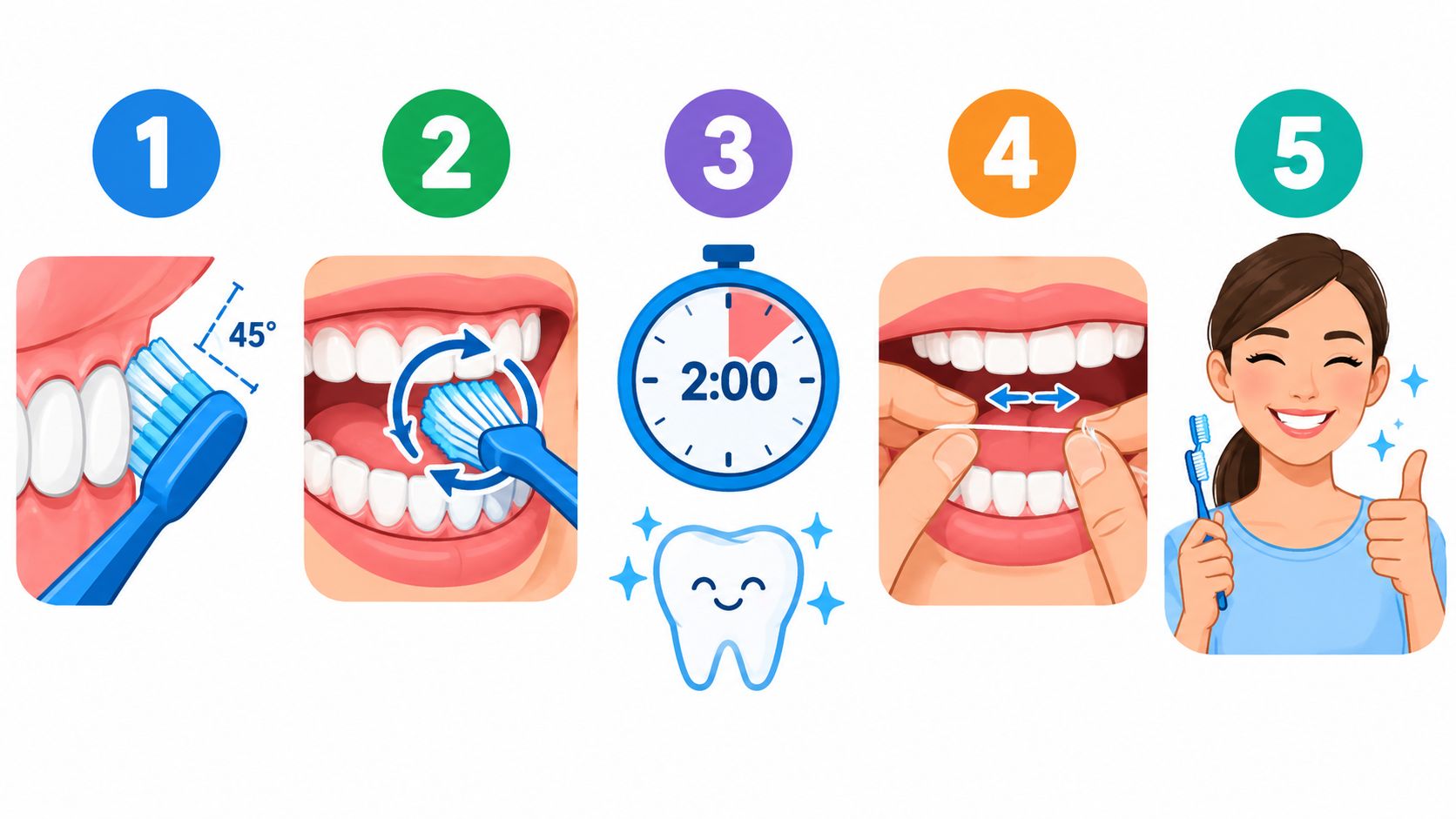
Brush for two minutes, twice a day, especially before bed. Use a soft-bristled manual brush or an electric brush, and angle the bristles toward the gumline. Move slowly across the outer, inner, and chewing surfaces instead of scrubbing aggressively in one spot.
Replace a toothbrush or electric brush head about every three months, or sooner if the bristles become bent and worn. A frayed brush can feel busy without cleaning efficiently. Children often need an adult to finish the areas they rush, particularly the back teeth.
Flossing and brushing can happen in either order. What matters is completing both. If string floss keeps getting abandoned, use a water flosser or interdental brushes that fit comfortably between the teeth. A tool you use consistently is more valuable than the theoretically perfect tool that stays in a drawer.
Practical rule: Choose the cleaning method you can repeat every day, then ask your dental team to check your technique.
Reduce repeated acid exposure
A single dessert with a meal is generally easier on your teeth than grazing on crackers, candy, or sweetened snacks throughout the day. Sipping coffee with sugar over a long morning can also keep exposing plaque to fuel. The goal isn't perfection. It's to reduce the number of separate eating and drinking episodes that involve sugar or fermentable starch.
Choose water between meals, and be especially cautious with sticky foods that remain in grooves. If you have a sweet drink, finishing it rather than carrying it around for hours is a more protective pattern.
Keep fluoride on the teeth
Use fluoride toothpaste each time you brush. After brushing at night, spit out the excess and avoid rinsing thoroughly with water, so a thin fluoride layer remains on the tooth surfaces. Don't swallow toothpaste, and follow age-appropriate guidance for young children.
Flossing before brushing may help move loosened debris out of the mouth, while brushing first may feel more natural to someone who prefers that order. Either approach works if you clean the gumline, between the teeth, and the chewing surfaces consistently.
Fluoride, Mouthwash, and What the Evidence Really Supports
Fluoride toothpaste is the foundation because it delivers fluoride directly to the surfaces most exposed to plaque and acids. Over-the-counter fluoride toothpastes generally contain 1,000 to 1,500 ppm fluoride, and the American Dental Association's fluoride overview notes that toothpastes in this range reduce caries compared with non-fluoride toothpaste.
For adults with persistent decay, exposed roots, severe dry mouth, or certain treatment histories, a prescription toothpaste containing 5,000 ppm fluoride may be considered. It isn't automatically appropriate for everyone, and it should be selected with a dentist who knows your medical and dental history.
Compare products by their job
| Product | Active ingredient | Best for |
|---|---|---|
| Fluoride toothpaste | Fluoride | Everyone who can safely use it, as the daily foundation |
| Fluoride mouthrinse | Fluoride | People who need additional topical fluoride support |
| Professional varnish | Concentrated fluoride | Patients with elevated decay risk, vulnerable roots, or recurrent cavities |
| Xylitol gum | Xylitol | A possible complementary option, especially when chewing stimulates saliva |
| Hydroxyapatite or remineralization paste | Mineral-based ingredients | Patients discussing non-fluoride or emerging adjunctive approaches with a dentist |
| Cosmetic mouthwash | Flavoring and freshening ingredients | Breath freshness, not cavity prevention |
Mouthwash should fill a specific gap, not compensate for rushed brushing. An alcohol-free fluoride rinse may help some higher-risk patients, while an alcohol-containing rinse can feel uncomfortable for people with dry mouth. Cosmetic fresheners can improve taste or breath temporarily, but they shouldn't be presented as a cavity-prevention treatment.
Know what is established and what is complementary
A major evidence review found high-quality evidence that daily fluoride toothpaste prevents about 24% of new caries in permanent teeth compared with no fluoride. The same evidence review of fluoride-based prevention found that fluoride varnish produced about a 43% prevented fraction after two to four professional applications per year, with moderate evidence.
Xylitol gum may stimulate saliva and may offer an additional benefit, but it shouldn't replace fluoride. Comparative evidence is less consistent than the evidence for fluoride-based prevention. Hydroxyapatite and other remineralization products are reasonable topics for discussion, but they shouldn't lead a high-risk patient to abandon a proven fluoride plan without professional guidance.
Prioritize the product that addresses your actual risk. A patient with stable enamel may not need several rinses and pastes. Someone with dry mouth or repeated new lesions may need a carefully coordinated combination.
Sealants and Professional Treatments Worth Asking About
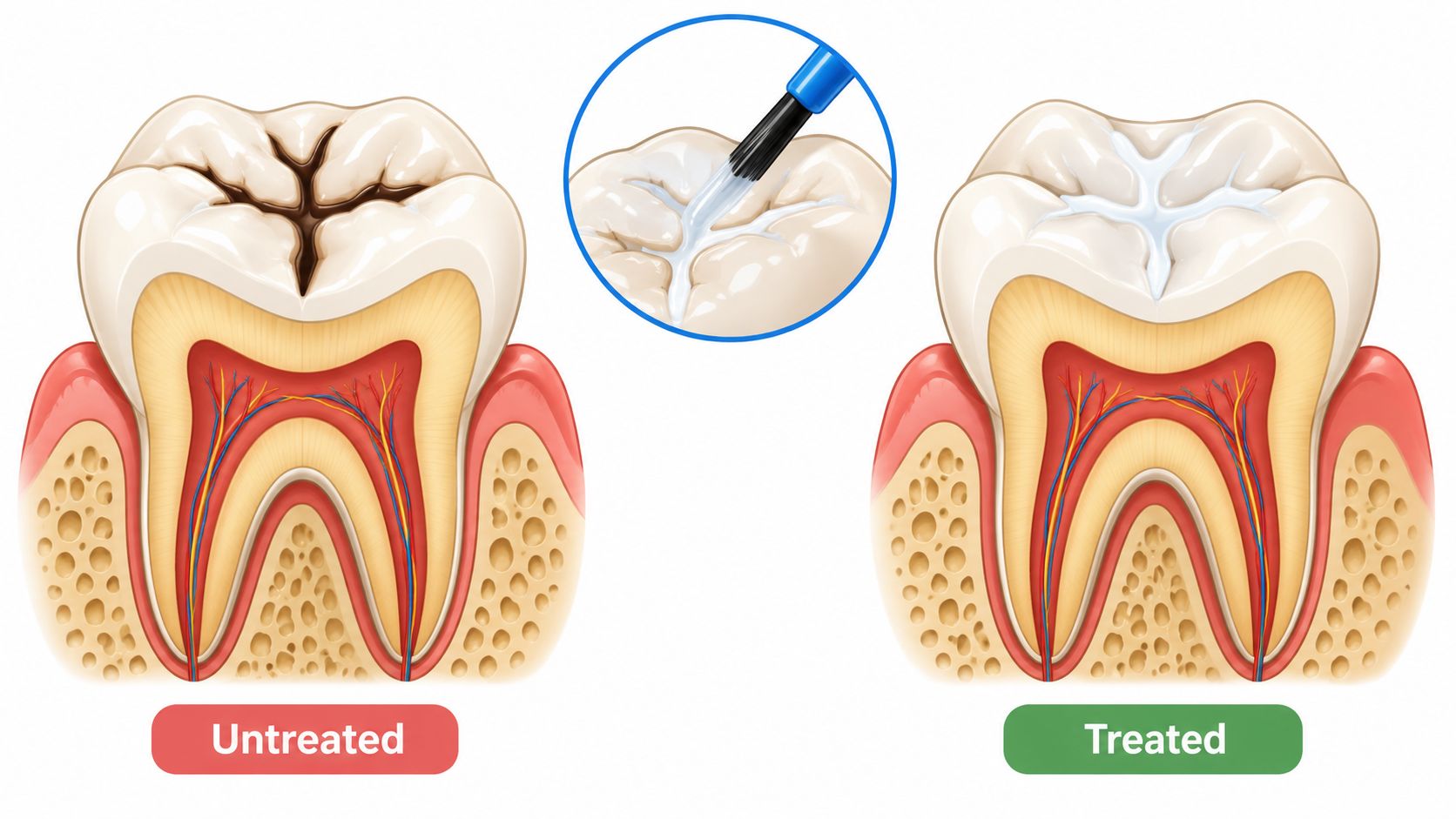
Some teeth are difficult to protect because of their anatomy. Molars can have deep pits and fissures that trap plaque and food even when a child brushes conscientiously. Fluoride is particularly helpful on smooth surfaces, while a sealant provides a physical barrier over susceptible grooves.
Sealants solve a specific problem
Sealants are especially useful for children and teens soon after permanent molars erupt, particularly when those teeth are cavity-free but have deep grooves. Adults may also benefit when they have newly erupted teeth, persistent dry mouth, or chewing surfaces that repeatedly collect food.
Placement is straightforward. The dental team cleans and prepares the tooth, paints on a thin resin material, and cures it. No drilling is needed when the surface is healthy and suitable for sealing. Sealants aren't a replacement for brushing, and they don't protect every surface of the tooth.
The CDC's guidance on school-based sealant programs identifies sealants as effective for preventing decay on chewing surfaces and highlights school programs as an access strategy for children. The same guidance discusses professional fluoride varnish, which can reduce primary-tooth caries by about 37% over three years compared with no intervention.
Match treatment to the lesion and the patient
Sealants should be checked during recare visits. They can chip or wear, and a dentist may recommend repair or replacement when protection is no longer complete. Waiting until decay is plainly visible defeats the purpose of using a preventive barrier.
Other options may fit different situations:
- Fluoride varnish: Useful for patients with frequent decay, vulnerable roots, or other heightened risks.
- Silver diamine fluoride: May help arrest selected small lesions, although it can permanently darken the treated area and isn't appropriate for every tooth.
- Prescription-strength toothpaste: May provide additional home fluoride for adults whose risk remains high despite good daily care.
A preventive appointment should include a discussion of why a treatment is being recommended. At Bristol Dental & Orthodontics, families in Santa Ana can ask whether a particular tooth, age group, or medical condition changes the value of sealants or fluoride treatment.
Adjusting the Plan by Age and Life Stage
The prevention plan should change as the mouth changes. A toddler, a teenager in orthodontic treatment, and an adult with medication-related dryness don't face the same obstacles.
Young children need supervision and surface protection
Children usually need parental help with brushing until they can reliably reach every tooth, often around age seven or eight. The parent's job isn't only to buy the right toothpaste. It's to watch the routine, limit frequent juice and sticky snacks, and make sure the back teeth receive attention.
The first permanent molars, often called the six-year molars, deserve an early look once they erupt. If the grooves are deep and the teeth are healthy, timely sealants can protect them before plaque begins a long-term problem. Children should still brush with fluoride toothpaste and clean between teeth as directed for their age.
Teenagers face an orthodontic challenge
Brackets and wires create extra places for plaque to collect. A teenager who brushed adequately before Invisalign or braces may need a more deliberate routine during treatment. Water flossers, interdental or proxy brushes, and careful cleaning around each bracket can make the difference between a clean-looking smile and hidden plaque around the appliances.
Frequent exposure to sweet drinks, sports beverages, and gummy snacks is often a larger problem than one occasional treat. White-spot lesions may become noticeable after orthodontic appliances are removed, when the surrounding enamel looks lighter than the covered areas. Teens should carry a practical cleaning option and use water instead of sipping sweetened drinks throughout the day.
Adults accumulate different vulnerabilities
Adults may deal with gum recession, which exposes root surfaces that are less resistant than enamel. Medications can reduce saliva, and old fillings or crowns can create margins that require careful cleaning. A history of previous decay is also useful information, because it can signal that the current routine needs reinforcement.
An adult with stable teeth may not need every preventive product. An adult with exposed roots, dry mouth, or recurrent lesions may need a tighter fluoride plan and more frequent professional monitoring. This is also relevant for patients pursuing Invisalign, cosmetic dentistry, or restorative treatment, because keeping the surrounding teeth healthy protects the result.
Special Situations That Change the Risk Equation
Standard brushing advice underperforms when the mouth loses saliva, carries an appliance, or contains an implant. These situations don't make cavities inevitable, but they do require more targeted habits.
Dry mouth needs active management
Saliva buffers acids and helps clear food. Medication side effects, mouth breathing, and cancer treatment can reduce that protection. Drink water regularly, ask whether a salivary substitute is appropriate, and discuss prescription fluoride toothpaste if dryness persists.
Don't stop a prescribed medication on your own because it causes dry mouth. Instead, ask the prescribing clinician and dentist whether the timing, dosage, or supportive care can be reviewed. This week, keep water available, notice when your mouth feels driest, and report persistent symptoms rather than just brushing harder.
Sleep apnea appliances need oral follow-through
People who sleep with an open mouth or use positive-airway-pressure equipment may wake with significant dryness. That can affect comfort, plaque clearance, and the risk of inflammation around the teeth and gums. Clean the device as directed, pay attention to dryness around the front teeth, and ask for a prevention review if morning mouth dryness continues.
Oral appliance therapy can also affect oral health planning. A review of 89 publications and 3,027 patients found that oral appliances reduced the apnea-hypopnea index to under 10 in 54% of cases overall, with snoring reduced by 45% and an average AHI reduction of 42% in studies comparing appliances with other therapies, as reported in this review of oral appliance therapy for sleep apnea. Those figures describe study results, not a guarantee for an individual, so appliance fit and follow-up matter.
Implants require tissue-focused cleaning
A dental implant doesn't develop a cavity in the same way a natural tooth does, but the gum and bone around it can become inflamed. Problems around implants may progress without dramatic pain. Use a soft-bristled brush and ask which implant-safe floss, interdental brush, or water flosser tip fits your restoration.
This week, inspect the area for bleeding, swelling, tenderness, or a change in how the implant crown feels. Patients in Santa Ana, Costa Mesa, Tustin, Irvine, and Garden Grove who have implants should keep professional maintenance part of the plan, not rely solely on what feels comfortable at home.
Your Sample Prevention Plan and When to See a Dentist
A prevention plan works best when it fits into the parts of the day you already control. Use this as a starting rhythm, then adjust it with your dentist if you have braces, implants, dry mouth, repeated cavities, or another increased risk.
A practical weekly rhythm
Morning: Brush for two minutes with fluoride toothpaste. Clean between teeth if mornings are the time you're most consistent, and drink water rather than slowly sipping a sweetened beverage.
During the day: Keep sugary and starchy snacks from becoming an all-day pattern. If you chew xylitol gum, use it as a possible complement after meals, not as a substitute for brushing or fluoride.
Evening: Clean between teeth once daily, then brush before bed. Spit rather than rinsing thoroughly with water after fluoride toothpaste. If a fluoride rinse has been recommended, use it on the schedule your dental team gives you, and don't assume that using it more often is automatically better.
Once each week: Check your eating and drinking pattern. Ask yourself whether sweetened coffee, juice, sports drinks, or crackers are being consumed repeatedly. If you have dry mouth, note when it occurs and whether a medication, mouth breathing, or a sleep device may be contributing.
The ADA topical fluoride chairside guide states that patients age six and older may receive 2.26% fluoride varnish at least every three to six months, while another guideline summary identifies twice-yearly application as an optimal frequency for cavity prevention. An ADA report on preventive services cites reductions of 37% in primary teeth and 43% in permanent teeth when varnish is applied twice a year. Your dentist should determine whether varnish belongs in your plan and how often.
Signs that shouldn't wait
Schedule an evaluation sooner than a routine visit if you notice:
- New sensitivity: Pain from hot, cold, or sweet foods can have several causes and deserves assessment if it persists.
- White or brown areas: Spots near the gumline may signal mineral changes or decay.
- Ongoing bleeding: Bleeding that doesn't settle within a week should be discussed with a dental professional.
- Persistent dryness: Dry mouth lasting more than two weeks can raise decay risk and may need medical review.
- A loose restoration: A filling or crown that feels loose can allow food and plaque to collect around the tooth.
Most patients benefit from regular preventive examinations and cleanings on a schedule suited to their history. Some people do well with visits about twice a year, while those with frequent decay, dry mouth, gum disease, orthodontic appliances, or extensive dental work may need shorter intervals. A visit can also identify early changes before pain appears.
Common questions
How long should I wait between brushing and eating?
Brush after a meal when practical, but don't brush immediately after acidic foods or drinks because the enamel surface may be temporarily softened. If you've just had an acidic drink, ask your dentist about the timing that fits your routine. At night, brush after your final food and drink, then choose water only.
Are whitening products safe for cavity-prone teeth?
Whitening products can cause sensitivity, and they shouldn't be used to cover up a suspected cavity or untreated gum problem. Have your teeth examined first, especially if you see spots, feel pain, or have exposed roots. Your dentist can help determine whether whitening is appropriate and how to limit irritation.
Are electric brushes worth the upgrade?
An electric brush can be worthwhile if it helps you maintain consistent timing, gentle pressure, and complete coverage. A soft manual brush can also work well when you use the right technique. The important outcome is reliable plaque removal, not the type of handle.
Bristol Dental and Orthodontics offers preventive examinations, fluoride treatments, sealants, family dentistry, Invisalign, dental implants, sleep apnea care, cosmetic dentistry, and emergency dental care for patients in Santa Ana and nearby Orange County communities. Visit Bristol Dental and Orthodontics to schedule a consultation with Dr. Andrew Finley and discuss a cavity-prevention plan built around your teeth, habits, and health.