
It's 11:30 at night. Your tooth is throbbing, your jaw feels tight, and you're typing, “can the ER do anything for a toothache” because your dentist's office is closed and you need an answer now.
Here's the straight answer. Yes, the ER can help in some situations, but it usually cannot fix the tooth. The emergency room is there to keep you safe if the problem has crossed from dental pain into a medical emergency. If it hasn't, a dentist is almost always the right place to go.
That distinction matters when you're in pain and trying to decide quickly. Some symptoms mean “wait for a dental visit in the morning.” Others mean “go now.”
Table of Contents
- A Toothache After Hours Your Next Steps
- What an ER Can and Cannot Do for Dental Pain
- ER or Dentist When to Choose an Emergency Room
- Managing Tooth Pain at Home Before Your Appointment
- Your Local Solution for Dental Emergencies in Santa Ana
- Preventing Future Emergencies with Comprehensive Dental Care
A Toothache After Hours Your Next Steps
A bad toothache has a way of making everything feel urgent. You can't sleep. You can't chew. Even drinking water can set off a jolt of pain. A lot of patients in Santa Ana, Costa Mesa, Tustin, Irvine, and Garden Grove end up stuck on the same question. Is this a dental problem that can wait until morning, or is it serious enough for the hospital?
Most of the time, a toothache needs a dentist, not an ER. But not every toothache is routine. If the pain comes with major swelling, trouble swallowing, trouble breathing, fever, or an injury to the face, that's a different situation.
Practical rule: If the problem threatens your breathing, swallowing, or overall safety, go to the ER. If it's tooth pain without those danger signs, call a dentist as soon as possible.
You don't need a complicated answer tonight. You need a clear one. The safest way to think about it is this:
- The ER is for medical danger
- The dentist is for fixing the tooth
- Home care is only a short-term bridge
If you're reading this in pain, focus on making the next right move, not the perfect one. If there are red flags, don't wait. If there aren't, get the tooth evaluated quickly because pain doesn't usually improve on its own for long.
What an ER Can and Cannot Do for Dental Pain
The ER's job is stabilization. That means it can help you get through the immediate crisis, but it usually won't solve the dental problem causing the pain.
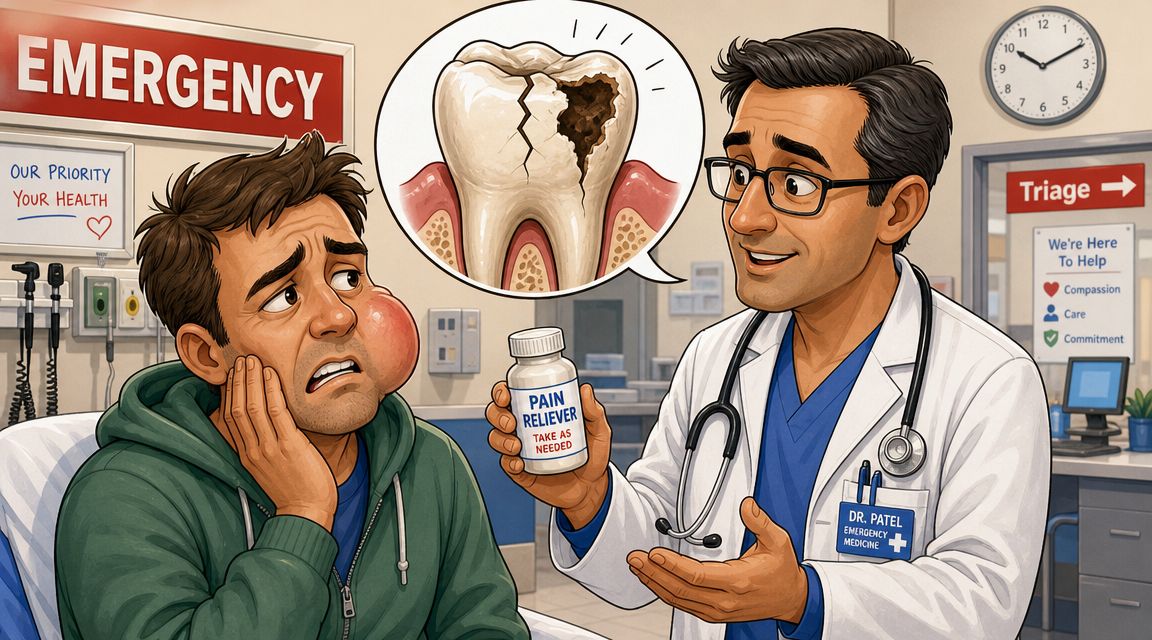
The scale of this problem is bigger than commonly realized. The American Dental Association estimates 2 million hospital emergency department visits each year in the U.S. for dental pain. That tells you two things. First, you're not overreacting by being worried. Second, hospitals see this often, but they still usually can't provide the final dental treatment.
What the ER can do
If your toothache has become severe, the ER may be able to help with short-term relief, such as:
- Pain control so you can function until you see a dentist
- Antibiotics if the medical team believes an infection is involved
- Local numbing in some cases
- Drainage of a clearly localized abscess when appropriate
That care matters. If swelling is increasing or the infection may be spreading, temporary medical treatment can buy time and reduce risk.
What the ER usually cannot do
This is the part people need to hear clearly. The ER usually can't do fillings, root canals, crowns, or extractions. Those are dental procedures, and most emergency departments aren't equipped for them.
The ER can help you get safer and more comfortable. It usually cannot remove the reason your tooth hurts.
So if you're asking, “Can the ER do anything for a toothache?” the honest answer is yes, but mostly in a limited, temporary way. If the pain is from decay, a cracked tooth, a dying nerve, or a failed filling, the underlying problem is still there when you leave.
That's why an ER visit should be viewed as a stopgap, not the finish line.
ER or Dentist When to Choose an Emergency Room
This is the decision point that matters most. Don't guess. Use symptoms.
Red flags that mean go to the ER
Authoritative clinical guidance says the ER is appropriate when dental pain comes with signs of a potentially dangerous infection or serious injury. The clinical guidance from Cleveland Clinic notes the ER becomes appropriate with severe bleeding, serious swelling, or facial injury, and Baptist Health identifies difficulty swallowing, difficulty breathing, fever, swelling below the jawline, or neck swelling as warning signs.
Go to the ER if you have:
- Difficulty breathing
- Difficulty swallowing
- Fever with dental pain
- Swelling below the jawline
- Neck swelling
- Serious facial trauma
- Severe bleeding that won't stop
Those aren't “watch and wait” symptoms. They can signal a spreading infection or injury that needs medical evaluation right away.
Decision Guide ER vs Dentist for Tooth Pain
| Symptom | Go to the ER | Call Your Dentist |
|---|---|---|
| Trouble breathing | Yes | No |
| Trouble swallowing | Yes | No |
| Fever with tooth pain | Yes | No |
| Swelling moving below the jaw or into the neck | Yes | No |
| Serious facial injury | Yes | No |
| Severe bleeding | Yes | No |
| Severe toothache without breathing or swallowing issues | No | Yes |
| Lost filling or crown | No | Yes |
| Broken or chipped tooth without major swelling or trauma | No | Yes |
| Pain when biting or chewing | No | Yes |
| Sensitivity to hot or cold | No | Yes |
A lot of people assume “worst pain equals ER.” That isn't always true. Pain alone usually points to an urgent dental visit. The ER becomes the right choice when the problem affects your airway, your ability to swallow, or your general medical safety.
If your face is puffy but you can breathe, swallow, and think clearly, call a dentist urgently. If swelling is spreading into the jawline or neck, stop debating and go in.
If you're in Orange County and trying to decide late at night, keep it simple. Red flags mean hospital. Most other tooth problems mean dental office.
Managing Tooth Pain at Home Before Your Appointment
Home care won't fix an infected or damaged tooth. It can make the wait more manageable.
Safe steps you can take right now
Try these basic steps:
- Rinse with warm salt water. This can help keep the area cleaner and soothe irritated tissue.
- Floss gently. Sometimes food trapped between teeth can sharply increase pain.
- Use an over the counter pain reliever as directed on the label. Follow the instructions exactly.
- Apply a cold compress on the outside of the face. Use short intervals to help with swelling and discomfort.
- Stick to soft foods and avoid chewing on that side. Don't keep aggravating the tooth.
These are bridge measures, not treatment.
What not to do
A few common home remedies do more harm than good.
- Don't put aspirin directly on the tooth or gums. It can irritate or burn the tissue.
- Don't place heat on a swollen face. Heat can make some swelling feel worse.
- Don't ignore a bad taste, drainage, or increasing pressure. Those signs can mean infection.
- Don't wait several days if the pain is escalating. Tooth problems tend to get more complicated, not less.
You're not trying to cure this at home. You're trying to stay as comfortable and safe as possible until a professional examines the problem.
If new red-flag symptoms start while you're waiting, change course and seek emergency medical care.
Your Local Solution for Dental Emergencies in Santa Ana
It is 7:30 at night, your tooth is throbbing, and you need a clear next step. If you do not have trouble breathing, trouble swallowing, rapidly spreading swelling, or other red-flag symptoms covered earlier, skip the ER and call a local emergency dentist as soon as the office opens.
What a dental office can do that the ER cannot
A dental office focuses on the source of the pain. The team can examine the tooth, take the right images, identify whether the problem is decay, infection, a crack, a failing filling, gum irritation, or a damaged nerve, and then recommend treatment that addresses it.
Bristol Dental & Orthodontics serves Santa Ana patients who need that kind of direct answer. The goal is not to mask symptoms for a few hours. The goal is to figure out what is wrong and make a plan to treat it properly.
That plan may involve repairing the tooth, treating infection, replacing a broken restoration, or deciding whether the tooth can be saved. If it cannot, you should hear that plainly and get a realistic next step for function, comfort, and appearance.
For Santa Ana and nearby Orange County communities
Local care matters when you are in pain. If you live in Santa Ana, Costa Mesa, Tustin, Irvine, or Garden Grove, it helps to have one office that can assess the problem, tell you if it stays in the dental lane, and act quickly.
Use a simple rule. ER for red flags. Dentist for a tooth problem that needs a diagnosis and treatment.
That decision is what lowers stress after hours. You stop guessing, stop bouncing between options, and start getting the right kind of care.
Preventing Future Emergencies with Comprehensive Dental Care
Dental emergencies usually start small. A cavity gets deeper. A filling loosens. A cracked tooth waits until dinner, then suddenly becomes the only thing you can think about.
The better long term plan
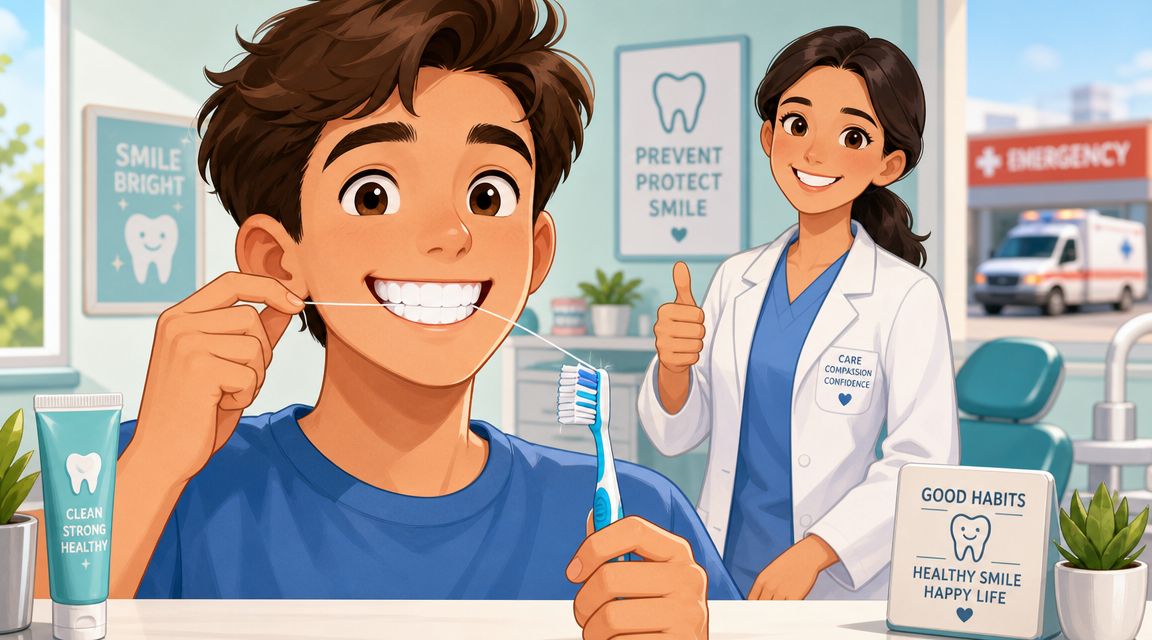
If you want fewer late-night decisions about whether a symptom is serious enough for the ER, stop waiting for pain to force the issue. Regular dental care catches the problems that commonly turn into urgent visits, especially small cavities, failing fillings, cracked teeth, gum disease, and bite-related wear.
A good prevention plan usually includes:
- Routine exams to find trouble before it becomes painful
- Professional cleanings to reduce buildup and calm gum inflammation
- Early treatment for damaged teeth, worn restorations, and signs of infection
- A practical plan if you grind, clench, or put heavy stress on your teeth
Good ongoing care can also include restorative treatment, cosmetic dentistry, orthodontics, and support for conditions like sleep-disordered breathing with oral appliance therapy for sleep apnea, when appropriate.
Why having a dental home matters
When you already know which office to call, an urgent dental problem becomes much easier to handle. You get advice from a team that knows your history, understands your past X-rays and treatment, and can tell the difference between a problem that can wait until morning and one that needs immediate medical attention.
That matters for families in Santa Ana and across Orange County. Kids, teens, adults, and older relatives all do better with one office that handles routine care and urgent dental problems.
Keep the rule simple. Go to the ER for red-flag symptoms such as trouble breathing, trouble swallowing, rapidly spreading facial swelling, or bleeding that will not stop. Go to a dentist for the tooth itself, because that is where you get the diagnosis and treatment that fixes the problem.
Bristol Dental & Orthodontics provides that kind of long-term care for local patients. If you are hurting tonight, use the red flags to make the first decision. If those red flags are not present, get the tooth evaluated promptly and do not settle for temporary relief when the cause is still there.