
You notice it in a family photo, during a work meeting, or while talking with someone new. Your teeth may be healthy, yet a chip, uneven edge, stain, gap, or crowded appearance keeps drawing your attention. You may be wondering whether whitening would be enough, whether veneers are appropriate, or whether straightening or restorative care should come first.
A cosmetic dentist in Santa Ana can help you sort through those questions, but the right starting point isn't a procedure. It's a careful look at your goals, bite, gums, enamel, existing restorations, and long-term comfort. This guide explains the decision pathway in plain language, so you can compare options without assuming that the most noticeable change is automatically the most suitable one.
Table of Contents
- Introduction to Your Smile Goals in Santa Ana
- What Cosmetic Dentistry Means for Everyday Patients
- Popular Cosmetic Services and How They Work
- Your Patient Journey From Consultation to Aftercare
- Understanding Candidacy Timing and Natural Results
- How to Choose a Cosmetic Dentist in Santa Ana
- Next Steps Toward a Confident Smile
Introduction to Your Smile Goals in Santa Ana
A Santa Ana parent might want a brighter smile before a family celebration. Another patient may have lived with a chipped front tooth since an accident. Someone else may have crowded teeth, jaw discomfort, or a missing tooth and initially describe the concern as, “I want my smile to look better.” Those situations sound similar, but they can call for very different evaluations.
At Bristol Dental & Orthodontics, a family and cosmetic dental practice on South Bristol Street, Dr. Andrew Finley works with patients who may be considering cosmetic dentistry, Invisalign, dental implants, sleep apnea treatment, or emergency dental care. The useful question isn't, “Which treatment is most popular?” It's, “Which problem are we solving, and what needs to be healthy or stable first?”
Santa Ana sits within a large and active Orange County dental market. A county oral-health plan reported a dentist-to-resident ratio of about 1:856, while a later community health assessment reported 810:1. The same county data reported that 29.2% of adults lacked dental insurance, 10.3% of children lacked dental insurance, and 13.7% of children ages 3 to 11 had never visited a dentist. These figures describe access and utilization, not an individual's care needs, but they help explain why families may be comparing practices that can address both everyday and elective dental concerns. Orange County oral-health data
Start with the concern, not the label
Write down what you'd like to change. “My teeth look dull in photographs” points toward a different conversation than “I can't chew comfortably on one side” or “My front teeth overlap.” Bring photographs if they help you explain the look you're hoping for, but let the clinical examination guide what's practical.
A consultation with Dr. Finley should be personal and specific. No online guide can determine whether whitening, bonding, veneers, aligners, an implant, or another approach fits your mouth. The purpose of this information is to help you ask better questions before that conversation.
What Cosmetic Dentistry Means for Everyday Patients
Cosmetic dentistry changes the appearance of teeth and smiles, but responsible planning also considers function and oral health. Tailoring clothing is a useful analogy. A shirt can be a beautiful color, but if the cut restricts movement or doesn't fit your proportions, the color won't solve the problem. A smile plan works similarly. Shade matters, yet shape, spacing, bite, gum position, tooth structure, and facial features matter too.
The first distinction is between appearance and cause. A surface stain may respond to professional whitening, while a deep discoloration, worn edge, old restoration, or uneven position may need another type of discussion. A gap might be visually improved with bonding, but orthodontic movement could be more appropriate if the teeth also need repositioning. A missing tooth isn't a color concern, so replacing its function may become part of the plan.
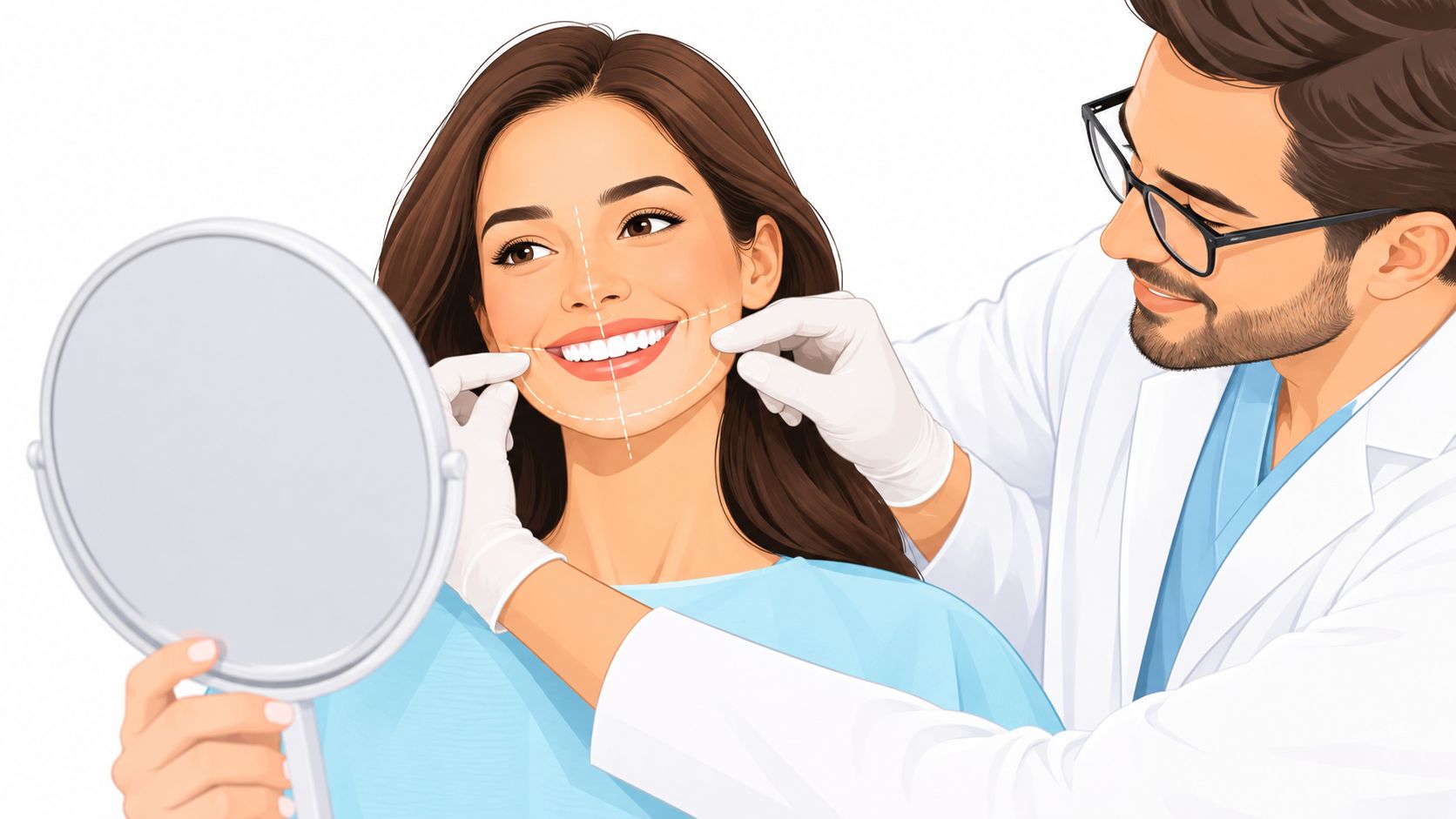
The four questions behind a cosmetic plan
A useful consultation often works through four connected questions:
- What do you want to change? Color, shape, length, spacing, alignment, missing teeth, or several concerns at once.
- Is the foundation healthy? Gum inflammation, decay, infection, worn teeth, or unstable restorations may need attention before elective treatment.
- How does your bite work? A treatment that looks attractive at rest still needs to function during speaking and chewing.
- How much tooth structure can be preserved? Lower-intervention options may be appropriate in some cases, but preservation must be balanced with durability and the condition of the tooth.
Recent patient-facing coverage describes a movement toward more individualized aesthetics, including softer shades, visible translucency, digital previews, and minimally invasive approaches. The practical lesson is not that one style suits everyone. It's that a natural-looking result generally needs to account for your age, facial features, existing teeth, and expectations rather than applying one uniform shade or shape. Natural-looking cosmetic dentistry trends
A useful rule: A smile should look like it belongs to you, not like it was selected from a single template.
Cosmetic care also fits within family dentistry. A child or teenager may need prevention and orthodontic assessment, while a parent may be considering whitening or restorative treatment. Keeping those conversations connected can make it easier to understand which needs are urgent, which are elective, and which should happen first.
Popular Cosmetic Services and How They Work
Different services solve different kinds of concerns. A quick comparison can help you describe your goals, but it can't establish candidacy. Dr. Finley would need to examine the teeth, gums, bite, and restorations before recommending a specific approach.
| Concern | Common Options to Discuss | Key Consideration | Maintenance Focus |
|---|---|---|---|
| Surface discoloration | Professional whitening | Sensitivity, shade expectations, and the source of discoloration | Oral hygiene and touch-up planning |
| Small chip or limited shape concern | Bonding | Amount of sound enamel, bite forces, and the location of the repair | Avoiding damaging habits and routine examinations |
| Multiple shape or shade concerns | Veneers | Enamel preservation, bite, gum health, and material selection | Hygiene, bite protection when indicated, and monitoring |
| Severely weakened or heavily restored tooth | Crown or other restorative care | Remaining tooth structure and functional demands | Cleaning around the restoration and regular reviews |
| Missing tooth | Dental implant with a restoration, or other replacement options | Bone, gum health, spacing, and overall treatment sequence | Hygiene around the replacement and professional follow-up |
| Crowding, spacing, or uneven alignment | Invisalign and orthodontic care | Whether tooth movement should precede cosmetic reshaping | Wearing aligners as directed and using retainers afterward |
Whitening and conservative changes
Professional whitening is designed to address certain types of tooth discoloration. Recent systematic-review evidence indicates that moderate in-office hydrogen peroxide concentrations of about 25% to 35% can produce color outcomes comparable to higher concentrations while reducing sensitivity, and routine light or laser activation doesn't reliably improve final whitening efficacy. Systematic-review evidence on whitening
Bonding can add tooth-colored material to improve the appearance of a limited chip, edge, or small space. It may preserve more natural tooth structure than treatments that require preparation, but its suitability depends on the tooth's condition and the forces it receives. A patient who grinds or has a challenging bite may need a broader conversation about protection and durability.
Veneers, crowns, and implants
Veneers cover the visible surface of a tooth, while crowns generally surround more of the tooth and are used when a tooth needs greater structural support. Veneers aren't interchangeable with crowns, and neither should be selected only by looking at a photograph. The amount of sound enamel, the position of the tooth, gum health, and bite all influence the decision.
Dental implants replace a missing tooth's root support before a crown or another restoration is attached. They generally rely on osseointegration, the bone-healing process that bonds the implant to the jaw. Common guidance places that healing window at roughly 3 to 6 months before the final crown or loading step, although the appropriate sequence varies by patient and location. Implant osseointegration guidance
Invisalign and alignment
Invisalign uses a series of custom aligners to move teeth gradually. Aligners are commonly changed every 1 to 2 weeks, with the exact schedule set by the treating dentist or orthodontist. Aligner change guidance
For a patient with crowded front teeth, alignment may create a more balanced foundation than reshaping teeth to make them appear straighter. For someone with a small isolated chip and stable alignment, bonding might be part of a shorter discussion. The difference is why a cosmetic dentist Santa Ana patient can trust should evaluate the whole bite instead of treating one visible feature in isolation.
Your Patient Journey From Consultation to Aftercare
Most patients feel more comfortable when they know what happens next. At Bristol Dental & Orthodontics, the process begins with a conversation about what you see, what bothers you, and what you hope to change. The examination then adds information that a mirror can't provide.

First comes listening and examination
You may discuss color, shape, alignment, chewing, sensitivity, old dental work, grinding, and upcoming events. The team may use clinical photographs or other planning records to document the starting point. If a digital preview or smile simulation is appropriate, it should be treated as a communication aid, not a guarantee of the final result.
Ask questions such as:
- What is causing the concern? A visible change may have more than one possible cause.
- What needs treatment first? Gum care, decay treatment, orthodontics, or restorative work may affect timing.
- Which options preserve the most tooth structure? Preservation is important, but it must be considered alongside function.
- What maintenance will this involve? Ask about hygiene, retainers, sensitivity, repairs, and future reviews.
Planning follows candidacy
The treatment plan should connect your goals with findings from the examination. A patient with a chipped tooth may need a focused repair. Another patient with worn teeth, an altered bite, and several old restorations may need staged restorative care rather than a quick cosmetic change. Someone asking about a brighter smile may need an evaluation of existing crowns or veneers, since whitening doesn't change every dental material in the same way.
The timeline also depends on the service. Aligner treatment follows a sequence of trays and an individualized change schedule. Implant care may include a healing period before the final restoration, as described earlier. Emergency dental care, sleep apnea evaluation, and general treatment can also affect the order of elective cosmetic work.
Placement is only one stage
Preparation and placement should include clear explanations of what you'll feel, what temporary changes may occur, and how to protect the treated area. Aftercare may involve regular brushing and interdental cleaning, follow-up visits, aligner wear, retainers, or a protective appliance when clinically indicated.
Before agreeing to treatment, ask for the plan in plain language: what will happen, what alternatives exist, what could require a change in sequence, and how the team will monitor your oral health afterward.
No provider can promise a particular cosmetic outcome before evaluating your individual case. A consultation gives you a chance to understand the reasoning, consent thoughtfully, and decide whether the proposed plan matches your priorities.
Understanding Candidacy Timing and Natural Results
A quick cosmetic fix makes sense only when the underlying conditions support it. The most visible issue isn't always the first issue to treat. Bite alignment, gum health, enamel thickness, grinding, decay, existing restorations, and missing teeth can all change the treatment sequence.
When alignment or restorative care comes first
Suppose a patient sees uneven front teeth and asks for veneers. If the teeth are crowded, the bite is putting heavy pressure on the edges, or the gums are inflamed, placing veneers immediately may not address the reason the teeth look uneven or the forces they experience. Orthodontic treatment, gum care, or restorative treatment may need to come first.
The same reasoning applies to a patient with a missing tooth. An implant consultation may involve the surrounding teeth, available bone, gum condition, spacing, and the intended final restoration. A patient with jaw symptoms or significant grinding may also need to discuss how those forces affect any cosmetic plan.
Why enamel preservation matters
Veneer bonding depends heavily on the surface being bonded. In an in vitro study, porcelain laminate veneers bonded to enamel-only preparations had the highest reported shear bond strength at 24.76 ± 8.8 MPa, while dentine-only preparations measured 5.42 ± 6.6 MPa. The study's technical takeaway is that preserving sound enamel can make bonding more predictable, although laboratory measurements don't determine the result for an individual patient. Evidence on veneer bonding substrates
That doesn't mean “less preparation” is always the only goal. A dentist must balance conservation with fit, appearance, bite, material requirements, and the tooth's existing condition. The right question is often, “What is the least invasive approach that still makes clinical and aesthetic sense for this tooth?”
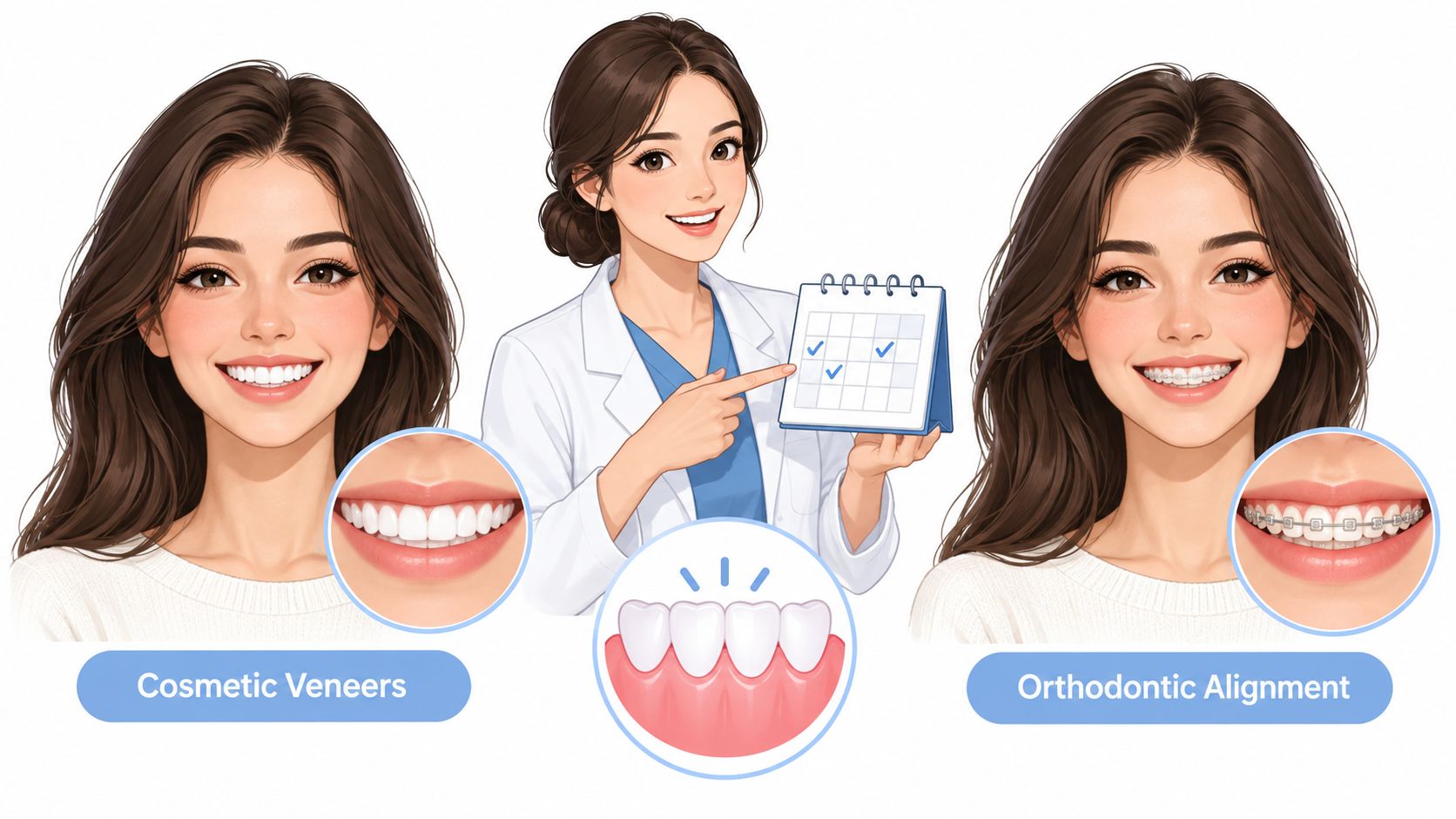
Natural isn't the same as imperfect
Natural-looking planning may involve a softer shade, individual translucency, varied contours, or a result that preserves some of the character of your smile. Digital previews can help patients and clinicians discuss proportions and expectations, but the preview shouldn't replace an examination or a conversation about limitations.
Budget is also part of candidacy planning, even when exact fees aren't discussed online. Ask how the options differ in preparation, longevity, maintenance, repairs, and future replacement needs. Families and high-value restorative patients may prefer different balances between immediate appearance, tooth preservation, treatment time, and long-term care. Dr. Finley can help connect those preferences to the clinical findings.
How to Choose a Cosmetic Dentist in Santa Ana
Choosing a cosmetic dentist in Santa Ana involves more than reviewing photographs. Look for a practice that examines the whole mouth, explains alternatives, and can coordinate cosmetic goals with general, orthodontic, implant, emergency, and sleep-related dental needs when those concerns overlap.
Examine the consultation itself
A useful consultation should leave you understanding why a recommendation was made. Pay attention to whether the dentist asks about your bite, gum health, sensitivity, grinding, old restorations, and medical or dental history. You should also be able to ask what happens if you choose no treatment, a more conservative option, orthodontics first, or restorative care first.
Technology may support that conversation through photographs, imaging, digital records, or a preview when appropriate. Technology isn't a substitute for judgment. Its value depends on whether the team uses it to explain your starting point and communicate realistic possibilities.
Comfort matters, too. Ask what comfort measures are available and whether sedation is appropriate for your situation. A patient who feels heard is more likely to share concerns about sensitivity, anxiety, cost limits, or a previous difficult dental experience.
Consider local continuity
Santa Ana patients may also travel from Costa Mesa, Tustin, Irvine, and Garden Grove. Local access can make follow-up easier, especially when care involves staged appointments, aligner checks, implant healing, a retainer, or monitoring of a restoration.
Orange County's strong provider density doesn't eliminate gaps in coverage or preventive visits. The county figures cited earlier show why a full-scope dental home can matter. A practice that sees children, adults, orthodontic patients, restorative patients, and emergency patients may be able to place a cosmetic question within a broader health picture instead of treating it as an isolated makeover.
Bristol Dental & Orthodontics is a family and cosmetic dental practice in Santa Ana, CA, led by Dr. Andrew Finley. Its services include general and family dentistry, Invisalign and orthodontics, dental implants, cosmetic dentistry, sleep apnea treatment, emergency dental care, and sedation dentistry. You can use a consultation to decide whether the practice's approach, communication style, and available services fit your needs.
Next Steps Toward a Confident Smile
A confident smile doesn't require choosing the most extensive treatment. It requires choosing a plan that respects natural appearance, tooth preservation, function, oral health, and your personal goals. Sometimes that plan begins with whitening or bonding. Sometimes alignment, gum care, restorative treatment, or replacement of a missing tooth needs to happen first.
Bring a short list of concerns to your appointment. You might include a photograph that shows what you notice, questions about sensitivity or grinding, and priorities such as treatment timing, maintenance, or keeping as much natural tooth structure as possible. It's normal not to know the correct procedure before the examination. That's what the consultation is for.
This educational article should be reviewed by Dr. Andrew Finley before publishing. It doesn't replace individualized diagnosis or treatment advice, and no outcome can be guaranteed without an in-person evaluation.
For Santa Ana families and patients from Costa Mesa, Tustin, Irvine, and Garden Grove, the next step is simple. Contact Bristol Dental & Orthodontics on South Bristol Street and ask to schedule a consultation with Dr. Finley about your smile goals, candidacy, and available options.
Bristol Dental & Orthodontics offers family, cosmetic, orthodontic, implant, sleep apnea, emergency, and sedation dentistry for Santa Ana patients. Visit Bristol Dental and Orthodontics to learn more and request a consultation about a natural-looking smile plan that fits your specific needs.