

You're finishing lunch on a busy weekday in Costa Mesa when you reach for your aligners. They were wrapped in a napkin beside your plate, and now the table's been cleared. Between work, errands, and a school pickup, a small interruption has become a call to your dental team.
Small daily moments shape your Invisalign progress. Putting trays back in after lunch, carrying a case, and cleaning your teeth before reinserting them all matter because aligners apply pressure only while you're wearing them. You don't need a complicated routine, but you do need one you can repeat when the day gets busy.
These Invisalign tips focus on the situations patients around Santa Ana, Tustin, Irvine, and Garden Grove encounter: coffee during a commute, lunch away from home, restaurant meals, and packing for a trip. The practical challenge isn't knowing what to do when everything goes smoothly. It's knowing what to do when brushing has to wait, a tray feels unusually tight, or you've missed more wear time than planned.
At Bristol Dental & Orthodontics, most Invisalign patients complete treatment in 6 to 18 months, although your timeline depends on your individual needs and response to treatment. Steady habits support that plan, while honest conversations with your care team help address problems before you make changes on your own.
Table of Contents
- 1. Wear Your Aligners About 20 to 22 Hours a Day
- 2. Remove Aligners for Meals and Drinks Other Than Water
- 3. Brush Before Reinserting Your Aligners
- 4. Clean Your Aligners Gently With Cool Water
- 5. Change Your Trays on Schedule and Keep Them in Order
- 6. Protect Your Aligners When You Are Not Wearing Them
- 7. Use Attachments as Directed and Expect Some Soreness With New Trays
- 8. Keep Your Retainer and Attend Your Check-Ins After Treatment
- How Each Daily Invisalign Habit Compares at a Glance
- Build Daily Habits Now and Let Your Care Team Guide the Details
1. Wear Your Aligners About 20 to 22 Hours a Day
Your lunch break may be short, but the time afterward can stretch. You finish eating, answer a message, head into a meeting, and realize your aligners are still in their case.
At Bristol Dental & Orthodontics, we instruct patients to wear Invisalign aligners 20 to 22 hours a day, removing them for meals, drinks other than plain water, and oral hygiene. The trays apply gentle pressure while they're in place. Leaving them out repeatedly can interfere with how closely your teeth follow the planned movements.
Consistency is a genuine challenge, not a character flaw. A scoping review of clear-aligner adherence reported that only 36% of patients adhered to their prescribed daily wear time, based on data from 2,644 patients, although the underlying study relied on subjective reporting.
Tie reinsertion to something you already do
For a Santa Ana office worker, that might mean brushing after lunch and reinserting trays before opening the next email. For a student in Tustin, it could mean setting a reminder when lunch begins rather than hoping to remember afterward.
- Track time out: Record removal and reinsertion on your phone so you're working with actual wear patterns rather than a guess.
- Keep the case close: Carry it in your work bag or backpack, not somewhere you'll need to search.
- Speak up about obstacles: Tell our team if frequent snacks, nausea, discomfort, or work demands make prescribed wear difficult.
Practical rule: A reminder should bring your aligners back to your teeth, not simply remind you that they're still out.
An occasional disruption and repeated under-wearing aren't the same situation. If missed wear becomes a pattern, contact Dr. Andrew Finley before advancing to another tray.

2. Remove Aligners for Meals and Drinks Other Than Water
A morning latte on the drive from Garden Grove to Santa Ana creates a real trade-off. If you sip throughout the commute and keep drinking at your desk, your trays may stay out much longer than you intended. Drinking with them in isn't the solution.
Remove aligners before eating or drinking anything other than plain water. Coffee, tea, juice, soda, and sports drinks can leave sugar, acids, or pigments around your teeth and inside the trays. Eating with aligners in also puts chewing forces on plastic that isn't intended to function as a chewing surface.
The reason goes beyond keeping trays clear. ADA reporting on clear aligners and the mouth's bacterial ecosystem explains that aligner coverage reduces saliva's access to tooth surfaces, limiting its natural rinsing and protective functions.
Make drinking occasions deliberate
Enjoy your coffee with breakfast, then clean your mouth and reinsert your aligners. During the school run or between meetings, choose plain, cool water while trays are in.
- Group snacks sensibly: When practical, have a snack with a meal rather than creating repeated removal periods. Don't skip needed meals to meet a wear target.
- Use your case immediately: Put trays away before the food or drink arrives.
- Have a fallback: If brushing isn't available, rinse your mouth and trays thoroughly with water, reinsert them, and brush when you can.
Rinsing is a temporary compromise, not an equivalent substitute for brushing. If your schedule regularly leaves you without a place to clean your teeth, bring that practical problem to Dr. Finley so you can discuss a workable routine.

3. Brush Before Reinserting Your Aligners
Clean teeth belong inside clean trays. Brushing before reinsertion removes food and plaque that you don't want sitting beneath an aligner. Cleaning the trays without cleaning your mouth leaves an important part of the job unfinished.
Say you're eating lunch at an Irvine office. A travel toothbrush, fluoride toothpaste, and floss in a small pouch let you clean up before returning to work. That's more dependable than planning to brush later and leaving trays out for the afternoon.
Brush gently along the gumline and around any attachments. Use a soft toothbrush rather than scrubbing harder when your teeth feel tender, and floss daily to clean between teeth where the brush can't reach.
Pack for the lunch you actually eat
Your kit should be small enough that you'll carry it. Keep the toothbrush covered appropriately for travel, rinse it after use, and let it dry when you're back somewhere suitable.
- After meals: Remove visible food, brush carefully, and check your teeth before reinserting trays.
- Between teeth: Use floss or an appropriate interdental aid, especially where food repeatedly catches.
- At home: Make evening brushing and flossing part of the same routine rather than postponing flossing until bedtime fatigue takes over.
Don't assume gum bleeding, persistent bad breath, or a new white spot on a tooth is part of Invisalign treatment. Those changes deserve a dental evaluation, particularly if they continue despite improved cleaning.
Keep your regular dental examinations and cleanings at Bristol Dental & Orthodontics during treatment. An aligner progress visit and preventive dental care serve different purposes, so ask which appointments you need rather than assuming one replaces the other.

4. Clean Your Aligners Gently With Cool Water
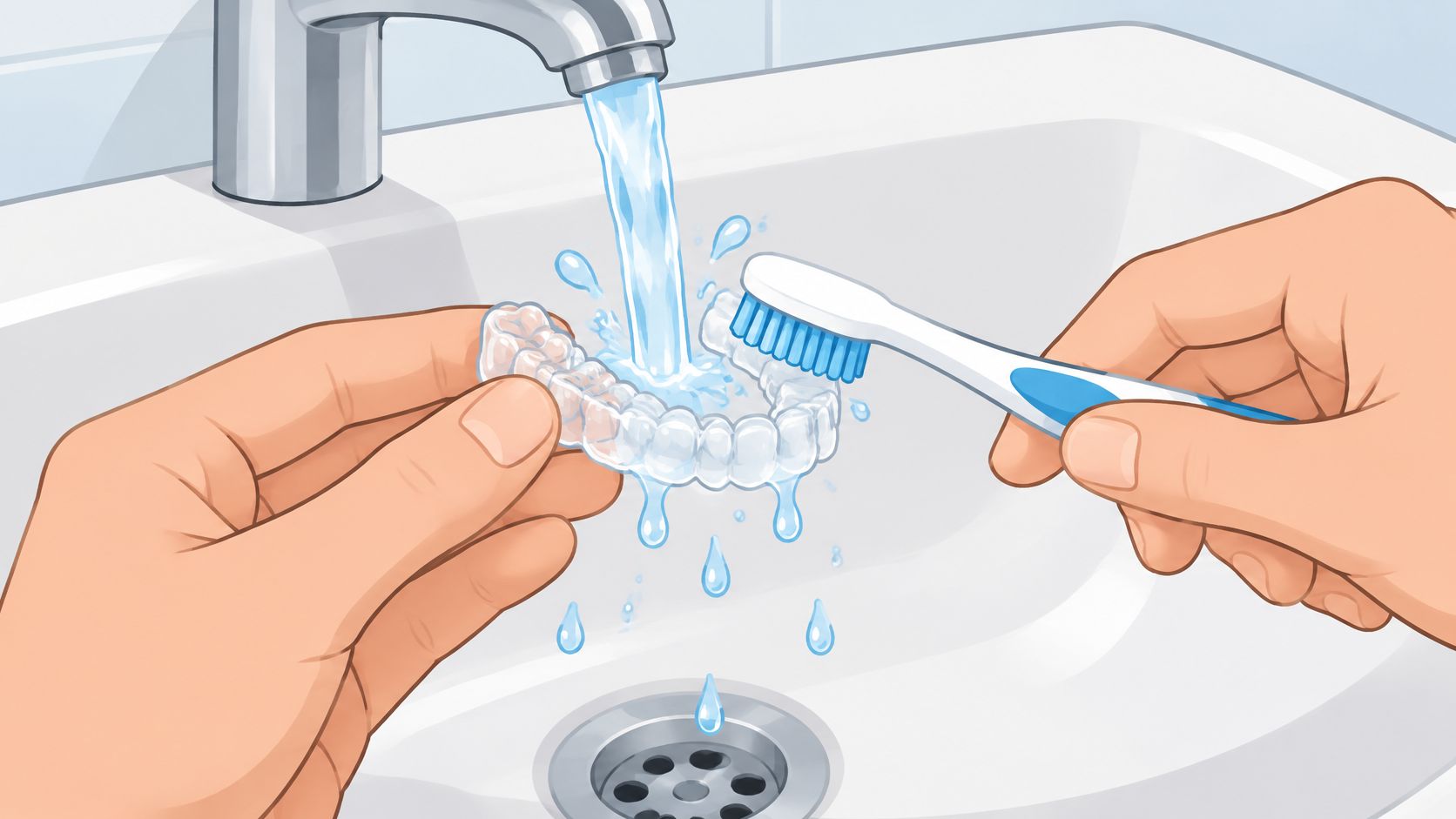
At the bathroom sink before breakfast in Irvine, it's tempting to turn the tap hot and scrub your trays with the same toothpaste you use on your teeth. Gentler cleaning is the better approach. Heat can distort aligner plastic, while abrasive toothpaste can scratch the surface and make it look cloudy.
Rinse your aligners with cool or lukewarm water when you remove them. For routine cleaning, use a separate soft toothbrush and a small amount of mild, non-abrasive soap that our team has confirmed is suitable for your trays. Brush the inner grooves gently, then rinse thoroughly so no soap remains.
A cloudy tray doesn't necessarily need stronger chemicals or harder scrubbing. If you've been using toothpaste, stop and review your cleaning method with our team; existing scratches won't disappear just because you switch products.
Protect the fit first. An aligner that looks clean but has warped no longer fits the way it was designed to.
Keep heat and harsh cleaners away
- Avoid hot water: Don't boil trays, run them through a dishwasher, or leave them near a heat source.
- Skip improvised soaks: Don't use bleach, household cleaners, or mouthwash as an aligner-cleaning solution.
- Use approved products correctly: If our team recommends an aligner cleaner, follow its specific preparation and soaking directions.
- Clean the case too: Wash away residue and let the case dry appropriately rather than returning clean trays to a dirty container.
A car parked during a Santa Ana errand isn't a safe storage spot for aligners. Keep the case with you, away from direct sunlight, and contact Bristol Dental & Orthodontics if a tray becomes distorted, cracked, or unexpectedly uncomfortable. Don't try to reshape it with hot water.
5. Change Your Trays on Schedule and Keep Them in Order
A tray that feels easier to remove isn't permission to skip ahead. Each aligner belongs to a planned sequence, and comfort alone doesn't tell you whether your teeth are ready for the next movement.
At Bristol Dental & Orthodontics, each set is generally worn for about two weeks, with Dr. Finley directing any changes to your individual schedule. Other schedules exist, but another patient's instructions aren't interchangeable with yours.
A clinical study comparing aligner replacement schedules found no clinically significant accuracy difference for the movements studied between 7-day and 14-day changes. That finding doesn't establish that a shorter schedule is appropriate for every tooth movement or patient.
Keep the sequence visible
Before a work trip out of Orange County, check the tray labels and your prescribed change date. Keep unused aligners in their labeled packaging, and note which set you're wearing on your phone.
- Record the change: Add the tray identifier and start date to a calendar.
- Keep previous trays organized: Retain them according to our team's instructions, without mixing them with unused sets.
- Don't improvise: Never skip ahead, alternate sets, or return to an older tray unless Dr. Finley directs you to do so.
Missed wear time changes the conversation. A randomized clinical trial protocol described in a systematic review instructed patients who missed prescribed wear to extend use before progressing to the next aligner.
If a busy Tustin weekend turns into substantial time without trays, contact our team before your scheduled switch. Tell us which set you're wearing, how much wear you missed, and whether the tray still seats fully. That information is more useful than saying it feels tight.
6. Protect Your Aligners When You Are Not Wearing Them
Put your aligners in their case before the first bite. Whether lunch is at a Santa Ana restaurant or you're grabbing food between errands in Orange County, a case keeps the trays from being mistaken for trash or left behind on the table.
Make the case part of your routine. Keep it in the same compartment of your bag, and check that it's there before you leave. If you switch between a work bag and a school-run bag, keeping a case in each can make the habit easier.
Build a restaurant-to-home routine
Remove your aligners with clean hands, place them directly in the case, and put it back in your bag. After eating, clean your mouth and trays as circumstances allow, then reinsert them before the next errand distracts you.
- Before leaving: Check your mouth or case rather than relying on memory.
- When traveling: Keep your aligner supplies somewhere accessible during meals.
- At home: Store the case away from heat and out of reach of pets and small children.
If a tray goes missing: Call the practice promptly for guidance. Don't choose the next or previous set yourself.
Tell our team whether the tray was lost, cracked, or exposed to heat, and which set it was. Don't force a damaged aligner onto your teeth or try to repair it with glue. The right next step depends on your treatment stage and how the tray fits.
7. Use Attachments as Directed and Expect Some Soreness With New Trays
Your new trays may feel snug just as you're getting ready for a Garden Grove school event or a work presentation. Mild pressure can be part of the adjustment, but you shouldn't assume every kind of discomfort is normal.
Some plans use attachments, small tooth-colored shapes bonded to teeth that help the aligners grip and direct movement. If our team provides a seating aid, sometimes called a chewie, use it exactly as demonstrated. It's a tool for helping seat a tray, not a way to force an ill-fitting aligner into place.
A scoping review of patient experiences with clear aligners found generally favorable views of appearance alongside temporary effects involving discomfort, speech, anxiety, and oral-health-related quality of life. Early pressure or a temporary speech change doesn't, by itself, mean treatment is failing.
Separate adjustment from a problem that needs checking
Soft foods may make meals more comfortable when teeth feel tender. Reading aloud at home can help you practice speaking with trays in before a presentation or social event.
- Care for attachments: Brush around them carefully and keep cleaning between your teeth.
- Report a missing attachment: Don't wait until your next visit to mention that a bonded shape has come off.
- Check persistent rubbing: Let us know about sharp edges, sores, or speech difficulties that aren't improving.
- Discuss pain relief: Ask Dr. Finley before using medication for aligner discomfort, since suitability depends on your health history.
Don't file an attachment, trim a tray, or scrub a rough area aggressively. Severe, worsening, or persistent pain needs assessment, particularly when a tray won't seat or you notice swelling. Contact our team rather than continuing to force the fit.
8. Keep Your Retainer and Attend Your Check-Ins After Treatment
Teeth can shift after orthodontic treatment, so retainer wear is part of keeping your result. Our team provides retainers after treatment, along with specific guidance for keeping teeth in their new positions. Follow your prescribed schedule rather than adopting someone else's routine. If your retainer becomes tight, damaged, or difficult to seat, contact the team instead of forcing it.
For a family in Tustin, keeping the retainer case beside the evening toothbrush can make the routine easier to remember. Store the case safely away from the sink edge, and use it whenever the retainer is out of your mouth.
Keep appointments even when everything feels comfortable
During active treatment, check-ins let Dr. Finley assess tooth movement, tray fit, attachments, and oral health. Comfortable trays are a welcome sign, while progress still needs to be assessed against the treatment plan.
To make appointments easier to manage, coordinate them with school, work, and travel before calendars fill up. After treatment, follow the recommended visits and the orthodontist's guidance for maintaining your result. If your school or work routine changes, adjust your retainer routine to fit the new schedule.
How Each Daily Invisalign Habit Compares at a Glance
Use these everyday cues to connect your aligner routine to moments that already shape your day in Santa Ana and Orange County.
| Habit | Everyday scenario | Practical cue |
|---|---|---|
| Wear your aligners about 20 to 22 hours a day | On a commute between Santa Ana and Orange, keep your case and aligners with you rather than leaving them at home. | Put them back in after eating, drinking anything besides water, brushing, or flossing. |
| Remove aligners for meals and drinks other than water | At lunch near the office or over dinner in Tustin, take them out before you sit down to eat. | Keep a case in your bag so the trays have a safe place while you eat. |
| Brush before reinserting your aligners | After a school-run breakfast or a quick snack, clean your teeth before putting the trays back in. | Brushing helps avoid trapping food beneath the aligners. |
| Clean your aligners gently with cool water | During a work break, rinse your trays when you remove them. | Use cool water and gentle cleaning. Hot water can warp the plastic, while abrasive products can scratch it. |
| Change your trays on schedule and keep them in order | Set a reminder that fits your weekly routine, such as after the evening school run. | Follow the change interval your provider gives you. Each set is generally worn for about two weeks. |
| Protect your aligners when you are not wearing them | At a restaurant table in Santa Ana, put your trays in their case rather than a napkin. | A case helps prevent accidental loss or damage. |
| Use attachments as directed and expect some soreness with new trays | When you change trays at home, follow your care team's directions for any attachments or chewies. | Mild soreness can occur with a new set. Contact your care team if you have concerns about fit or discomfort. |
| Keep your retainer and attend your check-ins after treatment | Add appointments and retainer reminders to the calendar you use for work or family plans. | Follow the retainer guidance and follow-up schedule your orthodontist provides. |
Build Daily Habits Now and Let Your Care Team Guide the Details
A late lunch in Santa Ana or a long commute from Irvine can disrupt your usual routine. If your aligners are out longer than planned or you misplace a tray, tell your care team what happened and ask how to proceed. Don't move to the next set early to make up for missed wear.
Removable aligners offer flexibility, but your bite, oral health, and daily routine all matter when choosing an appliance. A review comparing clear aligners with fixed appliances found no consistent treatment-duration advantage for aligners in non-extraction cases. Case complexity and following the treatment plan also affect results.
Bring your everyday questions to your visits
At Bristol Dental & Orthodontics in Santa Ana, Dr. Andrew Finley personally oversees each Invisalign case from consultation through completion. Patients see the same dentist at every visit, providing continuity when discussing fit, comfort, and progress.
Progress check-ups take place every six to eight weeks. Bring up practical challenges, such as limited brushing access at work or a school-run schedule in Garden Grove, so your care team can advise you.
- Describe the obstacle: Explain when your routine gets disrupted and what makes it difficult to follow your wear instructions.
- Ask before adjusting: Bring questions about a cleaning product, an uncomfortable edge, or an upcoming trip to your visit.
- Bring your schedule: A typical day, including meals, work, school runs, and travel, helps make the conversation specific to your routine.
For your consultation, bring your questions about speaking, travel, and the daily demands of treatment. If your routine changes often, describe when and where it does, such as during lunch in Costa Mesa or on the commute through Orange County.
To discuss your goals and whether Invisalign may suit your routine, schedule a consultation at the Santa Ana office through Bristol Dental and Orthodontics.