

You've got your first set of Invisalign trays in, lunch is in front of you, and the obvious question hits fast: What do I do now? That moment is completely normal. New patients often expect the trays to feel simple once they're in, but the true adjustment starts when everyday routines like coffee, lunch breaks, snacks, and dinners out suddenly need a little structure.
The good news is that eating with Invisalign usually becomes easy once you stop thinking in terms of restrictions and start thinking in terms of a routine. Invisalign is designed to be removable, so you can eat normally. The habit that matters is taking the trays out for meals, keeping track of them, cleaning up afterward, and getting them back in promptly.
For many patients in Santa Ana and nearby communities like Tustin, Irvine, Costa Mesa, and Garden Grove, the biggest challenge isn't food itself. It's fitting Invisalign into real life. Work meetings run long. Kids' schedules get busy. Weekend meals stretch out. When patients build a simple rhythm around those realities, treatment tends to feel much more manageable.
Dr. Andrew Finley and the team at Bristol Dental & Orthodontics help patients approach Invisalign that way. Not as a long list of rules, but as a set of practical habits you can live with.
Table of Contents
- Welcome to Invisalign Your First Meal
- The Core Routine Removing and Reinserting Aligners
- Your Invisalign-Friendly Diet Foods to Enjoy and Avoid
- Master Your Schedule to Maximize Wear Time
- Tips for Dining Out Travel and Social Events
- Managing Issues and When to Call Our Office
Welcome to Invisalign Your First Meal
That first meal with aligners can feel awkward. You know the trays are removable, but it's still easy to hesitate and wonder whether you're about to do something wrong. You're not. The basic rule is simple: take Invisalign out for anything except water, eat normally, clean your teeth, and put the trays back in.
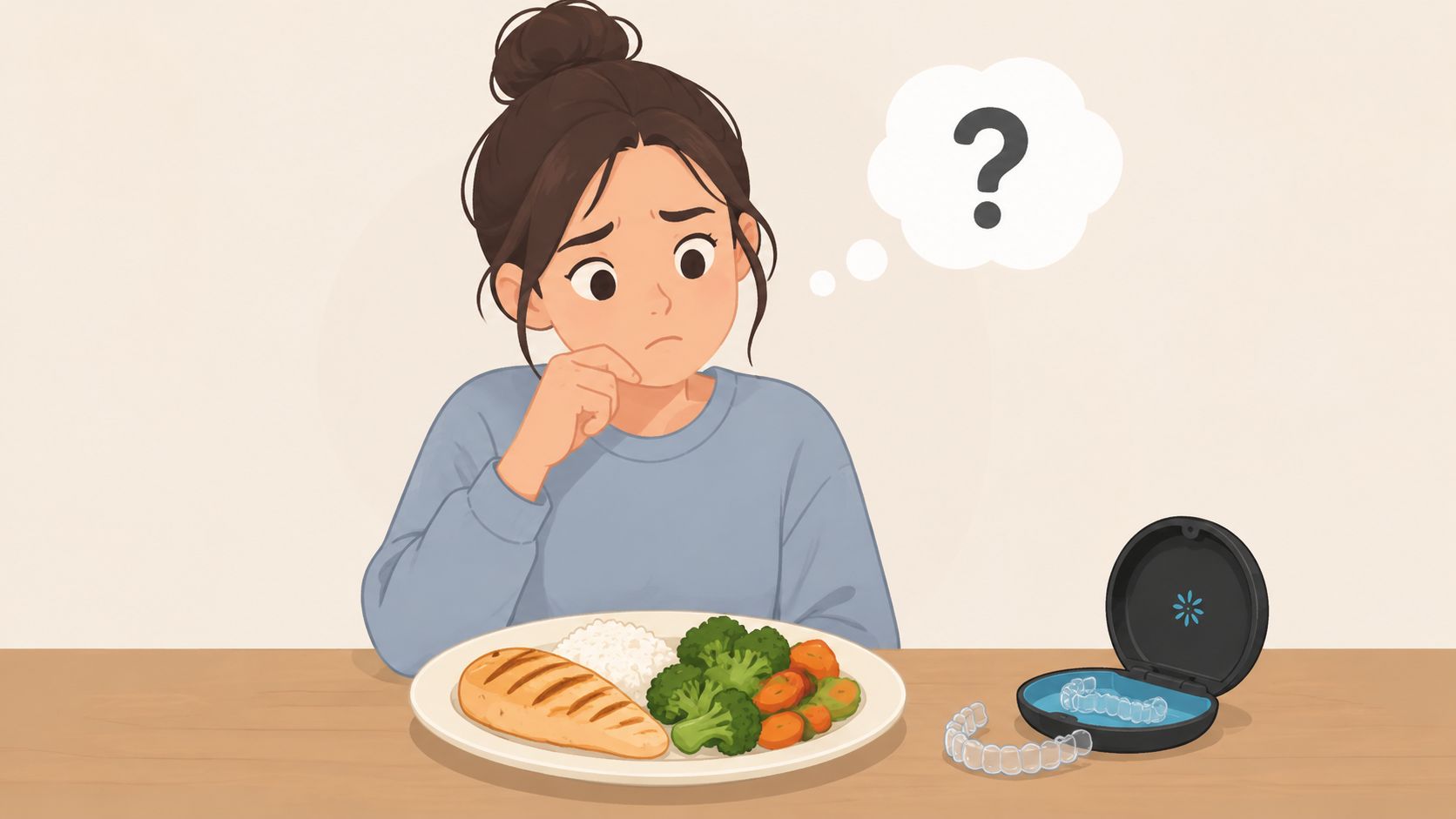
The removable design is one of the biggest reasons patients choose Invisalign in the first place. You don't have fixed brackets and wires limiting what you can chew. But that flexibility comes with a schedule. A widely used patient guidance standard is about 20 to 22 hours of wear per day, and many orthodontists recommend keeping eating to roughly 3 to 4 distinct times per day so meals happen in controlled windows rather than all day long, as explained in this Invisalign eating guide with wear-time recommendations.
Practical rule: If you can remember one thing, remember this. Trays out for food. Trays in the rest of the time.
That shift matters more than is often anticipated. Patients who do well with Invisalign usually don't have a “perfect diet.” They build a reliable routine. Breakfast becomes a meal instead of a long coffee-and-snack stretch. Lunch becomes a defined break. Dinner ends with brushing instead of late-night grazing.
A lot of the stress goes away once you stop asking, “Am I allowed to eat this?” and start asking, “Can I handle this meal cleanly and get my trays back in on time?” That's the question that keeps treatment realistic.
The Core Routine Removing and Reinserting Aligners
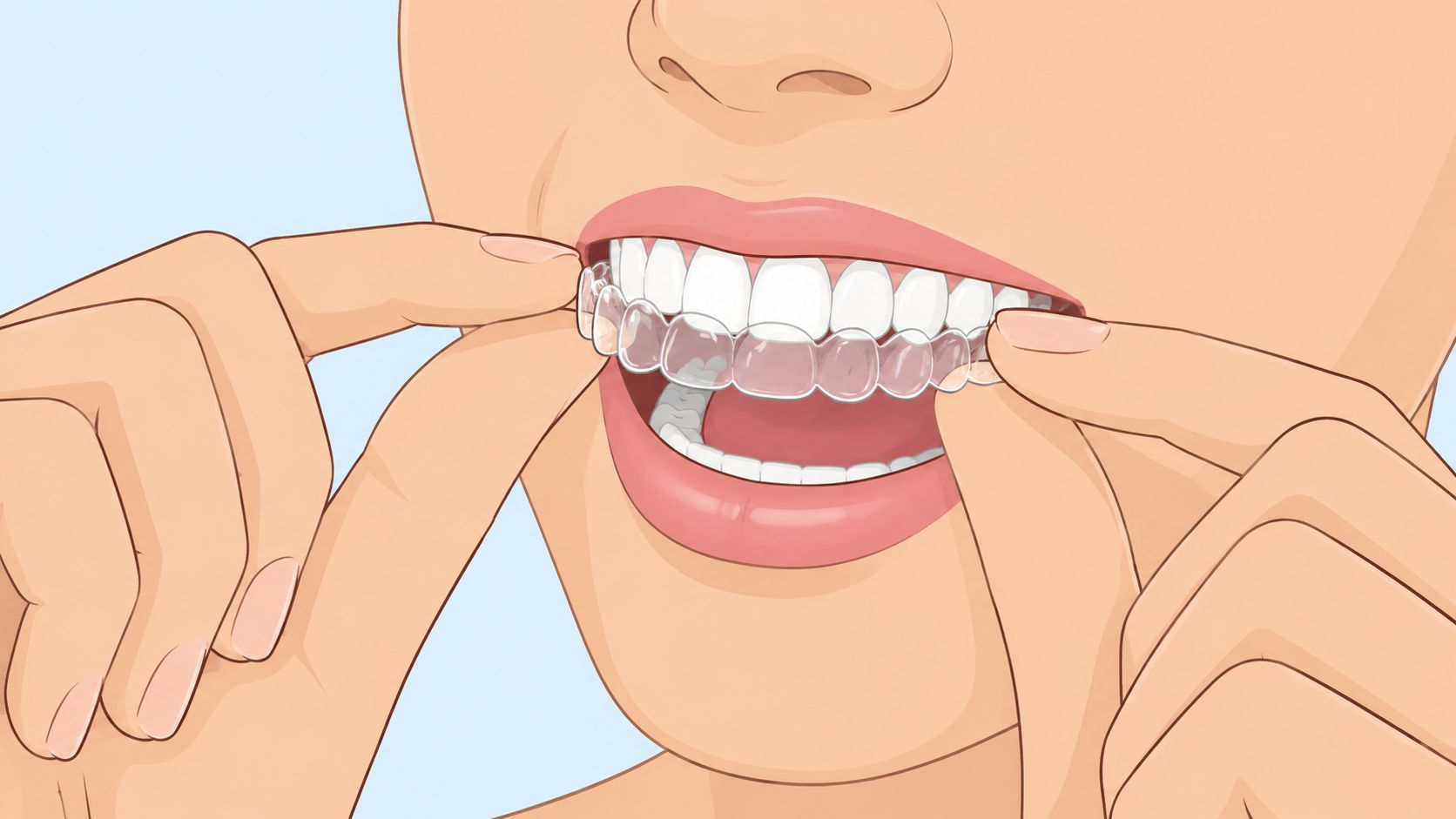
The day-to-day success of eating with Invisalign comes down to one repeatable sequence: Out, Clean, In. If that becomes automatic, most of the common frustrations become much smaller.
What to do before you eat
Start by removing the aligners gently. Use clean fingertips and loosen them from the inside of the back teeth first, then work forward. Don't yank from the front. That puts unnecessary stress on the trays and can make removal harder than it needs to be.
As soon as they're out, rinse them and put them in their case. Never wrap them in a napkin. Patients lose trays that way all the time, especially in restaurants and school cafeterias.
A simple pre-meal checklist helps:
- Wash your hands so you're not putting bacteria on the trays.
- Remove from the back first to avoid bending the aligners.
- Rinse and case them immediately so they stay protected and easy to find.
What to do after the meal
Once you've finished eating, clean your mouth before the trays go back in. Brushing and flossing is the ideal routine because it removes food particles that can otherwise sit under the aligners. If you can't do a full brush right away, rinse thoroughly and clean more completely as soon as you can.
The reason this matters is straightforward. Invisalign fits closely around the teeth. If sugars, starches, or food debris stay trapped underneath, your teeth sit in that environment until the trays come out again.
Putting trays back over unclean teeth is what turns a normal meal into a hygiene problem.
There's also a time-management side to this. Standard Invisalign protocols are built around a 22-hour-per-day wear target, which leaves about 2 hours per day total for meals, drinks other than water, and oral hygiene, according to this clinical overview of Invisalign wear time. That's why long lunches, slow snacking, and repeated tray removal tend to create trouble even when patients mean well.
When patients want one mental shortcut, this is the one I'd give them:
- Out: Remove aligners before food or drinks other than water.
- Clean: Brush and floss if possible. At minimum, rinse well until you can do more.
- In: Reinsert promptly instead of letting the trays sit in the case longer than necessary.
If you want Invisalign to fit your life, this small routine has to fit your day.
Your Invisalign-Friendly Diet Foods to Enjoy and Avoid
The short answer to “What can I eat?” is reassuring. You can eat normal foods because the trays come out. The more useful question is what foods feel easiest and most comfortable, especially when you've just switched to a new set of aligners and your teeth feel tender.
Why texture matters more than most patients expect
A 2024 study on clear aligners and chewing experience showed that food texture changes how difficult eating feels. On a chewing difficulty scale, yogurt or ice cream scored 2.13, rice scored 3.08, pizza scored 4.18, and chewing gum scored 5.84. That lines up with what many patients notice in real life. Softer foods tend to feel easier right after a tray change, while chewy or resistant foods can feel more annoying on sore teeth.
The same study found that 69.2% of participants noticed some movement of aligners during chewing, while 88.3% did not report deformation or breakage. That doesn't mean eating with aligners in is a good idea. It does show why the chewing experience itself is such a common compliance issue. It's noticeable, and patients feel the difference.
This is why food advice during Invisalign shouldn't be framed as punishment. It's mostly about comfort, convenience, and making it easier to stay consistent.
Softer meals usually make the first day or two in a new tray feel much more manageable.
Invisalign Food Guide
| Great Choices (Especially with New Trays) | Foods to Approach with Caution |
|---|---|
| Yogurt because it's soft and easy on tender teeth | Chewy pizza crust because it can feel more demanding to bite through |
| Eggs when you want something filling but not hard to chew | Chewing gum because sticky chewing habits and aligners don't mix well |
| Rice for a softer starch option that usually goes down easily | Hard, crunchy snacks if your teeth are sensitive after a tray change |
| Soup, pasta, softer cooked vegetables when your mouth feels sore | Very sticky foods that cling to teeth and make cleanup harder |
| Smoothies or soft dairy-based foods during tender periods | Deeply staining foods or drinks if you're trying to keep trays clear before reinserting |
A few practical patterns work well for most patients:
- Choose soft foods after new trays. This is often the easiest time to lean on yogurt, eggs, soups, rice, pasta, or other gentler foods.
- Be careful with sticky foods. Even though you'll remove the trays to eat, sticky foods can stay packed around teeth and make cleanup slower.
- Think past the meal itself. A food isn't just “allowed” or “not allowed.” Ask whether it leaves your mouth easy to clean before the trays go back in.
For patients wearing Invisalign in busy Orange County routines, the best eating plan is rarely the strictest one. It's the one you can repeat without frustration.
Master Your Schedule to Maximize Wear Time
Most Invisalign problems don't start with one dramatic mistake. They build gradually through small, repeated decisions. A handful of extra snack breaks. Coffee sipped slowly for hours. Trays sitting in the case while you finish errands and mean to put them back in later.
Think of wear time as a daily budget
The most useful way to look at eating with Invisalign is to treat tray-out time like a budget. You only have so much of it. If meals are organized, the budget usually works. If eating is scattered across the day, the budget starts shrinking fast.
That's why grazing is such a common problem. The issue usually isn't one “bad” food. It's the pattern of repeated removals. This discussion of Invisalign snacking and wear-time tradeoffs makes that point clearly: the most common cause of delays isn't a single food choice, but the cumulative effect of frequent snacking eroding the daily wear target.
A lot of patients find this surprising. They assume being careful about what they eat is the main challenge. In practice, when they eat often matters more.
What works better than grazing
Patients usually do better when they make the day more deliberate. That doesn't mean rigid or miserable. It means deciding in advance when trays will come out instead of removing them every time something small comes up.
Useful habits include:
- Batch your meals. Three defined meals, and if needed, one planned snack, is usually easier to manage than constant nibbling.
- Drink water with trays in. Water doesn't force another removal, so it keeps the day simpler.
- Use a timer if meals run long. This helps people who tend to talk, work, or scroll long after they're done eating.
- Finish the routine before moving on. Don't tell yourself you'll reinsert the aligners “in a little while.” That's where lost time adds up.
For students, parents, and professionals in Santa Ana, that structure often feels more natural after the first week or two. The trays stop feeling like an interruption. They become a cue to eat intentionally and move on with the day.
Tips for Dining Out Travel and Social Events
Dinner out is usually the first moment patients realize Invisalign is less about food rules and more about having a routine you can repeat anywhere. At home, the steps are easy to remember. At a restaurant, on a flight, or at a wedding, the routine needs to be just as simple.

A small go-kit makes a big difference. I tell patients to keep one where real life happens, in a purse, backpack, desk drawer, or car. If the tools are already with you, eating out feels routine instead of inconvenient.
Include:
- Your aligner case so trays do not end up wrapped in a napkin or dropped into a pocket
- A travel toothbrush and toothpaste for a quick cleanup after meals
- Floss or interdental picks for food caught between teeth
- A small mirror if you like to check that the trays are fully seated
Dining out gets easier when you make a few decisions before the food arrives. Remove the trays before the meal starts, store them in the case, and enjoy the meal without picking at food for an hour. Afterward, brush if you have the chance. If you do not, rinse well, check for trapped food, and do a proper cleaning at the next stop.
Menu choices matter less than cleanup. In practice, the harder meals are the ones that leave seeds, leafy pieces, or sticky residue behind. Those foods are not forbidden. They just require more patience before you put the trays back in, which is not always ideal in a busy restroom or between meetings.
Travel follows the same pattern. On a road trip or airport day, patients do best when they tie aligner removal to a planned meal instead of grazing through the day. Eat during a defined break, clean up as well as you can, and get the trays back in. That approach fits real life better, whether you are heading across Santa Ana for errands or meeting friends in Irvine for dinner.
Social events take a little judgment. A long wedding reception, holiday party, or work event can stretch a meal into several hours. If you know you will be eating and drinking over a long period, have a plan before you arrive. Some patients choose one clear meal window, then reinsert their trays once they are done. That usually works better than taking them in and out all evening.
The patients who handle restaurants, travel, and parties best are usually not doing anything complicated. They are prepared, they keep the routine short, and they avoid turning one meal into repeated tray-free time.
You do not need to put your social life on hold during Invisalign treatment. You need a routine that travels well and feels realistic enough to keep using.
Managing Issues and When to Call Our Office
Small hiccups happen. A new tray feels tight. You forgot and took a sip of something sugary with the aligners in. You finished a meal and don't have a toothbrush with you. Those situations are common, and they usually don't mean anything has gone seriously wrong.
Common issues you can usually manage at home
If a new tray makes your teeth feel sore, softer foods can make the first day or two easier. If you accidentally drink something other than water with the aligners in, remove them when you can, rinse, and clean your teeth and trays before putting them back.
If you can't brush right after eating, rinse thoroughly and do a full cleaning as soon as you're able. The main goal is not to make a habit of putting trays back over food and residue.
When to contact your orthodontic team
Some issues shouldn't wait. Call your orthodontic office if:
- You lose an aligner and aren't sure what to wear next
- A tray cracks or no longer fits correctly
- Pain feels persistent or unusual rather than the normal pressure of tooth movement
- You have repeated trouble with insertion or removal
Every patient's bite, tooth movement, and treatment plan is different. That's why any concern that keeps repeating deserves a direct conversation with Dr. Finley rather than guesswork at home. Every article on this topic should also be reviewed by Dr. Finley before publishing so the guidance stays clinically appropriate for our patients and community.
If you have questions about eating with Invisalign or you want to find out whether clear aligners fit your routine, schedule a consultation with Bristol Dental and Orthodontics. We welcome patients from Santa Ana and nearby Orange County communities, and Dr. Andrew Finley can help you understand what Invisalign may look like in your specific case.