
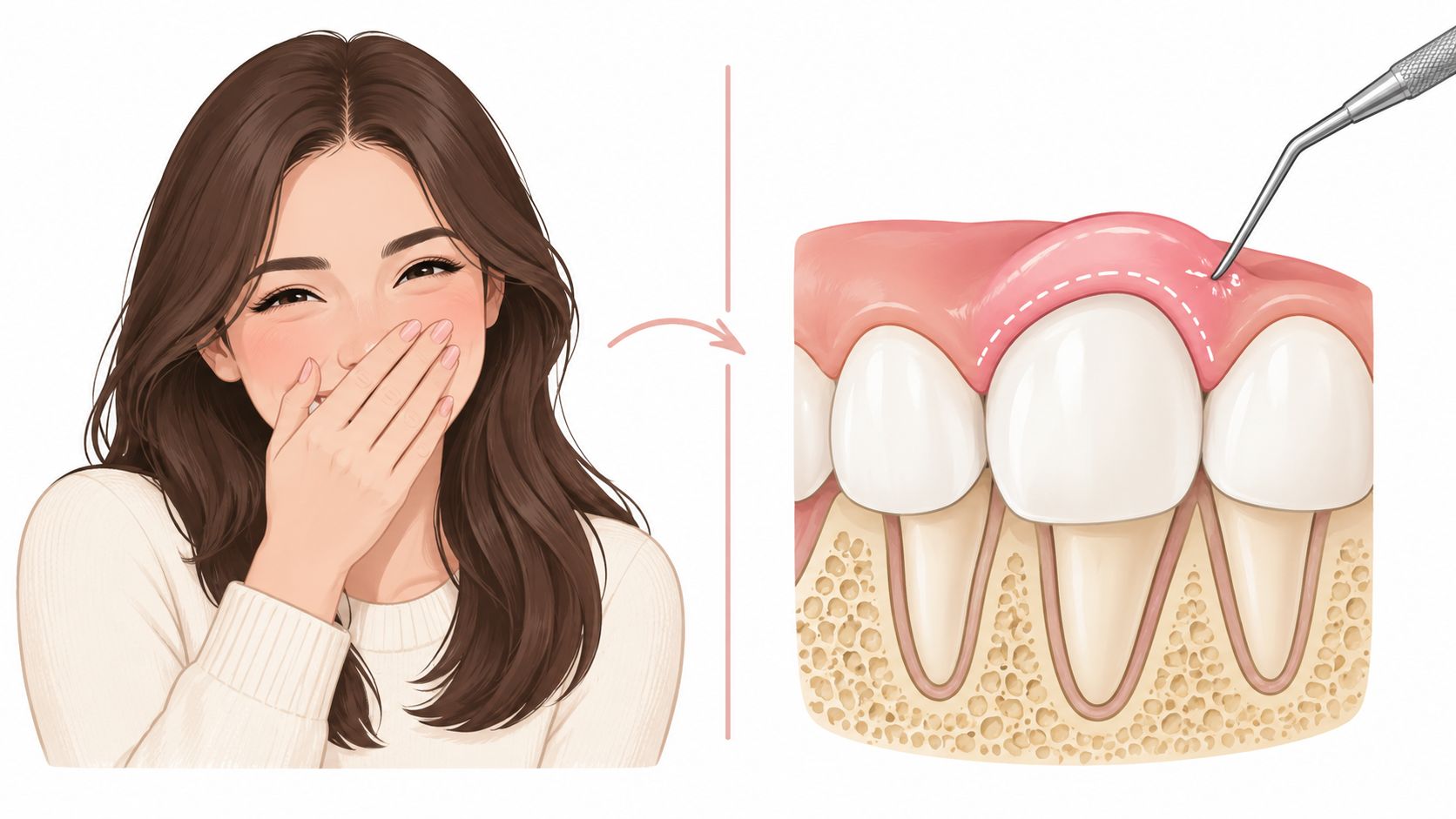
You may know the moment well. You're laughing with family or friends, catch your reflection, and notice that your upper gums seem to take center stage. Perhaps you cover your mouth, smile less broadly, or wonder whether your teeth look short because too much gum shows.
A gum contouring procedure can improve the gumline in the right situation, but it isn't a universal answer to every gummy smile. The most important first step is finding out why your smile shows more gum than you'd like. At Bristol Dental & Orthodontics, Dr. Andrew Finley evaluates the gums, teeth, lip movement, and supporting structures before discussing whether reshaping is appropriate.
Table of Contents
- What the Gum Contouring Procedure Actually Changes
- Why Some Smiles Show More Gum Than Others
- Laser Versus Surgical Gum Contouring
- Are You a Good Candidate and What Happens on the Day
- Recovery, Risks, and How Long Results Last
- Other Ways to Fix a Gummy Smile
- Questions Santa Ana Patients Ask Before Booking
What the Gum Contouring Procedure Actually Changes
Gum contouring reshapes the visible soft tissue around the teeth. A dentist removes or sculpts selected areas of gingiva so more natural enamel can show and the gumline can look more even. Treatment often focuses on the front teeth, where small differences in gum height are easiest to notice.
The proportions are similar to a picture frame. The teeth are the artwork, while the gums form the frame around it. If the frame covers too much of the picture or has an uneven edge, refining the frame can improve the overall balance. Gum contouring changes the frame, not the artwork.
What happens to the gumline
The dentist first plans the proposed margin, then carefully removes or repositions selected gum tissue. The goal is a natural scalloped edge, rather than a perfectly straight line. Because each tooth has its own shape, the gumline should follow those contours instead of making every tooth appear identical.
This can help when thick or overgrown gingiva covers too much of otherwise normally developed tooth structure. It may also correct uneven gum heights that make straight teeth look irregular. Although the result is visible, the planning must account for biology. The dentist needs to protect the attachment between the gum, tooth, and underlying bone.
What it cannot change
Gum contouring does not lengthen a naturally short tooth. A tooth may be short because it has worn down, fractured, or developed with a short visible crown. Removing gum tissue in that situation could expose an unsuitable amount of tooth or leave an unhealthy margin.
The procedure also cannot correct a smile that slopes because of the jawbone, and it does not replace orthodontic tooth movement. If tooth position is the main concern, Invisalign or another orthodontic approach may be more suitable. If the tooth itself needs rebuilding, bonding, veneers, or a crown may be discussed.
Practical rule: A gumline can be reshaped only when the anatomy underneath allows a stable, healthy result.
Before tissue is removed, the dentist should confirm the planned margin with probing and photographs. The margin must leave enough healthy attachment to the tooth and bone, so the cosmetic change does not compromise long-term gum health.
Why Some Smiles Show More Gum Than Others
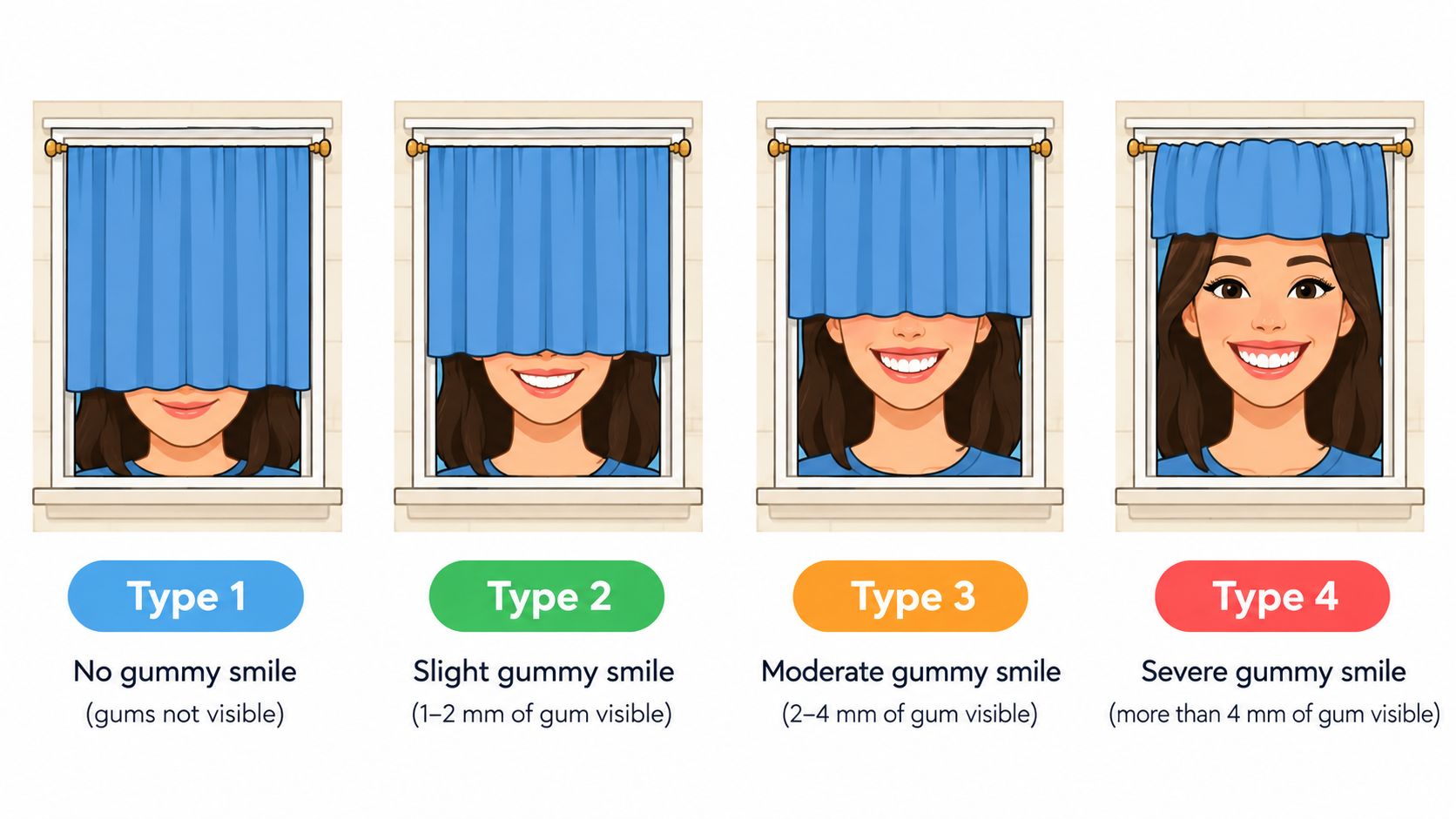
Excess gum display is not one condition. It can result from gum thickness, tooth eruption, lip movement, jaw growth, or a combination of these factors. Only some cases respond well to soft-tissue contouring alone, so diagnosis should come before choosing a procedure.
Four common causes
Thick or excessive gingiva can cover more of the tooth crown than expected. This is the cause most likely to improve with soft-tissue contouring alone, provided the supporting anatomy allows a healthy, stable gumline.
Incomplete tooth eruption leaves part of the crown beneath the gum. The tooth may be healthy, but it has not fully emerged into the visible smile. Removing tissue without checking the tooth's position can create an incomplete result or allow the gumline to move back.
A short or highly mobile upper lip may lift farther during smiling. The gum tissue can be healthy and correctly positioned in this situation. Since lip movement drives the display, reshaping the gums may produce only a limited change.
Vertical jaw growth can position the upper jaw lower in relation to the lips and teeth. When the bone contributes to the amount of gum showing, soft-tissue reshaping alone may not create the desired balance.
The measurement beneath the gum
Gum tissue does not just rest over the tooth. It connects with the tooth and supporting bone through a protective attachment complex, often called the supracrestal tissue attachment. This attachment functions like a biological boundary. The planned gum margin must leave enough space above the alveolar crest to protect healthy tissue.
For esthetic gingival contouring, osseous reduction is indicated when the alveolar crest is less than 3 mm from the planned margin. When the distance is 3 mm or more, gingivectomy alone is generally sufficient, according to a clinical review of the biological requirements for gingival reshaping (clinical review of esthetic gingival contouring).
If this attachment is disturbed, chronic inflammation or gum rebound may follow. A careful consultation therefore includes probing, photographs, and an assessment of tooth eruption and bone levels. The dentist is evaluating the underlying anatomy, not just measuring how much gum appears in a smile.
Why diagnosis comes first
The visible concern may be “too much gum,” while the actual source is gum tissue, tooth position, lip movement, bone, or several factors together. Depending on the findings, a dentist may discuss contouring, orthodontic treatment, restorative care, a lip-focused approach, or delaying treatment until gum health improves.
Patients in Santa Ana and nearby Orange County communities, including Costa Mesa, Tustin, Irvine, and Garden Grove, face the same diagnostic question: which structure is creating the excess display? The appropriate starting point depends on the anatomy and the health of the tissues, not on whether a particular device is available.
Laser Versus Surgical Gum Contouring
Laser and conventional surgical contouring can both reshape gum tissue. Neither technique is automatically right for every patient. The choice should follow the amount and location of tissue, the desired scallop, the health of the gums, and the relationship between the gumline and bone.
| Attribute | Laser Gingivectomy | Surgical (Scalpel/Electrosurgery) |
|---|---|---|
| Cutting method | A dental laser removes or reshapes soft tissue while helping seal small blood vessels | A blade or electrosurgical instrument removes or reshapes tissue |
| Anesthesia | Some cases may use topical or limited local anesthesia, depending on sensitivity and extent | Local anesthesia is commonly used |
| Bleeding control | Often provides strong hemostasis during treatment | Bleeding can be controlled with pressure, technique, or electrosurgery |
| Sutures | Often not needed for soft-tissue contouring | May or may not be needed, depending on the procedure |
| Precision | Useful for controlled soft-tissue reshaping | Offers direct tactile control and remains practical for broader recontouring |
| Comfort evidence | Reviews associate laser-assisted gingivectomy with less postoperative discomfort than scalpel approaches | Effective, though postoperative soreness can be more noticeable |
| Long-term evidence | Long-term superiority over scalpel techniques hasn't been consistently established | Remains a conventional, clinically established approach |
| Cost | Depends on the practice, device, training, and case | Depends on the practice, materials, and case |
Laser energy can seal small vessels as it cuts, which often means less visible bleeding and a cleaner field. Reviews also associate laser-assisted gingivectomy with reduced postoperative pain and discomfort compared with scalpel treatment (review of laser-assisted gingivectomy).
That doesn't mean laser treatment is painless, risk-free, or always faster. Patients can still feel pressure, vibration, warmth, or tenderness afterward. The clinician must also avoid excessive heat at the margins and use appropriate settings and technique.
The equipment shouldn't make the diagnosis. The anatomy and indication should determine the equipment.
A scalpel can offer excellent control, particularly when the dentist needs a sharp point of contact or broader tissue access. Electrosurgery can also assist with bleeding control in selected situations. Evidence reviews describe comfort and hemostasis advantages for lasers, but they also note that studies are often small and varied, so claims that lasers consistently produce better long-term periodontal outcomes go beyond the evidence.
Are You a Good Candidate and What Happens on the Day
A suitable candidate usually has healthy or stabilized periodontal tissue, realistic goals, and a diagnosis showing that excess gum display comes mainly from soft tissue. Active gum disease, untreated decay, or smoking that a patient isn't willing to pause can change the sequence. Health comes before cosmetic reshaping.
Before the appointment
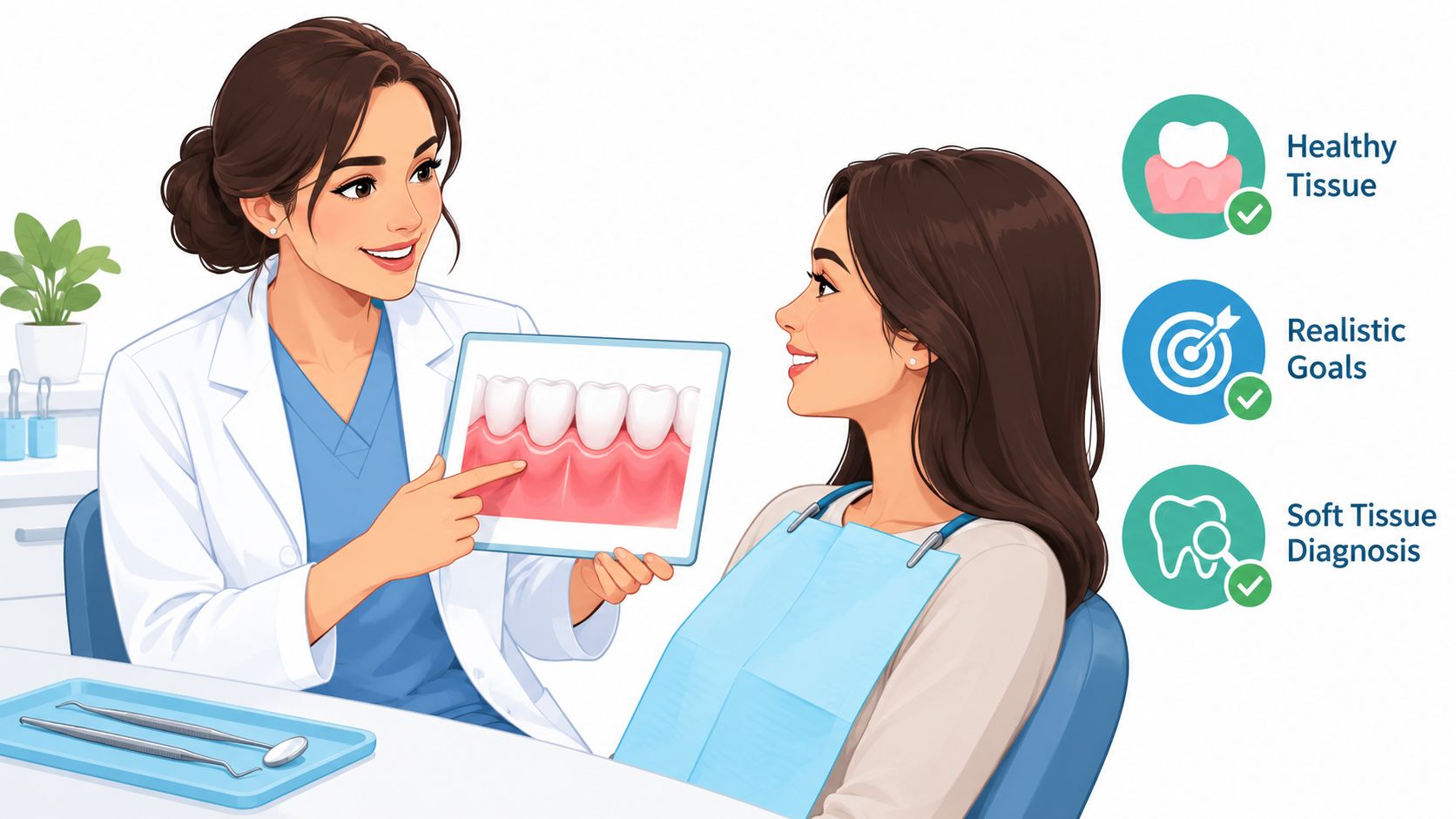
The planning visit may include a hygiene assessment, periodontal probing, photographs, and a discussion of what you'd like to change. Some patients benefit from a diagnostic wax-up, which previews a proposed tooth and gum relationship before treatment begins.
The dentist may ask you to smile naturally, smile broadly, relax your lips, and speak. These views help show whether the issue changes with lip movement or remains consistent. They also help distinguish uneven gum levels from tooth-position concerns.
What the appointment feels like
You'll first review the planned gumline. Local anesthetic is then placed, so you shouldn't feel sharp cutting sensations, although pressure and movement are normal. The dentist marks the proposed scallop, often using a periodontal probe or a laser guide to translate the plan onto the tissue.
The selected tissue is removed or recontoured with a diode laser or surgical instrument. You may hear a high-pitched sound, feel water, or notice pressure around the teeth. The dentist repeatedly checks the margins rather than removing tissue blindly.
The final stage involves refining the scallops and managing any bleeding points. Depending on the technique and extent, a protective dressing may be placed, and you'll receive written aftercare instructions. Planned treatment may take 45 to 90 minutes per arch, but the actual time depends on the number of teeth, the tissue pattern, and whether additional treatment is needed.
When treatment should wait
A dentist may recommend periodontal care before contouring if the gums bleed easily or show active inflammation. Restorative work, orthodontic planning, or treatment for decay may also come first.
A good consultation should leave you knowing what will change, what won't, and why the proposed margin is biologically safe.
You'll usually leave the office the same day. Arrange a ride if your dentist recommends it because of anxiety, sedation, or the extent of treatment, and ask which pain-relief options are appropriate for you.
Recovery, Risks, and How Long Results Last
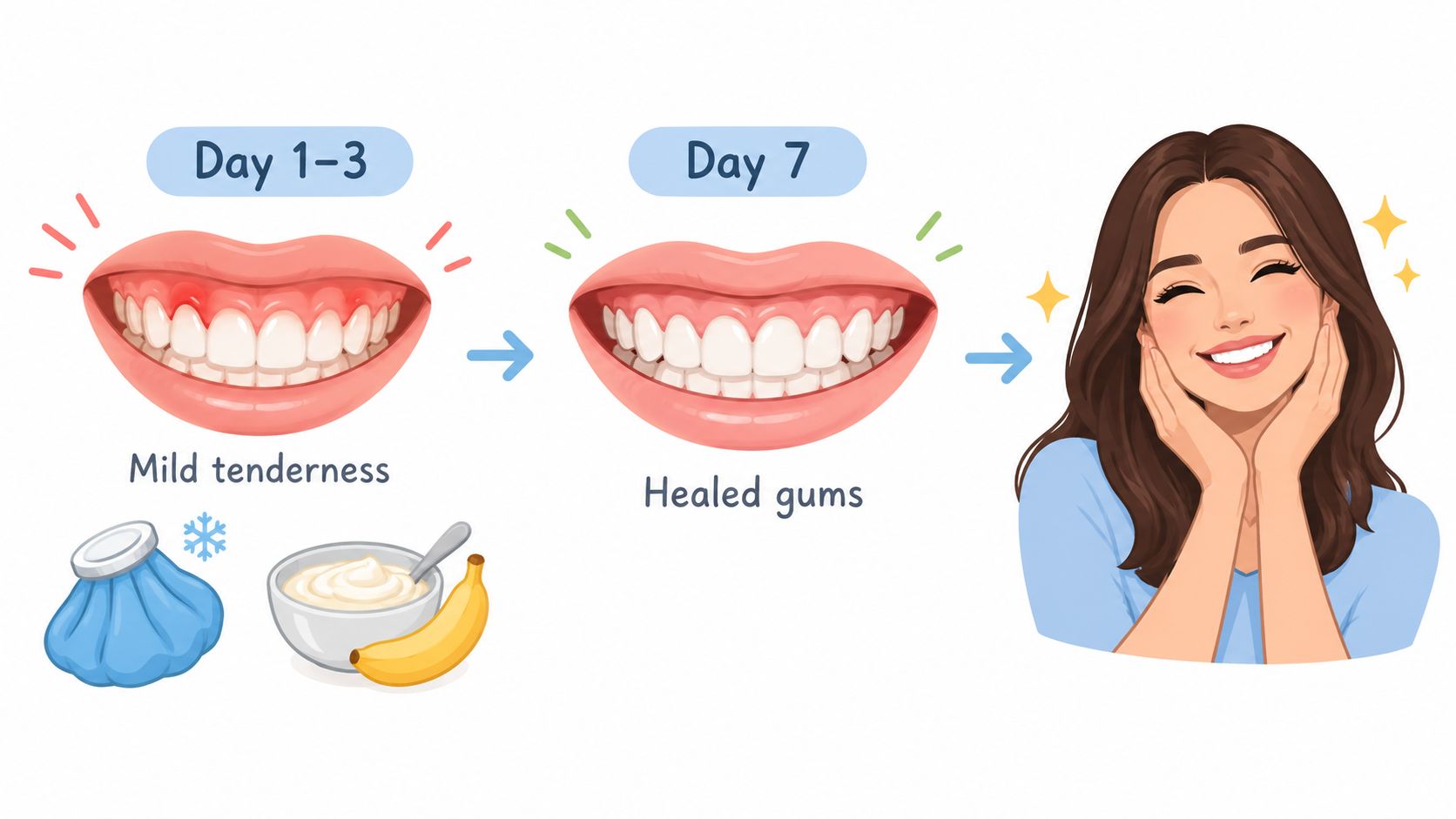
Many patients find recovery manageable, but the gums still need protection while the surface heals. During the first few days, tenderness, minor swelling, and sensitivity are common possibilities. A soft-food diet and careful cleaning can make eating more comfortable.
The visible tissue may look red or uneven before it settles. That early appearance doesn't represent the final contour. Follow-up appointments give the dentist a chance to assess healing and confirm that the margins are maturing as expected.
A practical recovery timeline
- Days 1 to 3: Tenderness and minor swelling may occur. Over-the-counter analgesics may be enough for some patients, but use medication only as directed and ask your dentist or physician if you have health conditions or take other medicines.
- Around day 7: Surface tissue has often re-epithelialized, and sutures, if used, may dissolve or be removed. Many patients can return to normal eating as comfort allows.
- Weeks 4 to 6: The gum margins continue to mature, and the aesthetic result becomes easier to judge.
Plan important events with the healing process in mind. A wedding, work presentation, family photograph, or vacation deserves enough breathing room for early redness and swelling to subside.
Risks that deserve a direct conversation
Possible complications include removing too much or too little tissue, asymmetry, recession that exposes root surfaces, prolonged bleeding, and infection. Tissue can also heal differently from one side to the other, particularly when the original gumline was uneven.
A 2023 systematic review of crown lengthening, a core form of gum contouring, screened 78 studies and included 4 clinical controlled trials involving 182 surgical procedures across 111 participants. It found no statistically significant changes in supracrestal tissue attachment, bone level, or probing depth at 3 and 6 months between treated and adjacent sites, while crown height was significantly higher at treated sites at both time points (2023 systematic review of crown lengthening surgery). In practical terms, that supports the clinical goal of exposing more tooth without measurable short-term periodontal harm in properly selected cases.
Long-term stability depends on the diagnosis, technique, healing response, gum health, home care, and smoking status. A 2021 review reported an acceptable long-term survival rate of 78.4% at 10 years for structurally compromised teeth treated with crown lengthening, and a cumulative success rate of 68% for teeth or patients followed for at least 15 years (Cleveland Clinic overview of gum contouring). Those figures relate to crown lengthening and tooth preservation, not a promise that every cosmetic contour will remain unchanged.
Other Ways to Fix a Gummy Smile
Gum contouring is sometimes the simplest solution, but simplicity matters only when the diagnosis is correct. If the gum is not the main reason for the smile's appearance, another treatment may produce a more balanced result.
Orthodontic intrusion moves teeth vertically when over-eruption contributes to excessive display. This may suit someone whose teeth and supporting structures need repositioning rather than tissue removal. Invisalign and other orthodontic plans can sometimes be part of a broader cosmetic sequence.
Composite bonding or veneers add visible tooth length when wear, shape, or naturally short crowns affects the gum-to-tooth ratio. These treatments change the artwork in the picture-frame analogy, while contouring changes the frame. They may be considered separately or together, depending on enamel, bite, tooth health, and aesthetic goals.
Botulinum toxin treatment can reduce upper-lip elevation when lip mobility is the dominant cause. Its effect is temporary, so it's a lower-commitment option for some patients but requires future maintenance and careful assessment of facial movement.
Crown lengthening may remove gum and a small amount of supporting bone when the tooth's clinical crown is structurally short or the attachment level requires more room. This is more involved than soft-tissue-only contouring and should be planned around tooth restorability and periodontal health.
Lip repositioning surgery changes the resting position and movement of the upper lip for selected moderate cases. It addresses the lip rather than the gum, so candidacy depends on facial anatomy and the reason the lip rises during smiling.
| Treatment | Best For | Downtime | How Long It Lasts |
|---|---|---|---|
| Gum contouring | Excess or uneven soft tissue with suitable bone spacing | Usually brief, with early tenderness and swelling | May be stable when the diagnosis and tissue support are favorable |
| Orthodontic intrusion | Tooth over-eruption or vertical tooth-position concerns | Gradual treatment period with ongoing appointments | Intended to create a lasting tooth-position change, subject to retention |
| Bonding or veneers | Short, worn, or irregular visible tooth structure | Often limited, depending on preparation | Depends on material, bite, tooth care, and future maintenance |
| Botulinum toxin | Hyperactive upper lip | Little procedural downtime, with temporary effects | Temporary and requires reassessment |
| Crown lengthening | Structurally short crowns or inadequate room above the bone | More involved healing than soft-tissue-only contouring | Designed for a stable margin when biologic requirements are respected |
| Lip repositioning | Selected cases where upper-lip position drives gum display | Surgical healing period | Can be lasting, but results depend on anatomy and healing |
The key question isn't “Which treatment is most modern?” It's “Which structure is creating the imbalance?” A consultation with Dr. Finley can help determine whether contouring, Invisalign, restorative dentistry, or another approach should come first.
Questions Santa Ana Patients Ask Before Booking
Before booking, ask for a diagnosis and a written plan, not just a procedure name. Gum contouring fees depend on the number of teeth, whether one or both arches are treated, the technique, the shape of the gumline, and whether periodontal or restorative care is needed. A lower fee may reflect a narrower treatment plan rather than a better value.
Santa Ana price ranges cannot be stated responsibly without an examination. Request an estimate that explains what you are paying for and which services are separate. Ask whether it includes:
- Planning photographs and measurements
- Local anesthesia
- A protective dressing, if recommended
- Follow-up visits
- Periodontal treatment
- Restorative care, if the tooth shape or position also needs attention
The written plan should also identify the teeth being treated, the proposed technique, and whether additional visits may be needed. This makes it easier to compare plans based on what they include, rather than comparing a single number.
Insurance and payment questions
Insurance commonly excludes treatment classified as cosmetic. Coverage may differ according to the diagnosis, plan rules, documentation, and whether the procedure is considered medically necessary. Do not assume coverage from the procedure name alone. Ask the dental office what it can verify, then contact your plan for the final determination.
Payment options may be available through the practice or through outside healthcare financing programs. Before accepting terms, ask whether approval is required, which services the arrangement covers, and how payments are scheduled. Request these details in writing.
Choosing the provider
Ask who will perform the procedure and how the gumline, tooth position, and supporting bone will be assessed. The proposed technique should follow those findings. Ask what alternatives fit your diagnosis, how the new margin will be planned, and who will monitor healing.
Bring a list of medications, medical conditions, and allergies. Previous dental records can help if they are available. Photographs showing what concerns you about your smile may also help explain your goals. Mention plans for veneers, whitening, Invisalign, dental implants, or sleep apnea care, because the order of treatment can affect the result.
A consultation should leave you able to answer three questions: What is causing the gum display? What can contouring change by itself? What additional treatment would be needed if the cause involves teeth, bone, or lip movement?
Timing and comfort
Several teeth may be treated in one visit, including a full upper arch, when the tissue pattern and plan support it. The appropriate scope depends on symmetry, healing, and the intended smile design. Treating more teeth at once is not automatically better.
Proper anesthesia should prevent sharp pain during treatment. You may still notice pressure, vibration, warmth, or sounds. Tenderness and sensitivity can occur afterward. Ask when whitening or veneers should be completed, since the gum margins need time to heal before final shade selection or restorative measurements.
Patients considering sleep-related care can also ask about a custom oral appliance. This noninvasive mouthpiece is worn during sleep and can help keep the airway open by moving the lower jaw forward or holding the tongue in place. Guidance on oral appliances for sleep apnea describes their use for primary snoring and mild to moderate obstructive sleep apnea. Discuss that concern with the dentist if it may affect your dental treatment sequence.
Bristol Dental & Orthodontics provides consultations for gum contouring and can evaluate whether the gumline, tooth position, lip movement, or another factor shapes your smile. Visit Bristol Dental and Orthodontics to request a consultation with Dr. Andrew Finley in Santa Ana and discuss a plan suited to your needs.