

You're an adult considering braces, but you're picturing the reaction at work, in family photos, or during a presentation. You want straighter teeth, yet the thought of wearing obvious metal brackets makes you hesitate. That's where ceramic braces often enter the conversation.
Table of Contents
- A Patient's First Look at Ceramic Braces
- How Ceramic Brackets Are Made and Why It Matters
- The Ceramic Braces Treatment Journey Step by Step
- Ceramic Braces Compared to Metal Braces and Invisalign
- Pros and Cons of Choosing Ceramic Braces
- Daily Care and Maintenance Tips for Ceramic Braces
- Who Makes a Good Candidate for Ceramic Braces
- Common Questions Santa Ana Patients Ask About Ceramic Braces
A Patient's First Look at Ceramic Braces
Ceramic braces are fixed braces with tooth-colored or clear brackets bonded to the front surfaces of your teeth. A metal archwire runs through the brackets and applies gentle, continuous pressure, gradually guiding your teeth into better positions. Some systems use a tooth-colored or frosted-looking wire, although the wire itself is still generally made of metal.
The important point is that ceramic braces use the same basic tooth-moving principle as traditional braces. The cosmetic difference comes mainly from the bracket material, not from a completely different orthodontic system. The American Association of Orthodontists' explanation of braces describes the same general process, brackets are attached to teeth and an archwire applies pressure over time.

Why adults often consider them
Ceramic brackets are less noticeable than shiny metal brackets, especially from a normal conversational distance. That can matter if you work with clients, attend school, appear on camera, or want orthodontic treatment to attract less attention.
They're still visible up close. They're also still bonded to your teeth, so they don't offer the same removable, tray-based experience as clear aligners. You're choosing a more discreet version of fixed braces, not invisible treatment.
A consultation should therefore cover more than appearance. You'll want to understand:
- How the brackets are made, and why ceramic behaves differently from metal.
- What treatment feels like, from bonding day through wire adjustments.
- How ceramic compares with metal braces and Invisalign, including eating, cleaning, and daily routines.
- What can go wrong, including bracket damage, friction, staining of elastic ties, and removal-related enamel concerns.
- Whether your teeth, bite, lifestyle, and treatment goals make ceramic a sensible choice.
For a patient in Santa Ana, Costa Mesa, Tustin, Irvine, or Garden Grove, the right choice depends on the examination rather than appearance alone. Ceramic braces can be a thoughtful option, but they aren't automatically the right option for every smile.
How Ceramic Brackets Are Made and Why It Matters
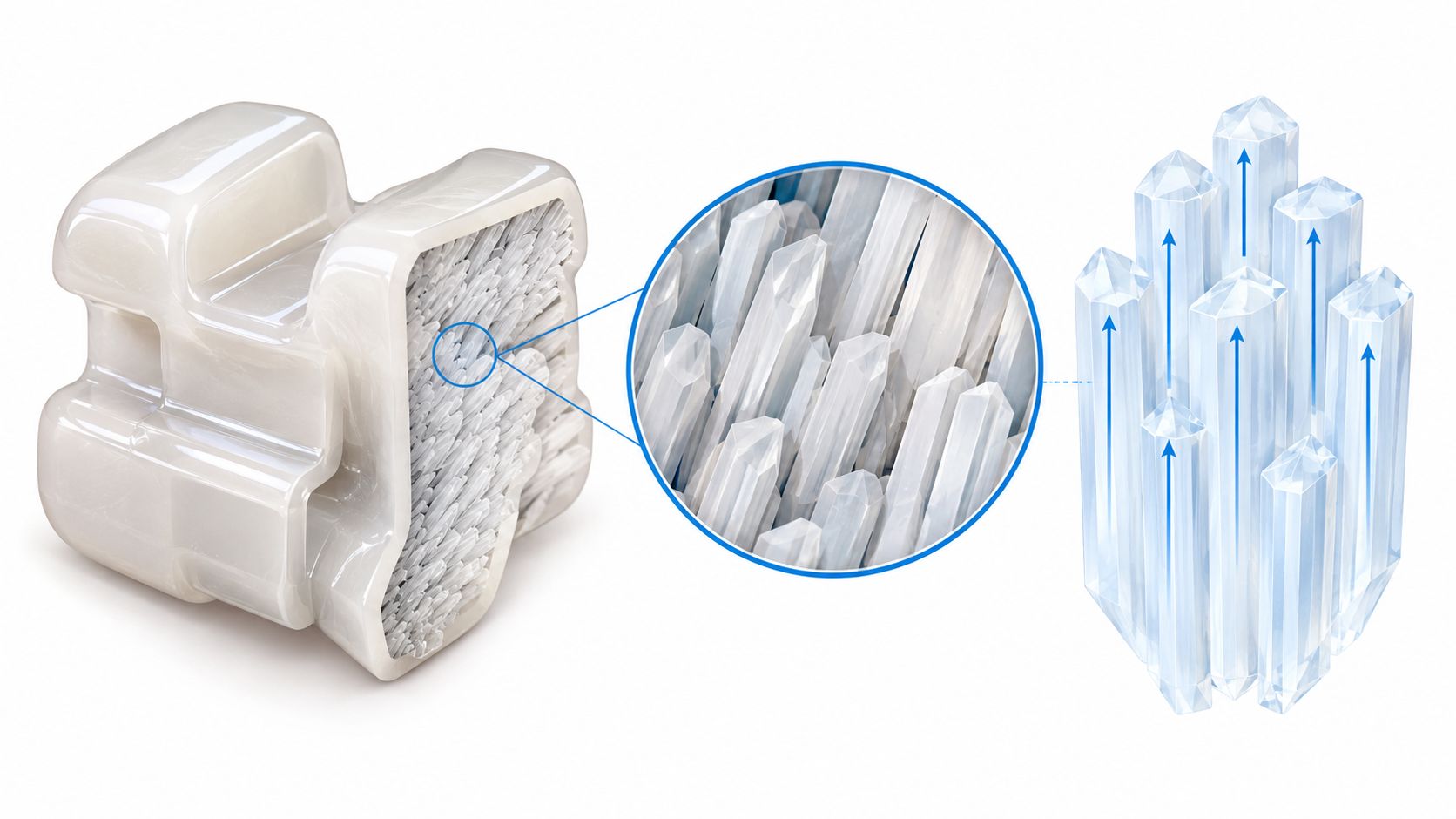
Most ceramic brackets are made from alumina, a ceramic material valued for strength, chemical stability, and biocompatibility. Manufacturers produce ceramic brackets as either polycrystalline or monocrystalline systems. In simple terms, polycrystalline ceramic is made from many small crystals, while monocrystalline ceramic is formed from a more continuous crystal structure.
That structure affects how the bracket looks and behaves. Monocrystalline designs can appear more translucent, while polycrystalline brackets generally have a tooth-colored appearance. The clinical review of ceramic orthodontic brackets explains the central trade-off in everyday language: ceramic is more brittle and less ductile than stainless steel.
Metal can bend to absorb force. Ceramic has less tolerance for deformation, so it may crack or fracture if it receives excessive force during handling, adjustment, biting, or removal. That doesn't mean a ceramic bracket will break because you're eating normally. It means your orthodontist has to consider placement, bite forces, food habits, and the mechanics of your particular case.
Appearance and movement involve different surfaces
The ceramic bracket may look smooth and tooth-like, but the archwire still has to slide through or against the bracket. Ceramic can create more friction than stainless steel in sliding mechanics, depending on the bracket design, wire, angle, and force being used. Some ceramic systems include a metal slot or silica insert to reduce that friction while keeping the bracket's visible portion discreet, as described in research on friction in ceramic brackets.
That engineering detail matters because your orthodontist may select a particular bracket design for the front teeth while using different mechanics elsewhere. The choice isn't just “ceramic or metal.” It can also involve the bracket's surface, slot material, shape, location, and how your teeth meet.
Practical rule: Ceramic is chosen for its appearance, but the bracket still has to perform mechanically. Your treatment plan should account for both.
The Ceramic Braces Treatment Journey Step by Step
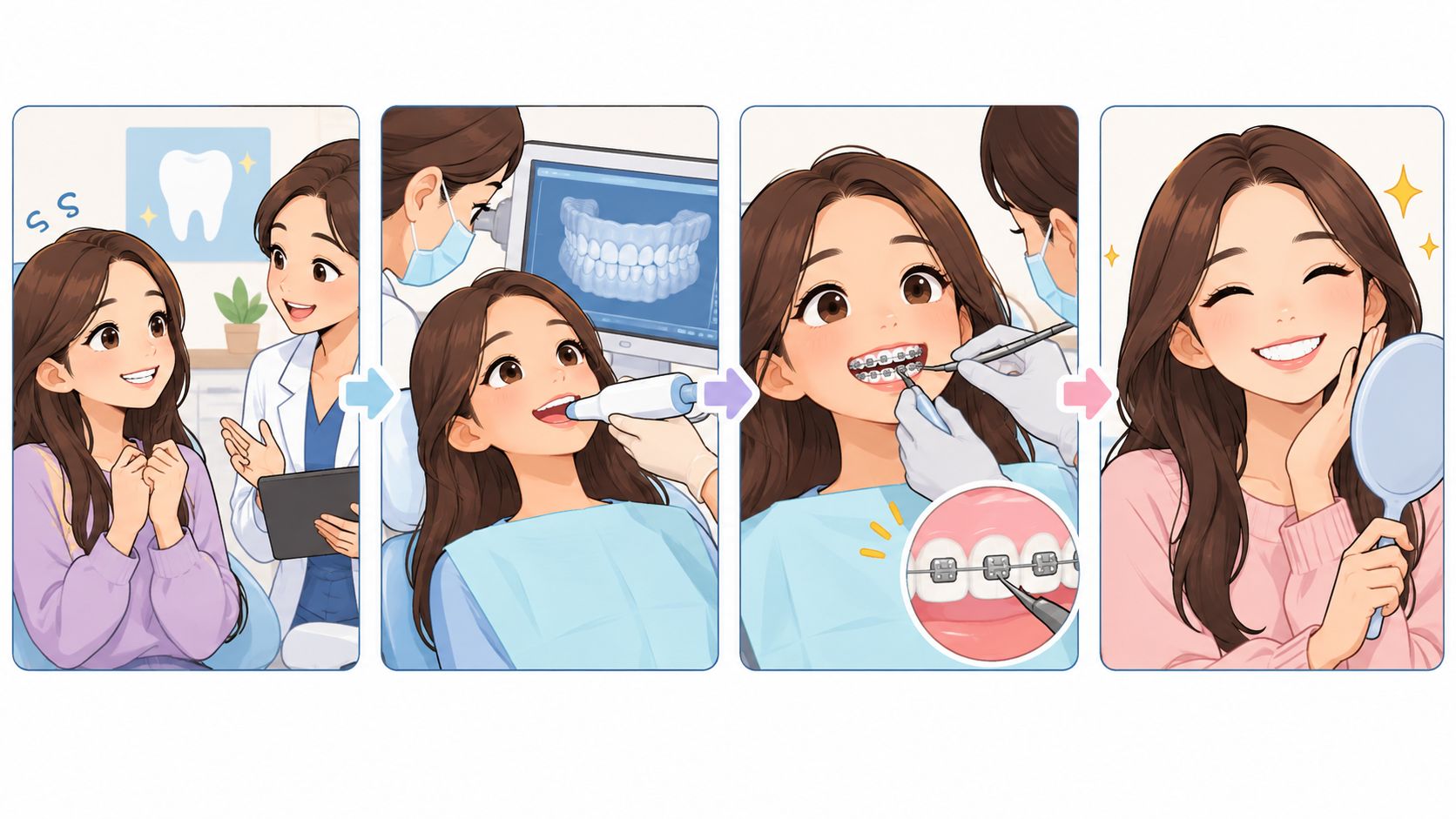
Your first appointment usually begins with an examination of your teeth, gums, bite, and jaw relationship. The team may take photographs, X-rays, or digital scans so the orthodontist can see more than what's visible in the mirror. Those records help determine whether fixed ceramic braces can move your teeth predictably and whether another option would be more appropriate.
Bonding day is focused on attaching each bracket in its planned position. You'll keep your mouth open for much of the appointment, and your teeth may feel dry or unfamiliar while the brackets are placed. Once the archwire is secured, your lips and cheeks may notice the brackets before you do.
What the first week can feel like
The first few days can bring pressure, tenderness, or mild soreness as your teeth begin responding to the wire. Softer foods can make eating easier, and orthodontic wax may help if a bracket rubs against the inside of your cheek. Speaking can feel slightly different at first because your lips are adapting to new surfaces.
You won't usually feel your teeth moving from moment to moment. The archwire works gradually, and your orthodontist makes controlled changes during follow-up appointments. Adjustment visits are commonly scheduled at intervals such as four to eight weeks, depending on the appliance and your treatment plan.
At each visit, the orthodontist may replace or adjust the wire, change elastic ties, inspect the brackets, and evaluate your bite. Mild pressure after an adjustment is common, but severe pain, facial swelling, or a wire that is cutting into tissue should be reported to the practice rather than ignored.
From active treatment to retainers
The total timeline varies with crowding, spacing, bite concerns, tooth movement, growth, cooperation with instructions, and the type of mechanics required. Patient conversations about ceramic braces often include a broad treatment estimate of 12 to 24 months, but your examination is what determines whether that range applies to you.
Removal day requires careful technique because ceramic is more brittle than metal. After the brackets and adhesive are removed, your teeth are cleaned and retainers are provided or prescribed to help hold the new positions. Retainers aren't an optional finishing touch. Teeth can shift after orthodontic treatment, so your retention plan is part of the treatment, not an afterthought.
Ceramic Braces Compared to Metal Braces and Invisalign
The most useful comparison isn't just which option looks nicest. Ask which appliance fits your case complexity, daily habits, appearance priorities, eating routine, and ability to follow instructions.
Ceramic braces occupy the middle ground. They're less conspicuous than metal braces, but they remain fixed to your teeth. They can handle many of the same orthodontic tasks as metal braces, while their material requires more careful planning. Invisalign uses removable clear aligners, which can be more discreet and flexible for meals, but suitability depends on the movements your teeth require and how consistently you wear the aligners.
| Feature | Ceramic Braces | Metal Braces | Invisalign |
|---|---|---|---|
| Visibility | Tooth-colored or clear brackets are less noticeable than metal, though they can still be seen up close. | Metal brackets and wires are visibly distinct. | Clear removable trays are generally less noticeable during normal conversation. |
| How they stay in place | Bonded to the teeth for continuous treatment. | Bonded to the teeth for continuous treatment. | Removable trays must be worn according to the treatment plan. |
| Eating | Hard or very crunchy foods may damage brackets, so food often needs to be cut or softened. | Food restrictions also apply because brackets and wires can be damaged. | Trays are removed for meals, but teeth should be cleaned before putting them back in. |
| Friction and mechanics | Some ceramic designs create more friction during sliding, so wire and bracket selection matter. | Stainless steel generally offers favorable sliding mechanics. | Movement occurs through a sequence of planned trays, with limits based on the case. |
| Comfort | Brackets may feel bulky at first, and cheek adaptation takes time. | The mouth also needs time to adapt to brackets and wires. | Trays can feel smooth, though they may create pressure or temporary speech changes. |
| Treatment length | Varies with the case and mechanics. Friction or bracket repairs may influence the course. | Varies with the case and treatment response. | Varies with case suitability, wear, and the planned movements. |
| Cost considerations | Often selected when appearance justifies a potentially higher appliance cost, but the actual fee depends on the practice and plan. | Often has a lower appliance cost, but fees vary by case and provider. | Fees vary according to the treatment plan, number of aligners, and complexity. |
| Lifestyle fit | Suits patients who want fixed treatment with a more discreet appearance. | Suits patients who prioritize durability and traditional fixed mechanics. | Suits patients who value removability and can follow a consistent wear routine. |
The practical decision
Ceramic may suit an adult who wants fixed braces but feels self-conscious about metal. Metal may make more sense when durability, complex mechanics, sports, or the simplest appliance choice carries greater weight. Invisalign may appeal to someone who wants removable trays and can manage the responsibility that comes with taking them out and putting them back in.
Neither ceramic braces nor aligners are automatically more comfortable or faster. The clinically appropriate choice depends on the tooth movements required, your bite, your hygiene, and the plan your orthodontist can control reliably.
Pros and Cons of Choosing Ceramic Braces
You are preparing for a presentation, checking a photograph, or meeting someone new, and your front teeth are the part of your smile you notice first. Ceramic braces can make fixed orthodontic treatment feel easier to fit into an adult lifestyle because their brackets blend more closely with natural tooth color.
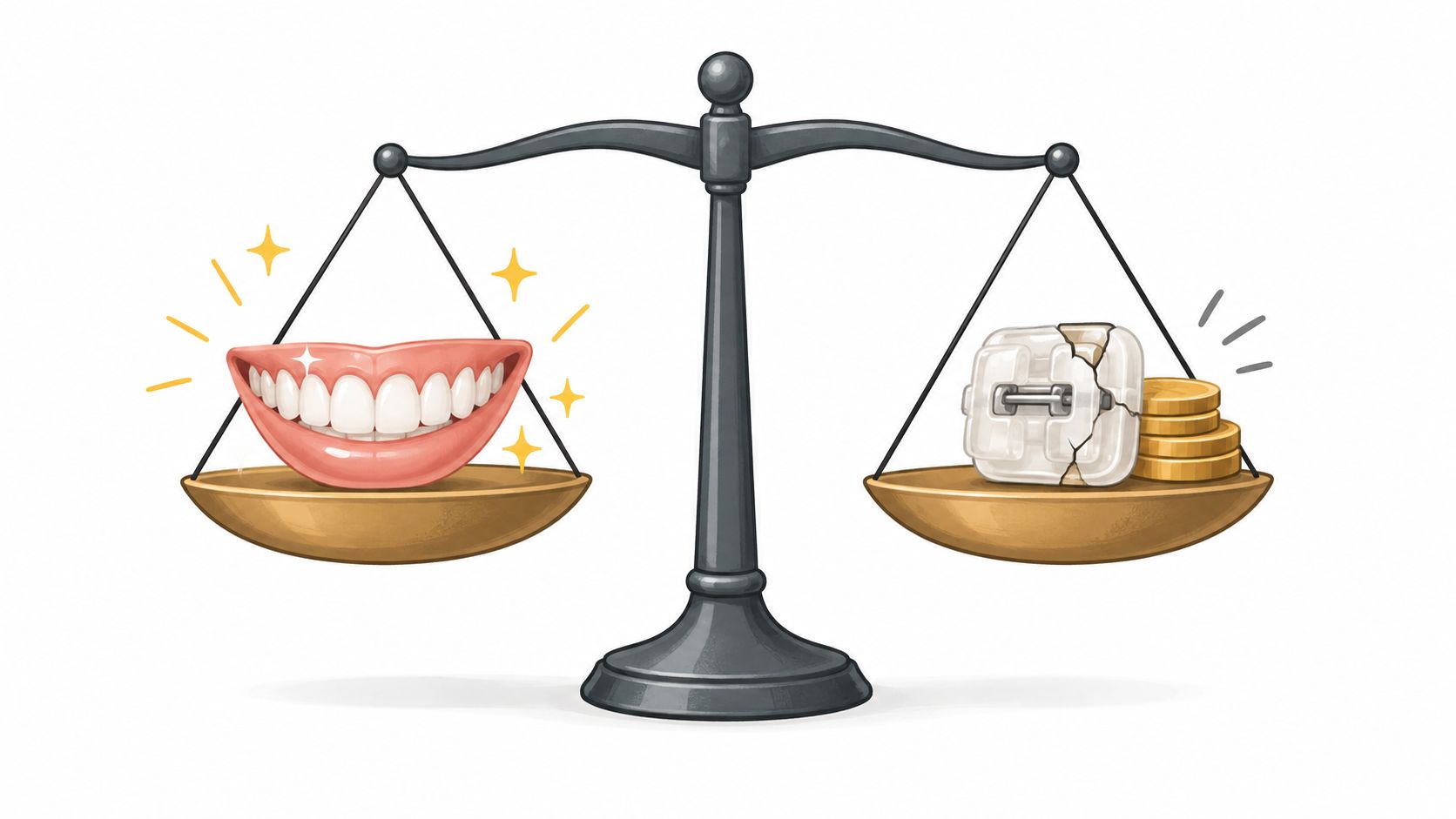
They remain attached throughout treatment, so you do not need to remember to put them back after meals or keep track of a removable appliance. You still receive the steady mechanics of bracket-and-wire treatment, with a less metallic appearance. The cosmetic advantage comes with trade-offs involving durability, wire movement, and bracket removal.
What patients tend to appreciate
- A more natural appearance: Tooth-colored or clear brackets usually attract less attention than metal.
- Fixed treatment: The appliance stays in place, so daily compliance does not depend on remembering to wear it.
- Broad orthodontic usefulness: Ceramic braces can address many alignment concerns, although an examination is needed to determine whether they suit your case.
- Confidence during treatment: Some adults feel more comfortable starting orthodontic care when the appliance is visually subtle.
The brackets are made to resist staining, but small elastic ties used with some systems can discolor. Coffee, tea, red wine, curry, tobacco, and other strongly pigmented foods and drinks may make clear ties look yellow or tan before the next adjustment visit. Tooth-colored ties, tie-free bracket designs, and rinsing after staining foods may reduce that effect.
What requires more care
Ceramic is more brittle than metal. A bracket may crack, chip, or debond after contact with hard foods, a direct blow, or inappropriate force during treatment. A broken bracket may require an earlier repair and can interrupt the movement planned for that tooth.
Friction also affects treatment mechanics. Depending on the bracket design and angulation, ceramic may resist wire sliding more than stainless steel. Your orthodontist can account for that through bracket selection, wire choice, and the order of tooth movements. The material does not automatically make treatment slower, but it does require thoughtful planning.
Removal deserves a clear conversation before treatment begins. Ceramic brackets can be harder to remove safely, so the orthodontist uses an appropriate technique to reduce the risk of enamel damage or crown chipping. Material-focused coverage of newer ceramic systems discusses continued development of lower-profile brackets, smoother surfaces, and debonding approaches intended to address these concerns.
Daily Care and Maintenance Tips for Ceramic Braces
Good home care protects more than the brackets. It also protects the enamel around them, where plaque can collect and leave visible white or brown areas if cleaning is inconsistent.
Use a soft-bristle toothbrush or an orthodontic brush. Angle the bristles toward the gumline, then clean above, below, and directly around each bracket. Fluoride toothpaste supports enamel care, and a fluoride rinse may be useful if your dental professional recommends it for your risk level.
Build a routine around the appliance
A water flosser can help flush debris around brackets and wires, while floss threaders or orthodontic floss make it possible to clean between teeth beneath the archwire. The tool matters less than reaching the spaces that a regular toothbrush cannot enter.
Try this sequence:
- Brush around each bracket. Use small, controlled movements instead of scrubbing hard across the wire.
- Clean between the teeth. Thread floss beneath the archwire or use an interdental cleaning method recommended by your dental team.
- Rinse thoroughly. A fluoride rinse may add support, but it doesn't replace brushing and flossing.
- Inspect in a mirror. Look along the gumline and around the back teeth, where missed plaque is common.
Food choices also protect ceramic brackets. Avoid biting directly into ice, nuts, hard candy, pens, fingernails, and very crusty bread. Cut firm foods into smaller pieces, and chew with the back teeth when your orthodontist says that's appropriate.
Staining affects elastic ties more than the ceramic brackets. Coffee, tea, red wine, curry, tomato-based foods, and tobacco can change the appearance of clear ties. Rinsing with water after a strongly colored drink or meal can limit contact, and a straw may help keep dark drinks away from the front brackets.
If a bracket loosens: Don't pull it off or try to replace the elastic yourself. Call the practice, keep the bracket and wire protected, and follow the instructions you're given until it can be assessed.
Wear a properly fitted mouthguard for contact sports. If a wire pokes your cheek, orthodontic wax can provide temporary comfort, but persistent irritation or a damaged appliance should be reported.
Who Makes a Good Candidate for Ceramic Braces
Ceramic braces may be worth discussing if you want fixed orthodontic treatment and the appearance of metal brackets concerns you. Adults often choose them for professional or social reasons, and some teens may prefer a less noticeable appliance.
The case itself matters just as much as age. Ceramic braces are commonly considered for alignment concerns such as crowding, spacing, and bite problems, but the complexity and location of the movements determine whether ceramic is suitable. Ceramic brackets are often used on visible front teeth, while an orthodontist may recommend a different appliance or bracket material for areas exposed to heavier bite forces.
Ask yourself what matters most
Ceramic may fit your priorities if:
- Appearance is important: You want a discreet fixed appliance.
- You prefer not to manage removability: You're comfortable keeping brackets attached throughout treatment.
- You can follow food and care guidance: You're willing to avoid habits that could damage brittle brackets.
- Your treatment plan allows it: Your bite and required movements can be managed safely with ceramic components.
Metal braces may deserve stronger consideration if you play contact sports without consistent mouthguard use, need demanding mechanical corrections, or place speed and durability above appearance. A removable aligner approach may be worth discussing if removability is central to your lifestyle and your case is appropriate for it.
At Bristol Dental & Orthodontics, Dr. Andrew Finley can evaluate your enamel, gum health, bite mechanics, and alignment needs before recommending an appliance. Bring recent X-rays if you have them, a current medication list, and your insurance information so the consultation can address both clinical and practical questions.
Common Questions Santa Ana Patients Ask About Ceramic Braces
How long do ceramic braces take?
Treatment length depends on the starting alignment, bite, tooth movement, appliance design, and how well appointments and home-care instructions are followed. Patients often hear an estimate of 18 to 30 months, but that isn't a promise or a universal range. Your records and examination are needed to create a more meaningful estimate.
Do ceramic braces stain?
The ceramic brackets are designed to resist staining. Clear or tooth-colored elastic ties can pick up color from coffee, tea, red wine, curry, tobacco, and other pigmented foods. Fresh ties at adjustment visits can improve their appearance, while rinsing after colored drinks and choosing less visibly staining tie colors may help between visits.
What do ceramic braces cost in Santa Ana?
There isn't one appropriate fee for every patient. The total depends on the appliance, treatment complexity, length of care, required records, repairs, retainers, and the practice's treatment plan. If you have dental insurance with orthodontic benefits, ask the office to explain how those benefits may apply to your specific plan. Avoid choosing an appliance based only on an advertised starting fee.
Are ceramic braces suitable for teens?
They may be suitable for some teens, especially when appearance matters and the patient can follow food and hygiene instructions. Younger patients who play active sports, frequently bite hard objects, or need complex corrections may be better served by another fixed appliance. The orthodontist should make that decision after examining the teeth and bite.
How are ceramic brackets removed?
The orthodontist uses controlled instruments and a planned debonding technique to remove the brackets and adhesive. Because ceramic can be more brittle and removal can require greater care, ask how the practice approaches enamel protection before treatment begins.
What happens if a bracket breaks?
Call the practice for guidance rather than waiting until the next scheduled visit. Don't pull at the bracket or wire, and use orthodontic wax temporarily if the area is rubbing your cheek. The urgency depends on whether the loose piece is causing pain or interfering with the wire and tooth movement.
Will I need retainers afterward?
Yes, retention is generally part of orthodontic treatment because teeth can shift after braces are removed. Your orthodontist will explain which retainer is appropriate and how to use it. If you stop wearing it without professional guidance, your teeth may not remain in their planned positions.
For patients in Santa Ana and nearby Orange County communities, a consultation is the most reliable way to answer questions about candidacy, timing, appearance, and enamel safety. Call to discuss your concerns or schedule online so Dr. Finley can explain the options for your smile.
Bristol Dental and Orthodontics offers orthodontic consultations for ceramic braces and Invisalign, along with cosmetic dentistry, dental implants, sleep apnea oral appliance therapy, and emergency dental care for Santa Ana patients. Visit Bristol Dental and Orthodontics to request a consultation and discuss which treatment approach fits your smile, health, and daily routine.