
You may be sitting in your car outside a Santa Ana dental office, telling yourself you'll reschedule again. The appointment might be for a filling, an implant, Invisalign-related care, or a procedure you've already postponed because of fear, a sensitive gag reflex, or an unpleasant memory from an earlier visit. Sedation dentistry can make treatment more manageable, but the right choice isn't the strongest medication available.
The better question is how sedation dentistry works for your specific anxiety, health history, and procedure. A dentist may recommend a light inhaled option, medication taken before treatment, IV sedation, or referral for general anesthesia. Each approach has different effects on awareness, breathing, memory, monitoring, recovery, and practical arrangements.
Table of Contents
- What Sedation Dentistry Actually Means
- How Nitrous Oxide and Oral Sedation Work
- How IV Sedation and General Anesthesia Work
- Matching the Right Sedation Level to the Right Patient
- The Safety Process Behind Every Sedation Visit
- Common Misconceptions and Honest Trade-offs
- What to Expect at Your Bristol Dental Consultation
What Sedation Dentistry Actually Means
Sedation dentistry is a range of techniques that can reduce anxiety, discomfort, and movement while allowing many patients to remain responsive and breathe independently. Under lighter conscious sedation, you may be able to answer questions, follow simple instructions, and communicate with your dental team.
That doesn't make sedation the same as general anesthesia. General anesthesia is intended to produce complete unconsciousness. Conscious sedation is intended to preserve awareness and protective responses to a degree determined by the sedation level. Adding medications such as benzodiazepines or opioids can deepen sedation and increase central-nervous-system depression risk, so the method must match the patient and the treatment.
Sedation also doesn't replace local anesthetic. Local anesthetic blocks pain signals from a specific area. Sedation mainly changes anxiety, arousal, awareness, and sometimes memory. If a filling, extraction, implant procedure, or other treatment requires profound pain control, the dentist will generally still numb the treatment area.

Sedation level at a glance
| Sedation Level | Patient Responsiveness | Breathing | Monitoring Intensity |
|---|---|---|---|
| Minimal | Awake and able to respond normally | Usually independent | Continuous observation and appropriate vital-sign monitoring |
| Moderate | Responds to verbal prompts or light stimulation | Usually independent, but breathing requires closer observation | Continuous assessment of consciousness, oxygenation, and ventilation |
| Deep | May respond only to repeated or stronger stimulation | May require more intensive rescue capability | Advanced monitoring and readiness to support ventilation |
| General anesthesia | Fully unconscious | Requires anesthesia-level airway and breathing management | Specialist-level anesthesia care and monitoring |
The aim isn't to move upward through this table. A patient who needs nitrous oxide for a short procedure may not benefit from oral or IV sedation. Someone with severe dental phobia, a long treatment plan, or difficulty remaining still may need a deeper approach. The least intense method likely to work can be the most practical starting point.
Nitrous oxide has a long history in dentistry. American dentist Horace Wells used it during a tooth extraction on December 11, 1844, an event widely recognized as an early milestone in modern dental anesthesia. Today, the central idea remains straightforward: reduce distress enough for necessary care to proceed while maintaining a safe, observable level of responsiveness.
How Nitrous Oxide and Oral Sedation Work
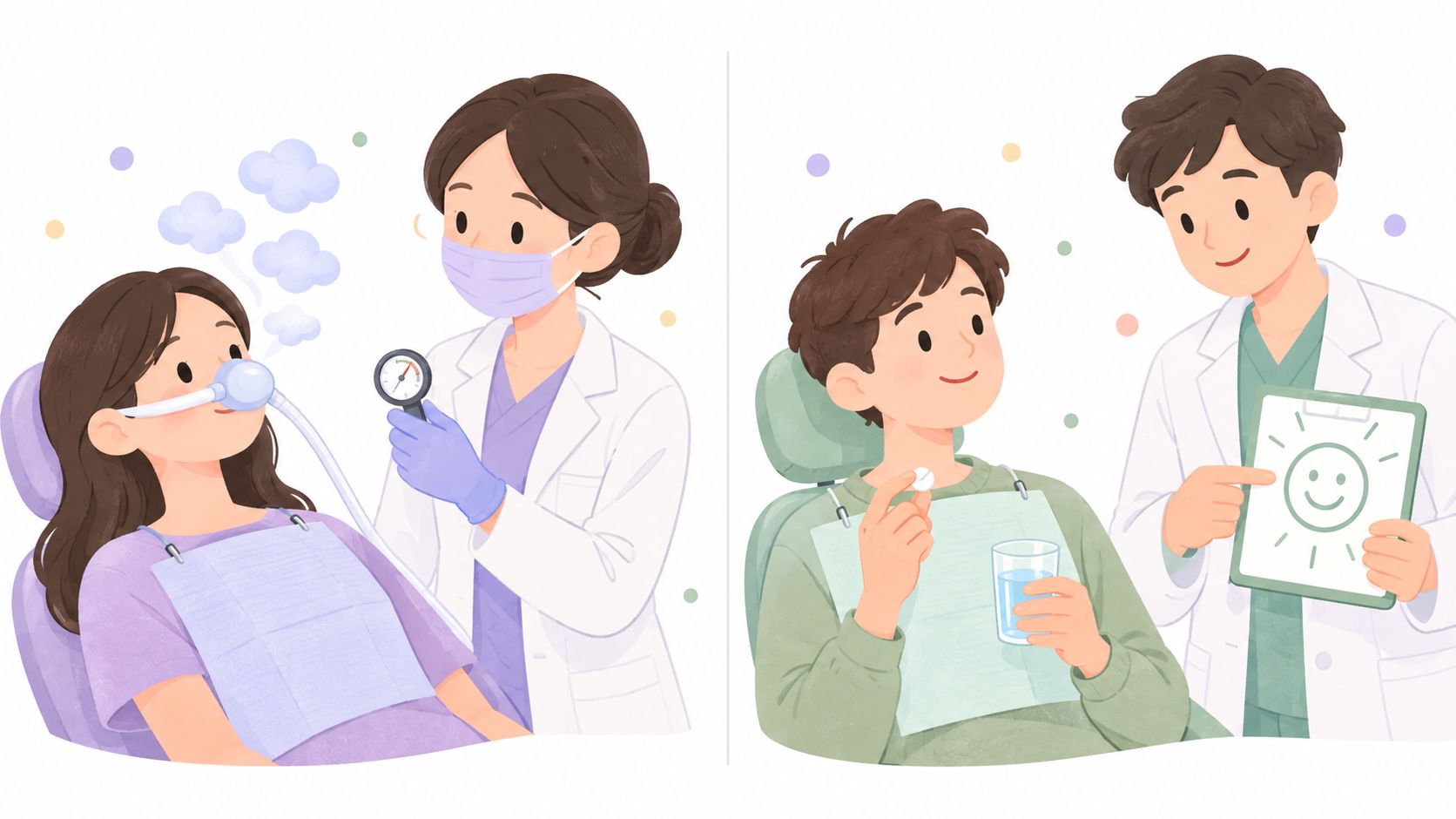
Nitrous oxide is often the first option discussed because it can be adjusted during treatment and wears off quickly after administration stops. A small mask or nosepiece delivers a mixture of nitrous oxide and oxygen. The gas is absorbed through the lungs, producing rapid anxiety relief and some pain relief, while the oxygen is given at the same time.
Many patients notice a calmer or lighter feeling within three to five minutes, according to Cleveland Clinic's explanation of nitrous oxide sedation. You remain able to communicate, and the dentist can adjust the concentration during the appointment. The effect begins to fade quickly when the gas stops.
What a nitrous oxide visit can feel like
A patient who has missed cleanings because of anxiety might arrive tense, sit back with the nosepiece in place, and breathe normally through it. As the medication takes effect, the dental team can continue talking with the patient and provide local anesthetic if the procedure requires stronger pain control.
At the end, the dentist stops the nitrous oxide and administers oxygen to help clear residual gas before removing the mask. Many patients don't feel woozy afterward. Whether you can drive depends on the individual circumstances and the treating dentist's instructions, so that decision shouldn't be assumed in advance.
Nitrous oxide is often considered for anxious patients, children who have difficulty cooperating, lengthy procedures, and people with a strong gag reflex. Evidence in pediatric dentistry is especially strong. A systematic review and meta-analysis estimated the efficacy of nitrous oxide and oxygen procedural sedation in pediatric dentistry at 91.9%, with a 95% confidence interval of 82.5% to 98.2%, as reported in the American Academy of Pediatric Dentistry guidance on nitrous oxide. Another review found that procedures were completed in 52% of cases using 40% nitrous oxide alone and in up to 85% using an equimolar nitrous oxide and oxygen mixture, from the same source.
How oral sedation differs
Oral sedation uses prescribed medication taken before treatment. A benzodiazepine such as midazolam can reduce anxiety, cause drowsiness, and produce dose-dependent anterograde amnesia. You may feel sleepy and less aware of the appointment, but the response can vary based on the medication, dose, health history, and other drugs in your system.
Because oral sedation can affect coordination and judgment after the visit, patients generally need a responsible adult to escort them. You may also need to avoid driving, operating equipment, or making important decisions until the medication's effects have resolved.
The practical difference is control. Nitrous oxide can be adjusted minute by minute and usually clears quickly. Oral medication lasts longer and may provide stronger anxiety control or memory reduction, but it also brings more recovery planning. A systematic review of nitrous oxide combined with midazolam included three studies and 534 participants. The combination didn't significantly improve cooperation compared with either medication alone, although it reduced recovery time and the required midazolam dose, as described in this review of sedation pharmacology and clinical use.
How IV Sedation and General Anesthesia Work
IV sedation places sedative medication directly into a vein. That route allows the dental team to adjust the medication during treatment and usually produces a deeper level of relaxation than nitrous oxide. You may become drowsy or semi-aware, and you may still respond to prompts, depending on the depth of sedation.
For a Santa Ana patient having dental implant placement or complex restorative treatment, IV sedation may make it easier to remain still through a longer appointment. The dental team still uses local anesthetic for treatment-area pain control. IV medication changes anxiety and awareness. It doesn't replace the numbing process.
Why deeper sedation needs more planning
IV sedation requires closer observation because sedative effects can influence breathing, responsiveness, blood pressure, and heart rate. You'll generally need an escort, post-treatment observation, and clear restrictions on driving or important decisions until your coordination and alertness return.
General anesthesia is different. It produces complete unconsciousness and requires anesthesia-level management of breathing and vital functions. It may be considered for certain oral surgery cases, patients with special healthcare needs, or situations where lighter methods aren't appropriate. It isn't a stronger version of nitrous oxide that anyone can request.
A general anesthesia referral may be the responsible choice when the required airway support, medical complexity, or procedure setting falls outside an in-office sedation plan. The decision should follow a health assessment and discussion of alternatives, not a preference for being completely unaware.
Practical rule: A deeper level isn't automatically a better level. It's appropriate only when the expected benefit justifies the added monitoring, recovery, and medical planning.
Matching the Right Sedation Level to the Right Patient
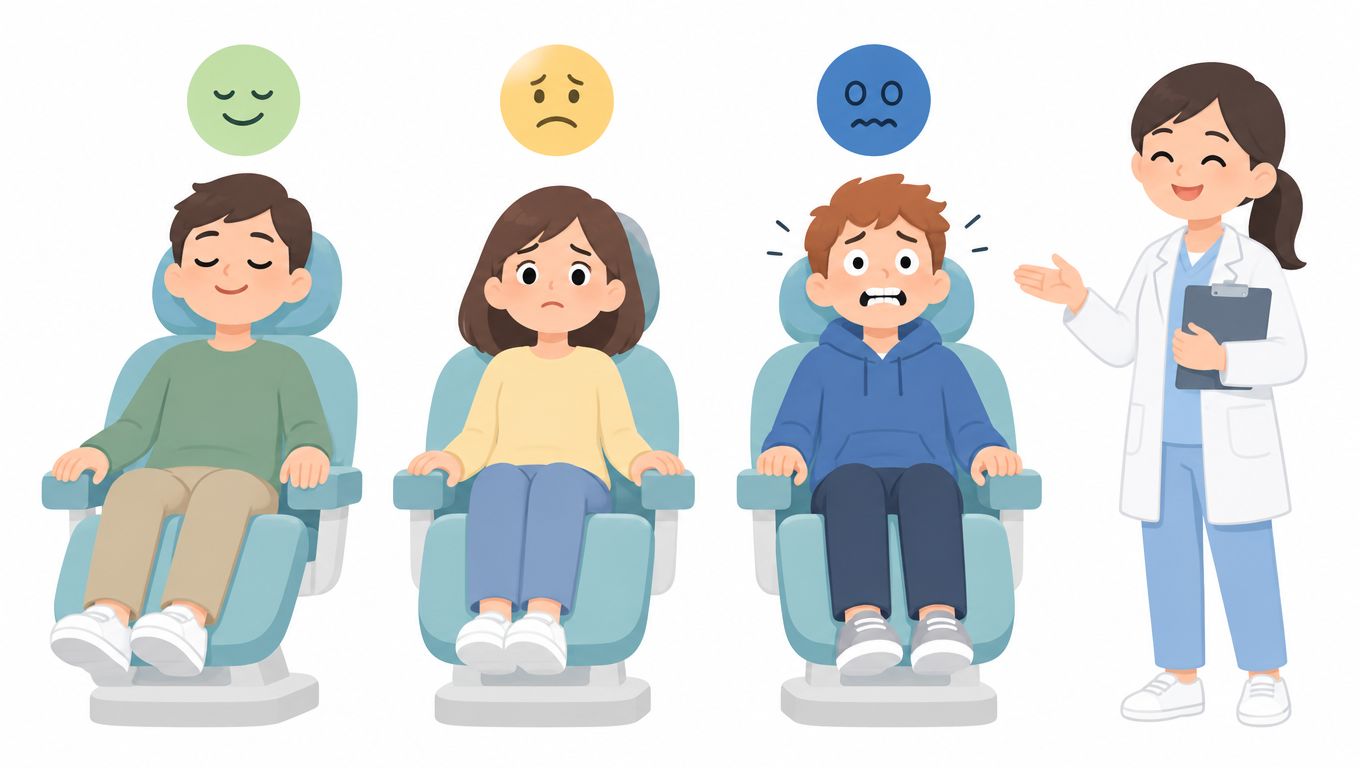
Two patients can describe themselves as “afraid of the dentist” and still need completely different plans. Dr. Andrew Finley would need to consider the planned treatment, your dental history, the source of your anxiety, and your medical circumstances before recommending a method.
The factors that shape the decision
A consultation may address:
- Procedure demands: A short filling, a series of restorations, dental implant placement, and complex oral surgery create different requirements for stillness and appointment length.
- Anxiety triggers: Fear of pain, the sound of instruments, loss of control, needles, or past trauma may respond to different combinations of communication, stop signals, behavioral support, and medication.
- Physical responses: A strong gag reflex or difficulty keeping the mouth open can affect the practicality of treatment.
- Health information: Airway concerns, cardiopulmonary conditions, pregnancy status, allergies, sleep-disordered breathing, and previous sedation reactions all matter.
- Medication use: Prescription drugs, over-the-counter medicines, and supplements can interact with sedatives or change their effects.
- Age and cooperation: Children may need gradual acclimatization, simple explanations, and a plan that accounts for their ability to follow instructions.
Minimal sedation may fit an adult who feels nervous about a cleaning but can comfortably communicate and cooperate. A child needing several fillings in one visit might need a more structured plan because treatment length and cooperation are part of the decision.
Moderate sedation may be considered for someone with substantial anxiety, a sensitive gag reflex, or difficulty tolerating a longer appointment. A patient preparing for an impression, for example, may need help managing the gag reflex and the feeling of materials in the mouth, but that doesn't automatically mean IV sedation is necessary.
Deep sedation requires a more careful assessment. Significant dental phobia, extensive treatment, medical complexity, or an inability to tolerate lighter approaches may change the recommendation. The dentist must also consider whether general anesthesia referral is more appropriate.
A 2024 study of the Surgical Dental Anxiety Scale found that only 56% of patients were receiving sedation in line with the tool's indication, according to the published study on sedation indication and dental anxiety. That finding reinforces why a consultation matters. Anxiety alone doesn't determine the answer, and sedation shouldn't be treated as a default response to every nervous feeling.
The Safety Process Behind Every Sedation Visit
Safe sedation depends on a system. The medication matters, but so do patient selection, dose control, continuous observation, recovery assessment, and clear instructions after treatment.
Before the appointment, the dental team should review your medical history, allergies, current medications, prior sedation reactions, airway concerns, pregnancy status, and relevant heart or lung conditions. Oral or deeper sedation may also require fasting instructions. Those instructions aren't interchangeable, so follow the exact guidance provided for your appointment.
What the team watches during treatment
Monitoring may include:
- Consciousness: The team checks how readily you respond and whether your sedation level remains appropriate.
- Oxygenation: Pulse oximetry measures oxygen saturation continuously when applicable.
- Breathing: The team observes breathing quality and listens for changes in breath sounds.
- Circulation: Blood pressure and heart rate are assessed before and after treatment, and during treatment when necessary.
- Ventilation: Capnography measures exhaled carbon dioxide and can identify hypoventilation or apnea earlier than pulse oximetry.
The timing matters. Ventilation can deteriorate before oxygen saturation falls, particularly when supplemental oxygen is being administered. The American Dental Association sedation guidelines call for continuous assessment of consciousness and oxygenation with pulse oximetry during applicable sedation, along with ongoing evaluation of ventilation.
Consider a patient whose breathing becomes slightly slow during IV sedation. Capnography may show that change before a pulse oximeter signals a problem, giving the team an opportunity to adjust the medication or provide support promptly. Monitoring doesn't eliminate every risk, but it helps the team recognize changes early.
A qualified dentist, or an appropriately trained person working under the dentist's direction, should remain in the operatory during active treatment and monitor the patient continuously until discharge criteria are met. For pediatric sedation, guidance from the American Academy of Pediatric Dentistry on monitoring and documentation states that heart rate, respiratory rate, blood pressure, oxygen saturation, and expired carbon-dioxide values should be recorded at least every 10 minutes in a time-based record.
Recovery continues after the procedure ends. Patients receiving oral or deeper sedation generally need an escort and observation until discharge criteria are satisfied. You should also receive instructions about driving, activity, medication use, food, and important decisions while the effects continue.
Nitrous oxide alone has a favorable safety record when used with oxygen. One review reported serious adverse-event rates of approximately 0% to 0.3%, with vomiting the most common adverse event. A prospective survey of 35,828 nitrous oxide and oxygen administrations found adverse events in 4.4% of cases, mostly minor gastrointestinal or neuropsychiatric symptoms, while serious events occurred in 0.03%, as reported in this review of nitrous oxide safety. These are population-level findings, not a guarantee for an individual patient.
Common Misconceptions and Honest Trade-offs
Sedation can help someone complete needed dental care, but it comes with decisions that deserve a direct explanation.
“Deeper sedation is always better.” Not necessarily. Deeper sedation can require more intensive monitoring, more recovery planning, an escort, and greater attention to medical risk. If nitrous oxide can provide enough comfort for a short procedure, a stronger method may add burden without adding useful benefit.
“Sedation means I won't feel pain.” Sedation mainly reduces anxiety and changes awareness. Local anesthetic is still typically needed when the dentist must block pain from a tooth or gum tissue.
“I'll remember nothing.” Memory effects vary. Midazolam can produce dose-dependent anterograde amnesia, but no dentist should promise complete amnesia. Nitrous oxide often leaves patients able to communicate and may not create the same memory effect as oral or IV medication.
“I can drive afterward.” That may be possible after nitrous oxide in an individual case, but the dentist must confirm it. Oral and deeper sedation commonly require a responsible adult, and patients may need to avoid driving or important decisions until psychomotor effects resolve.
The costs beyond medication
Sedation can add appointment planning, recovery time, escort arrangements, and limited availability. IV sedation may be less accessible in some systems and may involve out-of-pocket considerations. Families in Santa Ana, Costa Mesa, Tustin, Irvine, and Garden Grove should ask about the full practical plan before scheduling, rather than treating the medication as an isolated choice.
Behavioral techniques, communication, hand signals, gradual acclimatization for children, and shorter visits may be enough for some patients. Others may need oral or IV sedation, while a referral for general anesthesia may be appropriate when lighter approaches aren't clinically suitable.
The least intense effective approach is often a reasonable starting point because it may reduce medication exposure, simplify recovery, and make treatment easier to access. That decision still belongs in a conversation with the treating dental team.
What to Expect at Your Bristol Dental Consultation
A consultation with Dr. Andrew Finley should begin with your health history and your actual concern, not with a preset sedation menu. Tell the team what you're afraid of, what happened during previous dental visits, whether you've had sedation before, and what medications or supplements you take.
The discussion may include:
- Your treatment needs: This could involve a filling, dental implants, cosmetic dentistry, Invisalign, sleep apnea or oral appliance therapy, or emergency dental care.
- Your anxiety pattern: Explain whether you fear pain, needles, sounds, loss of control, gagging, or the possibility of remembering the visit.
- Your medical information: Mention airway problems, breathing conditions, pregnancy, allergies, prior reactions, and current medications.
- Your practical arrangements: Ask whether you'll need to fast, bring an escort, arrange transportation, or restrict driving and important decisions afterward.
- Your alternatives: Ask whether communication techniques, gradual acclimatization, nitrous oxide, oral sedation, IV sedation, or referral for general anesthesia make sense for your situation.
Bristol Dental & Orthodontics is a family and cosmetic dental practice in Santa Ana, CA, led by Dr. Andrew Finley. The practice provides general and family dentistry, Invisalign and orthodontic care, dental implants, cosmetic dentistry, sleep apnea treatment and oral appliance therapy, emergency dental care, and sedation dentistry for patients from Santa Ana and surrounding Orange County communities.
Every treatment plan should be reviewed by Dr. Finley before scheduling. The purpose of that review is to match the sedation method to your health, anxiety, and procedure, rather than making you fit a predetermined method.
If you've postponed care, a consultation can be a manageable first step. You don't have to decide on sedation before you understand what the appointment involves, what monitoring will be used, and how recovery will work.
Bristol Dental & Orthodontics offers sedation dentistry alongside Invisalign, dental implants, sleep apnea and oral appliance therapy, cosmetic dentistry, and emergency dental care. To discuss whether sedation is appropriate for your treatment in Santa Ana, visit Bristol Dental and Orthodontics and schedule a consultation with Dr. Andrew Finley.