

Replacement retainers typically cost about $100 to $600 per arch, with clear retainers toward the lower end, Hawley retainers in the middle, and bonded retainers toward the higher end. A full upper-and-lower set generally costs about twice as much as replacing one arch.
You may be asking because a retainer cracked over lunch, disappeared during a sleepover, or suddenly feels too tight. The first reaction is often a small wave of panic. Take a breath. The right next step depends on the retainer type, whether one or both arches need attention, and whether a repair can preserve a good fit.
Table of Contents
- That Moment When Your Retainer Disappears or Cracks
- The Three Main Retainer Types and Their Price Ranges
- What Actually Drives the Final Bill
- How Santa Ana and Orange County Pricing Compares
- When a Repair Beats a Full Replacement
- Replacement Timing and the Cost of Waiting
- Practical Ways to Lower What You Pay
- Bringing It All Together and Next Steps
That Moment When Your Retainer Disappears or Cracks
A napkin gets thrown away, and with it goes a clear retainer. Or your teenager returns from a sleepover holding a Hawley retainer with a bent wire. Sometimes the appliance is still in hand, but a crack makes it uncomfortable or impossible to wear.
These problems are common among retainer wearers, and losing one isn't a reason to panic. It is a reason to contact the dental or orthodontic office promptly, especially if you don't have a backup that still fits comfortably. A cracked or distorted appliance may not hold the teeth correctly, so don't force it into place or try to reshape it at home.
Practical rule: Put the damaged retainer aside, keep any older retainer that still fits safely, and call the office before ordering a replacement.
The main question, how much does it cost to replace retainers, has several answers because “retainer” can describe three different appliances. Clear removable retainers are made from plastic, Hawley retainers combine acrylic and wire, and bonded retainers use a wire attached behind the teeth. Each requires different materials, fabrication, and clinical work.
The final bill also depends on whether you need one arch or both, whether the office has a suitable digital scan on file, and whether the appliance can be repaired. Santa Ana and Orange County pricing can differ by practice and location, while mail-order options may show a lower appliance-only price without the same professional fitting. Waiting can create a separate concern if your teeth begin to move and the original retainer no longer fits.
The Three Main Retainer Types and Their Price Ranges
The simplest way to compare replacement costs is to separate the appliances by design. National pricing guidance places clear removable retainers around $100 to $300 per arch, Hawley retainers around $150 to $500 per arch, and bonded retainers around $250 to $600 per arch. These ranges reflect the appliance and the work involved, not a guaranteed quote for an individual patient. See the retainer pricing overview for a type-by-type explanation.
| Retainer Type | Per Arch (USD) | Full Set Range (USD) | Average Lifespan |
|---|---|---|---|
| Clear removable, often called Essix | $100–$300 | About $200–$600 | About 1–3 years |
| Hawley, acrylic and wire | $150–$500 | About $300–$1,000 | About 5–10 years or longer when maintained |
| Bonded or fixed | $250–$600 | Depends on the arches and procedure | Replaced when broken or debonded |
A clear removable retainer usually sits at the lower end because it is formed from a plastic sheet over a model of the teeth. It can be convenient and discreet, but plastic may crack, develop holes, warp from heat, or lose its fit. One source describes clear retainers as lasting about 1 to 3 years, depending on use and care. Details on wear and replacement causes are available in this retainer lifespan guide.
A Hawley retainer uses an acrylic base and custom wirework. The design can be durable and adjustable, but laboratory fabrication includes more components and more work. A well-maintained Hawley may remain usable for 5 to 10 years or longer, although damage to the acrylic, wire, clasps, or fit can still require service.
A bonded retainer is different because replacement is not just a new plastic appliance. The clinician may need to remove old material, prepare the teeth, position a wire, and bond it in place. If the wire repeatedly breaks or debonds, the long-term cost may exceed the price of a single repair. A clinical assessment helps determine whether the wire is still passive and whether repair is appropriate.
What Actually Drives the Final Bill
The number of arches comes first. If only the upper retainer is lost and the lower appliance still fits, replacing one arch generally costs less than remaking both. A full set usually costs roughly double a single-arch quote because the office and laboratory are making two appliances, as explained in this retainer cost breakdown.
Records matter too. A practice may use a current digital scan, take a new scan, or use a traditional impression. An older scan can save time only if it still represents the tooth position you want to preserve. Fillings, crowns, tooth movement, or a change in bite may make a fresh record more suitable.
Where fabrication happens
Some practices send models to an outside laboratory. That process can involve laboratory materials, design, shipping, and coordination. Other offices may produce certain clear retainers in-house, which can reduce turnaround time when the equipment and clinical workflow support it. The fee can differ even when the finished appliance appears similar.
The provider also affects the quote. A general dentist, orthodontic office, and mail-order service may include different levels of examination, fitting, adjustment, and follow-up. A lower product price isn't automatically a lower total cost if a retainer doesn't fit and needs a remake.
Repair or replacement
A repair may cost less when the appliance remains structurally sound and still matches the teeth. A complete replacement becomes more likely when plastic is distorted, a Hawley is badly damaged, or a bonded wire can't be rebonded reliably. Ask whether the quoted fee includes the examination, records, fitting, adjustments, and any remake policy.
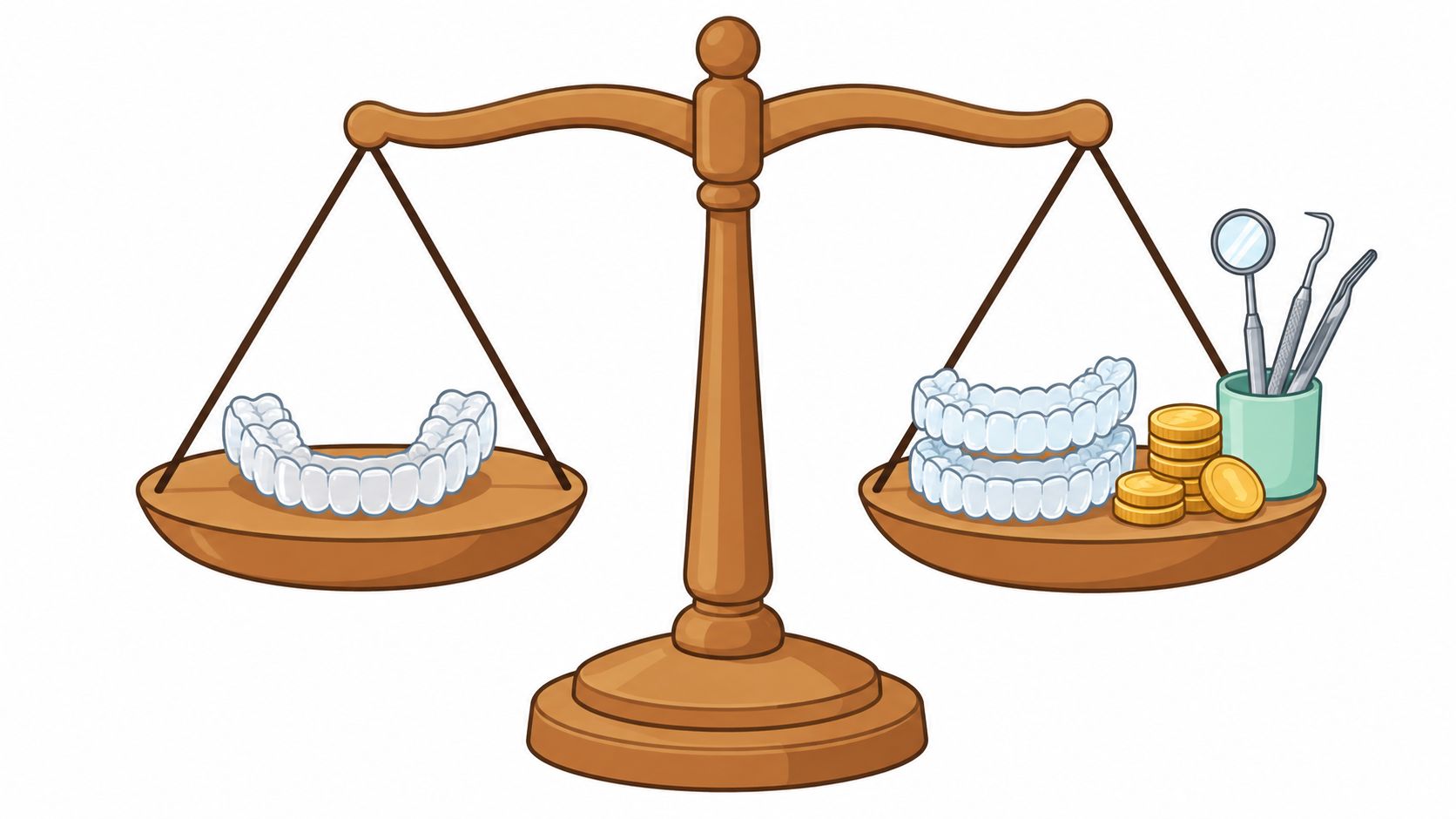
How Santa Ana and Orange County Pricing Compares
Santa Ana pricing should be viewed as part of a wider Orange County market rather than as one fixed local number. Costs can vary among offices in Santa Ana, Costa Mesa, Tustin, Irvine, and Garden Grove because practices have different laboratory arrangements, appointment workflows, facilities, and clinical services.
Major metropolitan areas can sit near the upper end of national pricing. One 2026 guide places a new set in large markets such as Chicago, New York, and Los Angeles around $500 to $1,000, while rural markets may be closer to $250 to $500 per set. Other guidance places common U.S. replacement pricing around $150 to $600 per set, showing why a local quote needs context rather than a simple national average. The geographic comparison appears in this retainer replacement pricing guide.
A quote from a Santa Ana practice may include more than the appliance itself. Before you compare it with a mail-order offer, ask whether it includes the exam, scan or impression, fitting, adjustments, and follow-up. Also confirm whether the amount covers one arch, both arches, or more than one appliance.
The most useful question at the front desk is: “What exactly is included in this total?” A written estimate makes it easier to compare like with like, especially if you're considering a clear removable retainer, a Hawley, or bonded work.
When a Repair Beats a Full Replacement
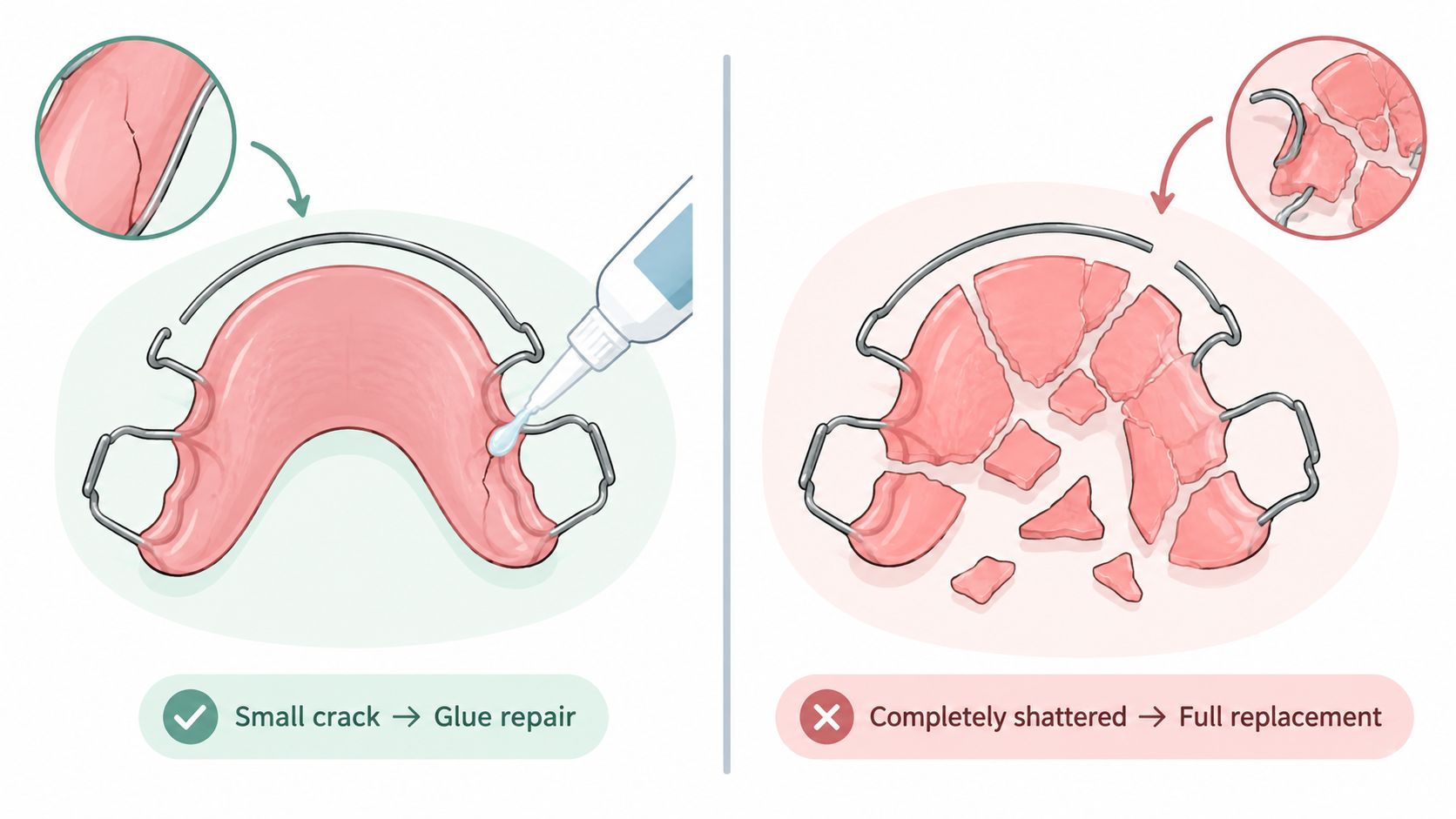
Repair versus replacement is a practical triage decision. A clinician needs to check the appliance, the teeth, and the bite before recommending a fix. A small Hawley acrylic fracture may be repairable if the retainer still matches the teeth, while a distorted clear retainer often can't be restored accurately once its shape has changed.
A loose bonded wire may be rebonded when the wire remains intact and passive. If the wire has bent, detached across several teeth, or no longer sits in the intended position, the office may recommend more extensive removal and replacement work. The quoted amount depends on what must be removed, repaired, and rebonded.
Questions that help at the appointment
- Does it still fit? An appliance that fits accurately may be a repair candidate.
- Is the material stable? Cracks, holes, thinning, or warping can make a patch unreliable.
- Has the bite changed? A new scan or examination may be needed before making any appliance.
- Will the repair last? A low initial fee isn't useful if the same failure returns quickly.
Don't use household glue, heat, or a tool to bend the retainer. Adhesives can damage the material, and reshaping can change the way the appliance contacts the teeth. Send the office a clear photo if they invite it, but expect an examination before a final decision.
Replacement Timing and the Cost of Waiting
A replacement retainer is usually a predictable appliance expense. The cost of waiting is less predictable because your teeth may no longer be in the position the old retainer was designed to hold. Guidance on timing says clear vacuum-formed retainers are commonly renewed every 6 to 12 months, Hawley retainers every 3 to 5 years, and bonded wires when they break or debond. The retainer replacement timing guidance explains why lifespan varies by design.
Teeth can begin drifting within days without retention, particularly after orthodontic treatment. A patient may notice that an older retainer feels tight, or that a replacement made from an old scan no longer fits. If movement has occurred, the clinician may need a new scan and may discuss whether the goal is to hold the current position or correct movement first.
Timing matters: A lost retainer isn't usually a medical emergency, but it is time-sensitive. Contact the office promptly instead of waiting to see whether the appliance turns up.
Insurance may not cover a lost or damaged replacement, and the original treatment fee may not include future replacements. That makes delay especially frustrating. If shifting progresses, a patient may need more than a new retainer, and additional orthodontic treatment can become part of the discussion. A 2026 retainer cost and delay guide addresses this tradeoff.
Practical Ways to Lower What You Pay
The lowest advertised retainer price isn't always the lowest overall cost. A product made from an old model may be inexpensive but unusable if your teeth have moved, while a properly assessed replacement can prevent repeated remakes.
Start with your records. Ask whether the office has a usable digital scan and whether it represents the position you want to maintain. If a current scan is needed, ask what it includes and whether the office offers in-office fabrication for the retainer type you need.
Questions to ask before ordering
- Ask about the total: Confirm the number of arches, appliances, visits, adjustments, and remakes included.
- Check treatment terms: Review whether your original agreement included a replacement benefit or a limited replacement period.
- Compare the process: Ask who evaluates the fit and what happens if an impression or finished appliance doesn't fit.
- Consider a backup: A current spare can be useful for travel or a retainer that receives heavy daily use, if your dental professional approves its fit.
Some patients explore mail-order services because the appliance-only price may look lower. That option may be less suitable when teeth have shifted, a bonded wire is involved, the bite has changed, or dental work has altered a tooth. The relevant comparison is professional assessment plus follow-up versus a product alone.
Care also affects value. Keep a removable retainer in a hard case, never a napkin. Remove it before meals, clean it according to professional instructions, and keep it away from hot water and heat exposure. A clear retainer may last about 1 to 3 years, while a maintained Hawley may last 5 to 10 years or longer, according to this retainer longevity resource. Care can't prevent every failure, but it can reduce avoidable damage.

Bringing It All Together and Next Steps
For most patients planning a replacement, the useful national range is about $100 to $600 per arch. Clear removable retainers generally sit toward the lower end, Hawley retainers occupy a middle range, and bonded retainers can cost more because replacement includes clinical placement rather than laboratory fabrication alone. A full upper-and-lower set usually costs about twice a single arch.
The decision at the front desk is rarely just “What does a retainer cost?” It is usually a short series of questions:
- Which type do you have? Clear, Hawley, and bonded retainers require different work.
- How many arches need attention? One appliance and a full set are not the same quote.
- Can the current appliance be repaired? A sound, well-fitting retainer may not need complete replacement.
- Have the teeth moved? If the fit has changed, the office may need new records before making an appliance.
- What does the estimate include? Confirm scans, impressions, fitting, adjustments, and follow-up.
For a family in Santa Ana, the right choice may differ from one for a patient in Costa Mesa, Tustin, Irvine, or Garden Grove, even when the retainer type is the same. Local laboratory arrangements and the level of care included in the visit can change the total. Replacement retainers may also be excluded from insurance or treated separately from the original orthodontic fee, so ask for a written explanation of your benefits rather than assuming coverage.
Bristol Dental & Orthodontics is a family and cosmetic dental practice in Santa Ana led by Dr. Andrew Finley. The team can discuss retainer repair or replacement alongside Invisalign and orthodontic care, dental implants, cosmetic dentistry, sleep apnea and oral appliance therapy, and emergency dental care when a damaged appliance is part of a larger dental concern.
If your retainer is lost, cracked, loose, or no longer fits, a consultation can give you a personalized quote and a clear repair-versus-replace recommendation. Dr. Finley can assess your current situation and explain whether one arch, both arches, a new scan, or a different retainer design is appropriate.
Bristol Dental and Orthodontics can evaluate damaged or missing retainers, discuss Invisalign and orthodontic maintenance, and provide a case-specific estimate for Santa Ana patients. Visit Bristol Dental and Orthodontics to schedule a consultation with Dr. Andrew Finley and decide on the next step with clear, practical guidance.