
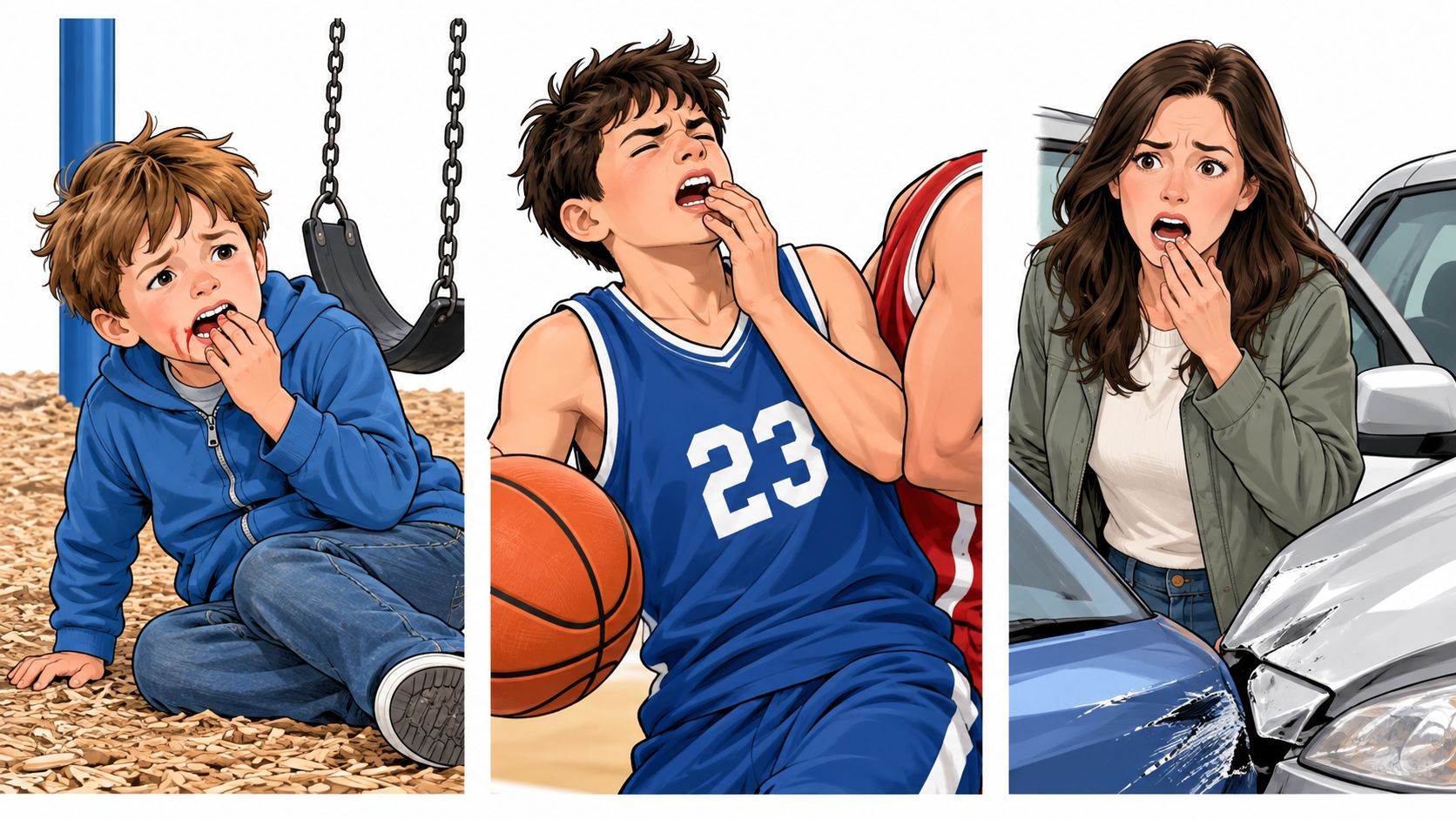
A child collides on the playground. A teenager takes an elbow during a game. After a minor car accident, an adult notices blood on the chin and an empty space where a front tooth used to be. If you're searching for “knocked out tooth what to do,” start with one decision before anything else: is the missing tooth a baby tooth or a permanent tooth?
That distinction changes the first-aid plan. A permanent tooth may sometimes be replanted, while a primary baby tooth should not be replanted, because doing so can injure the permanent tooth developing underneath. If the person has lost consciousness, is vomiting, has trouble breathing, may have inhaled the tooth, or has a serious facial injury, airway and head-injury assessment come first.
Table of Contents
- What Counts as a Knocked-Out Tooth Emergency
- The First Five Minutes at the Accident Scene
- Choosing the Right Storage Medium on the Way to the Dentist
- When the Missing Tooth Is a Baby Tooth
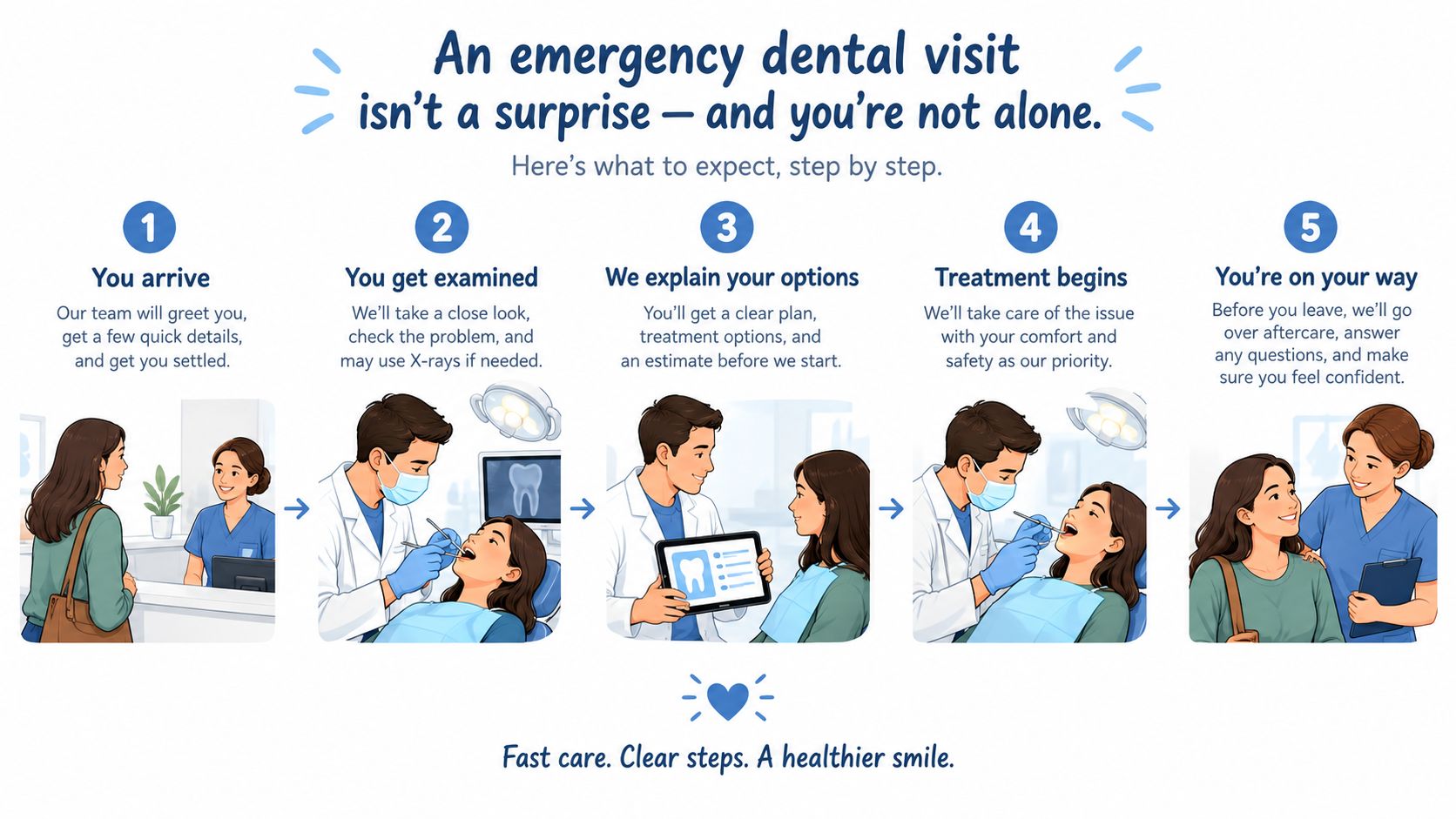
- What Happens During the Emergency Visit
- Follow-Up Treatment and the Realistic Long-Term Outlook
- A Quick-Reference Recap and How to Lower the Risk Next Time
What Counts as a Knocked-Out Tooth Emergency
A tooth that has been completely displaced from its socket is called dental avulsion. It's different from a tooth that's loose, chipped, cracked, or pushed partly out of position. A fully avulsed permanent tooth is a same-day emergency because delicate periodontal-ligament cells on the root begin deteriorating when exposed to air.
The American Association of Endodontists recommends seeking dental or endodontic care within 30 minutes and keeping the tooth moist continuously. You can read its patient guidance on knocked-out teeth and urgent care. That timing isn't a guarantee that the tooth will survive, but it explains why waiting to see whether bleeding or pain settles can reduce the available treatment options.
Start with the person, then identify the tooth
Check that the injured person is conscious and breathing. Look for uncontrolled bleeding, vomiting, confusion, suspected jaw injury, or other major trauma. If any of those signs are present, emergency medical assessment takes priority over trying to save the tooth.
If the person is alert and the missing tooth is permanent, the immediate priorities are simple:
- Find the tooth quickly.
- Pick it up by the crown, the visible chewing surface.
- Keep the root moist and untouched.
- Attempt safe replantation or use an appropriate storage medium.
- Arrange urgent dental care.
The central rule: stay calm, keep a permanent tooth moist, and reach professional care quickly. Speed and careful handling matter more than improvisation.
A loosened tooth still needs urgent evaluation, but it may remain partly attached. A fractured tooth may need protection and repair. A completely displaced permanent tooth requires a different response because the root surface is outside its normal environment. The rest of the process depends on whether safe replantation is possible, whether the tooth is primary or permanent, how it's stored, and how quickly a dental professional can assess the injury.
The First Five Minutes at the Accident Scene
The first few minutes can feel chaotic. A parent may search the grass while the child cries, or a teammate may hold a bloody shirt over the mouth and assume the tooth is gone forever. Slow the scene down enough to make the next correct decision.
Minute one, protect the patient
Look at the person before looking for the tooth. Confirm that they're awake and breathing normally. Ask whether they hit their head, lost consciousness, vomited, or may have inhaled the tooth. Facial swelling, uncontrolled bleeding, or a suspected jaw fracture also calls for urgent medical evaluation.
If the person is conscious, cooperative, and able to follow instructions, continue. If they're very young, confused, frightened to the point of resisting, or at risk of swallowing or inhaling the tooth, don't attempt to put it back yourself. Move directly to moist storage and professional care.
Minutes two and three, locate and handle the tooth
Search quickly and deliberately. Check the ground, clothing, nearby equipment, and the area around the impact. Once you find the tooth, hold it only by the crown, never the root. The root contains the cells that may help the tooth attach again, so touching, scraping, or scrubbing it can cause avoidable damage.
If dirt is visible, rinse it briefly and gently with milk or saline. Clean the visible surface without rubbing. Mayo Clinic guidance also advises a brief rinse with milk or saliva and warns against holding the tooth under running tap water, which can damage root-surface cells. Its first-aid guidance for tooth loss also cautions against wrapping the tooth in tissue.
Minutes four and five, choose replantation or storage
For an alert, cooperative person with a permanent tooth, gently guide the tooth back into its socket if it fits naturally. Use light digital pressure, not force. If it won't go in easily, stop and place it in a suitable moist medium instead.
Immediate replantation at the accident scene offers the best chance of preserving periodontal-ligament cells because most of them are nonviable after approximately 30 minutes of dry time, as described in International Association of Dental Traumatology guidance. If reinsertion isn't safe or possible, don't spend precious time repeatedly trying. Store the tooth and leave for urgent dental care.
Avoid these common mistakes:
- Don't hold the tooth by the root.
- Don't scrub it with a toothbrush, cloth, or tissue.
- Don't scrape away attached material.
- Don't leave it on a counter or wrap it dry.
- Don't force it into the socket.
- Don't place a baby tooth back into the mouth.
Storage mediums and how long the tooth stays viable
| Medium | Approximate viability | Notes |
|---|---|---|
| Hank's Balanced Salt Solution | Up to 24 hours | Preferred option when available in a tooth-preservation kit |
| Cold low-fat milk | About 3 hours | Practical household option |
| Saline | Not assigned a specific duration here | Use as a moist alternative while seeking urgent care |
| Patient's saliva | Not assigned a specific duration here | Use in a sealed container if other options aren't available |
| Cold sports drink or contact-lens solution | About 1 hour | Short-term alternative only |
The time estimates in this table aren't permission to delay. The tooth still needs urgent professional assessment.
Choosing the Right Storage Medium on the Way to the Dentist
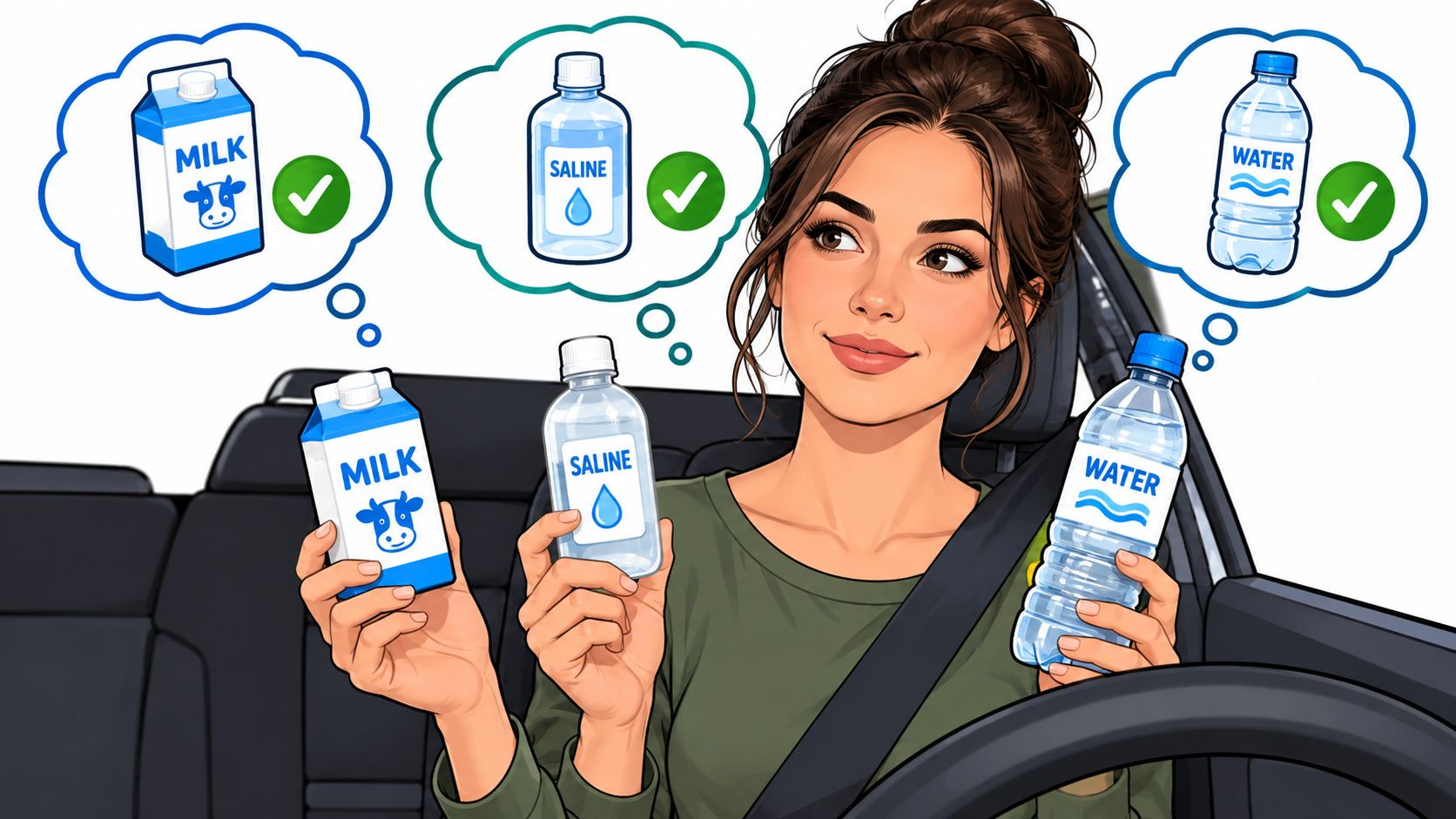
Once you have identified the tooth as permanent and cannot safely replant it, keep it moist immediately. Hank's Balanced Salt Solution is the preferred storage medium when available in a tooth-preservation kit. University of Iowa guidance gives it a viability of up to 24 hours and identifies cold low-fat milk as the most practical household option, preserving the tooth for about 3 hours. The same guidance on storing a knocked-out permanent tooth advises against wrapping the tooth in tissue or letting it dry.
Cold milk is often available at home, school, a sports field, or a nearby shop. Pour enough into a clean container to cover the tooth. Place the tooth crown-side up if possible, or let it float without touching the root. Start travelling to urgent dental care at once. The container protects moisture, but it cannot replace an appointment.
If milk and a preservation kit aren't available
Saline is a short-term option. Keep the tooth moist in it while travelling and seek care without delay. If no suitable solution is available, place the tooth in the patient's own saliva inside a small, clean, sealed container. This last-resort method is better than allowing the root to dry, but it should be used only while arranging immediate dental assessment.
Cold sports drink or cold contact-lens solution can serve as shorter-term alternatives, with viability of about 1 hour. They may help when the injury occurs away from home, but they do not make waiting safe.
What to avoid
Plain tap water is unsuitable for prolonged storage because it can harm cells on the root surface. A brief rinse may remove visible dirt, but do not leave the tooth soaking in water while preparing to leave.
Keep the tooth out of a frightened child's cheek. Although the mouth keeps it moist, a young or panicked child could swallow or inhale it. Avoid this method entirely if the person is drowsy, confused, vomiting, or unable to cooperate safely.
When the Missing Tooth Is a Baby Tooth
The first question after a child's dental injury shouldn't be, “How do I put the tooth back?” It should be, “What type of tooth was lost?”
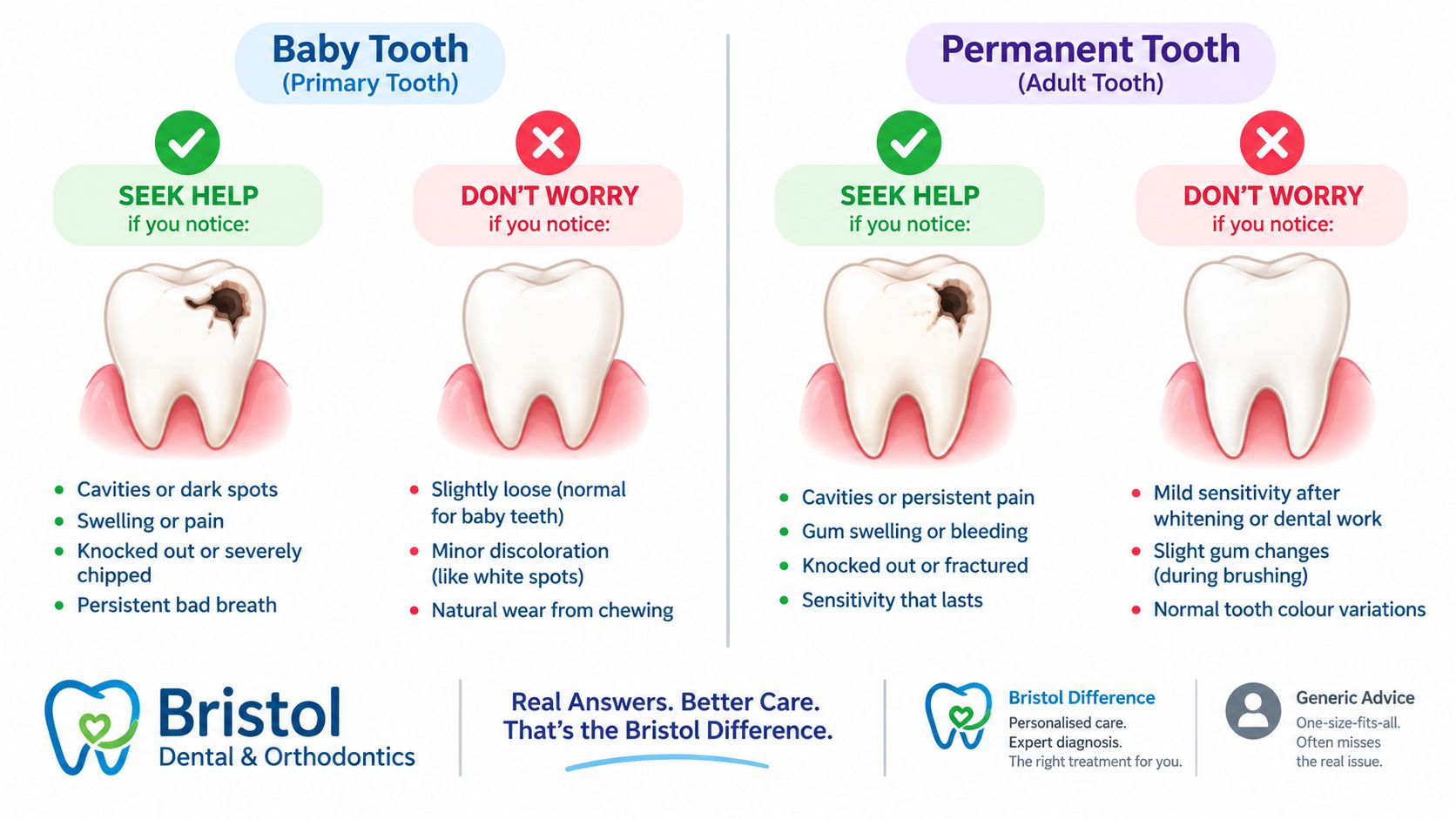
A primary baby tooth should not be replanted because it can injure the developing permanent tooth beneath it. That's especially important when a child has mixed dentition, meaning baby teeth and permanent teeth are present at the same time. International guidance on avulsion in children highlights inappropriate replantation and delayed evaluation as major communication risks for families.
A quick decision aid for parents
Consider the child's age, the tooth's appearance, and whether nearby adult teeth have already erupted.
- Mostly baby teeth: Don't replant the missing tooth. Save it for the dentist if you can and seek urgent assessment.
- Mixed dentition: Don't guess if you're unsure. Treat the tooth carefully, keep it moist, and ask a dental professional to identify it.
- Newly erupting or fully erupted permanent tooth: Replantation may be appropriate if the child is alert, cooperative, and safe to manage.
- Unconscious, vomiting, or possibly aspirating: Don't focus on replantation. Get medical help for airway and head-injury concerns first.
Children aged roughly 7 to 9 years are particularly vulnerable to dental trauma because newly erupting permanent incisors can be exposed during falls, sports, and play. The upper central incisor is the permanent tooth most commonly avulsed, according to the epidemiological evidence summarized in the linked guidance.
Apply gentle pressure with clean gauze if the gums are bleeding. Don't scrub the socket, push anything into it, or try to replace a baby tooth. A dental examination can assess the socket, neighboring teeth, soft tissues, and the developing permanent tooth, even when the missing tooth itself can't be restored.
What Happens During the Emergency Visit
At Bristol Dental & Orthodontics, Dr. Andrew Finley and the dental team would first want to know when the tooth came out, how long it was dry, and what storage medium was used. Those details help shape the clinical plan. The team also assesses the socket, gums, lips, jaw, bite, and surrounding teeth, while considering whether the accident caused a head injury.
The tooth may be gently cleaned without scraping the root. If replantation is clinically appropriate, the clinician slowly guides it back into the socket, checks its position clinically and with dental imaging, and stabilizes it with a passive flexible splint for about 2 weeks. The exact approach can change depending on root maturity and associated bone or soft-tissue injury. The clinical sequence is described in professional guidance on managing replanted teeth.
Why the splint stays flexible
A semirigid splint allows a small amount of natural movement while the supporting tissues recover. A rigid splint or prolonged immobilization can increase concern for ankylosis and replacement resorption, so the clinician chooses stabilization based on the injury rather than just holding the tooth as firmly as possible.
Before leaving, ask how to protect the splint while eating and brushing, what symptoms should prompt a call, and whether the bite feels correctly aligned. If the patient has facial impact, dizziness, vomiting, confusion, loss of consciousness, or jaw pain, mention it clearly. Saving the tooth matters, but medical assessment takes priority when the accident may involve more than the mouth.
Follow-Up Treatment and the Realistic Long-Term Outlook
Putting a tooth back into its socket isn't the same as guaranteeing that it will remain there permanently. The long-term result depends on dry time, storage, root development, damage to the socket, infection, and the way the supporting tissues heal.
A retrospective study reported that 25 teeth, or 40.3 percent of the study group, were replanted within one hour. Of those teeth, 16, or 64.0 percent, remained in their sockets, while the reported five-year survival rate across the study population was 50.0 percent. These figures come from the published study of avulsed and replanted permanent teeth. They describe longer-term retention, not merely whether a dentist could replace the tooth during the emergency visit.
What the dentist monitors
Possible complications include root resorption, ankylosis, infection, and later extraction. Follow-up appointments help the clinician look for changes before they become more difficult to manage. A darkening tooth, increasing swelling, drainage, worsening pain, or a change in the bite should be reported promptly.
Mature permanent teeth commonly need endodontic treatment, often called a root canal, because the pulp may not remain healthy after avulsion. Teeth with developing roots may instead be monitored for continued root development and signs of healing. The treatment pathway is determined by the individual tooth and injury, not by age alone.
During recovery, follow the dental team's instructions about food, brushing around the splint, and activity. Soft foods may be more comfortable for a short period, and gentle cleaning helps protect the surrounding gums. Even when the tooth feels stable, monitoring can remain important because some complications develop gradually.
A Quick-Reference Recap and How to Lower the Risk Next Time
If a permanent tooth is knocked out, check the person first. If they're conscious and safe to cooperate, find the tooth, hold it by the crown, rinse visible dirt gently with milk or saline, and try to replant it without force. If that isn't safe or possible, place it in Hank's Balanced Salt Solution, cold low-fat milk, saline, or the patient's saliva in a sealed container, then seek urgent dental care. Don't scrub the root, leave the tooth dry, store it in plain water for prolonged transport, or replant a baby tooth.
Mayo Clinic's first-aid advice for tooth loss reinforces the practical details: briefly rinse visible dirt with cow's milk or saliva, handle the tooth only by the crown, and don't wrap it in tissue. Keep the person calm while another adult calls the dental office and arranges transportation.
Reduce the chance of another dental injury
For Santa Ana families, prevention starts with the activity rather than the accident. A custom-fitted mouthguard can help protect teeth during contact sports, skateboarding, and other activities with falls or collisions. Helmets and face protection should fit the child properly, and a mouthguard shouldn't be skipped just because a league doesn't require one.
Families in Santa Ana, Costa Mesa, Tustin, Irvine, and Garden Grove can also keep a small dental first-aid plan with emergency contact information and a suitable storage option. Knowing who to call makes it easier to act while the tooth is still moist.
The first hour has one job: keep the permanent tooth moist and reach a dentist as quickly as you safely can.
Bristol Dental & Orthodontics provides emergency dentistry for dental trauma, including evaluation of knocked-out teeth, and also offers family dentistry, dental implants, Invisalign, cosmetic dentistry, and oral appliance therapy for sleep apnea. To discuss an injury or arrange follow-up care in Santa Ana, visit Bristol Dental and Orthodontics and request a consultation with the team led by Dr. Andrew Finley.