

When looking for a pediatric dentist in Irvine, CA, you're likely aiming to make a careful decision, not just book the next available appointment. Maybe your child is teething, maybe a first tooth just came in, or maybe you've already had one rough medical visit and you don't want dental care to feel scary too.
Most parents aren't only looking for someone who can count teeth and spot cavities. You're looking for a dental home where your child feels safe, where questions are welcome, and where the team understands that every child has a different temperament, comfort level, and pace. That matters across Irvine, Santa Ana, Costa Mesa, Tustin, Garden Grove, and the rest of Orange County, especially for families balancing school schedules, work, and the emotional side of healthcare.
A good pediatric dental experience can shape how a child feels about oral health for years. A stressful one can do the same. That's why it helps to know what to look for before you choose.
Table of Contents
- Your Guide to Finding the Right Dentist for Your Child
- What Is a Pediatric Dentist
- Why a Specialized Dentist Matters for Your Child
- How to Choose the Right Pediatric Dentist in Irvine
- Your Child's Dental Visits and Common Treatments
- Planning Your Family's Dental Care Logistics
- Your Partner for a Healthy Smile in Santa Ana and Irvine
Your Guide to Finding the Right Dentist for Your Child
A parent in Irvine recently described the search this way: “I'm not worried about finding a dentist. I'm worried about finding the right first experience.” That's a wise way to look at it.
For young children, the first few visits do more than check the mouth. They teach your child whether the dental office is a place where adults listen, explain gently, and move at a manageable pace. If your child is shy, highly sensitive, wiggly, or fearful of new settings, those early interactions matter even more.
Practical rule: Choose the office with the best fit for your child's needs, not the office with the fastest opening.
That fit can look different from family to family. One parent may need a dentist who's especially good with toddlers. Another may need support for a child with sensory challenges, speech differences, or medical complexity. Another may want one practice where parents and children can all receive care in the same general setting as life gets busier.
A strong search usually starts with a few simple questions:
- How does this office help children feel safe?
- How do they handle fear, tears, or refusal?
- What happens if my child needs treatment, not just a checkup?
- Will they explain things clearly to me without pressure?
Those questions lead to better choices than focusing only on location or convenience. Convenience matters, of course. But the right pediatric dentist in Irvine, CA should also help your child build confidence, trust, and healthy habits that last well beyond one appointment.
What Is a Pediatric Dentist
A parent may hear “pediatric dentist” and wonder whether it just means a dentist who is willing to see kids. It is more specific than that. A pediatric dentist is a dental specialist whose training centers on infants, children, teens, and many children with special healthcare needs.
General dentists often care for children well, especially in straightforward cases. A pediatric specialist, though, spends additional training time learning how children grow, how baby and adult teeth develop, how to guide a child through an unfamiliar visit, and how to adjust care for medical, developmental, sensory, or behavioral differences.
That distinction can be reassuring for families in Irvine, where children come to the office with very different needs. One child may be cheerful and curious. Another may feel overwhelmed by lights, sounds, or a new routine. Another may need extra patience, visual support, or shorter steps to feel safe enough to participate.
Some pediatric residency programs include 2 to 3 extra years focused on child development, behavior guidance, infant oral health, and care for children with special needs. The exact experience varies by provider, but the goal is consistent. Treat the teeth while also caring for the child's comfort, attention span, and stage of development.
General Dentist vs Pediatric Dentist at a Glance
| Attribute | General Dentist | Pediatric Dentist |
|---|---|---|
| Primary focus | Oral health for a broad age range | Oral health focused on infants, children, and teens |
| Extra child-specific training | May treat children as part of general practice | Receives advanced child-focused specialty training |
| Behavior guidance | Varies by provider | Core part of specialty care |
| Growth and development knowledge | Broad dental training | Deeper focus on baby teeth, eruption, jaw growth, and development |
| Office setup | Usually designed for all ages | Often shaped around child comfort, pacing, and communication |
| Special needs support | Depends on experience | Often a larger part of training and daily care |
| Parent education | Common in many practices | Usually central to the visit, especially for early prevention |
The difference is scope and focus. For a toddler with strong stranger anxiety, a child who gags easily, or a child with autism, ADHD, speech differences, or medical complexity, that focus often changes the whole feel of the appointment.
A helpful way to picture it is to compare the visit to a first day of school. Two teachers may both be qualified, but the one who understands child behavior, transitions, and different learning needs usually creates a calmer start. Pediatric dental care works in a similar way. The provider is not only checking teeth. They are also reading your child's signals, choosing language your child can handle, and adjusting the pace so the visit stays manageable.
That is often what parents remember most. They want a dentist who can care for the mouth and respond well to the child sitting in the chair.
Why a Specialized Dentist Matters for Your Child
Children aren't just small adults
You may notice how quickly your child's mouth changes from one year to the next. A baby who just cut a first tooth can become a preschooler with biting habits, snack preferences, and speech changes that raise new questions. By elementary school, spacing, crowding, and the timing of adult teeth start to matter too.
A pediatric specialist is trained to follow those changes in the same way a pediatrician follows growth. The goal is not to turn every small concern into treatment. The goal is to tell the difference between a stage your child may outgrow and a pattern that needs attention now.
Early care also deserves serious attention because dental problems in children are common. A National Institutes of Health published study found that 57.09% of evaluated children had a dental disease that required specialist care, according to the NIH-published pediatric study. For parents, the practical takeaway is simple. Waiting for pain is rarely the best plan.
The visit itself shapes future habits
Specialized care affects more than teeth. It can shape how your child feels about dental visits for years.
A good pediatric visit often works like a careful introduction to water for a nervous swimmer. You do not throw the child into the deep end and hope for the best. You start slowly, build trust, and let confidence grow in steps. In a dental setting, that may mean simple language, showing instruments before using them, offering short breaks, or changing the pace when a child looks overwhelmed.
That approach can be especially helpful for Irvine families whose children have different needs. Some children need extra time because of dental anxiety. Some have autism, ADHD, sensory sensitivities, speech differences, or medical conditions that make a standard appointment harder. In those moments, specialized pediatric care is not about making the office look more child friendly. It is about giving the child a better chance to feel safe, understood, and successful.
The practical benefits of specialization include:
- Fear is addressed early. The team expects hesitation, tears, or refusal, and responds with calm guidance instead of pressure.
- Growth is monitored over time. Changes in bite, spacing, habits, and tooth eruption are easier to catch while they are still small.
- Parents get clearer guidance. You can leave knowing what to watch at home, what can wait, and what deserves follow-up.
Some children sit down easily. Others need patience before they even open their mouth.
A child who feels respected in the chair is often easier to care for year after year.
For many families searching for a pediatric dentist in Irvine, CA, the primary question is not only who can clean teeth or fill a cavity. It is who can meet their child where they are, reduce stress for the whole family, and make dental care feel manageable from the start.
How to Choose the Right Pediatric Dentist in Irvine
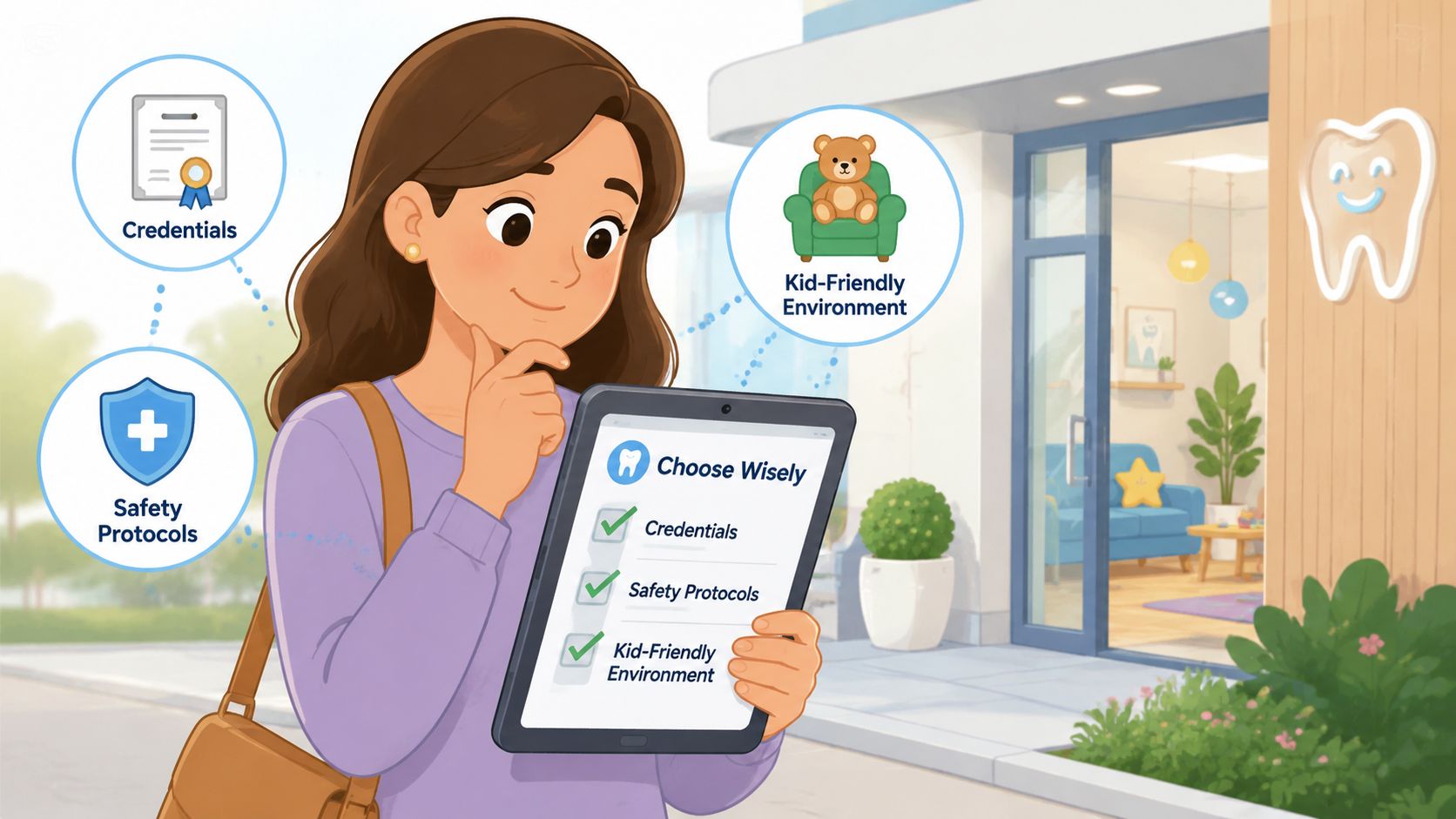
Credentials and safety
Start with training and readiness. If an office describes a dentist as board-certified, ask what that means in practical terms for your child's care. You're looking for evidence of child-focused education, hands-on clinical experience, and a practice environment built around pediatric safety.
The Commission on Dental Accreditation requires pediatric training programs to maintain accessible and functional emergency equipment and supplies, as outlined in the CODA pediatric dentistry standards. For parents, that translates into a straightforward question: if my child has a medical or behavioral emergency, is this team prepared?
When you call or visit, ask about:
- Emergency readiness: Is the team trained and equipped for pediatric emergencies?
- Radiation awareness: Do they use child-appropriate imaging and only when needed?
- Experience with age-specific care: Do they routinely see infants, toddlers, school-age children, and children with special needs?
Office philosophy and environment
A polished waiting room doesn't tell you much on its own. What matters is how the team responds when a child is hesitant, crying, overstimulated, or unable to cooperate right away.
Look for an office that explains its approach in plain language. A strong pediatric practice should be able to tell you how they introduce new children to the space, how they help fearful patients, and how they involve parents during appointments. You should hear patience in their answers, not irritation.
This is especially important in a diverse community. According to a UC Irvine study, low-income and non-white children face significantly more negative dental experiences. A practice that prioritizes trauma-informed care and understands social determinants is essential for creating a positive foundation for all children, as discussed in the UC Irvine report on negative dental experiences.
That doesn't mean you need perfect language in order to ask for what your child needs. It means the practice should be ready to meet families where they are.
A few signs of a thoughtful office philosophy:
- They ask about your child before the appointment. Sensory triggers, past medical experiences, communication preferences, and comfort items all matter.
- They don't rush trust-building. A short introductory visit can be better than forcing a full exam on day one.
- They welcome parent questions. Clear explanation is part of good care.
If an office seems annoyed by fear, that's useful information. Children notice that faster than adults do.
Sedation and emergency care
Parents often feel uneasy even asking about sedation, because they don't want to overreact. But asking is part of being prepared. Some children need extra help with comfort, movement, or anxiety during treatment. What matters is whether the office explains the options clearly, including when sedation may or may not be appropriate.
You don't need a complicated lecture. You need plain answers to practical questions:
- Why would my child need this?
- What are the alternatives?
- Who monitors my child?
- What should I expect before and after the visit?
The same goes for urgent dental issues. If your child falls, breaks a tooth, wakes up with swelling, or develops sudden pain, ask how the office handles pediatric emergencies and after-hours guidance. Calm systems matter just as much as calm personalities.
Choosing a pediatric dentist in Irvine, CA becomes much easier when you focus on these real-world questions instead of trying to decode marketing language.
Your Child's Dental Visits and Common Treatments
What a first visit often looks like
You arrive with a toddler on your hip, a diaper bag over one shoulder, and one big question in your mind. Will my child cooperate, cry, or refuse to open their mouth at all?
That uncertainty is normal. Early pediatric dental visits are often simple, gentle, and shorter than parents expect. The first goal is usually comfort. Your child gets a chance to see the room, hear a friendly voice, and learn that this new place is safe.
For babies and toddlers, the exam may happen in a parent's lap or in a knee-to-knee position with the dentist. That setup helps a small child feel anchored instead of separated. It also lets the dentist take a quick look at the teeth and gums without turning the visit into a struggle.
Children with sensory sensitivities, speech differences, developmental needs, or strong dental fear may need an even slower start. In a community as diverse as Irvine, that matters. A thoughtful pediatric dental team knows that success does not always mean finishing every step in one visit. Sometimes success means your child walked in, stayed calm, and left a little less afraid than before.
If your baby is teething and you are not sure what is typical, many families find this complete guide for new parents helpful for understanding what symptoms are common at home and what deserves a dental check.
A calm first visit builds trust for the visits that follow.
Common treatments explained in plain language
Most pediatric dental care focuses on prevention. The idea is similar to putting a raincoat on before the storm starts. It is easier to protect a healthy tooth than to repair one after decay begins.
A routine visit may include an exam, a gentle cleaning, and guidance for parents on brushing, flossing, snacks, and bedtime habits. Depending on your child's age and risk for cavities, the dentist may also recommend fluoride or sealants.
Fluoride is a mineral treatment that helps strengthen enamel, which is the outer shell of the tooth. Sealants are thin protective coatings placed on the deep grooves of back teeth, where food and plaque like to hide. Both are meant to lower the chance of cavities, especially during the years when kids are still learning how to brush well.
X-rays can worry parents, especially during early childhood. That concern makes sense. If images are needed, a pediatric office should explain why they are recommended, how they help, and how they keep the process as limited and child-friendly as possible.
If a cavity is found, the explanation should feel clear, not alarming. In simple terms, a cavity is a weak or damaged spot in the tooth. Treatment depends on how small or deep that area is, whether your child has pain, and how comfortable they can be during care. Some children do well with straightforward treatment in the office. Others, including children with significant anxiety or special health care needs, may need the plan broken into smaller steps.
Common pediatric treatments often include:
- Exams and cleanings: Checking how teeth are growing, looking for early trouble spots, and removing plaque buildup.
- Fluoride treatments: Adding extra protection to teeth that need help staying strong.
- Sealants: Covering the chewing grooves of molars to make cavities less likely.
- Fillings: Repairing a tooth after decay has created a cavity.
- Space maintainers: Holding room for an adult tooth if a baby tooth is lost too early.
Parents sometimes worry that a difficult appointment means their child has failed in some way. That is not how pediatric dentistry works. Children bring their age, temperament, sensory profile, and past experiences into the room with them. Good care meets them there, explains each step clearly, and adjusts the pace so treatment feels manageable.
Planning Your Family's Dental Care Logistics
Making appointments easier on real life
Even when you've found a dentist you trust, the practical side can still feel hard. Parents in Santa Ana, Irvine, Tustin, Costa Mesa, and Garden Grove are often trying to coordinate school drop-off, work schedules, traffic, and multiple family members who all need care.
It helps to ask early whether the office offers grouped family scheduling, reminder systems, and appointment times that fit around school or work obligations. A good front desk team can reduce stress before you ever sit in the chair.
You can also ask for help understanding treatment timing, expected follow-up, and payment arrangements in general terms. Families shouldn't feel embarrassed about needing clarity. Administrative guidance is part of patient care.
Daily routine matters outside the office too. Habits around meals, snacks, sleep, and activity all affect children's health. Some parents find it helpful to pair oral health changes with broader family wellness goals, and resources on reducing childhood obesity can support those bigger home routines.
When your child has extra care needs
Logistics become more complicated when a child has developmental, behavioral, or medical needs. Scheduling may need to happen at a specific time of day. Appointments may need to be shorter, slower, or broken into stages. Parents may need extra communication before the visit so the child knows what to expect.
Insurance navigation can also be harder for these families. Finding a dentist who accepts Denti-Cal for children with special needs is a significant challenge in California. A good practice will help families explore all available pathways to care, including and beyond limited public insurance options, as described in this California report on children's access challenges.
That kind of support doesn't solve every barrier, but it does help families feel less alone while they work through them.
Your Partner for a Healthy Smile in Santa Ana and Irvine
Choosing a pediatric dentist is really about choosing the kind of dental experience you want your child to grow up with. Parents usually feel more confident when they focus on a few essentials: training, safety, a child-centered environment, respectful communication, and a practice style that can adapt to anxiety, development, and family logistics.
For many Orange County families, it also helps to have one trusted office for care that changes over time. Children may need preventive visits now, then orthodontic guidance later. Parents may be thinking about Invisalign, cosmetic dentistry, dental implants, emergency dentistry, or sleep apnea support through oral appliance therapy for themselves. A family-centered practice can make those moving parts easier to manage under one roof.
Bristol Dental & Orthodontics in Santa Ana serves patients across Orange County, including Irvine, Costa Mesa, Tustin, and Garden Grove, with a warm, patient-focused approach led by Dr. Andrew Finley. The practice provides care for families in every stage of treatment, from routine and preventive dentistry to Invisalign, dental implants, cosmetic dentistry, emergency dental care, and sleep apnea treatment with oral appliance therapy.
Every child is different, and every family brings its own priorities, concerns, and history to the dental office. The best next step is a conversation. Every article should be reviewed by Dr. Finley before publishing, and your own child's needs should be discussed directly with him and the team.
If you're looking for a dental home that serves Santa Ana and nearby Irvine with compassionate, modern family care, consider scheduling a consultation with Bristol Dental and Orthodontics. Dr. Andrew Finley and the team can talk through your child's needs, your family's goals, and whether the practice feels like the right fit.