
You may be dealing with several problems at once. A broken tooth on one side. Worn teeth in the front. Old dental work that keeps failing. A missing molar that makes chewing harder. Maybe your jaw feels tired, or you avoid certain foods without even thinking about it.
That combination can make people feel stuck. Many patients in Santa Ana and nearby Orange County communities tell me the same thing: they don't know which problem to fix first, and they worry that every new issue will just lead to another patch.
That's where full mouth rehabilitation can help. It isn't one giant procedure done all at once. It's a carefully planned way to rebuild comfort, function, and stability across your whole mouth, step by step. Instead of chasing one symptom at a time, we look at the bigger picture and create a roadmap.
If you've been feeling discouraged, there's a reason for hope. The first step usually isn't treatment. It's understanding what's going on, why it happened, and what a healthy long-term plan could look like for you.
Table of Contents
- Feeling Overwhelmed by Dental Problems? You Are Not Alone
- What Is Full Mouth Rehabilitation and Who Needs It?
- Your Diagnostic and Treatment Planning Journey
- Common Procedures Used in a Rehabilitation Plan
- Understanding the Timeline and Staged Approach
- How to Choose Your Provider in Orange County
- Your Path to a Healthy, Confident Smile Starts Here
Feeling Overwhelmed by Dental Problems? You Are Not Alone
A patient might come in thinking the problem is one cracked tooth. After a closer look, we may find that the crack is only part of the story. The bite may be uneven. Several teeth may be worn down. Old crowns may no longer fit the way they should. A missing back tooth may have shifted extra pressure onto the front teeth for years.
That kind of situation is common. It can feel frustrating because the mouth works as a system. When one part breaks down, other parts often compensate until they start to break down too.
Many people have spent years doing small repairs, hoping each one will be the last. A filling here. A crown there. Maybe a night guard that helped somewhat, but didn't solve the whole picture. Then one day they realize they're tired of reacting.
A full mouth rehabilitation plan can bring order to what feels like dental chaos.
That's why this treatment approach matters. It gives structure to a complicated situation. Instead of asking, “Which tooth do we fix today?” we ask, “What does your mouth need so it can function comfortably and stay stable over time?”
For many patients, that shift is a relief. It turns a long list of problems into a sequence. First we diagnose. Then we control disease. Then we test the bite and appearance. Then we move toward final treatment with a clearer plan.
What Is Full Mouth Rehabilitation and Who Needs It?
A patient may say, “I just want to fix the tooth that keeps chipping.” After an exam, we sometimes find a bigger pattern. The back teeth may no longer support the bite well. Old dental work may be wearing out. Years of grinding may have shortened several teeth. In that situation, full mouth rehabilitation means treating the mouth as one working system so it can chew comfortably, stay stable, and hold up over time.
Full mouth rehabilitation is a planned process for restoring teeth, bite function, and oral health when several problems are connected. It may include crowns, bridges, implants, or orthodontic movement, but the goal is larger than replacing damaged parts. The goal is to create a mouth that works in a balanced, predictable way while preserving as much healthy tooth structure as possible, as discussed in this overview of full mouth rehabilitation and functional goals.
Why this approach is different
A single crown repairs one tooth. Full mouth rehabilitation asks a different question. Will the entire mouth function well after treatment, or will the same forces keep damaging the new work?
That distinction matters.
If your bite is off, placing beautiful restorations without correcting the pressure pattern can be like putting new tires on a car with poor alignment. The tires may look great on day one, but they wear unevenly because the underlying problem is still there. Teeth and restorations behave the same way under repeated stress.
This is why Dr. Finley looks beyond appearance alone. Yes, patients often want a better-looking smile. That is understandable. But the deeper purpose is to improve chewing, reduce strain on teeth and muscles, protect healthy structures, and make future problems less likely.
Questions that often guide this kind of care include:
- Which teeth can be preserved well? Saving healthy structure matters because natural teeth are still the best foundation whenever they can be predictably kept.
- Is the bite stable enough to support new treatment? If the upper and lower teeth meet unevenly, restorations can chip, loosen, or wear faster.
- What started the breakdown? Grinding, acid wear, decay, missing teeth, gum disease, and tooth position can all change how forces travel through the mouth.
- What order makes sense? Some patients need disease control first, others need bite correction, and others need temporary testing before final restorations.
Who may benefit from this kind of care
Full mouth rehabilitation is usually considered when several issues are interacting at the same time. The pattern matters as much as the number of damaged teeth.
You may be a candidate if you have:
- Extensive wear: Teeth look shorter, flatter, chipped, or increasingly sensitive.
- Multiple missing teeth: Chewing becomes less efficient, and remaining teeth may carry more pressure than they were designed to handle.
- Older dental work that is failing in several areas: Crowns, fillings, or bridges may still be repairable one by one, but the overall result may remain unstable.
- A bite that no longer feels comfortable: You may clench, feel muscle fatigue, or struggle to find a natural closing position.
- Cosmetic concerns tied to structural problems: Teeth may look uneven or worn because the bite has changed, not just because the color or shape needs improvement.
- Combined treatment needs: Some patients need care from more than one area of dentistry as part of one coordinated plan.
A simple rule helps here. If you keep fixing individual teeth and the bigger problem never settles down, the mouth may need a system-wide plan instead of another isolated repair.
This kind of treatment often involves more than one dental discipline because function, structure, gum health, and tooth position all affect one another. Researchers who published a comparative analysis of treatment success across dental specialties described strong outcomes across several specialties that are commonly involved in complex care. That helps explain why coordinated planning is such a central part of successful rehabilitation.
Your Diagnostic and Treatment Planning Journey
Many patients arrive expecting a treatment date. Instead, the first phase often feels more like investigation than repair. That can be surprising, but it is how full mouth rehabilitation becomes safer, more predictable, and built for long-term health rather than a quick cosmetic fix.
What happens at the first visits
At the beginning, the dental team studies your mouth as a working system. Teeth, gums, bone, jaw joints, and bite all affect one another. If one part is missed, the final result can look good at first but fail under daily chewing forces.
Your early visits may include an exam, digital images, photos, and impressions or scans. Each record answers a different question.
- Clinical exam: Which teeth are healthy enough to keep, which ones are under stress, and where are decay, cracks, wear, or gum problems present?
- Digital X-rays and 3D imaging: These show roots, bone support, joint anatomy, and problems hidden below the surface.
- Photos and digital scans: These record tooth shape, gum contours, and the way the upper and lower teeth fit together.
- Bite records: These help the dentist understand how your jaw closes, whether your muscles are compensating, and whether the current bite is forcing teeth into harmful contact.
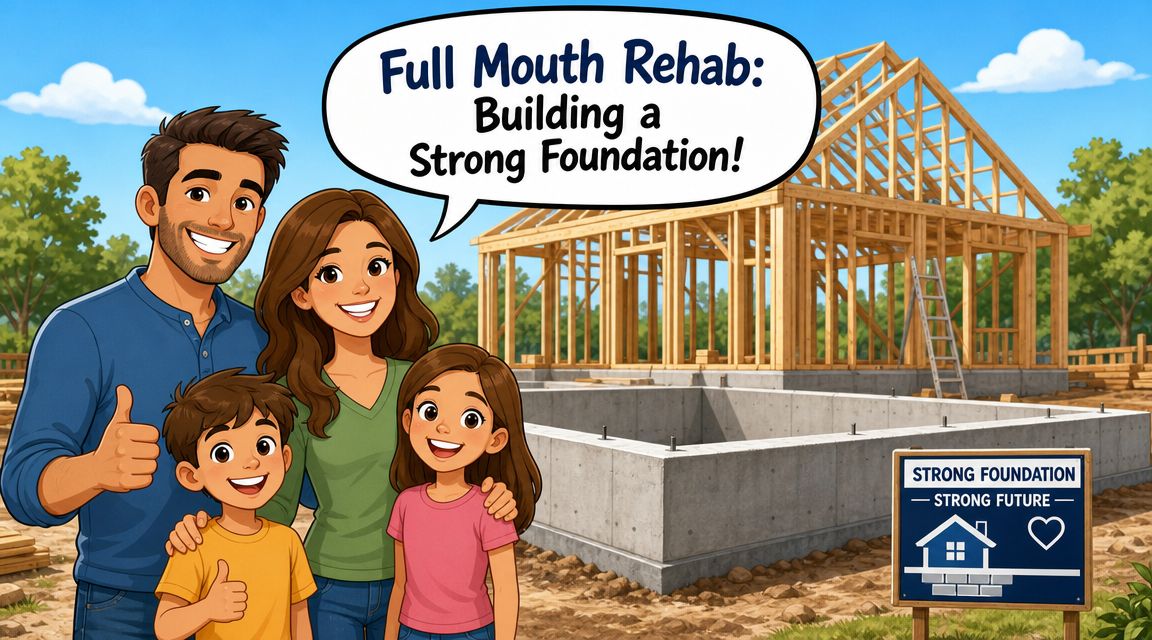
A useful comparison is building work on a house. You would not replace the roof before checking the foundation and framing. Full mouth rehabilitation follows the same logic. The planning phase helps the team find the underlying causes of breakdown before choosing the final repairs.
Why the order matters
The sequence matters because each decision affects the next one. Active disease usually needs attention first. After that, the team can study jaw position, bite relationship, tooth wear patterns, and the amount of space available to rebuild damaged areas. A structured prosthodontic process often uses records of jaw position, mounted models, and diagnostic mock-ups before final tooth preparation, as described in this review of the sequenced prosthodontic workflow for full mouth rehabilitation.
Patients sometimes ask why the dentist cannot place the final crowns right away. The answer is function. If the bite is unstable, if the front teeth need a new length, or if the jaw needs a healthier closing position, those changes should be tested before anything permanent is made.
Provisional restorations work like a real-world trial version. You can speak with them, chew with them, and notice how your muscles and joints respond. The dentist can check comfort, appearance, and force distribution before final materials are chosen. That step lowers the chance of committing to a design that looks fine in a chair but feels wrong in daily life.
How digital planning improves predictability
Modern planning tools let the team combine scans, imaging, and bite data into a more complete picture of how your mouth functions. In case-based reports of digital workflows, clinicians used these records to simulate changes, test provisional designs, and then transfer validated information into the final restorations with better consistency, as shown in this case-based digital workflow article on creating a virtual patient.
For patients, the benefit is simple. More planning happens before irreversible treatment begins.
That means fewer guesses about tooth shape, bite position, and available space. It also means the final result is based on tested information, not just what seems right during one appointment. In many cases, digital records help the dentist compare options, explain the sequence clearly, and build a plan around health, comfort, and durability, not appearance alone.
This part of the process can feel slow. It is where a lot of future problems are prevented.
Common Procedures Used in a Rehabilitation Plan
A full mouth rehabilitation plan is built from individual treatments that each solve a different part of the problem. Some rebuild damaged teeth. Some replace missing support. Some move teeth into healthier positions. Others protect the final result.
Restorative dentistry rebuilds damaged teeth
When teeth are worn, cracked, heavily filled, or weakened, restorative treatment often forms the backbone of the plan.
That may include:
- Crowns: Used when a tooth needs full coverage and protection because too much structure has been lost.
- Bridges: Used to replace one or more missing teeth when a bridge is the right fit for the overall case.
- Veneers or conservative bonded restorations: Sometimes used in selected areas when the goal is to improve shape, length, or appearance while preserving structure.
- Replacement of failing dental work: Old restorations that no longer fit well may need to be updated as part of creating a more stable bite.
If you'd like to learn more about appearance-focused options that may be part of a larger rehabilitation plan, Bristol Dental & Orthodontics offers cosmetic dentistry for patients in Santa Ana and surrounding areas.
Dental implants replace missing support
Missing teeth don't just leave gaps. They can change chewing patterns, place extra strain on remaining teeth, and reduce support in the bite.
That's why implants are often an important piece of a rehabilitation plan. They can replace missing teeth without relying on neighboring teeth in the same way a traditional bridge might. In some cases, implants support single crowns. In others, they help anchor a broader restorative strategy.
Patients often think of implants as a separate treatment. In a full rehabilitation, they're usually part of a bigger engineering plan. Their location, timing, and relationship to the final bite all matter.
You can explore that treatment category through the practice's dental implant care.
Orthodontics creates a better starting position
Sometimes the smartest way to restore teeth is to move them first.
If teeth have drifted, tipped, crowded, or erupted unevenly, placing crowns on top of that arrangement may force unnecessary compromise. Orthodontic treatment can create better spacing, improve alignment, and set the stage for more conservative restorative work.
For adults who want a less noticeable option, Invisalign clear aligners may be used before final restorations so the teeth are in a more ideal position.
Straightening teeth in the right cases can reduce how much drilling or reshaping is needed later.
Supportive therapies protect the final result
Some patients also need therapies that support comfort, airway health, or bite stability.
These may include:
| Need | Possible role in the plan |
|---|---|
| Bite imbalance or clenching | Occlusal adjustment, bite appliances, or protective night guards may help support the new bite |
| Airway concerns during sleep | Sleep apnea oral appliance therapy may be considered in appropriate cases |
| Anxiety about treatment | Sedation dentistry can help some patients receive care more comfortably |
| Sudden pain or breakage during the process | Emergency dentistry may be needed to stabilize urgent problems |
Because these cases often combine several specialties, coordination matters as much as the procedures themselves. The goal isn't to stack treatments. It's to make each one support the next.
Understanding the Timeline and Staged Approach
One of the most common questions patients ask is simple: how long will this take?
The honest answer is that it depends on the case. Full mouth rehabilitation usually isn't one appointment or one procedure. It's a staged process built around diagnosis, bite planning, healing, and careful transitions from temporary to final work.

Why it usually isn't a quick fix
Modern cases are often organized around digital planning, vertical dimension changes, and coordination of tooth position across the arch, rather than one fixed procedure. That's why timelines can vary widely, and why some people need months of diagnostic or preparatory work before definitive restorations are placed, as explained in this discussion of why full mouth rehabilitation timelines vary.
That can feel slow when you're eager for visible change. But in complex care, slower often means safer and more predictable.
Several things can affect the timeline:
- Whether disease control is needed first: Gum inflammation, decay, or infection usually need attention before major reconstruction.
- Whether teeth need to be moved: Orthodontic treatment changes the schedule because it changes the foundation.
- Whether implants are part of the plan: Implant treatment often requires healing periods between stages.
- Whether the bite is being changed: When we adjust vertical dimension or bite position, testing matters.
Temporary teeth are often part of the plan
A lot of patients are surprised to learn that temporary or provisional restorations are not just placeholders. They often serve as a test drive.
During this stage, you and your dentist can evaluate questions that are hard to answer on a model alone. Do the teeth feel comfortable when you chew? Is speech natural? Does the new bite feel balanced? Is the tooth shape working well with your lips and smile?
That trial period can help us refine the details before final restorations are made. It's one of the reasons staged care can lead to a more thoughtful outcome.
When a treatment plan includes a provisional phase, that usually means the team is trying to verify function, not rush past it.
Patients in Santa Ana, Tustin, Irvine, Costa Mesa, and Garden Grove often appreciate hearing this upfront. The process may take time, but every stage has a job. You're not waiting for no reason. You're building toward a result that's meant to work, not just look finished.
How to Choose Your Provider in Orange County
A full mouth rehabilitation is a major decision. The right provider should help you understand the process clearly, not make it feel mysterious or sales-driven.
What to look for
Start with the basics. Does the dentist evaluate the whole picture, or only the most obvious tooth? In complex cases, planning quality often matters just as much as technical skill.
A retrospective study on tooth-supported full-mouth rehabilitations found that overall clinical success remained stable over time, while significant changes were still detected in marginal adaptation and surface texture. The same study emphasized that success depends on a multidisciplinary workflow and precise execution, and highlighted CAD/CAM technology as improving accuracy and reducing error in complex cases, as detailed in this retrospective study on clinical success and CAD/CAM accuracy in full-mouth rehabilitations.
That's why it helps to look for a provider who values:
- Thorough diagnostics: Digital records, bite analysis, and detailed planning matter.
- A sequenced philosophy: You want a dentist who can explain why certain steps come first.
- Technology with a purpose: Scanners, 3D imaging, and CAD/CAM tools should support decision-making, not just marketing.
- Clear communication: You should understand the options, tradeoffs, and likely stages of care.
Questions worth asking at a consultation
A consultation should leave you more informed, not more confused. Good questions include:
- Can you explain what's causing my dental breakdown?
- What parts of my treatment are focused on function versus appearance?
- Will I need temporary restorations to test the bite first?
- How do you decide whether implants, Invisalign, crowns, or other treatments come first?
- What technology do you use to plan complex cases?
- How will you help me understand the sequence before treatment begins?
If you live in Santa Ana or nearby cities like Costa Mesa, Tustin, Irvine, or Garden Grove, it's reasonable to take your time and ask detailed questions. This kind of treatment should feel personalized, methodical, and understandable.
Your Path to a Healthy, Confident Smile Starts Here
A lot of people reach this point feeling tired. They may be avoiding one side of the mouth when they chew, worrying about another tooth breaking, or wondering why every fix seems to lead to one more problem. That kind of pattern is frustrating, and it usually has a cause.
Full mouth rehabilitation is designed to restore order to a mouth that has lost stability. The goal is a bite that works comfortably, teeth that share force more evenly, and a plan that supports long-term health. A better smile can be part of the outcome, but appearance is only one piece of the picture.
A good rehabilitation plan works like rebuilding the foundation of a house before painting the walls. If the bite is unstable, if teeth are missing, or if older dental work is failing, treatment has to be staged carefully so the final result lasts. That is why the process tends to be deliberate. Diagnose the cause. Set the sequence. Test the bite when needed. Then complete the final restorations with more confidence and predictability.
If you have been living with worn teeth, missing teeth, repeated repairs, jaw discomfort, or a bite that feels off, a consultation can help turn a confusing situation into a clear plan.
The team at Bristol Dental and Orthodontics can walk you through your concerns in a calm, practical way and help you understand whether full mouth rehabilitation, implants, Invisalign, cosmetic treatment, or another approach fits your needs and goals.
Refined using Outrank tool