

There is no universal rule. Most low-risk adults can often go 12 to 24 months between routine visits, while higher-risk patients may need appointments as often as every 3 months, based on current oral health and dental history.
The familiar advice to see a dentist every six months sounds simple, but it doesn't fit every patient. A healthy adult with stable gums and a low history of decay may need a different schedule from a child, a patient with active gum disease, or someone caring for new dental implants.
At Bristol Dental & Orthodontics, the practical question isn't “What is the standard appointment interval?” It's “What recall schedule matches this patient's risk, treatment, and daily life?” That approach helps Santa Ana families avoid both extremes: waiting until pain forces an emergency visit and booking routine appointments that don't reflect their actual needs.
Table of Contents
- The Truth About Dental Check-Up Schedules
- What the Latest Research and Guidelines Say
- Dentist Visit Frequency by Patient Type
- What Happens During a Routine Dental Visit
- Finding Your Dental Home in Santa Ana
- Practical Scheduling Tips and Warning Signs
The Truth About Dental Check-Up Schedules
The six-month rule isn't a universal clinical requirement for every adult. Modern guidance has moved toward risk-based recall, which means your dentist considers your disease history, current oral health, age, home-care routine, and active treatments before recommending when you should return.
Guidance linked to NICE states that adults should have a dental check-up at least once every two years, while the actual interval should be adjusted to oral disease risk. NHS materials describe intervals ranging from 3 months to 2 years, with people who have good oral health often needing visits only once every 12 to 24 months. You can review the supporting adult oral health guidance.
That doesn't mean routine dental care is unimportant. It means the appointment should have a reason. A patient with bleeding gums, recurring decay, recent periodontal treatment, or a restoration that needs monitoring may benefit from closer supervision. A patient with stable findings may be able to extend the interval after discussing it with a dentist.
Why one schedule doesn't work for everyone
A blanket six-month schedule creates two problems. It can give a higher-risk patient the impression that six months is always enough, even when active disease calls for earlier care. It can also make a low-risk patient feel that a longer interval is careless, even when individualized planning supports it.
Your schedule may change as your circumstances change. A new medication, pregnancy, smoking, diabetes, dry mouth, orthodontic treatment, an implant, or a history of gum disease can alter the way your dental team monitors your mouth. The interval isn't a permanent label. It's a clinical decision that can be reviewed over time.
Practical rule: A longer recall interval is appropriate only when it reflects your current risk and a dentist has helped you choose it.
The useful question to ask
Instead of asking only how often to see a dentist, ask what your last examination showed and what could change before the next one. Patients should understand whether the visit is intended for preventive monitoring, periodontal maintenance, restoration review, orthodontic follow-up, or treatment planning.
For many low-risk adults, a visit every 12 to 24 months may be reasonable. Patients with active or recurring problems may need shorter intervals, sometimes as often as every 3 months. The right answer is not the most familiar number. It's the interval that gives your dentist enough opportunity to monitor your specific risks without treating every patient alike.
What the Latest Research and Guidelines Say
The familiar six-month appointment is not a universal clinical rule. Current evidence supports a risk-based approach, with recall timing shaped by disease history, examination findings, and how well a patient's daily care is working. A Cochrane review found little to no difference in tooth decay, gum disease, or quality of life between six-monthly check-ups and risk-based recall intervals. For low-risk adults, intervals of up to 24 months did not appear to worsen these outcomes. The findings are summarized in the Cochrane evidence review on dental check-ups.

That evidence does not mean every adult should wait two years. It shows why a fixed calendar cannot serve every patient equally. Someone with low cavity risk and healthy gums has different monitoring needs from a patient with active periodontal disease, repeated new cavities, an implant, or ongoing orthodontic care.
What the guidance means in practice
NICE places routine adult recall within a practical range of 3 to 24 months, with the interval adjusted for oral health and disease risk. For patients under 18, the longest routine interval is 12 months. Developing teeth, changing hygiene habits, and the growth of the jaws require closer observation than a stable adult mouth. The detailed NICE dental recall recommendations provide that framework.
The American Dental Association also recognizes that no single recall interval suits every patient. Its guidance explains that people who attend twice a year for an oral examination and prophylaxis spend about two hours per year in the dental chair, while emphasizing that disease risk should guide the schedule. The ADA guidance on home care and recall planning places that time commitment in context without turning it into a prescription.
Why personalized care is the more useful model
A risk-based schedule balances prevention with the patient's actual needs. Shorter intervals give the dental team more opportunities to reinforce home care, assess gum response, review healing, and identify changes in higher-risk patients. Longer intervals can make sense when examinations remain stable and daily cleaning is effective.
The trade-off requires clear communication. Bleeding, sensitivity, pain, a loose restoration, or a changed bite should prompt a call rather than waiting for the planned appointment. At a Santa Ana practice, the most useful recall plan is one patients understand, can follow, and can adjust when their health or treatment changes.
Dentist Visit Frequency by Patient Type
The answer to how often to see a dentist changes with age, treatment, and disease history. The ranges below are starting points for discussion, not personal prescriptions.
| Patient Type | Typical Interval |
|---|---|
| Low-risk adult with stable oral health | Every 12 to 24 months may be appropriate |
| Adult with elevated disease risk or active concerns | As often as every 3 months may be recommended |
| Patient under 18 | No longer than 12 months for routine monitoring |
| Patient with periodontal treatment history | A customized schedule, often with closer early monitoring |
| Patient receiving Invisalign or other orthodontic treatment | At intervals set by the treating dental team |
| Patient with a dental implant | Customized examinations and maintenance based on the implant and surrounding tissues |
| Patient using an oral appliance for sleep apnea | Periodic dental and sleep-medicine follow-up |
Children and teenagers
Children generally need more regular monitoring than low-risk adults. Growing mouths change, new teeth erupt, brushing habits develop, and early problems may progress before a child describes symptoms clearly. NICE sets the longest routine interval for patients under 18 at 12 months, so parents in Santa Ana should follow the schedule recommended for the child's age and findings rather than automatically applying an adult interval.
A teenager in orthodontic treatment also has a different care pattern from a teenager without appliances. Brackets, wires, or aligners can make cleaning more demanding, and the orthodontic team may need to review tooth movement and hygiene at planned intervals.
Invisalign and orthodontic care
Orthodontic appointments aren't just routine cleanings. The dental team checks how teeth are moving, whether the appliance is being used as directed, and whether the gums and enamel remain healthy during treatment.
For Invisalign treatment, one study describes typical aligner wear of 20 to 22 hours per day and changes every 7 days under current manufacturer protocols. It also reported that a 14-day protocol may be preferable for more challenging movements such as posterior tooth movement, torque, tip, and rotation. Those details come from the study of Invisalign wear protocols, but your treating dentist determines the protocol for your case.
Implants, gum disease, and complex care
A dental implant deserves ongoing professional attention because the implant, crown, gum tissue, and surrounding bone all need to remain stable. Patients with a history of periodontitis may need closer monitoring than patients who have never had gum disease. The same principle applies after deep periodontal treatment, extensive restorative work, or other major changes in oral health.
Sleep apnea treatment also requires follow-up. For adults using oral appliance therapy, the joint guidance from sleep-medicine and dental organizations recommends a custom, titratable device provided by a qualified dentist, along with periodic visits with both the dentist and sleep physician. The guidance on oral appliance therapy for sleep apnea explains why the appliance shouldn't be treated as a set-it-and-forget-it device.
Emergencies and sedation
An emergency visit doesn't replace preventive care. Severe tooth pain, swelling, a dental injury, or a damaged restoration may require prompt assessment, but the follow-up schedule depends on what caused the problem and what treatment was provided. Sedation dentistry may help some anxious patients complete needed care, but it doesn't remove the need for future examinations or maintenance.
What Happens During a Routine Dental Visit
A routine visit usually begins with a conversation. The dental team reviews your medical history, medications, symptoms, concerns, and any changes since your last appointment. Tell the team about sensitivity, bleeding, jaw discomfort, dry mouth, changes in sleep-apnea treatment, or difficulty cleaning around orthodontic appliances or implants.
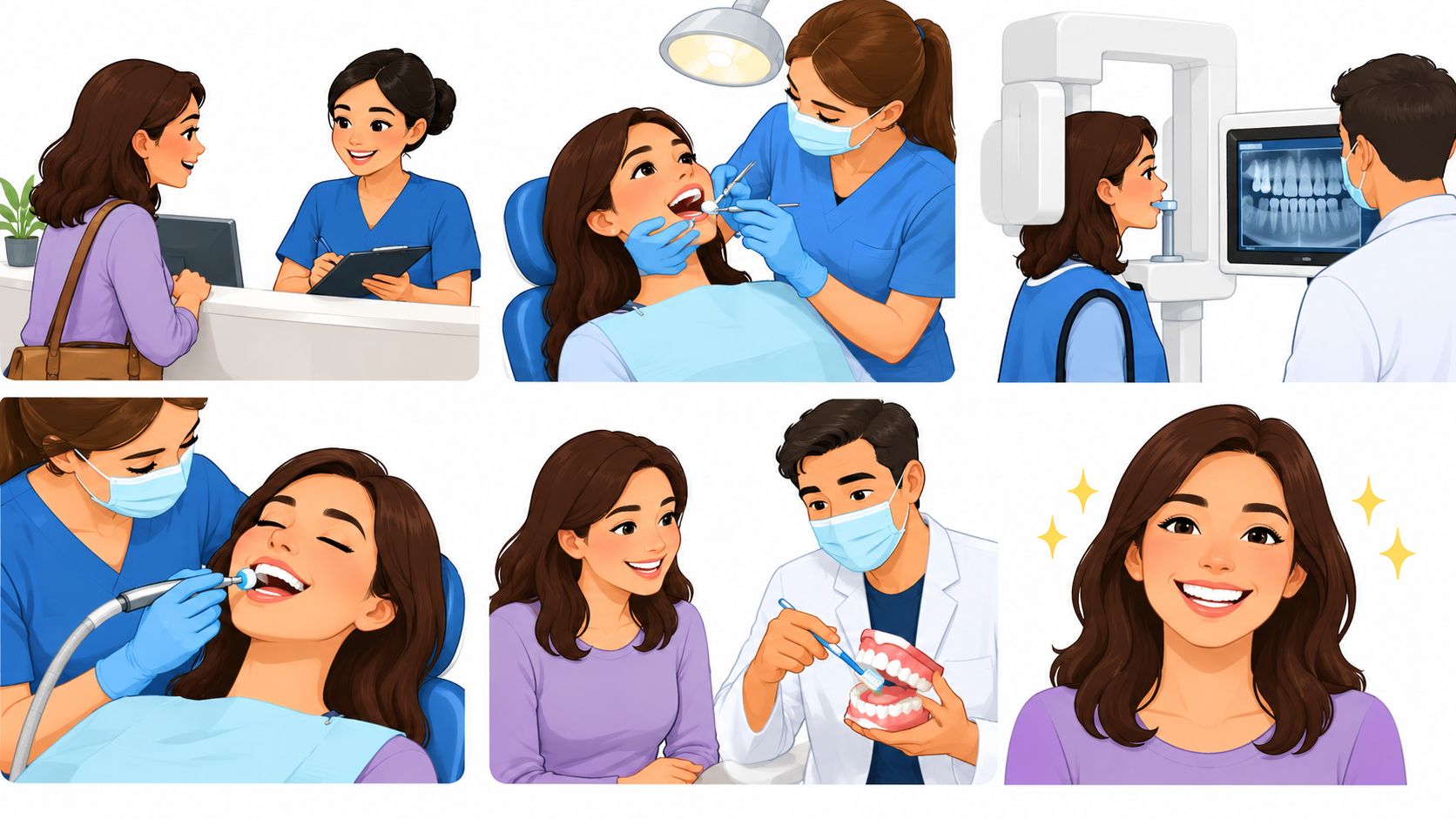
The examination may include an inspection of the teeth, gums, bite, existing restorations, and areas that are difficult to see at home. Dental X-rays aren't automatically needed at every appointment for every patient. A dentist recommends imaging when it can answer a specific clinical question, taking your history and current findings into account.
Cleaning and prevention
A professional cleaning removes deposits that brushing and flossing may not fully manage. The hygienist may also discuss brushing technique, interdental cleaning, sensitivity, plaque accumulation around orthodontic appliances, or the way you clean an implant-supported restoration.
This part of the visit should feel collaborative, not judgmental. If your routine has been difficult to maintain, explain why. A useful plan might involve changing the technique, choosing a more manageable cleaning method, or setting a realistic goal that fits family schedules in Santa Ana, Tustin, Irvine, Garden Grove, or Costa Mesa.
Discussion before treatment
After the examination, the dentist explains what looks stable and what needs attention. A small area of concern may be monitored, treated conservatively, or investigated further. If you need restorative, cosmetic, orthodontic, implant, or sleep-apnea care, the next step should include an explanation of the options, expected maintenance, and reasons for the proposed timing.
You don't need to memorize every clinical term. Ask what happens if you wait, what symptoms should prompt an earlier call, and whether the recommended interval is based on active disease, past history, or treatment monitoring.
Why prevention still matters for busy patients
Waiting until a tooth hurts can make scheduling more disruptive. Pain may arrive at an inconvenient time, while a planned visit gives you more control over when you address an issue. Routine care can't guarantee that every problem will be prevented, but it gives your dental team a chance to assess changes before they become urgent.
If dental anxiety has kept you away, tell the practice before the appointment. Clear explanations, pacing, and appropriate comfort measures can make the visit more manageable.
Finding Your Dental Home in Santa Ana
A consistent dental home makes risk-based scheduling easier because the team can compare your current findings with your previous examinations. Instead of starting from scratch at every appointment, your dentist can see whether gum inflammation is improving, whether a restoration has changed, or whether your home-care plan is working.
That continuity matters for families. Parents can keep children's preventive care in one place, while adults can coordinate general dentistry with Invisalign, implants, cosmetic dentistry, sleep apnea treatment, emergency dental care, or sedation dentistry. A practice that understands your history can also explain why one family member needs a shorter interval while another may safely return less often.
What continuity helps your dentist monitor
A long-term relationship supports more informed conversations about:
- Gum health: Changes in bleeding, pocket measurements, inflammation, and home-care needs can be reviewed over time.
- Restorations and implants: Your dentist can monitor crowns, bridges, implant-supported restorations, and the tissues around them.
- Orthodontic progress: Invisalign and other orthodontic treatment require planned reviews rather than an occasional general cleaning.
- Cosmetic goals: Whitening, bonding, veneers, and other cosmetic options should be considered alongside the health and condition of the teeth.
- Sleep apnea appliances: An oral appliance may need dental review as well as coordination with sleep care.
- Urgent problems: A familiar team can help determine whether a concern needs same-day attention or a planned appointment.
Care that fits real family routines
Santa Ana families often coordinate school, work, transportation, and appointments across Orange County. A recall plan should be clinically appropriate and workable enough that you can follow it. If an appointment interval doesn't fit your life, discuss the problem instead of allowing preventive care to lapse.
Bristol Dental & Orthodontics, led by Dr. Andrew Finley, provides family and cosmetic dental care for patients in Santa Ana and nearby communities including Costa Mesa, Tustin, Irvine, and Garden Grove. The team can discuss a personalized approach to routine exams and cleanings, as well as treatment planning for Invisalign, dental implants, cosmetic dentistry, sleep apnea, emergency dentistry, and sedation dentistry.
A dental home should also make questions welcome. You should be able to ask why a particular interval was chosen, what signs should prompt an earlier visit, and how your home routine affects the next examination.
Practical Scheduling Tips and Warning Signs
Set your next visit from your dentist's findings, not from an automatic calendar habit. Ask whether the appointment will monitor active disease, maintain completed treatment, check an appliance, or confirm that your oral health remains stable. The right interval should reflect your risk and the care you are receiving.
The ADA's patient guidance describes routine examinations and preventive care as roughly two hours per year in the dental chair, while acknowledging that no single recall interval suits everyone. Read the ADA's explanation of dental home care and recall timing for that perspective. A planned visit may be easier to manage than waiting until pain, swelling, or a broken restoration disrupts work and family plans.
Book sooner when something changes
Contact a dental practice promptly if you develop:
- Persistent tooth pain: Pain that continues, worsens, or interrupts sleep needs assessment.
- Swelling or drainage: Facial or gum swelling, drainage, or a bad taste with discomfort should not be ignored.
- Bleeding or gum changes: New or worsening bleeding, tenderness, recession, or loose teeth may require evaluation.
- A damaged tooth or restoration: A crack, lost filling, loose crown, or broken orthodontic component can worsen without attention.
- A dental injury: Trauma to a tooth or the mouth should be assessed promptly, even when pain seems limited.
- Changes with an oral appliance: New discomfort, poor fit, or a change in symptoms should be discussed with the dental and sleep-care teams.
Keep planned recalls even when you feel well, unless your dentist changes the schedule. Some oral conditions produce few early symptoms. Checking at home helps, but it cannot replace a professional examination.
Personalized recall planning is the practical standard for preventive care. If your schedule no longer fits your needs, Santa Ana patients can consult Bristol Dental & Orthodontics about their history, current concerns, and an appropriate interval.
Bristol Dental and Orthodontics provides routine exams and cleanings, Invisalign, dental implants, cosmetic dentistry, sleep apnea treatment, emergency dental care, and sedation dentistry for Santa Ana families. Visit Bristol Dental and Orthodontics to request a consultation.