

You might be here because you've noticed your top teeth seem to cover too much of your bottom teeth in photos, or because chewing doesn't feel as smooth as it should. Some people first spot it in the mirror. Others hear it from a dentist or notice wear on their front teeth and start asking questions.
That's a very normal place to start. An overbite can be mild, more noticeable, mostly cosmetic, or tied to how your teeth and jaws function together. The important part is that overbite treatment isn't one single fix. It depends on what's causing the bite to sit the way it does, how severe it is, and what matters most to you in daily life.
If you live in Santa Ana or nearby areas like Costa Mesa, Tustin, Irvine, or Garden Grove, it helps to think about this as a journey. You begin with self-awareness, move into a proper diagnosis, choose the right treatment path, and then protect the result once treatment is finished. That step-by-step approach tends to make the whole process feel much less overwhelming.
Table of Contents
- Do I Have an Overbite and Why Does It Matter
- How We Diagnose and Measure an Overbite
- Orthodontic Overbite Treatment Options
- When Jaw Surgery Is the Right Solution
- Your Treatment Journey and Long-Term Results
- Comparing Overbite Treatments at a Glance
- Frequently Asked Questions About Overbite Treatment
Do I Have an Overbite and Why Does It Matter
A lot of people use the word “overbite” to mean any upper teeth that sit in front of the lower teeth. In reality, some overlap is normal. Your top front teeth should usually overlap the lower front teeth a bit. The concern starts when that overlap becomes too deep or starts creating functional problems.
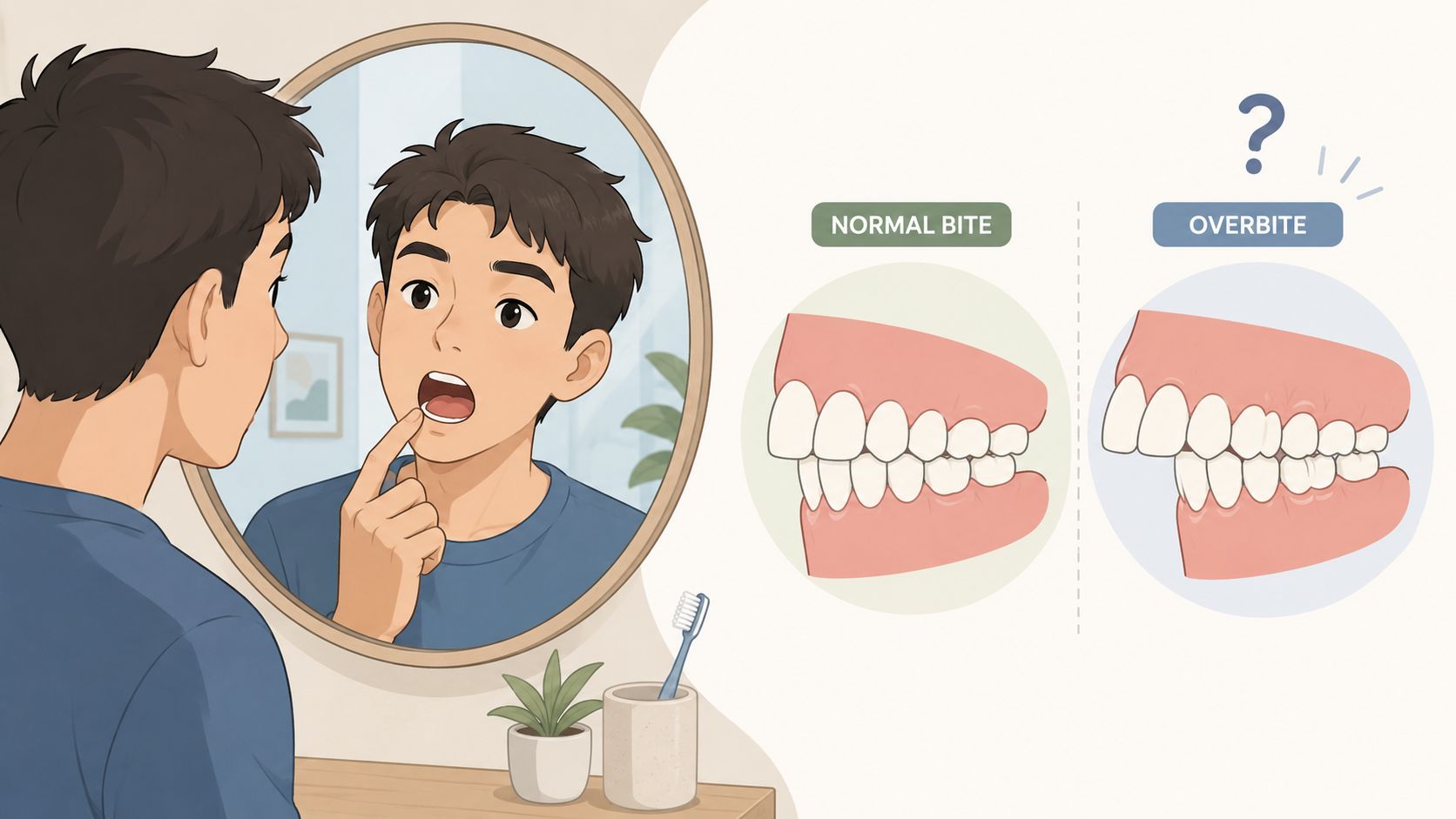
What patients often notice first
You don't need to diagnose yourself perfectly. Still, a few signs tend to bring people in for an evaluation:
- Your top front teeth hide most of your lower front teeth when you bite down naturally.
- Your smile feels “gummy” or closed in, even if your teeth look fairly straight.
- You see uneven wear on the edges of certain teeth.
- Biting into foods feels awkward, especially with sandwiches, apples, or crusty bread.
- Your jaw feels tired or sore, particularly after eating or clenching.
Sometimes the issue is appearance. Sometimes it's function. Quite often, it's both.
Why it matters beyond looks
A significant overbite can place extra pressure on certain teeth and on the jaw system as a whole. That doesn't mean every overbite causes pain or damage, but it does mean the bite deserves a closer look if you're noticing symptoms.
Practical rule: If you're thinking about your bite often enough to search for answers, it's worth having it examined.
The reason orthodontists take overbites seriously is simple. Teeth are supposed to share biting forces in a balanced way. When they don't, some teeth can take more force than they were meant to, and the jaw muscles may compensate.
What a consultation helps clarify
The hardest part for most patients is not knowing whether their bite issue is minor, moderate, or something more structural. A proper exam can sort out whether you're dealing with tooth positioning, jaw positioning, or a mix of both.
That distinction shapes everything that comes next, including whether treatment is mostly orthodontic, whether clear aligners may work, and whether a more involved plan is needed. For your specific situation, Dr. Finley should review the findings personally before any treatment decisions are made.
How We Diagnose and Measure an Overbite
A lot of Santa Ana patients come in after noticing the same pattern. They see that the top front teeth seem to cover too much of the bottom teeth, but they are not sure what that means. The key question in the exam is simple: are the teeth positioned in a way that creates the overbite, are the jaws part of the problem, or is it a mix of both?
That answer matters because two people can both say, "I have an overbite," and still need very different treatment plans.
What counts as a significant overbite
Orthodontists measure overbite by looking at how much the upper front teeth vertically overlap the lower front teeth. A small amount of overlap is normal. Too much overlap can start to affect tooth wear, bite function, comfort, or all three.
Measurement is only the starting point. A number on its own does not tell the whole story, just like a shoe size does not tell you whether the shoe fits well. We also need to see where the teeth touch, whether the lower teeth are being hidden too much, and how your jaw works when you bite and speak.
What we look at during the exam
A good overbite evaluation is more like building a map than taking a snapshot. Each record shows one part of the picture.
Visual bite exam
We check how the front teeth overlap, how the back teeth meet, and whether the bite looks centered or shifted.Photos
Photos help us study the smile, lip posture, and tooth display from several angles. They also give us a clear before-and-after record.Digital scans
A 3D scan shows the shape of the teeth and bite in detail. It lets us study contact points and crowding without messy impressions.X-rays and imaging
Imaging helps us look below the surface at roots, bone support, tooth position, and jaw relationships. In some cases, extra imaging helps clarify whether the problem is mostly dental or more structural.
Dental overbite versus skeletal overbite
This is the part many patients find confusing at first.
A dental overbite means tooth position is doing most of the work. The jaws may be reasonably well aligned, but the teeth have tipped, erupted, or settled into too much vertical overlap.
A skeletal overbite means the jaw pattern is a major reason for the bite. The upper jaw, lower jaw, facial growth pattern, or a combination of those factors may be contributing.
Straight teeth do not rule out a skeletal issue. Crooked teeth do not prove one either. That is why a mirror check can alert you to a problem, but it cannot explain the cause.
Why the distinction changes treatment
Treatment works best when it matches the source of the problem. If the overbite is mainly dental, tooth movement may be enough to improve the bite. If jaw structure is a large part of the picture, especially in an adult who has finished growing, the plan may need to address more than tooth position.
This is also why online self-checks have limits. They can help you notice that something feels off, but they cannot show how your teeth, roots, bone, and jaws fit together.
For patients who want that kind of local evaluation, Bristol Dental & Orthodontics includes orthodontic assessment within a broader dental setting, which can be helpful when overbite concerns overlap with tooth wear, appearance goals, or airway-related questions.
Orthodontic Overbite Treatment Options
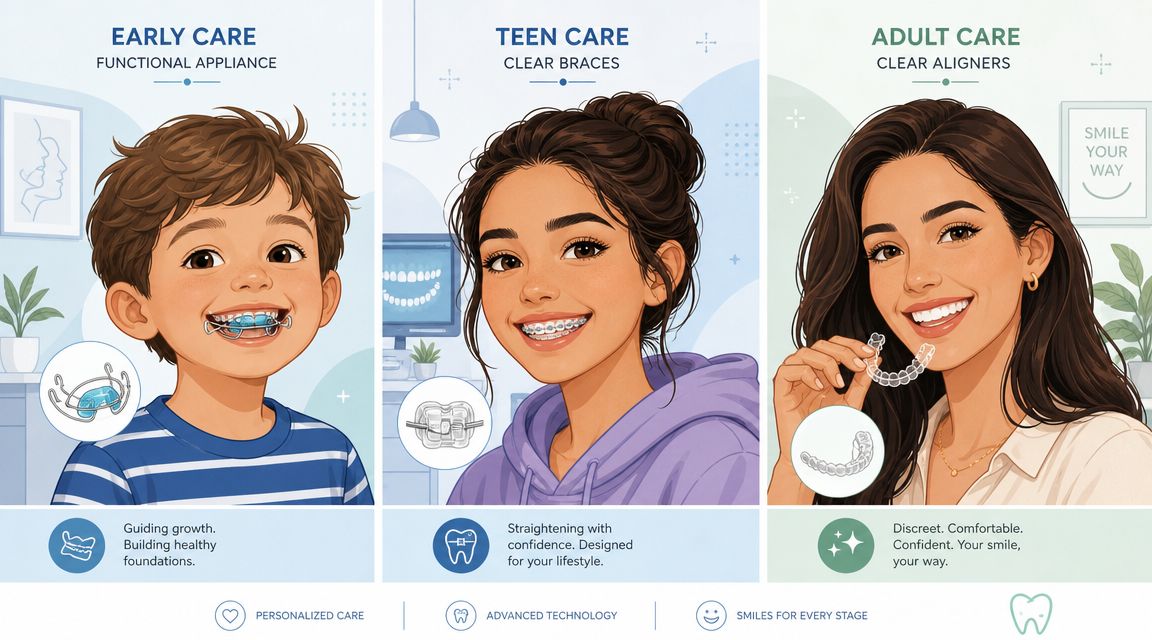
Orthodontic treatment is where most Santa Ana patients begin after they learn their overbite is more than a cosmetic concern. The plan depends on age, growth, tooth position, jaw pattern, and daily habits. In other words, two people can both say, “I have an overbite,” and still need very different treatment.
A good way to picture it is this. Correcting an overbite is less like straightening one crooked picture frame and more like getting a door to close properly again. The front teeth matter, but so do the back teeth, the way the bite meets, and whether the upper and lower arches are working together.
For children and growing teens
Growth gives us options that adults no longer have. If a child's bite is developing in a way that could lead to a deeper overbite, treatment may focus on guiding eruption, creating room, or reducing the severity of the problem while the jaws are still changing.
That does not always mean early treatment is the right move. Sometimes the better choice is careful monitoring until the timing is more favorable. Parents are often relieved to hear that “start now” and “wait too long” are not the only two choices. There is often a middle path based on what the exam shows and how the bite is developing.
For families, this stage is often about prevention and simplification. The goal may be to make later treatment shorter, more stable, or less invasive.
Traditional braces
Braces are still one of the most reliable ways to correct an overbite, especially when the bite is deep or several problems need to be fixed at the same time. Because braces stay attached to the teeth, they let the orthodontist make precise adjustments over time.
Braces may be a strong fit when:
- The overbite is pronounced
- Teeth are crowded, rotated, or unevenly erupted
- The bite needs detailed control from front to back
- A patient may have trouble keeping removable trays in consistently
For many patients, braces are the steady, predictable option. They are not the only option, but they are often the one that gives the orthodontist the most control when the bite is complicated.
Clear aligners
Clear aligners appeal to many teens and adults because they are less noticeable and can be removed for meals, brushing, and flossing. For the right case, they can work very well.
The key word is “right.”
Some overbites respond nicely to aligners when tooth movement is straightforward and wear time is consistent. Other cases need more control than removable trays can comfortably provide. That is why a patient who wants the most discreet treatment still needs an honest evaluation first. The question is not whether aligners are popular. The question is whether they fit the mechanics of your bite.
What aligners do well and where they can be limited
Aligners work best for patients who are organized and consistent. If trays are left out too often, tooth movement slows down or becomes less predictable.
They are often a good match for patients who:
- Want a less noticeable treatment option
- Value easier brushing and flossing during treatment
- Can commit to wearing trays as instructed every day
The tradeoff is simple. Removable treatment gives you more flexibility, and it also asks more of you.
How Overbite Correction Happens
Many patients assume overbite treatment means pushing the upper front teeth backward. Sometimes that is part of the plan, but overbite correction is usually broader than that.
An orthodontist may intrude certain teeth, adjust the position of back teeth, level the bite, coordinate the arches, or create space so the teeth can meet in a healthier pattern. A published orthodontic case report on treatment mechanics describes adult deep-bite correction using several of these strategies, including intrusion and bite leveling. That kind of detail matters because overbite treatment is not one move repeated over and over. It is a sequence.
This is often the part patients in consultation find reassuring. Treatment is not chosen from a generic menu. It is built around what your teeth are doing now, what your jaw pattern allows, and what kind of result is likely to hold up after treatment ends.
When Jaw Surgery Is the Right Solution
Most patients with an overbite will not need jaw surgery. Still, for some adults, surgery is the right answer because the main problem isn't tooth position. It's jaw position.
When orthodontics alone may not be enough
If a patient has a severe skeletal discrepancy, braces or aligners can improve tooth alignment but may not fully correct the underlying jaw relationship. In those cases, moving only the teeth can have limits.
Jaw surgery is usually considered when:
- The bite problem is primarily skeletal and the jaws don't relate well.
- Growth is complete, so growth-guiding treatment is no longer an option.
- Function is a major concern, such as chewing difficulty, bite instability, or pronounced facial imbalance.
For some adults, the question isn't whether orthodontics can make things look somewhat better. It's whether orthodontics alone can create a stable, healthy bite.
What the process usually involves
Orthognathic surgery is a coordinated process between the orthodontist and an oral and maxillofacial surgeon. The orthodontic phase prepares the teeth so they will fit together correctly once the jaws are repositioned.
That often means treatment happens in stages:
- Pre-surgical orthodontics to align the teeth for the planned jaw movement.
- Surgery to reposition one or both jaws as needed.
- Post-surgical orthodontics to refine the bite.
Patients are often relieved to learn that surgery is not a separate cosmetic add-on. It's part of a structured plan aimed at getting the teeth and jaws to work together properly.
Why some patients choose this route
Jaw surgery can improve more than the way the front teeth overlap. In the right case, it may also improve facial balance and support better overall function.
That's also where broader health questions sometimes come up. If a patient has airway concerns, snoring, or a history that suggests sleep-disordered breathing, those findings deserve discussion during planning. Not every overbite is connected to sleep issues, but severe jaw relationships can overlap with airway evaluation, and that's one reason a thorough diagnosis matters.
Surgery sounds intimidating until you understand that it's recommended only for a specific group of patients, not for routine cases.
The right way to think about jaw surgery is not as a last resort, but as the appropriate tool when the anatomy calls for it.
Your Treatment Journey and Long-Term Results
For most patients, treatment feels less stressful once they know what the path looks like. The process usually starts with records and planning, moves into active correction, and ends with retention.
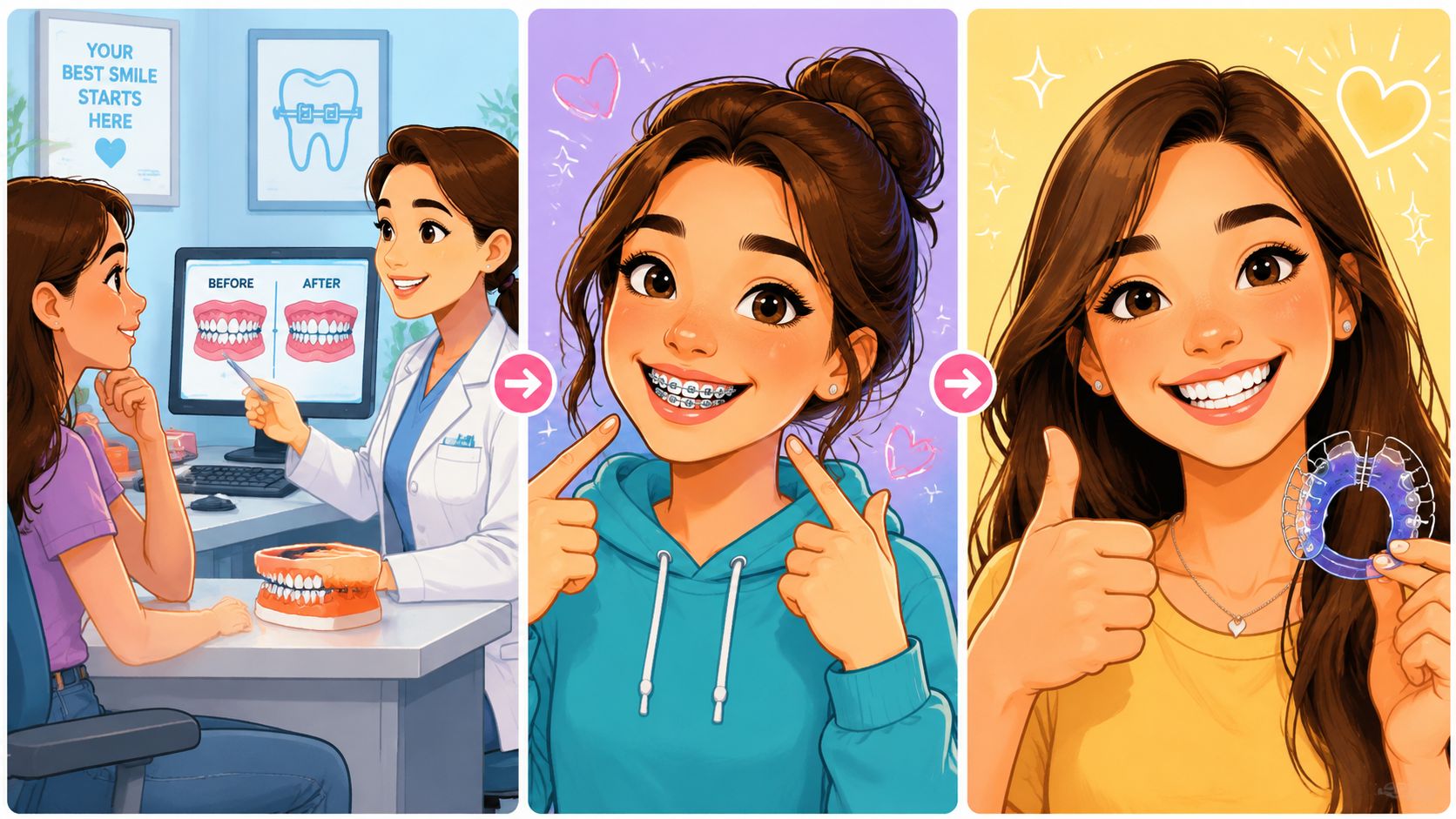
Phase one: planning and setup
At the beginning, the main goal is clarity. You want to know what kind of overbite you have, what treatment options fit your case, and what daily life during treatment will likely involve.
This is also when questions about appearance, comfort, work schedules, school activities, and long-term maintenance should come up. A good plan fits your bite, but it also fits your life.
Phase two: active treatment
Once treatment starts, teeth and bite relationships are gradually guided into healthier positions. Progress is usually steady rather than dramatic week to week. That's normal.
Some visits are about adjustments. Others are about checking that the bite is tracking the way it should. Patients often notice changes in stages. First the teeth begin to look straighter, then the bite starts feeling different, and later the whole smile looks more balanced.
What long-term studies tell us
Research is reassuring here, as long as expectations stay realistic. A systematic review of deep-bite correction outcomes found that patients started with a mean overbite of 5.3 mm, finished treatment at 2.6 mm, and averaged 3.4 mm at long-term follow-up. Across the studies in that review, initial severity ranged from 4.0 to 7.6 mm, correction ranged from 0.9 to 4.4 mm, and follow-up periods of 1.2 to 14.7 years showed relapse of 0 to 2.1 mm, or 0% to 82% of the original correction.
That tells us two things at once. First, overbite treatment can produce meaningful correction. Second, stability varies, which is why retention matters so much.
Phase three: retention
This is the part patients sometimes underestimate. Once teeth are in a better position, they still need support while the surrounding bone and soft tissues adapt.
Retention may include removable retainers, fixed retainers in selected cases, or both. The exact plan depends on the type of correction and what your doctor sees as the main relapse risks.
Wear matters
A retainer only helps when it's used as prescribed.Small shifts can add up
A little movement may not seem urgent at first, but it can change how the front teeth meet over time.Follow-up visits still matter
Retention checks help catch small concerns before they become bigger ones.
The end of active treatment isn't the end of care. It's the start of protecting the result.
For many patients, post-treatment life is refreshingly uneventful. They smile, eat, and talk without thinking about their bite nearly as much. That's usually the point. The bite should feel more natural, not like a project you're constantly managing.
Comparing Overbite Treatments at a Glance
When patients compare options, they usually care about four things. Will it work for my kind of bite? How visible is it? How much daily discipline does it require? And how involved is the process overall?
Overbite Treatment Option Comparison
| Treatment | Best For | Appearance | Patient Role |
|---|---|---|---|
| Braces | Dental overbites and more complex tooth movements | Visible on the teeth | Keep up with hygiene, food precautions, and visits |
| Invisalign | Mild to moderate cases that are suitable for clear aligner mechanics | Clear and less noticeable | Wear aligners consistently, remove them responsibly, and follow instructions closely |
| Surgical orthodontics | Severe adult skeletal overbites | Orthodontic appliances are used, plus a surgical phase | Commit to a longer, staged process with both orthodontic and surgical care |
How to use this table
This isn't a ranking. It's a decision aid.
If your top priority is appearance during treatment, clear aligners may sound appealing. If your bite is mechanically complex, fixed appliances may offer more control. If the jaws are the underlying issue, surgery may be the option that addresses the cause rather than just the symptom.
A thorough consultation matters because treatment choice should come from diagnosis, not preference alone. The most comfortable option on paper isn't always the option that will move the bite the right way.
Frequently Asked Questions About Overbite Treatment
Is overbite treatment always medically necessary
Not always. Some overbites are mild and mainly cosmetic. Others affect wear, function, or comfort enough that treatment becomes more than a smile decision. The key question is whether your bite is healthy and stable, not just whether it looks ideal.
Can an overbite cause jaw pain
It can contribute, but it isn't the only possible cause. Jaw discomfort can come from clenching, joint issues, muscle tension, or bite problems. That's why an exam should look at the whole picture instead of assuming the overbite is the only factor.
Can overbite treatment help with sleep apnea
Sometimes bite and jaw structure overlap with airway concerns, especially in more severe skeletal cases. But overbite treatment and sleep apnea treatment are not automatically the same thing. If snoring, daytime fatigue, or breathing concerns are part of your history, those should be discussed directly so the right evaluation can happen.
Am I too old to fix an overbite
Adults can absolutely pursue treatment. The main difference is that adult treatment can't rely on growth the way treatment in children sometimes can. That doesn't rule treatment out. It just changes the planning.
Does overbite treatment hurt
Most patients feel pressure or soreness at certain points, especially after starting a new stage of treatment or after adjustments. That's usually temporary. It's more accurate to think of it as a process of adaptation than constant pain.
How do I know if Invisalign can fix my overbite
You won't know from photos alone. Some cases are well suited to clear aligners, and some are better managed with braces or a combined plan. The answer depends on your tooth positions, jaw relationship, and how your bite functions as a whole.
What happens if I do nothing
That depends on the severity of the overbite and whether it's already causing wear or symptoms. Some people stay stable for years. Others develop more noticeable wear, bite strain, or frustration with function and appearance. A consultation helps separate those situations.
If you'd like a clearer answer for your own bite, schedule a consultation with Dr. Finley at Bristol Dental & Orthodontics in Santa Ana. Patients from across Orange County, including Costa Mesa, Tustin, Irvine, and Garden Grove, often start with the same simple goal: they want to know what's going on and what their options really are. Dr. Finley should review every treatment plan before publishing or presenting final recommendations, and that one-on-one evaluation is the best way to understand what overbite treatment may involve for you.