

You get braces adjusted, drive home, and a few hours later your teeth start to feel tender. Not sharp, not alarming, just sore enough that chewing suddenly seems like a bad idea. That's the moment a lot of patients and parents start searching for what relieves braces pain.
The good news is that this kind of soreness is common, and in most cases it's manageable with a few simple steps. The most helpful approach is usually not one magic fix, but a combination of smart home care, the right food choices, and safe use of over-the-counter relief when needed. If you're in Santa Ana or nearby Orange County communities like Costa Mesa, Tustin, Irvine, or Garden Grove, it also helps to know when normal soreness crosses into something worth a call to the office.
Table of Contents
- Your First Few Days with Braces
- Why Braces Cause Temporary Discomfort
- Immediate Relief with Simple Home Remedies
- Using Over-the-Counter Pain Relievers Safely
- Your Diet and Daily Habits During Sore Periods
- When to Call Your Orthodontist in Santa Ana
Your First Few Days with Braces
The first sore period often catches people off guard because braces may feel fine at first. Then later that day, dinner feels different. A sandwich may seem too firm. Even biting into something soft can make your teeth feel bruised.
That early ache usually means your teeth are responding to pressure and beginning to adapt. Many patients describe it as a dull, spread-out soreness rather than pain in one exact spot. Parents often notice their child chewing more slowly, choosing softer foods, or asking if this is normal. In most cases, it is.
A simple example. Someone gets braces on a Thursday, feels mostly okay through the appointment, then wakes up Friday with tender front teeth and mild gum irritation where the cheeks are adjusting to the brackets. By the weekend, the soreness starts settling down, especially if they stick with soft foods, cold drinks, and gentle care.
Most braces soreness is temporary. It tends to feel most noticeable when you bite, chew, or accidentally tap one tooth against another.
What helps most in these first days is knowing what to expect, staying calm, and using safe, repeatable relief steps instead of trying random home remedies.
Why Braces Cause Temporary Discomfort
Braces move teeth by applying light, steady pressure. Your mouth responds to that pressure by remodeling the tissues that support each tooth. That's a normal biological process, but it can leave teeth and surrounding areas feeling tender for a while.
When you start a new workout, your muscles may feel fine during the activity, then become sore later as your body adapts. Braces soreness works in a similar way. The feeling doesn't usually mean something is wrong. It usually means your mouth is adjusting.
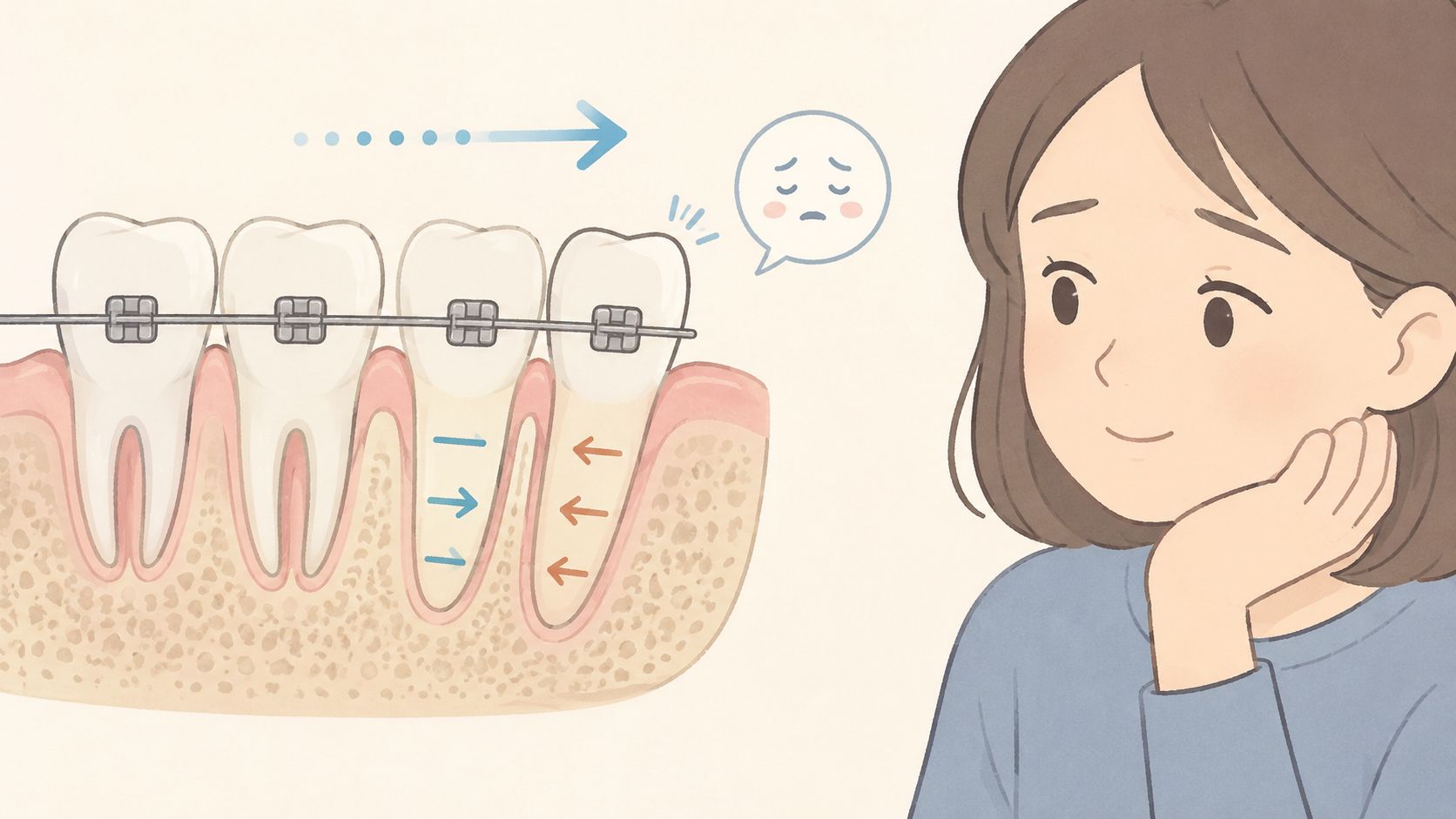
Tooth movement and soft tissue irritation
There are really two kinds of discomfort people mix together.
The first is tooth soreness from pressure. This is the ache you feel when biting down or chewing.
The second is soft tissue irritation. Brackets and wires can rub against the cheeks, lips, or tongue until those areas toughen up. That can create small sore spots that feel very different from pressure soreness.
What feels normal
Common early symptoms include:
- Tender teeth when chewing: Foods that need biting pressure may feel uncomfortable.
- A general achy feeling: It may affect several teeth rather than one.
- Minor rubbing inside the mouth: Cheeks and lips need time to get used to braces.
- Sensitivity after adjustments: A tightening visit can restart that temporary sore phase.
If the discomfort is mild to moderate and gradually improves, that fits the usual pattern. If it becomes sharp, highly localized, or tied to a loose bracket or poking wire, that's different and should be checked.
Practical rule: Pressure soreness usually feels broad and temporary. Mechanical problems usually feel sharp, specific, or constantly irritating.
Immediate Relief with Simple Home Remedies
The first evening with braces often goes like this. Dinner takes longer than usual, your teeth feel tender when you bite, and one bracket keeps brushing the inside of your cheek. That can feel like a lot at once. At Bristol Dental & Orthodontics, we usually remind patients that you do not need one big fix. You need the right remedy for the right kind of soreness.
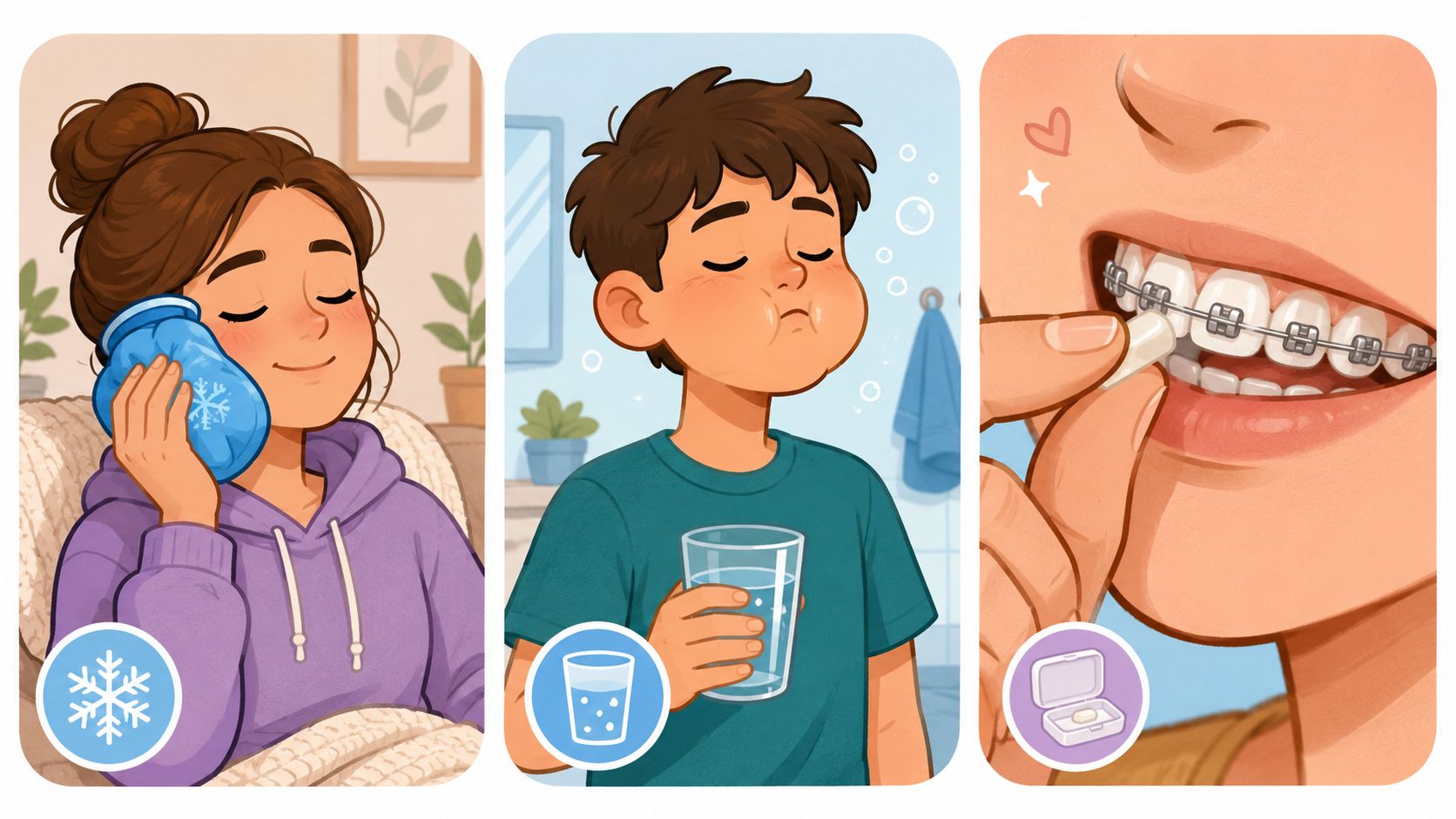
A helpful way to sort it out is this: tooth pressure is one problem, and rubbing on the cheeks or lips is another. Cold can calm the deeper, achy feeling. Saltwater and wax help the soft tissues heal and protect them. If you match the remedy to the symptom, relief usually comes faster.
Warm saltwater rinse
If the inside of your mouth feels scraped or irritated, start here. Warm saltwater is gentle, simple, and often soothing when brackets have been rubbing the same spot.
Mix about 1 teaspoon of salt into a glass of warm water and swish gently for about 30 seconds. Gentle matters. Vigorous swishing can make a tender area feel worse.
Parents sometimes ask why this helps. A good comparison is rinsing a small scrape on your skin with clean water. It does not stop tooth movement, but it can calm irritated tissue and make your mouth feel less raw. The American Association of Orthodontists also notes saltwater rinses and cold compresses as common ways to ease early braces discomfort: AAO guide to managing orthodontic pain.
Cold compress on the cheeks
Use cold on the outside of the mouth when the soreness feels deeper, broader, or more throbbing. A cold pack against the cheeks can dull that ache for a short time, especially later the same day after braces are placed or adjusted.
Keep it simple:
- Wrap the pack in a towel or cloth so it is not too harsh on the skin.
- Use short sessions of about 10 to 15 minutes.
- Take breaks between sessions instead of keeping cold on continuously.
Cold is a comfort tool, not a cure. That is normal. It takes the edge off while your teeth and supporting tissues adapt.
Orthodontic wax for rubbing brackets
Wax helps with friction. It does not do much for pressure soreness in the teeth, but it can make a big difference if one bracket keeps catching the same place on your cheek or lip.
Try this step by step:
- Wash your hands.
- Dry the bracket area with a clean tissue or cotton roll if you can.
- Roll a small piece of wax into a ball.
- Press it over the bracket or wire that feels rough.
Wax works like a cushion between the brace and the soft tissue. If it falls off while eating or talking, replace it. That is expected.
A simple first-day comfort routine
If you are not sure what to try first, use a basic plan:
- Rinse with warm saltwater if your cheeks, lips, or gums feel irritated.
- Apply cold to the outside of the cheeks if the soreness feels more like pressure or aching in the teeth.
- Place wax on any rough bracket that keeps rubbing one spot.
- Stick with soft foods so you are not adding extra biting pressure to already tender teeth.
Small steps add up. Relief often comes in pieces instead of all at once.
If something feels sharp, a wire is poking, or the pain seems stronger instead of better after the first few days, call Bristol Dental & Orthodontics. We would much rather have you check with us than sit at home wondering if something is wrong.
Using Over-the-Counter Pain Relievers Safely
By the time the soreness has built for a few hours, many patients ask the same question at Bristol Dental & Orthodontics: “Is it okay to take something for this?” In many cases, yes. The goal is to lower the discomfort while your teeth settle into the new pressure, not to ignore pain that seems unusual or keeps getting worse.
Orthodontic soreness after braces often feels deeper than a cheek sore from rubbing. That difference matters. A medicine that helps with general aching may be more useful for tooth pressure than a gel placed on the surface of the gums or lips.
What the evidence says about common pain relievers
For families, that means there are two common over-the-counter options that may help during the first day or so after braces are placed or adjusted. The best choice depends on age, medical history, allergies, and what your child's physician has advised before.
Here is a simple way to sort them out:
| Option | What to know |
|---|---|
| Acetaminophen | Often used for general soreness relief. |
| Ibuprofen and similar NSAIDs | Often used for soreness relief and may also help with inflammation. |
| Either option | Use only as directed on the label, and follow advice from your physician, dentist, or pharmacist if you have health questions. |
If your child has asthma, kidney problems, liver disease, a history of stomach ulcers, medication allergies, or takes other medicines regularly, pause and call your medical provider or our office before choosing on your own.
Topical gel or systemic medicine for children
This is the part that confuses many parents.
A numbing gel may help if a small spot on the lip, cheek, or gum feels irritated on the surface. It works a bit like putting a temporary cover over a scraped area. But braces soreness is often coming from pressure around the teeth and supporting tissues, which sits deeper than the surface. In that situation, a topical gel may not do much.
Systemic medicine, such as acetaminophen or ibuprofen, moves through the body and can help with that broader aching feeling. That does not mean every child should take it automatically. It means the two approaches are solving different problems.
A practical way to think about it at home:
- Use a topical gel for localized surface irritation if your child's doctor says it is age-appropriate and the product label supports that use.
- Use oral pain medicine for general tooth soreness or pressure only according to the label and any medical guidance your child has been given.
- Do not assume “numbing” means the problem is fixed. A child can have less surface sensation and still have pressure, swelling, or a poking wire that needs attention.
- Call Bristol Dental & Orthodontics if you are unsure which type of pain your child is describing. Parents are often trying to sort out two different kinds of discomfort at once.
If a child says, “The gel helped my cheek, but my teeth still hurt,” that pattern makes sense. The bracket rubbing and the tooth movement are not the same kind of soreness.
Safe use matters more than taking “something”
More is not better. Mixing medicines, repeating doses too soon, or using a product meant for an older child can create problems fast.
Before giving any over-the-counter pain reliever:
- Check the child's age and weight instructions on the label.
- Use the measuring device that comes with the medicine if it is a liquid.
- Avoid doubling up on products with the same active ingredient.
- Keep track of the time of each dose, especially during a busy first evening with braces.
If the discomfort seems out of proportion, a wire is poking, swelling looks significant, or your child cannot eat, sleep, or get comfortable even after following label directions, call us. We would rather help you sort it out early than have you guessing at home.
Your Diet and Daily Habits During Sore Periods
What you eat can either calm a sore mouth down or keep it irritated. The same is true for daily habits like brushing, chewing, and talking around a spot that's already rubbing.
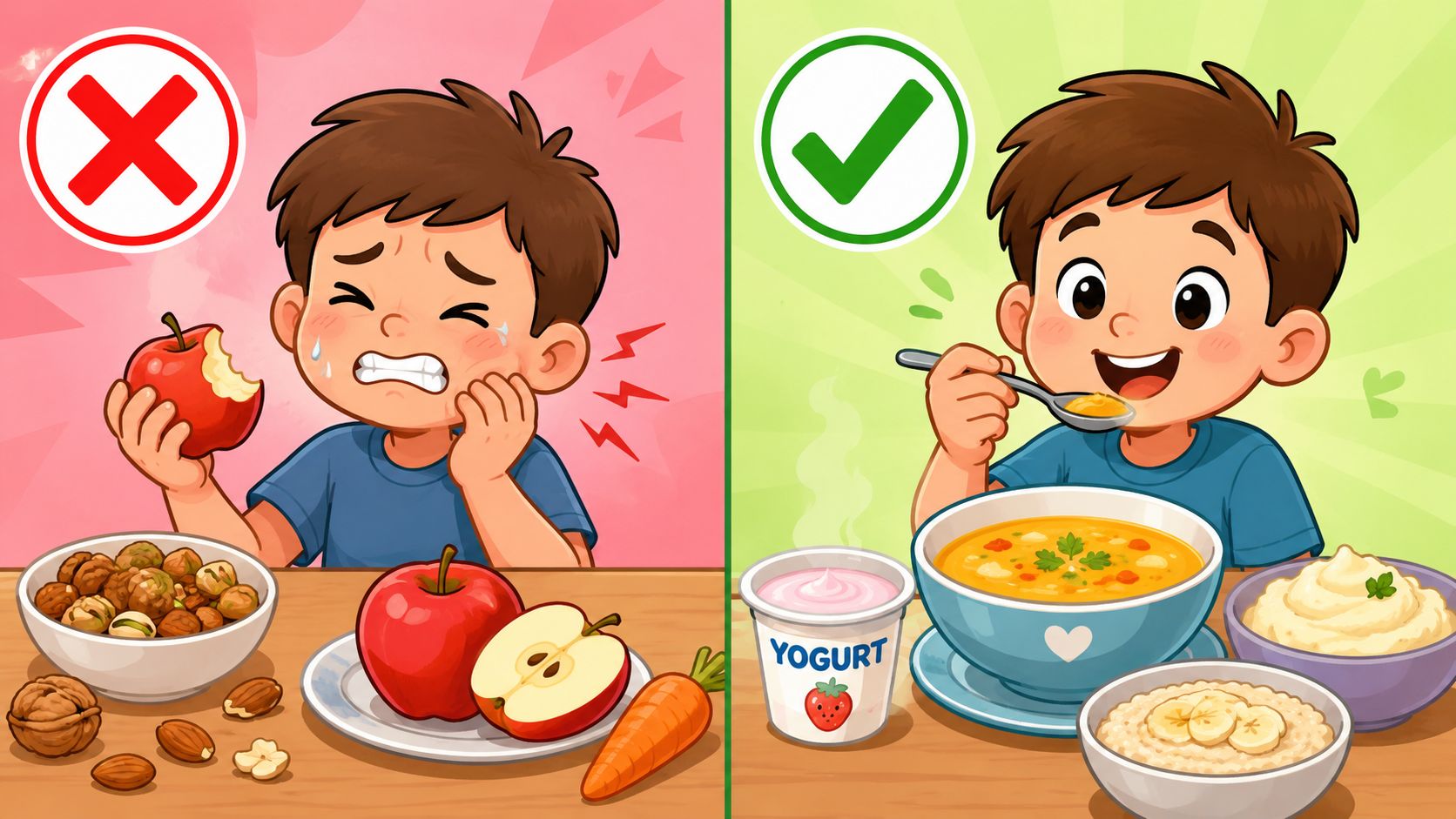
Foods that are easier on sore teeth
When teeth are tender, pressure matters more than temperature for many people. Soft foods reduce the force needed to chew.
Good choices during a sore stretch include:
- Yogurt and smoothies: Easy to eat when front teeth feel sensitive.
- Mashed potatoes or soft rice: Filling without much chewing effort.
- Soup: Comforting, as long as it isn't so hot that it irritates tender tissue.
- Scrambled eggs or soft pasta: Gentle on sore back teeth.
- Applesauce, oatmeal, or soft fruit: Useful for kids who still want a snack.
Foods to pause for now:
- Hard bites: Whole apples, crusty bread, hard chips.
- Crunchy foods: Nuts, popcorn, firm crackers.
- Sticky foods: Anything that clings to brackets and makes cleaning harder.
- Tough chewing foods: Dense bagels, chewy candy, very firm pizza crust.
A helpful rule is to ask, “Will this food make me bite hard?” If the answer is yes, save it for later.
Small habits that lower irritation
Eating is only part of comfort. Small routine changes can make the day go more smoothly.
- Cut food into smaller pieces: This reduces the force of biting with sore front teeth.
- Chew slowly: Rushing usually makes tenderness more noticeable.
- Brush gently but thoroughly: Clean teeth and gums feel better than irritated ones with food trapped around brackets.
- Use wax before a long day: Talking a lot at school or work can make a rough bracket more annoying.
- Keep hydrated: A dry mouth often makes rubbing feel worse.
Here's a quick way to understand:
| If your mouth feels | Try this |
|---|---|
| Achy when chewing | Switch to soft foods and smaller bites |
| Rubbed raw inside the cheek | Use wax and a gentle rinse |
| Sensitive all over | Eat slowly and avoid crunchy foods |
| Fine at rest, sore when biting | Don't test it with hard foods yet |
These aren't restrictions for the sake of rules. They're comfort tools. The easier you are on your mouth during sore periods, the easier those days usually feel.
When to Call Your Orthodontist in Santa Ana
It's 8:30 at night. Your child says, “My teeth are sore,” and that can be normal after braces. Then they add, “One spot keeps stabbing my cheek,” or “I can't chew on one side at all.” That is the moment to stop guessing and call.
A good way to sort it out is to ask what kind of pain it is. General pressure across several teeth usually means the braces are doing their job, much like sore muscles after starting a new workout. A sharp, pinpoint pain, a poking wire, or a bracket that feels loose usually means something needs to be checked.
Call your orthodontic office if you notice:
- Sharp pain in one specific spot: Especially if it seems tied to one tooth, one bracket, or one part of the wire.
- A wire rubbing or poking the cheek, lip, or gum: Wax can help for the moment, but the source may still need to be adjusted.
- A loose bracket or band: Even if it is not causing major pain yet, it can keep rubbing and can affect treatment if it stays loose.
- Soreness that keeps getting worse instead of easing up: Early braces discomfort usually settles. Pain that builds deserves attention.
- Swelling, bleeding that seems unusual, or anything that looks wrong to you: Parents are often the first to notice when something is off.
- Trouble eating, drinking, or sleeping because of the pain: That is more than routine tenderness.
For parents, the question often comes up about topical numbing gel versus pain medicine taken by mouth. Here at Bristol Dental & Orthodontics, we usually want families to focus first on the cause of the discomfort. A cold compress, soft foods, wax, or the right oral pain reliever can help with normal soreness. A numbing gel may dull the feeling on the surface, but it does not fix a wire that is scraping the cheek. It can also make it harder to tell whether the irritation is getting worse. If you are unsure which option is safest for your child, call us and ask before using it repeatedly.
One simple rule helps. If the pain sounds like pressure, tenderness, or “my whole mouth feels sore,” home care is often enough. If the pain sounds like stabbing, pinching, catching, or “this one thing keeps hurting me,” it should be evaluated.
You do not need to wait until a problem feels severe. If you are in Santa Ana or nearby areas like Costa Mesa, Tustin, Irvine, or Garden Grove, having a local orthodontic team matters because small braces problems are usually easier to fix early.
If you have questions about braces soreness, rubbing brackets, or whether your child's symptoms are normal, Bristol Dental & Orthodontics is here to help. Dr. Andrew Finley and the team provide family-focused care in Santa Ana for orthodontic concerns, including braces and Invisalign treatment. If you'd like guidance specific to your needs, schedule a consultation and get clear next steps. This article should be reviewed by Dr. Finley before publishing.